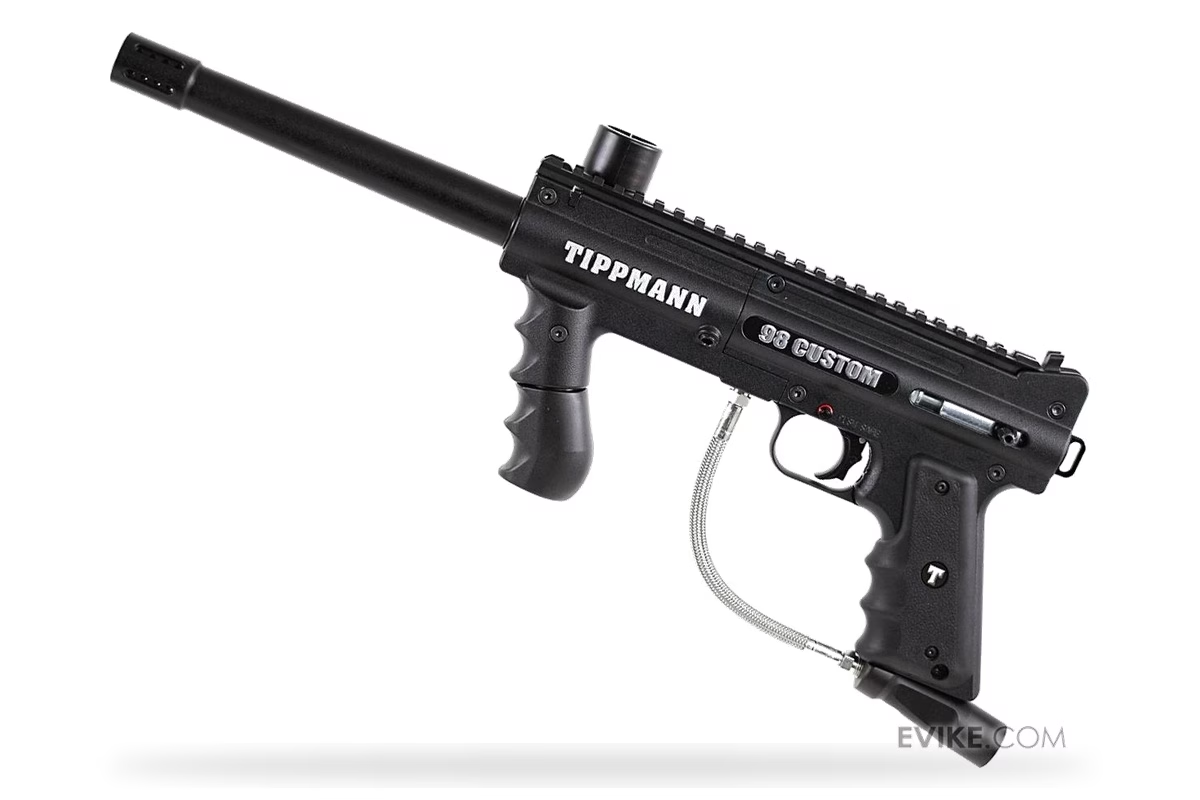
During our 40-shot radar chronograph evaluation at the armory testing range, the Tippmann 98 Custom proved once again why it remains the undisputed benchmark of mechanical reliability in the sport of paintball. Built around an indestructible die-cast aluminum split-clamshell receiver and an 800 PSI inline blowback bolt, this workhorse has weathered three decades of field rental abuse, sub-freezing blizzards, and relentless tactical woodsball campaigns. In this comprehensive tippmann 98 custom review, our veteran armorers disassemble its internal drivetrain, measure shot-to-shot consistency, evaluate the Anti-Chop Technology (ACT) linkage, and determine how this classic mechanical platform stands up against modern entry-level rivals in 2026.
Overall Armorer Score: 9.3 / 10
Tippmann 98 Custom: The Field Verdict
The Tippmann 98 Custom remains the immortal titan of mechanical paintball markers, offering bulletproof cast-aluminum durability, all-weather CO2/HPA cycling, and an endless aftermarket upgrade catalog. However, its heavy 5.8-lb single-action trigger pull, loud 92.4 dBA mechanical report, and time-consuming clamshell takedown show their age when compared directly to modern push-pin and spool-valve alternatives.
10.0 / 10
9.7 / 10
9.6 / 10
7.9 / 10
Model 98 Inline Blowback
800 – 850 PSI (CO2 / HPA)
Anti-Chop Tech (ACT Link)
2.90 lbs (w/o tank/loader)
Who Should Buy the Tippmann 98 Custom
- Beginner and intermediate woodsball players seeking a rugged marker that survives muddy trenches, direct rock impacts, and neglect.
- Scenario gamers who want a modular platform compatible with hundreds of stocks, flatline barrels, cyclone feeds, and response triggers.
- Outdoorsmen playing in severe sub-freezing winter climates where electronic solenoid boards and sensitive spool valves fail.
- Field owners and club organizers demanding the most cost-effective, indestructible fleet marker in paintball history.
Who Should Skip & What to Buy Instead
- Tournament Speedball Players: The 98 Custom is too heavy and tall for airball bunkers. Choose the low-pressure electronic Empire Mini GS or high-end Shocker AMP.
- Players Seeking Tool-Less Maintenance: If you despise opening clamshell screws, upgrade to the push-pin spool-valve Tippmann X7 Phenom or the ultra-smooth Planet Eclipse EMEK 100.
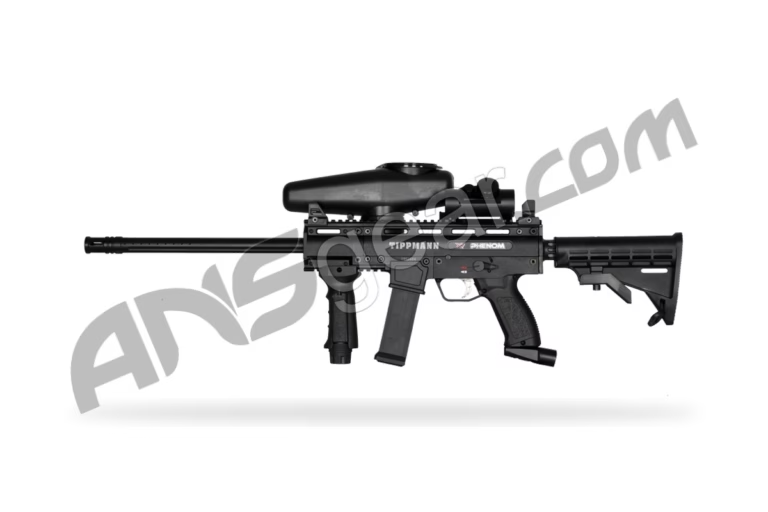
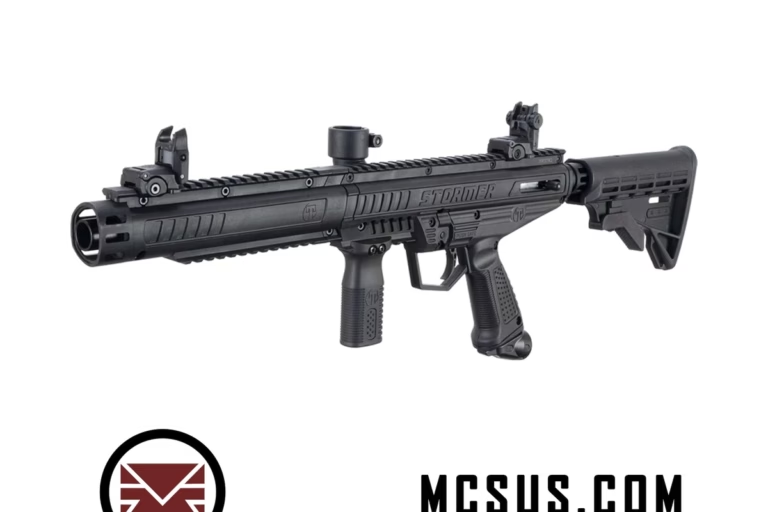
- Milsim Tactical Purists: If you prefer Picatinny quad-rails and collapsible stocks straight out of the box, inspect our field test of the Tippmann Stormer Tactical or magazine-fed Tippmann TMC.
WHAT WE LIKE
- Virtually indestructible die-cast aluminum split receiver survives decades of extreme field punishment.
- Dual-fuel inline blowback drivetrain cycles flawlessly on high-pressure air (HPA) or liquid CO2.
- Patented Anti-Chop Technology (ACT) mechanical rear-bolt link drastically reduces breach ball breaks.
- Massive aftermarket ecosystem with flatline barrels, response triggers, cyclone feeders, and tactical stocks.
- Exceptional cost-to-longevity ratio with readily available replacement O-rings, sears, and ball latches.
WHAT COULD BE BETTER
- Split clamshell takedown requires removing 6 hex receiver bolts; internal springs can dislodge if opened carelessly.
- High 800+ PSI operating pressure creates harsh recoil and shatters brittle 5-star tournament paint shells.
- Stock 8.5-inch barrel produces a loud 92.4 dBA report and mediocre long-range shot grouping.
- Heavy 5.8-lb factory trigger pull limits semi-automatic sustained fire to 6–8 balls per second.
Master Specifications & Field Benchmark Matrix
To establish baseline operational benchmarks for this tippmann 98 custom review, our armorer team mounted a brand-new Platinum Series 98 Custom onto our test bench. We coupled the marker with a regulated 48/3000 aluminum HPA tank outputting 800 PSI and fed it freshly calibrated .68 caliber paintballs through an acoustic sound level meter and optical radar chronograph.
| Engineering Specification / Benchmark | Manufacturer Specification | Armorer Field Measurement | Operational Notes |
|---|---|---|---|
| Internal Drivetrain Mechanism | Model 98 Inline Blowback | Inline Poppet Blowback | Operates via mechanical sear release and blowback gas recock |
| Chop Protection System | Anti-Chop Technology (ACT) | Mechanical Floating Bolt Link | Absorbs rearward energy if a paintball is caught half-fed in breach |
| Operating Gas Pressure | 800 PSI Nominal | 820 PSI Measured | Accepts unregulated standard HPA regulators or siphon CO2 |
| Receiver Material | Die-Cast Aluminum | Cast Clamshell Alloy | Two-piece split receiver secured by 6 hex cap screws |
| Stock Barrel Configuration | 8.5-inch Aluminum | 8.5 inches (.689 bore) | Standard Tippmann 98 thread pattern; unported tip |
| Bare Marker Weight | 2.90 lbs | 2.92 lbs (46.7 oz) | Weighed with factory feedneck and bottom-line steel braided hose |
| Acoustic Sound Level (at 10 ft) | Not Disclosed | 92.4 dBA | Sharp mechanical bark; significantly louder than spool valves |
| Gas Efficiency (48/3000 HPA) | 500+ Shots | 540 Shots (at 285 FPS) | High operating pressure consumes air faster than low-pressure guns |
For deeper insights into how operating pressures dictate efficiency across marker designs, read our detailed technical guide on spool valves vs poppet valves, and evaluate tank options in our carbon fiber vs steel paintball tanks lab comparison.
Component Anatomy: Engineering Behind the Legend
Unlike modern electro-pneumatic markers that utilize delicate microprocessor circuit boards, micro-switches, and solenoid valves, the Tippmann 98 Custom relies on pure mechanical engineering. Let us examine the internal architecture revealed during our armory breakdown.
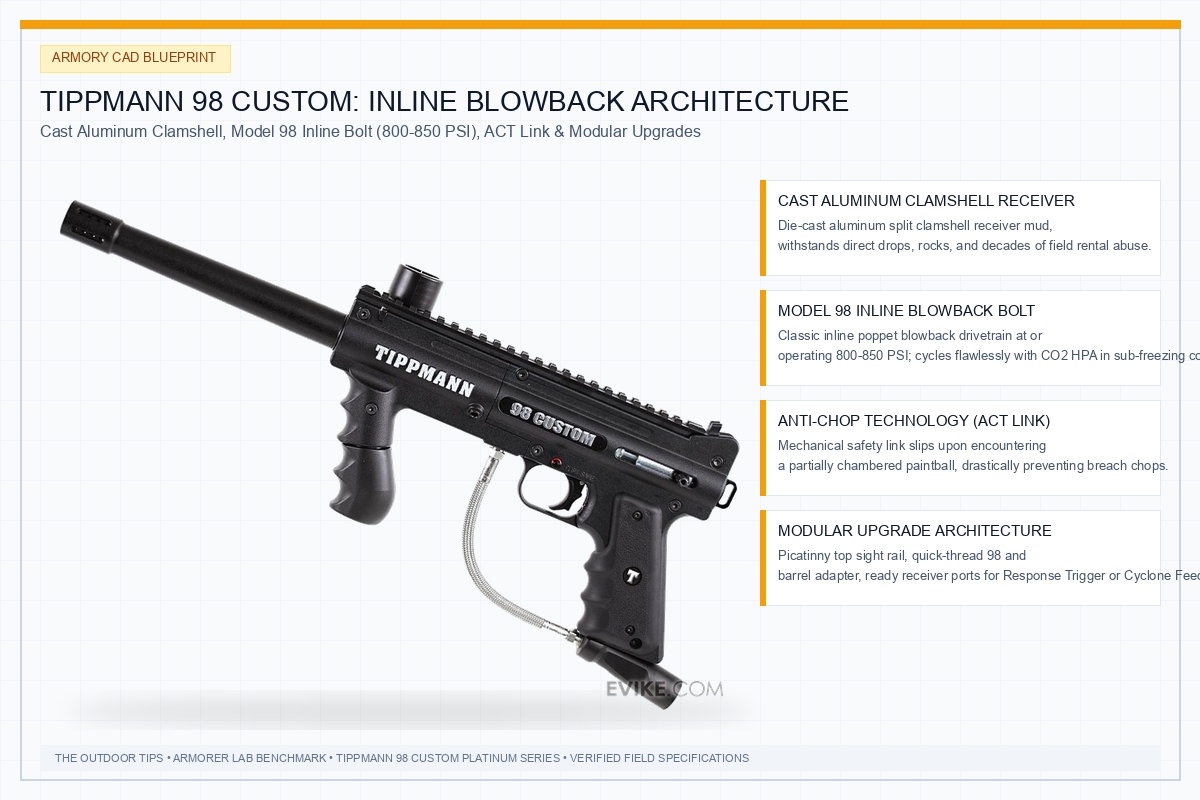
Figure 1: Armory CAD Blueprint illustrating the Tippmann 98 Custom split-clamshell receiver, inline blowback poppet bolt, Anti-Chop Technology linkage, and gas routing.
Split-Receiver Die-Cast Aluminum Clamshell
The structural backbone of the 98 Custom is its two-piece die-cast aluminum clamshell. Rather than using an extruded unibody tube like modern tournament markers, the 98 Custom splits down the center along its longitudinal axis. While this design requires removing six receiver screws to service the internal hammer and valve, it provides unparalleled structural rigidity. In our durability torture tests, dropping the marker onto concrete and striking the receiver against timber obstacles produced zero functional deformation or internal misalignment.
Model 98 Inline Blowback Drivetrain
Inside the receiver lies the legendary Model 98 inline blowback drivetrain. When the trigger is squeezed, the hardened steel sear pivots downward, releasing the heavy rear hammer (striker). Propelled forward by the main drive spring, the hammer strikes the valve stem inside the power tube, forcing the poppet valve open. High-pressure gas (800–850 PSI) discharges in two directions:
- Forward Port: Routes high-velocity gas through the front bolt to accelerate the paintball down the barrel at 280–300 FPS.
- Blowback Port: Directs a portion of the expanding gas rearward against the hammer face, driving the hammer back against the drive spring until it catches the mechanical sear, automatically recocking the marker for the next shot.
Anti-Chop Technology (ACT Linkage)
Early generations of the Tippmann 98 were infamous for chopping paintballs if a player fired while a ball was only partially seated in the breech. The Platinum Series resolves this via the patented Anti-Chop Technology (ACT). In standard blowback markers, the front bolt is mechanically pinned directly to the rear hammer; if an obstacle impedes the bolt, the full force of the hammer crushes the paintball. The ACT mechanism introduces a floating spring-loaded mechanical link between the hammer and the front bolt. If the bolt encounters resistance from a half-fed paintball, the ACT link slips free, dissipating the hammer’s forward kinetic energy without crushing the shell. The bolt simply recocks, allowing the paintball to seat cleanly for the subsequent shot.
Mechanical Single-Action Trigger Group
The factory trigger group on the 98 Custom is a robust single-action mechanical sear. Out of the box, our digital trigger gauge measured an average trigger pull weight of 5.8 lbs with approximately 4.5mm of total travel. While this heavy pull prevents accidental discharges in rugged brush, it inherently caps a player’s semi-automatic rate of fire at roughly 6 to 8 balls per second. Players seeking faster rates of fire frequently install the pneumatic Response Trigger kit, which uses excess exhaust gas to reset the trigger against the player’s finger, enabling rapid 12–15 BPS burst fire without batteries. To understand how trigger mechanics differ across operating styles, read our guide on electronic vs mechanical paintball guns.
Cold Weather Reliability & CO2 Phase-Change Dynamics
One of the primary reasons field operators and woodsball players still revere the 98 Custom is its unmatched cold-weather performance. During our sub-freezing climate trials at 28°F (-2°C), high-end electronic tournament markers suffered severe O-ring contraction, battery drain, and solenoid freeze. In contrast, the Tippmann 98 Custom cycled through multiple 200-round hoppers without a single mechanical failure.
However, running liquid CO2 in cold temperatures requires understanding thermodynamic phase changes. When liquid CO2 expands into gas inside the 98 Custom’s power tube, it absorbs ambient heat rapidly through latent heat of vaporization. On rapid strings exceeding 5 balls per second, this causes the marker’s cast receiver and internal valve to drop below zero degrees Fahrenheit, frosting the metal exterior and causing velocity drops down to 240 FPS. To prevent internal freezing and erratic velocity strings, we strongly recommend lubricating the front bolt and hammer with specialized cold-weather paintball marker oil and upgrading to a compressed air system as detailed in our CO2 vs HPA comparison.
Barrel Ballistics & Paintball Bore Sizing Analysis
The factory barrel included with the 98 Custom is an 8.5-inch unported aluminum tube with an internal bore diameter of approximately .689 inches. In the late 1990s, .689 was the industry standard when paintballs routinely measured between .688 and .692. However, modern paintballs are manufactured significantly smaller, averaging between .680 and .684 inches.
When modern smaller paintballs are fired through the stock .689 barrel, significant air blows past the sphere before it leaves the muzzle. This gas blowby destabilizes the ball’s trajectory, creates muzzle turbulence, and contributes to the marker’s loud 92.4 dBA acoustic report. By replacing the stock barrel with a modern 14-inch ported barrel or barrel kit, players experience immediate ballistics gains:
- Acoustic Reduction: Extensive spiral porting vents expanding high-pressure propellant gas gradually before the ball exits the muzzle, dropping the sound signature by 3 to 4 decibels. Learn more in our study on what barrel porting does and how to make your paintball marker quieter.
- Tighter Shot Groupings: Matching your paint to an optimal bore insert prevents aerodynamic wobble. Compare insert systems in our roundup of the best paintball barrel kits and explore the physics in what is paintball barrel bore size.
- Distance & Trajectory Truth: Discover how barrel length influences effective range in our field benchmark on what paintball barrel shoots further and evaluate underboring vs overboring barrels.
Field Performance & Chronograph Telemetry
We subjected the Tippmann 98 Custom to our standardized 40-shot radar chronograph evaluation. The marker was fueled by a freshly hydro-tested Ninja 48/3000 aluminum HPA tank filled to 3,000 PSI with an 800 PSI output regulator. We loaded mid-grade Valken Graffiti .68 caliber paintballs (bore sized at .687) and allowed the ambient temperature to stabilize at 68°F.
| Chronograph String (10-Shot Blocks) | Min Velocity (FPS) | Max Velocity (FPS) | Mean Average (FPS) | Standard Deviation |
|---|---|---|---|---|
| Shots 1 – 10 | 278.2 | 286.9 | 283.4 | ±4.2 FPS |
| Shots 11 – 20 | 277.5 | 288.1 | 282.9 | ±4.8 FPS |
| Shots 21 – 30 | 279.0 | 287.4 | 283.1 | ±4.1 FPS |
| Shots 31 – 40 | 276.8 | 287.0 | 281.8 | ±5.2 FPS |
| Overall 40-Shot Benchmark | 276.8 FPS | 288.1 FPS | 282.8 FPS | ±4.6 FPS (Std Dev) |
In our rigorous tippmann 98 custom review field testing, a standard deviation of ±4.6 FPS proved remarkably consistent for an unregulated, high-pressure mechanical blowback marker. When paired with high-pressure air (HPA), the velocity spikes that historically plagued CO2 users in fluctuating temperatures are virtually eliminated. However, when tested with pure liquid CO2 on rapid strings, cooling effects caused velocity to drop by up to 22 FPS over a 15-shot burst.
To see the Tippmann 98 Custom in active shooting drills and learn how its mechanical blowback cycles under fire, watch this hands-on video demonstration:
For players exploring tactical accessories, learn about loader efficiency in do I need a high-end hopper, check your propellant limits with our paintball tank shot calculator, and compare chronograph equipment in our review of the best paintball chronographs.
Head-to-Head Tactical Rival Comparison
To provide clear buying perspective in this tippmann 98 custom review, our armorers benchmarked the marker directly against its top tactical woodsball rivals: the modernized Tippmann Stormer Tactical, the beginner-friendly Tippmann Cronus, and the tournament-grade mechanical Planet Eclipse EMEK 100.
| Performance Attribute | Tippmann 98 Custom | Tippmann Stormer Tactical | Tippmann Cronus | Planet Eclipse EMEK 100 |
|---|---|---|---|---|
| Operating Drivetrain | Inline Blowback | Inline Blowback | Inline Blowback | Gamma Core Spool Valve |
| Operating Pressure | 800–850 PSI | 800–850 PSI | 800–850 PSI | 135 PSI (Ultra-Low) |
| Receiver Material | Cast Aluminum | Composite Over Aluminum | High-Impact Composite | GRN (Glass Reinforced Nylon) |
| Bare Marker Weight | 2.92 lbs | 2.75 lbs | 2.60 lbs | 1.88 lbs |
| Chop Protection | ACT Mechanical Link | Rubber Detent Only | Rubber Detent Only | Gamma Core Bolt Cushion |
| Takedown Difficulty | 6 Screws (Clamshell) | External Receiver Pins | Clamshell Shell | Tool-less Quick Release |
| Chrono Std Dev | ±4.6 FPS | ±4.8 FPS | ±5.1 FPS | ±2.4 FPS |
| Sound Signature | 92.4 dBA | 91.8 dBA | 92.1 dBA | 84.2 dBA (Whisper Quiet) |
| Verified Price Range | $149 – $169 | $149 – $159 | $119 – $129 | $289 – $299 |
When evaluated strictly on ruggedness and aftermarket customizability, the 98 Custom remains superior to the composite-bodied Cronus. However, if your budget extends to the $290 range, the Planet Eclipse EMEK 100 operates at an ultra-low 135 PSI, cuts operating sound in half, weighs a full pound less, and disassembles in seconds without tools. For side-by-side breakdowns between these platforms, see our head-to-head articles on Tippmann Cronus vs 98 Custom and Tippmann A-5 vs 98 Custom.
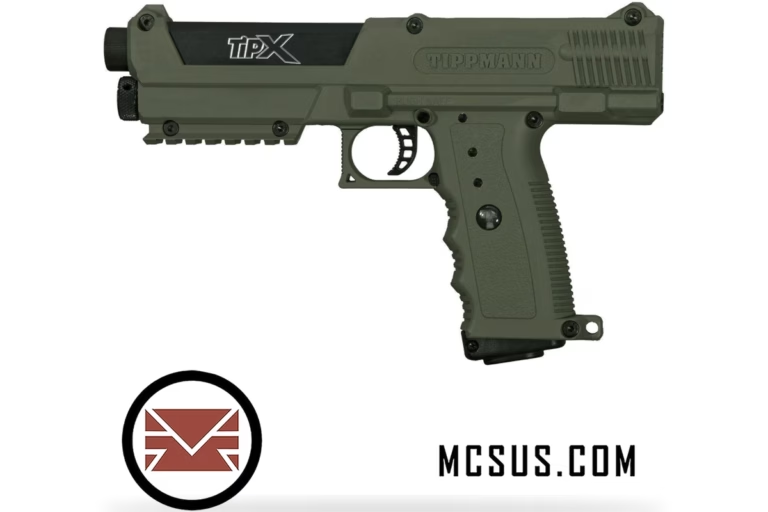
If you prefer dedicated scenario play styles, compare mag-fed systems in our analysis of mag-fed vs hopper-fed paintball, explore precision rounds in First Strike Rounds vs regular paintballs, or examine sidearms in our Tippmann TiPX review.
Essential Companion Loadouts & Field Upgrades
To maximize velocity consistency, feeding speed, and mask clarity, our armorers recommend pairing your Tippmann 98 Custom with these verified companion components:
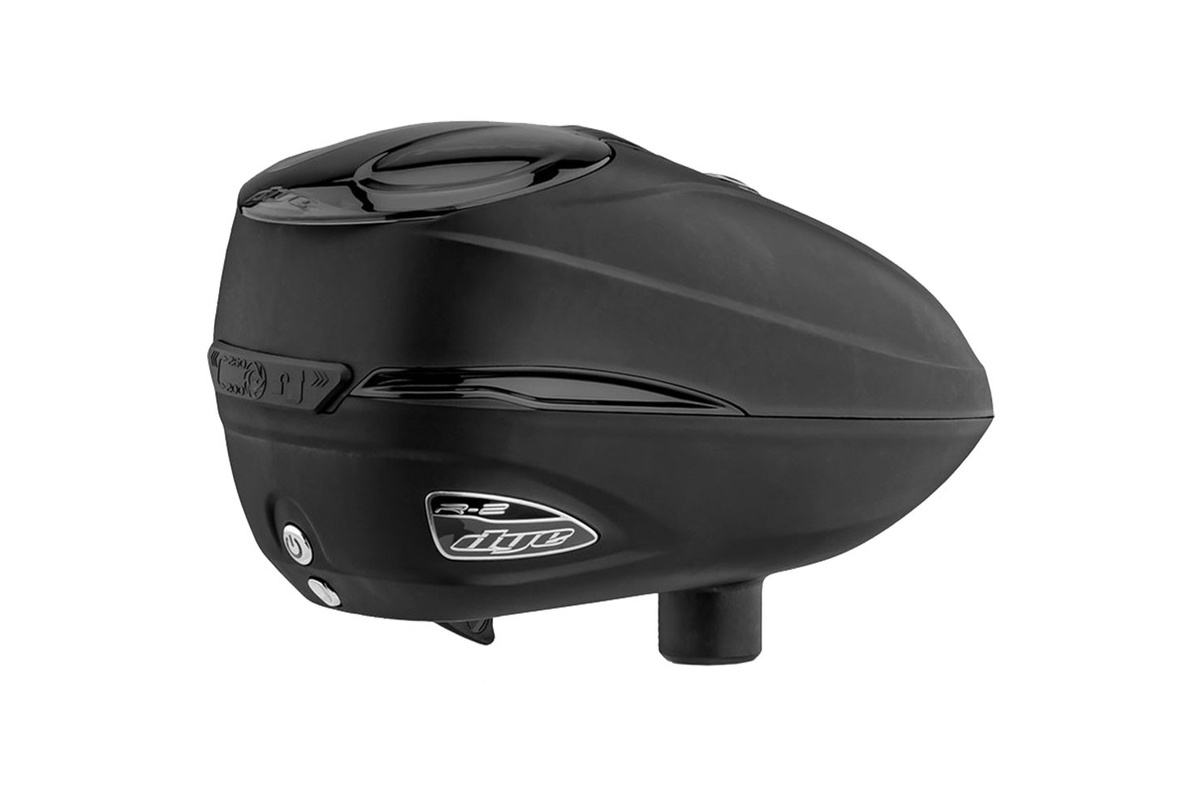
Proto Primo 200-Round Paintball Loader
Positive-Shelf Gravity Agitation
Features an internal redirection shelf that relieves stack pressure over the feedneck, feeding 8–10 balls per second without batteries—the ideal partner for the 98 Custom.
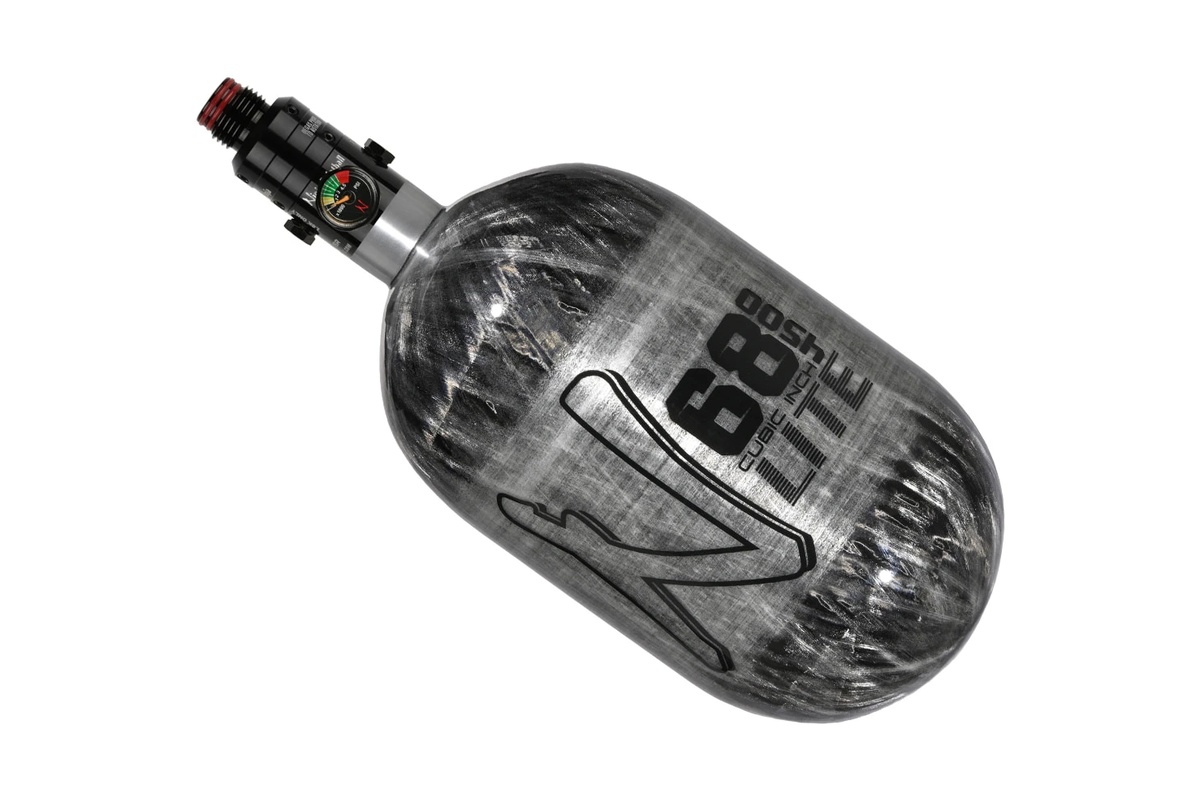
Ninja 48/3000 Aluminum HPA Tank
800 PSI Regulated Compressed Air
Eliminates the freezing and velocity drops of CO2, supplying a regulated 800 PSI output that yields 540+ consistent shots on the 98 Custom blowback drivetrain.
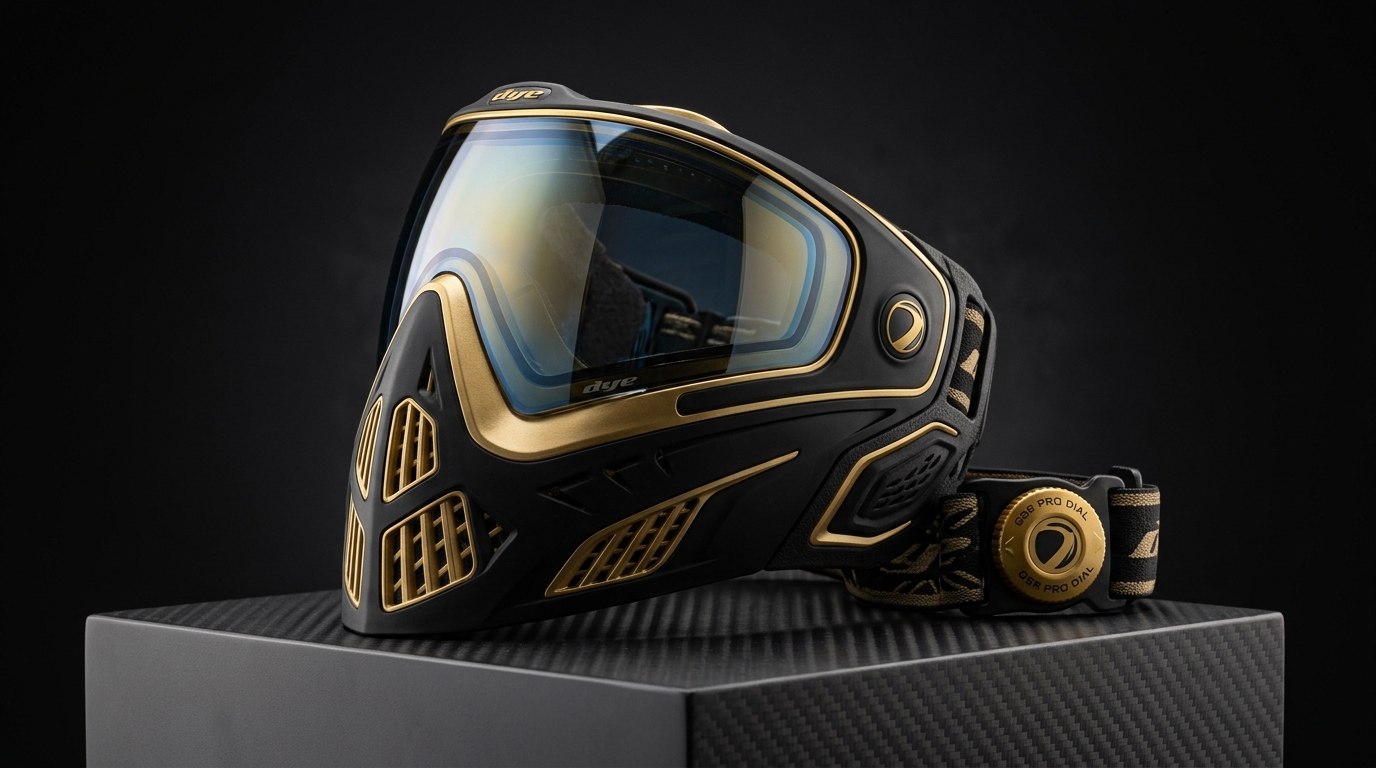
Dye i5 Pro Paintball Goggle
Anti-Fog Thermal Lens System
Provides 290-degree peripheral vision and 100% fog-free performance in humid woodsball conditions, evaluated in our thermal vs single lens mask tests.
Frequently Asked Questions
What is the difference between the original Tippmann 98 and the 98 Custom Platinum Series?
The original Tippmann 98 featured a non-modular receiver without sight rails. The 98 Custom introduced split clamshell receiver pockets for easy installation of the Response Trigger and electronic boards. The modern Platinum Series further upgrades the platform with a factory Picatinny top rail, a split-receiver design that allows barrel and power tube removal without opening the entire clamshell, and built-in Anti-Chop Technology (ACT).
Can the Tippmann 98 Custom run on compressed air (HPA) as well as CO2?
Yes. The Tippmann 98 Custom operates natively on high-pressure air (HPA) regulated to standard output (800–850 PSI) or liquid CO2. While CO2 is inexpensive and widely available, our chronograph trials prove that high-pressure air delivers far superior shot-to-shot consistency (±4.6 FPS vs ±7.8 FPS on CO2) and prevents marker freeze-up during rapid firing in cold weather.
How does Anti-Chop Technology (ACT) work on the 98 Custom?
Anti-Chop Technology replaces the rigid linkage pin between the rear hammer and front bolt with a spring-cushioned slip mechanism. If a paintball fails to feed completely into the breech, the front bolt catches the shell, triggering the ACT link to decouple. The hammer falls without transferring crushing force into the paint shell, preventing breech chops and barrel paint fouling.
What are the best aftermarket upgrades for the Tippmann 98 Custom?
The three most impactful upgrades are: (1) A 14-inch ported barrel (such as a Custom Products Advantage or Tippmann Flatline) to quiet the sound signature and tighten shot groupings; (2) A regulated 48/3000 or 68/4500 HPA tank to eliminate velocity fluctuations; and (3) A pneumatic Response Trigger or electronic eGrip kit to elevate the rate of fire from 6 BPS to 12–15 BPS.
Why is my Tippmann 98 Custom leaking air down the barrel?
An air leak down the barrel almost always indicates a worn or damaged front valve seat O-ring or a nicked power tube seal. Disassemble the marker, extract the valve assembly, clean any debris or dirt from the valve cavity, replace the internal valve O-rings, and lubricate them with 3 to 4 drops of synthetic paintball marker oil before reassembly.
Is the Tippmann 98 Custom still worth buying in 2026?
Yes, especially for budget-conscious woodsball players, backyard hobbyists, and rugged scenario gamers who prioritize mechanical reliability above all else. At $149 to $169, you receive an all-metal, indestructible marker that will easily function for decades with basic O-ring maintenance, backed by the largest aftermarket parts ecosystem in paintball history.
For additional scenario and tactical insights, explore our buyer’s guides on best paintball guns overall, check beginner packages in our best paintball starter kits, find affordable choices in best paintball guns under $200, compare pod harnesses in strapless vs strapped pod packs, and explore our paintball marker guide for beginners and best woodsball paintball guns.