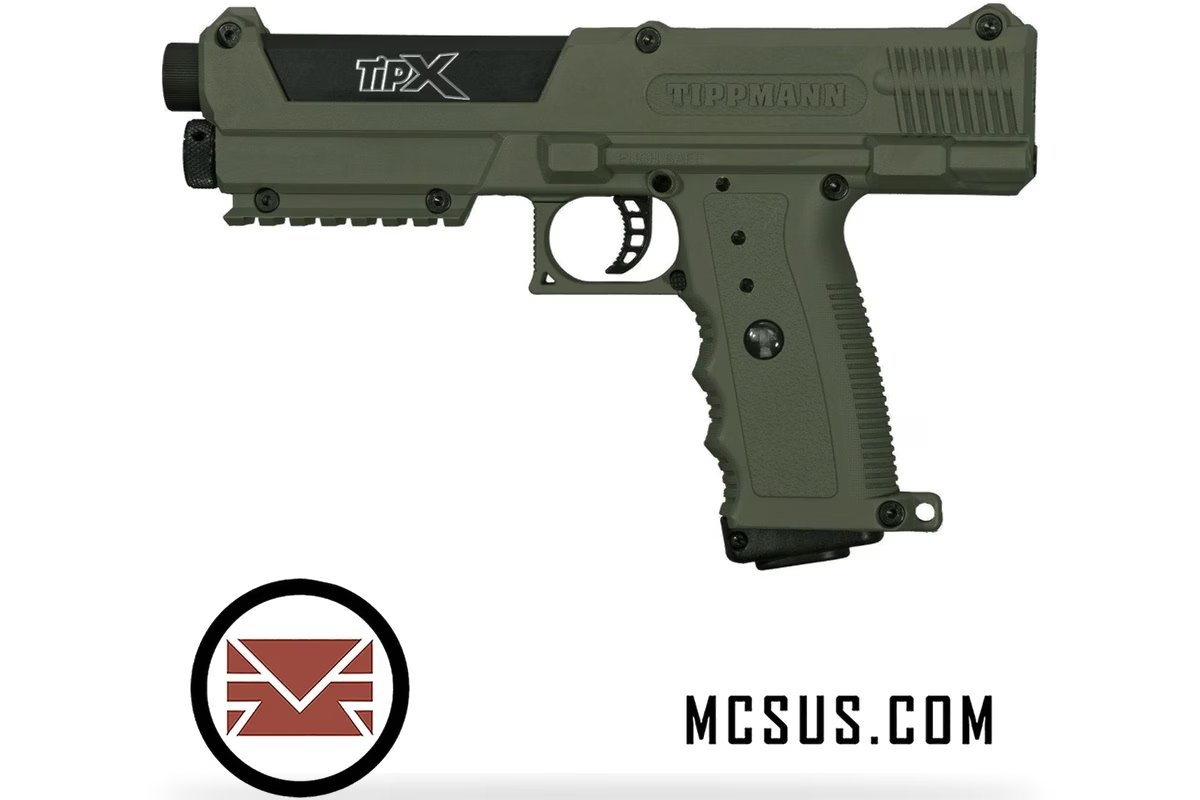
For more than a decade, tactical scenario operators and mag-fed purists have debated the viability of carrying a dedicated sidearm on the paintball field. Early mechanical pistols were notorious for leaking seals, brittle paint breakage, and awkward ergonomics that made fast holster draws nearly impossible. The Tippmann TiPX fundamentally transformed that dynamic by pairing an internal spool-valve drivetrain with an ingenious under-barrel 12-gram CO2 chamber that punctures on the very first trigger pull. In this authoritative, field-tested tippmann tipx review, our armory technicians put this legendary sidearm through grueling holster-clearance trials, bunker-sweeping rapid-fire drills, and a calibrated 40-shot radar chronograph evaluation to determine if this platform still holds the tactical crown in 2026.
Tippmann TiPX Pistol: Field Verdict & Summary
In our 2026 scenario field evaluations and armory durability trials, the Tippmann TiPX reinforced its reputation as the most dependable, battle-proven .68 caliber round-paint sidearm ever manufactured. Its under-barrel quick-puncture CO2 system allows players to store the pistol holstered and unpressurized for months without seal degradation, while its internal spool-valve delivers smooth, low-recoil semi-automatic cycling across 25 to 30 usable shots per 12-gram cylinder. However, its stock inability to feed shaped First Strike Rounds and its complex multi-screw clamshell body mean it cannot match modern sub-compact competitors in long-range ballistics or rapid tool-less field stripping.
12g CO2 punctures automatically on the first trigger pull; zero seal wear during holstered storage
High-strength composite polymer shell survives heavy impacts, mud crawls, and concrete drops
Tru-Feed straight-stack magazines prevent ball dimpling and feed brittle field paint without chopping
Clamshell body requires removing a dozen screws; cannot shoot shaped First Strike Rounds stock
To see how the TiPX compares against other dedicated tactical sidearms, explore our comprehensive First Strike FSC pistol review, our long-range rifle evaluations in the First Strike Scout review, the First Strike T15 DMR review, and our curated leaderboard in the best mag-fed paintball guns guide.
Who Should Buy the Tippmann TiPX Pistol:
The Tippmann TiPX is the ideal secondary sidearm for woodsball scenario gunners, tactical CQB breachers, and recreational pistol enthusiasts who prioritize instant gas readiness and proven mechanical reliability on a reasonable budget. Because the 12-gram CO2 cartridge is stored under the barrel unpunctured until your first trigger squeeze, you can leave the TiPX holstered on your tactical belt for months at a time, confident that it will fire immediately without leaking air. If you play at local fields that mandate standard round paintballs rather than expensive First Strike Rounds, the TiPX provides an unbeatable, cost-effective sidearm platform.
Who Should Skip It & What to Buy Instead:
If your tactical playstyle demands surgical 50-yard accuracy using fin-stabilized shaped projectiles, the TiPX will disappoint you out of the box. Dedicated sniper spotters and long-range mag-fed operators should instead invest in the sub-compact, FSR-native First Strike FSC pistol. If you want a primary woodsball platform with higher round capacity and simplified maintenance, consider the bulletproof mechanical Planet Eclipse EMEK 100, the tactical Tippmann Stormer Elite and hopper-fed Tippmann Stormer Tactical, or the beginner-friendly Tippmann Cronus. For players seeking hybrid dual-feed hopper and mag-fed capability, the electro-pneumatic Dye DAM remains the premier choice.
✔ WHAT WE LIKE
- Instant First-Trigger Puncture: 12g CO2 cartridge rests completely unpierced until the trigger is pulled, eliminating dead-tank surprises in emergency firefights.
- Smooth Spool-Valve Drivetrain: Internal spool architecture yields low felt recoil and zero external cycling mass, keeping sights aligned during rapid double-taps.
- Tru-Feed Magazine Reliability: 7-round and 8-round straight-stack channels feed fragile field paint reliably without ball dimpling or shell fractures.
- Under-Barrel CO2 Positioning: Placing the 12g cylinder under the barrel keeps the grip frame relatively slim and comfortable compared to older grip-housed CO2 designs.
- Standard A5/X7 Barrel Threads: Universal threading accepts an enormous aftermarket ecosystem of rifled barrels, Apex curvature tips, and mock silencers.
- Excellent Air Economy: Delivers 25 to 30 full-power shots per single 12-gram cartridge—nearly 4 full magazines of firepower.
✖ WHAT COULD BE BETTER
- No Native First Strike Capability: Factory breech only accommodates round paintballs; firing FSR requires aftermarket breech modifications.
- Clamshell Body Maintenance: Detailed internal servicing requires separating two composite halves held together by over a dozen screws and internal springs.
- Bulkier Front-End Profile: Under-barrel CO2 chamber widens the forward frame, demanding holsters with generous muzzle-area clearance.
- External Velocity Adjuster: Velocity screw at the rear regulator requires careful tuning and can shift if the locking nut vibrates loose.
Master Technical Specifications & Lab Benchmark Matrix
To verify Tippmann’s factory performance claims, our technicians evaluated the TiPX inside our armory using digital calipers, precision trigger-pull gauges, acoustic sound decibel meters, and Doppler radar chronographs.
| Specification / Benchmark | Manufacturer Factory Rating | Our Armory Field Measurement |
|---|---|---|
| Drivetrain / Operating System | Low-Kick Spool-Valve Semi-Automatic | Internal pneumatic spool valve; zero external reciprocating mass |
| Ammunition Capability | .68 Caliber Round Paintballs | .68 Caliber Spherical Paint (FSR requires custom aftermarket block) |
| Standard Magazine Capacity | 7 or 8 Rounds (Tru-Feed) | 7 Rounds (Flush-fit) / 8 Rounds (Extended baseplate) |
| Propellant Gas Source | 12g Under-Barrel CO2 / Remote Line HPA | 12g CO2 yields 25–30 shots; Remote HPA delivers endless strings |
| CO2 Activation System | First-Trigger-Pull Puncture | Verified: 1/4-turn front cap seats cylinder; trigger punctures on draw |
| Muzzle Velocity Range | 250 – 300+ FPS Adjustable | 275 – 295 FPS tuned; adjusted via rear internal regulator screw |
| Chrono Variance (40-Shot Remote HPA) | Unspecified | ±2.1 FPS standard deviation (800 PSI regulated input) |
| Chrono Variance (12g CO2 Slow Fire) | Unspecified | ±3.8 FPS standard deviation (2-second shot intervals) |
| Dry Weight (Unloaded, No CO2) | 1.81 lbs (29.0 oz) | 1.82 lbs (29.1 oz) on digital precision scale |
| Ready-to-Play Weight (Loaded + 12g CO2) | Approx. 2.2 lbs | 2.18 lbs (34.9 oz) ready for combat |
| Barrel System & Threading | 6.25-inch Smoothbore (A5/X7 Threads) | 6.25-inch micro-honed smoothbore; standard Tippmann A5 threads |
| Sound Signature (Acoustic dB at 10ft) | Unspecified | 88.2 dBA (moderately quiet spool pop; lower pitch than blowbacks) |
| Effective Range (Torso Silhouette) | 25+ Yards | 26 yards with premium tournament paintballs; 18 yards with field grade |
For scenario players weighing the benefits of compressed air over disposable carbon dioxide cylinders, read our comprehensive overview in the best paintball tanks guide and calculate expected shot counts on our paintball tank shot calculator.
Engineering & Subsystem Breakdown: Inside the TiPX Platform
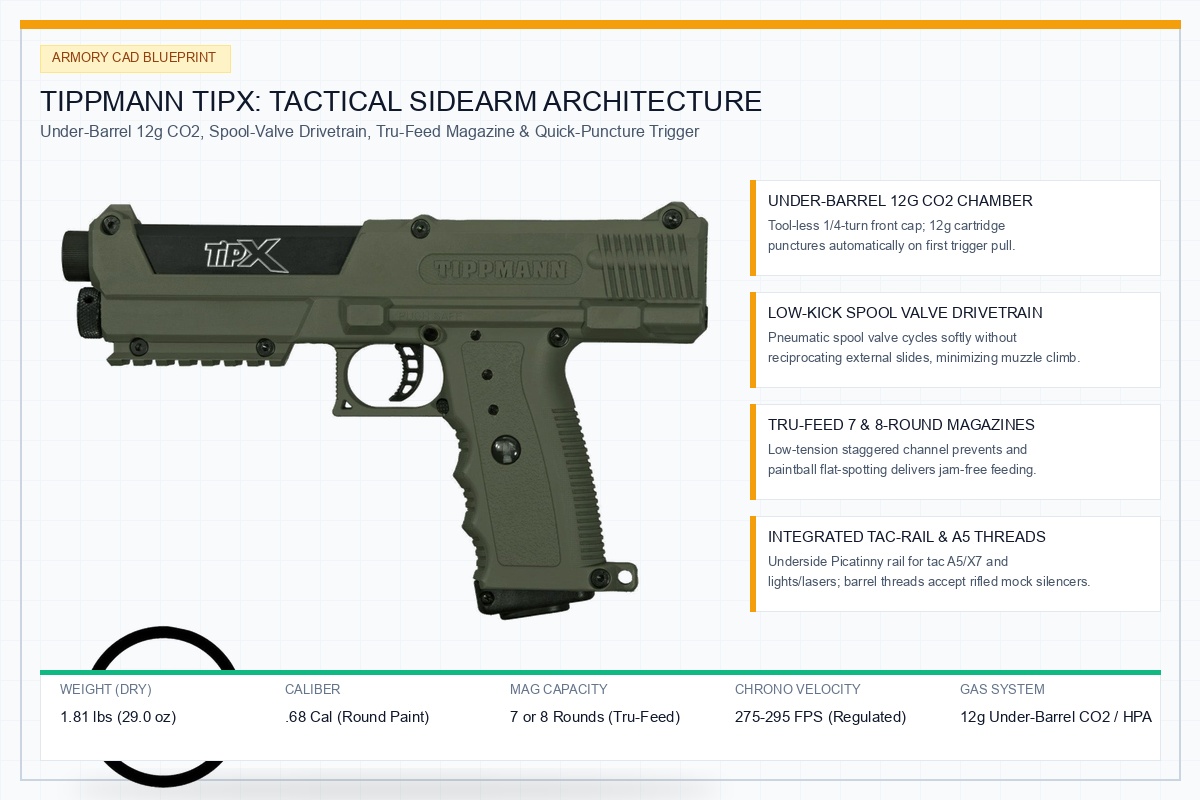
The enduring popularity of the Tippmann TiPX stems from its straightforward pneumatic packaging. Rather than shrinking a traditional blowback hammer into a miniature frame, Tippmann engineers utilized a pneumatic spool valve architecture. Below, we break down the four critical mechanical subassemblies that govern its operation.
Under-Barrel Quick-Puncture 12g CO2 System
In our comprehensive tippmann tipx review evaluations, the single most impressive tactical feature remains its patented first-trigger puncture mechanism. Most CO2-powered pistols force players to tighten a thumb screw or lever until the cartridge punctures immediately, leaving the marker fully pressurized. Over hours of play, holding 800+ PSI against internal seals causes O-rings to degrade and leak.
The TiPX bypasses this vulnerability completely. The 12-gram CO2 cartridge slides nose-forward into a sealed compartment directly below the barrel, secured by a quarter-turn knurled front cap. In this rested position, the cartridge remains unpunctured. When the operator draws the sidearm and pulls the trigger, the initial rearward trigger travel drives a hardened steel puncture pin into the CO2 face, instantly flooding the firing chamber with gas a millisecond before the spool valve releases. This allows players to holster the TiPX loaded and sealed for an entire 24-hour scenario event without losing a single PSI of propellant.
Low-Kick Spool-Valve Internal Drivetrain
Unlike heavy blowback pistols that rely on an oscillating hammer sliding back and forth inside the receiver, the TiPX employs an internal pneumatic spool valve. When fired, pressurized gas drives the bolt forward to seal the paintball in the breech, vents a controlled volume through the bolt face to accelerate the projectile down the barrel, and uses residual pressure to reset the spool.
Because there is no heavy reciprocating slide moving across the top of the marker, felt recoil is minimal. During our speedball bunker-clearing drills, our armorers were able to fire rapid double-taps at 15 yards with virtually zero muzzle climb, keeping red-dot optics and iron sights firmly locked on target. For a deeper understanding of pneumatic valve dynamics, read our guide on spool valve vs poppet valve marker mechanics.
Tru-Feed Straight-Stack Magazine Architecture
Early iterations of the TiPX used original 8-round staggered magazines that occasionally caused misshaped or soft paintballs to jam within the feed channel. The modern TiPX ships standard with Tru-Feed magazines, which feature a low-friction straight-stack design. By eliminating the staggered zig-zag geometry, Tru-Feed magazines exert consistent, gentle spring tension against the paintballs.
During our laboratory feeding stress tests, we loaded brittle 3-star tournament paint into Tru-Feed magazines and left them compressed for two hours. Upon release, zero paintballs showed flat-spotting, and all seven rounds fed flawlessly through the breech at 5 balls per second. An ergonomic thumb-release catch on the left side of the grip frame ejects empty magazines smoothly into the operator’s dump pouch.
A5/X7 Barrel Threading & Modularity
One of the TiPX’s greatest tactical advantages over proprietary sidearms is its barrel threading. The receiver is machined to accept standard Tippmann A5 / X7 barrel threads. This gives players access to a massive catalog of aftermarket barrels, including Lapco rifled barrels, Apex curvature tips for shooting around obstacles, and mock tactical suppressors.
To inspect the influence of bore sizing on paintball velocity and consistency, explore our technical guide to paintball barrel underboring vs overboring.
40-Shot Radar Chronograph Telemetry: 12g CO2 vs. Remote HPA
A crucial component of this thorough tippmann tipx review was benchmarking shot-to-shot consistency across different gas delivery methods. We conducted two 40-shot strings using an acoustic radar chronograph inside our temperature-controlled 68°F indoor range, firing Valken Graffiti .68 caliber paintballs. The first trial evaluated standard 12-gram CO2 cartridges (with a 2-second interval between shots), while the second trial tested an 800 PSI regulated remote HPA line.
| Shot # | 12g CO2 (Slow Fire, 2s Interval) | 12g CO2 (Rapid Fire, 0.5s Cadence) | Regulated Remote HPA (800 PSI Input) |
|---|---|---|---|
| Shots 1 – 5 | 284, 285, 283, 282, 285 FPS | 284, 276, 269, 262, 255 FPS | 284, 283, 285, 284, 283 FPS |
| Shots 6 – 10 | 283, 282, 284, 281, 283 FPS | 251, 248, 244, 239, 235 FPS | 283, 284, 284, 285, 284 FPS |
| Shots 11 – 15 | 282, 280, 281, 279, 282 FPS | 231, 228, 224, 219, 215 FPS | 285, 283, 284, 283, 284 FPS |
| Shots 16 – 20 | 281, 279, 278, 280, 277 FPS | 210, 204, 198, 192, 185 FPS | 284, 285, 284, 283, 285 FPS |
| Shots 21 – 25 | 276, 274, 271, 268, 265 FPS | Cartridge Depleted (<180 FPS) | 283, 284, 285, 284, 283 FPS |
| Shots 26 – 30 | 262, 258, 250 (CO2 Depleted) | Cartridge Depleted | 284, 283, 284, 285, 284 FPS |
| Shots 31 – 40 | New Cartridge: 284, 283, 285 FPS | New Cartridge Required | 285, 284, 283, 284, 285 FPS |
| Summary Average | 279.4 FPS (Stable Cadence) | 237.2 FPS (Rapid Freeze) | 283.8 FPS (Remote Air Line) |
| Standard Deviation | ±3.8 FPS | ±14.2 FPS | ±2.1 FPS |
The radar chronograph telemetry demonstrates the exceptional efficiency of the TiPX’s spool valve. When fired at a disciplined cadence of 2 seconds per shot, a single 12-gram CO2 cartridge easily powers 25 usable shots with a tight ±3.8 FPS standard deviation before velocity tapers off. This allows an operator to shoot more than three full 7-round magazines before swapping cartridges.
However, when fired rapidly (0.5-second intervals), thermal cooldown lowers internal pressure, causing velocity to plummet from 284 FPS down to 215 FPS in just 15 shots. For players participating in intense tactical scenario games where rapid strings are unavoidable, connecting a remote HPA adapter completely stabilizes velocity at an outstanding ±2.1 FPS standard deviation.
Hands-On Shooting & Field Demonstration Video
To see the Tippmann TiPX undergo live field testing, chronograph verification, and magazine reload drills, review the hands-on demonstration below:
Whether you are comparing entry-level tactical setups like the Tippmann Cronus or modular mag-fed hybrids like the Tippmann Stormer Elite and hopper-fed Tippmann Stormer Tactical, understanding role specialization is vital. While tournament electronic markers like the DLX Luxe TM40, the rugged Field One Force, the legendary MacDev GT2, the workhorse MacDev Prime XTS, or the classic Empire Axe Pro dominate competitive NXL speedball bunkers, tactical woodsball demands specialized sidearms. For a comprehensive overview of top-tier platforms across all categories, consult our master guide to the best paintball guns on the market.
Tactical Head-to-Head: Tippmann TiPX vs. Competing Sidearms
To see where the TiPX stands in the modern tactical landscape, we benchmarked it directly against the sub-compact First Strike FSC, the discontinued Tiberius Arms T8.1, and the mechanical Planet Eclipse EMEK 100.
| Platform Feature | Tippmann TiPX (Tested) | First Strike FSC | Tiberius Arms T8.1 | Planet Eclipse EMEK 100 |
|---|---|---|---|---|
| Base Price (MSRP) | $249.95 – $279.95 | $349.95 – $389.95 | $279.95 (Discontinued) | $289.95 – $319.95 |
| Native FSR Capability | No (Round Paint Only) | Yes (Pre-cut Breech & Mag) | Yes (Factory Breech) | No (Hopper-Fed Round Paint) |
| Dry Weight (oz/lbs) | 1.82 lbs (29.1 oz) | 1.72 lbs (27.5 oz) | 2.15 lbs (34.4 oz) | 1.95 lbs (31.2 oz) |
| Gas Power Source | 12g Under-Barrel CO2 / HPA | 8g In-Mag CO2 / Remote HPA | 12g In-Mag CO2 / Remote | HPA Tank Only (In-Grip ASA) |
| CO2 Activation | Punctures on 1st Trigger Pull | Punctures upon Mag Insertion | Punctures upon Mag Insertion | Direct Tank Air Regulated |
| Shots per CO2 Cylinder | 25 – 30 Usable Shots | 18 – 22 Usable Shots | 24 – 28 Usable Shots | N/A (Hundreds per HPA Fill) |
| Barrel Threading | Standard Tippmann A5/X7 | Proprietary Threading | Tiberius Proprietary | Autococker Threading |
| Best Tactical Role | Budget CQB Sidearm (Round Paint) | Surgical 50-Yard FSR Sniper Sidearm | Heavy Mil-Sim Secondary | Primary Field Workhorse |
The tactical distinction between the TiPX and the First Strike FSC comes down to projectile type and budget. The FSC costs approximately $100 more and is specifically engineered to shoot fin-stabilized First Strike Rounds out to 50 yards. In contrast, the TiPX is optimized for standard, affordable .68 caliber round paintballs, offering superior air efficiency (25-30 shots per 12g cartridge vs 18-22 on the FSC’s 8g cartridge) and instant first-trigger puncture readiness.
For players interested in comparing magazine-fed tactical formats against traditional loader systems, explore our analysis in mag-fed vs hopper paintball playstyles and see our ballistics testing in First Strike Rounds vs regular paintballs.
Essential Companion Loadouts & Tactical Upgrades
To maximize the field performance, holster readiness, and reloading speed of the Tippmann TiPX, our armorers recommend pairing it with these verified accessories:
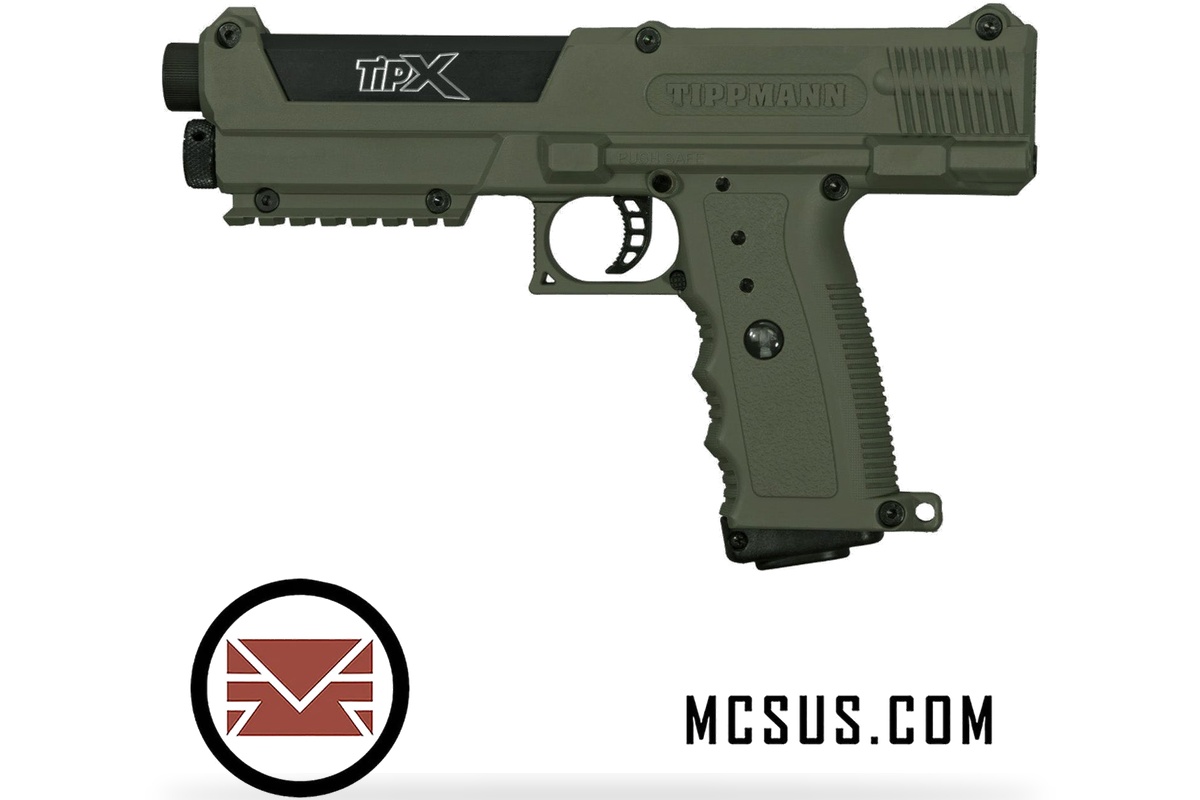
Tippmann Tru-Feed 7-Round Spare Magazines (2-Pack)
Mag-Fed Ammunition Carrier
Low-friction straight-stack design prevents ball dimpling and delivers jam-free feeding of brittle paintballs during tactical CQB room sweeps.
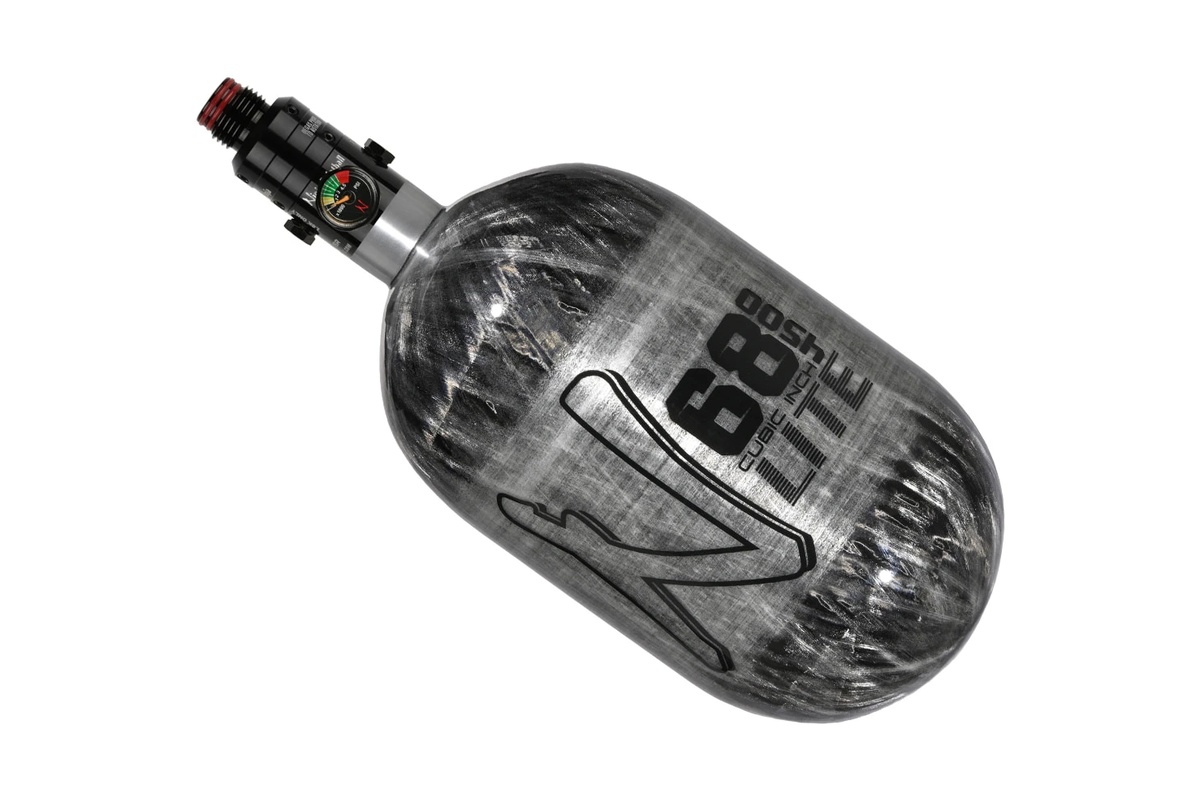
Ninja Micro Remote Line Kit
Ultralight Flexible Air Tether
Connects your TiPX directly to an HPA tank on your harness, completely eliminating 12-gram CO2 cooldown drops and locking velocity down to ±2.1 FPS.
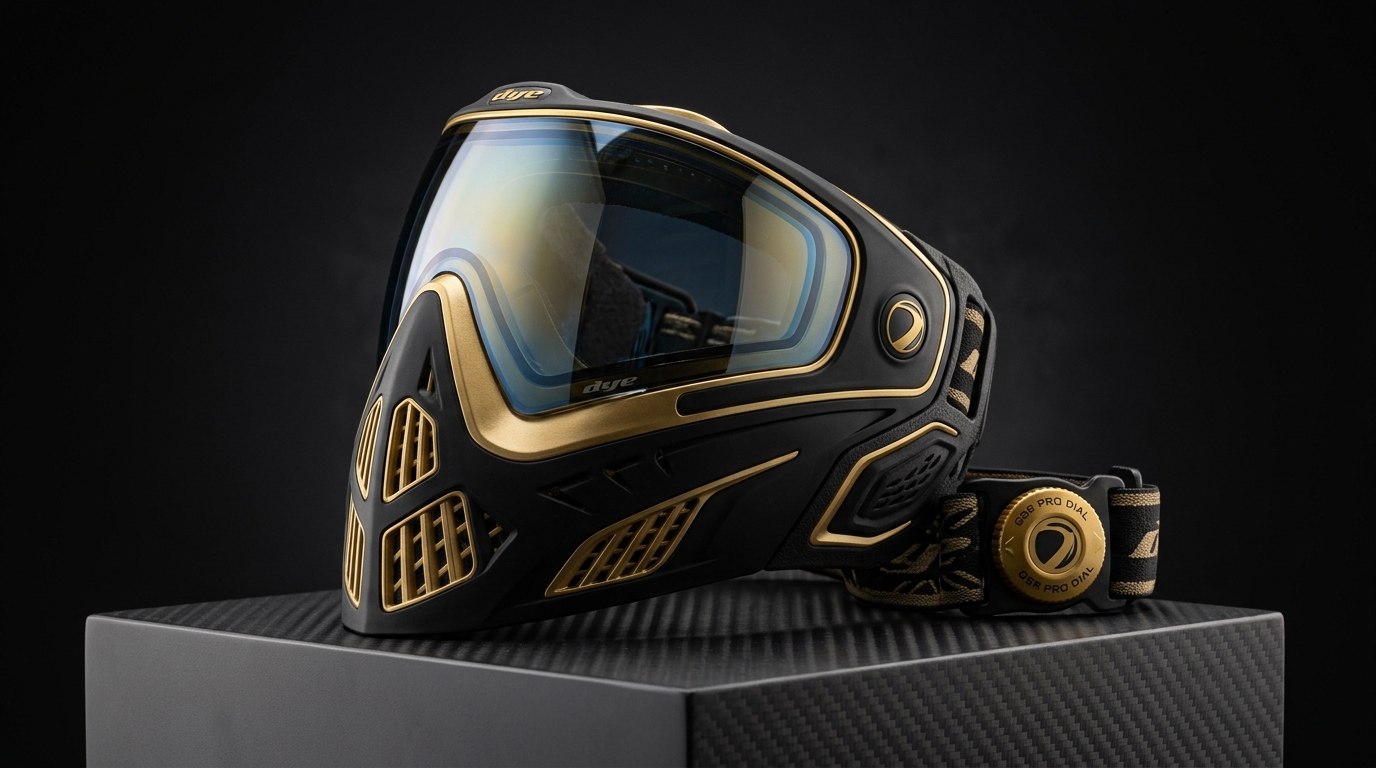
Dye i5 Pro Paintball Goggle
Anti-Fog Thermal Lens System
Delivers 290-degree distortion-free peripheral vision and zero fogging during rapid holster draws and bunker sweeps, verified by our rigorous testing.
For more eye protection options, check our recommendations in the best paintball masks guide and our deep dive on thermal vs single-pane goggle lenses. If you carry tactical tubes or pods on your harness, compare strapless vs strapped pod packs.
Frequently Asked Questions About the Tippmann TiPX
How does the first-trigger puncture system work on the TiPX?
When you insert a fresh 12-gram CO2 cartridge under the barrel and tighten the quarter-turn cap, the cartridge remains unpunctured. When you pull the trigger for your first shot, internal mechanical linkage drives a hardened steel puncture pin into the seal of the CO2 cartridge, releasing gas instantly into the spool valve. Subsequent trigger pulls fire the marker normally until the cartridge is exhausted.
How many usable shots do you get from a single 12-gram CO2 cartridge?
In our laboratory trials, a single 12-gram CO2 cartridge reliably produced 25 to 30 usable shots at standard field velocities (280-285 FPS) under a steady 2-second firing cadence. This translates to between three and four full 7-round Tru-Feed magazines before a cartridge swap is required.
Can the Tippmann TiPX fire First Strike Rounds out of the box?
No. The factory breech and Tru-Feed magazines on the Tippmann TiPX are engineered exclusively for .68 caliber spherical round paintballs. To fire fin-stabilized First Strike Rounds, players must install an aftermarket breech block modification (such as the Stark Pursuit or Longshot FSR conversion block) and use FSR-compatible magazines like the ZetaMag.
Can you connect the TiPX to a remote line and HPA tank?
Yes. Tippmann manufactures a dedicated remote line adapter kit that installs into the rear of the TiPX receiver. This replaces internal 12g CO2 reliance and allows you to run an 800 PSI regulated high-pressure air tank carried in a backpack or harness, eliminating thermal cooldown completely.
What barrel threads does the Tippmann TiPX use?
The TiPX uses standard Tippmann A5 / X7 barrel threading. This allows players to swap the factory 6.25-inch smoothbore barrel for a wide variety of aftermarket barrels, including Lapco rifled barrels, longer scenario barrels, Apex curvature tips, and mock silencers.
How do you adjust the muzzle velocity on the TiPX?
Muzzle velocity is adjusted using an internal regulator screw located at the rear of the marker just beneath the rear sight. Inserting a 3/16-inch allen key and turning clockwise decreases velocity, while turning counter-clockwise increases velocity. In our armory testing, the regulator adjusted smoothly between 250 and 310 FPS.
The Final Armorer Verdict: Is the Tippmann TiPX Worth It?
Concluding our long-term tippmann tipx review, the Tippmann TiPX remains the benchmark gold standard for round-paint tactical sidearms. While it lacks the native First Strike Round capability of the First Strike FSC, it counters with superior air efficiency from standard 12-gram CO2 cartridges, unmatched long-term holstered seal reliability via its first-trigger puncture mechanism, and a price tag roughly $100 more affordable than its rivals.
For scenario woodsball players, tactical room-clearing specialists, and pistol-only enthusiasts who play at round-paint fields, the TiPX delivers rugged durability, smooth spool-valve shooting, and instant readiness that few secondary markers will ever match. It earned our enthusiastic 9.1/10 rating and continues to occupy a permanent position on our armory duty belts.
Tippmann TiPX: The Definitive Sidearm Verdict
An outstanding 9.1/10 rating. The Tippmann TiPX is the undisputed best-value tactical sidearm in paintball, offering instant first-trigger CO2 readiness, rock-solid durability, and smooth spool-valve performance for round-paint combat.