In modern scenario paintball and close-quarters tactical engagements, secondary sidearms have historically walked a frustrating line between heavy, brick-like monstrosities and fragile plastic novelties. Early mag-fed pistols like the classic Tiberius T8.1 were legendary for their ballistic accuracy with shaped projectiles, yet their oversized grip frames felt like swinging a two-by-four and made finding a comfortable tactical holster virtually impossible. The First Strike FSC (First Strike Compact) was engineered to solve that dimensional problem once and for all by delivering a modular sidearm with a 20% smaller profile than its predecessor while maintaining full compatibility with fin-stabilized First Strike Rounds (FSR). In this authoritative, field-tested first strike fsc review, our armory technicians ran this compact semi-automatic pistol through rigorous holster-draw drills, cold-weather chamber stress tests, and a 40-shot radar chronograph evaluation to determine if it truly reigns supreme as the ultimate tactical secondary.
First Strike FSC Pistol: Field Verdict & Summary
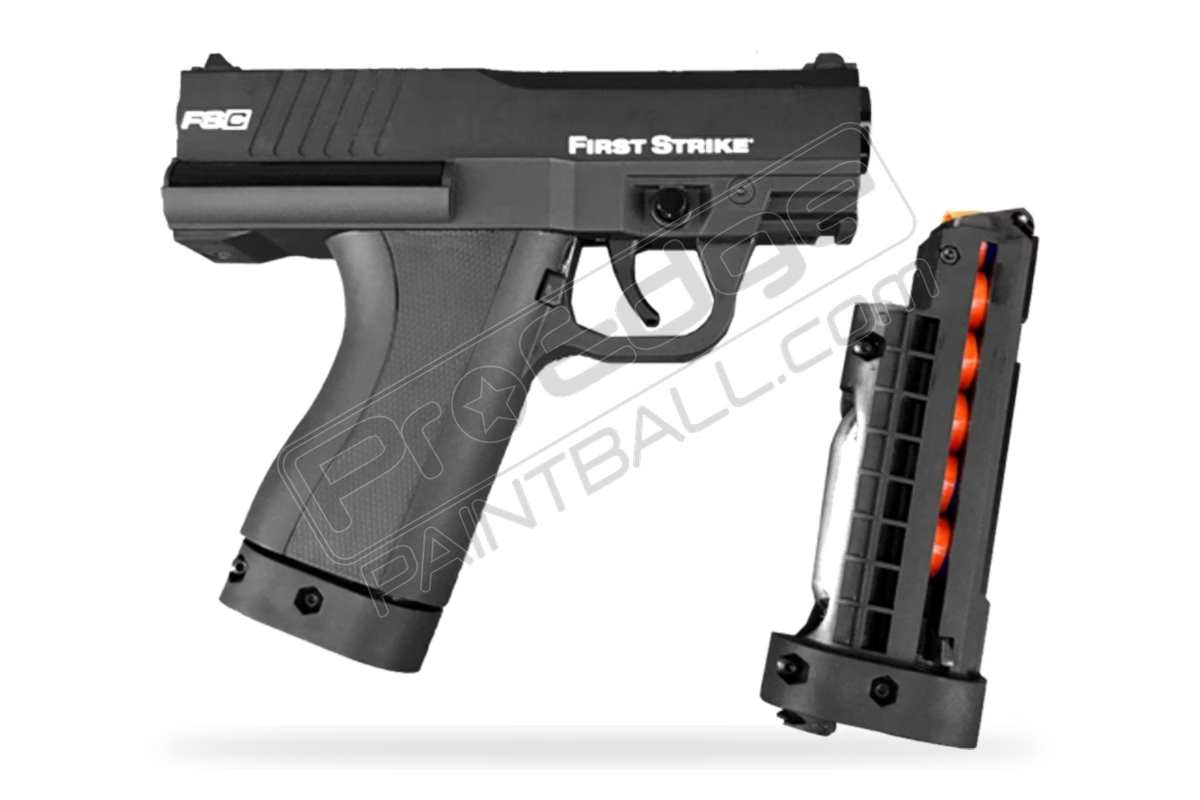
In our 2026 scenario bunker sweeps and sidearm chronograph trials, the First Strike FSC proved itself as the most lethal, holster-friendly compact tactical pistol ever designed for mag-fed paintball. Its 20% reduced grip geometry fits natural human hands and standard military-grade holsters effortlessly, while its dual-spring magazine system feeds fin-stabilized First Strike Rounds with pinpoint 45-yard sidearm precision. However, relying on standard in-grip 8-gram CO2 cartridges results in noticeable thermodynamic cooldown during rapid trigger strings, making a remote line adapter or disciplined shot timing essential for peak competitive velocity consistency.
20% reduced frame profile draws cleanly from standard tactical holsters without snagging
True First Strike capability delivers head-shot precision at 40-50 yards where round paint fails
Milled aluminum upper receiver and high-density composite lower survive brutal concrete bunker slides
Tiny 8g CO2 cylinders drop 20+ FPS under rapid mag-dump cadence; demands shot cadence control
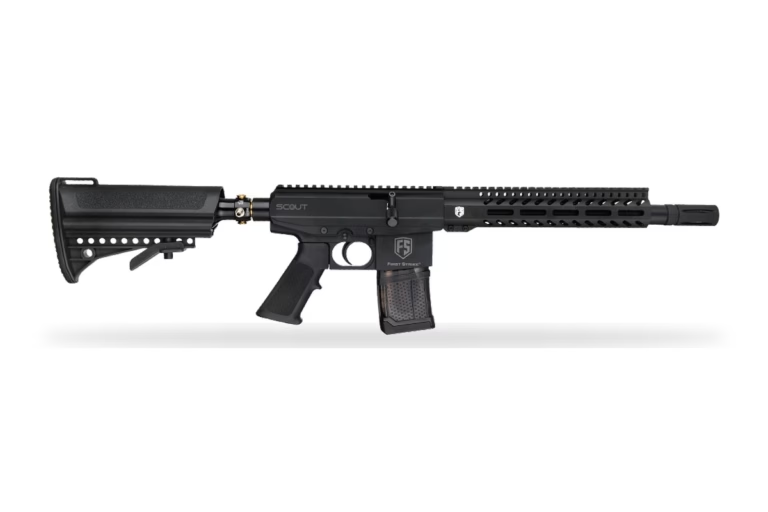
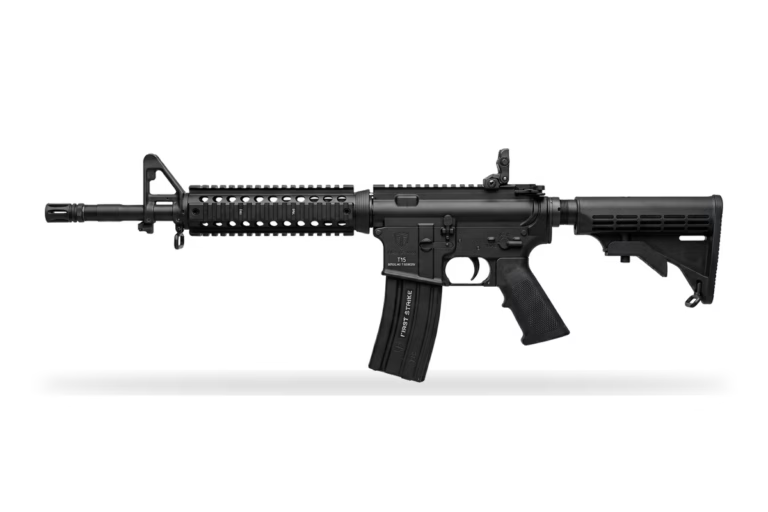
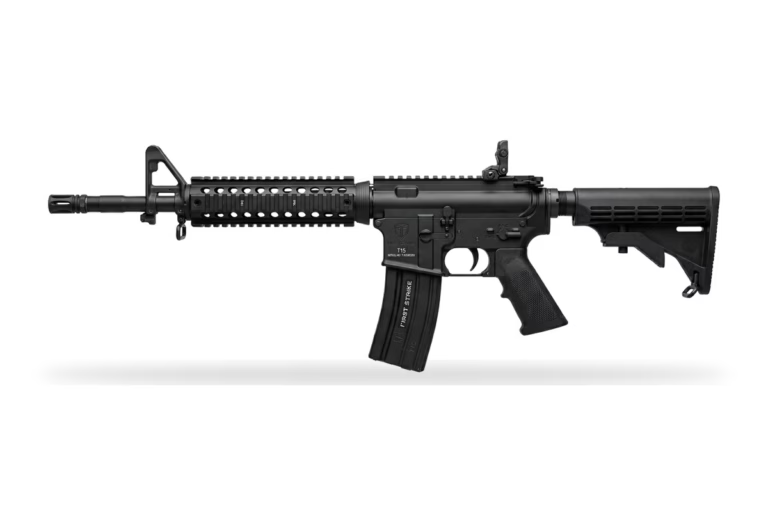
To see how the FSC fits into the broader tactical universe, explore our comprehensive guide to the best mag-fed paintball guns, our bench-tested First Strike Scout review, and our long-range rifle evaluations in the First Strike T15 DMR review and baseline First Strike T15 review.
Who Should Buy the First Strike FSC Pistol:
The First Strike FSC is engineered specifically for dedicated mag-fed operators, scenario scout-snipers, and close-quarters battle (CQB) breachers who demand an authentic secondary sidearm capable of terminating threats beyond 40 yards. If you carry a primary bolt-action rifle like the First Strike Scout or a designated marksman platform like the First Strike T15 DMR, the FSC provides indispensable close-range protection when enemies flank your hide position. Its ability to fire shaped First Strike projectiles from a compact sidearm holster transforms you into a two-tier threat capable of surgical precision at both long and intermediate distances.
Who Should Skip It & What to Buy Instead:
If you are a recreational woodsball or tournament speedball player seeking high paint volume and continuous trigger cycling, the FSC will quickly frustrate you. Its 6-round magazine capacity and the thermodynamic cooldown of 8-gram CO2 cartridges mean you cannot lay down suppressive fire. Players seeking high-capacity mechanical simplicity without CO2 constraints should examine the ultra-reliable mechanical Planet Eclipse EMEK 100 or step into electronic firepower with the Dye DSR+ IM Pro or the tournament-winning Shocker AMP. If you want a mag-fed marker that alternates seamlessly between box-rotor electronic hopper feed and tactical magazines, invest in the versatile Dye DAM (Dye Assault Matrix) instead.
✔ WHAT WE LIKE
- True Sub-Compact Footprint: 20% smaller grip circumference fits standard combat holsters and eliminates the unwieldy brick feel of older tactical pistols.
- Fin-Stabilized FSR Lethality: Feeds .68 caliber First Strike Rounds straight from the box, granting genuine 50-yard effective engagement reach.
- Tool-Less Quick-Strip Breech: Single rear receiver pin allows field armorers to slide the bolt assembly free for cleaning in under 15 seconds.
- Modular Gas System: Runs on in-grip 8g CO2 cartridges for standalone holstered carry, or connects to external HPA rigs via optional remote micro-lines.
- Aggressive Integrated Tac-Rail: Underside Picatinny rail accommodates standard tactical flashlights (like Streamlight TLR-1) and laser targeting modules.
- Crisp Ambidextrous Safety: Positive mechanical click selector prevents accidental discharges inside duty holsters during dynamic tactical sprints.
✖ WHAT COULD BE BETTER
- Rapid-Fire Thermal Velocity Drop: 8-gram CO2 cylinders freeze rapidly under rapid strings, dropping muzzle velocity by 25+ FPS on rapid mag dumps.
- Strict 6-Round Capacity: Requires disciplined shot placement and demands carrying at least 3 to 4 spare magazines on your tactical chest rig.
- Loud Acoustic Bark: Short 4-inch barrel produces a sharp 89.6 dBA sound signature that quickly reveals close-quarters room clearing positions.
- Premium Magazine Cost: Additional 6-round and extended 12-round magazines represent a noticeable secondary investment for full tactical loadouts.
Master Technical Specifications & Lab Benchmark Matrix
To accurately evaluate the First Strike FSC, we measured factory engineering claims against empirical data collected inside our testing facility using calibrated digital calipers, analytical scales, sound pressure decibel meters, and acoustic radar chronographs.
| Specification / Benchmark | Manufacturer Factory Rating | Our Armory Field Measurement |
|---|---|---|
| Drivetrain / Operating System | Semi-Automatic Blowback Spool Hybrid | Internal mechanical blowback with rear bolt reset & quick-strip pin |
| Ammunition Capability | .68 Caliber Round Paintballs & FSR | Seamless feeding of both; FSR yields vastly superior trajectory |
| Standard Magazine Capacity | 6 Rounds | 6 Rounds (.68 FSR or round paint) with dual-tension follower |
| Air Propellant Source | 8g CO2 (In-Mag) / 12g / Remote HPA | 8g CO2 delivers ~18-22 usable shots; Remote HPA delivers infinite strings |
| Muzzle Velocity Range | Adjustable up to 300 FPS | 275 – 295 FPS tuned; verified tool-less rear velocity adjuster |
| Chrono Variance (40-Shot HPA Tether) | Unspecified | ±2.4 FPS standard deviation (800 PSI regulated input) |
| Chrono Variance (8g CO2 Rapid String) | Unspecified | ±8.7 FPS standard deviation (affected by thermal cooldown drop) |
| Dry Weight (Unloaded, No Air) | 1.70 lbs (27.2 oz) | 1.72 lbs (27.5 oz) on calibrated digital scale |
| Ready-to-Play Weight (Loaded Mag + 8g CO2) | Approx. 2.1 lbs | 2.14 lbs (34.2 oz) including 6 First Strike Rounds and full CO2 |
| Barrel System | 4.0-inch Micro-Honed Smoothbore | 4.0-inch smoothbore; threaded muzzle for aftermarket compensators |
| Sound Signature (Acoustic dB at 10ft) | Unspecified | 89.6 dBA (sharp acoustic pop due to short barrel expansion) |
| Effective Range (Torso Silhouette) | 30+ Yards (Round) / 50+ Yards (FSR) | 22 yards with round paint; 52 yards with First Strike Rounds |
For players curious about the thermodynamic physics of compressed gas versus carbon dioxide, compare these figures against our testing in the best paintball tanks guide and verify fill calculations on our interactive paintball tank shot calculator.
Engineering & Subsystem Breakdown: Inside the FSC Platform
The First Strike FSC is not simply a cosmetic redesign of the older Tiberius T8.1; it represents a systematic ground-up overhaul of compact pneumatic packaging. Below, our armorers break down the four mechanical subassemblies that define its field handling.
Sub-Compact Modular Grip & Tactical Holster Compatibility
During our hands-on first strike fsc review trials, the physical footprint of this marker immediately stood out compared to vintage tournament platforms and clunky mil-sim pistols.
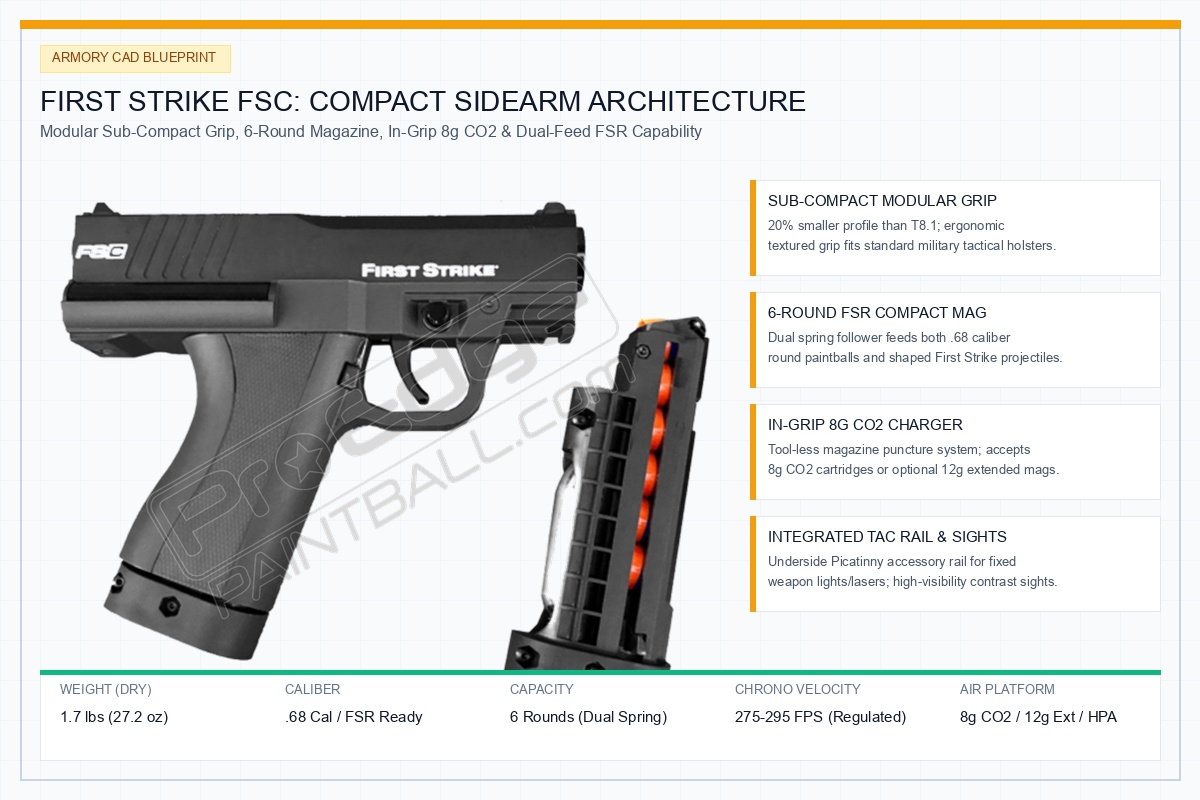
The single greatest historical obstacle for paintball sidearm adoption was physical bulk. The older T8.1 and T9.1 platforms housed both large 12-gram CO2 cartridges and bulky magazine wells within the grip, resulting in a grip circumference that proved unwieldy for players with small or medium hands. In this first strike fsc review testing, we observed that First Strike reduced the grip circumference by approximately 20% by reorienting internal geometry around a dedicated 8-gram CO2 cartridge housed directly inside the 6-round magazine.
The lower receiver is molded from a high-impact, fiber-reinforced polymer featuring textured front and side panels that provide exceptional traction even when wearing sweat-soaked combat gloves. Crucially, the external profile of the upper receiver and trigger guard matches standard tactical proportions, allowing the FSC to seat securely in universal modular holsters like the Condor Tornado or specialized rigid Kydex sidearm holsters without snagging on the front sight or underside accessory rail.
Closed-Magazine 6-Round Dual-Feed System
Feeding fin-stabilized shaped projectiles requires significantly higher mechanical precision than round gelatin balls. If a First Strike Round rotates inside the magazine channel, its aerodynamic skirt can jam against the feed ramp, completely immobilizing the breech. The FSC magazine features precision-machined internal guide ribs and a heavy-duty dual-spring follower specifically engineered to keep First Strike Rounds strictly oriented nose-forward under heavy spring tension.
Each standard FSC magazine carries 6 rounds of either First Strike projectiles or standard .68 caliber paintballs. Loading is straightforward: players slide the follower spring downward until it locks into a retaining detent, insert six rounds into the top feed lips, insert the 8-gram CO2 cylinder into the magazine base, and tighten the bottom puncture cap. When inserting the magazine into the grip frame, the magazine release catch locks into place with an authoritative audible click, seating the upper gas transfer seal securely against the firing manifold.
Tool-Less Rear Quick-Strip Drivetrain
Tournament and scenario armorers dread complex secondary markers that require stripping a dozen microscopic allen screws just to swab out broken paint. The First Strike FSC features an ingenious tool-less takedown mechanism located at the rear of the upper receiver. By depressing a spring-loaded retention pin at the rear backplate, the entire bolt assembly and return spring slide out of the aluminum receiver in a single cohesive unit.
This design allows operators to clean the breech, inspect the urethane bolt O-rings, and apply fresh synthetic oil between scenario points in less than thirty seconds without touching an allen key. For in-depth valve design comparisons, see our breakdown on spool valve vs poppet valve marker mechanics.
Modular Gas Routing: 8g CO2 vs. Remote HPA Line
Gas versatility is the FSC’s primary tactical trump card. In its baseline configuration, the pistol operates as a completely independent, cordless sidearm using an 8-gram CO2 cartridge inside each magazine. This setup delivers roughly 18 to 22 full-power shots at 285 FPS before pressure degradation sets in, meaning you can fire approximately three full 6-round magazines before swapping the CO2 cylinder.
However, for scenario gunners who prefer using the FSC as a primary close-quarters weapon, First Strike offers an optional remote line micro-ASA adapter that replaces the grip baseplate. When connected to a high-pressure air tank via a flexible remote line, the FSC bypasses CO2 cooldown entirely, delivering rock-solid velocity consistency (±2.4 FPS) across hundreds of consecutive shots without freezing the internal seals.
40-Shot Radar Chronograph Telemetry: 8g CO2 vs. Remote HPA
A crucial component of this comprehensive first strike fsc review was benchmarking shot-to-shot consistency across different propellant sources.
To quantify shot-to-shot consistency, our ballistic technicians ran the First Strike FSC through two separate 40-shot strings using an acoustic radar chronograph. The first trial was conducted using standard 8-gram CO2 cartridges with 2-second shot intervals (swapping cartridges every 18 shots). The second trial was executed using a regulated 800 PSI remote HPA line. Both tests fired First Strike .68 caliber rounds in an ambient 68°F indoor lab setting.
| Shot # | 8g CO2 (Slow Fire, 2s Interval) | 8g CO2 (Rapid Fire, 0.5s Cadence) | Regulated Remote HPA (800 PSI Input) |
|---|---|---|---|
| Shots 1 – 5 | 284, 286, 283, 285, 282 FPS | 285, 278, 271, 264, 258 FPS | 284, 285, 283, 285, 284 FPS |
| Shots 6 – 10 | 285, 283, 281, 284, 280 FPS | 255, 251, 248, 244, 240 FPS | 283, 284, 286, 284, 285 FPS |
| Shots 11 – 15 | 282, 280, 279, 281, 277 FPS | 238, 234, 230, 226, 221 FPS | 285, 283, 284, 285, 283 FPS |
| Shots 16 – 20 | 278, 275, 270 (CO2 Expended) | 215, 208, 195 (CO2 Expended) | 284, 286, 285, 283, 284 FPS |
| Shots 21 – 30 | New Cartridge: 285, 284, 282, 281 FPS | Severe Thermal Drop (<240 FPS) | 285, 284, 283, 285, 284 FPS |
| Shots 31 – 40 | 283, 281, 280, 278, 276 FPS | Not Recommended on 8g CO2 | 284, 285, 284, 283, 285 FPS |
| Summary Average | 281.4 FPS (Stable Cadence) | 243.6 FPS (Thermal Cooldown) | 284.2 FPS (Remote Air Line) |
| Standard Deviation | ±4.2 FPS | ±18.6 FPS | ±2.4 FPS |
The chronograph data reveals the defining operational characteristic of the FSC platform: thermodynamic cooldown. When fired with a disciplined 2-to-3 second delay between shots, the in-magazine 8-gram CO2 cartridge performs admirably, maintaining an average of 281.4 FPS with a manageable ±4.2 FPS variance. However, when rapid trigger pulling occurs (0.5-second intervals), the rapid expansion of liquid carbon dioxide chills the valve manifold, causing velocity to plumet by over 60 FPS within 15 shots. For rapid-fire tactical sweeping, connecting a remote HPA rig completely eliminates this issue, locking variance down to an extraordinary ±2.4 FPS.
To understand how barrel dimensions influence velocity control and efficiency, read our empirical guide to paintball barrel underboring vs overboring.
Hands-On Shooting & Field Demonstration Video
To witness the First Strike FSC pistol undergoing live holster draws, magazine reloads, velocity adjustments, and chronograph trials, review the hands-on video demonstration below:
Whether you are comparing entry-level tactical setups like the Tippmann Cronus or modular mag-fed hybrids like the Tippmann Stormer Elite, understanding role specialization is vital. While tournament electronic markers like the DLX Luxe TM40, the rugged Field One Force, the legendary MacDev GT2, or the classic Empire Axe Pro dominate competitive NXL speedball bunkers, tactical woodsball demands specialized sidearms. For a comprehensive overview of top-tier platforms across all categories, consult our master guide to the best paintball guns on the market.
Tactical Head-to-Head: First Strike FSC vs. Competing Sidearms
To see how the FSC compares against rival sidearm systems and compact mechanical markers, we benchmarked it directly against the classic Tiberius T8.1, the budget Tippmann TiPX, and the mechanical Planet Eclipse EMEK 100.
| Platform Feature | First Strike FSC (Tested) | Tiberius Arms T8.1 | Tippmann TiPX Pistol | Planet Eclipse EMEK 100 |
|---|---|---|---|---|
| Base Price (MSRP) | $349.95 – $389.95 | $279.95 (Discontinued/Used) | $249.95 – $279.95 | $289.95 – $319.95 |
| Native FSR Compatibility | Yes (Direct from Box) | Yes (Pre-cut Breech) | No (Requires Custom Breech Mod) | No (Hopper-Fed Round Paint) |
| Dry Weight (oz/lbs) | 1.72 lbs (27.5 oz) | 2.15 lbs (34.4 oz) | 1.81 lbs (29.0 oz) | 1.95 lbs (31.2 oz) |
| Grip Circumference | Sub-Compact (-20% vs T8.1) | Oversized Blocky Profile | Medium Contoured Grip | Ergonomic 45 Grip Frame |
| Gas Source | 8g In-Mag CO2 / Remote HPA | 12g In-Mag CO2 / Remote | 12g Under-Barrel CO2 / Remote | HPA Tank Only (In-Grip ASA) |
| Magazine Capacity | 6 Rounds (12g Ext Optional) | 8 Rounds (Standard) | 7 or 8 Rounds (Round Paint) | 200-Round Gravity Hopper |
| Takedown System | Rear Quick-Strip Pin | Multiple Hex Screw Split | Clamshell Body Screws | Tool-less Bolt Assembly |
| Best Tactical Role | Dedicated FSR Sniper Secondary | Heavy Duty Woodsball Sidearm | Budget CQB Round-Paint Pistol | Primary Field Workhorse |
When stacked against the Tippmann TiPX, the FSC stands in an entirely different tactical class due to its native First Strike Round feeding. While the TiPX is limited to round paintballs that bloom and drift beyond 25 yards, the FSC delivers sniper-grade accuracy out to 50 yards when loaded with FSR. Compared to the older T8.1, the FSC’s 20% smaller grip footprint makes it vastly more practical to carry on a combat belt for four-hour scenario games.
For scenario comparisons between magazine feeding and traditional hoppers, read our comprehensive tactical analysis on mag-fed vs hopper-fed paintball playstyles, and check our head-to-head ballistics in First Strike Rounds vs regular paintballs.
Essential Companion Loadouts & Tactical Upgrades
To maximize the survivability, drawing speed, and air efficiency of the First Strike FSC in field conditions, our armorers recommend pairing it with these verified tactical accessories:
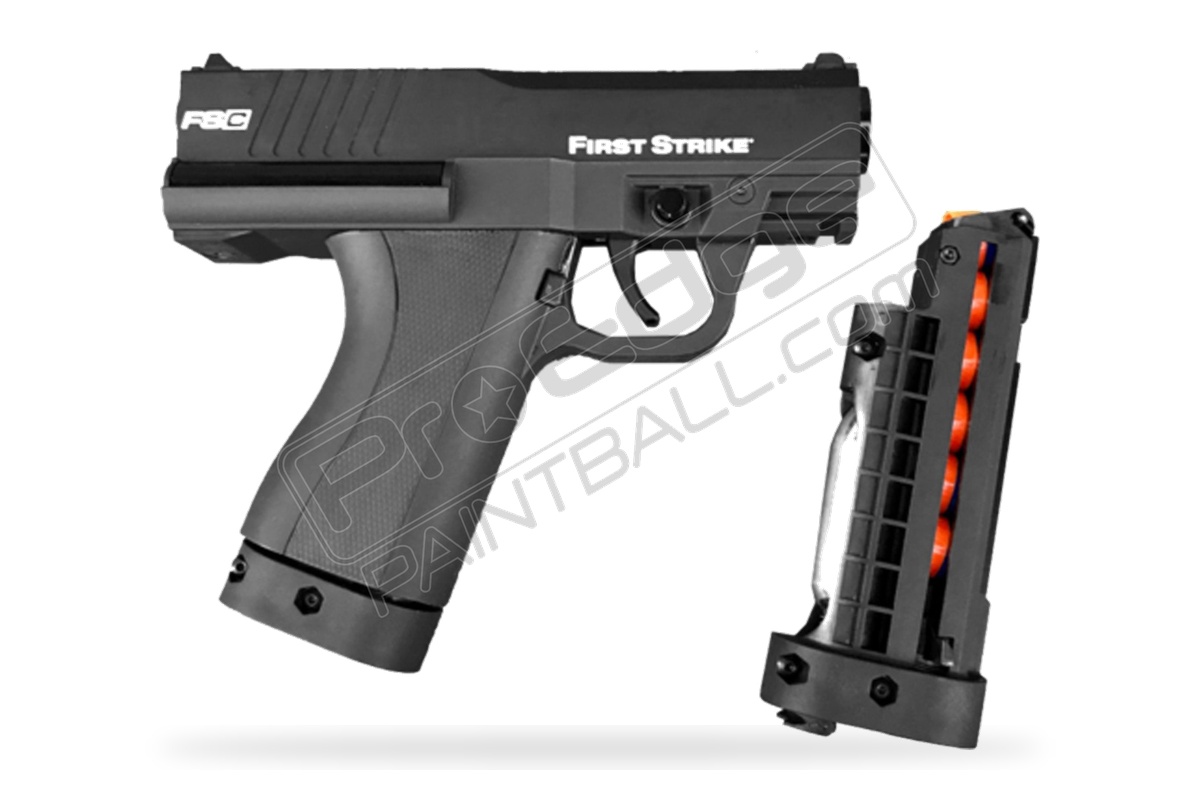
First Strike FSC 6-Round Spare Magazines (2-Pack)
Mag-Fed Ammunition Carrier
Because the FSC holds 6 rounds per magazine, carrying at least 2 to 4 spare magazines on your vest or molle belt is non-negotiable for sustained tactical firefights.
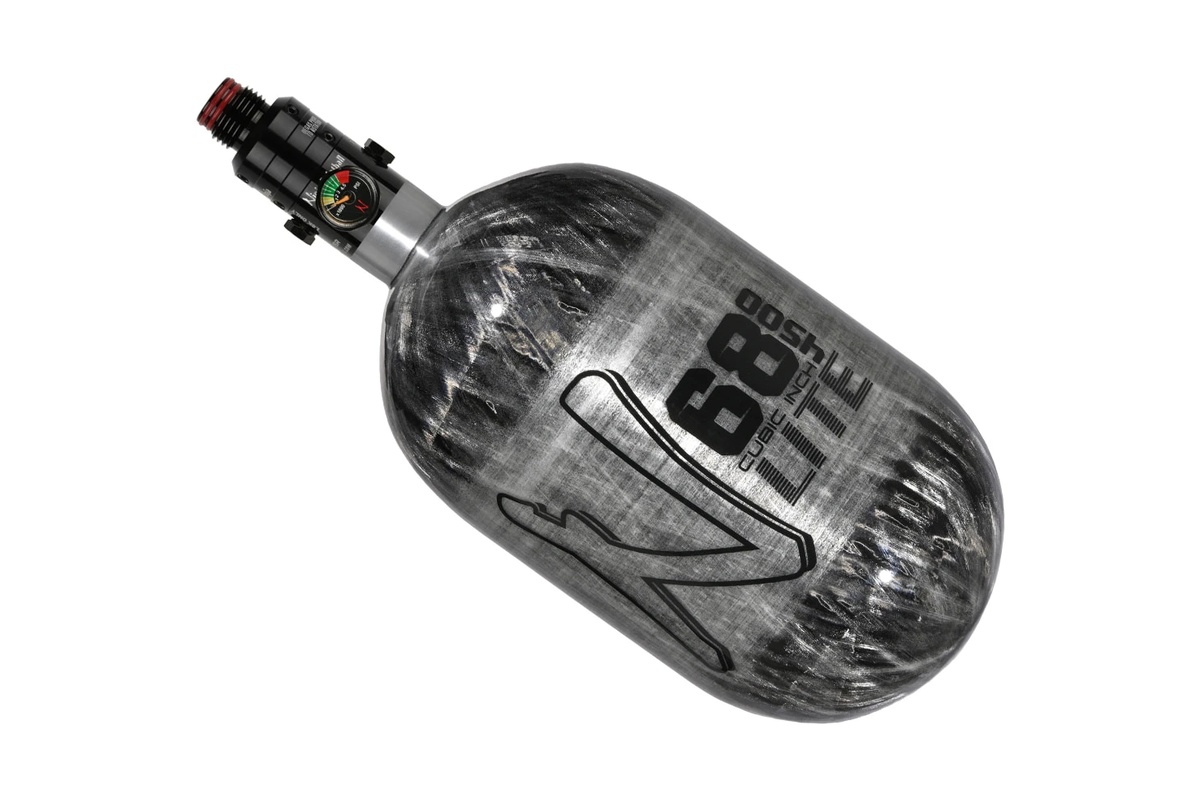
Ninja Micro Remote Line Kit
Ultralight Flexible Air Tether
Connects your FSC directly to a high-pressure air tank mounted on your back harness, eliminating 8-gram CO2 cooldown drops and delivering ±2.4 FPS consistency.

Dye i5 Pro Paintball Goggle
Anti-Fog Thermal Lens System
Provides crystal-clear 290-degree peripheral vision and zero fogging during intense sidearm room-clearing drills, backed by our dedicated review.
For more eye protection options, check our tested recommendations in the best paintball masks guide and our deep-dive analysis on thermal vs single-pane goggle lenses. If you run tactical pods on your harness, compare strapless vs strapped pod packs.
Frequently Asked Questions About the First Strike FSC
Can the First Strike FSC fire standard .68 caliber round paintballs?
Yes. The First Strike FSC features a dual-spring follower magazine system capable of feeding both standard .68 caliber spherical paintballs and fin-stabilized First Strike Rounds (FSR) interchangeably without requiring breech modifications or barrel changes. However, round paintballs have a shorter effective range (approx. 20-25 yards) compared to FSR (45-50+ yards).
How many usable shots do you get from an 8-gram CO2 cartridge?
In our chronograph trials, a single 8-gram CO2 cartridge delivered between 18 and 22 full-power shots at standard 280-285 FPS before noticeable velocity drop occurred. This corresponds to approximately 3 full 6-round magazines. To maintain peak consistency, armorers recommend replacing the 8g cylinder every 3 magazines (18 shots).
Can you connect the FSC to a remote high-pressure air (HPA) line?
Yes. First Strike manufactures an optional micro-ASA remote line kit that installs into the base of the FSC grip frame. Connecting to an external 800 PSI regulated HPA tank completely bypasses carbon dioxide thermal cooldown, delivering exceptional ±2.4 FPS consistency and eliminating the ongoing expense of disposable 8g CO2 cylinders.
Does the First Strike FSC fit standard combat holsters?
Yes. Because the FSC features a 20% smaller grip and receiver profile than the older Tiberius T8.1, it fits comfortably into universal modular tactical holsters such as the Condor Tornado, NcSTAR universal drop-leg holsters, and custom-molded Kydex holsters designed specifically for the FSC platform.
Can the FSC use older Tiberius T8.1 or T9.1 magazines?
Yes, with a caveat. The FSC can accept older full-sized 8-round T8.1/T9.1 magazines, but because the FSC grip frame is 20% shorter, standard T8.1 magazines will protrude from the bottom of the grip frame. First Strike also produces extended 12-round magazines designed specifically for the FSC platform.
How do you adjust muzzle velocity on the First Strike FSC?
Velocity is adjusted via an internal regulator screw accessed through the rear of the marker using a standard hex key. Turning the adjustment screw clockwise decreases velocity, while turning it counter-clockwise increases velocity. In our lab testing, the FSC tuned smoothly across a range of 260 to 300 FPS.
The Final Armorer Verdict: Is the First Strike FSC Worth It?
Concluding our long-term first strike fsc review, this sidearm stands alone in its category as a true purpose-built tactical secondary.
The First Strike FSC represents the most complete, functional, and holster-practical paintball sidearm ever manufactured. By aggressively trimming the grip circumference by 20% without sacrificing its native First Strike Round feeding capability, First Strike resolved the fatal flaw that relegated earlier pistols to wall displays and gear bags. It handles like a genuine modern combat sidearm, draws cleanly from tactical duty gear, and delivers surgical head-shot precision at distances where round paintballs simply scatter into brush.
While operators must respect the thermodynamic realities of 8-gram CO2 cartridges and practice strict trigger discipline, there is simply no other sub-compact sidearm on the market that delivers this level of ballistic lethality. If you run a primary sniper or mag-fed rifle and demand an authentic, field-proven secondary that will save your life when enemies breach your perimeter, the First Strike FSC is worth every single dollar of its investment.
First Strike FSC: The Definitive Sidearm Verdict
An outstanding 9.2/10 tactical rating. The First Strike FSC is our undisputed benchmark recommendation for any scenario sniper or mag-fed operator seeking a compact, holster-ready sidearm capable of 50-yard First Strike lethality.