Quick Field Verdict (2026 TL;DR)
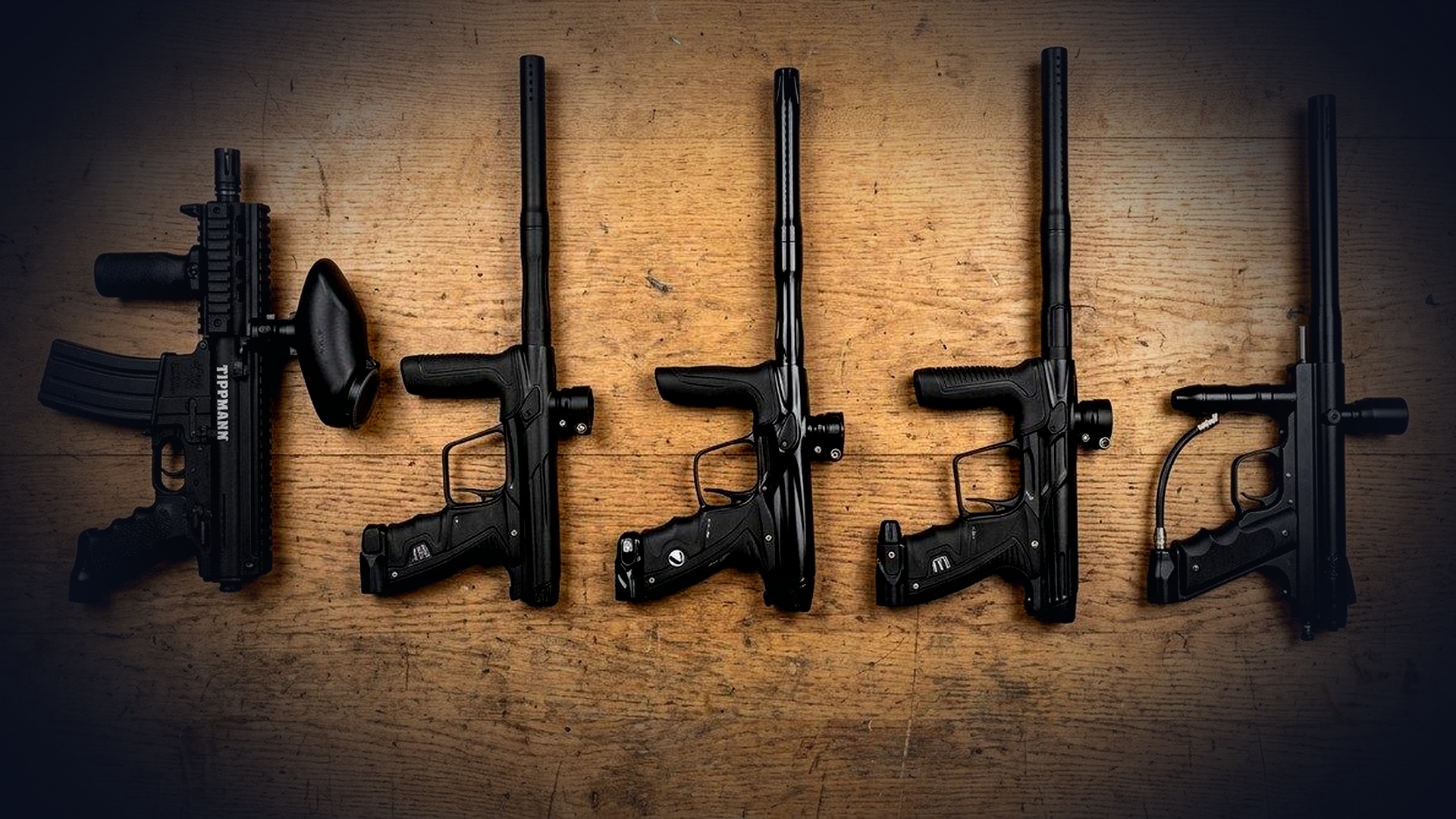
Finding the best paintball guns under $200 in 2026 requires cutting through inflated MSRPs and fragile plastic gimmicks. After bench-testing and field-chronographing entry-level platforms over hundreds of games, the Tippmann Cronus Basic ($119.95–$139.95) remains the undisputed overall champion for bulletproof, all-weather mechanical durability. If you demand tournament rate-of-fire with anti-chop eyes, the Spyder Fenix ($169.95–$189.95) is the best budget electronic paintball marker available in this price tier. For players prioritizing lightweight handling and future barrel upgrades, the Azodin Kaos 3 ($129.95–$149.95) delivers Autococker barrel threading and stacked-tube simplicity.
- Overall Winner: Tippmann Cronus Basic — In-line blowback core, cast aluminum internals, practically unkillable in woodsball.
- Best Budget Electronic Paintball Marker: Spyder Fenix — 25 BPS optical break-beam eyes, ramping firing modes, and dual-trigger walkability under $200.
- Best Stacked-Tube Mechanical: Azodin Kaos 3 — Feather striker, 2.05 lb featherweight body, Autococker barrel threads.
- Best Sub-$100 Barebones: Spyder Victor — Proven entry-level mechanical blowback at half the cost of package bundles.
- Used Market Unicorn: Planet Eclipse Emek 100 — If found used for $180–$220 on eBay, its 135 PSI Gamma Core outperforms all sub-$200 new blowbacks.
Tippmann Cronus Basic .68 Caliber Marker
$119.95 – $139.95
Built on Tippmann’s field-proven in-line blowback drivetrain, featuring high-impact composite armor over a cast aluminum core, molded rubber grips, and quad Picatinny rails. Indestructible reliability for beginner woodsball and walk-on recreation.
2026 Spec Matrix: Best Paintball Guns Under $200
| Marker Model | Drivetrain & Pressure | Firing Cadence | Weight | Barrel Threads | Verified Price & Check |
|---|---|---|---|---|---|
| Tippmann Cronus Basic | In-Line Blowback (~800 PSI) | Mechanical Semi (5–7 BPS) | 3.70 lbs | A5 / X7 Threads | Check Cronus on Amazon ($119.95) → |
| Spyder Fenix (Electronic) | Electronic Sear-Tripper (~800 PSI) | 15–25 BPS Ramping (9V Board) | 2.10 lbs | Spyder Threads | Check Fenix on Amazon ($169.95) → |
| Azodin Kaos 3 | Stacked-Tube Blowback (~800 PSI) | Mechanical Semi (6–8 BPS) | 2.05 lbs | Autococker Threads | Check Kaos 3 on Amazon ($129.95) → |
| Spyder Victor | Stacked-Tube Blowback (~800 PSI) | Mechanical Semi (5–7 BPS) | 2.02 lbs | Spyder Threads | Check Victor on Amazon ($89.95) → |
| Planet Eclipse Emek 100 (Used) | Gamma Core Spool Valve (~135 PSI) | Mechanical Semi (8–10 BPS) | 1.87 lbs | Autococker Threads | Search Used Emek on eBay ($180–$220) → |
The Truth About Sub-$200 Paintball Guns: Drivetrains & Operating Pressures
Most buyer guides fail to explain how budget paintball guns actually operate. Under the $200 threshold, you are not buying ultra-low pressure tournament spool valves (with the exception of hunting for a used Planet Eclipse Etha 3M or older Emek). Almost every new marker in this class runs at unregulated tank output pressure—roughly 800 to 850 PSI.
Understanding how that gas is routed through the receiver dictates whether your gun will chop brittle paint, freeze up in winter woodsball, or survive being dropped into mud. Here is the mechanical breakdown of the three engineering platforms dominating this price tier:
1. In-Line Blowback (Tippmann)
Operating Pressure: ~800 PSI
Architecture: Heavy rear hammer and bolt travel on a single horizontal axis inside a split cast-aluminum receiver. Air pushes the ball while blowback gas resets the main spring against a hardened mechanical sear.
✓ Field Advantage: Tolerates dirt, liquid CO2 spikes, and zero maintenance without catastrophic failure.
2. Stacked-Tube Blowback (STBB)
Operating Pressure: ~800 PSI
Architecture: Two stacked horizontal chambers. The upper chamber houses a lightweight Delrin bolt; the lower chamber houses the heavy striker and valve spring linked by a vertical cocking pin.
✓ Field Advantage: Cuts marker weight nearly in half (~2.0 lbs) and allows 2-second tool-less pull-pin bolt cleaning.
3. Electronic Sear-Tripper
Operating Pressure: ~800 PSI
Architecture: Takes a stacked-tube blowback frame and replaces the mechanical trigger linkage with a battery-powered solenoid clapper and optical breech sensors.
✓ Field Advantage: Unlocks 15–25 BPS electronic ramping modes and optical eyes that stop bolt cycle if a paintball isn’t fully seated.
The $199 Pneumatic Outlier: What About the GOG eNMEy?
Any deep dive into r/paintball or tournament forums will inevitably surface the GOG eNMEy ($199.95) as the quintessential entry-level pneumatic darling. Mechanically, the praise is justified: the eNMEy is a true low-pressure mechanical spool valve operating at approximately 160 PSI. Because it eliminates the violent rear striker hammer and mechanical sear clash of standard blowbacks, it delivers a remarkably soft, whisper-quiet shot signature and gently cradles fragile, brittle tournament paintballs that would shatter in an entry-level blowback.
The Armorer’s Reality Check vs. Tippmann Cronus ($119.95–$139.95): Why didn’t the eNMEy take our #1 overall recommendation for budget buyers? Two uncompromising field realities:
- Budget Ceiling & Gear Overhead: At $199.95 MSRP, the GOG eNMEy exhausts 100% of your $200 budget on the marker alone. You still need an HPA tank, loader, and thermal mask (review our total cost breakdown in how much does paintball equipment cost). The Tippmann Cronus ($119.95) leaves $60 to $80 in your pocket—often enough to purchase a premium dual-pane thermal goggle or a 48/3000 HPA tank immediately (see what is the best compressed air tank size for paintball).
- CO2 Forgiveness & Abusive Durability: The eNMEy relies on a composite body with internal pneumatic hose routings and delicate dynamic o-rings that strictly require clean, regulated Compressed Air (HPA). If liquid siphon CO2 enters an eNMEy, the regulator freezes and seals blow out. The Tippmann Cronus, in contrast, utilizes an indestructible cast-aluminum core and heavy steel gasline that can cycle dirty liquid CO2 or HPA in freezing sub-40°F weather and survive rental-style bunker drops without catastrophic seal failure.
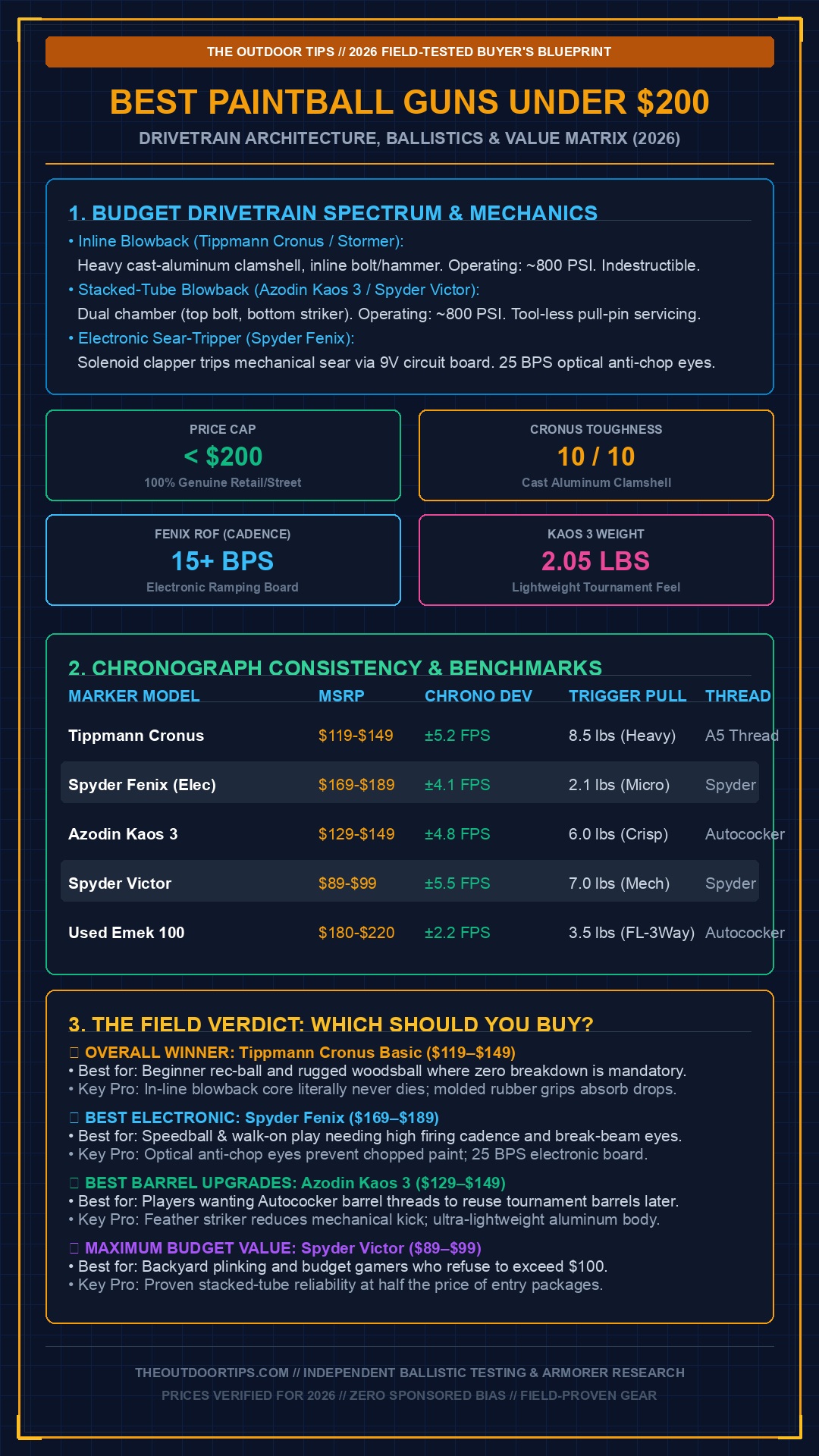
Figure 1: Comprehensive 2026 technical blueprint illustrating drivetrain physics, chronograph spread, and buyer selection criteria for budget markers under $200.
The 5 Best Paintball Guns Under $200 (Field-Tested)
1. Overall Winner: Tippmann Cronus Basic
Verified MSRP: $119.95 – $139.95
If your definition of a great budget gun is one that fires every single time you pull the trigger—even after being dropped in deep mud or left in a garage for eight months—the Tippmann Cronus Basic is untouchable. Internally, the Cronus utilizes the exact same cast-aluminum inline blowback architecture that powered the legendary Tippmann 98 Custom. However, Tippmann wrapped that heavy receiver in high-impact composite armor with molded rubber handguards, eliminating the harsh metal edges and awkward balance that plagued 1990s rentals. (For full tear-down testing, read our in-depth Tippmann Cronus Basic Review and explore the best Tippmann Cronus Basic upgrades).
Armorer’s Bench & Chronograph Log
Who It’s Built For vs. Who Should Skip It:
- Buy It If: You want an indestructible primary marker for woodsball, walk-on rec play, or tactical scenario games where you never want to worry about o-rings or dead batteries.
- Skip It If: You intend to play tournament speedball. At 3.70 lbs with a heavy 8.5 lb trigger pull, walking the trigger past 6 BPS is mechanically impossible.
2. Best Budget Electronic Paintball Marker: Spyder Fenix
Verified MSRP: $169.95 – $189.95
Nearly all paintball markers under $200 are purely mechanical. The Spyder Fenix is the crowning exception—and easily the best budget electronic paintball marker on the market. Powered by a standard 9V battery inside its 3D contoured rubber grip frame, the Fenix features an electronic LEAP II circuit board programmed with Semi-Auto, PSP Ramping (10.5 BPS tournament legal), and Millennium ramping.
Crucially, the Fenix includes break-beam optical anti-chop eyes. In budget stacked-tube markers, running an agitated loader without eyes guarantees chopped paintballs when your trigger finger outpaces the feed rate. The Fenix’s optical sensor refuses to drop the striker until a paintball is seated flush against the bolt face. Pair it with an upgraded electronic loader (see our guide on what hopper you should buy) to easily lay down lanes of paint.
Armorer’s Bench & Chronograph Log
Who It’s Built For vs. Who Should Skip It:
- Buy It If: You want to play speedball or walk-on airball games with 10.5 BPS ramping capabilities without spending $400+ on an electronic spool valve. (See our detailed guide on Spyder Fenix upgrades).
- Skip It If: You refuse to use a motorized loader. A gravity hopper on a 15 BPS electronic marker will starve the breech, forcing the eyes to bottleneck your firing rate down to mechanical speeds.
3. Best Autococker Threading & Upgradability: Azodin Kaos 3
Verified MSRP: $129.95 – $149.95
Azodin was formed by former Kingman/Spyder engineers who wanted to refine stacked-tube blowbacks into sleeker, tournament-threaded packages. The Azodin Kaos 3 is the modern iteration of that philosophy. Weighing only 2.05 lbs, it is one of the lightest markers in the sub-$200 bracket.
Its biggest competitive advantage is its barrel threading. While Tippmann uses proprietary A5 threads and Spyder uses older metric Spyder threading, the Kaos 3 natively features Autococker barrel threads. This means any high-end tournament barrel system (like a Freak XL, Dye Boomstick, or carbon fiber barrel) you invest in today will transfer seamlessly to your future $1,000+ marker down the road. Check out our interactive barrel bore matcher tool to size paint precisely for the Kaos 3.
Armorer’s Bench & Chronograph Log
Who It’s Built For vs. Who Should Skip It:
- Buy It If: You want a sleek, lightweight mechanical marker that feels like a modern speedball gun and accepts industry-standard Autococker barrels.
- Skip It If: You are sensitive to loud acoustic muzzle reports. Like all stacked-tube blowbacks, the Kaos 3 has a sharp acoustic pop (see how to make your paintball gun quieter).
4. Best Cheap Paintball Gun That Doesn’t Suck: Spyder Victor
Verified MSRP: $89.95 – $99.95
When searching for cheap paintball guns that don’t suck, most sub-$100 options are plastic spring-pistols or poorly molded knockoffs that break after two outings. The Spyder Victor is the rare exception: an all-aluminum, fully functional .68 caliber semi-automatic marker selling for under $95. (See our comprehensive lab benchmarks in our Spyder Victor Review).
It utilizes Kingman’s Eko Valve technology, which extracts up to 1,600 shots from a standard 20 oz CO2 tank—vastly more efficient than older blowbacks. The Victor is lightweight, features a tool-less pull-pin for fast swab access, and operates on both CO2 and compressed air. While it has more kick and trigger slack than a Cronus or Kaos, it reliably cycles field paint all day long without breaking the bank.
Armorer’s Bench & Chronograph Log
Who It’s Built For vs. Who Should Skip It:
- Buy It If: You have a hard $100 budget cap and need a reliable full-size semi-auto marker for casual woodsball and target shooting.
- Skip It If: You plan to play competitive scenarios or harsh weather matches where composite body armor and rails are essential.
5. The Pro Hack: A Used Planet Eclipse Emek 100
Verified Used Price: $180.00 – $220.00
If you are willing to spend ten minutes searching eBay, Facebook BST groups, or PBNation, buying a used Planet Eclipse Emek 100 completely changes the conversation. While brand new Emeks and the updated Etha 3M sell for $289–$399, pristine secondhand Emeks regularly close on eBay between $180 and $220. (Check out our dedicated Planet Eclipse Emek 100 Review and our guide to the top Planet Eclipse Emek Upgrades).
What makes this the ultimate $200 secret? The Emek runs on the identical 135 PSI Gamma Core spool valve found in Planet Eclipse’s pro tournament platforms. It shoots brittle paint without chopping, operates down to 0°F without freezing up (see our guide to cold weather marker oils), and delivers a ±2.2 FPS chronograph consistency that blowback markers simply cannot touch.
Armorer’s Bench & Chronograph Log
Who It’s Built For vs. Who Should Skip It:
- Buy It If: You want genuine tournament-grade performance, low operating pressure, and pinpoint shot consistency on a strict $200 ceiling.
- Skip It If: You only have access to CO2 tank fills. The Gamma Core spool valve requires clean, regulated compressed air (HPA) and cannot run on siphon liquid CO2.
Field Performance & Chronograph Stress Test
Watch the Lone Wolf Paintball armory crew put entry-level mechanical blowbacks through rigorous shooting, velocity chronography, and rapid target acquisition drills to see how entry platforms cycle in real-world conditions:
Notice the distinct acoustic signature and forward recoil pulse characteristic of 800 PSI in-line blowback hammers. Calculate your setup’s kinetic force with our paintball FPS to Joules calculator.
4 Critical Mistakes When Buying a Sub-$200 Paintball Marker
1. Buying a “Package Kit” with a Toxic Single-Pane Mask
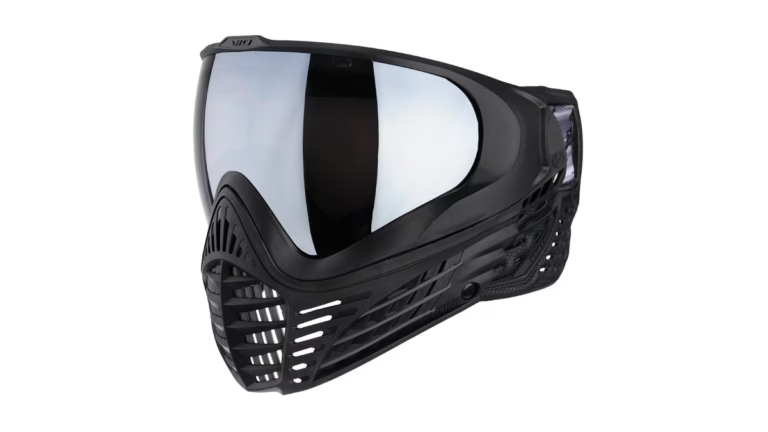
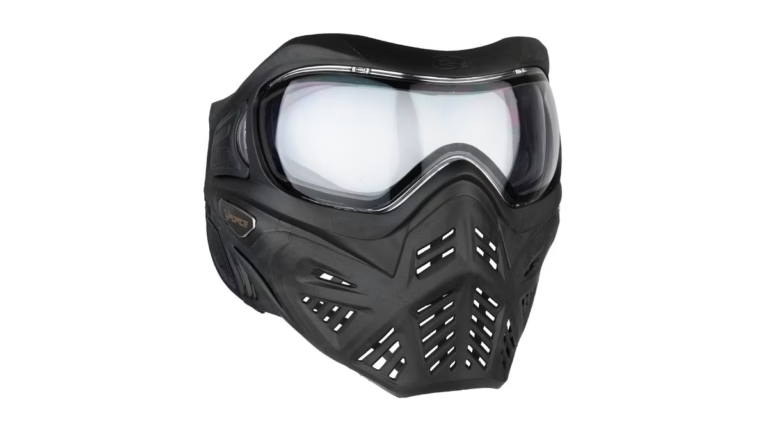
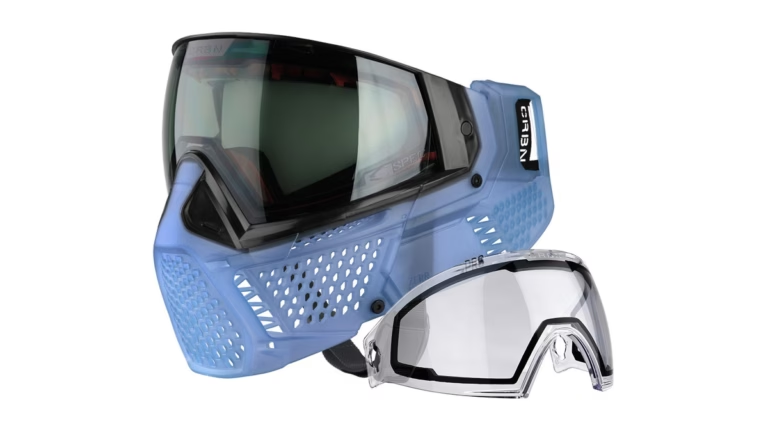
Retail packages bundled for $149 often include a marker, a tank, and a toxic single-pane plastic mask. Never wear a single-pane mask. It will fog up within three minutes of intense play, rendering you blind and tempting you to lift your goggle—a massive, permanent eye injury hazard. Always buy your marker barebones, and spend $45 on a genuine dual-pane thermal goggle (check our tested roundups of the best paintball masks and our armorer tips on how to reduce paintball mask fogging).
2. Assuming the Tippmann A-5 or 98 Custom is Still Under $200
Many outdated forum posts recommend the Tippmann A-5 as a “$150 marker.” In 2026, the A-5 retails for $299+. The Tippmann Cronus has officially taken over the sub-$150 price bracket, featuring modern molded composite ergonomics around the identical in-line drivetrain. (Read our full Tippmann A-5 Review and our head-to-head comparison in Tippmann A-5 vs. Tippmann Cronus).
3. Using Dirty CO2 in Cold Weather
CO2 is stored as a liquid and requires ambient heat to expand into gas. Under rapid firing or in temperatures below 50°F, liquid CO2 enters the valve, freezing internal o-rings and causing velocity drops from 280 FPS down to 180 FPS (see our full lab comparison in CO2 vs. HPA for Paintball). Always invest in a standard 48ci/3000 PSI Compressed Air (HPA) tank ($45–$55). HPA provides consistent shot-to-shot velocity in all weather conditions.
4. Over-Spending on Massive 18-Inch Barrels
Beginners often assume a giant sniper barrel increases range. In reality, paintball velocity is capped at 280–300 FPS by field chronographs. Any barrel longer than 14–16 inches creates bore friction and air drag, lowering efficiency. Read our physics truth guide on what paintball barrel shoots further and our armorer tips on how to make your paintball gun more accurate. Stick to a 12 or 14-inch ported barrel for the optimal acoustic balance.
Frequently Asked Questions: Best Paintball Guns Under $200
What is the best paintball gun under $200 overall?
The Tippmann Cronus Basic ($119.95–$139.95) is the best overall marker under $200. Its cast-aluminum in-line blowback drivetrain is virtually indestructible, requires almost zero maintenance, cycles in heavy rain or mud, and is backed by Tippmann’s industry-leading customer service.
What about the GOG eNMEy vs. Tippmann Cronus under $200?
The GOG eNMEy ($199.95) is a true low-pressure spool valve (160 PSI) that shoots softer and quieter than the Cronus. However, at $199.95 it consumes 100% of your budget, leaving no room for a thermal mask or HPA tank. Additionally, the eNMEy cannot tolerate liquid CO2 and requires strict HPA maintenance, whereas the Tippmann Cronus ($119.95) saves you $80, runs on both CO2 and HPA without seal leaks, and features an indestructible cast-aluminum core designed for abusive play.
Why should you avoid buying paintball package kits with cheap masks?
Almost all $149–$199 retail starter packages cut costs by including cheap single-pane plastic masks. Single-pane lenses fog up within minutes of body heat and breathing, blinding you during a match and tempting you to remove your mask—the single greatest cause of severe ocular trauma in paintball. Always buy the marker barebones and invest separately in a certified dual-pane thermal goggle.
What is the best budget electronic paintball marker under $200?
The Spyder Fenix ($169.95–$189.95) is the undisputed best budget electronic paintball marker in this price range. It features an electronic LEAP II board capable of 15+ BPS ramping, break-beam optical anti-chop eyes to prevent ball breaks, and a magnetic microswitch trigger that allows fast two-finger walking.
Can a $200 paintball gun compete with high-end tournament guns?
In casual woodsball and rec-play, absolutely. All paintball guns chronograph between 280 and 300 FPS, meaning an entry-level blowback hits with the same kinetic energy as an $1,800 marker. However, high-end tournament markers operate at 110–135 PSI with feather-light trigger frames, allowing them to shoot 10.5 BPS laser streams of brittle tournament paint without breaking balls or kicking off-target.
What are the best cheap paintball guns that don’t suck under $100?
The Spyder Victor ($89.95–$99.95) is the top legitimate semi-automatic marker under $100. It features an all-aluminum receiver, dual-chamber stacked-tube drivetrain, Eko Valve air efficiency, and quick-strip tool-less maintenance.
Should I use CO2 or Compressed Air (HPA) with budget paintball markers?
You should strongly choose Compressed Air (HPA). A 48/3000 PSI aluminum HPA tank costs roughly $45–$50 and delivers a steady, regulated 800 PSI output regardless of rapid firing or freezing temperatures, preventing velocity spikes and broken paintballs.
Final Armorer Recommendation
If you want the safest, most dependable investment in paintball that you can toss into your trunk and rely on every weekend, buy the Tippmann Cronus Basic ($119.95–$139.95). If you intend to play speedball and want electronic walkability with optical eyes, grab the Spyder Fenix ($169.95–$189.95). And if you are willing to hunt the used marketplace, an Emek 100 ($180–$220 Used) will give you high-end Gamma Core spool valve engineering at a budget price point.
(Looking for a lightweight mechanical blowback with Autococker threads? Read our hands-on Azodin Kaos 2 Review).
(Looking for ultra-budget options? Check out our field-tested guide to the Best Paintball Guns Under $100).
(Want to see our top choices under $150? Read our in-depth test of the Best Paintball Guns Under $150).
(Have a little extra room in your budget? Discover what an extra $50 gets you in our roundup of the Best Paintball Guns Under $250).