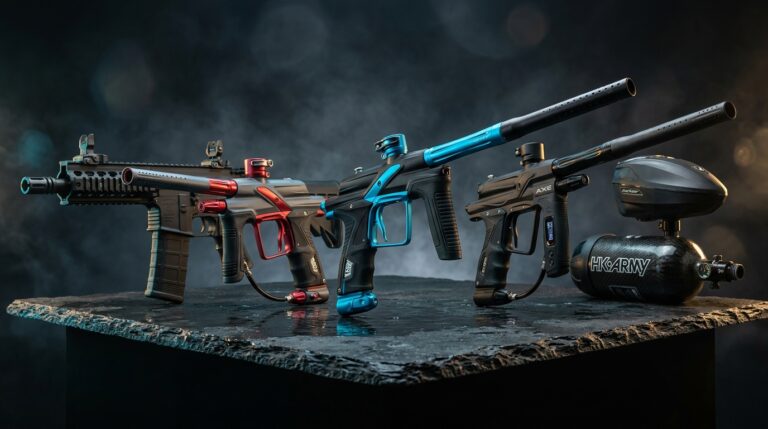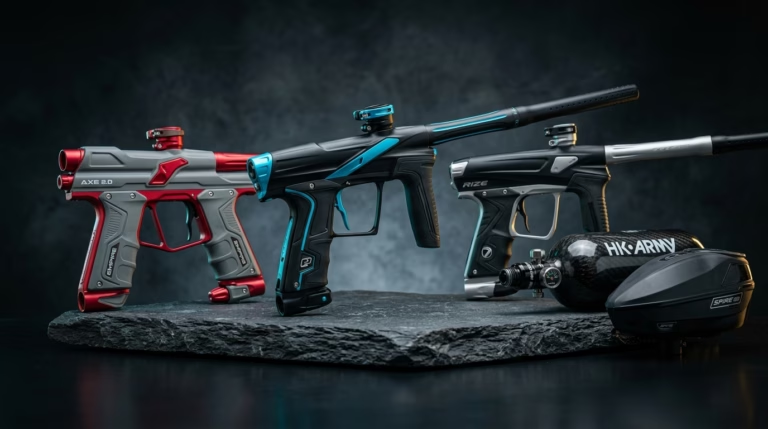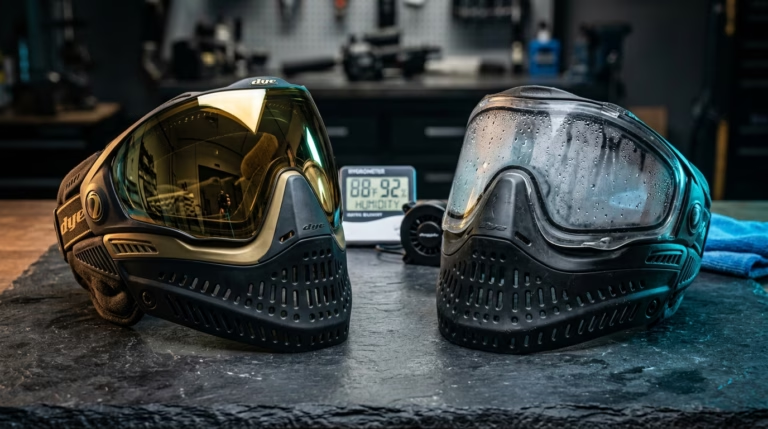
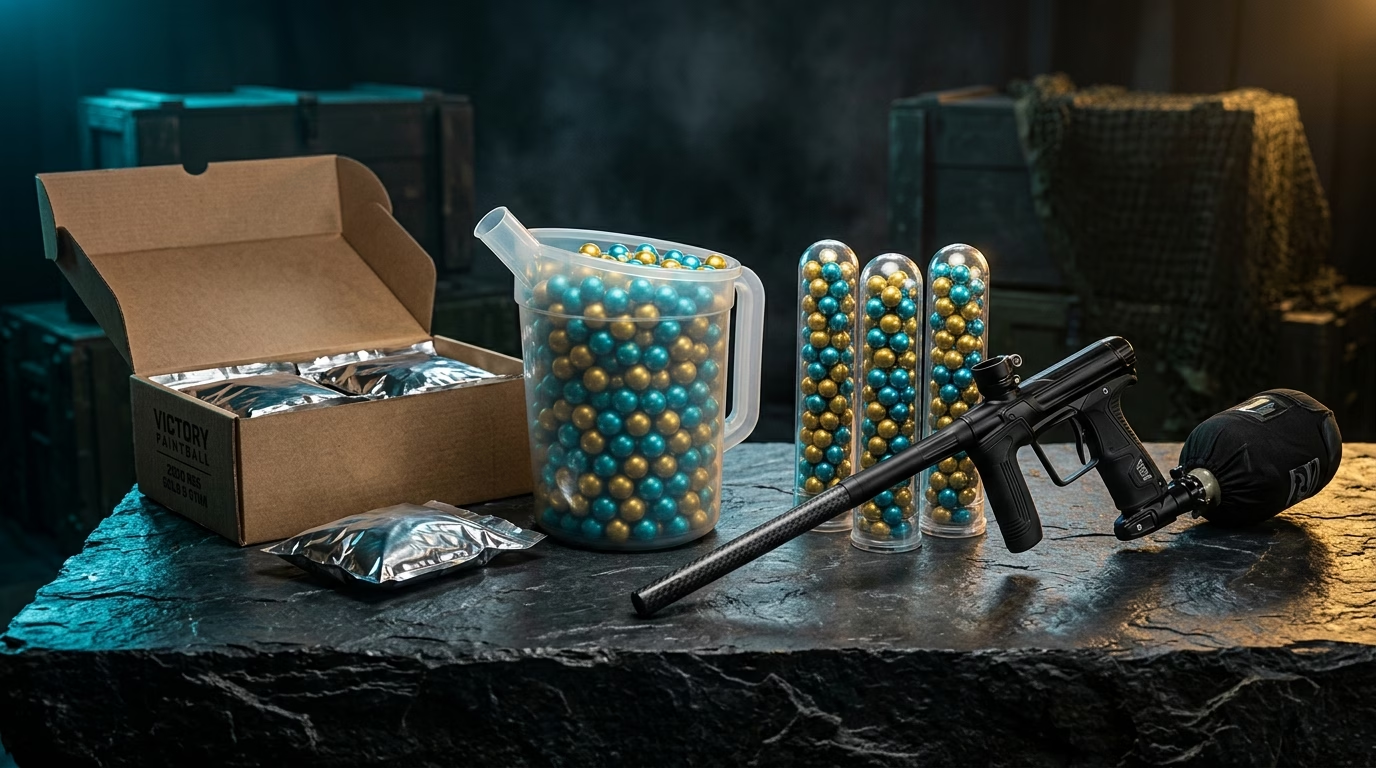
Our interactive paintball paint cost calculator models your exact weekend ammo consumption, 2,000-round case count, 140-round pod fills, and cost per 10-minute game based on your marker drivetrain and session length. In 2026, a standard 2,000-round case of .68 caliber paintballs costs $35–$45 for entry field grade, $45–$55 for mid-grade scenario paint, and $55–$65+ for pro tournament brittle shell (plus $20–$35 for field entry and all-day 4500 PSI HPA air).
- Average Full-Day Weekend Budget: Expect to spend $45–$65 total for MagFed tactical play (~500–900 rounds), $70–$95 total for mechanical semi-auto rec-ball (1 full case / 2,000 rounds), and $125–$185+ total for 10.5 BPS electronic speedball scrimmages (1.5 to 2.5 cases).
- The #1 Pit Money-Saver: Switching an electronic marker from 10.5 BPS ramping to capped semi-auto during rec-ball walk-on sessions cuts your ammo burn rate by 38% to 45%—saving $32 to $54 per day without sacrificing lane accuracy.
- Stop Spilling $0.03 Paintballs in the Dirt: Pouring loose 500-round bags directly into pods wastes 8%–12% of your case on the staging table. An Exalt 1,000-Round Paintball Hauler Caddy ($29.95 MSRP) pays for itself in three weekends.
Paintball Paint Cost & Weekend Field Expense Calculator
1. 2026 Case Pricing Breakdown Across Major US Paint Brands (Valken, GI Sportz, Empire & Pro-Shar)
Not all .68 caliber gelatin shells are engineered equally. Whether you are feeding a rugged entry-level blowback from our best paintball guns under $200 guide or running ultra-brittle 5-star tournament spheres through a low-pressure Planet Eclipse CS3 Pro vs. Dye MXR spool engine, matching your paint grade to your marker’s operating pressure and barrel bore insert size determines both your accuracy and your weekend wallet burn.
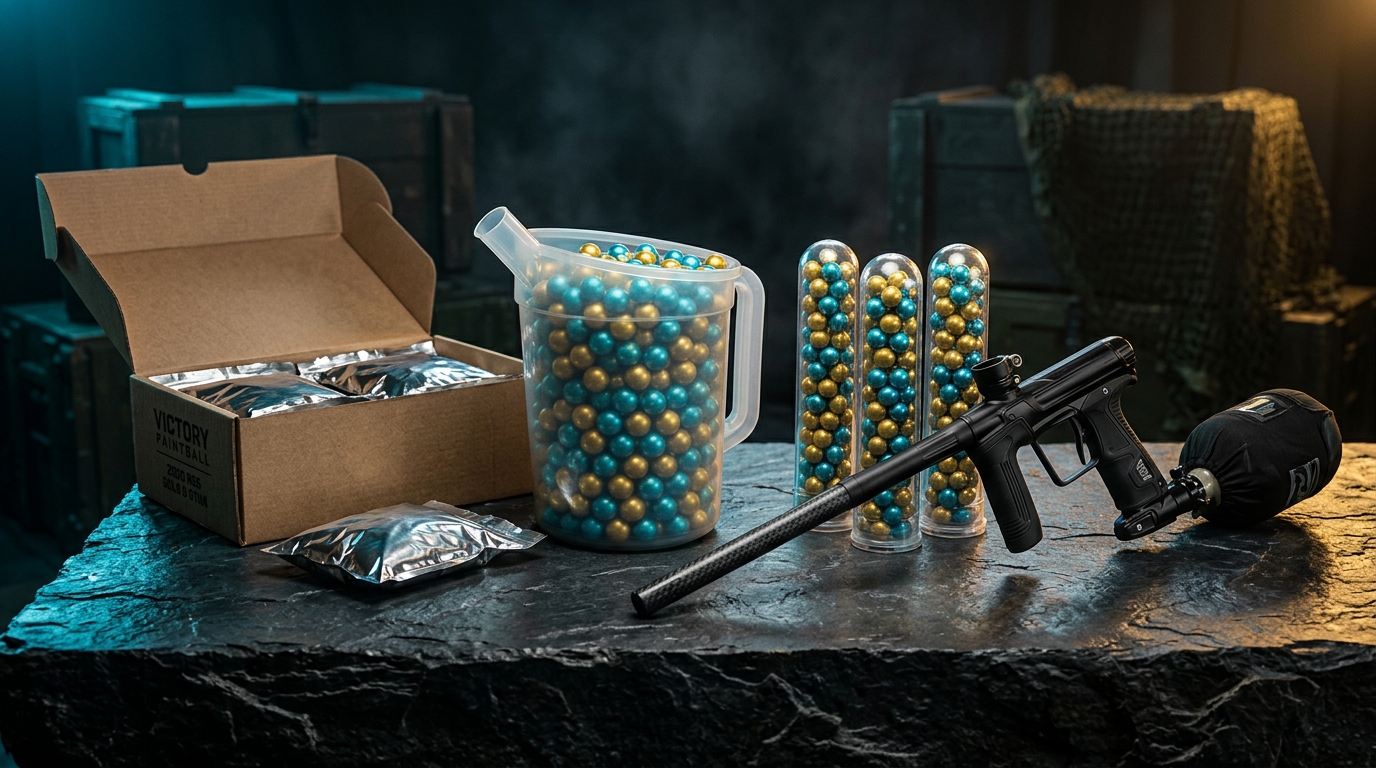
Below is our verified 2026 North American pricing and ballistics specification matrix across the four dominant paintball manufacturers:
| Paint Brand & Tier (2026) | 2,000-Rd Case Price | Cost Per Ball | Shell Brittle Rating | Rec. Bolt Pressure | Best Marker & Field Application |
|---|---|---|---|---|---|
| Valken Infinity (Rec / Field Grade) | $34.95 – $39.95 | 1.75¢ – 2.00¢ | Thick / Resilient (2/5) | 135 – 800 PSI | Tippmann blowbacks, rental fleets, thick woodsball brush |
| GI Sportz Field / 1-Star & Custom | $36.95 – $42.95 | 1.85¢ – 2.15¢ | Medium-Thick (2.5/5) | 120 – 800 PSI | Walk-on rec play, mechanical markers (EMEK 100 / Cronus) |
| Empire Marballizer (Mid-Tier Classic) | $44.95 – $52.95 | 2.25¢ – 2.65¢ | Balanced Swirl (3.5/5) | 105 – 200 PSI | Scenario big games, Etha 3M, Mini GS, Rize CZR |
| Pro-Shar Skirmish / Mid-Grade | $42.95 – $48.95 | 2.15¢ – 2.45¢ | All-Weather Mid (3/5) | 110 – 250 PSI | Team speedball drills, cold/damp weather woodsball |
| GI Sportz 3-Star / Valken Graffiti | $48.95 – $54.95 | 2.45¢ – 2.75¢ | Crisp Semi-Brittle (4/5) | 100 – 160 PSI | Divisional speedball practice, high-end magfed (EMF200) |
| Pro-Shar Tournament / Win | $54.95 – $62.95 | 2.75¢ – 3.15¢ | Ultra-Brittle (4.8/5) | 95 – 135 PSI | NXL / WXL tournament events, soft spool valves only |
| GI Sportz 5-Star / Empire Evil | $59.95 – $68.95 | 3.00¢ – 3.45¢ | Glass-Fragile Pro (5/5) | 95 – 120 PSI | Pro NXL turf matches (Luxe Idol, CS3 Pro, MacDev GTX) |
New players frequently make the expensive mistake of buying a $60–$65 case of Empire Evil or GI 5-Star tournament paint to use inside a mechanical blowback marker (like a Tippmann Cronus, A-5, or Spyder Victor). Because inline blowbacks slam a heavy steel hammer forward using an unregulated 800 PSI valve pulse, fragile tournament shells will detonate inside the breech on every third trigger pull—coating your barrel in gelatin soup. Unless you shoot a low-pressure spool valve operating at 100–135 PSI (like the Gamma Core, OP Core, or ARC+ engine), stick to $35–$45 Valken Infinity, GI 1-Star, or Empire Marballizer.
2. BYOP (Bring Your Own Paint) vs. Field-Paint-Only (FPO) Economics: Why Fields Charge More & How to Save
If you can buy a 2,000-round case of Valken Infinity online for $36.95, why do so many commercial US paintball parks enforce strict Field-Paint-Only (FPO) policies and charge $60 to $80 per case at the registration counter? Understanding park unit economics unlocks the smartest ways to slash your monthly paint bill without breaking field rules:
Field-Paint-Only (FPO) Economics
A $25 walk-on entry and all-day HPA air fee barely covers commercial liability insurance, referee wages, turf upkeep, and 3-phase electricity for 4500 PSI air compressors (which you can model in our Paintball Tank Shot Calculator). Paint margin is what keeps local fields open.
Additionally, FPO prevents walk-on players from bringing 3-year-old rock-hard garage paintballs that fail ASTM F1776 goggle impact margins and leave permanent oil stains on inflatable NXL air bunkers.
BYOP (Bring Your Own Paint) & Corkage
Parks that allow BYOP (Bring Your Own Paint) typically charge a slightly higher admission/corkage fee ($30–$40 entry + air instead of $20) or host designated BYOP Customer Appreciation Weekends once a month.
If you shoot 2+ cases per day (such as electronic speedballers practicing at 10.5 BPS NXL ramping), paying a $15 BYOP corkage fee to shoot two $40 wholesale cases ($95 total) beats buying two $75 FPO cases ($150 total) by $55 per day!
5 Field-Tested Ways to Cut Your Weekend Paint Bill by 40%
- 1. Split a Team Skid or 5-Case Bundle: Even at strict FPO speedball fields, pro shops almost always offer a Team Practice Tier ($42–$48/case when buying 4 or more cases together). Pool your cash with three teammates at registration instead of buying single cases individually.
- 2. Never Buy Single 500-Round Bags at the Counter: Fields often charge $22–$25 for a single 500-round bag ($88–$100 per case rate!), whereas a full 2,000-round case costs $60. Always buy the full case and split leftover bags with a buddy or seal them in an airtight bag for next weekend.
- 3. Run a Mechanical Frame for Morning Walk-On Games: Swap your electronic marker for a mechanical spool like the Planet Eclipse Etha 3M during recreational walk-on rotations. You will shoot 160 balls per game instead of 450, saving $35+ every Saturday.
- 4. Annual Field Membership Passes: If you play more than 6 times a year at your home park, a $99–$149 annual membership usually waives your $25 entry/air fee AND knocks $10–$15 off every FPO case of paint.
- 5. Eliminate Pod Spillage with a Ball Hauler: Every time you miss a pod mouth while pouring from a torn plastic bag, 15 to 25 paintballs hit the dirt ($0.50 to $0.75 wasted per reload). Over 15 pods in a day, that is $8–$10 of paint trampled into the mud.
3. Pro Ammo Storage Protocols: Preventing Thermal Dimpling & Humidity Swelling
A paintball shell is made from pharmaceutical-grade bovine or porcine hydrophilic gelatin encapsulating a non-toxic polyethylene glycol (PEG) and food-dye fill. Because gelatin is hygroscopic (absorbs moisture from humid air) and thermally sensitive, improper storage in a hot car trunk or damp garage will ruin a $60 case of paint in less than 4 hours—causing wild corkscrew trajectories and barrel breaks.
Thermal Control & Cooler Staging
Above 85°F (29°C), gelatin shells soften and sweat oil; below 45°F (7°C), the shell turns brittle as glass. During summer tournaments in Texas, Florida, or California, store sealed bags inside a dry insulated thermal cooler in the shade—NEVER place paint directly on ice (condensation water droplets will weld the balls together in 10 minutes).
Preventing Humidity Bore Swelling
When you slice open a 500-round factory foil bag on a humid 80% RH morning, the paintballs immediately begin absorbing atmospheric moisture—swelling from .683" to .689" within 90 minutes! Pour opened bags immediately into an airtight Exalt Pod Hauler Caddy with the lid caps sealed, and drop two food-safe silica desiccant packets into partially used storage bags.
The Gravity Box-Flip Schedule
If you store leftover cases at home between weekends, gravity pulls the liquid PEG fill downward while the weight of the top balls presses against the bottom layer, creating flat gravity dimples. Flip your cardboard paint boxes upside down once every 7 days on a flat climate-controlled closet shelf (never directly on a concrete garage floor).
Afternoon Barrel Insert Sizing
Because paintballs swell slightly as afternoon temperatures and humidity rise, a .684 barrel insert that fit perfectly at 8:30 AM can pinch and rupture swollen balls at 1:30 PM. Always re-check your paint-to-barrel fit after lunch and step up one insert size (e.g., .684 to .687) to prevent costly mid-game barrel breaks.
4. Top Field-Tested Ammo Gear: Pod Caddies, Lock Pods & Bulk Paintballs
Protect every dollar of your weekend paint budget with these three essential pieces of pit staging equipment:
1. Exalt 1,000-Round Paintball Hauler & Pod Loader Caddy
The Exalt Paintball Hauler is the single highest-ROI accessory in paintball. Holding 1,000 paintballs (half a case) inside a reinforced, impact-resistant polymer jug with dual tethered weather caps, its oversized funnel mouth lets you dump two 500-round bags in seconds, while the precision pour spout fills 140-round pods in 2 seconds with zero dropped paintballs and zero humidity exposure.
- Eliminates 100–150 spilled paintballs per case ($3–$5 saved every trip)
- Sealed rubberized caps block rain, humidity swelling, and direct sun
- Molded volume markings show remaining pod fills at a glance
- Takes up rigid space inside smaller gear bags when empty
2. Valken Infinity & Graffiti .68 Caliber Paintballs (2,000-Rd Case)
For BYOP weekends, backyard chronograph testing, and woodsball scenario games, Valken Infinity ($39.95/case) and mid-tier Valken Graffiti ($52.95/case) deliver the most reliable roundness-per-dollar in North America. Infinity features a durable shell that survives high-pressure Tippmann blowbacks and heavy woodland brush without barrel breaks, while Graffiti steps up to a tournament-grade brittle shell ideal for MagFed and low-pressure spool valves.
- Four individually foil-sealed 500-round bags preserve freshness
- Consistent sphere roundness minimizes corkscrew flyers
- Zero-stain biodegradable fill washes easily out of jerseys
- Check local field rules first to confirm BYOP paint is permitted
3. HK Army High-Capacity 6-Pack Pods & Exalt Thermal Paint Bag
Cheap $2 flip-top pods pop open when you dive into the snake or sprint through woodland brush—dumping 140 paintballs ($4.20 of tournament paint) onto the turf in a single slide. Upgrading to a 6-pack of HK Army Skull / MaxLock Pods ($24.95 MSRP) and storing your un-opened paint bags inside an Exalt Insulated Thermal Bag ($39.95 MSRP) prevents accidental pod dumps and heat-induced shell dimpling.
- Contoured thumb-tab lids resist accidental pop-opens in strapless packs
- Flared interior neck accelerates speed-feed reloads
- Thermal storage bag keeps a full 2,000-round case below 72°F all day
- Mark your pods with tape so teammates do not accidentally walk off with them
5. Frequently Asked Questions (Paintball Case Prices & Weekend Budgeting)
How much does a case of 2,000 paintballs cost in 2026?
In 2026, a standard 2,000-round case of .68 caliber paintballs (packaged as four 500-round bags) costs between $35 and $45 for entry-level recreational paint (such as Valken Infinity or GI Sportz 1-Star), $45 to $55 for mid-grade scenario paint (such as Empire Marballizer or GI 3-Star), and $55 to $65+ for ultra-brittle tournament grade paint (such as GI 5-Star, Empire Evil, or Pro-Shar Tournament). At Field-Paint-Only (FPO) parks, retail park markups typically put single-case prices at $60–$85.
How many paintballs do I need for a full day of recreational play?
For a standard 4-to-6 hour full day of recreational woodsball or rec-ball (roughly 10 to 12 ten-minute games), a single player shooting a mechanical semi-automatic marker (like a Planet Eclipse EMEK 100, Etha 3M, or Tippmann Cronus) typically fires 1,500 to 2,000 paintballs—making one 2,000-round case the ideal full-day allocation. MagFed players only need 500 to 1,000 rounds (1 to 2 bags), whereas electronic speedballers ramping at 10.5 BPS burn 3,000 to 4,500 rounds (1.5 to 2+ cases).
How many 140-round pods fit inside one case of paintballs?
A standard 2,000-round case of paintballs fills 14.3 standard 140-round pods (2,000 ÷ 140 = 14.28 pods), or 10 full 200-round electronic hoppers (such as a Virtue Spire V or Dye LTR). Each 500-round bag inside the case fills exactly one 200-round hopper plus two 140-round pods with 20 balls to spare.
Why do paintball fields require Field Paint Only (FPO) and charge more per case?
Most commercial US paintball parks enforce Field-Paint-Only (FPO) rules for two reasons: safety liability and park economics. FPO guarantees that players are not shooting old, degraded, or thick-shelled monster balls that exceed safe goggle impact thresholds (verify your velocity energy using our Paintball FPS & Joule Kinetic Energy Calculator), while paint sales subsidize low $20–$25 entry and 4500 PSI air compressor costs. Looking to build a complete marker setup within your budget? Try our interactive Paintball Gun Finder Quiz & Custom Loadout Builder.