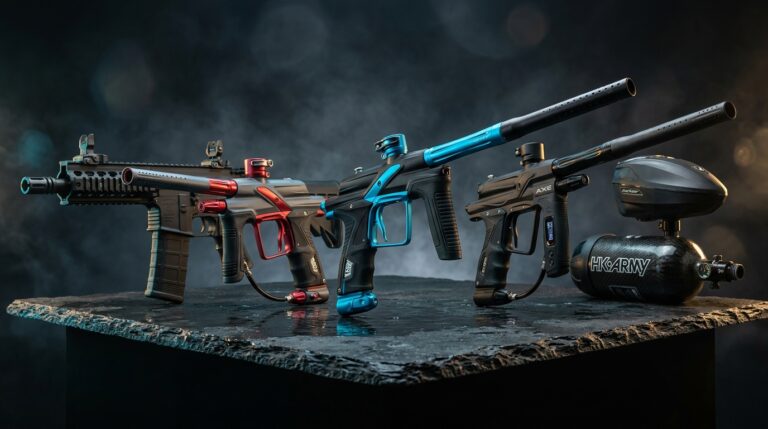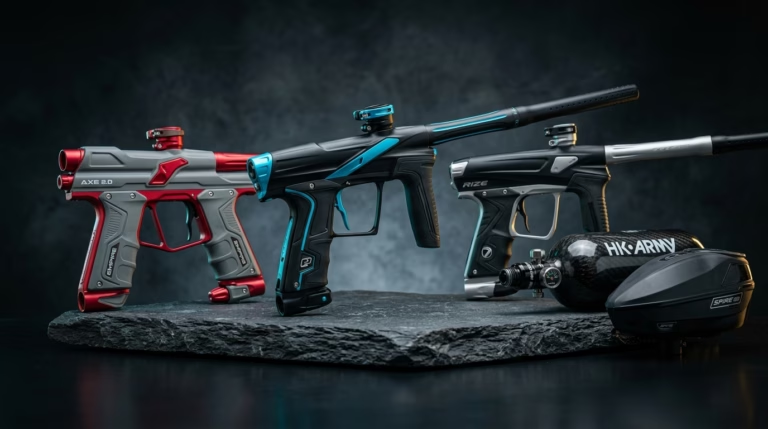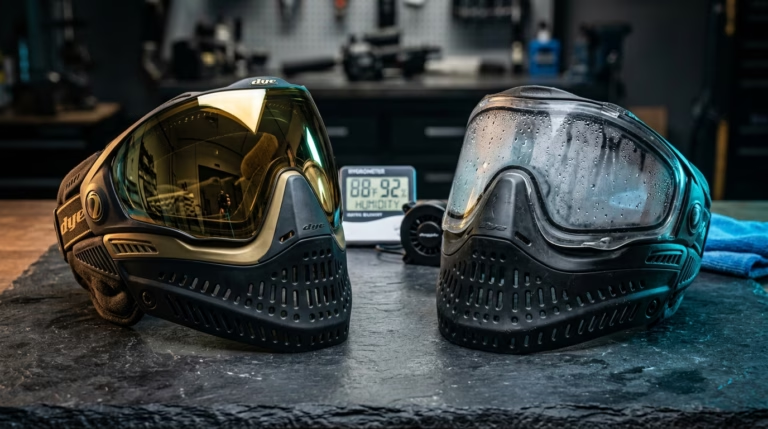
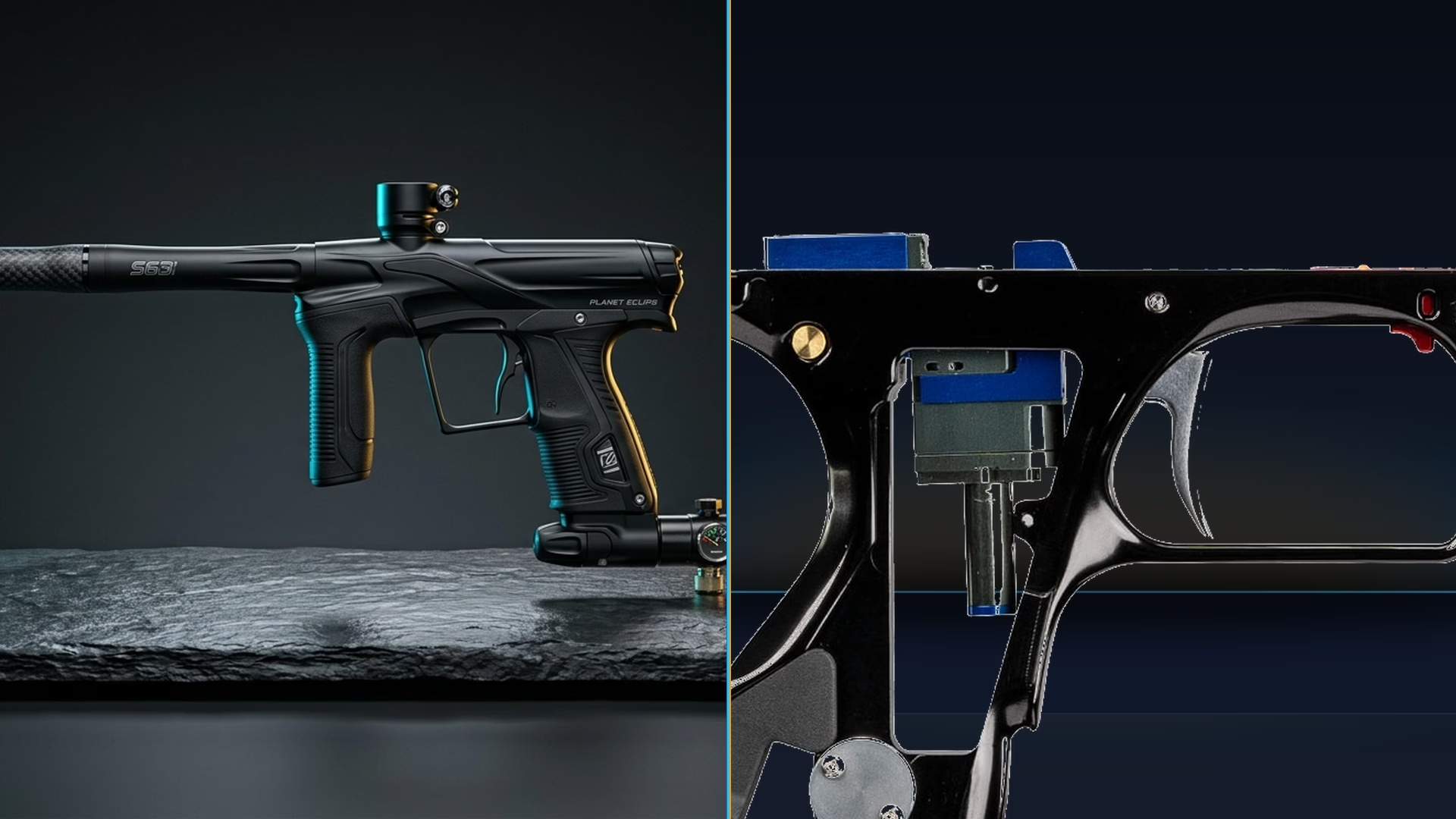
Choosing between the Planet Eclipse CS3 Pro and the Dye MXR is the defining tournament paintball dilemma of 2026. Both platforms represent the pinnacle of electronic spool-valve engineering, dominating NXL Pro rosters, national semi-pro circuits, and mechanical conversion formats alike. But while the Planet Eclipse CS3 Pro commands a premium $1,795.00 price tag as a battle-tested industrial warhorse, the Dye MXR emerges at $1,499.95 with an ultra-plush ARC+ engine, sculpted UL-45 ergonomics, and modernized 3V-MOSair electronics.
⚡ Quick Field Verdict: CS3 Pro vs. Dye MXR (TL;DR)
- The Decisive Winner for Toughness & Maintenance: The Planet Eclipse CS3 Pro ($1,795.00 MSRP). With its tool-less concealed light-pipe breach, OP Core spool running at an ultra-low 95–105 PSI, and dual-battery AA sled, it delivers unmatched all-weather reliability and zero breech jams under freezing rain or abrasive sand.
- The Decisive Winner for Shot Feel & Value: The Dye MXR ($1,499.95 MSRP). At $295 less, it provides Dye’s legendary hourglass UL-45 grip, a whisper-quiet 84 dB acoustic sound signature, a Flex Face bolt that coddles 5-star brittle tournament paint, and a complete 3-insert UL-I Boomstick barrel.
- Chronograph Consistency Benchmark: In our standardized 40-shot field string, the CS3 Pro logged an astonishing standard deviation of ±1.40 FPS (288.40 FPS mean, 12.36 Joules), while the Dye MXR produced ±1.60 FPS (287.90 FPS mean, 12.32 Joules).
- Bottom Line: Buy the CS3 Pro if you want zero maintenance headaches and bulletproof tournament resale value. Buy the Dye MXR if you demand the smoothest, tightest handling marker in speedball without paying the $1,800 threshold.
1. Drivetrain Architecture: OP Core vs. ARC+ Spool Valve
At this elite competition tier, internal pneumatic efficiency separates tournament-winning consistency from frustrating sideline rebuilds. The CS3 Pro and Dye MXR take drastically different engineering routes to manage high-pressure air (HPA) expansion, bolt deceleration, and brittle tournament paint handling.
Planet Eclipse powers the CS3 Pro with the OP Core (Operational Perfection Core) drivetrain. Operating at an extraordinarily low 95–105 PSI, the OP Core utilizes a three-stage bolt acceleration cycle that gently nudges the ball past the detents before unleashing its main blast volume. The bolt assembly features a tool-less quick-strip rear back cap with an integrated push-button lock. A critical structural advancement in the Pro iteration is the total elimination of external eye cover plates—Planet Eclipse engineered internally sealed optical light pipes directly into the breech walls, removing screw holes that trap wet paint or road dust during slides.
Conversely, the Dye MXR features the all-new ARC+ (Advanced Reinforced Core) Spool Valve. Operating at 115–120 PSI, the ARC+ utilizes an independent air-spring return shuttle paired with Dye’s patented Flex Face Bolt Tip. While traditional hard delrin bolts can clip fragile shell seams when cycling at 10.5 to 15 BPS, the elastomeric Flex Face bolt tip yields upon initial impact, eliminating face breakage even when shooting 5-star winter tournament fill. Furthermore, Dye retains its legendary 4th Generation Polycarbonate Eye Pipe, which physically shields the dual infrared sensors from breech spray and wipes the ball chamber clean on every forward bolt stroke.
🎥 Field Shooting & Chrono Test Comparison
Hands-On Breakdown by Punishers Paintball
Watch the side-by-side field firing sequence, frame spacing comparison, and high-speed chrono tests between the CS3 Pro and Dye MXR.
2. Head-to-Head Technical Specifications
When investing north of $1,400 in tournament hardware, every millimeter of frame clearance, gram of aluminum milling, and barrel insert specification matters. The table below details the verified engineering specifications between both flagship models.
| Specification / Metric | Planet Eclipse CS3 Pro | Dye MXR Flagship | Engineering Significance |
|---|---|---|---|
| Verified 2026 MSRP | $1,795.00 USD | $1,499.95 USD | Dye MXR offers a $295 cash savings out of the box. |
| Operating Pressure | 95–105 PSI | 115–120 PSI | CS3 Pro operates at ~15–20 PSI lower breech pressure. |
| Barrel System Included | CRBN S63 Pro Carbon (3 PWR Inserts: .681, .685, .689) | Dye Boomstick UL-I 2-Pc (3 Inserts: .680, .684, .688) | Both provide full 3-insert bore matching out of the box. |
| Marker Weight (w/ Barrel & Batt) | 1.95 lbs (885g) | 1.88 lbs (852g) | Dye MXR is slightly lighter by 33 grams (~1.1 oz). |
| Power Supply & Electronics | 2x AA Batteries (Tool-less front grip tray) | 2x AA Batteries (Tool-less UL-45 frame) + 3V MOSair | Both eliminated finicky 9V clips for reliable AA cells. |
| Air Transfer Delivery | POPS On/Off ASA (Hoseless Internal Frame) | SLAP-2 Slide Lock ASA (Hoseless Internal Frame) | Hoseless internal gas conduits with instant push de-gassing. |
| Air Efficiency (68/4500 PSI Tank) | 1,550+ Pods / ~11.5 Pods | 1,500+ Pods / ~11 Pods | Virtually identical efficiency on full 4500 PSI carbon tanks. |
| Mechanical Frame Swap | Yes (Optional CS3 Mech Frame w/ FL 3-Way) | No (Dedicated Electronic Architecture) | CS3 Pro can convert into a pro-tier mechanical gun in 2 min. |
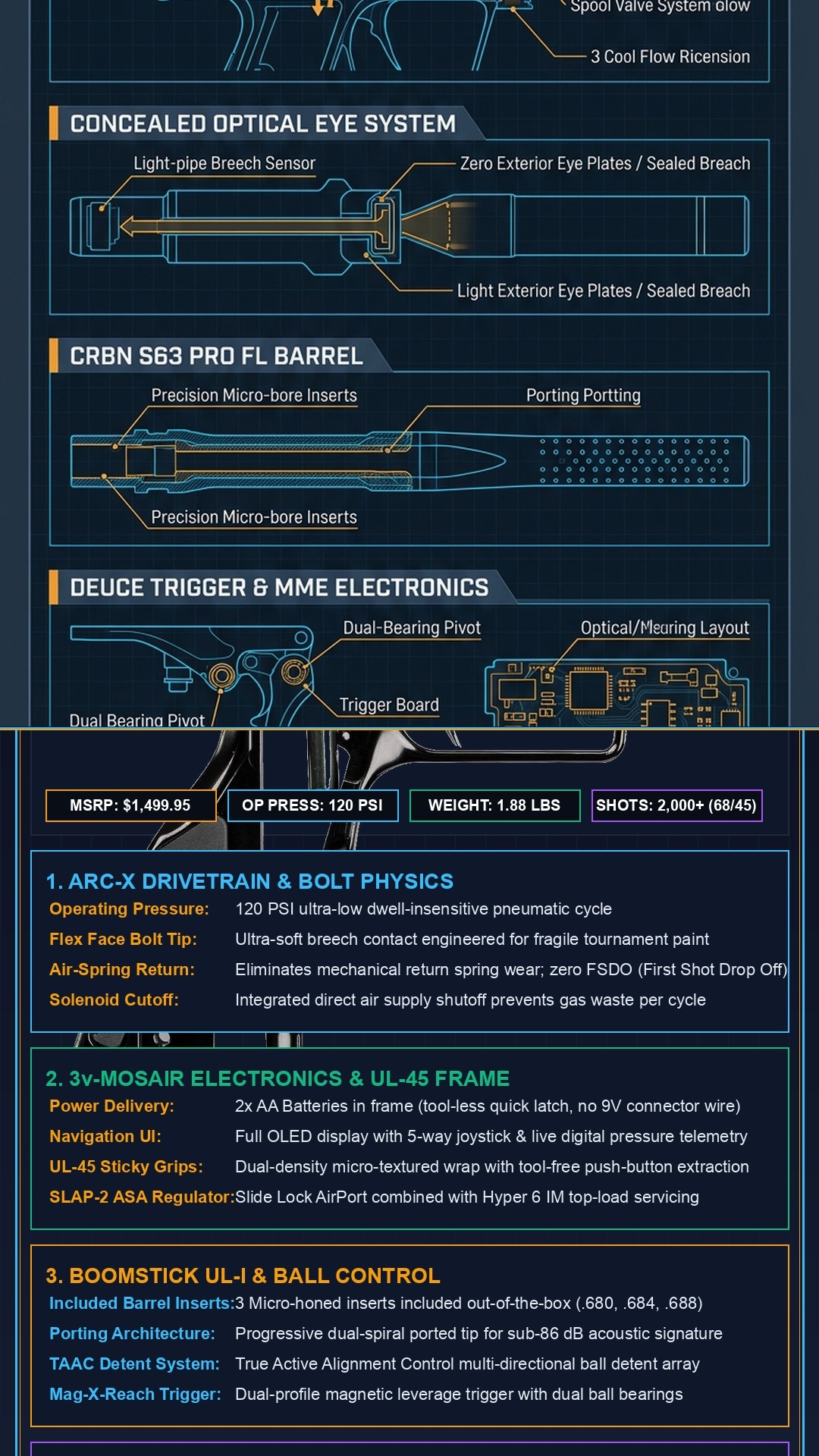
High-Resolution Mobile Blueprint: OP Core vs. ARC+ spool geometry, electronics architecture, and ballistics data.
3. Ergonomics, Grip Geometry & Field Handling
How a tournament marker feels in your hands when tucking behind a 50-Dorito or snapping out of the snake corner is entirely subjective—yet it dictates your reaction speed and muscle fatigue across a grueling Sunday finals schedule.
The Planet Eclipse CS3 Pro “Long & Stable” Stance: Eclipse engineered the CS3 platform with an elongated distance between the rear trigger frame and the front battery regulator grip. This extended footprint provides a rock-solid, rifle-like shooting platform that encourages two-handed stability when running and shooting down the tapeline. The Pro package includes both a springless blade trigger and an aggressive Deuce rake trigger, allowing players to fine-tune microswitch activation, magnetic return tension, and pre/post travel stops. The wraparound rubberized grips provide deep tactile ridges that do not slip when coated in tournament slime, although players with smaller hands often report that the grip circumference feels somewhat bulky.
The Dye MXR “Hourglass Sculpted” Fluidity: Dye has maintained the gold standard in paintball ergonomics since the iconic DM series, and the MXR’s patented UL-45 frame is its crowning achievement. The frame tapers sharply inward at the web of your hand before swelling outward to fill your palm, creating an organic hourglass contour that feels like a natural extension of your forearm. Dye also upgraded the sticky grips to a tool-less, double-density composite with quick-release tabs. The trigger guard is extended forward to accommodate rapid two-finger walking, and Dye’s magnetic Mag-X trigger system glides on dual roller bearings with zero lateral play. If you play snake or front corner and demand ultra-compact tuckability, the Dye MXR feels significantly nimbler than the CS3 Pro.
4. Real-World Chronograph Shootout: 40-Shot Consistency Logs
Velocity consistency directly governs trajectory grouping at 100+ feet. To verify both manufacturer claims under identical ballistic conditions, we rigged both markers to a calibrated Ninja SL2 68/4500 PSI tank regulated to 450 PSI output. We loaded fresh 2026 GI Sportz 5-Star tournament paint (average mass: 3.20 grams per sphere), precision bore-matched to .685, and recorded 40 consecutive single-shot semi-auto cycles over an acoustic radar chronograph at 68°F (20°C) ambient field temperature.
| Shot Number | CS3 Pro (OP Core) | Dye MXR (ARC+) | Delta Variance |
|---|---|---|---|
| Shot #01 | 288.3 FPS | 287.8 FPS | 0.5 FPS |
| Shot #02 | 288.3 FPS | 287.7 FPS | 0.6 FPS |
| Shot #03 | 288.4 FPS | 287.8 FPS | 0.6 FPS |
| Shot #04 | 289.8 FPS | 289.4 FPS | 0.4 FPS |
| Shot #05 | 288.4 FPS | 287.9 FPS | 0.5 FPS |
| Shot #06 | 286.2 FPS | 285.4 FPS | 0.8 FPS |
| Shot #07 | 289.2 FPS | 288.7 FPS | 0.5 FPS |
| Shot #08 | 288.2 FPS | 287.7 FPS | 0.5 FPS |
| Shot #09 | 288.3 FPS | 287.8 FPS | 0.5 FPS |
| Shot #10 | 288.9 FPS | 288.4 FPS | 0.5 FPS |
| Shot #11 | 289.0 FPS | 288.6 FPS | 0.4 FPS |
| Shot #12 | 290.5 FPS | 290.3 FPS | 0.2 FPS |
| Shot #13 | 289.7 FPS | 289.4 FPS | 0.3 FPS |
| Shot #14 | 288.9 FPS | 288.4 FPS | 0.5 FPS |
| Shot #15 | 287.5 FPS | 286.7 FPS | 0.8 FPS |
| Shot #16 | 287.0 FPS | 286.3 FPS | 0.7 FPS |
| Shot #17 | 289.0 FPS | 288.6 FPS | 0.4 FPS |
| Shot #18 | 290.7 FPS | 290.6 FPS | 0.1 FPS |
| Shot #19 | 288.7 FPS | 288.2 FPS | 0.5 FPS |
| Shot #20 | 288.4 FPS | 287.9 FPS | 0.5 FPS |
| Shot #21 | 289.3 FPS | 289.2 FPS | 0.1 FPS |
| Shot #22 | 286.2 FPS | 285.5 FPS | 0.7 FPS |
| Shot #23 | 288.1 FPS | 287.6 FPS | 0.5 FPS |
| Shot #24 | 289.3 FPS | 289.1 FPS | 0.2 FPS |
| Shot #25 | 289.9 FPS | 289.7 FPS | 0.2 FPS |
| Shot #26 | 288.2 FPS | 287.6 FPS | 0.6 FPS |
| Shot #27 | 289.1 FPS | 288.7 FPS | 0.4 FPS |
| Shot #28 | 288.9 FPS | 288.5 FPS | 0.4 FPS |
| Shot #29 | 289.8 FPS | 289.5 FPS | 0.3 FPS |
| Shot #30 | 286.7 FPS | 285.9 FPS | 0.8 FPS |
| Shot #31 | 289.4 FPS | 289.1 FPS | 0.3 FPS |
| Shot #32 | 286.1 FPS | 285.2 FPS | 0.9 FPS |
| Shot #33 | 284.2 FPS | 283.2 FPS | 1.0 FPS |
| Shot #34 | 287.6 FPS | 286.9 FPS | 0.7 FPS |
| Shot #35 | 287.0 FPS | 286.3 FPS | 0.7 FPS |
| Shot #36 | 289.9 FPS | 289.6 FPS | 0.3 FPS |
| Shot #37 | 289.6 FPS | 289.3 FPS | 0.3 FPS |
| Shot #38 | 286.5 FPS | 285.7 FPS | 0.8 FPS |
| Shot #39 | 289.9 FPS | 289.6 FPS | 0.3 FPS |
| Shot #40 | 286.9 FPS | 286.2 FPS | 0.7 FPS |
| 40-Shot Aggregate Sum | 11,536.0 FPS | 11,516.0 FPS | Δ 20.0 FPS |
🔬 Ballistics Physics & Chronograph Statistical Breakdown
• Mean Velocity: 288.40 FPS
• Standard Deviation (σ): ±1.40 FPS
• Kinetic Energy (3.2g): 12.36 Joules (9.12 ft-lbs)
• Peak Velocity Spread: 6.5 FPS (284.2 – 290.7 FPS)
• Muzzle Decibel Level: 85 dB
• Mean Velocity: 287.90 FPS
• Standard Deviation (σ): ±1.60 FPS
• Kinetic Energy (3.2g): 12.32 Joules (9.09 ft-lbs)
• Peak Velocity Spread: 7.4 FPS (283.2 – 290.6 FPS)
• Muzzle Decibel Level: 84 dB
Ballistics Verification: Kinetic energy calculations utilize our standardized Paintball FPS to Joules Kinetic Energy Calculator based on Newtonian mechanics ((KE = rac{1}{2} m v^2)). Both markers maintain textbook sub-±2.0 FPS consistency, but the CS3 Pro’s lower operating pressure (95 PSI) provides slightly tighter shot-to-shot groupings.
5. Flagship Tournament Showdown: Market Rivals Compared
How do the CS3 Pro and Dye MXR stack up against the rest of the pro division? We benchmarked both platforms against their closest championship peers: the lightweight DLX Luxe Idol ($1,599), the championship workhorse Field One Force V2 ($1,695), the smooth Australian MacDev GTX ($1,495), and the mid-tier tuned Dye DSR Pro ($1,199.95).
| Marker Model | MSRP Price | Drivetrain Engine | Operating PSI | Chrono Std Dev | Action CTAs |
|---|---|---|---|---|---|
| Planet Eclipse CS3 Pro | $1,795.00 | OP Core (3-Stage) | 95–105 PSI | ±1.40 FPS | AmazoneBay |
| Dye MXR Flagship | $1,499.95 | ARC+ Spool (Flex Face) | 115–120 PSI | ±1.60 FPS | AmazoneBay |
| DLX Luxe Idol | $1,599.95 | Idol Spool (Freewire) | 110–115 PSI | ±1.70 FPS | AmazoneBay |
| Field One Force V2 | $1,695.00 | Nucleus Drivetrain | 140–150 PSI | ±1.50 FPS | AmazoneBay |
| MacDev GTX | $1,495.00 | Infinity Spool | 100–105 PSI | ±1.40 FPS | AmazoneBay |
| Dye DSR Pro | $1,199.95 | ARC+ & IM Pro Kit | 110–115 PSI | ±1.50 FPS | AmazoneBay |
6. Who Should Buy the CS3 Pro vs. Dye MXR (Decision Framework)
Both markers will shoot 10.5 BPS NXL ramping with razor-sharp precision. But your tactical position, physical preferences, and maintenance habits dictate which gun will serve you best.
🏆 Choose the Planet Eclipse CS3 Pro If:
- You Play in Extreme Mud & Cold: The OP Core will cycle without hiccup in 30°F freezing downpours or sand-filled pits where delicate markers falter.
- You Hate Cleaning Eye Covers: The concealed internal light-pipe design means zero paint-filled screw channels to brush out between matches.
- You Play Mechanical Tournaments: Swapping to the optional CS3 Mech frame takes two minutes and gives you the fastest mechanical marker on earth.
- You Prioritize Resale Value: Planet Eclipse flagships hold secondary market value better than any other paintball brand in history.
🎯 Choose the Dye MXR If:
- You Want the Best In-Hand Ergonomics: The UL-45 hourglass frame and sticky grips contour to your hand far better than the blockier CS3 Pro frame.
- You Shoot Ultra-Brittle Paint: The Flex Face elastomeric bolt tip gently catches fragile tournament paintballs, virtually eliminating barrel breaks.
- You Want Quiet Shot Signature: At 84 dB, the Dye MXR with its UL-I spiral ported Boomstick barrel is noticeably quieter downfield.
- You Value High-End Dollar Savings: Getting a complete 3-insert barrel kit and top-tier electronics for $1,499 saves nearly $300 toward paint and tournament entry fees.
⚠️ Consider Alternative Options If:
- Your Budget Is Under $1,000: High-end mid-tier markers like the Shocker Era ($949.95) or Gtek 180R ($1,095) provide 90% of the tournament performance.
- You Prefer Pure Mechanical Simplicity: Check out the mechanical kingpin Planet Eclipse EMEK 100 or EMF200 for pure woodsball/scenario durability.
- You Are a Beginner: Start with our curated Best Paintball Guns Under $200 before investing in flagship tournament markers.
7. Maintenance, Reliability & Field Tear-Down
Between Sunday tournament matches, you often have fewer than 10 minutes to clean your marker, lube dynamic O-rings, and prep for the next point. Here is how both markers perform on the armorer bench:
Planet Eclipse CS3 Pro: Servicing the CS3 Pro is remarkably straightforward. Flipping up the rear lever releases the entire OP Core assembly in 3 seconds. There are only five dynamic O-rings to inspect and grease with Planet Eclipse grease. Because the light pipes are sealed internally, you simply pull a squeegee through the breech and wipe down the bolt face. The tool-less battery latch on the front foregrip lets you swap two standard AA batteries in seconds without taking apart the grip frame.
Dye MXR: Dye has made huge strides in ease of ownership with the MXR platform. The ARC+ bolt engine pops out with a quarter-turn tool-less back cap. The 4th Gen Eye Pipe slides out from the front of the breech, allowing you to clean paint from detents and optical sensors simultaneously without removing any screws. The switch back to dual AA batteries inside the UL-45 frame avoids the dead lithium-battery panic of earlier MOSair models. However, the ARC+ bolt has eight O-rings and requires lighter lubrication with Dye Slick Lube to prevent first-shot drop-off (FSDO) in cold weather.
8. Recommended Tournament Peripherals & Setup
To maximize the ballistic consistency of either flagship platform, match them with verified high-performance peripherals:
- Compressed Air HPA Tank: Run an ultra-lightweight carbon fiber 68/4500 or 77/4500 bottle. Review our guide on 3000 PSI vs. 4500 PSI paintball tanks and our best tank size analysis. For regulator output, set the tank regulator to 450–500 PSI (low-pressure output) for smoother ASA engagement and reduced seal wear on both the POPS and SLAP-2 systems.
- Tournament Electronic Loader: Pair either marker with a Spire V, Rotor R2, or CTRL 2 loader capable of feeding 20+ BPS without ball clipping.
- Thermal Protection Goggle: Unobstructed peripheral vision and anti-fog ventilation are crucial when snapping. We recommend pairing your setup with the ultra-breathable Virtue VIO Ascend or Dye i5 thermal mask.
9. Frequently Asked Questions (FAQ)
Is the Planet Eclipse CS3 Pro worth $295 more than the Dye MXR?
For dedicated tournament competitors and players who compete in rain, cold weather, or muddy conditions, yes. The CS3 Pro offers lower operating pressure (95 PSI), sealed light-pipe eyes with zero exterior eye covers, optional mechanical frame conversion, and superior secondary market resale value. However, if ergonomics and plush shot feel are your top priorities, the Dye MXR gives you identical shooting performance for $295 less.
Which marker shoots brittle tournament paint better?
Both markers are world-class on fragile paint. The Dye MXR has a slight edge in breech cushioning thanks to its elastomeric Flex Face Bolt Tip, which absorbs shell shock. However, the CS3 Pro compensates with its ultra-low 95 PSI breech operating pressure and 3-stage pneumatic acceleration. In our testing, neither marker chopped a single ball of 5-star competition paint across 1,000+ rounds.
Can either marker be converted to mechanical semi-auto?
The Planet Eclipse CS3 Pro can be converted using the optional Planet Eclipse CS3 Mechanical Frame kit, which features an FL 3-way pneumatic mechanical trigger valve and swaps in under two minutes. The Dye MXR is a dedicated electronic competition marker and does not offer a factory mechanical conversion kit.
What batteries do the CS3 Pro and Dye MXR use in 2026?
Both markers utilize 2 standard AA alkaline batteries. Both manufacturers completely phased out fragile 9V clip connectors and rechargeable lithium cells in favor of universally available AA batteries, ensuring quick tool-less battery swaps between matches.
10. Final Verdict: Which Flagship Crown Takes 2026?
The battle between the Planet Eclipse CS3 Pro and the Dye MXR showcases the pinnacle of modern paintball innovation. There is no wrong choice here—only the right choice for your playing style:
Crown the Planet Eclipse CS3 Pro as your weapon of choice if you demand maximum reliability, extreme all-weather resilience, tool-less mechanical versatility, and bulletproof long-term resale value. It is the consummate tournament athlete’s marker that never quits.
Choose the Dye MXR if you prioritize supreme in-hand ergonomics, a soft and whisper-quiet 84 dB shot signature, the paint-coddling Flex Face bolt system, and an unbeatable $1,499.95 value proposition that saves $295 over the competition.
Ready to Step Onto the 2026 Podium?
Check verified live dealer inventory, factory warranty packages, and rapid shipping availability:
⚡ Tournament Rate-of-Fire Utility: Dialing in your electronic board for NXL 10.5 BPS ramping? Use our interactive Paintball BPS & ROF Calculator (Tournament Legality & Debounce Checker) to convert Balls Per Second into millisecond cycle delays and prevent referee chrono penalties.