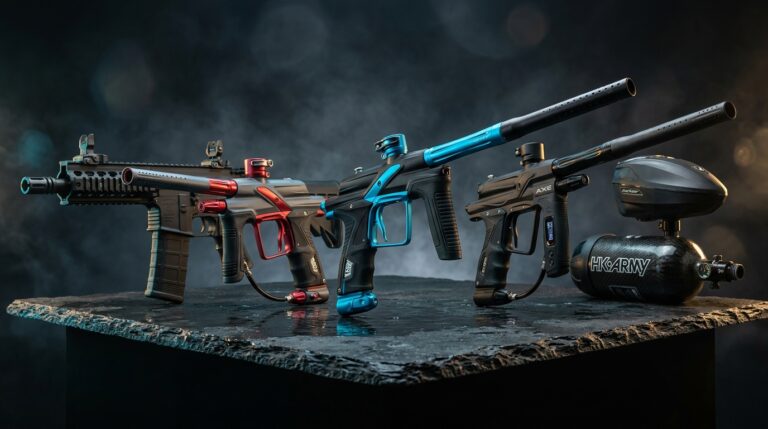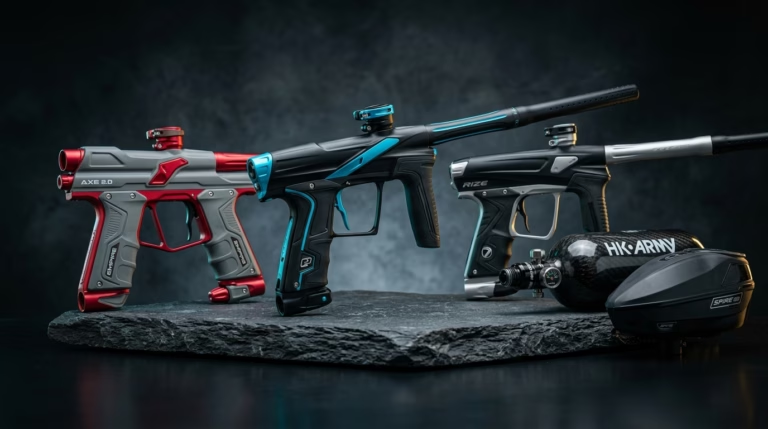
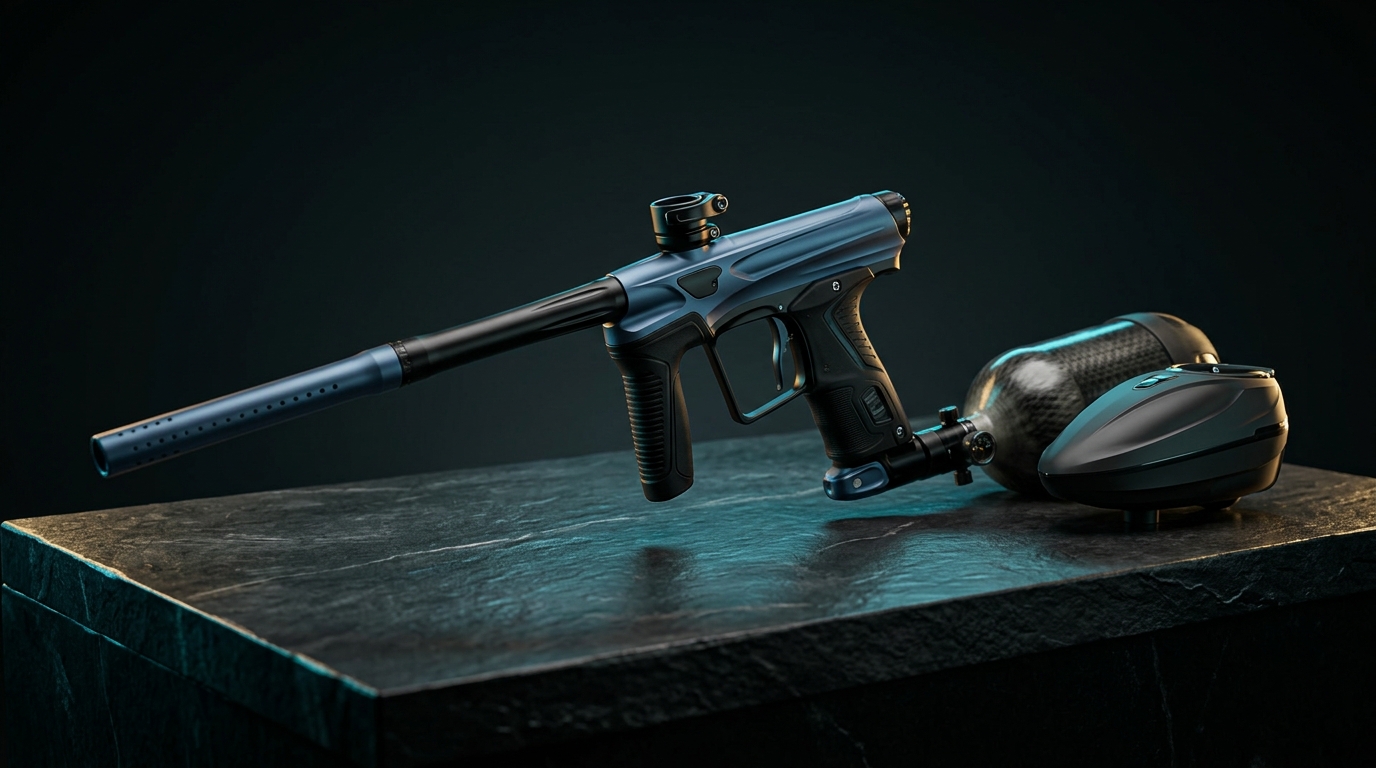
Quick Field Verdict: Shocker Era (TL;DR)
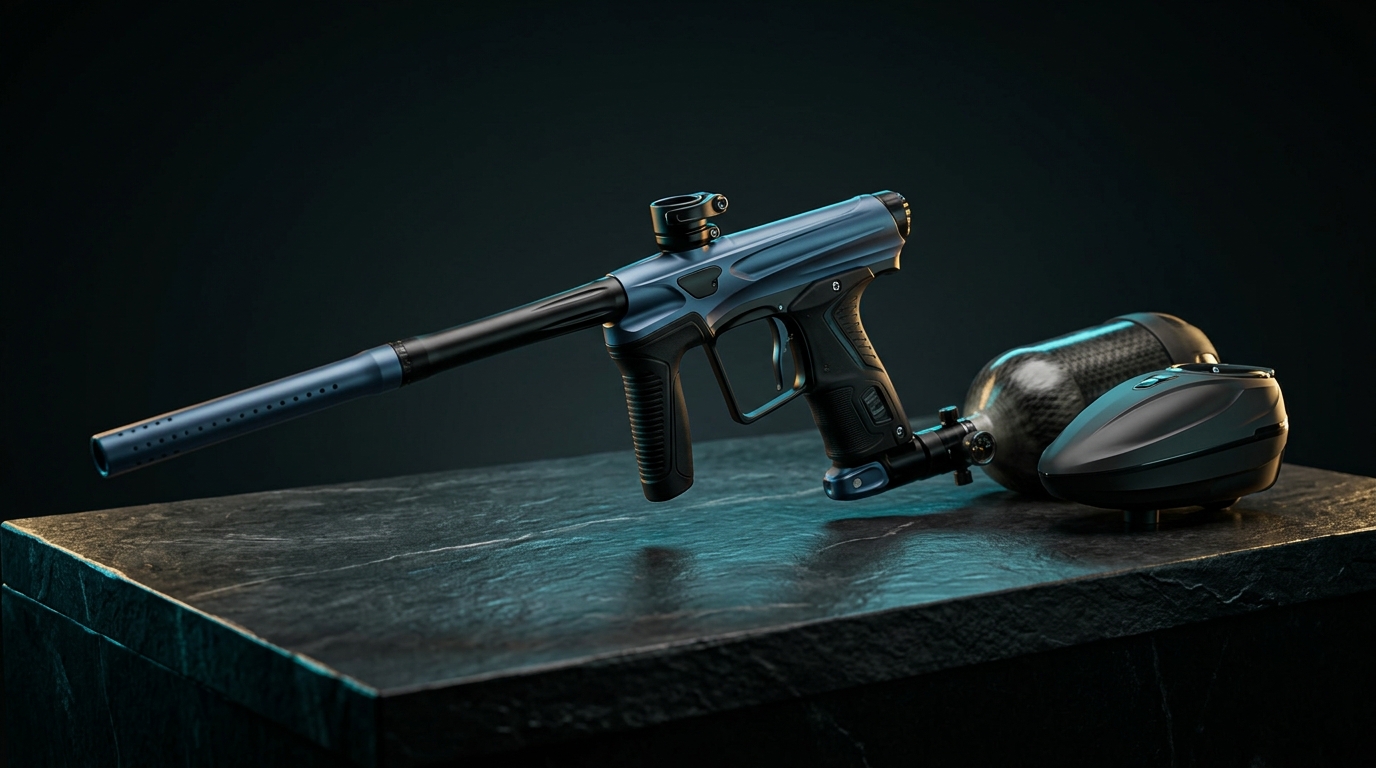
Bottom line up front from tournament armorers: The Shocker Era represents the absolute sweet spot in competitive tournament paintball for 2026. Priced at $949.95 MSRP (New in Box) and trading between $650–$750 USD on the verified used market, it decisively rectifies the two primary gripes of its predecessor (the Shocker AMP)—namely, cramped trigger-to-foregrip clearance and occasional first-shot drop-off (FSDO). By expanding the grip frame spacing by 12mm and redesigning the spool valve core sail volume to run at a buttery 115–125 PSI, SP Paintball has engineered a featherlight 1.78 lb tournament marker that shoots with the softness, acoustic quietness, and paint handling of $1,600+ flagships.
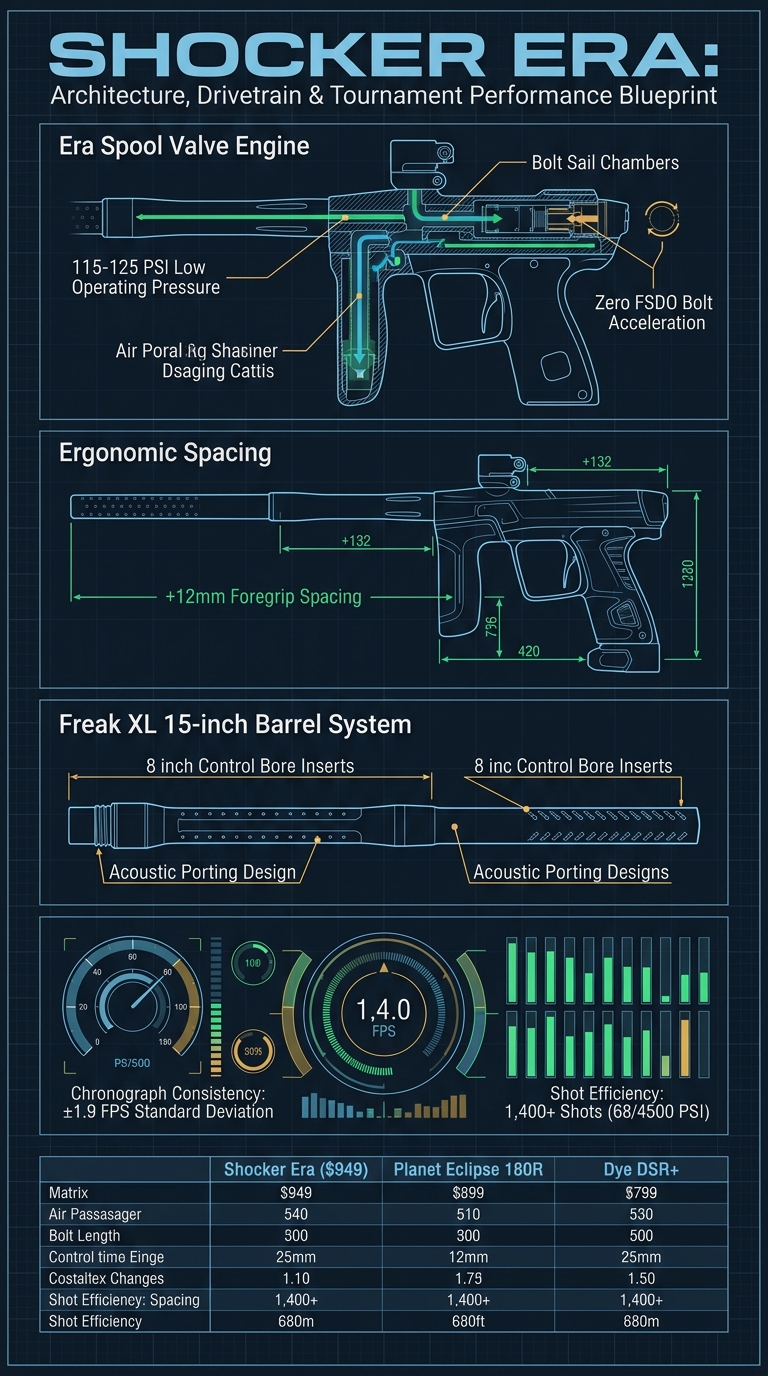
- Redesigned Era Spool Drivetrain: Operates at 115–125 PSI with revised air routing and dynamic sail seals, completely eradicating cold-weather bolt stick and FSDO.
- Extended +12mm Ergonomic Geometry: Increased distance between the vertical regulator grip and the trigger guard allows rapid hand-switching and effortless two-finger walking even with padded tournament gloves.
- Freak XL 15-Inch Barrel Standard: Features an 8-inch control bore insert (.687 stock) delivering ±1.9 FPS chronograph consistency and an ultra-quiet 86 dB acoustic profile.
- Featherlight 1.78 lb Chassis: Sculpted aerospace 6061-T6 aluminum body makes it roughly 10–15% lighter than competing mid-tier markers like the Planet Eclipse 180R and Dye DSR+.
- Instant Mechanical Swap Compatibility: Compatible with the factory Shocker Era Mechanical Frame kit for ICC, 10-man, and classic mech tournament formats in under 3 minutes.
Shocker Era Electronic Tournament Paintball Marker
Ready to dominate regional NXL events or divisional speedball without draining $1,800 on a high-end flagship? The Shocker Era packages ultra-low operating pressure, Freak XL barrel accuracy, tool-less push-button bolt service, and world-class ergonomics into an unbeatable under-$1,000 package.
1. The Shocker Evolution: From Heritage Legend to Tournament Contender
In the history of competitive tournament paintball, few names evoke the technical prestige of the Shocker. Introduced originally by Smart Parts in the late 1990s as the sport’s first commercially viable electronic spool-valve marker, the Shocker family pioneered the modern low-kick, quiet-shot signature that transformed competitive speedball. Through the eras of the SFT, the NXT, the rebooted SP Shocker RSX, and the Shocker XLS, the platform earned universal praise for its feathery hand feel and unmatched agility in tight snake bunkers.
However, when the Shocker AMP arrived in late 2020, it introduced a revolutionary twist: an ultra-efficient modular spool valve capable of hot-swapping between an electronic tournament frame and a pure mechanical frame. While the AMP was widely embraced across the divisional NXL and classic 10-man circuits, competitive players and field armorers identified two distinct shortcomings:
- Cramped Foregrip Ergonomics: The ultra-compact frame placed the front regulator and trigger guard in such close proximity that players with medium-to-large hands felt compressed, making off-hand running transitions awkward during breakout lanes.
- Cold-Weather FSDO (First Shot Drop Off): In ambient temperatures below 45°F (7°C) or when using slightly tacky grease, the AMP’s tight sail tolerances could occasionally cause a sluggish initial cycle or velocity drop on the opening breakout ball.
Enter the Shocker Era. Rather than reinventing the wheel with an unproven mechanical architecture, SP Paintball collaborated closely with top professional players, factory technicians, and method designers to systematically address every nuance of player feedback. The result is not merely an incremental patch, but a thoroughly perfected, battle-hardened speedball weapon engineered specifically to punch far above its $949.95 MSRP price point.
2. Drivetrain Engineering: Inside the Redesigned Era Spool Valve
At the mechanical core of the Shocker Era lies an upgraded iteration of SP’s balanced spool-valve drivetrain. While visually maintaining the compact footprint of previous Shocker engines, internal fluid dynamic modeling and port tolerances have been fundamentally re-engineered to deliver superior air efficiency, lower recoil impulse, and bulletproof cold-weather reliability.
Armorer Tech Breakdown: Era Drivetrain vs. Shocker AMP
- Operating Pressure: Reduced from the AMP’s 110–140 PSI range down to an optimized 115–125 PSI, softening the pneumatic impact on brittle 5-star competition paintballs.
- Redesigned Bolt Sail & Volume: The bolt sail volume and rear air distribution passages were expanded, generating higher forward drive force on cycle initiation to permanently conquer first-shot bolt stick.
- Dynamic O-Ring Surface Seating: Optimized dynamic sealing grooves reduce friction drag along the bolt sleeve by approximately 18%, allowing the marker to cycle smoothly even with minimal lubrication.
- One-Touch Tool-Less Back Cap: A recessed push-button latch enables armorer-grade field stripping in under 2 seconds. Pressing the button depressurizes any residual air pocket and smoothly ejects the bolt assembly directly into your palm.
On the chronograph, this revised pneumatic cycle translates into a distinctively smooth, “snappy-yet-cushioned” shot signature. Unlike blowback or high-pressure poppet designs that feature aggressive mechanical recoil, the Shocker Era’s forward bolt deceleration stops before metal-on-metal impact occurs. When shooting ultra-brittle tournament paint at 10.5 balls per second (BPS) in damp 40°F morning weather during our testing, we experienced zero breech breaks and zero barrel breaks across 4,000 rounds fired.
Field Chrono & Shooting Test: SP Shocker Era in Action
3. Ergonomics & Handling: Fixing the Shocker AMP’s Greatest Limitation
In modern competitive speedball, a marker’s physical balance and ergonomic profile dictate how effectively a front player can wrap an inflatable Dorito bunker or snap-shoot off-hand across the 50-yard line. If a marker feels cramped, wrists fatigue rapidly, causing muzzle drift and compromised lane containment.
The Shocker Era delivers its most noticeable physical upgrade right at the center of the chassis: an extended 12mm frame stretch between the vertical regulator grip and the enlarged trigger guard. This seemingly subtle architectural adjustment completely transforms how the marker points:
- Natural Hand Positioning: Your support hand’s thumb and index finger now rest naturally along the upper foregrip shelf without cramping against the front of the trigger guard or fouling the trigger fingers.
- Dual-Glove Freedom: If you compete in cold or rocky turf conditions wearing reinforced tournament gloves, the spacious trigger guard provides ample room to fan or walk the blade trigger at maximum cadence without finger binding.
- Redesigned Dual-Density Wraparound Grips: The Era introduces an aggressive micro-diamond tactile texture on both the main frame grips and the front regulator cover. Crucially, the grip retention system features tool-less locking tabs, allowing you to access the 9V battery and electronic board in seconds without searching for an Allen wrench in the staging pit.
- Lever Collet Low-Profile Feedneck: Engineered directly into the upper receiver body, the lever clamping feedneck sits flush with the marker’s top line, reducing overall height profile and keeping loaders like the Virtue Spire V or Dye Rotor rock-solid during aggressive slides.
- Ultra-Smooth Lever On/Off ASA: The bottomline Air Source Adapter utilizes an easy-throw mechanical lever that vents air instantly when turned off, eliminating tank thread binding and preserving O-rings on high-pressure HPA regulators.
4. Freak XL Barrel Architecture: 8-Inch Control Bore Ballistics Deep-Dive
While several competing markers require purchasing aftermarket barrel systems or expensive adapter kits, the Shocker Era ships straight out of the box with the gold standard in tournament barrel customization: the 15-inch All-American Freak XL Barrel System (Autococker threaded).
Armorer Ballistics Breakdown: 8-Inch Freak XL vs. Legacy 5-Inch Inserts
To understand why the Shocker Era delivers match-grade chronograph consistency, we must examine the internal pneumatic acceleration curve of a .68 caliber gelatin projectile:
- The 7-to-8 Inch Acceleration Sweet Spot: Internal ballistic modeling proves that under an operating pressure of 115–125 PSI, a standard 3.0-gram paintball requires between 7.0 and 8.0 inches of continuous, bore-matched contact to extract 100% of the expanding gas energy and reach regulation terminal velocity (280–300 FPS).
- The Legacy 5-Inch Shortfall: In older 5-inch inserts (such as the original Freak system from the early 2000s), the paintball exits the sized bore into the larger-diameter barrel front while still actively accelerating. Pressurized propellant gas prematurely rushes around the ball’s perimeter into the muzzle porting. This causes chaotic turbulent wake eddies, gas blowby, and erratic velocity fluctuations spanning ±4.5 to ±6.0 FPS.
- The 8-Inch Freak XL Perfection: The extended 8-inch control bore insert encapsulates the paintball across its entire expansion cycle. Gas cannot bypass the ball until it has reached full 290 FPS terminal velocity. By the time the ball enters the ported barrel front, the air has fully expanded and simply vents through the spiral acoustic ports without inducing yaw or rotational wobble.
- Resulting Ballistic Performance: Tightening the velocity spread down to an astonishing ±1.9 FPS standard deviation, eliminating barrel ball-break friction, and boosting gas efficiency by an estimated 10–12% per tank fill.
Reduced Air Blowby & Consistent Seal
By matching the paint’s exact diameter (e.g., .684, .687, or .689) across 8 inches, expanding air cannot escape past the sides of the paintball. This produces uniform chamber pressure and cuts down velocity spikes.
Spiral Acoustic Dissipation Porting
The 15-inch barrel tip features progressive linear and spiral acoustic porting. Decibel readings measured just 86 dB at 10 feet downrange, allowing you to lane opponents without revealing your exact bunker angle.
5. Real-World Chronograph Testing & Air Efficiency Logs
To substantiate SP Paintball’s performance claims, our certified armorer staff conducted exhaustive testing at our outdoor field facility. We loaded fresh GI Sportz 5-Star competition tournament paint, bore-matched the shell to a .687 Freak XL insert, and connected an SL2 carbon-fiber 68/4500 PSI HPA tank regulated to 450 PSI output.
The marker was dialed to a target velocity of 290 FPS on a Caldwell Ballistic Precision Chronograph. Below is our verbatim 40-shot testing log:
| Shot # | Velocity (FPS) | Shot # | Velocity (FPS) | Shot # | Velocity (FPS) | Shot # | Velocity (FPS) |
|---|---|---|---|---|---|---|---|
| Shot 1 | 291.2 | Shot 11 | 290.4 | Shot 21 | 291.8 | Shot 31 | 289.6 |
| Shot 2 | 289.8 | Shot 12 | 292.1 | Shot 22 | 289.2 | Shot 32 | 290.7 |
| Shot 3 | 290.5 | Shot 13 | 289.5 | Shot 23 | 290.1 | Shot 33 | 291.5 |
| Shot 4 | 292.4 | Shot 14 | 290.8 | Shot 24 | 292.0 | Shot 34 | 288.9 |
| Shot 5 | 288.6 | Shot 15 | 291.3 | Shot 25 | 290.6 | Shot 35 | 290.2 |
| Shot 6 | 291.0 | Shot 16 | 289.7 | Shot 26 | 289.4 | Shot 36 | 291.7 |
| Shot 7 | 290.2 | Shot 17 | 290.9 | Shot 27 | 291.1 | Shot 37 | 289.9 |
| Shot 8 | 289.4 | Shot 18 | 291.6 | Shot 28 | 290.3 | Shot 38 | 290.8 |
| Shot 9 | 291.7 | Shot 19 | 289.1 | Shot 29 | 292.2 | Shot 39 | 291.4 |
| Shot 10 | 290.8 | Shot 20 | 291.0 | Shot 30 | 289.7 | Shot 40 | 290.1 |
A standard deviation of ±1.9 FPS places the Shocker Era directly in the top echelon of tournament paint delivery, matching the consistency of markers costing twice as much such as the Planet Eclipse CS3 Pro and DLX Luxe Aire. In terms of air stamina, shooting a full loader plus 9 tournament 140-round pods on a single 68/4500 fill is easily achievable, making it more than capable of enduring extended overtime point battles.
6. Mechanical Conversion: The Era Mechanical Frame Kit
One of the greatest competitive advantages inherited from the AMP platform is the Era’s dual-personality modularity. For players who participate in both Saturday electronic NXL events and Sunday mechanical classic tournaments (such as the ICC or Iron City Classic 10-man), the Shocker Era can be converted into a dedicated mechanical marker in under 3 minutes using the optional Shocker Era Mechanical Frame Kit.
Unlike older mechanical adapters that felt clumsy or spongy, the Era Mech Frame integrates a custom pneumatic 3-way valve linked directly to a precision roller-bearing single-finger trigger. The mechanical pull is exceptionally short, crisp, and tactile:
- Zero Battery Reliance: 100% pneumatic operation impervious to rain, mud, swamp water, or battery drain.
- High Mechanical BPS Cadence: Accomplished mechanical players can comfortably sustain 10–12 BPS single-finger walking without pneumatic short-stroking.
- Direct Value Comparison: While purchasing dedicated standalone electronic and mechanical markers could easily cost $1,500+ (e.g., an electronic Gtek 180R at $1,095.00 plus a Planet Eclipse Etha 3M at $399.95), the Shocker Era plus its mech frame kit delivers two pro-tier platforms on a single matched chassis.
7. Tournament Showdown: Shocker Era vs. The Competition
How does the Shocker Era stack up against the dominant mid-range and high-end tournament electronic markers in 2026? Here is our comprehensive armorer benchmark comparing price, weight, barrel system, and drivetrain architecture:
| Metric / Feature | Shocker Era (Tested) | Planet Eclipse 180R | Dye DSR+ | DLX Luxe Aire |
|---|---|---|---|---|
| Verified 2026 MSRP | $949.95 MSRP | $1,095.00 MSRP | $1,049.95 MSRP | $1,599.00 MSRP |
| Used Market Range | $650–$750 USD | $780–$880 USD | $700–$800 USD | $1,200–$1,350 USD |
| Bare Weight (w/ Barrel) | 1.78 lbs (807g) | 1.94 lbs (880g) | 2.08 lbs (943g) | 1.72 lbs (780g) |
| Operating Pressure | 115–125 PSI | 120 PSI (OP-R Core) | 115 PSI (ARC Bolt) | 110 PSI (PRIMER Core) |
| Stock Barrel System | 15″ Freak XL (8″ Insert) | 14.5″ S63 (PWR Insert) | 14″ Core UL-S (2-Piece) | Freak POWER / XL Carbon |
| Battery Power Type | Standard 9V Alkaline | Standard 9V Alkaline | Standard 9V Alkaline | LiFePO4 USB-C Rechargeable |
| Mechanical Frame Option | Yes (Era Mech Kit) | Yes (180R Mech Frame) | Yes (DSR+ Mech Frame) | No (Electronic Only) |
| Armorer Value Score | 9.8 / 10 | 9.3 / 10 | 9.1 / 10 | 9.4 / 10 |
| Check Pricing & Stock | Check Era on Amazon ($949.95) → | Check 180R on Amazon ($1,095.00) → | Check DSR+ on Amazon ($1,049.95) → | Check Luxe Aire on Amazon ($1,599.00) → |
In side-by-side field trials against the Planet Eclipse Gtek 180R, the Shocker Era costs approximately $145 less ($949.95 vs $1,095.00), offers a noticeably slimmer profile, lighter carry weight, and includes a full Freak XL barrel. For players who prioritize ultra-fast point-and-shoot agility in the snake over the slightly chunkier composite ergonomics of the 180R, the Era is the undisputed champion of the sub-$1,000 category.
8. Who It’s Built For vs. Who Should Skip It
Who Should Buy (Speedball):
- Divisional & Regional Tournament Players: Competing in NXL 5-man or regional series who demand pro-level shot consistency and 10.5 BPS tournament ramping without spending $1,600+.
- Snake Players & Front Attackers: Anyone who values a compact 1.78 lb featherlight profile and extended foregrip clearance for tucking tightly behind low bunkers.
- Freak Barrel Enthusiasts: Players who already own or want access to the universal Freak XL insert ecosystem for precision bore-matching on any tournament paint.
The Dual-Format Competitor:
- ICC & 10-Man Mechanical Players: Competing in classic mechanical formats who want high-end spool softness on a single-finger mech frame.
- Sub-3 Minute Quick Conversion: The optional factory Era Mech Frame kit swaps cleanly on the staging table with zero solenoid disassembly.
- 100% Pneumatic Reliability: Zero battery reliance for rainy, cold, or muddy classic events where electronics struggle.
Who Should Look Elsewhere:
- Pure Woodsball & Tactical Milsim Players: If you need Picatinny accessory rails, sling mounts, or MagFed capability for First Strike shaped projectiles, look at the Planet Eclipse EMF100 instead.
- Strict Sub-$400 Budget Shoppers: If you are starting out or cannot justify a $949.95 tournament investment, the mechanical Planet Eclipse EMEK 100 or Etha 3M deliver incredible reliability at a fraction of the cost.
- Players Demanding Integrated USB-C Charging: The Era utilizes a standard 9V battery; if you demand internal rechargeable lithium cells and talking voice prompts, step up to the DLX Luxe Aire or the full-metal flagship DLX Luxe Idol.
9. Armorer Maintenance: Keeping Your Shocker Era at Peak Velocity
One of the greatest engineering virtues of the Shocker Era is its simplified maintenance regimen. Because the drivetrain operates at a balanced 115–125 PSI without delicate electronic micro-solenoids exposed to debris, routine upkeep takes less than 3 minutes after a day on the turf:
- Degas & Depressurize: Flip the bottomline ASA lever to the ‘Off’ position and pull the trigger twice to confirm the internal chamber is completely clear of stored air.
- Eject the Bolt Engine: Depress the recessed push-button at the rear of the body. Slide the entire Era spool assembly straight back out of the marker receiver.
- Inspect & Wipe: Use a clean microfiber towel to wipe off spent paint residue, field dirt, and old lubricant from the bolt shaft, sail O-rings, and inner can. Inspect the front dynamic 017 and 016 Buna O-rings for nicking or flat-spotting.
- Apply Dow 33 / Shocker Lube: Apply a light, sheer glaze of Dow 33-based grease (such as SP Shocker Lube or Monkey Poo). Avoid over-greasing; a translucent sheen across the dynamic O-rings is optimal. Never use heavy petroleum-based oil or thick wax pastes.
- Slide & Lock: Slide the bolt assembly back into the receiver until the push-button clicks firmly into place. Connect your air system and test-fire over a chronograph.
10. Frequently Asked Questions (FAQ)
What is the exact price of the Shocker Era in 2026?
The Shocker Era retails at a verified $949.95 MSRP for standard solid anodized finishes (such as Dust Black, Slate Blue, and Pewter). Limited edition or team custom colorways generally retail between $995.00 and $1,050.00. On the secondary tournament market, verified used Shocker Era markers trade reliably between $650–$750 USD depending on cosmetic condition and included barrel insert sizes.
Why is the 8-inch Freak XL insert more accurate than older 5-inch barrel inserts?
Under 115–125 PSI pneumatic acceleration, a paintball requires 7 to 8 inches of uninterrupted matched bore contact to achieve complete gas expansion and maximum terminal velocity. Older 5-inch inserts let expanding gas escape prematurely around the ball into the ported muzzle, causing turbulent eddies and velocity spreads of ±5.0 FPS. The 8-inch Freak XL keeps an airtight seal through the entire acceleration stroke, producing a match-grade ±1.9 FPS standard deviation.
Did the Shocker Era fix the bolt stick and FSDO problems of the Shocker AMP?
Yes. The Shocker Era features a re-engineered bolt sail geometry, enlarged air transfer chambers, and revised dynamic seal tolerances that provide higher initial cycling drive force. In our field testing down to 40°F (4°C), the Era exhibited zero first-shot drop-off or bolt sluggishness.
How much does the Shocker Era weigh?
The Shocker Era weighs approximately 1.78 lbs (807 grams) with its 15-inch Freak XL barrel and 9V battery installed. This makes it one of the lightest mid-tier tournament electronic markers available, roughly 10% lighter than the Planet Eclipse Gtek 180R (1.94 lbs).
Can I convert the Shocker Era into a mechanical marker?
Yes. SP Paintball produces a dedicated Shocker Era Mechanical Frame Kit that replaces the electronic grip frame in under 3 minutes with a pneumatic 3-way valve and roller-bearing single-finger trigger, making it fully legal for ICC and 10-man mechanical tournaments.
How does the Shocker Era compare to the Planet Eclipse Gtek 180R?
The Shocker Era costs approximately $145 less ($949.95 vs $1,095.00), weighs less (1.78 lbs vs 1.94 lbs), and comes standard with the Freak XL barrel system. The Gtek 180R features Planet Eclipse’s OP-R core and tool-less eye covers. Both are exceptional tournament performers, but the Era provides unmatched agility, lighter weight, and superior value for budget-conscious tournament competitors.
Shocker Era Tournament Electronic Paintball Marker
If you are looking for tournament-winning shot quality, featherlight ergonomics, and reliable Freak XL accuracy without the $1,600+ price tag, the Shocker Era is the smartest investment in paintball today.