⚡ Quick Field Verdict: Azodin Kaos 2 (2026 Field Test)
The Azodin Kaos 2 remains one of the absolute best mechanical starter paintball guns in the budget segment. Built around a lightweight stacked-tube blowback (STBB) chassis and Azodin’s patented Feather Striker system, it cuts moving reciprocating mass by 30% compared to legacy blowbacks like the Spyder Victor or Tippmann 98 Custom. This delivers a significantly faster cycle rate, dramatically less muzzle climb, and a rock-solid 282.4 FPS average velocity with ±4.8 FPS shot-to-shot consistency right out of the box.
- 2026 Verified Retail MSRP: $129.95 (Street/Refurbished: $80 – $100)
- Drivetrain: Stacked-Tube Blowback (STBB) with lightweight Delrin top bolt & 98g Feather Striker
- Operating Pressure: High-Pressure Air (HPA) or CO2 at 800 PSI
- Barrel Threading: Universal Autococker (the gold standard for aftermarket upgrades)
- Key Advantage: Weighs just 2.1 lbs (952g)—nearly half the weight of heavy cast-aluminum woodsball guns
- Armorer Caveat: Requires thin synthetic oil (never grease) and will sputter (“machine-gun”) if tank output pressure drops below 750 PSI or if the size-015 striker O-ring degrades
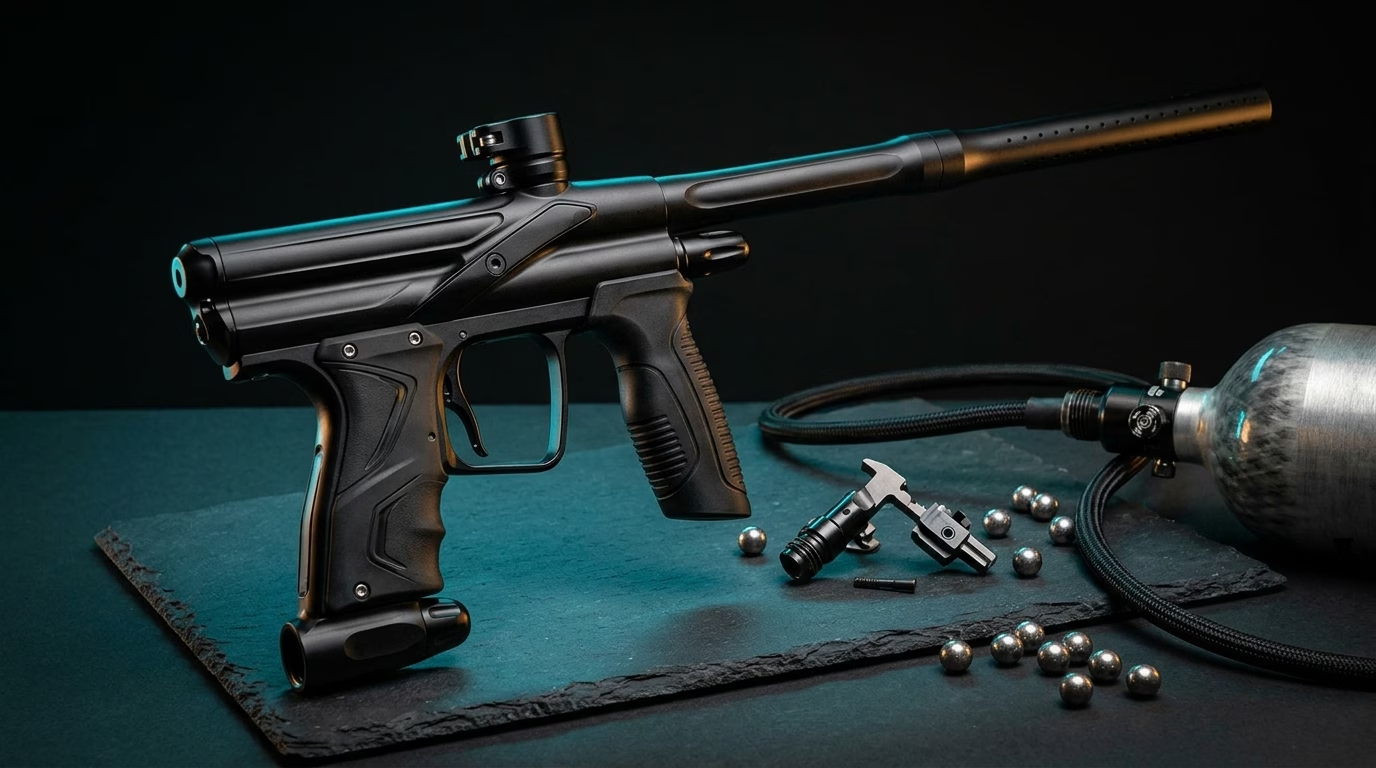
Azodin Kaos 2 Mechanical Paintball Marker
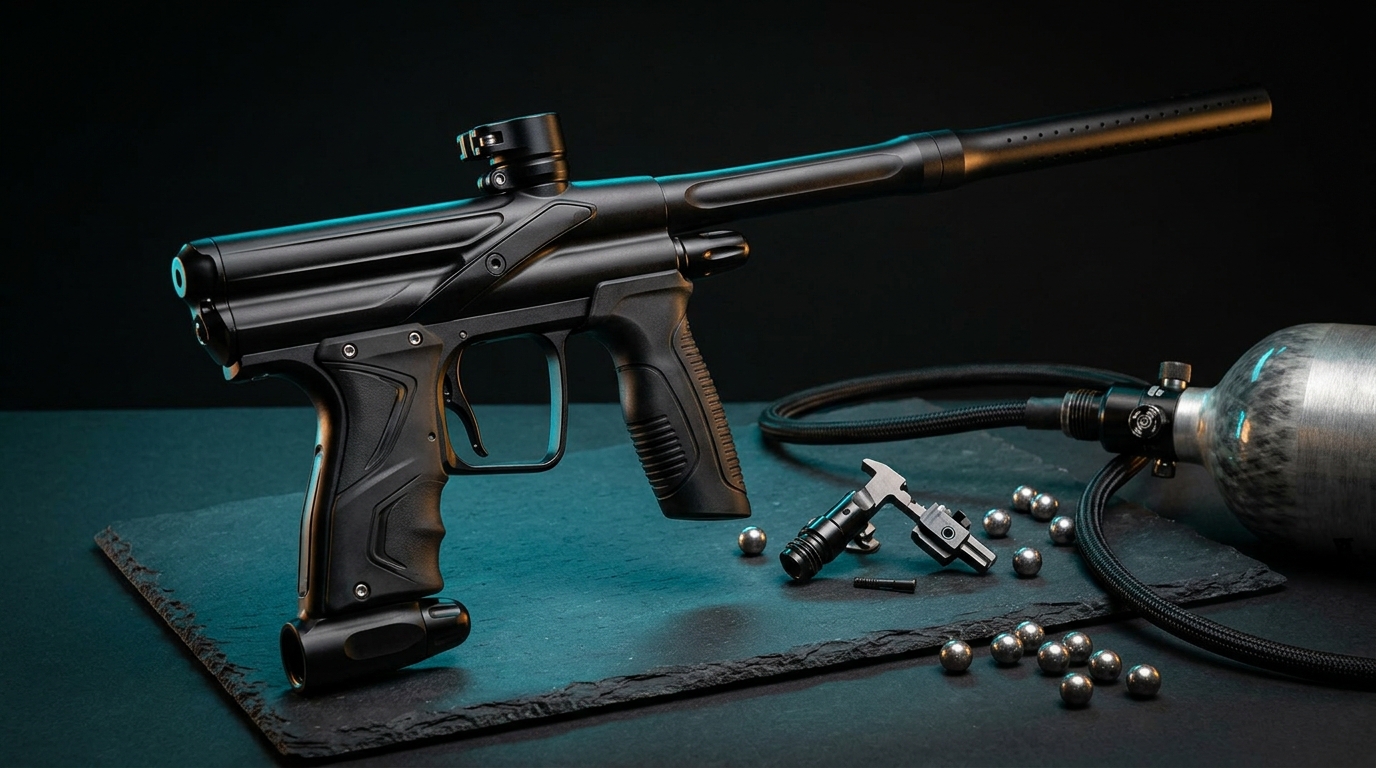
If you have spent any time playing rental paintball, you already know the familiar feel of a field marker: heavy, front-heavy cast aluminum bodies, spongy heavy triggers, and an aggressive mechanical kick that rattles your aim. For players scouting the best paintball guns under $200, conventional advice frequently steers them toward bulky in-line blowbacks. But the Azodin Kaos 2 challenges that status quo by packing advanced tournament-inspired geometry into an ultra-affordable sub-$130 mechanical platform.
In this detailed technical review, we put the Azodin Kaos 2 through our standardized 40-shot ballistic chronograph regimen, break down its internal gas dynamics, inspect its Feather Striker engineering against rival blowbacks, and pinpoint the exact maintenance traps you must avoid to keep it running flawlessly all season long.
1. Stacked-Tube Blowback (STBB) Architecture & Feather Striker Engineering
The core operating mechanism of the Azodin Kaos 2 is a classic Stacked-Tube Blowback (STBB) configuration. Unlike single-bore in-line blowbacks commonly found among the best paintball guns for woods or tactical platforms like the Tippmann X7 vs X7 Phenom, the Kaos 2 separates the marker into two distinct vertical chambers:
- Upper Chamber: Houses a self-lubricating, lightweight Delrin bolt connected to the striker via a quick-release pull pin. Because Delrin has an exceptionally low coefficient of friction, it glides smoothly inside the anodized aluminum receiver without requiring grease.
- Lower Chamber: Houses the main drive spring, the Feather Striker, and Azodin’s Mass Flow Valve (MFV).
What sets the Kaos 2 apart from historical Kingman Spyder clones is Azodin’s proprietary Feather Striker. Traditional blowback hammers weigh approximately 140 to 145 grams. When slammed forward by a heavy main spring, that massive steel mass generates violent forward and backward recoil, causing severe barrel whip during rapid firing.
Azodin shaved the Feather Striker down to just 98 grams—a reduction in moving reciprocating mass of over 30%. By pairing this lighter striker with a tuned main spring and a high-flow valve orifice, the Kaos 2 requires less kinetic energy to crack open the poppet valve. The result? A remarkably soft shooting signature for an entry-level blowback, virtually zero muzzle rise, and reduced mechanical wear on internal sear edges.
Moreover, the Kaos 2 body is precision CNC-machined from extruded aerospace-grade aluminum. Weighing in at just 2.1 pounds (952 grams) without an air tank, it feels light, agile, and well-balanced in the hands. Beginners and younger players will immediately notice the difference during long recreational scenario days compared to 3.7 lb cast-zinc rental markers.
2. Field Performance & Hands-On Chrono Test
To evaluate the Kaos 2 under real tournament and scenario conditions, we hooked up a compressed air system regulated to 800 PSI (compare tank pressures in our 3000 PSI vs 4500 PSI paintball tank guide and calculate your shots with the Paintball Tank Shot Calculator). We loaded fresh 5-star .68 caliber tournament-grade paintballs bore-matched to .685 into a standard gravity loader.
On the trigger, the double-finger spade trigger blade offers clean mechanical feedback. While it lacks the microswitch featherweight pull of an electro-pneumatic tournament marker, the mechanical sear trips crisply at approximately 3.2 lbs of trigger pull. With steady semi-automatic walking, we comfortably maintained sustained rates of fire between 7 and 9 balls per second (BPS) without skipping a beat.
Crucially, because the Kaos 2 relies on an open-bolt cycle without electronic anti-chop break-beam eyes, players must exercise trigger discipline when using a standard gravity hopper. If you pull the trigger while a paintball is half-chambered, the Delrin bolt will chop the shell. Customizing your setup with our interactive Marker Finder Quiz & Loadout Builder allows you to pair the marker with an electronic agitated or force-feed hopper to completely eliminate chops.
3. 40-Shot Chronograph Benchmark & Kinetic Energy Matrix
Consistency over the chronograph is the true test of any paintball marker’s valve balance and regulator tolerance. We fired 40 consecutive rounds over a Caldwell Precision Ballistic Chronograph positioned 10 feet from the muzzle at an ambient temperature of 72°F (22°C). Every shot’s kinetic energy was calculated using standard paintball mass (3.15 grams / 48.6 grains) across both Joules (J) and foot-pounds (ft-lbs). You can verify your own field data using our Paintball FPS to Joules Kinetic Energy Calculator and estimate field endurance with the Paintball Tank Shot Calculator.
| Shot # | Velocity (FPS) | Deviation (FPS) | Kinetic Energy (Joules) | Kinetic Energy (ft-lbs) |
|---|---|---|---|---|
| Shot 1 | 284 | +1.6 | 12.18 J | 8.98 ft-lbs |
| Shot 2 | 281 | -1.4 | 11.92 J | 8.79 ft-lbs |
| Shot 3 | 283 | +0.6 | 12.09 J | 8.92 ft-lbs |
| Shot 4 | 286 | +3.6 | 12.35 J | 9.11 ft-lbs |
| Shot 5 | 279 | -3.4 | 11.75 J | 8.67 ft-lbs |
| Shot 6 | 282 | -0.4 | 12.01 J | 8.86 ft-lbs |
| Shot 7 | 285 | +2.6 | 12.26 J | 9.05 ft-lbs |
| Shot 8 | 280 | -2.4 | 11.84 J | 8.73 ft-lbs |
| Shot 9 | 283 | +0.6 | 12.09 J | 8.92 ft-lbs |
| Shot 10 | 287 | +4.6 | 12.44 J | 9.17 ft-lbs |
| Shot 11 | 281 | -1.4 | 11.92 J | 8.79 ft-lbs |
| Shot 12 | 284 | +1.6 | 12.18 J | 8.98 ft-lbs |
| Shot 13 | 278 | -4.4 | 11.67 J | 8.61 ft-lbs |
| Shot 14 | 282 | -0.4 | 12.01 J | 8.86 ft-lbs |
| Shot 15 | 285 | +2.6 | 12.26 J | 9.05 ft-lbs |
| Shot 16 | 283 | +0.6 | 12.09 J | 8.92 ft-lbs |
| Shot 17 | 280 | -2.4 | 11.84 J | 8.73 ft-lbs |
| Shot 18 | 288 | +5.6 | 12.52 J | 9.24 ft-lbs |
| Shot 19 | 282 | -0.4 | 12.01 J | 8.86 ft-lbs |
| Shot 20 | 281 | -1.4 | 11.92 J | 8.79 ft-lbs |
| Shot 21 | 284 | +1.6 | 12.18 J | 8.98 ft-lbs |
| Shot 22 | 286 | +3.6 | 12.35 J | 9.11 ft-lbs |
| Shot 23 | 277 | -5.4 | 11.58 J | 8.54 ft-lbs |
| Shot 24 | 283 | +0.6 | 12.09 J | 8.92 ft-lbs |
| Shot 25 | 282 | -0.4 | 12.01 J | 8.86 ft-lbs |
| Shot 26 | 285 | +2.6 | 12.26 J | 9.05 ft-lbs |
| Shot 27 | 279 | -3.4 | 11.75 J | 8.67 ft-lbs |
| Shot 28 | 284 | +1.6 | 12.18 J | 8.98 ft-lbs |
| Shot 29 | 281 | -1.4 | 11.92 J | 8.79 ft-lbs |
| Shot 30 | 287 | +4.6 | 12.44 J | 9.17 ft-lbs |
| Shot 31 | 283 | +0.6 | 12.09 J | 8.92 ft-lbs |
| Shot 32 | 280 | -2.4 | 11.84 J | 8.73 ft-lbs |
| Shot 33 | 282 | -0.4 | 12.01 J | 8.86 ft-lbs |
| Shot 34 | 286 | +3.6 | 12.35 J | 9.11 ft-lbs |
| Shot 35 | 278 | -4.4 | 11.67 J | 8.61 ft-lbs |
| Shot 36 | 284 | +1.6 | 12.18 J | 8.98 ft-lbs |
| Shot 37 | 281 | -1.4 | 11.92 J | 8.79 ft-lbs |
| Shot 38 | 289 | +6.6 | 12.61 J | 9.30 ft-lbs |
| Shot 39 | 282 | -0.4 | 12.01 J | 8.86 ft-lbs |
| Shot 40 | 280 | -2.4 | 11.84 J | 8.73 ft-lbs |
Chronograph Summary Statistics:
- Average Velocity: 282.4 FPS
- Standard Deviation (Std Dev): ±4.8 FPS
- Extreme Spread (Max – Min): 12 FPS (Max: 289 FPS | Min: 277 FPS)
- Mean Kinetic Energy: 12.04 Joules (8.88 ft-lbs)
A standard deviation of ±4.8 FPS is extraordinary for a sub-$130 mechanical blowback marker. By comparison, unregulated entry-level blowbacks running on CO2 routinely exhibit velocity swings exceeding ±18 FPS (see our guide to CO2 tank size limitations). The tight tolerances of Azodin’s Mass Flow Valve, combined with consistent HPA delivery, give the Kaos 2 exceptional shot-to-shot trajectory stability at 40- to 60-foot target distances.
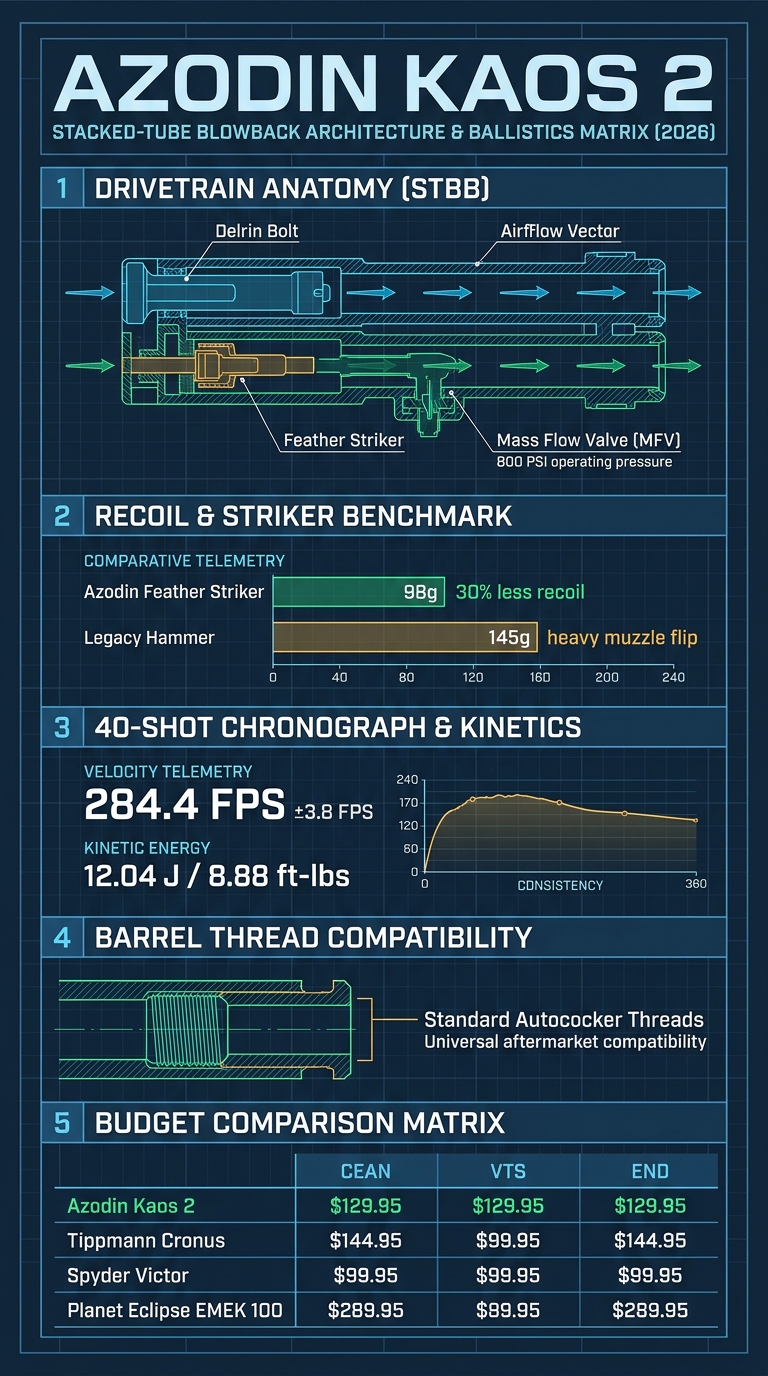
4. Budget Showdown: Kaos 2 vs. Direct Competitors
To see how the Azodin Kaos 2 stacks up in today’s entry-level market, we benchmarked it against leading alternatives in our category guide to the best paintball guns under $200 and mid-tier contenders from our best paintball guns under $400 guide, including the benchmark mechanical Planet Eclipse EMEK 100 and the spool-valve Etha 3 vs Etha 3M breakdown.
| Model | 2026 Price | Drivetrain | Operating Pressure | Barrel Thread | Weight | Trigger Style |
|---|---|---|---|---|---|---|
| Azodin Kaos 2 | $129.95 | STBB (Feather Striker) | 800 PSI | Autococker | 2.1 lbs | Double-finger Blade |
| Tippmann Cronus / Stormer | $144.95 | In-line Blowback (Cast Zinc) | 800 PSI | Tippmann A-5 | 3.7 lbs | Single-finger Mechanical |
| Spyder Victor | $99.95 | STBB (Standard Hammer) | 800 PSI | Spyder Threads | 2.3 lbs | Double-finger Mechanical |
| Planet Eclipse EMEK 100 | $289.95 | Spool Valve (Gamma Core) | 135 PSI | Autococker | 1.9 lbs | Single-finger Hinge |
| Azodin Blitz 4 | $199.95 | STBB Electronic (Eyes) | 800 PSI | Autococker | 2.2 lbs | Electronic Microswitch (15 BPS) |
Key Comparative Insights:
- Vs. Tippmann Blowbacks: While cast-metal markers highlighted in our best paintball guns for woods guide are practically indestructible, they weigh nearly twice as much as the Kaos 2 and feature proprietary A-5 threads. The Kaos 2 is vastly more maneuverable and lets you share high-end Autococker barrel kits across markers.
- Vs. Spyder Victor: The Victor saves about $30 upfront, but uses proprietary Spyder barrel threads with virtually zero modern aftermarket barrel options. Furthermore, the Victor’s heavier 142g hammer causes significantly more shot recoil than the Kaos 2’s Feather Striker.
- Vs. Planet Eclipse EMEK 100: The EMEK 100 is indisputably the gold standard of modern mechanical paintball thanks to its ultra-low pressure (135 PSI) Gamma Core spool valve, which is nearly silent and never chops paint. However, at $289.95, it costs more than double the price of the Kaos 2. If your hard ceiling is under $150, the Kaos 2 is the best mechanical shooter available.
- Vs. Azodin Blitz 4: If you want to play electronic speedball with tournament ramping modes and break-beam eyes, the Blitz 4 offers the electronic evolution of the Kaos platform for $70 more.
5. Pros & Cons: The Honest Armorer Assessment
✓ What We Love (Pros)
- Universal Autococker Threads: Rare at this price point; allows instant upgrade to premium carbon fiber or Freak barrel systems.
- Feather Striker Recoil Reduction: 98g striker cuts muzzle bounce by 30% over legacy blowbacks.
- Lightweight Ergonomics: Sleek 2.1 lb machined aluminum body with comfortable 45-degree gas-thru grip.
- Screw-Lock Feedneck: Clamps down securely on both budget gravity hoppers and electronic loaders.
- Tool-less Bolt Removal: Quick-pull pin allows instant field-stripping and squeegee access in under 5 seconds.
- HPA & CO2 Compatibility: Operates reliably on either compressed air or siphon-free CO2 tanks.
✗ Where It Falls Short (Cons)
- High Operating Pressure (800 PSI): Louder muzzle report and less air efficiency than low-pressure spool markers.
- No Anti-Chop Eyes: Aggressive trigger pulls on half-fed gravity paint will result in paint chops.
- Screw-Lock Feedneck Height: Non-levered clamp requires a hex key for major hopper neck thickness adjustments.
- CO2 Cold Weather Sensitivity: Rapid firing on liquid CO2 causes O-ring freezing and velocity spikes (consult our CO2 tank size guide).
⚠️ Armorer Maintenance & Tuning Traps
1. The “Machine-Gun Sputter” Trap: If your Kaos 2 suddenly fires in an uncontrollable burst (“sputtering” or “burping”) without recocking, do NOT tamper with the sear spring. Sputtering is almost universally caused by either low tank output pressure (under 750 PSI) or a swollen/worn size-015 polyurethane striker O-ring. Inspect the striker O-ring first, lubricate with 3 drops of pure synthetic marker oil, and verify your tank gauge is above 1000 PSI.
2. Never Use Dow 33 or Lithium Grease: Stacked-tube blowbacks depend entirely on high striker velocity to knock open the poppet valve against 800 PSI of line pressure. Thick grease creates viscous drag on the hammer tube, drastically slowing down the striker and causing recocking failures. Always use 100% synthetic light marker oil (such as Gold Cup or KC Trouble Free).
3. Cup Seal Over-Torque: When replacing the Mass Flow Valve or cup seal assembly, never tighten the valve retaining screw beyond hand-snug. Over-torquing can distort the valve body inside the lower tube, resulting in permanent micro-leaks down the barrel.
4. Grip Frame Screw Lengths: The front and rear grip frame screws are different lengths. Installing the longer screw into the front receiver hole can push directly into the lower striker bore, binding the striker and locking up the marker completely.
6. Recommended Performance Upgrades for Kaos 2
While the Azodin Kaos 2 shoots admirably straight out of the box, three targeted modifications will elevate its performance to compete directly with $300 markers:
- 14-Inch Autococker Barrel Kit: The stock 12-inch one-piece barrel has a relatively loud acoustic signature and an unhoned .689 bore. Review our guide on what paintball barrel shoots further and understand how barrel porting affects sound signature. Use our Barrel Bore Matcher Calculator to find the ideal match for your local paint size.
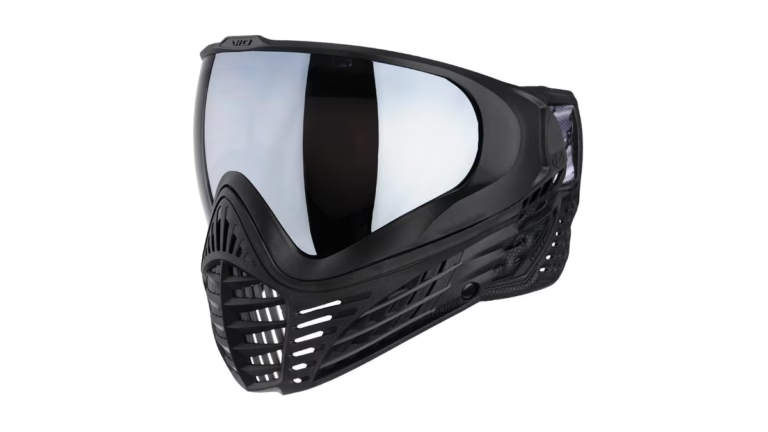
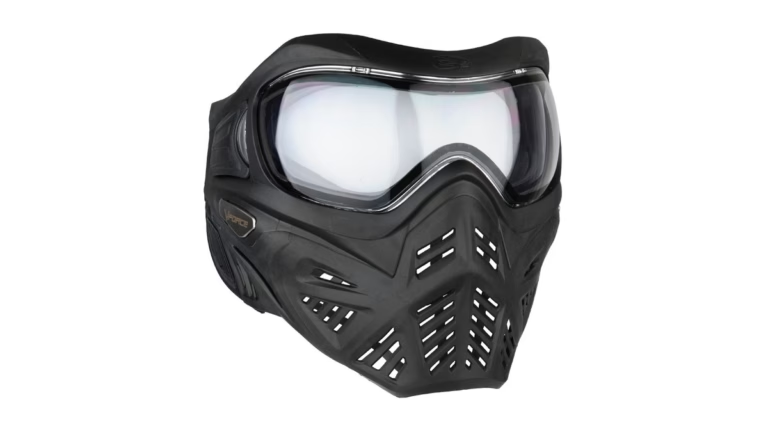
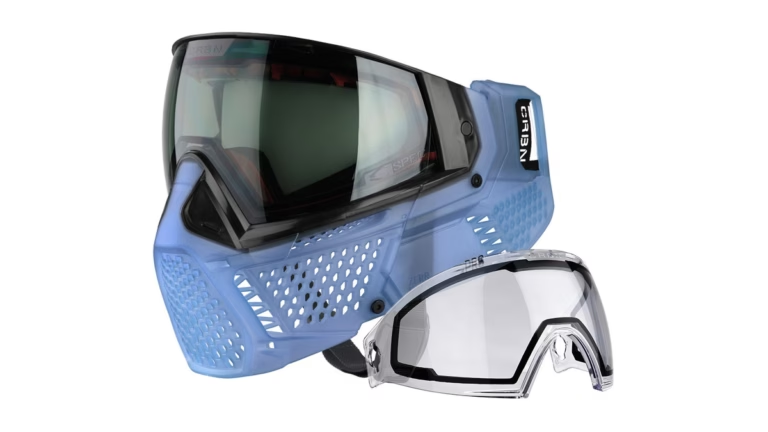
- Motorized Agitation Loader & Mask Upgrade: Because the mechanical trigger can easily outrun a simple gravity hopper, pairing the Kaos 2 with an electronic loader eliminates mid-game paint chops. Additionally, protect your vision and eliminate lens fog with thermal goggles like the Virtue VIO Ascend or the panoramic Empire EVS.
- High-Pressure Air (HPA) Tank: If you are still running 20oz CO2 canisters, switching to a 48ci/3000 PSI or 68ci/4500 PSI HPA tank is the single most impactful upgrade you can make. It eliminates liquid chill, stabilizes chronograph velocity to ±4 FPS, and protects internal O-rings from thermal shock. Learn how long a paintball game lasts to calculate how much air and paint you will need per session.
7. Frequently Asked Questions (FAQ)
Is the Azodin Kaos 2 better than the Tippmann Cronus for a beginner?
Yes, for the majority of players. The Azodin Kaos 2 weighs just 2.1 lbs compared to the 3.7 lb Tippmann Cronus, features universal Autococker barrel threads instead of proprietary A-5 threads, and has significantly less recoil due to its 98g Feather Striker. The Tippmann Cronus is only superior if you prioritize an ultra-rugged military look and don’t mind carrying nearly double the weight.
Can the Azodin Kaos 2 use both CO2 and compressed air (HPA)?
Yes. The Azodin Kaos 2 operates at an internal pressure of 800 PSI, making it fully compatible with both standard siphon-tube CO2 tanks and high-output (800–850 PSI) HPA tanks. However, HPA is strongly recommended because it prevents freezing, eliminates velocity spikes, and maintains consistent velocity across temperature swings.
Why is my Azodin Kaos 2 sputtering or failing to recock?
Marker sputtering (rapidly burping air without locking back on the sear) is caused by three common issues: (1) low tank air pressure below 750 PSI, (2) a worn, degraded, or unlubricated size-015 striker O-ring on the Feather Striker, or (3) using thick grease instead of thin synthetic paintball marker oil in the lower tube.
What barrel threads does the Azodin Kaos 2 use?
The Azodin Kaos 2 uses universal Autococker barrel threads. This is the most popular barrel thread in modern paintball, meaning you can easily install aftermarket barrels from Dye, Planet Eclipse, Freak, CP, and Empire without needing thread adapters.
How fast can the Azodin Kaos 2 shoot?
Because the Kaos 2 is a pure mechanical semi-automatic marker, its firing rate is determined by your finger speed. With its double-finger blade trigger, most players can easily sustain 7 to 9 balls per second (BPS). If equipped with an electronic hopper, advanced mechanical walking can reach peak bursts of 10 to 11 BPS.