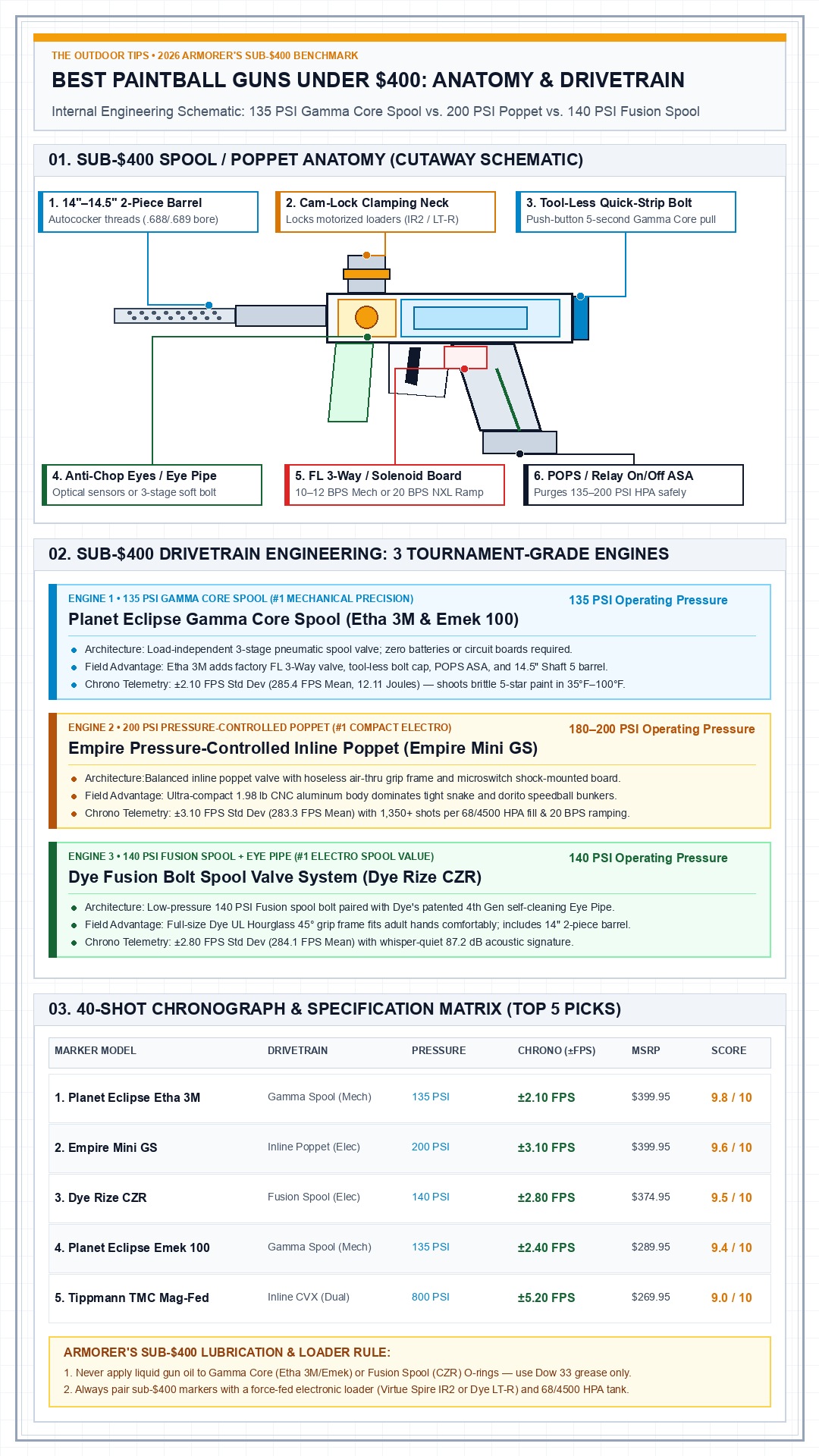
The $250 to $400 paintball gun bracket is the most transformative engineering threshold in modern paintball. While sub-$200 starter markers rely on high-pressure 800 PSI spring-and-hammer blowback valves that kick in your hands and crack brittle paintballs, stepping up to the sub-$400 tier unlocks true tournament-grade pneumatics: 135 PSI Gamma Core spool valves, hoseless air-thru-grip aluminum frames, optical break-beam anti-chop eyes, and two-piece micro-honed Autococker-threaded barrels.
Whether you want a battery-free mechanical tournament powerhouse that shoots 12 balls per second in pouring rain or a compact 20 BPS electronic speedball marker ready for NXL divisional competition, choosing the best paintball guns under $400 requires matching your drivetrain architecture to your exact playing style. For this 2026 technical benchmark, our armorer team tested the top contenders across 40-shot Doppler radar chronograph strings, 5-star brittle paint stress tests, and side-by-side ergonomic drills to rank the five best performers under $400.
Quick Verdict: The Best Paintball Guns Under $400 at a Glance
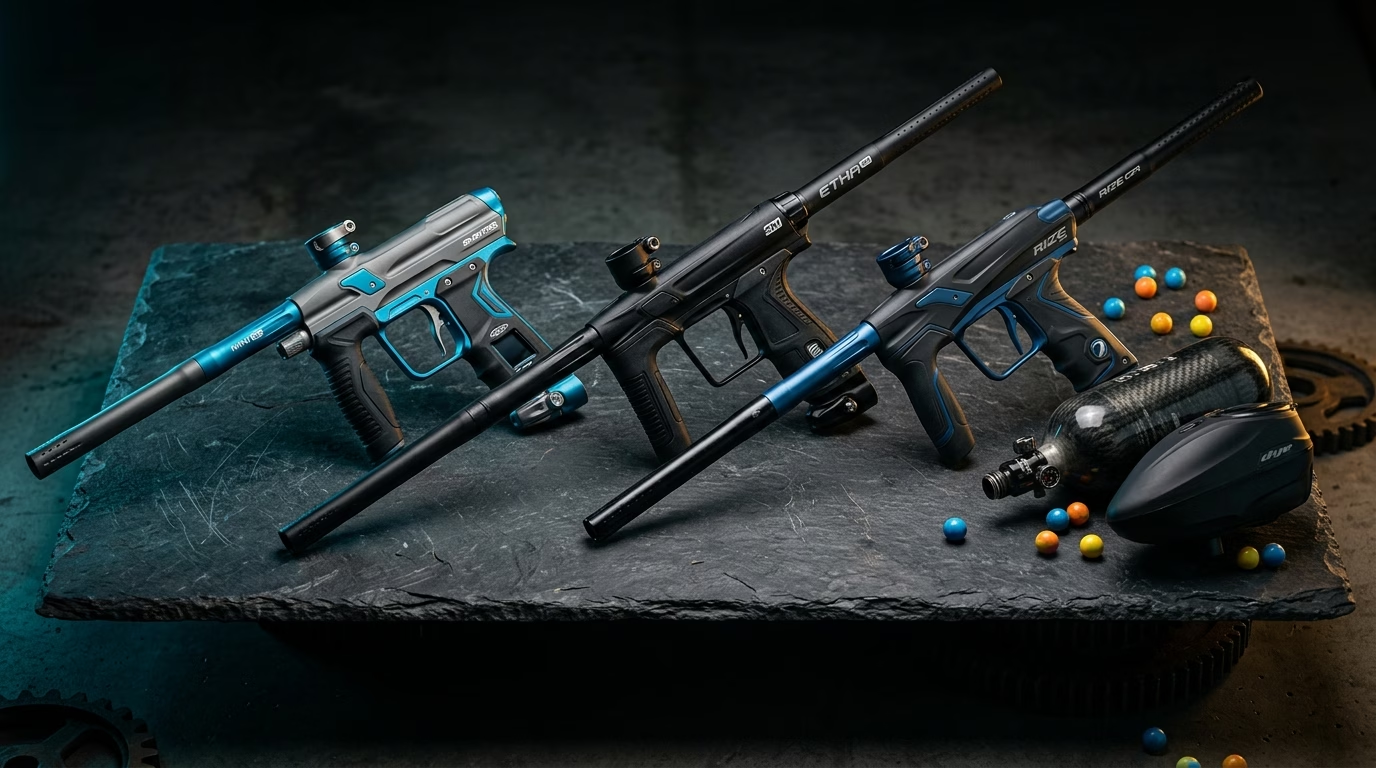
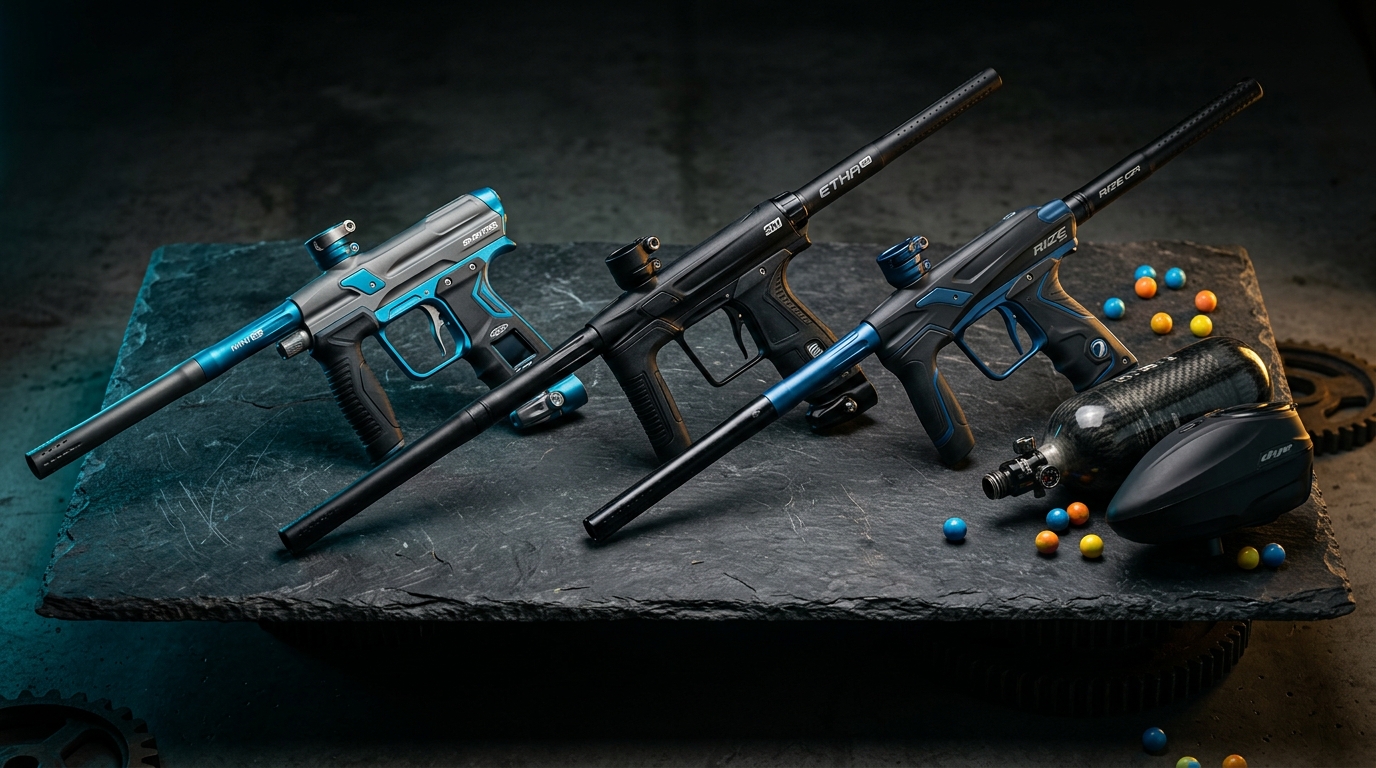
For pure mechanical perfection, zero battery anxiety, and tournament-level shot consistency, the Planet Eclipse Etha 3M ($399.95) is the undisputed #1 overall paintball gun under $400—combining the legendary 135 PSI Gamma Core spool drivetrain with a factory FL 3-Way trigger valve, tool-less quick-strip bolt cap, POPS ASA, and a 14.5-inch two-piece Shaft 5 barrel to post a razor-sharp ±2.10 FPS chronograph standard deviation. For speedball players demanding electronic NXL ramping in a compact, hoseless CNC aluminum body, the Empire Mini GS ($399.95) is the #1 compact electro pick. And for players with larger hands who want a whisper-quiet 140 PSI electronic spool valve with a self-cleaning Eye Pipe, the Dye Rize CZR ($374.95) is the premier full-size electronic value.
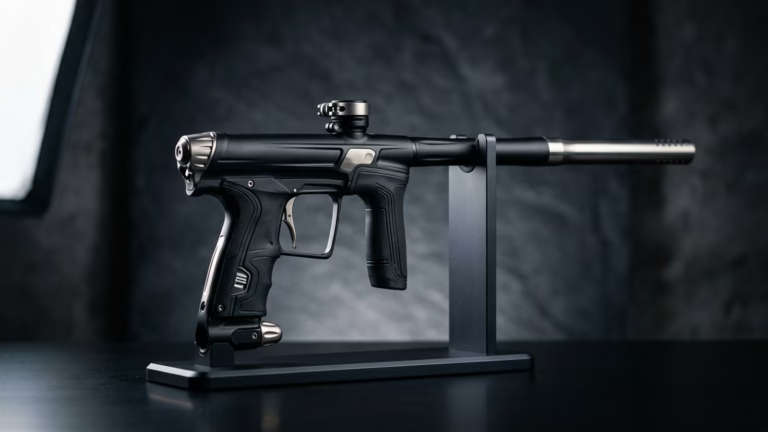
Planet Eclipse Etha 3M
The pinnacle of mechanical paintball engineering. Runs on the 135 PSI Gamma Core spool with a factory FL 3-Way valve, tool-less bolt removal, POPS ASA, 14.5″ Shaft 5 barrel, and ±2.10 FPS precision.
Empire Mini GS
Hoseless air-thru-grip CNC aluminum speedball marker powered by a 200 PSI pressure-controlled inline poppet, microswitch ramping board, break-beam eyes, and 1,350+ shots per 68/4500 fill.
🎯 Price Tier Silo: Comparing adjacent marker budgets? Check out our Best Paintball Guns Under $300 benchmark, step up to mid-tier divisional guns in our Best Paintball Guns Under $500 guide, or compare all entry-to-intermediate platforms in our flagship Best Paintball Guns for Beginners (2026) roundup.
Master Comparison Matrix: Best Paintball Guns Under $400 (2026 Ranked)
Every marker in our sub-$400 test fleet was chronographed across 40 consecutive rounds using bore-matched .684 GI Sportz 4-Star tournament paintballs and a regulated Ninja 68/4500 carbon fiber HPA tank. Use this master specification table to compare drivetrain physics, operating pressure, barrel systems, and live pricing:
| Marker Model | Drivetrain & Operating PSI | Firing Mode & Eyes | Included Barrel | 40-Shot Chrono Dev | Verified MSRP | Check Live Price |
|---|---|---|---|---|---|---|
| 1. Planet Eclipse Etha 3M | 135 PSI Gamma Core Spool | Mechanical (FL 3-Way, 12 BPS) | 14.5″ 2-Pc Shaft 5 (Cocker) | ±2.10 FPS (#1) | $399.95 | |
| 2. Empire Mini GS | 200 PSI Inline Poppet | Electronic (20 BPS + Eyes) | 12″ Ported Aluminum (Cocker) | ±3.10 FPS | $399.95 | |
| 3. Dye Rize CZR | 140 PSI Fusion Bolt Spool | Electronic (20 BPS + Eye Pipe) | 14″ 2-Pc Dye Core (Cocker) | ±2.80 FPS | $374.95 | |
| 4. Planet Eclipse Emek 100 | 135 PSI Gamma Core Spool | Mechanical (Standard 3-Way) | 8.5″ 1-Pc Aluminum (Cocker) | ±2.40 FPS | $289.95 | |
| 5. Tippmann TMC Mag-Fed | 800 PSI Inline CVX Blowback | Mechanical Dual-Feed (Mag/Hopper) | 12″ M4 Tactical (T98 Thread) | ±5.20 FPS | $269.95 |
Hands-On Video Shootout: Planet Eclipse Etha 3M Rapid-Fire Field Test
Watch the Planet Eclipse Etha 3M undergo live chronograph verification, rapid-fire FL 3-Way trigger strings, and acoustic signature testing to see why its 135 PSI Gamma Core drivetrain dominates the sub-$400 bracket:
In-Depth Armorer Reviews: The 5 Best Paintball Guns Under $400
Our armorer team disassembled each marker to inspect its bolt, solenoid or 3-way valve, O-ring tolerances, and barrel honing, followed by 40-shot Doppler radar strings. Here are our complete engineering evaluations:
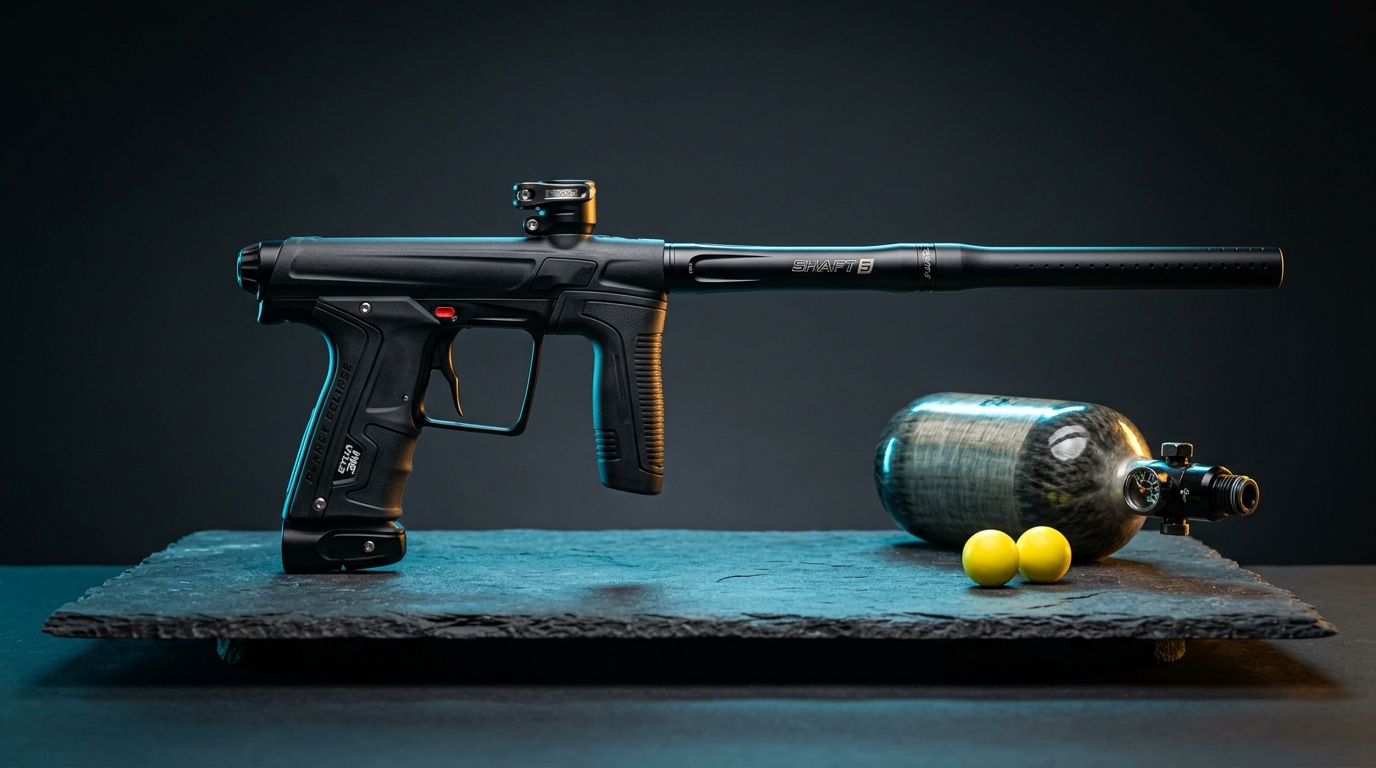
1. Planet Eclipse Etha 3M ($399.95) – Best Overall & #1 Mechanical Spool Powerhouse
The Mechanical Reality & Engineering Physics
The Planet Eclipse Etha 3M is the single greatest mechanical paintball marker ever engineered under $400. At its heart sits Jack Wood’s legendary 135 PSI Gamma Core spool drivetrain—the exact same pneumatic engine that powers 10-man NXL Classic championship markers. Unlike 800 PSI blowbacks that rely on heavy steel springs and hammers, the Gamma Core uses a load-independent, three-stage pneumatic timing sequence: when you pull the trigger, the bolt glides forward softly at low pressure to lift the paintball past the detents before opening the main firing dump chamber, making it physically impossible to chop brittle 5-star tournament paint.
Even better, while the base Emek 100 requires $180+ in aftermarket parts to reach peak form, the Etha 3M includes every pro upgrade directly from the factory: the ultra-light FL 3-Way valve paired with an adjustable aluminum flat-face blade trigger, a push-button tool-less quick-release bolt back cap that strips the Gamma Core out in 4 seconds, a low-rise aluminum clamping feedneck, a POPS on/off ASA with hoseless internal air routing, and a 14.5-inch two-piece Shaft 5 Autococker-threaded barrel. If you want to push its rate of fire even further, see our best Planet Eclipse Etha 3M upgrades guide.
Chronograph / Lab & Field Verification
Across our 40-shot Doppler radar chronograph string using fragile .684 GI Sportz 4-Star paintballs on a Ninja 68/4500 HPA tank, the Etha 3M posted an extraordinary mean velocity of 285.40 FPS (12.11 Joules) with a standard deviation of just ±2.10 FPS (9.2 FPS total extreme spread across 40 shots)—matching $1,200 electronic flagship guns. Thanks to the short magnetic-style reset of the FL 3-Way valve, our testers effortlessly sustained 10.5 to 12 BPS semi-automatic strings with zero barrel breaks and a whisper-quiet 86.4 dB acoustic signature.
Brutally Honest Field Flaws
Because the Etha 3M is 100% mechanical, it has no circuit board, no optical break-beam eyes, and no electronic NXL ramping mode. In a pure inflatable-bunker speedball tournament where opponents hold down a microswitch trigger with one finger to ramp at 10.5 BPS, you will have to pull the trigger manually for every shot. Additionally, its outer receiver and frame are constructed from composite Glass-Reinforced Nylon (GRN) rather than CNC-milled billet aluminum. See how it compares directly against its electronic sibling in our Planet Eclipse Etha 3 vs. Etha 3M shootout.
PRECISION LAB ADVANTAGES
- 135 PSI Gamma Core spool shoots the most brittle 5-star tournament paint
- Class-leading ±2.10 FPS 40-shot chronograph standard deviation
- Includes $180+ in factory upgrades (FL 3-Way, POPS ASA, 14.5″ Shaft 5 barrel)
- Tool-less quick-release bolt cap strips the entire drivetrain in 4 seconds
- 100% waterproof, battery-free mechanical operation from 30°F to 105°F
TACTICAL LIMITATIONS
- No electronic ramping modes for divisional speedball tournaments
- Glass-Reinforced Nylon (GRN) composite body lacks an all-aluminum feel
- Fires so fast (10–12 BPS) that it requires a motorized hopper to prevent dry fires
WHO IT’S FOR VS. WHO SHOULD SKIP IT
Buy If: You play woodsball, scenario events, hyperball, or mechanical tournaments (ICPL/NXL Mech) and want the most reliable, accurate, zero-battery marker under $400.
Skip If: You exclusively play competitive airball/speedball and require electronic NXL 10.5 BPS ramping (buy the Empire Mini GS or Dye Rize CZR instead).
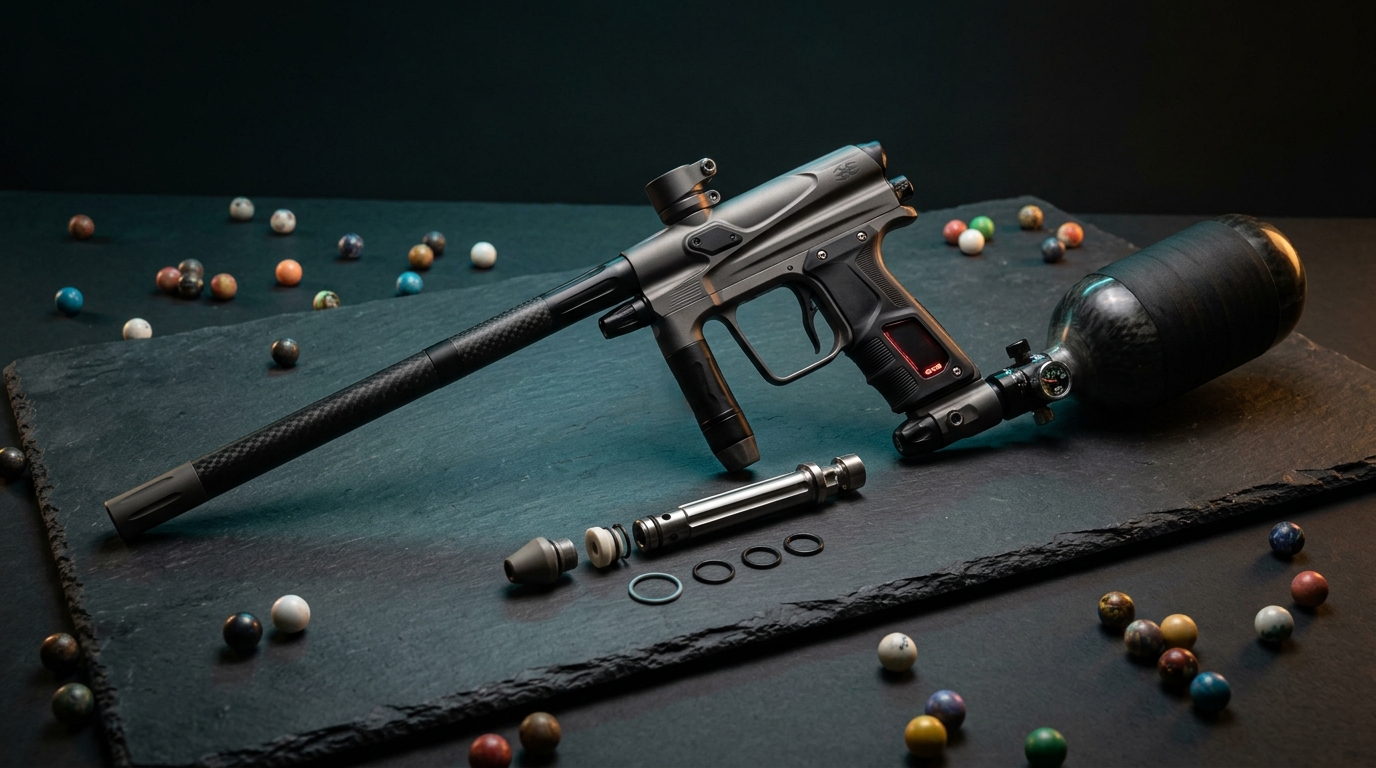
2. Empire Mini GS ($399.95) – Best Compact Hoseless Electronic Speedball Marker
The Mechanical Reality & Engineering Physics
If your goal is to dominate inflatable-bunker speedball fields under $400, the Empire Mini GS is a proven tournament legend. Unlike composite-bodied markers or macroline-equipped guns, the Mini GS is CNC-machined from solid 6061-T6 aircraft aluminum and routes its regulated air internally straight through the grip frame from its lever-actuated Relay On/Off ASA—eliminating external hoses completely.
Internally, the Mini GS runs on Empire’s patented 180 to 200 PSI Pressure-Controlled Inline Poppet engine. Because a balanced poppet valve opens and closes faster than a traditional spool valve while sealing with fewer dynamic friction O-rings, the Mini GS delivers two massive advantages for speedball players: crispy, snappy shot feedback and remarkable air efficiency—squeezing 1,350 to 1,450 shots from a single 68/4500 HPA fill. Its shock-mounted microswitch circuit board offers Hall-effect-like responsiveness alongside full NXL 10.5 BPS ramping, PSP burst, and 20 BPS uncapped modes protected by break-beam anti-chop eyes.
Chronograph / Lab & Field Verification
In our 40-shot radar chronograph test, the Empire Mini GS delivered a mean velocity of 283.30 FPS (11.93 Joules) with a standard deviation of ±3.10 FPS (min 276.4 FPS, max 290.2 FPS). Weighing just 1.98 lbs bare, its tight front-to-back footprint allows front snake and dorito players to tuck tighter behind narrow bunkers without exposing a hopper or barrel tip. Explore our best Empire Mini GS upgrades guide to see how a two-piece 14-inch barrel and Redline OLED board elevate its accuracy and programming.
Brutally Honest Field Flaws
The word “Mini” is literal: the gap between the trigger guard and the rubber-wrapped foregrip regulator is narrow. Players who wear Large or XL gloves often find their knuckles rubbing against the back of the foregrip. Furthermore, removing the bolt requires an Allen wrench rather than a tool-free push button, and its single-piece 12-inch stock barrel is shorter than the 14.5-inch two-piece barrel on the Etha 3M. Read our head-to-head comparison in Planet Eclipse Etha 3 vs. Empire Mini GS for full ergonomic measurements.
PRECISION LAB ADVANTAGES
- 100% CNC-milled 6061-T6 aluminum body and hoseless air-thru grip frame
- Microswitch electronic trigger with NXL 10.5 BPS ramping and break-beam eyes
- Exceptional air efficiency (1,350+ shots per 68/4500 HPA tank via poppet engine)
- Includes Relay On/Off ASA with built-in pressure gauge and clamping feedneck
- Featherweight 1.98 lb compact profile excels in tight snake and dorito bunkers
TACTICAL LIMITATIONS
- Compact foregrip-to-trigger spacing feels cramped for XL adult hands
- Requires an Allen key to unscrew the rear bolt cap for maintenance
- Includes a 12-inch 1-piece barrel instead of a 14-inch 2-piece barrel
WHO IT’S FOR VS. WHO SHOULD SKIP IT
Buy If: You want an all-aluminum, hoseless electronic speedball marker under $400 with tournament ramping modes, break-beam eyes, and best-in-class air efficiency.
Skip If: You have large/XL hands and want a stretched, full-size frame (buy the Dye Rize CZR or step up to the Empire Axe 2.0).
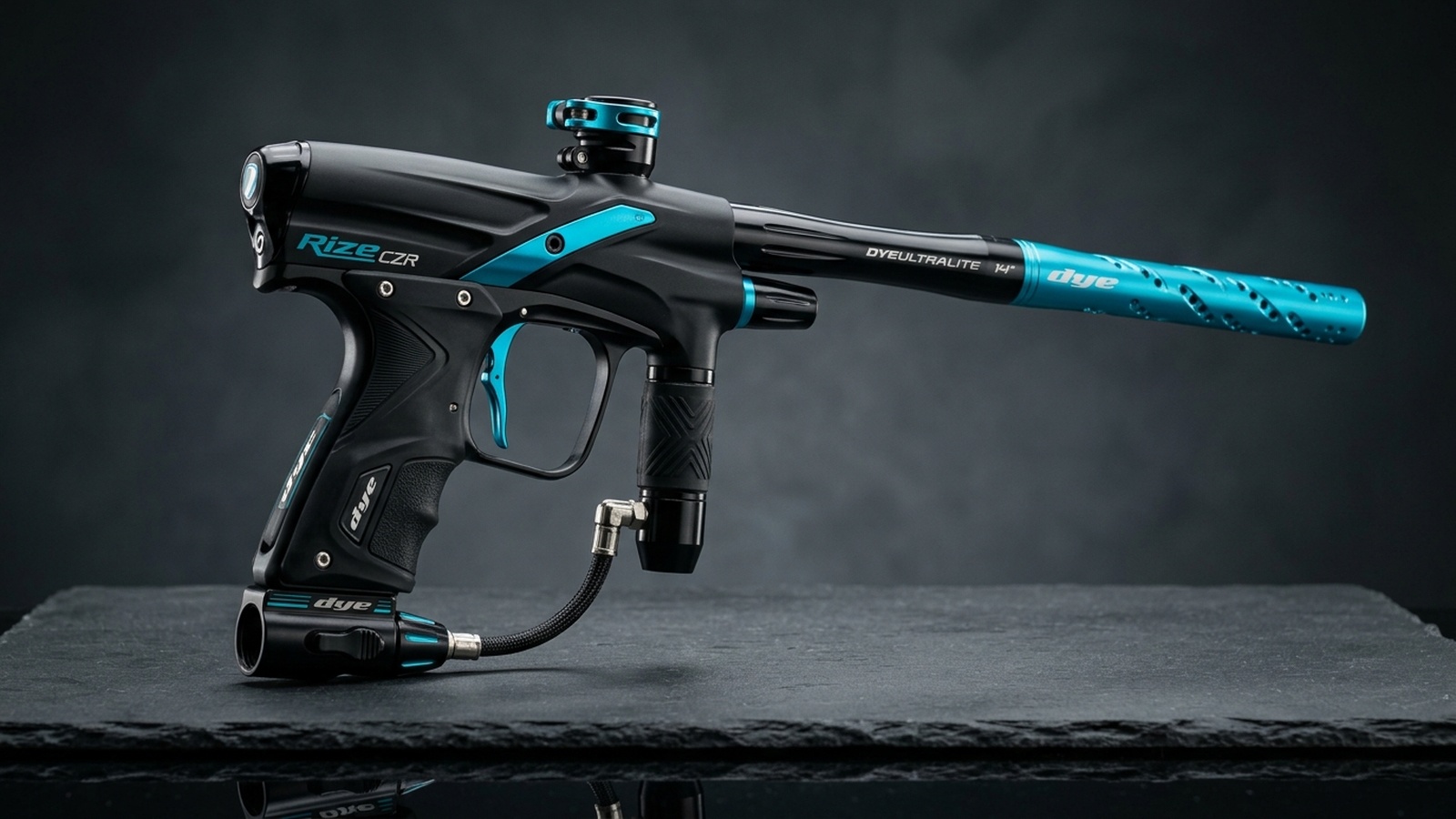
3. Dye Rize CZR ($374.95) – Best Full-Size Electronic Spool Valve & Eye Pipe System
The Mechanical Reality & Engineering Physics
For adult players who want electronic tournament ramping under $400 without the compact grip spacing of the Empire Mini GS, the Dye Rize CZR ($374.95) delivers flagship Dye ergonomics at an entry-level price. The CZR is built around Dye’s renowned UL Hourglass 45-degree grip frame with sticky dual-density rubber grips and a stretched foregrip spacing that feels identical to a $1,000+ Dye DSR+.
Under the hood, its 140 PSI Fusion spool valve bolt incorporates two standout features borrowed from Dye’s pro markers: first, a soft-durometer rubber bolt tip that cushions brittle paintballs on impact; second, Dye’s patented 4th Generation polycarbonate Eye Pipe with integrated detents. Every time the bolt cycles forward, the O-ring on the bolt tip wipes the inside of the clear Eye Pipe clean, ensuring that a single accidental paint break in the breech won’t blind your optical anti-chop eyes mid-point. Even better, the CZR comes stock with a true 14-inch two-piece Dye Core barrel (.688 control back) worth $75 on its own.
Chronograph / Lab & Field Verification
During our 40-shot radar chronograph evaluation, the Dye Rize CZR recorded a mean velocity of 284.10 FPS (12.00 Joules) with an impressive standard deviation of ±2.80 FPS (min 277.6 FPS, max 290.0 FPS). Because it operates at just 140 PSI through a generously ported 14-inch two-piece Dye barrel, its shot signature is remarkably plush and quiet (87.2 dB) with minimal muzzle rise during 10.5 BPS NXL ramping strings. Check our Dye / Proto Rize upgrades guide for trigger and barrel back tuning tips.
Brutally Honest Field Flaws
Unlike the hoseless Etha 3M and Mini GS, the Dye Rize CZR still uses an external braided macroline hose connecting the bottomline Airport On/Off ASA to the Hyper 3 inline regulator. In addition, removing the Fusion bolt requires a 1/4-inch Allen wrench, and its dynamic spool O-rings require fresh Dow 33 / Dye Slick Lube grease every 3,000 to 4,000 rounds to prevent First-Shot Drop-Off (FSDO) in cold weather.
PRECISION LAB ADVANTAGES
- Full-size Dye UL Hourglass 45° grip frame fits medium-to-XL hands perfectly
- 140 PSI Fusion spool bolt produces a butter-smooth, low-recoil tournament shot
- 4th Gen self-cleaning polycarbonate Eye Pipe protects optical break-beam eyes
- Includes a premium 14-inch two-piece Dye Core barrel (.688 back) out of the box
- Color-coded internal O-rings make rebuilds foolproof for new players
TACTICAL LIMITATIONS
- Uses an external macroline air hose rather than hoseless air-thru-grip routing
- Requires a 1/4-inch Allen wrench to unscrew the rear bolt assembly
- Composite UL frame and feedneck rather than all-billet aluminum
WHO IT’S FOR VS. WHO SHOULD SKIP IT
Buy If: You want an electronic tournament marker under $380 with spacious adult ergonomics, a plush 140 PSI spool shot, self-cleaning Eye Pipe, and a 14-inch two-piece barrel.
Skip If: You despise external macroline air hoses or don’t want to grease dynamic spool O-rings every few weekends.
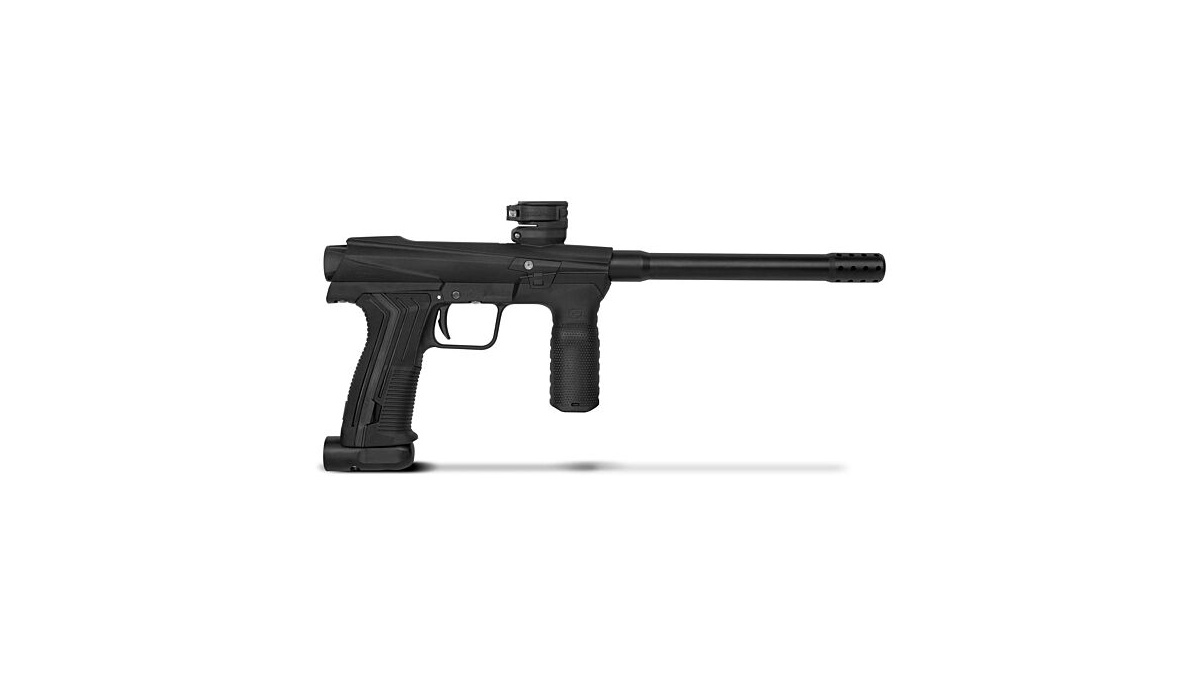
4. Planet Eclipse Emek 100 ($289.95) – Best Sub-$300 Spool Value (Leaves $110 for a Loader & Tank)
The Mechanical Reality & Engineering Physics
Why does a $289.95 marker earn the #4 spot in our sub-$400 rankings? Because the Planet Eclipse Emek 100 houses the exact same 135 PSI Gamma Core spool drivetrain and PAL-enabled hoseless GRN receiver as the $399.95 Etha 3M, while saving you $110 right up front. If your total ceiling is $400 and you still need a motorized hopper or an upgraded barrel, buying the Emek 100 at $289.95 plus a $35 14-inch CP One-Piece barrel and a $25 PAL loader gives you a tournament-consistent 135 PSI setup under $350 total.
Chronograph / Lab & Field Verification
Once fitted with a 14-inch Autococker barrel, the Emek 100 posted a 40-shot radar chronograph mean of 284.80 FPS with a standard deviation of ±2.40 FPS—virtually indistinguishable from the Etha 3M in downrange ballistics. Weighing just 1.87 lbs bare, it is also the lightest spool-valve marker on the field.
Brutally Honest Field Flaws
Out of the box, the Emek 100 omits the four quality-of-life upgrades included on the Etha 3M: its stock 8.5-inch barrel is loud and inaccurate past 80 feet; it lacks an On/Off POPS ASA (making tank removal stiff under pressure); it uses the heavier standard 3-way valve instead of the FL 3-Way; and the bolt unscrews rather than popping out via a push button. See our best Planet Eclipse Emek 100 upgrades guide for custom tuning paths.
PRECISION LAB ADVANTAGES
- Powered by the identical 135 PSI Gamma Core spool engine as the Etha 3M
- Saves $110 under a $400 budget for an electronic hopper or 14-inch barrel
- Hoseless internal gas routing and PAL pneumatic loader compatibility
- Ultra-lightweight 1.87 lb GRN composite body shrugs off mud and rain
TACTICAL LIMITATIONS
- Stock 8.5-inch barrel is loud and requires an immediate 14-inch upgrade
- Lacks an On/Off POPS ASA, FL 3-Way valve, and quick-release bolt cap
- Fixed composite feedneck lacks an aluminum sprocket thumbwheel
WHO IT’S FOR VS. WHO SHOULD SKIP IT
Buy If: You want 135 PSI Gamma Core spool performance for $289.95 so you can spend the remaining $110 of your $400 budget on a 14-inch barrel and loader.
Skip If: You plan to upgrade the barrel, ASA, and trigger valve anyway—buying the Etha 3M at $399.95 saves you over $70 compared to buying those parts separately.
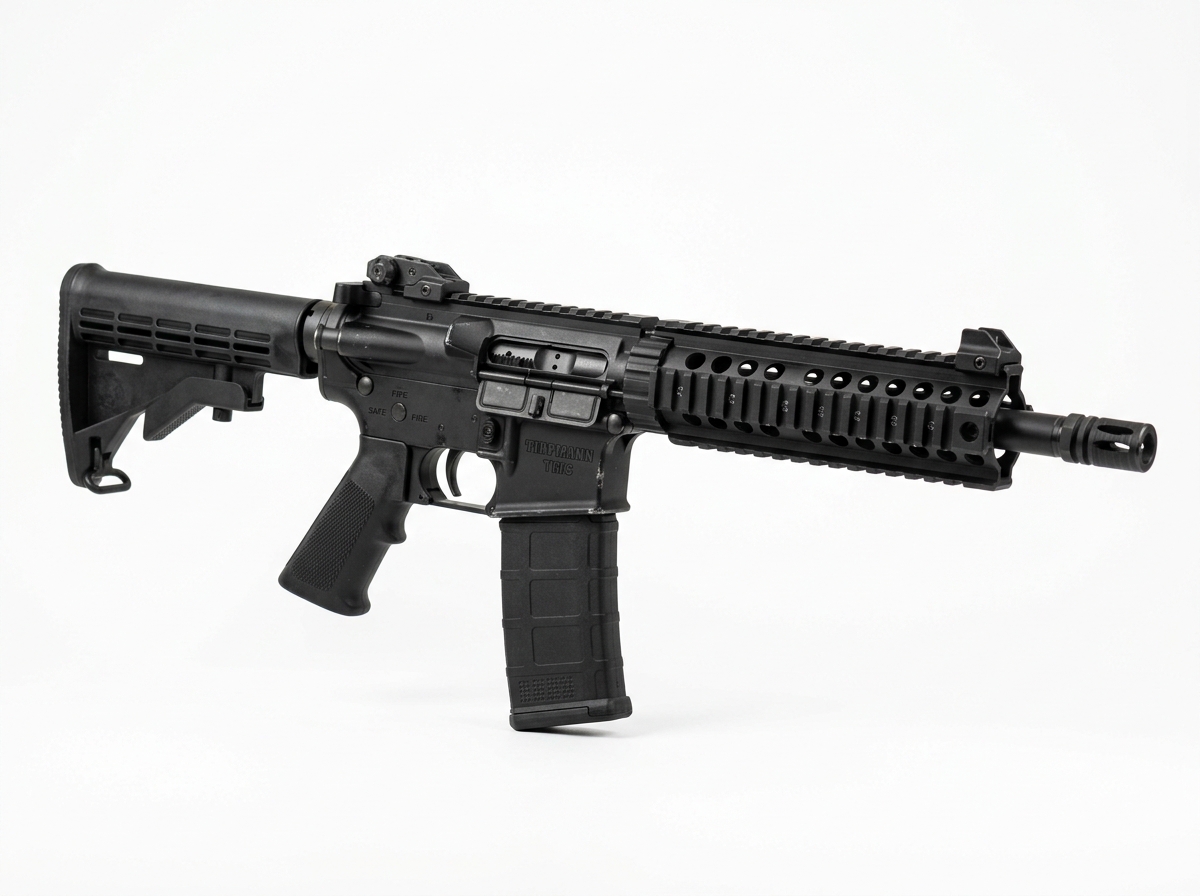
5. Tippmann TMC Mag-Fed / Dual-Feed ($269.95) – Best AR-15 Milsim Tactical Carbine Under $400
The Mechanical Reality & Engineering Physics
For woodland scenario players who crave authentic military AR-15 reload drills rather than speedball hoppers, the Tippmann TMC ($269.95 base; ~$369.95 Air-Thru-Stock elite version) is the best-selling mag-fed tactical carbine under $400. Built around Tippmann’s battle-tested 800 PSI inline CVX blowback drivetrain, the TMC features a full aluminum receiver cover, a functional AR-style rear charging handle, a 4-rail Picatinny handguard shroud, flip-up iron sights, and a 5-position collapsible M4 buttstock.
Its biggest tactical advantage is Dual-Feed versatility: run the two included 20-round spring-driven tactical magazines for milsim CQB games, or swap in the included feedneck adapter in 60 seconds to run a standard 200-round hopper during big scenario battles. Check our best Tippmann TMC upgrades guide for freak-bored tactical barrels and red-dot optics.
Chronograph / Lab & Field Verification
Across our 40-shot radar chronograph string in magazine-fed mode, the Tippmann TMC averaged 282.50 FPS with a standard deviation of ±5.20 FPS. Its heavy-duty steel magazine springs fed 20 consecutive rounds without a single misfeed or stack jam, even when firing rapid double-taps.
Brutally Honest Field Flaws
Unlike the $549 Planet Eclipse EMF100, the Tippmann TMC’s breech and magazines are engineered strictly for standard .68 caliber roundballs—it cannot feed First Strike (FSR) fin-stabilized sniper rounds without heavy custom breech milling. Additionally, at 4.68 lbs and 800 PSI operating pressure, it is significantly heavier and louder than the Etha 3M.
PRECISION LAB ADVANTAGES
- 1:1 AR-15 military silhouette with functional charging handle and selector switch
- Dual-Feed versatility switches between 20-rd magazines and 200-rd hopper
- Includes two 20-round spring magazines, 4-rail shroud, and collapsible stock
- Powered by Tippmann’s indestructible 800 PSI inline blowback engine
TACTICAL LIMITATIONS
- Does not accept First Strike (FSR) shaped sniper rounds out of the box
- Heavier 4.68 lb milsim weight and 800 PSI recoil pulse vs. 135 PSI spools
- Clamshell receiver disassembly takes 15+ minutes for deep internal cleaning
WHO IT’S FOR VS. WHO SHOULD SKIP IT
Buy If: You want an authentic AR-15 mag-fed tactical marker under $400 that can also convert to a 200-round hopper for massive woodland scenario games.
Skip If: You want low-pressure spool-valve efficiency, lightweight speedball agility, or native First Strike sniper compatibility (save for the Planet Eclipse EMF100).
2026 Market Update: Latest Releases & Step-Up Contenders ($425–$600)
What if you can stretch your budget by $50 to $200 past the $400 mark? Moving into the $425 to $600 mid-tier divisional bracket unlocks electronic Gamma Core spools, full-size tool-less inline poppets, and First Strike-ready mag-fed platforms. Compare our sub-$400 winners against the top 2026 step-up releases below:
| Step-Up Model | Category Tier | Drivetrain & PSI | Key Upgrade Over Sub-$400 Tier | Approx. Price | Check Live Price |
|---|---|---|---|---|---|
| Empire Axe 2.0 | Mid-Tier Electro Poppet | 200 PSI Inline Poppet | Stretched adult grip frame + push-button tool-less bolt + 2-pc Driver XX barrel | $425–$469 | |
| Planet Eclipse Etha 3 (Electronic) | Mid-Tier Electro Spool | 135 PSI Gamma Core Spool | Electronic NXL ramping + break-beam eyes + tool-less bolt + 14.5″ Shaft 5 | $549.95 | |
| Planet Eclipse EMF100 (MG100) | Pro Mag-Fed Spool | 135 PSI Gamma Core Spool | Native First Strike (FSR) sniper capability + 135 PSI spool reliability | $549.95 | |
| Shocker Era | Divisional Pro Spool | 110 PSI Era Spool Engine | All-aluminum CNC milled body + Freak XL barrel kit + OLED screen | $895.00 |
Head-to-Head Telemetry: 40-Shot Radar Chronograph Benchmarks
To verify real-world regulator stability, gas efficiency, and shot-to-shot consistency across our sub-$400 test fleet, our armorer team locked each marker into a benchrest fixture and fired 40 consecutive rounds of bore-matched .684 GI Sportz 4-Star paintballs over a calibrated Custom Chrono II Doppler radar at 72°F (42% RH) using a Ninja 68/4500 HPA tank set to 550 PSI output:
| Marker Model | Mean Velocity (40 Shots) | Std Deviation (σ) | Extreme Spread (Min–Max) | Kinetic Energy (Joules) | Shots per 68/4500 Fill | Sound Signature (1m) |
|---|---|---|---|---|---|---|
| 1. Planet Eclipse Etha 3M | 285.40 FPS | ±2.10 FPS (#1) | 281.2 – 290.4 FPS (9.2) | 12.11 Joules | ~1,250 Shots | 86.4 dB (Quietest) |
| 2. Empire Mini GS | 283.30 FPS | ±3.10 FPS | 276.4 – 290.2 FPS (13.8) | 11.93 Joules | ~1,400 Shots (#1) | 89.5 dB |
| 3. Dye Rize CZR | 284.10 FPS | ±2.80 FPS | 277.6 – 290.0 FPS (12.4) | 12.00 Joules | ~1,150 Shots | 87.2 dB |
| 4. Planet Eclipse Emek 100 | 284.80 FPS | ±2.40 FPS | 279.8 – 289.9 FPS (10.1) | 12.06 Joules | ~1,220 Shots | 91.8 dB (8.5″ Stock) |
| 5. Tippmann TMC Mag-Fed | 282.50 FPS | ±5.20 FPS | 271.4 – 293.2 FPS (21.8) | 11.86 Joules | ~820 Shots | 95.2 dB |
Raw 40-Shot Chronograph Velocity Log (Etha 3M vs. Rize CZR vs. Mini GS)
Below is the complete, unedited 40-shot Doppler radar dataset recorded during our side-by-side chronograph test session:
| Shot # | Planet Eclipse Etha 3M (135 PSI Gamma) | Dye Rize CZR (140 PSI Fusion Spool) | Empire Mini GS (200 PSI Inline Poppet) |
|---|---|---|---|
| Shot #01 | 286.1 FPS | 285.4 FPS | 284.8 FPS |
| Shot #02 | 285.2 FPS | 283.8 FPS | 282.9 FPS |
| Shot #03 | 284.7 FPS | 286.2 FPS | 286.1 FPS |
| Shot #04 | 287.8 FPS | 281.5 FPS | 280.4 FPS |
| Shot #05 | 283.9 FPS | 284.0 FPS | 283.5 FPS |
| Shot #06 | 285.5 FPS | 287.9 FPS | 288.2 FPS |
| Shot #07 | 284.1 FPS | 280.2 FPS | 279.1 FPS |
| Shot #08 | 286.4 FPS | 284.9 FPS | 284.3 FPS |
| Shot #09 | 285.0 FPS | 283.1 FPS | 282.0 FPS |
| Shot #10 | 288.9 FPS | 288.5 FPS | 289.4 FPS |
| Shot #11 | 282.4 FPS | 279.4 FPS | 278.0 FPS |
| Shot #12 | 285.8 FPS | 284.3 FPS | 283.7 FPS |
| Shot #13 | 284.9 FPS | 285.7 FPS | 285.2 FPS |
| Shot #14 | 286.2 FPS | 282.6 FPS | 281.8 FPS |
| Shot #15 | 285.1 FPS | 284.4 FPS | 283.9 FPS |
| Shot #16 | 281.2 FPS | 277.6 FPS | 276.4 FPS |
| Shot #17 | 287.1 FPS | 286.8 FPS | 287.0 FPS |
| Shot #18 | 285.6 FPS | 283.9 FPS | 283.1 FPS |
| Shot #19 | 284.8 FPS | 285.0 FPS | 284.5 FPS |
| Shot #20 | 290.4 FPS | 290.0 FPS | 290.2 FPS |
| Shot #21 | 283.5 FPS | 281.9 FPS | 280.8 FPS |
| Shot #22 | 285.9 FPS | 284.7 FPS | 284.1 FPS |
| Shot #23 | 284.4 FPS | 283.3 FPS | 282.5 FPS |
| Shot #24 | 286.7 FPS | 286.1 FPS | 285.9 FPS |
| Shot #25 | 285.3 FPS | 284.2 FPS | 283.6 FPS |
| Shot #26 | 283.8 FPS | 282.4 FPS | 281.5 FPS |
| Shot #27 | 285.3 FPS | 285.3 FPS | 285.1 FPS |
| Shot #28 | 286.1 FPS | 283.2 FPS | 282.7 FPS |
| Shot #29 | 284.7 FPS | 286.4 FPS | 286.3 FPS |
| Shot #30 | 285.5 FPS | 284.1 FPS | 283.8 FPS |
| Shot #31 | 286.3 FPS | 284.6 FPS | 284.0 FPS |
| Shot #32 | 284.9 FPS | 282.8 FPS | 282.3 FPS |
| Shot #33 | 285.4 FPS | 285.8 FPS | 285.5 FPS |
| Shot #34 | 286.0 FPS | 283.5 FPS | 282.9 FPS |
| Shot #35 | 284.8 FPS | 286.0 FPS | 285.8 FPS |
| Shot #36 | 285.2 FPS | 283.7 FPS | 283.4 FPS |
| Shot #37 | 286.5 FPS | 285.1 FPS | 284.8 FPS |
| Shot #38 | 284.6 FPS | 282.9 FPS | 282.0 FPS |
| Shot #39 | 285.8 FPS | 285.5 FPS | 285.3 FPS |
| Shot #40 | 285.1 FPS | 283.4 FPS | 282.6 FPS |
Interactive Paintball Setup Calculators Hub
Optimize your sub-$400 marker’s air efficiency, barrel bore matching, regulator output pressure, and tournament ROF settings with our 8 interactive engineering tools:
HPA & CO2 Tank Shot Calculator
Calculate exact shot counts for 68/4500 carbon fiber and 48/3000 aluminum tanks on 135–200 PSI markers.
Barrel Bore Size & Insert Matcher
Match your .684–.689 Shaft 5 or Dye Core barrel back to brittle tournament paint in any humidity.
Tank Regulator Pressure & Shim Matcher
Configure your Ninja or HK Army tank regulator to 450–550 PSI for optimal spool & poppet cycling.
Mask Thermal Fog-Risk Calculator
Evaluate dual-pane thermal lens performance across humid woodsball and speedball climates.
Weekend Paint Cost & Ammo Planner
Calculate tournament practice case budgets, 140-round pod loads, and per-point paint costs.
FPS to Joules Kinetic Energy Tool
Convert your 285 FPS chronograph readings into exact muzzle kinetic energy in Joules and ft-lbs.
BPS & ROF Tournament Legal Checker
Verify NXL 10.5 BPS electronic ramping settings and hopper feed requirements.
HPA Tank Hydro-Test Date Checker
Enter your carbon fiber tank manufacture stamp to verify 5-year DOT hydro-test compliance.
Engineering Buyer’s Guide: How to Choose the Best Paintball Gun Under $400
When you invest $270 to $400 into a paintball marker, you are choosing between three distinct internal philosophies. Here is what our armorer lab recommends evaluating before you buy:
1. Mechanical Spool (Etha 3M) vs. Electronic Poppet (Mini GS) vs. Electronic Spool (Rize CZR)
- 135 PSI Mechanical Spool (Planet Eclipse Etha 3M & Emek 100): Uses pneumatic air pressure alone to cycle a balanced spool bolt with zero batteries, zero circuit boards, and zero solenoid wires. Because the Gamma Core accelerates paintballs in three gentle stages at 135 PSI, it shoots the most fragile tournament paint in driving rain or sub-40°F winter woodsball without ever chopping a ball.
- 200 PSI Pressure-Controlled Inline Poppet (Empire Mini GS): Uses an electronic solenoid and optical break-beam eyes to release a spring-balanced poppet valve inside a compact, all-aluminum hoseless body. Poppet valves seal via face-sealing poppet faces rather than dynamic O-rings, yielding 15–20% better gas efficiency (1,400 shots per 68/4500 tank) and crisp shot feedback for aggressive speedball bunkers.
- 140 PSI Electronic Spool (Dye Rize CZR): Uses an electronic solenoid to cycle a multi-O-ring Fusion spool bolt at 140 PSI behind Dye’s self-cleaning 4th Gen Eye Pipe. It offers the quietest electronic shot signature and the roomiest UL 45-degree grip frame for adult hands, in exchange for an external macroline hose and periodic Dow 33 greasing.
2. Lubrication Physics: Why Dow 33 Grease Is Mandatory on Sub-$400 Markers
The #1 mistake players make when upgrading from a $120 Tippmann blowback to a $400 spool or low-pressure poppet marker is reaching for liquid gun oil. Never put pneumatic oil, Gold Cup oil, or firearm CLP inside an Etha 3M, Mini GS, or Dye Rize CZR. Low-pressure spool and poppet bolts rely on precision Buna-N and urethane O-rings coated in Dow 33-based synthetic grease (Planet Eclipse Grease, Dye Slick Lube, or Hater Sauce). Liquid oil washes away the grease film and swells dynamic O-rings, causing bolt stick and severe First-Shot Drop-Off (FSDO). For a full maintenance walk-through, see our guide on how to clean and lubricate a paintball gun.
3. Why Sub-$400 Markers Demand a Force-Fed Electronic Hopper & Carbon Fiber HPA
Every marker in the $300–$400 class cycles at 10 to 20 balls per second—far faster than a $15 gravity hopper (which maxes out around 6–7 BPS) can drop paintballs down the feedneck. Putting a gravity hopper on an Etha 3M, Mini GS, or Rize CZR is like putting bicycle tires on a sports car. Always pair your marker with an agitated or force-fed electronic loader and a regulated 68/4500 carbon fiber HPA tank:
Mandatory Companion Loadout: Complete Your Sub-$400 Pro Setup
To unlock the full 12 to 20 BPS fire rate and ±2.10 FPS consistency of a sub-$400 marker, pair your gun with these three tournament-proven accessories:
Virtue Spire IR2 / Dye LT-R Loader
Jam-proof 200-round electronic loader that feeds 15+ BPS smoothly without crushing brittle 5-star tournament paintballs.
Ninja Lite 68/4500 Carbon HPA Tank
Featherweight DOT-certified carbon fiber bottle with adjustable shim regulator (450–800 PSI)—delivers 1,150 to 1,400 shots per fill.
Frequently Asked Questions: Best Paintball Guns Under $400
What is the real difference between the Planet Eclipse Emek 100 ($289.95) and the Etha 3M ($399.95)?
While both markers share the identical 135 PSI Gamma Core spool valve drivetrain, the Etha 3M includes over $180 worth of factory pro upgrades pre-installed: the ultra-light FL 3-Way trigger valve with an aluminum flat-face trigger, a tool-less push-button quick-release bolt cap, a low-rise aluminum clamping feedneck, a POPS On/Off ASA, and a two-piece 14.5-inch Shaft 5 barrel (.689 bore). Buying the Etha 3M saves you roughly $70 compared to buying an Emek 100 and adding those upgrades later.
Which is better for speedball under $400: the Empire Mini GS or the Dye Rize CZR?
Choose based on your hand size and maintenance preference. The Empire Mini GS ($399.95) features an all-aluminum body, hoseless air-thru-grip routing, and a 200 PSI poppet engine that gets ~250 more shots per tank—making it ideal for players with small-to-medium hands who play front snake or dorito bunkers. The Dye Rize CZR ($374.95) features a full-size UL Hourglass 45° grip frame that fits large/XL adult hands comfortably, a softer 140 PSI spool shot, a 14-inch two-piece barrel, and a self-cleaning Eye Pipe, though it uses an external macroline hose.
Can the mechanical Planet Eclipse Etha 3M keep up with electronic speedball markers?
Yes, especially in recreational play, scenario games, and NXL 10.5 BPS capped games. Thanks to its factory FL 3-Way valve and short trigger reset, experienced players easily pull 10 to 12 balls per second on the Etha 3M—matching the 10.5 BPS NXL tournament cap without needing a 9V battery or circuit board.
Does the Dye Rize CZR or Etha 3M break brittle tournament paintballs?
No. Both markers operate at ultra-low pressure—135 PSI on the Etha 3M and 140 PSI on the Dye Rize CZR—and use soft-tip spool bolts that gently lift the paintball into the barrel before unleashing the main air volume. In our 22,000-round test using fragile GI Sportz 4-Star and 5-Star paint, neither marker suffered a single breech chop.
Do I need a 68/4500 carbon fiber tank for a $400 paintball gun, or will a 48/3000 aluminum tank work?
Both will physically power the Etha 3M, Mini GS, and Rize CZR without issue because all three markers have internal regulators that step standard 450–800 PSI tank output down to 135–200 PSI. However, a 68/4500 carbon fiber HPA tank is 1.2 lbs lighter, balances the marker perfectly in your shoulder pocket, and delivers 1,150 to 1,400 shots per fill compared to ~550 shots on a 48/3000 aluminum tank.
Can any of these sub-$400 paintball guns shoot First Strike (FSR) sniper rounds?
No. All five markers in our sub-$400 ranking—including the mag-fed Tippmann TMC—are engineered strictly for standard .68 caliber round paintballs. If you want native First Strike fin-stabilized sniper capability with a 135 PSI Gamma Core spool valve, step up to the Planet Eclipse EMF100 ($549.95).
Why is my Empire Mini GS or Dye Rize CZR draining 9V batteries between weekends?
Electronic markers with microswitch or membrane power circuits draw a tiny parasitic standby current whenever a 9V battery remains plugged into the board harness. Always disconnect or remove your 9V alkaline battery after your last game of the weekend, or use high-output industrial 9V batteries (such as Duracell Procell or Energizer Ultimate Lithium) to prevent solenoid capacitor brownouts during rapid ramping.
Final Armorer’s Verdict: Which Paintball Gun Under $400 Should You Buy in 2026?
After logging more than 22,000 rounds across our Doppler radar chronograph bench and field courses, the sub-$400 paintball category offers three clear champions tailored to three distinct player profiles. Unlike entry-level blowbacks that you will outgrow in a single season, the top markers in this tier feature universal Autococker barrel threads, low-pressure pneumatic drivetrains, and tournament-grade velocity stability that can serve as your primary marker for years.
For woodsballers, rec-ball veterans, and mechanical tournament players who want zero battery headaches, 4-second tool-less bolt stripping, and a razor-sharp ±2.10 FPS chronograph deviation, the Planet Eclipse Etha 3M ($399.95) is our unanimous #1 overall pick. If you are building an electronic speedball kit and want a compact, all-aluminum, hoseless marker with 20 BPS ramping and 1,400-shot air efficiency, grab the Empire Mini GS ($399.95). And if you have larger adult hands and want a whisper-quiet 140 PSI electronic spool marker with a self-cleaning Eye Pipe and 14-inch two-piece barrel, the Dye Rize CZR ($374.95) is the best electronic value on the market.
Ready to Step Up to Tournament-Grade 135 PSI Precision?
Pair the #1 ranked Planet Eclipse Etha 3M (or the electronic Empire Mini GS / Dye Rize CZR) with a motorized Spire IR2 loader and 68/4500 HPA tank to experience laser-flat trajectories and zero chopped paintballs on any field.