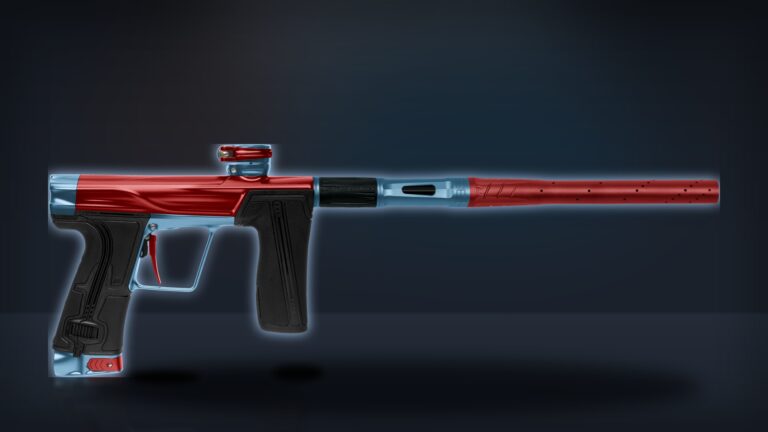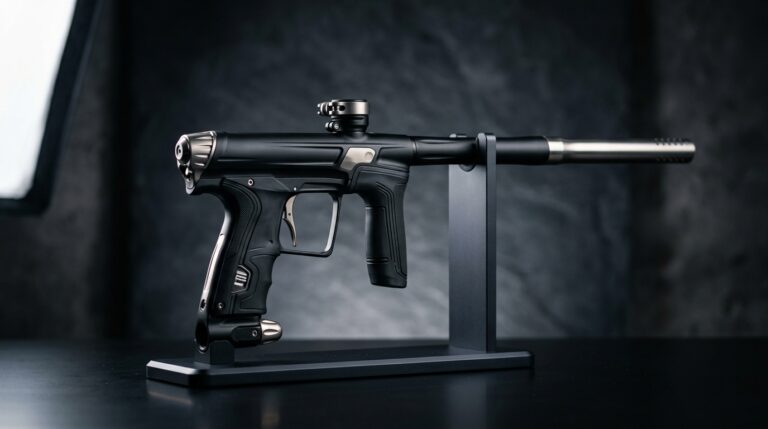
When stepping into the competitive electro-pneumatic paintball marker arena under $600, two titans dominate nearly every locker room debate: the Planet Eclipse Etha 3 and the Empire Mini GS. Both markers have introduced thousands of players to high-cadence electronic firepower, tournament ramping modes, and tournament-grade reliability. Yet, their mechanical philosophies, physical footprints, and ergonomics could not be more divergent.
The Planet Eclipse Etha 3 brings the bulletproof, low-pressure Gamma Core spool drivetrain down from tournament workhorses like the Gtek 170R, wrapped in a lightweight glass-reinforced nylon (GRN) chassis with a tool-less rear bolt back cap. Conversely, the Empire Mini GS remains the quintessential compact speedball platform—featuring full aircraft-grade aluminum body construction, an integrated micro-honed barrel, and an ultra-tight frame engineered specifically for tight snap-shooting behind small bunker wings.
Quick Comparison Summary: At a Glance
Best For: Adult players, players with average-to-large hands, and anyone demanding instant 3-second tool-less bolt maintenance and maximum cold-weather paint handling.
Best For: Younger athletes, teen players, front snake runners, and budget-conscious competitors who prefer a full-aluminum metal body under $450.
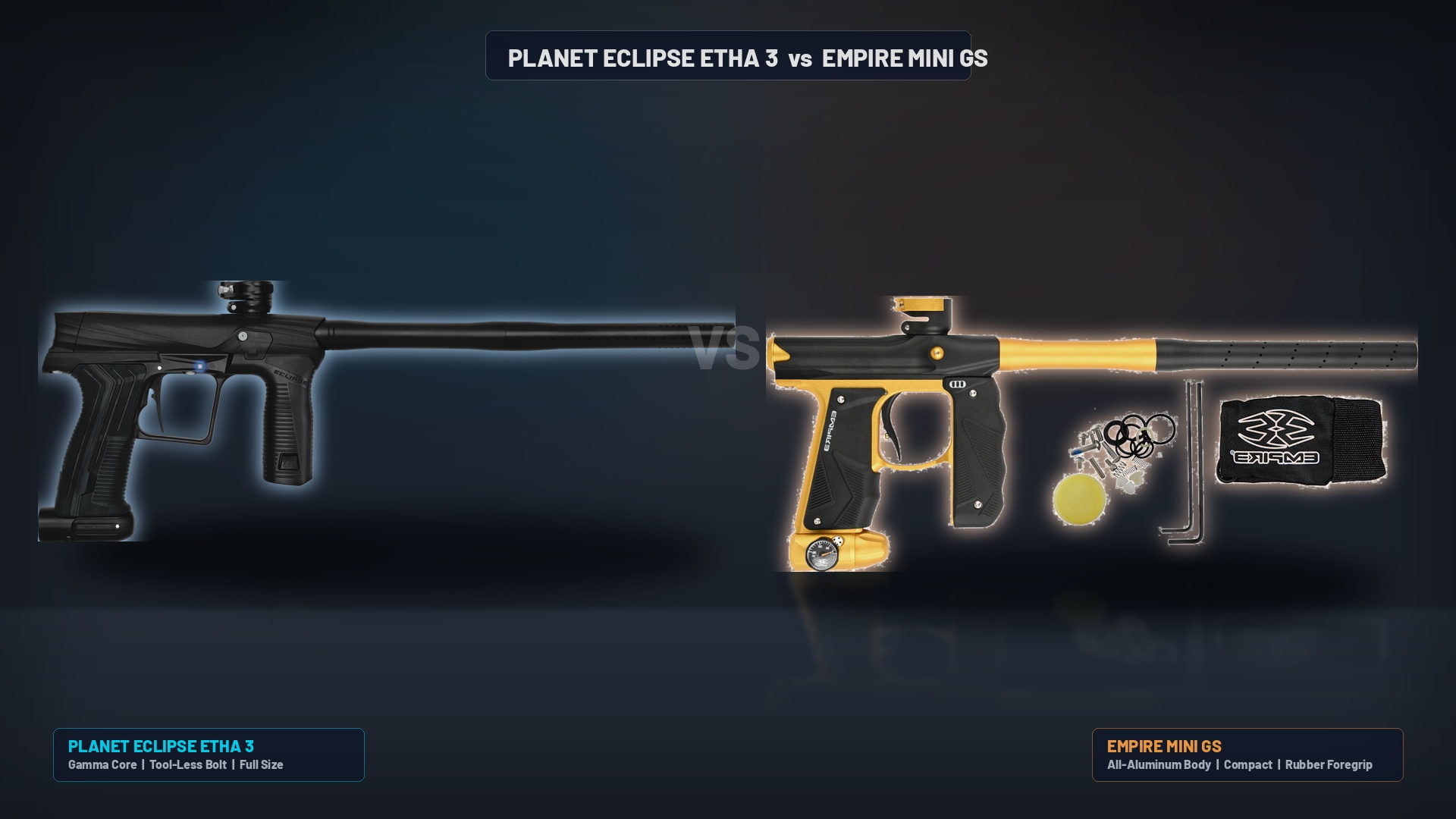
Studio comparison: Planet Eclipse Etha 3 (left) showcasing full-length tournament ergonomics and quick-release bolt cap vs Empire Mini GS (right) featuring compact all-aluminum construction and rubberized foregrip.
Technical Specifications Head-to-Head
Understanding the mechanical differences under the hood is critical when determining which platform will support your playstyle over multi-season tournament campaigns:
| Feature | Planet Eclipse Etha 3 | Empire Mini GS |
|---|---|---|
| Drivetrain Engine | Gamma Core Spool Valve | Pressure-Controlled Poppet Engine |
| Operating Pressure | 135 PSI (Softer on fragile shells) | 180 – 200 PSI |
| Body & Frame Material | Glass-Reinforced Nylon (GRN) Composite | All-Aluminum Milled Billet |
| Bolt Removal | Tool-Less Quick Release Back Cap | Rear Allen Screw (Requires Hex Key) |
| Barrel System | 14.5" 2-Piece Shaft 5 (Autococker Threads) | 12.0" 1-Piece Ported Barrel (Autococker Threads) |
| Gas Routing Architecture | Fully Hoseless Internal Transfer | Hoseless Through-Grip Routing |
| ASA (Air Source Adapter) | POPS On/Off Purge ASA (Push Button) | Lever-Action On/Off Purge ASA |
| Battery Access | Tool-Less "Lock N' Load" Front Caddy | Grip Frame Screws (Requires Hex Key) |
| Feedneck | Low-Rise Aluminum Lever Clamping | Low-Rise Aluminum Clamping |
| Weight (with Barrel & Battery) | 997 g (2.20 lbs) | 889 g (1.96 lbs) |
1. Ergonomics & Frame Spacing: The Crucial Deciding Factor
While specifications provide the baseline numbers, the physical feel between your hands on the field is the single biggest difference between these two markers.
Planet Eclipse Etha 3: Adult Tournament Spacing
The Etha 3 uses a full-size modern speedball wheelbase. The distance between the rear trigger frame and the front foregrip measures roughly 6.5 inches. This elongated spacing gives adult players ample room to wrap both hands comfortably around the front reg, tuck elbows tight into their chest, and transition between left-hand and right-hand shooting while sliding into bunkers. If your glove size is Medium, Large, or XL, the Etha 3 will feel natural and balanced with a standard 68ci or 77ci carbon fiber compressed air tank.
Empire Mini GS: Ultra-Compact Agility
The Mini GS is famously engineered with minimal distance between the grip frame and foregrip—measuring just around 4.5 inches. For youth players, teenagers, or athletes with smaller hands, this compact geometry is an absolute superpower: it keeps the hopper tucked low against the goggles, shortens your overall bunker profile, and enables lightning-fast snap rolls. However, adult players with larger hands may find their fingers cramped, with knuckles bumping against the foregrip during rapid two-finger trigger walks.
2. Drivetrain & Shot Characteristics: Gamma Core vs. Poppet Engine
The firing engines inside these markers reflect distinct design generations:
- Gamma Core (Etha 3): Originally designed by Planet Eclipse’s legendary lead engineer Jack Wood, the Gamma Core is virtually impervious to environmental elements. It uses a pneumatically latched spool valve operating at 135 PSI. Because it accelerates the paintball gently before applying full volume dump, it fires brittle, tournament-grade paint without breakage even in sub-freezing conditions. Its shot signature is a quiet, cushioned pneumatic "thump." (For players curious about Planet Eclipse's mechanical platform, check our Etha 3 vs Etha 3M comparison).
- Pressure-Controlled Poppet (Mini GS): The Mini GS utilizes an inline poppet valve operating at 180 to 200 PSI. It cycles with a crisp, tactile snap and delivers outstanding gas efficiency on smaller 48ci aluminum or 45ci carbon tanks. However, because it operates at a higher operating pressure and uses a shorter stock 12-inch barrel, it is slightly louder and somewhat harsher on super-fragile tournament tournament paintballs than the Etha 3.
3. Between-Point Pit Maintenance: Tool-Less Speed vs. Hex Keys
When you are in the staging area between points with paint sprayed across your marker or need to swab the bolt between tournament matches, maintenance speed matters:
Etha 3 Maintenance Perks
- 3-Second Tool-Less Bolt Release: Lift the rear back-cap latch, pull the Gamma Core straight out, wipe it clean, and re-grease without touching a hex tool.
- Lock N' Load Battery Caddy: The 9V battery slides into a tool-less front foregrip tray that unlatches with finger pressure.
- Push-Button POPS ASA: Instantly vents gas and disengages tanks with a simple push of a sliding button.
Mini GS Maintenance Reality
- Requires Hex Wrenches: Extracting the bolt engine requires unscrewing the rear bolt cap screw with an Allen key.
- Grip Frame Battery Access: Changing the 9V battery requires removing the rubber foregrip screws with a hex tool.
- Lever On/Off ASA: The flip-lever ASA is smooth and reliable, though slightly bulkier than Planet Eclipse's push-button POPS.
Detailed Product Breakdowns
1. Planet Eclipse Etha 3 Electronic Marker
The Planet Eclipse Etha 3 represents the ultimate tournament workhorse for players wanting pro-tier reliability without pro-tier pricing. Powered by the renowned Gamma Core spool valve, it delivers virtually recoil-free shooting, effortless paint handling, and lightning-fast tool-less maintenance. While its outer body utilizes glass-reinforced nylon composite instead of billet aluminum, the durability and weather resistance under tournament punishment are unmatched.
2. Empire Mini GS Electronic Marker
The Empire Mini GS has rightfully earned its status as a legend in the sport. Offering a premium all-aluminum body, micro-textured wraparound rubber foregrip, integrated on/off regulator ASA, and tournament-legal electronic firing modes at an accessible price point, it provides unbeatable value for budget-conscious players and athletes with smaller physical frames.
Pros and Cons Comparison
Planet Eclipse Etha 3
Pros:
- Legendary Gamma Core spool reliability at 135 PSI
- Tool-less quick-release bolt assembly
- Comfortable full-size frame spacing for adult hands
- Superior stock 14.5" two-piece Shaft 5 barrel
- Tool-less front battery door
Cons:
- Composite GRN body shell instead of metal
- Costs ~$150 more than the Mini GS
Empire Mini GS
Pros:
- Full aircraft-grade aluminum body construction
- Very compact, tight profile for snap-shooting
- Significantly lower purchase price (~$399)
- Excellent wraparound rubberized foregrip
- Lightweight and maneuverable for youth players
Cons:
- Cramped frame spacing for adult hands
- Bolt and battery access require hex keys
- Slightly harsher on brittle tournament paint at 180-200 PSI
Upgrade Potential: Taking Both Markers to the Next Level
Both markers benefit significantly from targeted aftermarket upgrades depending on your competition requirements:
- Mini GS Upgrades: A two-piece micro-honed barrel kit (such as a 14" Freak XL or Shaft barrel) dramatically improves shot grouping and sound signature over the stock 12" barrel. An OLED Redline board upgrade replaces the blinking LED light with a full digital screen for effortless mode programming. Read our full guide to the best Empire Mini GS upgrades.
- Etha 3 Upgrades: The Etha 3 is remarkably complete out of the box. Adding an aftermarket deuce or scythe blade trigger shoe and pairing it with a tournament-grade electronic loader like the Dye LTR or Spire IR2 allows players to push maximum NXL ramping speeds effortlessly.
Frequently Asked Questions
Which marker handles brittle tournament paint better?
The Planet Eclipse Etha 3 handles brittle paint significantly better due to its Gamma Core operating at 135 PSI. The initial gentle forward stroke of the bolt cushions the ball into the breech before air release, whereas the Mini GS operates at 180 to 200 PSI with a sharper acceleration profile.
Is the composite GRN body of the Etha 3 durable compared to the aluminum Mini GS?
Yes. The glass-reinforced nylon (GRN) used by Planet Eclipse is the same rugged material used in firearms, industrial power tools, and rental fleet markers. While aluminum provides a more traditional metallic feel, the composite GRN body of the Etha 3 will not scratch, dent, or show anodizing wear from aggressive diving on turf or dirt.
Can I play NXL tournament speedball with both of these markers?
Absolutely. Both the Etha 3 and the Empire Mini GS feature official tournament-legal NXL 10.5 BPS ramping modes, break-beam anti-chop eye sensors, and clamping feednecks, making them fully compliant for divisional speedball leagues.
Final Verdict: Which Marker Should You Buy?
Both the Planet Eclipse Etha 3 and the Empire Mini GS stand as exceptional achievements in modern mid-range paintball. However, your decision comes down to physical ergonomics, maintenance preference, and budget:
- Choose the Planet Eclipse Etha 3 if: You have average-to-large adult hands, want a full-size tournament platform, prioritize instant 3-second tool-less bolt maintenance, and want the unbeatable paint-handling reliability of the 135 PSI Gamma Core.
- Choose the Empire Mini GS if: You are shopping on a tighter budget under $400, have smaller hands or are buying for a teen player, prioritize a rugged all-aluminum metal body, and want the tightest possible profile behind small bunker wings.
Ready to Equip Your Tournament Loadout?
Check current inventory, bundled loader packages, and certified tournament listings below: