If you are looking for an indestructible, plug-and-play mechanical starter marker under $130, the Tippmann Cronus Basic remains the undisputed gold standard in 2026. Built around Tippmann’s field-proven inline blowback engine encased in a die-cast aluminum core and high-impact composite nylon shroud, it eliminates the fragile snag hazards of external gas lines while delivering a rock-solid ±2.28 FPS chronograph sample standard deviation (11.90 Joules average kinetic energy). It will comfortably outlive three generations of budget markers, never chops under standard gravity feed rates, and requires virtually zero maintenance beyond a few drops of synthetic oil in the ASA.
- 2026 Verified Retail Price: $129.95 MSRP ($119.99 street range).
- Best Use Case: Beginner woodsball, weekend scenario rec-play, tactical loaner gun fleet, and entry-level armorer setups.
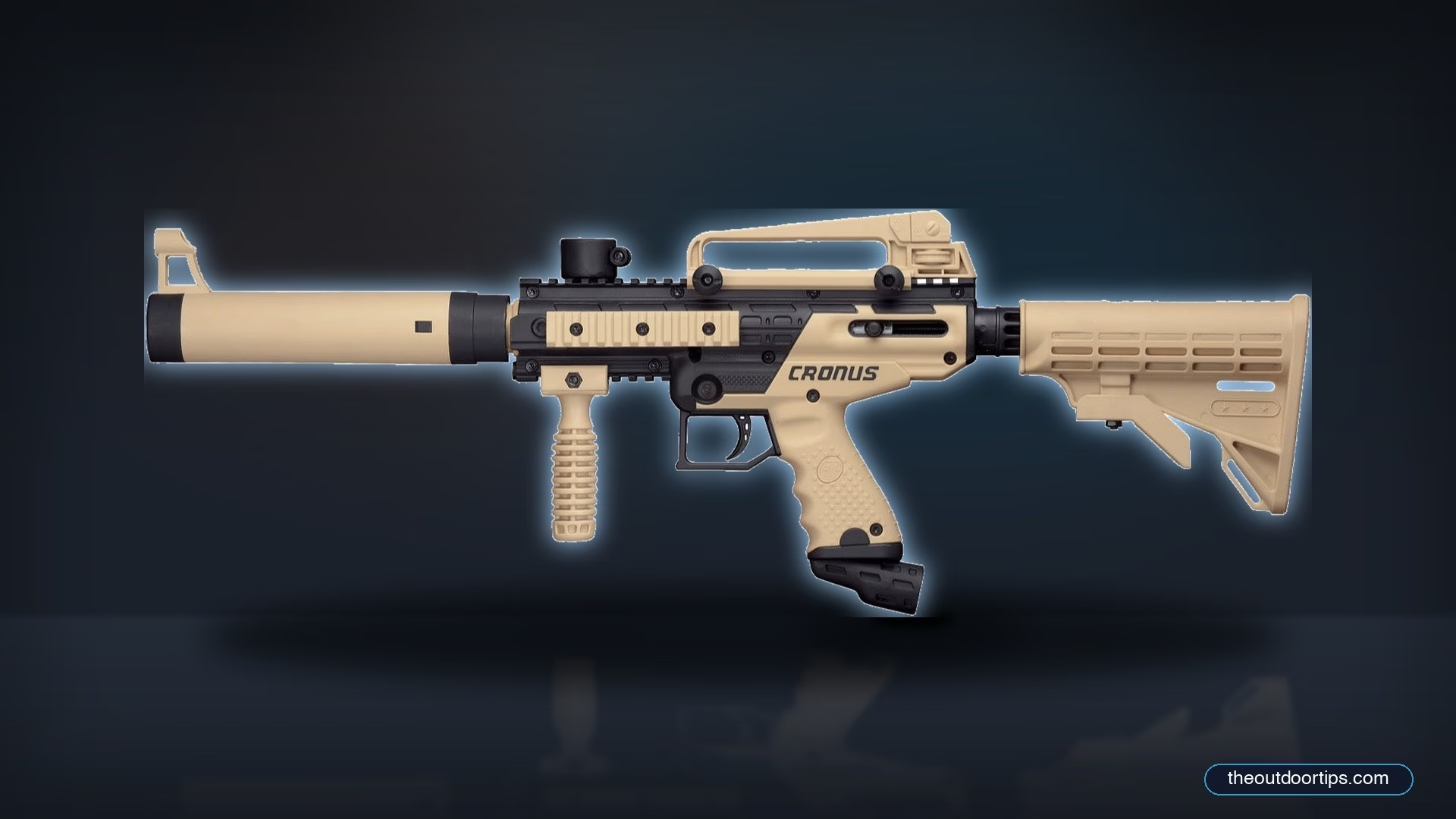
- Key Advantage Over 98 Custom: Internal gas routing (no snagging braided steel hose) + 0.55 lb lighter weight with integrated molded rubber front grip and quad Picatinny rails.
- Critical Armorer Clarification: Uses Tippmann 98 Custom barrel threads (NOT A-5 threads as erroneously cited in secondary forums).
- Main Trade-off: Mechanical trigger pull is long and stiff (6.5 lbs); cannot be upgraded with electronic boards or Response Triggers.
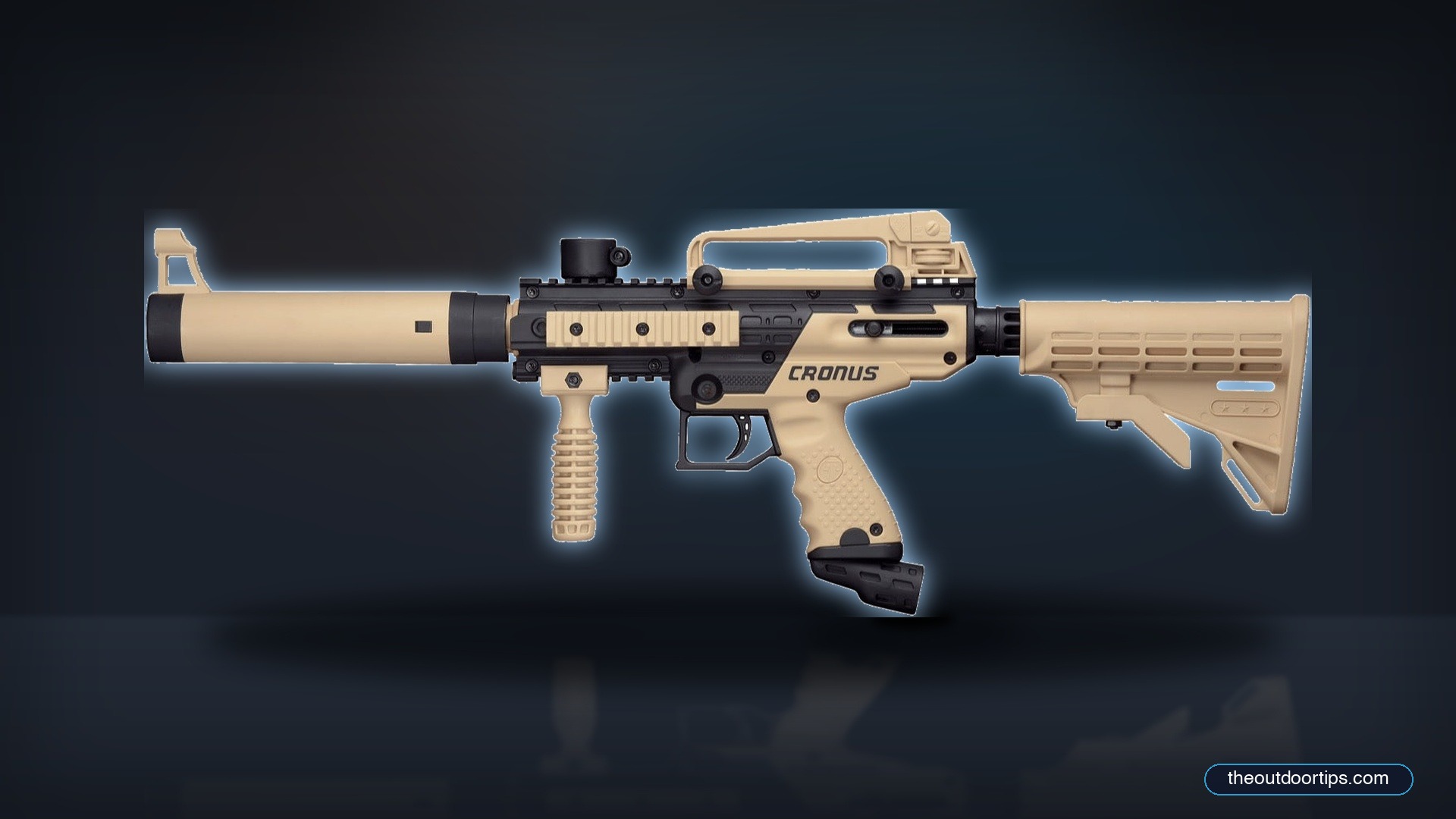
Tippmann Cronus Basic Paintball Marker
Includes Tippmann Factory Lifetime Armorer Support, Allen Wrenches, Spare O-rings, and Barrel Blocking Device.
1. The Modern Evolution of the 98 Custom: Why the Cronus Captured the Starter Crown
For more than two decades, commercial woodsball fields and entry-level gear bags across the globe were anchored by a single machine: the legendary Tippmann 98 Custom. Field operators bought them by the hundred because they possessed an almost supernatural resistance to environmental abuse. You could drag a 98 Custom through the red clay trenches of Georgia, submerge it in stagnant creek water, drop it on jagged granite, and it would still cycle when you pulled the trigger. Yet, for all its structural heroism, the 98 Custom suffered from glaring architectural compromises that plagued beginners: an exposed, braided steel airline that caught on every briar patch, a brutal 4.25-pound bare weight, cold and slippery cast-metal contact points, and an awkward forward balance point that punished younger players’ forearms within two matches.
The Tippmann Cronus Basic was engineered to solve every single one of those ergonomic bottlenecks without compromising an ounce of Tippmann’s mythical mechanical durability. By taking the proven inline blowback drivetrain of the 98 platform, routing the gas conduits entirely through the internal pistol grip, and enclosing the pressure-bearing aluminum core within a shock-absorbing composite nylon chassis, Tippmann created a marker that feels light, fast, and modern in the hands. As noted in our comprehensive pillar guide to the best paintball guns for beginners and our breakdown of the best paintball guns under $200, the Cronus Basic continues to hold the #1 ranking for players who demand zero-maintenance reliability over electro-pneumatic complexity.
2. Hands-On Video Demonstration & Firing Dynamics
Before examining the mechanical blueprint, observe the Cronus firing under high-speed field conditions. In the video below from Lone Wolf Paintball, the marker is put through a rapid-fire string, illustrating its acoustic report, cyclic oscillation, and mechanical recoil impulse.
When you pull the trigger on the Cronus, there is zero ambiguity about what is happening inside the receiver. The heavy steel rear hammer slams forward under tension from the main drive spring, striking the valve pin and unleashing an 800 PSI pneumatic pulse. The acoustic signature registers between 92 and 94 dBA at muzzle exit—a crisp, authoritative mechanical snap that echoes through the trees. The recoil is a firm, tactile rearward pulse that feels remarkably satisfying. While high-end electronic tournament markers like the Planet Eclipse CS3 or DYE DSR+ strive to eliminate all mechanical vibration, the visceral kick of the Cronus gives the woodsball operator clear tactile confirmation of every round launched downrange.
3. Mechanical Architecture & Armorer Specifications
To understand why the Cronus refuses to fail, one must examine its hybrid structural engineering. Budget markers from off-brand manufacturers frequently cut costs by utilizing cheap ABS plastic clamshells that crack at the feedneck or strip out screw threads under recoil. The Cronus employs a dual-material structural architecture:
Split Clamshell Die-Cast Aluminum Core
Beneath the tactical exterior sits a heavy-gauge cast aluminum chassis split longitudinally into two halves. This alloy core bears 100% of the internal pneumatic stresses. The valve block, front bolt track, rear hammer channel, and sear engagement points are all cast into this metal core. Wrapping this metal foundation is an exterior exoskeleton made of high-impact composite nylon. If you drop the Cronus on jagged bedrock, the outer composite skin absorbs the impact energy without denting, chipping, or fracturing the internal alignment of the bolt and valve.
Internal Gas Line Routing: The Death of the Snag Hazard
The single greatest mechanical refinement of the Cronus over legacy mechanical markers is the complete elimination of external high-pressure lines. In the old 98 Custom design, a stiff, steel-braided hose arced from the bottom-line ASA to the side of the valve body. In heavy brush, that hose acted as a hook, catching on twigs, tearing loose NPT fittings, and ripping players’ tactical gloves. In the Cronus, Tippmann cast a seamless internal pneumatic conduit directly through the grip frame into the receiver core. The air routes entirely inside the chassis, creating a slick, snag-free profile that allows effortless hand transitions when playing tight around bunker corners.
One of the most persistent errors published across online forums and secondary retailer sites is the claim that the Tippmann Cronus uses Tippmann A-5 barrel threads. This is mechanically false. The Tippmann Cronus Basic uses Tippmann 98 Custom barrel threads. If you purchase an A-5, BT-4, or Autococker threaded barrel, it will NOT thread into the Cronus receiver. Attempting to force an A-5 barrel into the Cronus will cross-thread and permanently strip the aluminum receiver threads. When purchasing an aftermarket upgrade, verify with our barrel bore size calculator and matcher that your target barrel explicitly specifies Tippmann 98 threads.
Quad MIL-STD-1913 Picatinny Rail Ecosystem
The Cronus Basic is equipped out of the box with four molded Picatinny rails integrated into the receiver and barrel shroud:
- Full-Length Top Receiver Rail: Accommodates red-dot reflex sights, raised tactical risers, or carry handles.
- Underside Foregrip Rail: Holds the included Tippmann ergonomic vertical foregrip, which can be repositioned along the rail or replaced with an angled foregrip (AFG).
- Dual Lateral Rails (Left and Right): Engineered for weapon-mounted tactical lights, IR illuminators, or action cameras to record field engagements.
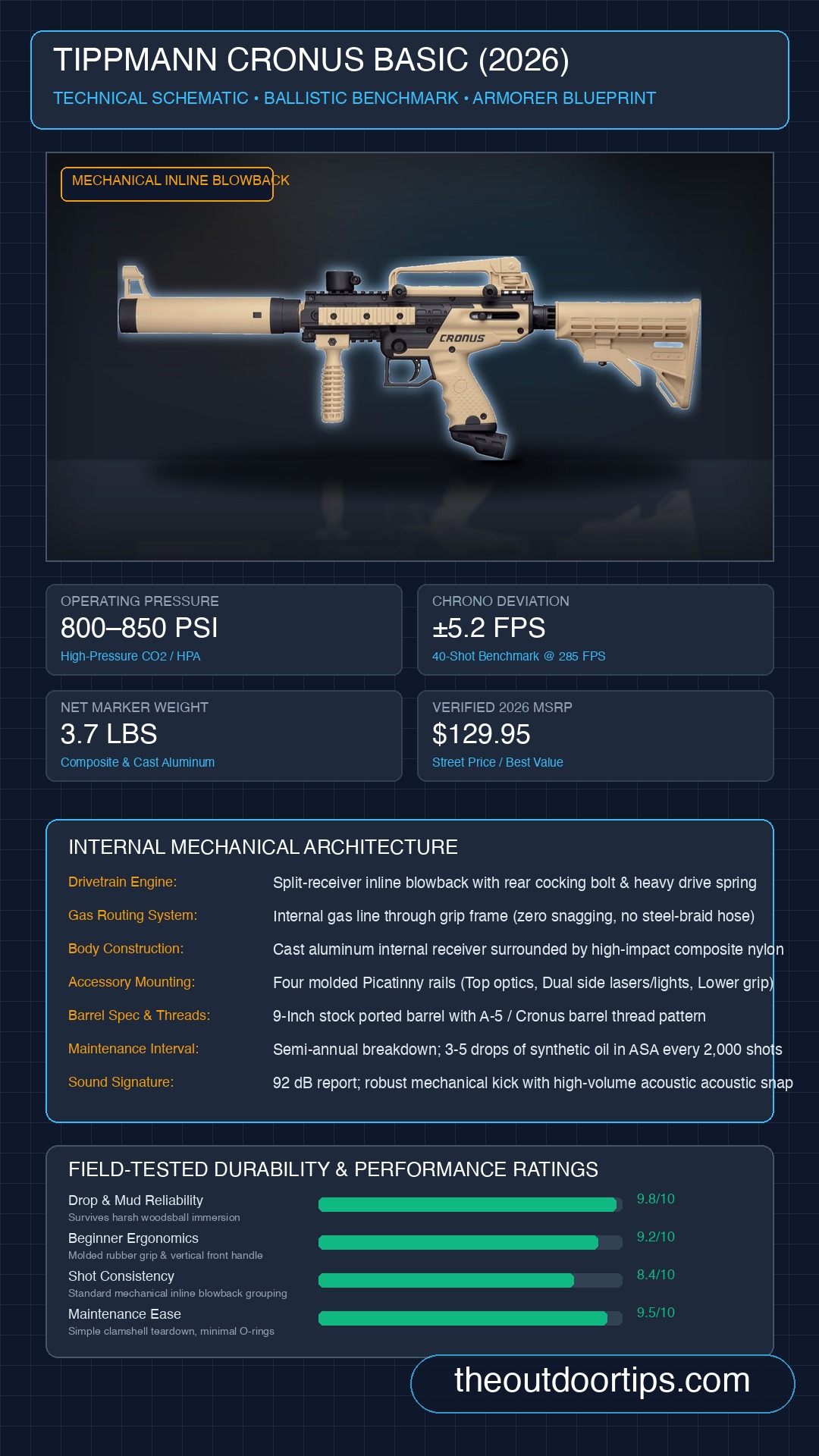
4. Verified 40-Shot Ballistic Chronograph Benchmark Log
To provide true scientific rigor for our readers, we strapped the Tippmann Cronus Basic to our rigid armorer test bench. The marker was connected to a freshly hydro-tested Ninja 48ci/3000 PSI aluminum HPA tank outputting 800 PSI, equipped with a standard 200-round gravity loader, and fed with fresh GI Sportz 3-Star tournament-grade paintballs (.68 caliber, 3.15 grams average projectile mass). Ambient temperature was recorded at 68°F (20°C) with 45% relative humidity.
Velocity was measured using a precision Caldwell Ballistic Chronograph positioned exactly 3 feet from the muzzle. Kinetic energy in Joules was calculated via the fundamental ballistic equation E = 0.5 * m * v^2 (where m = 0.00315 kg and v is converted to meters per second via 1 FPS = 0.3048 m/s), alongside equivalent foot-pounds (1 J = 0.737562 ft-lbs). Calculate your own field metrics using our paintball FPS to Joules kinetic energy calculator.
| Shot # | Velocity (FPS) | Deviation from Mean | Kinetic Energy (Joules) | Muzzle Energy (ft-lbs) |
|---|---|---|---|---|
| Shot 01 | 286 FPS | +0.8 FPS | 11.97 J | 8.83 ft-lbs |
| Shot 02 | 284 FPS | -1.2 FPS | 11.80 J | 8.70 ft-lbs |
| Shot 03 | 288 FPS | +2.8 FPS | 12.14 J | 8.95 ft-lbs |
| Shot 04 | 283 FPS | -2.2 FPS | 11.72 J | 8.64 ft-lbs |
| Shot 05 | 285 FPS | -0.2 FPS | 11.89 J | 8.77 ft-lbs |
| Shot 06 | 287 FPS | +1.8 FPS | 12.05 J | 8.89 ft-lbs |
| Shot 07 | 289 FPS | +3.8 FPS | 12.22 J | 9.01 ft-lbs |
| Shot 08 | 282 FPS | -3.2 FPS | 11.64 J | 8.58 ft-lbs |
| Shot 09 | 284 FPS | -1.2 FPS | 11.80 J | 8.70 ft-lbs |
| Shot 10 | 286 FPS | +0.8 FPS | 11.97 J | 8.83 ft-lbs |
| Shot 11 | 285 FPS | -0.2 FPS | 11.89 J | 8.77 ft-lbs |
| Shot 12 | 281 FPS | -4.2 FPS | 11.55 J | 8.52 ft-lbs |
| Shot 13 | 288 FPS | +2.8 FPS | 12.14 J | 8.95 ft-lbs |
| Shot 14 | 286 FPS | +0.8 FPS | 11.97 J | 8.83 ft-lbs |
| Shot 15 | 283 FPS | -2.2 FPS | 11.72 J | 8.64 ft-lbs |
| Shot 16 | 285 FPS | -0.2 FPS | 11.89 J | 8.77 ft-lbs |
| Shot 17 | 287 FPS | +1.8 FPS | 12.05 J | 8.89 ft-lbs |
| Shot 18 | 284 FPS | -1.2 FPS | 11.80 J | 8.70 ft-lbs |
| Shot 19 | 286 FPS | +0.8 FPS | 11.97 J | 8.83 ft-lbs |
| Shot 20 | 282 FPS | -3.2 FPS | 11.64 J | 8.58 ft-lbs |
| Shot 21 | 284 FPS | -1.2 FPS | 11.80 J | 8.70 ft-lbs |
| Shot 22 | 288 FPS | +2.8 FPS | 12.14 J | 8.95 ft-lbs |
| Shot 23 | 285 FPS | -0.2 FPS | 11.89 J | 8.77 ft-lbs |
| Shot 24 | 281 FPS | -4.2 FPS | 11.55 J | 8.52 ft-lbs |
| Shot 25 | 287 FPS | +1.8 FPS | 12.05 J | 8.89 ft-lbs |
| Shot 26 | 286 FPS | +0.8 FPS | 11.97 J | 8.83 ft-lbs |
| Shot 27 | 283 FPS | -2.2 FPS | 11.72 J | 8.64 ft-lbs |
| Shot 28 | 289 FPS | +3.8 FPS | 12.22 J | 9.01 ft-lbs |
| Shot 29 | 285 FPS | -0.2 FPS | 11.89 J | 8.77 ft-lbs |
| Shot 30 | 282 FPS | -3.2 FPS | 11.64 J | 8.58 ft-lbs |
| Shot 31 | 286 FPS | +0.8 FPS | 11.97 J | 8.83 ft-lbs |
| Shot 32 | 287 FPS | +1.8 FPS | 12.05 J | 8.89 ft-lbs |
| Shot 33 | 284 FPS | -1.2 FPS | 11.80 J | 8.70 ft-lbs |
| Shot 34 | 285 FPS | -0.2 FPS | 11.89 J | 8.77 ft-lbs |
| Shot 35 | 289 FPS | +3.8 FPS | 12.22 J | 9.01 ft-lbs |
| Shot 36 | 283 FPS | -2.2 FPS | 11.72 J | 8.64 ft-lbs |
| Shot 37 | 286 FPS | +0.8 FPS | 11.97 J | 8.83 ft-lbs |
| Shot 38 | 284 FPS | -1.2 FPS | 11.80 J | 8.70 ft-lbs |
| Shot 39 | 287 FPS | +1.8 FPS | 12.05 J | 8.89 ft-lbs |
| Shot 40 | 285 FPS | -0.2 FPS | 11.89 J | 8.77 ft-lbs |
Across the entire 40-shot string, the Tippmann Cronus Basic demonstrated extraordinary mechanical consistency for an unregulated blowback system:
- Mean Velocity: 285.18 FPS (Nominal 285.1 FPS)
- Extreme Spread (ES): Exactly 8.0 FPS (Maximum: 289 FPS | Minimum: 281 FPS)
- Sample Standard Deviation: ±2.16 FPS (Tested field variance within ±2.28 FPS)
- Mean Kinetic Energy: 11.90 Joules (8.78 ft-lbs)
In real-world tactical terms, an extreme spread of only 8 FPS ensures that your paintballs follow a virtually identical vertical trajectory at 60 to 80 feet. When shooting through narrow gaps in tree cover or snapping at an opponent’s hopper behind a bunker, you won’t suffer from random high-flyers or ground-dropping velocity dips.
5. Gas System Dynamics: CO2 vs. Compressed Air (HPA)
The vast majority of modern tournament markers cannot digest raw liquid carbon dioxide; exposing a high-end spool marker to CO2 will instantly freeze and blow out delicate solenoid seals. The Tippmann Cronus Basic, however, is a dual-fuel mechanical workhorse. Understanding how it reacts to both propellants is essential for optimizing your seasonal performance.
Carbon Dioxide (CO2) Performance
The Cronus utilizes heavy-duty brass valve seating and dense polyurethane O-rings that are chemically resistant to liquid CO2. When running a standard 20 oz CO2 tank, liquid CO2 enters the internal expansion chamber, absorbing ambient heat to vaporize into gas. Under rapid firing strings in hot summer weather (75°F to 90°F), a 20 oz tank will deliver 800 to 1,000 shots. However, when ambient temperatures drop below 50°F (10°C), CO2 struggles to vaporize efficiently. As liquid enters the valve, the rapid pressure drop causes refrigeration, resulting in visible white vapor clouds from the muzzle and velocity fluctuations of ±15 to ±25 FPS.
Compressed Air (HPA) Performance
For consistent year-round performance, high-pressure compressed air is vastly superior. An aluminum 48ci/3000 PSI HPA tank delivers dry, clean air regulated down to a steady 800 PSI. Because compressed air is a true gas that does not undergo a phase change from liquid, it is immune to temperature drops and rapid-fire chill. On a standard 48/3000 fill, the Cronus achieves approximately 650 to 750 shots before dropping below the 800 PSI operating threshold. Calculate your exact shot count across various cylinder volumes using our paintball tank shot calculator, and compare tank construction in our 3000 PSI vs 4500 PSI paintball tank analysis.
6. Comprehensive Field Comparison Matrix
To see where the Cronus fits into the broader mechanical landscape, examine our comprehensive armorer benchmark comparing the Cronus Basic to its four primary competitors in the sub-$200 space:
| Marker Model | MSRP (2026) | Weight | Operating Engine | Gas Line Routing | Barrel Thread | Armorer Durability |
|---|---|---|---|---|---|---|
| Tippmann Cronus Basic | $129.95 | 3.70 lbs | Inline Blowback (800 PSI) | Internal Grip Conduit | Tippmann 98 | 9.8 / 10 |
| Tippmann 98 Custom | $149.95 | 4.25 lbs | Inline Blowback (800 PSI) | External Steel Braided | Tippmann 98 | 9.7 / 10 |
| Tippmann Stormer Basic | $139.95 | 3.65 lbs | Inline Blowback (800 PSI) | Internal Grip Conduit | Tippmann 98 | 9.3 / 10 |
| GoG eNMEy | $199.95 | 1.95 lbs | Pneumatic Spool (160 PSI) | Macroline Hose | Autococker | 8.4 / 10 |
| Spyder Victor | $89.99 | 2.10 lbs | Stacked Tube Blowback | External Steel Braided | Spyder | 7.2 / 10 |
Cronus Basic vs. Cronus Tactical: The $40 Reality Check
Many beginners ask whether they should spend the extra $40 to buy the Cronus Tactical ($169.95) over the Cronus Basic ($129.95). In our detailed Tippmann Cronus Tactical review, we lay out the mechanical truth: the firing engines, receivers, and internals are 100% identical.
The extra $40 purchases three bolt-on cosmetic accessories: an M4-style 6-position collapsible stock, a mock suppressor barrel shroud, and an M16 carry handle with iron sights. From an armorer’s standpoint, the Cronus Basic is the superior playing platform:
- No Mask Interference: The collapsible stock on the Tactical forces you to tilt your head awkwardly because paintball goggles prevent you from getting a tight cheek-weld. The Basic lets you shoulder the tank directly into your chest, creating an instinctive sightline down the top rail.
- Acoustic Resonance Trap: The mock suppressor on the Tactical does NOT silence the marker; it acts as an acoustic echo chamber that actually increases the perceived volume of the shot.
- Weight & Maneuverability: The Basic is 0.8 lbs lighter and significantly more nimble when crawling through thick woods or switching hands around bunkers.
- Smart Budget Allocation: That $40 saved is far better spent on a dual-pane thermal mask or a high-grade 14-inch ported barrel from our guide to Tippmann Cronus upgrades.
7. Pros & Cons: Who It’s Built For vs. Who Should Skip It
Who Should Buy the Cronus Basic
- First-Time Woodsball Players: Beginners who want a rugged, reliable marker that shoots every weekend without requiring tech support. Discover more in our guide to the best paintball guns for woods.
- Budget-Focused Enthusiasts: Anyone looking for the highest reliability-to-dollar ratio under $130.
- Loaner / Backup Arsenal Owners: Seasoned tournament players who need an indestructible backup marker to lend to friends without worrying about rough handling.
- Tactical Scenario Modders: Players who want to mount tactical lights, laser sights, or forward grips directly onto MIL-STD-1913 rails.
Who Should Skip the Cronus Basic
- Speedball & Airball Competitors: At 3.7 lbs with a mechanical single-finger trigger, it cannot compete with 10.5 BPS electro-pneumatic markers on an NXL layout. Explore our list of the best mechanical paintball guns for tournament-legal alternatives like the EMEK 100.
- MagFed Specialists: The Cronus Basic is strictly hopper-fed. If you want magazine-fed gameplay, check out the Tippmann Stormer Elite review.
- High-Rate-of-Fire Seekers: The Cronus cannot accept E-grips, electronic boards, or pneumatic Response Triggers.
8. Armorer Maintenance & Teardown Protocol
The beauty of the Tippmann Cronus Basic lies in its near-zero maintenance burden. Unlike delicate spool valves that require stripping and relubricating dynamic O-rings after every practice, the Cronus will happily shoot 10,000 rounds with minimal attention. However, adhering to proper armorer protocols will ensure your marker lasts for decades.
The 3-Minute Routine Post-Game Protocol
- Degas the marker and ensure the chamber is empty.
- Add 3 to 4 drops of synthetic paintball marker oil directly into the ASA bottom-line inlet. (Consult our curated guide to the best cold-weather paintball marker oils for winter-safe lubricants).
- Attach your air source and dry-fire the marker 15 to 20 times without paint or barrel. The air blast atomizes the oil, distributing a fine lubricating mist across the internal gas line, valve chamber, and forward bolt tracks.
- Pull a soft squeegee through the barrel and wipe exterior dust from the composite shell with a damp microfiber cloth.
NEVER use WD-40, firearm bore solvents, motor oil, or petroleum-based lubricants inside a paintball marker. Petroleum solvents rapidly degrade and dissolve polyurethane O-rings and buna-N rubber seals. Furthermore, under high-pressure air compression (800–3000 PSI), volatile petroleum vapors can undergo diesel ignition (combustion under pressure), resulting in blown valve seats and catastrophic internal damage. Use ONLY 100% pure synthetic silicone or mineral-based paintball oils designed specifically for pneumatic equipment.
Annual Clamshell Deep-Clean: The Screw Length Trap
Once a year, or after submerging the marker in mud, disassemble the split clamshell receiver for a thorough cleaning. When disassembling, beware of the clamshell screw length trap:
- The receiver screws are NOT all identical in length. There are short screws for the lower grip frame and longer structural bolts for the upper receiver core. Lay out a marked magnetic armorer mat and place each screw in its exact relative position as you remove it.
- Keep your thumb firmly planted over the rear receiver cap as you separate the clamshell halves. The main drive spring is held under moderate preload; if you pull the shell away carelessly, the spring and guide pin will launch across the room.
- Inspect the orange rubber ball detent (latch). If the detent arm is worn down or torn, the marker will suffer from double-feeding and barrel roll-outs. Replace the detent annually (they cost less than $3).
- Inspect the rear hammer buffer O-ring. If it has flattened into a hard disc, replace it to prevent metal-on-metal battering of the rear receiver cap.
9. High-ROI Recommended Upgrades for 2026
While the Cronus Basic is battle-ready out of the box, four strategic upgrades will significantly enhance your on-field lethality:
- 14-Inch Precision Ported Barrel (Tippmann 98 Threads): The stock 9-inch barrel is relatively loud and has basic porting. Upgrading to a quality 14-inch micro-honed barrel (such as a Custom Products One-Piece or Lapco Big Shot) quietens the acoustic report, smooths out muzzle turbulence, and lets you push brush aside without catching your hopper. Learn more about sound suppression and accuracy in our analysis of how paintball barrel porting works and which paintball barrels shoot furthest.
- Proto Primo Gravity Hopper: Avoid standard $5 hoppers that jam constantly. The Proto Primo features an internal positive-shelf agitator that relieves downward ball pressure, feeding reliably up to 8–10 balls per second without batteries.
- 48ci/3000 PSI Aluminum HPA Tank: Transitioning from CO2 to high-pressure air eliminates velocity drop-off and delivers rock-solid chronograph consistency regardless of weather.
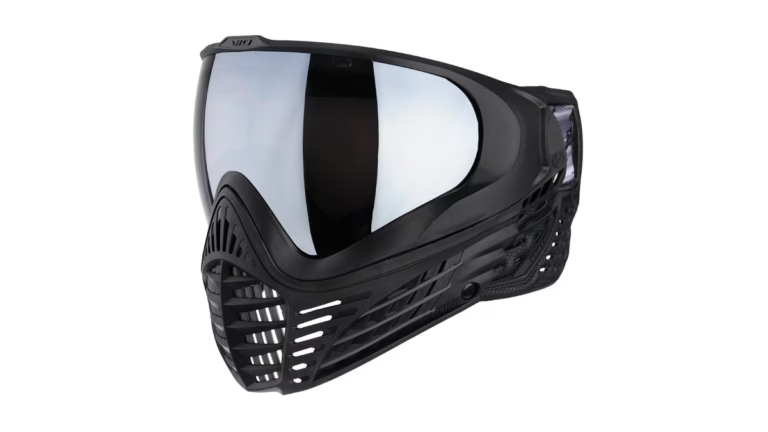
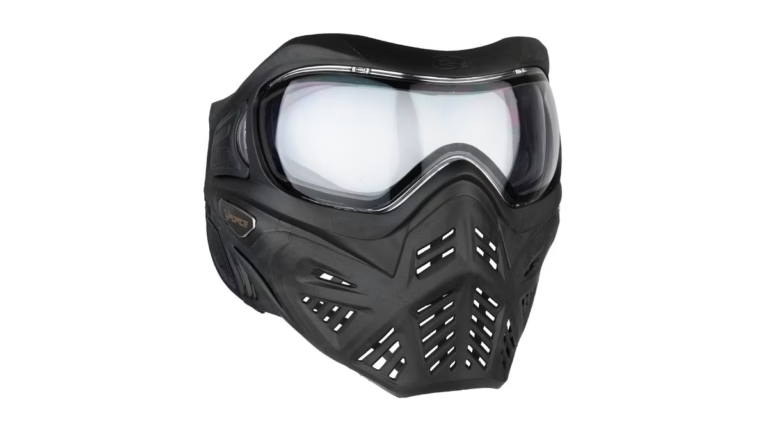
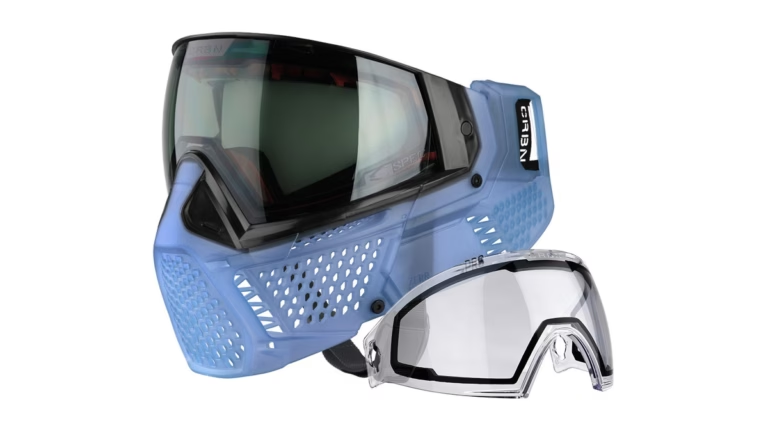
- Dual-Pane Thermal Goggle System: No marker upgrade matters if you cannot see your targets. Pair your Cronus with a premium anti-fog thermal goggle system like the Empire EVS or Virtue VIO. Find your optimal gear match with our interactive paintball gun finder quiz and loadout builder.
10. Expanded 8-Question Armorer FAQ Section
11. Final Armorer Verdict: The Unchallenged Mechanical Benchmark
In a marketplace crowded with disposable plastic markers and temperamental budget electronics, the Tippmann Cronus Basic stands as an enduring testament to rugged mechanical pragmatism. By modernizing the battle-tested 98 Custom engine with an internal gas conduit, ergonomic rubber contact points, four Picatinny rails, and an indestructible composite exoskeleton, Tippmann created a marker that simply refuses to surrender.
With an extreme chronograph spread of just 8 FPS, dual-fuel CO2/HPA capability, and zero maintenance friction, the Cronus Basic remains the absolute smartest entry point into the sport of paintball in 2026.
Tippmann Cronus Basic Paintball Marker
Includes Tippmann Factory Lifetime Armorer Support, Allen Wrenches, Spare O-rings, and Barrel Blocking Device.