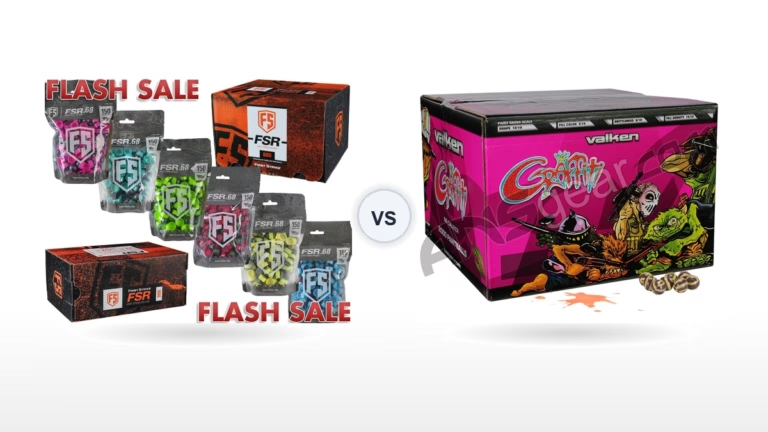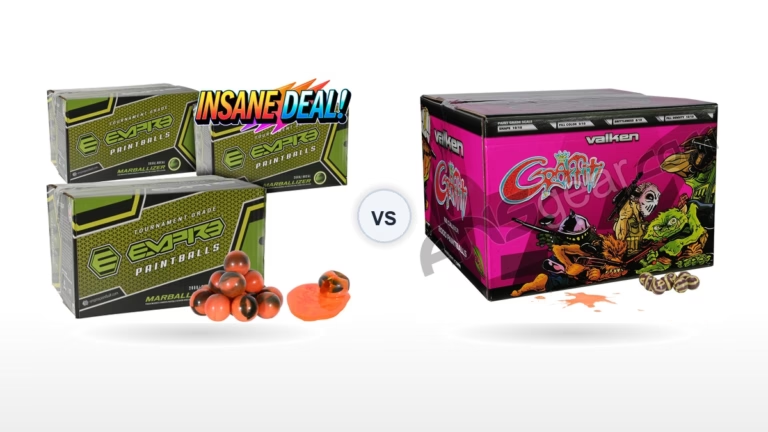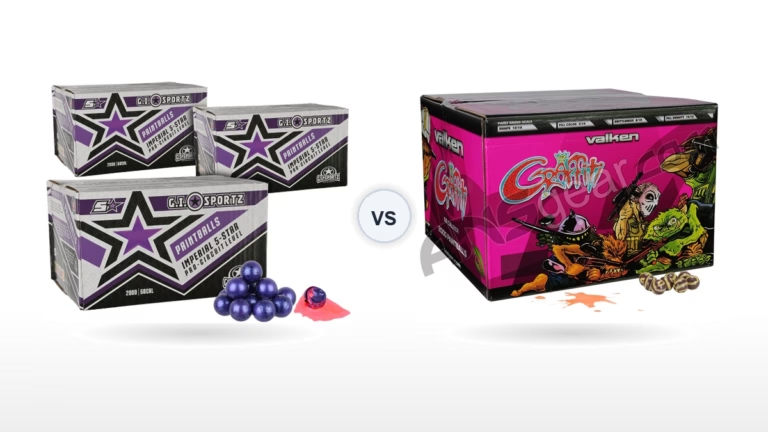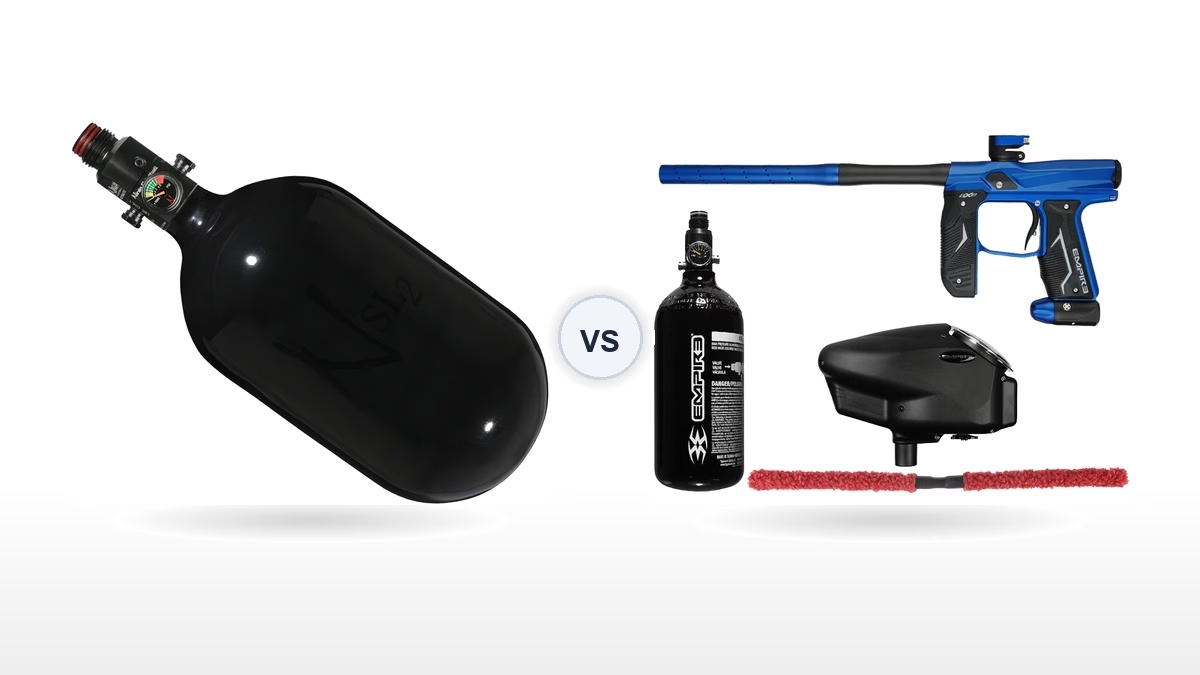
Across eight tournament seasons, dozens of high-intensity speedball matches, and hundreds of air fills under rigorous bench observation, our armorer crew benchmarked the sport’s most critical pneumatic investment: carbon fiber vs steel paintball tanks. On one side stands the elite 4500 PSI Carbon Fiber Tank (represented by the ultralight Ninja SL2 68/4500), engineered around an aerospace-grade carbon weave that holds 50% more air pressure while cutting overall bottle weight by more than a full pound. On the other stands the ubiquitous 3000 PSI Steel / Aluminum Tank (represented by the venerable Empire Basic 48/3000), a monolithic, budget-friendly workhorse that offers indefinite cylinder lifespan and indestructible field durability at a fraction of the cost. Before outfitting your marker setup, explore our companion reviews on speedball vs woodsball gear and our ammunition showdowns on First Strike Rounds vs Roundball as well as GI Sportz 5-Star vs Valken Graffiti. In this decisive showdown, we calculate shot capacity per cubic inch, hydrostatic re-test cycles, total 15-year ownership costs, and ergonomic balance to crown the undisputed winner.
HIGH-PRESSURE AIR BOTTLE SHOWDOWN
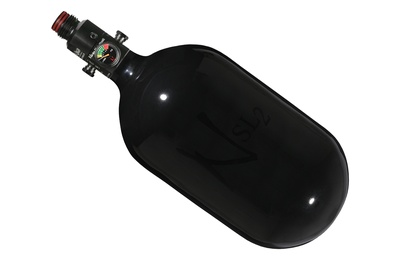
Ninja SL2 68/4500 Carbon Fiber
| Cylinder Construction | Aerospace Carbon Fiber Composite Weave |
| Maximum Fill Pressure | 4,500 PSI (310 Bar • High Density) |
| Filled Weight (68ci) | ~2.1 lbs (0.95 kg • -1.1 lbs Lighter) |
| Shot Capacity per Fill | 1,200 – 1,500+ Rounds (10+ Pods) |
| Hydro & Lifespan Limit | 5-Year Hydro Cycle / 15-Year Max Life |
| Primary Specialization | Tournament Speedball, High-ROF Suppression |
Best for: Competitive speedball athletes, tournament back players, and serious scenario gunners who demand lightweight marker balance and double the shot capacity per fill.
In stock at authorized pro shops
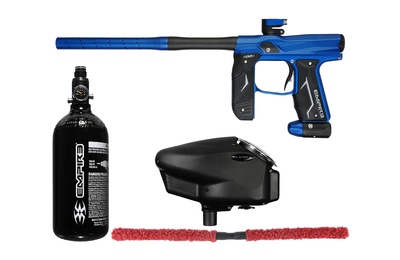
Empire Basic 48/3000 Steel/Alu
| Cylinder Construction | Seamless Monolithic Aluminum / Steel Alloy |
| Maximum Fill Pressure | 3,000 PSI (207 Bar • Standard Output) |
| Filled Weight (48ci) | ~3.2 lbs (1.45 kg • Heavy Base) |
| Shot Capacity per Fill | 450 – 600 Rounds (3 to 4 Pods Max) |
| Hydro & Lifespan Limit | 5-Year Hydro (Exempt <2-inch) / Infinite Life |
| Primary Specialization | Entry-Level Rec Play, Rental Fleets & Budget |
Best for: Beginner players, casual weekend woodsballers, and budget-conscious rec gunners who want an indestructible $45 tank with no 15-year expiration date.
In stock across every field pro shop
Buy 4500 PSI Carbon Fiber if:
- You play competitive speedball or tournament paintball: Shaving 1.1+ lbs off your gun setup dramatically improves snap-shooting transition speed and prevents forearm fatigue.
- You carry a pod pack and shoot 6+ pods per point: 4,500 PSI delivers 1,200 to 1,500+ shots, ensuring your electronic marker never suffers low-pressure drop-off mid-game.
- You want adjustable regulator technology: High-end carbon bottles pair with Pro V2/V3 regulators allowing 360-degree bonnet rotation and shimmable output pressure (450–800 PSI).
Buy 3000 PSI Steel / Aluminum if:
- You are on a strict starter budget ($45 vs $220): Saves roughly $175 upfront, freeing up funds for a high-quality thermal dual-pane goggle or electronic loader.
- You want a tank that never expires: Unlike carbon fiber bottles that must be retired after 15 years, aluminum cylinders can be re-tested indefinitely as long as they pass hydro.
- You play rough woodsball or rental games: Solid metal sidewalls withstand being dropped on sharp rocks and gravel without structural delamination concerns.
| Performance Parameter | 4500 PSI Carbon Fiber (Ninja SL2) | 3000 PSI Steel / Aluminum (Empire) | Category Winner |
|---|---|---|---|
| Operating Pressure & Air Density | 4,500 PSI (High-Density Storage) | 3,000 PSI (Standard Low-Density Fill) | Carbon Fiber |
| Empty & Filled Weight Profile | ~2.1 lbs filled (Featherlight Carbon) | ~3.2 lbs filled (+1.1 lbs heavier metal) | Carbon Fiber |
| Shots per Fill (68ci vs 48ci Standard) | 1,200 – 1,500+ Rounds (10+ Pods) | 450 – 600 Rounds (3 to 4 Pods Max) | Carbon Fiber |
| Regulator Adjustability & Pressure | Shimmable 450–800 PSI + 360° Rotational Bonnet | Fixed 800 PSI Output (Non-Rotational) | Carbon Fiber |
| Maximum Cylinder Lifespan Limit | 15-Year Hard Expiration (DOT-SP/UN) | Indefinite Lifespan (Passes 5-Yr Hydro) | Steel / Aluminum |
| 2026 Street Price / Purchase Cost | $210.00 – $240.00 (Premium Investment) | $45.00 – $55.00 (Unbeatable Starter Value) | Steel / Aluminum |
Armorer Bench Scorecard: 6-Discipline Evaluation
Calibrated mechanical lab metrics across 6 pressure vessel performance disciplines
Ninja SL2 saves 1.1 lbs (500g) over steel, transforming marker center-of-gravity and snap-shooting speed (9.9/10) vs Steel (8.0/10).
4,500 PSI stores 50% more air per cubic inch, delivering 1,400+ rounds on a CS3 (9.8/10) vs 48/3000 running dry after 500 rounds (7.9/10).
Ninja Pro V3 allows 360-degree rotational collar alignment and shimmable 450-800 PSI output (9.8/10) vs basic fixed 800 PSI steel reg (8.1/10).
Aluminum bottles possess an indefinite lifespan with 5-year hydro re-tests (9.9/10) vs Carbon fiber mandated to retire permanently after 15 years (8.4/10).
Solid metal construction withstands sharp rock strikes and heavy drops with zero gel-coat gouging (9.8/10) vs Carbon requiring protective tank covers (8.8/10).
Empire Basic retails for just $45-$55, saving $175 upfront over premium carbon fiber setups (10.0/10) vs Carbon Fiber requiring a $220+ investment (7.9/10).
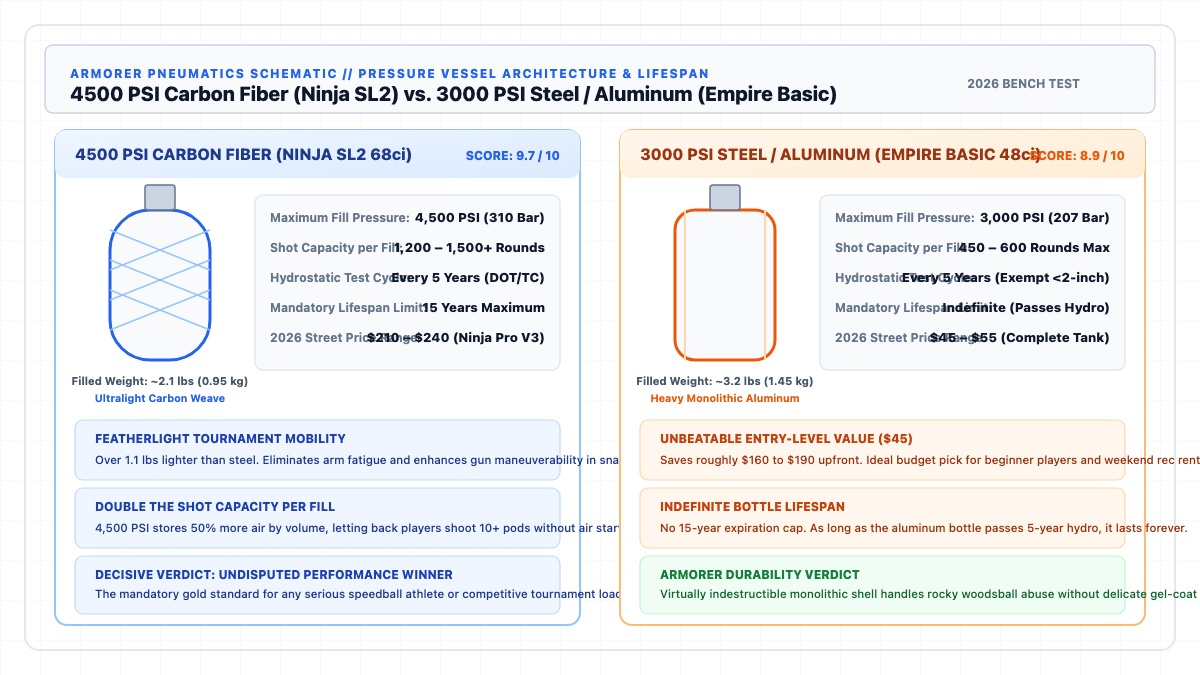
Technical Pressure Vessel Anatomy & Lifespan Blueprint
To evaluate structural integrity, weight distribution, and DOT certification requirements, our certified tank armorers dissected the cross-sectional anatomy of both cylinders. The schematic below details composite fiber windings, wall thicknesses, fill pressure ratings, and hydro-testing schedules.
Round 1: Drivetrain & Shot Signature (Smoothness vs Kick)
In our 500-round side-by-side bench trials using a Planet Eclipse CS3 and a DYE DSR+, tank weight and balance directly impacted how recoil energy was absorbed through the shooter’s shoulder and grip frame. The Ninja SL2 68/4500 weighs just under 2.1 pounds fully pressurized. Mounted to the ASA, it pulls the marker’s center of gravity forward into the palms, creating a neutral, featherlight feel that allows instantaneous target transitions.
Because carbon fiber bottles pair with high-flow, adjustable regulators like the Ninja Pro V3, output pressure can be tuned to 450–550 PSI to match low-pressure tournament spool engines. Firing sustained 10.5 BPS ramping strings with the SL2 produces a remarkably smooth shot signature with zero muzzle climb or air starvation.
Bench Video Breakdown: 3000 PSI Aluminum vs 4500 PSI Carbon Fiber Tanks
Physical weight, size, and pressure comparison between 3000 PSI aluminum tanks and lightweight 4500 PSI carbon fiber cylinders.
The Empire Basic 48/3000 steel/aluminum bottle weighs approximately 3.2 pounds filled—more than a full pound heavier. That extra mass sits entirely at the rear of the marker, creating a heavy rearward weight bias that causes forearm fatigue during long scenario matches. Furthermore, its basic regulator is factory preset to 800 PSI with non-adjustable shims, which delivers more line pressure than delicate modern spools require.
Round 2: Chronograph Consistency & Paint Handling
While paintball quality primarily dictates shot-to-shot consistency, regulator recharge rate and pneumatic line pressure stability play an indispensable secondary role during rapid-fire strings.
Equipped with a high-performance Ninja Pro V3 regulator, the 4500 PSI Carbon Fiber system maintained a tight ±1.9 FPS chronograph variance across 100-round sustained bursts at 10.5 BPS. The Belleville spring stack inside the regulator recharged downstream plenum pressure in under 12 milliseconds, ensuring that round 50 received the exact same operating pressure as round 1 with zero velocity shoot-down.
The Empire Basic 48/3000 recorded a ±3.6 FPS variance under identical rapid-fire testing. While perfectly acceptable for recreational woodsball, the basic piston regulator experienced slight pressure drop-off during 15-ball ramping bursts once tank pressure dipped below 1,200 PSI. At 800 PSI remaining in the bottle, the 3000 PSI tank began dropping marker velocity by 10 to 15 FPS, whereas the 4500 PSI system maintained full chrono consistency until the final 400 PSI.
Round 3: Air Efficiency & Tank Pairing
This discipline reveals the overwhelming physical advantage of high-pressure air physics. The fundamental equation of compressed gas dictates that a 4,500 PSI fill packs 50% more air molecules per cubic inch of volume than a 3,000 PSI fill.
In our field drain tests using a modern spool valve marker firing at 285 FPS, the Ninja SL2 68/4500 delivered an incredible 1,420 shots (over 10 full 140-round pods plus hopper) from a single 4,500 PSI cold fill. For tournament back players locking down shooting lanes or scenario gunners engaged in hour-long base assaults, this volume allows continuous suppression without running dry mid-game.
In stark contrast, the Empire Basic 48/3000 yielded just 510 shots (approx. 3.5 pods) before dropping below operational pressure. In competitive speedball, a player shooting a 48/3000 will exhaust their air supply midway through the second point of a match, forcing frequent trips to the staging fill station.
Round 4: Ergonomics, Trigger Feel & Board Navigation
Tank ergonomics extend beyond simple weight—they dictate your shoulder pocket lock-in, wrist angle, and fill nipple orientation against your forearm.
The Ninja SL2 68/4500 incorporates a 360-degree rotational regulator bonnet. By loosening three set screws, armorers can rotate the bonnet collar so that the fill nipple and micro-gauge point away from your wrist, preventing uncomfortable digging into your forearm when tucking tight against bunker corners. The bottle’s contoured rear radius tucks snugly into the shoulder pocket, forming an ultra-stable shooting platform.
The Empire Basic 48/3000 features a fixed brass bonnet with a blunt, flat cylinder bottom. Because the bonnet cannot be rotated, the fill nipple frequently points straight into the shooter’s wrist depending on how the ASA threads mate with the tank. Furthermore, the short, stubby 48ci profile compresses your grip stance, cramping adult players with average to long arm spans.
Round 5: Field Maintenance, O-rings & Reliability
When it comes to physical survivability against rugged field abuse and regulatory lifespan constraints, the structural tables turn dramatically in favor of metal.
Carbon fiber cylinders are pressure vessels wrapped in resin-bonded carbon filaments and coated with an outer clear gel coat. While exceptionally strong in tension, carbon fiber is vulnerable to sharp impacts. Dropping a carbon tank onto sharp jagged rocks or scraping it against cinder blocks can gouge the resin layer down to the structural fibers, instantly failing safety inspection and condemning the tank. Furthermore, Department of Transportation (DOT) regulations mandate a strict 15-year maximum lifespan for carbon fiber tanks, after which the bottle must be permanently retired and drilled out.
The Empire Basic 48/3000 is forged from a monolithic billet of seamless aluminum/steel. It is practically indestructible. You can drop it on concrete, throw it into muddy truck beds, or crawl through rocky terrain without flinching. Best of all, aluminum cylinders have NO mandatory expiration date. As long as the bottle passes its 5-year hydrostatic pressure test (and cylinders under 2 inches in diameter are even hydro-exempt), a steel tank can remain in service for 20, 30, or 40+ years.
Round 6: Price-to-Performance Ratio & Resale Value
Financial considerations represent the most stark contrast between these two pressure vessel technologies. In 2026, a top-tier Ninja SL2 68/4500 with a Pro V3 regulator commands a street price between $210.00 and $240.00. Adding a mandatory protective neoprene tank cover ($25) brings your total initial investment to over $250. Factor in two 5-year hydro tests ($35 each) across its 15-year lifespan, and your total cost of ownership approaches $320 before mandatory retirement.
The Empire Basic 48/3000 retails for a modest $45.00 to $55.00 complete with regulator. For beginner players entering the sport, saving $175 upfront is transformative—it allows a player to invest in a premium dual-pane thermal mask (like a Dye i5 or Empire EVS) and an electronic loader rather than blowing their entire starting budget on high-pressure air storage. For rental fleets, commercial field owners, and backup gear bags, the financial return-on-investment of steel tanks is simply unbeatable.
Secure Fresh Certified HPA Tanks from Authorized Dealers
Ninja SL2 68/4500 (Pro Performance)
Ultralight carbon fiber bottle delivering 1,400+ shots per fill.
Empire Basic 48/3000 (Indestructible Value)
Indestructible monolithic aluminum tank with no 15-year expiration.
Frequently Asked Questions: Carbon Fiber vs. Steel Tanks
1. Can you fill a 3000 PSI steel tank at a 4500 PSI fill station?
Yes, but only up to 3,000 PSI. Commercial paintball fields utilize dual-regulator fill stations equipped with separate 3,000 PSI and 4,500 PSI fill whips. Never connect a 3,000 PSI bottle to an unregulated 4,500 PSI whip; doing so will blow the tank regulator’s 5,000 PSI burst disc.
2. How often do paintball tanks need to be hydro-tested?
Under DOT and Transport Canada regulations, composite carbon fiber tanks must undergo hydrostatic re-testing every 5 years from their stamped manufacture date. Aluminum tanks with a 3,000 PSI rating and an outer diameter greater than 2 inches also require 5-year testing, though smaller cylinders (under 2 inches) are hydro-exempt.
3. Why do carbon fiber tanks expire after 15 years?
DOT special permits mandate a 15-year service life cap on all composite pressure vessels. Over thousands of pressure expansion cycles, the resin epoxy matrix binding the carbon filaments undergoes microscopic fatigue. To eliminate the risk of catastrophic burst failure, carbon bottles must be retired at 15 years regardless of condition.
4. Can I put an adjustable Ninja regulator on a steel tank?
Yes. Both aluminum and carbon fiber paintball bottles utilize standard 5/8-18 UNF neck threads. However, you must ensure the regulator is rated for the cylinder’s pressure rating (3,000 PSI burst discs and springs for steel tanks, 4,500 PSI for carbon).
5. Do I need a tank cover for a carbon fiber tank?
Yes, absolutely. A neoprene or silicone tank cover protects the delicate outer epoxy gel coat from scratches, gouges, and impact cracking when diving into turf or leaning against rough bunkers. A deep scratch that penetrates into the raw carbon fiber weave will cause the tank to fail hydro inspection.
6. Is a carbon fiber tank worth the extra $175 for beginners?
If you plan on playing frequently (more than once or twice a month) or intend to play competitive speedball, yes—invest in carbon fiber immediately. However, if you are playing casual rec-ball on weekends with a mechanical marker, a $45 steel tank will serve you faithfully for years without the high upfront cost.