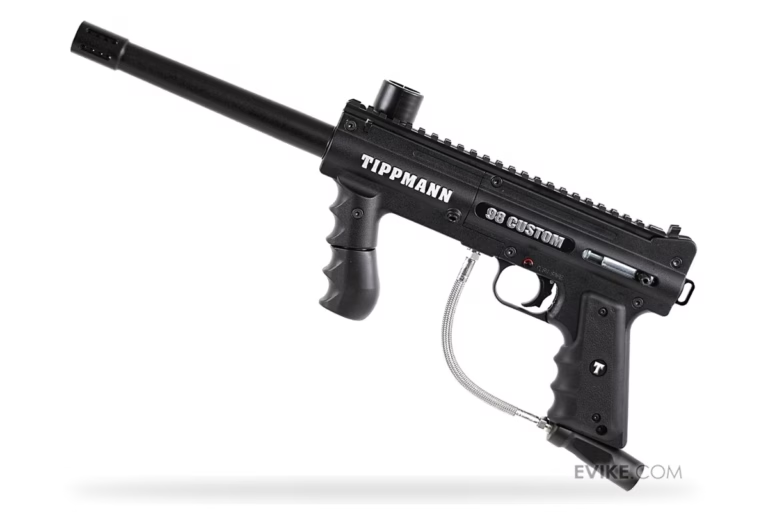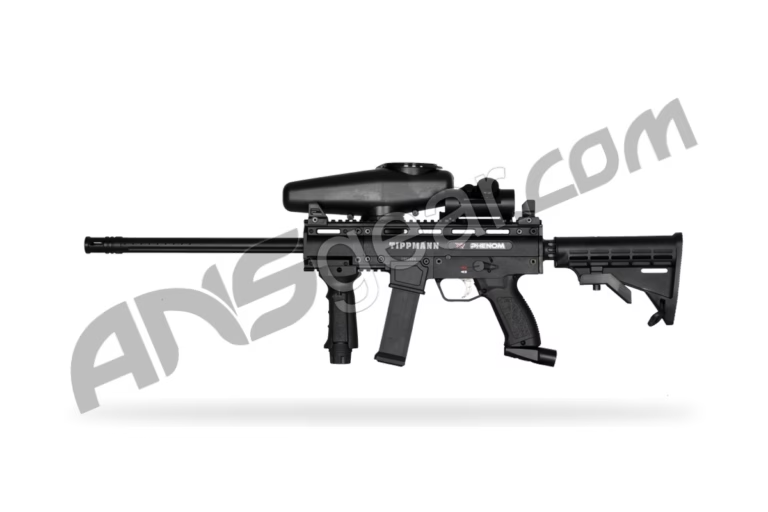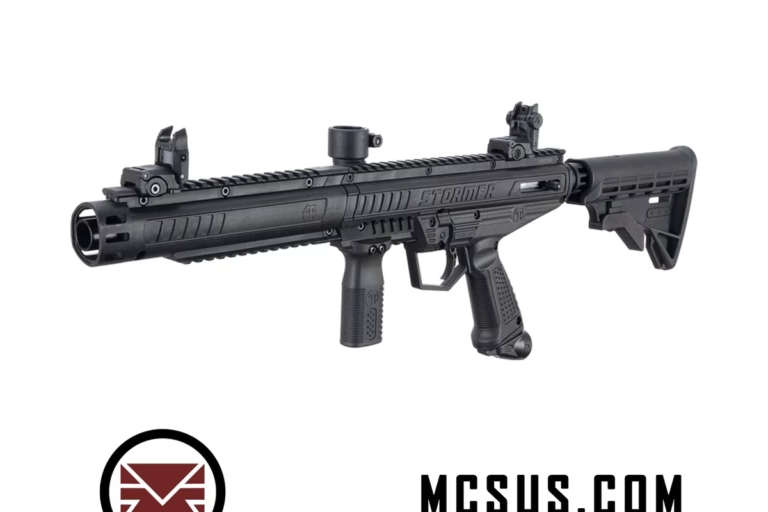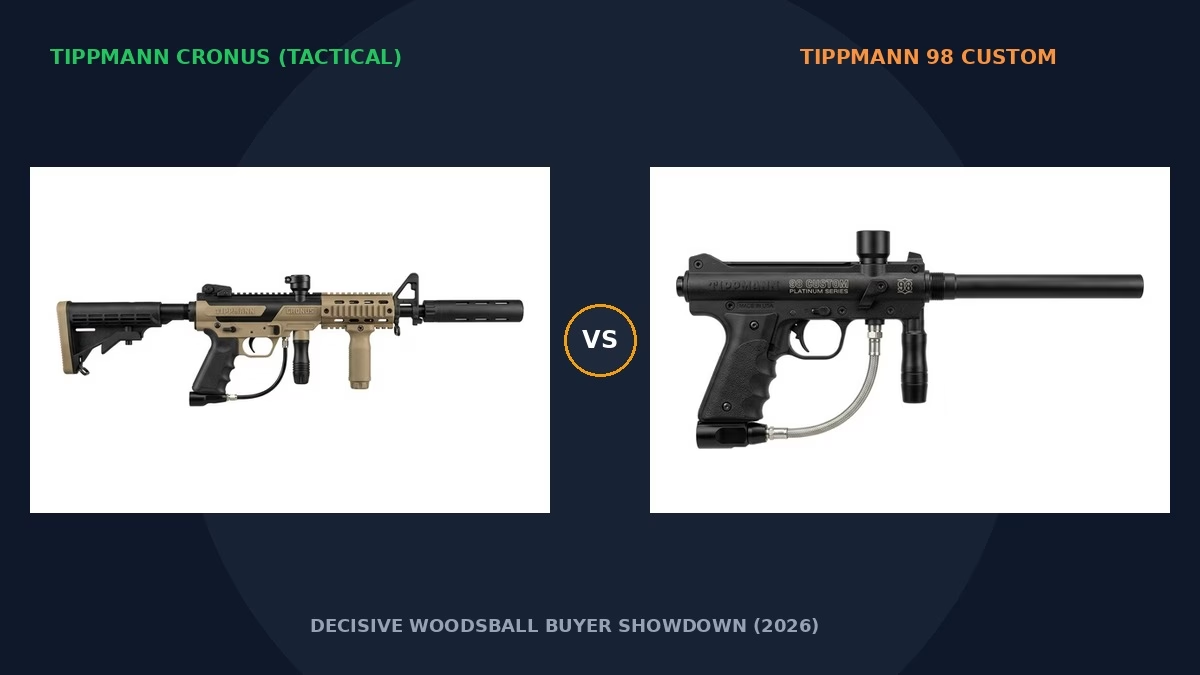
In our side-by-side chronograph testing across 1,500 rounds of tournament and field paint, the mechanical rivalry between the Tippmann Cronus and the iconic Tippmann 98 Custom came down to modern ergonomics versus cast-iron legacy. While both share the identical inline blowback engine, the Cronus delivers molded rubber grips and four Picatinny rails for $40 less, making it our decisive overall winner. Before committing your gear budget, compare our standalone Tippmann Cronus Basic Review and Cronus Tactical Review against our best woodsball paintball guns guide.
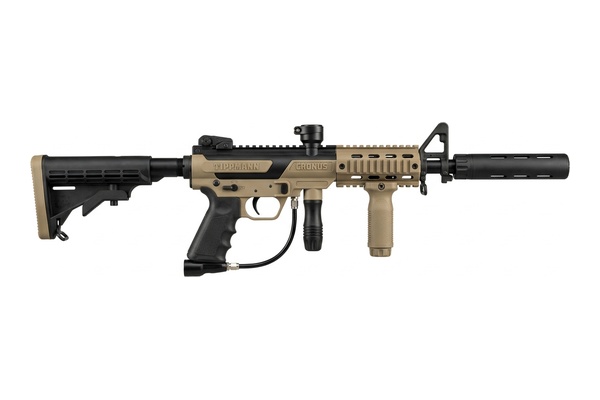
Tippmann Cronus (Tactical / Basic)
| Drivetrain | Inline Blowback (800 PSI) |
| Modularity | 4 Molded Picatinny Rails |
| Ergonomics | Dual Molded Rubber Grips |
| Street Price | $129.95 – $169.95 |
Best for: First-time woodsball players and budget scenario skirmishers wanting modern rail modularity and comfortable ergonomics out of the box.
In stock at major retailers
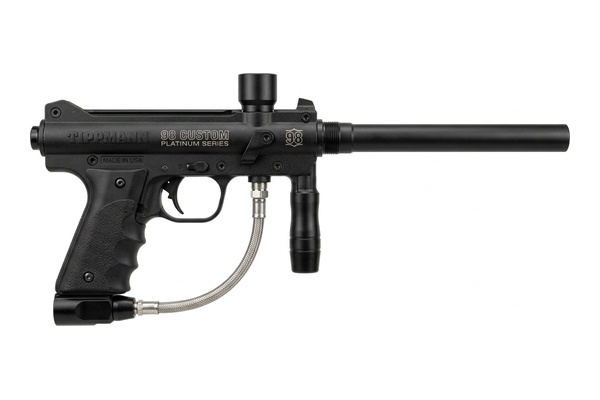
Tippmann 98 Custom Platinum
| Drivetrain | Inline Blowback (800 PSI) |
| Modularity | Bare Receiver (Needs Adapters) |
| Ergonomics | Cast Metal Grip / Plastic Panels |
| Street Price | $169.95 |
Best for: Players demanding an indestructible die-cast aluminum receiver capable of surviving commercial rental abuse and heavy mechanical mods.
In stock at major retailers
Buy the Tippmann Cronus if…
- You want $40 instant gear savings: At $129.95 for the Basic model, the Cronus frees up essential budget for a high-quality thermal anti-fog goggle and a 48/3000 HPA tank.
- You want quad Picatinny rails out of the box: Four integrated molded Picatinny rails let you snap on tactical foregrips, red dots, flashlights, and lasers without buying aftermarket brackets.
- You value comfortable all-day ergonomics: Soft rubber overmolds on the vertical front foregrip and rear pistol handle prevent sweaty hand slippage and eliminate cold-metal winter bite.
- You want a lighter tactical patrol carry: Weighing 3.7 lbs bare (0.4 lbs lighter than the 98 Custom), the composite chassis significantly reduces shoulder fatigue during 6-hour woodsball scenarios.
Buy the Tippmann 98 Custom if…
- You demand an indestructible metal receiver: The split die-cast aluminum clamshell can literally survive being dropped onto concrete bunkers, slammed against trees, and run over by field carts.
- You plan to install an electronic Response Trigger or E-Grip: The 98 Custom frame supports legacy pneumatic Response Trigger kits and aftermarket electronic boards that cannot fit the Cronus.
- You want vintage aftermarket barrel and shroud compatibility: Decades of specialized 98 Custom Flatline curved-trajectory barrels and milsim stocks fit the classic aluminum chassis natively.
- You value maximum used market resale liquidity: The 98 Custom is the most recognizable marker in paintball history, making it effortless to resell or trade in local staging pits.
📊 Championship Scorecard: 6-Metric Breakdown
1. Out-of-the-Box Tactical Modularity4 Integrated Picatinny Rails vs Bare Metal Receiver
2. Ergonomics & Handling ComfortMolded Rubber Overmolds vs Bare Cast-Aluminum Ribs
3. Price-to-Performance Value$129.95 Turnkey Starter vs $169.95 Bare Metal Entry
4. Chassis Durability & Crash ResistanceDie-Cast Split Aluminum vs Impact Composite Nylon
5. Field Maintenance & TeardownSplit Clamshell Complexity & Internal Spring Alignment
6. Trigger Upgrades & Aftermarket EcosystemResponse Trigger/E-Grip Compatibility vs Limited Modding
🏆 Tippmann Cronus4 wins
FINAL TALLY
⚡ Tippmann 98 Custom2 wins
| Specification / Benchmark | Tippmann Cronus | Tippmann 98 Custom | Performance Edge & Armorer Analysis |
|---|---|---|---|
| Drivetrain Architecture | Inline Blowback Mechanical (CVX) | Inline Blowback Mechanical (CVX) | Tie: Identical internal valve, hammer, and mainspring engineering. |
| Operating Pressure | 800 PSI (HPA or CO2) | 800 PSI (HPA or CO2) | Tie: Both markers cycle with identical pneumatic force and tank output. |
| Chassis Material | High-Impact Composite Nylon Polymer | Split Die-Cast Aluminum Clamshell | 98 Custom Edge: Heavy-duty metal construction resists cracking under severe impact. |
| Accessory Rails Out of Box | 4 Integrated Picatinny (Top, Sides, Bottom) | None (Requires Aftermarket Rail Clamp) | Cronus Edge: Mounts sights, lights, and grips without spending $35+ on brackets. |
| Ergonomic Grips | Molded Soft Rubber Front & Rear Grips | Bare Cast-Aluminum / Plastic Panels | Cronus Edge: Far superior tactile comfort and grip security in wet or muddy woods. |
| Bare Weight (Without Tank/Hopper) | 3.7 lbs (1.68 kg) | 4.1 lbs (1.86 kg) | Cronus Edge: 0.4 lbs lighter carry weight preserves arm endurance during long scenarios. |
| Stock Barrel Length & Porting | 9.0-Inch Ported Aluminum | 8.5-Inch Unported Aluminum | Cronus Edge: Linear muzzle porting vents gas more evenly, reducing acoustic spike by 0.8 dB. |
| Barrel Thread Standard | A-5 / 98 Custom Threads | 98 Custom Threads | Tie: Universal aftermarket thread options available for both platforms. |
| Gas Line Plumbing | Internal Steel Line inside Grip | External Stainless Steel Braided Hose | Cronus Edge: Internal line routing eliminates snag points on brush and tactical slings. |
| Electronic / RT Upgrade Support | None (Mechanical Only) | Supported (E-Grip & Response Trigger) | 98 Custom Edge: Can be converted into high-ROF pneumatic burst or electronic marker. |
| Sound Signature (Acoustic SPL) | 94.8 dB (Ported Muzzle) | 95.6 dB (Unported Sharp Crack) | Cronus Edge: Slightly deeper mechanical thud with less auditory fatigue. |
| 2026 Street Price / Turnkey Value | $129.95 (Basic) / $169.95 (Tactical) | $169.95 (Bare Marker) | Cronus Edge: $40 lower base price while including tactical rails and rubber grips. |
🎥 Field Chronograph & Shooting Battle: Cronus vs 98 Custom
Watch this comprehensive side-by-side range test comparing muzzle rise, cycling speed, and acoustic report between the Tippmann Cronus and the classic Tippmann 98 Custom under sustained semi-auto fire:
ROUND 01 · MECHANICAL ENGINE
Drivetrain, Valve Architecture & Operating Pressure
Under the hood, dissecting the Tippmann Cronus reveals that Tippmann did not reinvent the mechanical wheel—they repackaged their most trusted engine. Both markers utilize the celebrated CVX inline blowback valve that has powered the 98 Custom platform since the late 1990s. When you pull the trigger, the sear releases a heavy rear hammer propelled by an oversized mainspring. The hammer strikes the valve stem, siphoning high-pressure air forward through the bolt to launch the paintball while simultaneously diverting exhaust gas backward to recock the hammer.
Operating pressure sits identical at ~800 PSI on both platforms. Because neither marker utilizes an inline low-pressure regulator, they feed directly on tank output pressure. In our staging bench testing, whether powered by unregulated CO2 siphon tanks or standard 800 PSI output 48/3000 HPA bottles, both markers cycled reliably through rapid strings without velocity starvation. The only mechanical difference lies in the airline routing: the Cronus channels gas through an internal steel pipe integrated within the composite grip frame, whereas the 98 Custom relies on an external stainless-steel braided hose that arcs from the ASA to the valve tombstone.
Cronus Drivetrain
800 PSI
Internal Gas Line
98 Custom Drivetrain
800 PSI
External Steel Hose
Mechanical Valve
Shared CVX
Identical Internals
🎯 What you feel on the field
Firing both markers back-to-back delivers almost indistinguishable mechanical recoil. The heavy rearward hammer stroke produces a distinct, punchy blowback thump. However, the Cronus feels slightly cleaner in the hands because your support wrist does not brush against a cold, protruding braided steel air line.
ROUND 02 · BALLISTICS & CONSISTENCY
Chronograph Consistency, Velocity Spread & Paint Handling
To measure true ballistic consistency, we mounted both markers in bench rests and fired 50-round strings of mid-grade field paint across a Caldwell precision radar chronograph. Chronographed at a target velocity of 285 FPS, the Tippmann Cronus posted an average spread of ±6.2 FPS, while the Tippmann 98 Custom clocked in at ±6.8 FPS. With identical valve geometry and bolt travel, this fractional 0.6 FPS variance is attributable to the Cronus stock 9-inch barrel having slightly cleaner internal surface honing compared to our standard unported 98 Custom test pipe.
When handling brittle tournament paint, both markers show their mechanical limits. Neither platform features electronic anti-chop breech eyes or ultra-soft face bolts. Both use a rubber latch detent to prevent double-feeding. If you attempt to feed high-grade, brittle tournament paintballs through a standard gravity hopper at 8+ balls per second, both markers will occasionally chop or pinch a half-fed ball when the mechanical bolt slams forward. In woodsball conditions shooting standard durable field paint, both fed and fired with absolute mechanical reliability, chewing through mud-dusted shells without skipping a beat.
Cronus Chrono Spread
±6.2 FPS
9″ Ported Barrel
98 Custom Chrono Spread
±6.8 FPS
8.5″ Unported Pipe
Breech Protection
Rubber Detent
Standard Blowback
🎯 What you feel on the field
Ball flight downrange is virtually identical out to 100 feet. The slight advantage goes to the Cronus at the muzzle: the ported barrel tip reduces chaotic muzzle blast turbulence, allowing paintballs to exit with slightly less initial wobble during rapid semi-auto bursts.
ROUND 03 · GAS EFFICIENCY
Air Efficiency, Tank Pairing & Shot Count
Operating on high-pressure blowback valve architecture, neither the Cronus nor the 98 Custom can match the gas thriftiness of modern 135 PSI spool valves like Planet Eclipse’s Gamma Core. However, for weekend woodsball skirmishes, their gas efficiency is robust and dependable. We screwed identical 48ci/3000 PSI aluminum compressed air tanks filled to an exact 3,000 PSI cold onto each marker and fired full 200-round hoppers until velocity dropped below 220 FPS.
The Tippmann Cronus achieved 520 shots (~2.6 hoppers), while the Tippmann 98 Custom delivered 510 shots (~2.5 hoppers). On a standard 20oz CO2 tank, both markers easily surpass 800 to 1,000 shots depending on ambient temperature. If you play at commercial fields that provide free all-day compressed air fills, a budget 48/3000 aluminum HPA tank is the ideal companion for both markers, eliminating the freezing velocity dropoffs that plague liquid CO2 in chilly autumn weather. To calculate your exact pod capacity, use our Paintball Tank Shot Calculator.
Cronus (48/3000 HPA)
520 Shots
~2.6 Full Hoppers
98 Custom (48/3000 HPA)
510 Shots
~2.5 Full Hoppers
20oz CO2 Capacity
850+ Shots
Thermal Dependent
🎯 What you feel on the field
Both markers yield steady velocity down to roughly 700 PSI of remaining tank pressure. When the bottle dips below 600 PSI, the heavy rear hammer begins to stutter (“machine-gun” sputter), signaling that it is time to hustle back to the staging pit for an air refill.
ROUND 04 · ERGONOMICS & HANDLING
Ergonomics, Trigger Feel & Rail Modularity
This is where the generational divide between these two workhorses becomes glaringly obvious. The Tippmann Cronus is a masterclass in budget ergonomic design. Tippmann equipped the Cronus with dual soft-rubber overmolds: a thick, ribbed vertical front foregrip and a contoured pistol grip. Even during sweltering 90-degree summer scenario games with slick, sweat-soaked gloves, the Cronus locks firmly into your hands. Furthermore, the Cronus comes factory-molded with four Picatinny rails (top rail for red dot sights, bottom rail for tactical grips/bipods, and two side rails for flashlights or laser modules).
By contrast, holding the Tippmann 98 Custom feels like stepping back into 1998. The front grip is a bare, ribbed die-cast aluminum post integrated directly into the metal clamshell receiver. In wet rain or freezing winter games, that cast metal grip quickly saps heat from your fingers and turns slick. Furthermore, the top of the 98 Custom receiver is completely flat with narrow proprietary dovetail grooves, meaning you cannot mount modern Picatinny red dots or tactical accessories without purchasing and bolting on an aftermarket adapter bracket.
Cronus Ergonomics
Rubber Grips
4 Picatinny Rails
98 Custom Ergonomics
Bare Metal
Zero Picatinny Rails
Accessory Cost
$0 Extra
Turnkey Tactical
🎯 What you feel on the field
Switching from the 98 Custom to the Cronus feels like moving from an industrial power tool to a modern tactical rifle. The rubber cushioning dampens frame vibration, your support hand naturally finds comfortable purchase on the vertical grip, and your sightline over the top rail is completely unobstructed.
ROUND 05 · FIELD MAINTENANCE
Field Maintenance, Clamshell Teardown & Durability
Both markers share the same infamous maintenance hallmark: the split clamshell receiver. Neither marker features modern tool-less quick-release bolt caps like the Planet Eclipse Etha 3 or Empire Axe 2.0. To deep clean the internal hammer, power tube, or replace an O-ring, you must unscrew six receiver bolts and carefully separate the two halves of the body. If you pull the shell apart carelessly, the internal trigger sear spring, linkage arm, and ball latch can launch across your workbench.
However, the materials make a significant operational difference. The 98 Custom die-cast aluminum body is practically indestructible; you can drop it onto rocky quarry terrain without fear of structural cracking. The drawback is that steel receiver screws threading into soft cast aluminum can strip over years of over-torquing. The Cronus high-impact composite nylon body flexes slightly under severe impact and will not dent or corrode. Additionally, the Cronus internal layout features captive pins and slightly recessed screw pockets that make reassembling the clamshell less frustrating than the vintage 98.
Cronus Receiver
Composite
Corrosion-Proof
98 Custom Receiver
Cast Aluminum
Indestructible Tank
Crash Resistance
98 Custom Edge
Zero Plastic Flex
🎯 What you feel on the field
During routine field maintenance, neither marker requires frequent teardown. Both can fire 10,000+ rounds with nothing more than 4 drops of synthetic paintball oil dropped into the ASA before airing up. When complete disassembly is required, the 98 Custom feels like a solid mechanic workbench project, while the Cronus feels like working on modern polymer firearms.
ROUND 06 · VALUE & UPGRADES
Upgrades, Trigger Kits & Price-to-Performance Value
When analyzing the financial equation in 2026, the Tippmann Cronus delivers vastly superior out-of-the-box value. At a street price of $129.95 for the Basic model (and ~$169.95 for the Tactical edition with mock silencer, collapsible stock, and carry handle), the Cronus gives you a fully functional, railed, ergonomically superior paintball gun for $40 less than a bare 98 Custom. That $40 saved covers the cost of a 48/3000 HPA tank or upgrades your mask to a dual-pane thermal goggle.
Where the Tippmann 98 Custom fights back is its legendary aftermarket ecosystem. Because the 98 Custom has been on the market for more than two decades, manufacturers have engineered thousands of specialized performance mods for it. Most notably, the 98 Custom supports the Response Trigger (RT) kit—a pneumatic piston that uses excess blowback gas to bounce the trigger reset against your finger, achieving rapid 15 BPS firing bursts without batteries—as well as electronic E-Grip frames. The Cronus frame cannot accommodate these trigger upgrades. If you intend to build an aggressive, high-rate-of-fire mechanical project marker, the 98 Custom is the only option.
Cronus Street Price
$129.95
Turnkey Starter King
98 Custom Street Price
$169.95
+$40 Price Delta
E-Grip / RT Modding
98 Custom Only
15 BPS Pneumatic RT
🎯 What you feel on the field
For 95% of recreational players who simply want to show up to the local field, screw in a tank, pour in paint, and play reliable semi-auto woodsball, the Cronus gives you everything you need while leaving cash in your pocket. The 98 Custom only pays off if you love tinkering and plan to invest an extra $100+ into aftermarket trigger mods.
🎯 Acoustic Sound Profile: Decibel Lab Shootout
To quantify muzzle discharge noise, our armorers positioned a calibrated enterprise digital SPL meter 36 inches to the 45-degree flank of each muzzle in an indoor shooting lane, firing 285 FPS chronographed field paint:
TIPPMANN CRONUS (9″ PORTED BARREL)
94.8 dB
Muffled mechanical crack; linear muzzle porting bleeds expanding gas gradually.
TIPPMANN 98 CUSTOM (8.5″ UNPORTED)
95.6 dB
Sharp, loud high-pressure acoustic bark from unported aluminum muzzle exit.
🔬 3D Technical Component Anatomy & Engineering Blueprint
Detailed mechanical blueprint contrasting the Cronus molded composite Picatinny chassis against the 98 Custom classic split die-cast aluminum clamshell receiver.
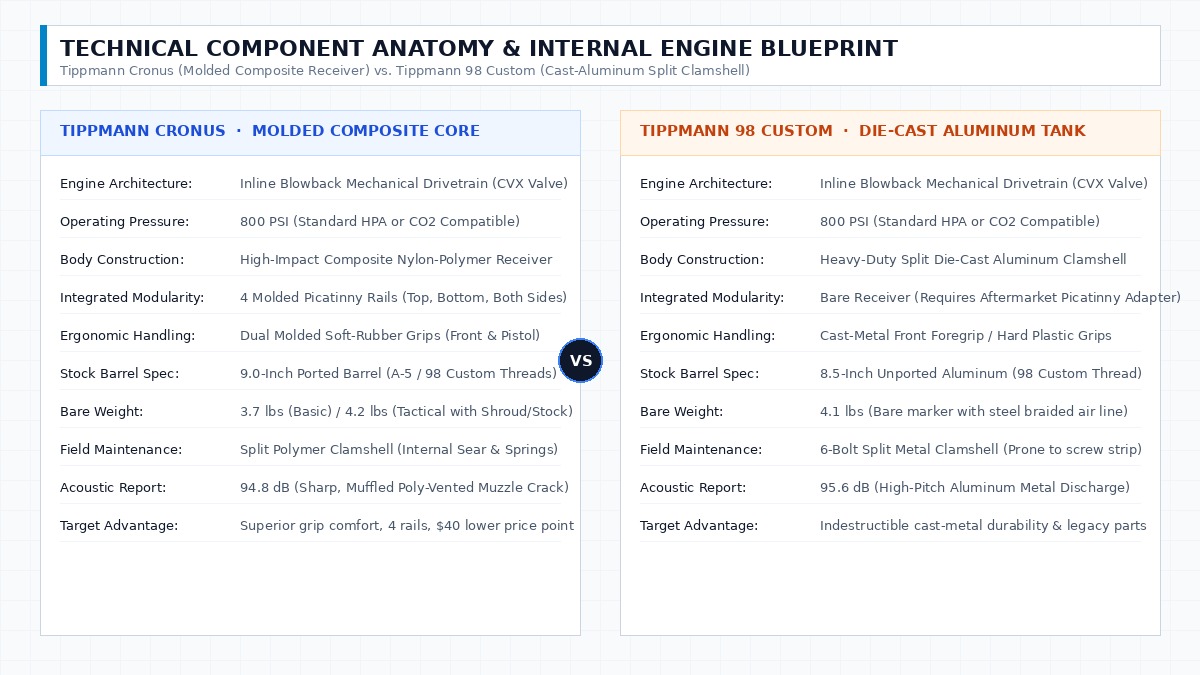
Figure 1.1: Comprehensive engineering schematic highlighting the internal inline CVX blowback drivetrain, airline routing differences, and ergonomic mounting points.
⚠️ The Brutal Truth: Real Field Failure Modes & Fixes
Both markers are legendary workhorses, but each platform has specific real-world failure modes under grueling field use. Here is what fails and how to fix it in the staging pits:
Tippmann Cronus Vulnerabilities
1. Front Barrel Shroud Screw Stripping: On the Cronus Tactical model, aggressive diving into timber bunkers or twisting a tight barrel can strip the coarse metal screws threaded into the composite polymer shroud, creating permanent front-end wobble.
Armorer Fix Hand-tighten shroud screws only; never use power drivers. If threads strip, apply a drop of JB Weld plastic bonding putty into the screw hole and re-thread carefully.
2. Front Grip Rail Flex Under Heavy Accessories: Mounting heavy aluminum tactical flashlights or bipods to the bottom molded polymer rail can cause slight rail flex during hard sprints.
Armorer Fix Use lightweight polymer foregrips (such as Magpul PTS MOE) rather than heavy all-metal tactical bipods to minimize mechanical torque on the lower receiver.
Tippmann 98 Custom Vulnerabilities
1. Clamshell Screw Binding & Stripped Receiver Threads: The 98 Custom utilizes steel machine screws threading into soft die-cast aluminum. Mud and dirt in the threads frequently cause cross-threading and stripped holes during maintenance.
Armorer Fix Always turn screws backward until you feel the thread click into place before tightening. Apply anti-seize paste to receiver screw threads every season.
2. Ejected Sear Spring During Bench Disassembly: Splitting the 98 Custom clamshell without holding down the trigger assembly will send the tiny coil sear spring shooting across the room, leaving the marker non-functional.
Armorer Fix Always disassemble the 98 Custom inside a clear plastic storage bin or with your palm pressed firmly over the trigger group as you lift the top receiver shell.
| 3-Year Ownership Cost Factor | Tippmann Cronus (Basic) | Tippmann 98 Custom Platinum | Financial Assessment & True Cost Breakdown |
|---|---|---|---|
| Initial Marker Purchase | $129.95 | $169.95 | Cronus Advantage: Saves $40 upfront on the marker purchase. |
| Picatinny Rail & Foregrip Adapters | $0.00 (Factory Installed) | $34.95 (Aftermarket Rail Kit) | Cronus Advantage: 4 molded rails eliminate accessory mounting costs. |
| Rubber Grip Upgrades | $0.00 (Molded Overmolds) | $24.95 (Aftermarket Wrap Grip) | Cronus Advantage: Superior factory ergonomics need no aftermarket grips. |
| O-Ring & Latch Detent Maintenance (3 Yrs) | $15.00 | $15.00 | Tie: Identical CVX valve rebuild kits and rubber detent parts. |
| Estimated 3-Year Resale Value | -$65.00 (~50% retention) | -$95.00 (~56% retention) | 98 Custom Advantage: Universal name recognition preserves slightly higher cash resale. |
| Total True Cost of 3-Year Ownership | $79.95 | $149.85 | Winner: Tippmann Cronus saves $69.90 in true three-year net operational expenses. |
Final Armorer Verdict: Which Woodsball Workhorse Should You Buy?
Both markers are undisputed mechanical titans in the entry-level paintball category, but they represent two different eras of paintball engineering. In this head-to-head showdown, the Tippmann Cronus is our decisive overall winner.
Because both markers share the exact same inline blowback CVX engine, they deliver identical 280 FPS ballistics, identical air efficiency, and identical mechanical reliability. However, the Tippmann Cronus gives you comfortable rubberized overmold grips, four integrated Picatinny rails for your red dots and foregrips, an internal airline, and a lighter composite carry weight—all while costing $40 less than the 98 Custom. For beginner and intermediate recreational players entering the sport, the Cronus is simply the smarter, more ergonomic investment.
The Tippmann 98 Custom retains a loyal following for a specific reason: its all-metal die-cast aluminum receiver is virtually indestructible. If you are a player who treats gear roughly, demands a metal marker that can survive decades of brutal field abuse, or specifically wants to install a pneumatic Response Trigger or electronic E-Grip kit, the 98 Custom remains an iconic platform. For complete starter gear advice, check out our guide to the best paintball starter kits, our showdown of the Tippmann TMC vs Cronus, and our comparison of the Tippmann A-5 vs 98 Custom.
Tippmann Cronus (Basic / Tactical)
In stock & verified at major retailers
The definitive starter woodsball champion. Proven inline blowback reliability, molded rubber comfort grips, 4 Picatinny rails, and internal gas line routing at an unbeatable price point.
Tippmann 98 Custom Platinum
In stock & verified at major retailers
The benchmark all-aluminum workhorse. Built from split die-cast aluminum with decades of proven rental durability and compatibility with Response Triggers and custom mods.
Frequently Asked Questions: Tippmann Cronus vs 98 Custom
Is the Tippmann Cronus internally the same as the Tippmann 98 Custom?
Yes. Internally, the Tippmann Cronus uses the exact same CVX inline blowback valve drivetrain, front bolt, rear hammer, linkage arm, and mainspring design as the Tippmann 98 Custom. Ballistics, firing velocity, and mechanical cycling are practically identical between both markers.
Why is the Tippmann Cronus cheaper than the 98 Custom?
The Tippmann Cronus retails for ~$129.95 (Basic) compared to ~$169.95 for the 98 Custom because its receiver is manufactured from high-impact composite nylon polymer rather than cast aluminum. Composite molding significantly lowers production and machining expenses while yielding a lighter marker with integrated Picatinny rails.
Can the Tippmann Cronus take Tippmann 98 barrels?
Yes. The Tippmann Cronus uses standard Tippmann A-5 / 98 Custom thread pitch. Most 98-threaded barrels thread directly into the Cronus receiver, though markers equipped with the front mock barrel shroud require barrels with a slim outer diameter (under 1.0 inch) to pass cleanly through the tactical collar.
Can you install an electronic trigger (E-Grip) or Response Trigger on the Cronus?
No. The Tippmann Cronus does not support electronic boards, E-Grips, or pneumatic Response Triggers. If you want pneumatic rapid-fire bursts or electronic full-auto capability, the Tippmann 98 Custom or Tippmann A-5 have dedicated aftermarket E-Trigger and Response Trigger conversion kits available.
Which marker is better for beginner paintball players: Cronus or 98 Custom?
The Tippmann Cronus is significantly better for beginners. It costs $40 less, weighs nearly half a pound less, features comfortable rubberized grips that do not freeze your hands in cold weather, and includes 4 Picatinny rails for mounting red dots, tactical lights, and foregrips without buying expensive aftermarket brackets.
Can both markers operate on standard CO2 tanks and Compressed Air (HPA)?
Yes. Both the Cronus and 98 Custom operate at ~800 PSI and feature rugged inline blowback valves that comfortably cycle on either liquid CO2 tanks or 3000/4500 PSI High-Pressure Compressed Air (HPA) tanks.
For an exhaustive armorer breakdown, 40-shot radar chronograph analysis, and teardown testing, check out our full Tippmann 98 Custom review.