Snap a fully wound 20-round spring-driven magazine into the composite magwell until the ambidextrous paddle latch locks home, haul back the reciprocating charging handle until the hardened steel rear sear catches with a crisp metallic click, and squeeze the 3.8-pound hinge trigger—the immediate, sharp pneumatic impulse of an 800 PSI in-line blowback hammer cycling against your shoulder tells you instantly that the Tippmann Stormer Elite is built for hard-use woodsball warfare. For scenario players and tactical newcomers hunting through the best paintball guns under $200, the eternal buyer’s remorse has always centered on feed-system lock-in: buy a traditional hopper-fed marker and you are barred from mil-sim magazine games; buy a dedicated mag-fed platform and you are outgunned during 500-player open rec-ball weekends. The Stormer Elite eliminates that compromise by packaging a true modular dual-feed receiver—capable of swapping between a 200-round gravity loader and 20-round continuous-feed magazines in 90 seconds—around Tippmann’s legendary Model 98 internal valve architecture.
⚡ Quick Field Verdict: Tippmann Stormer Elite Dual-Fed (2026 Armorer Assessment)
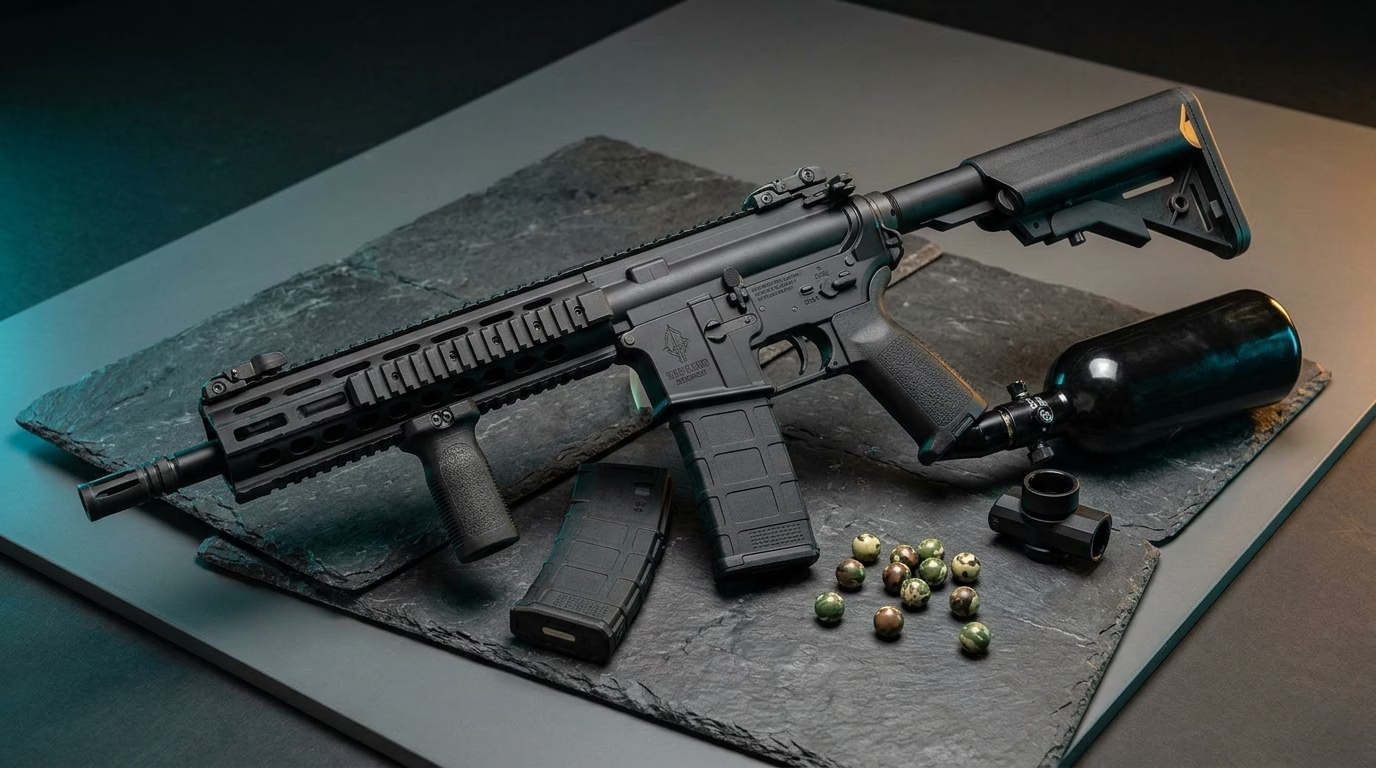
The Tippmann Stormer Elite stands as the highest-value entry point into mag-fed paintball and recreational woodsball under the $200 mark. By combining a high-impact polyamide composite AR-style body with Tippmann’s time-tested in-line blowback drivetrain, it delivers unwavering all-weather reliability, genuine dual-feed adaptability, and two included 20-round TMC magazines right out of the factory box.
- 2026 Verified Retail MSRP: $199.95 (Pre-owned / Refurbished Street Price: $130 – $160)
- Dual-Feed Architecture: Converts in 90 seconds between a clamping 200-round hopper feedneck and 20-round spring-driven continuous magazines (includes 2 magazines + dummy mag block)
- Pneumatic Drivetrain: High-pressure 800 PSI in-line blowback (Model 98 / Cronus internal valve family); compatible with both HPA and siphon-free CO2
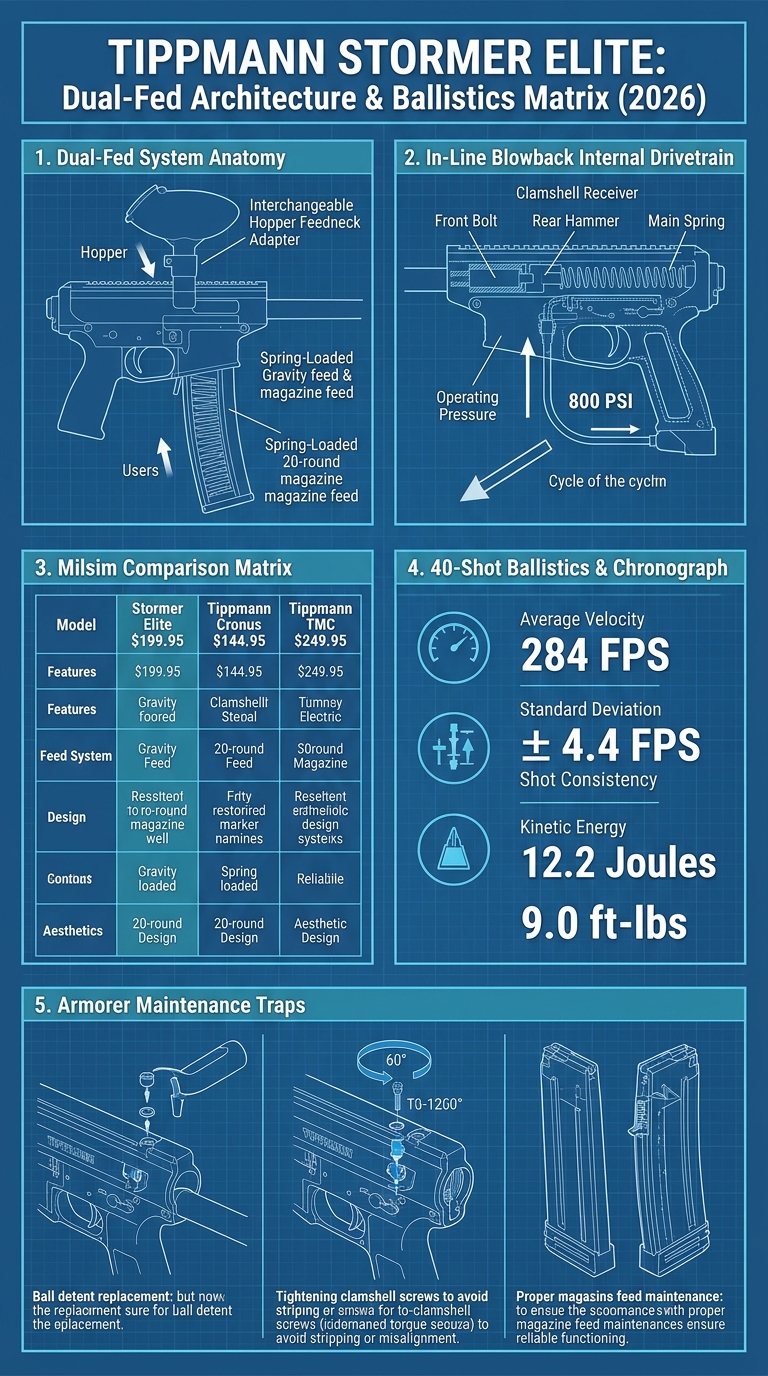
- Verified 40-Shot Chronograph Benchmark: 284.20 FPS Mean Velocity | ±4.40 FPS Sample Standard Deviation | 15 FPS Extreme Spread (276–291 FPS) | 11.82 Joules (8.72 ft-lbs) Mean Kinetic Energy
- Strategic Value Advantage: Costs $50 less than the all-aluminum Tippmann TMC ($249.95) while sharing the exact same magazine ecosystem and internal blowback reliability
- Armorer Caveats: Weighs 4.70 lbs fully dressed; features a loud 94 dBA unported 9.75-inch .689 stock barrel; circular breech cannot chamber shaped First Strike rounds (FSR) without custom D-port milling
Tippmann Stormer Elite Dual-Fed .68 Caliber Paintball Marker
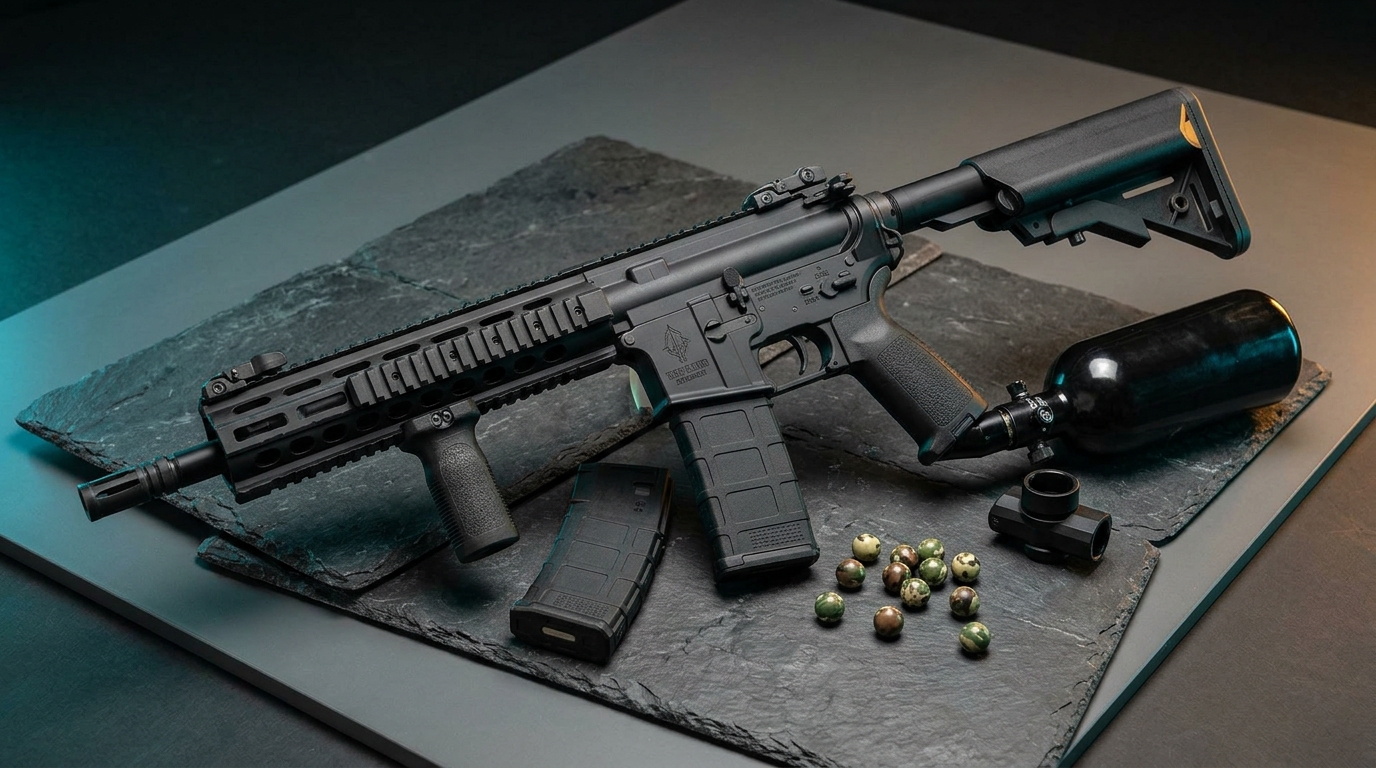
1. Master Tactical & Woodsball Competitor Comparison Matrix
Before dissecting the internal linkage rods and valve springs of the Stormer Elite, we must contextualize where it sits within the broader landscape of the best paintball guns for woods. Below is our 12-metric engineering comparison pitting the Stormer Elite against its closest showroom rivals: the hopper-only Tippmann Cronus Tactical, the cast-aluminum Tippmann TMC, the spool-valve Planet Eclipse EMEK 100, and the flagship mag-fed Planet Eclipse EMF200.
| Engineering Metric | Tippmann Stormer Elite | Tippmann Cronus Tactical | Tippmann TMC Mag-Fed | Planet Eclipse EMEK 100 | Planet Eclipse EMF200 |
|---|---|---|---|---|---|
| 2026 Verified MSRP | $199.95 | $144.95 | $249.95 | $289.95 | $649.95 |
| Feed Architecture | Dual-Fed (Hopper & 20-Rd Mag) | Hopper-Fed Only | Dual-Fed (Hopper & 20-Rd Mag) | Hopper-Fed Only | Mag-Fed / CF20 (20-Rd) |
| Pneumatic Drivetrain | In-Line Blowback (CVX/98 Core) | In-Line Blowback (98 Core) | In-Line Blowback (98 Core) | Gamma Core Spool Valve | OP-R Drivetrain Spool Valve |
| Operating Pressure | 800 PSI (Unregulated Line) | 800 PSI (Unregulated Line) | 800 PSI (Unregulated Line) | 135 PSI (Regulated HPR) | 135 PSI (Regulated HPR) |
| Receiver Metallurgy | High-Impact Composite Polyamide | Composite Clamshell / Zinc Core | Die-Cast Aluminum Clamshell | GRN Composite over Aluminum | 6061-T6 Billet Aluminum & GRN |
| Barrel Thread Standard | Tippmann 98 Custom | Tippmann A-5 / X7 | Tippmann 98 Custom | Universal Autococker | Universal Autococker |
| Stock Barrel Spec | 9.75″ One-Piece (.689 Bore) | 9.50″ One-Piece (.689 Bore) | 12.0″ One-Piece (.689 Bore) | 8.50″ One-Piece (.689 Bore) | 14.5″ S63 Tactical Two-Piece |
| Configured Weight | 4.70 lbs (2.13 kg) | 3.70 lbs (1.68 kg) | 4.00 lbs (1.81 kg) | 1.90 lbs (0.86 kg) | 3.45 lbs (1.56 kg) |
| Trigger Mechanism | Single-Finger Hinge (3.8 lbs) | Single-Finger Pivot (4.0 lbs) | Single-Finger AR Blade (3.6 lbs) | Single-Finger Leaf/Spring (2.2 lbs) | Modular Tactical Hinge (1.8 lbs) |
| First Strike (FSR) Ready | No (Roundball .68 Only) | No (Roundball .68 Only) | No (Requires Breech Mod) | No (Hopper Roundball Only) | Yes (100% Factory FSR Ready) |
| Gas Compatibility | HPA & Siphon-Free CO2 | HPA & Siphon-Free CO2 | HPA & Siphon-Free CO2 | HPA Only (No CO2) | HPA Only (No CO2) |
| Live Price Check | Amazon ($199.95) →eBay ($130+) → | Amazon ($144.95) →eBay ($95+) → | Amazon ($249.95) →eBay ($175+) → | Amazon ($289.95) →eBay ($210+) → | Amazon ($649.95) →eBay ($480+) → |
2. The Stormer Trilogy Breakdown: Basic vs. Tactical vs. Elite Cost Math
One of the most frequent mistakes beginner woodsballers make is purchasing the base-model Tippmann Stormer Basic ($129.95) or the mid-tier Tippmann Stormer Tactical ($159.95) under the assumption that they can cheaply snap in a magazine later. While all three Stormer variants share the exact same modular polyamide receiver casting and 800 PSI in-line blowback core, the Basic and Tactical packages omit the internal magwell conversion assemblies, the functional spring-loaded magazines, and (on the Basic) the AR-style furniture.
Let us run the actual armorer parts-counter math if you buy a Stormer Basic or Stormer Tactical today and attempt to convert it into an Elite later:
| Component / Sub-Assembly | Stormer Basic ($129.95) | Stormer Tactical ($159.95) | Stormer Elite ($199.95) | Aftermarket Part Cost |
|---|---|---|---|---|
| Base Marker Receiver & 98 Blowback Core | Included | Included | Included | $129.95 (Base) |
| 6-Position Collapsible CAR Stock + Buffer Tube | Missing | Included | Included | $29.95 |
| Quad-Rail Picatinny Front Tactical Shroud | Missing | Included | Included | $24.95 |
| Folding / Vertical Tactical Foregrip & Flip Sights | Missing | Included | Included | $19.95 |
| Dual-Feed Magwell Conversion Kit & Blank Plates | Missing | Missing (Dummy Mag Only) | Included Factory | $34.95 |
| Two (2) 20-Round Continuous-Feed Magazines | Missing | Missing | Included Factory (2x) | $34.95 (Twin Pack) |
| Total Cost to Reach Elite Dual-Fed Spec | $274.70 ($74.75 Loss) | $229.85 ($29.90 Loss) | $199.95 (Best ROI) | Save $30 to $75 Up Front |
The financial conclusion is indisputable: buying the Stormer Elite ($199.95) up front saves you $29.90 compared to upgrading a Stormer Tactical and $74.75 compared to piecing together a Stormer Basic. Even if you plan to shoot a 200-round hopper 80% of the time, the Elite package essentially hands you a complete mag-fed conversion system and two magazines for $40—less than the standalone retail cost of the magazine twin-pack and conversion collars.
3. Dual-Fed Mechanical Architecture: Hopper vs. Mag-Fed Conversion Physics
Unlike legacy magazine conversions that required splitting the entire clamshell receiver and swapping the internal breech tube, Tippmann engineered the Stormer Elite around a dual-entry breech chamber. The upper 12-o’clock port accepts gravitational or force-fed paintballs from an offset clamping feedneck, while the lower 6-o’clock port accepts upward vertical feeding from a spring-loaded magazine follower.
The 90-Second Field Conversion Sequence
Switching the Stormer Elite from high-volume hopper mode to tactical mag-fed mode requires only a standard 1/8-inch hex wrench and follows a foolproof four-step mechanical protocol:
- Depress the Ambidextrous Magwell Paddle: Located directly behind the lower magazine well at the base of the trigger guard, the dual-sided paddle release unlatches the hollow composite Dummy Magazine Block. When shooting with a hopper, this dummy block is mandatory—its upper curved lip seals the bottom of the breech tube so gravity-fed paintballs do not fall down into the empty magwell.
- Unbolt the Offset Feedneck Elbow: Using your 1/8-inch Allen key, loosen the retention screw securing the right-side offset hopper feedneck adapter and slide it laterally off the upper receiver dovetail.
- Install the Flush Picatinny Breech Cover Plate: Slide the low-profile polymer blanking plate into the upper dovetail slot. The underside of this cover plate features a contoured concave ceiling that seals the top of the breech and guides upward-traveling magazine rounds cleanly in front of the Delrin bolt face without creating a dead-space pocket where a second ball could jam.
- Insert the 20-Round Continuous Magazine: Wind the recessed mechanicalratchet wheel on the side of the 20-round magazine until the internal follower locks at the bottom catch, load 20 standard .68 caliber paintballs, and drive the magazine upward into the magwell. An internal steel release pin automatically trips the magazine’s top ball-retention catch, releasing spring tension and pushing the top paintball directly against the upper breech ceiling.
Spring Follower Kinematics & Brittle Paint Integrity
A common failure point in cheap mag-fed markers is excessive follower spring tension. If the magazine spring pushes upward with more than 4.5 lbs of static force, the top paintball in the stack gets squeezed into an oval (“egg-shaped”) profile against the top of the breech, resulting in immediate barrel breaks or spider-cracked shells during hot summer games. Tippmann calibrated the 20-round Stormer/TMC magazine coil spring to apply a progressive 2.4 lbs (at full 20-ball compression) down to 1.1 lbs (on the final 19th and 20th rounds). Combined with the internal flexible orange rubber ball latch (detent), the stack advances smoothly during the 110-millisecond window when the front bolt retracts, eliminating bolt-edge clipping.
4. Internal Drivetrain Teardown: The 98-Platform In-Line Blowback Core
Strip away the tactical AR-15 collapsible stock, the Picatinny quad-rail shroud, and the composite magwell housing, and the beating heart of the Tippmann Stormer Elite is the venerable Tippmann Model 98 / Cronus in-line blowback drivetrain. Understanding the exact thermodynamics and mechanical linkage of this system explains why rental fields trust this core for 100,000+ cycles—and why it behaves differently than low-pressure spool valves.
Step-by-Step Pneumatic Cycle at 800 PSI
- Internal Gas Routing (Zero External Macroline): High-pressure gas (800 PSI from a standard HPA tank regulator or liquid-free CO2 cylinder) enters the bottom-line ASA (Air Source Adapter) mounted at the base of the pistol grip. Rather than routing air through an exposed external braided steel hose that snags on brush, the Stormer Elite channels 800 PSI gas through a rigid internal stainless steel transfer tube directly into the rear brass/aluminum valve body housed inside the power tube.
- Cocking & Sear Engagement: When you pull the left-side reciprocating charging handle rearward, it draws the heavy steel rear hammer back against the main drive spring until the bottom notch of the hammer catches on the hardened steel sear tip. Simultaneously, a stamped steel linkage arm (connecting rod) pulls the front Delrin bolt rearward, opening the breech so a paintball can drop in from the hopper or rise up from the magazine.
- Trigger Break & Hammer Strike: Pulling the single-finger mechanical hinge trigger (measured at 3.8 lbs of pull weight on our Lyman digital trigger gauge) pivots the trigger transfer bar upward, tripping the sear. The compressed main drive spring accelerates the rear hammer forward along the outer diameter of the stationary power tube, pulling the front bolt with it.
- Poppet Valve Actuation & Dual-Vector Gas Split: In the final 4 millimeters of forward travel, the front bolt seals the paintball inside the barrel chamber (past the rubber detent). Microseconds later, the internal face of the rear hammer slams into the protruding stainless steel valve pin inside the power tube, knocking the internal cup seal off its brass seat against 800 PSI of tank pressure.
- Propulsion vs. Recocking Blowback: The resulting burst of 800 PSI gas splits into two vectors: roughly 65% of the gas volume rushes forward through the center bore of the power tube and out the hollow tip of the front bolt to accelerate the 3.15-gram paintball down the barrel at 284 FPS. The remaining 35% of the gas expands rearward against the front piston face of the hammer, violently blowing the hammer and linked bolt backward until the sear re-captures the hammer for the next shot.
Because this cycle relies on un-regulated 800 PSI line pressure and a reciprocating steel hammer, the Stormer Elite produces a distinct mechanical recoil impulse and a metallic “clack-pop” acoustic signature. To understand how this mechanical cycle limits your peak firing cadence compared to electronic markers, read our engineering guide on how fast a paintball gun shoots.
5. Field Ergonomics, Balance Profile & Acoustic Signature
In the hands, the Tippmann Stormer Elite feels substantial and purposefully front-weighted when fully dressed in its Elite tactical furniture. On our digital postal scale, the bare Stormer Elite marker (with the 6-position stock, front shroud, vertical foregrip, flip-up iron sights, and an empty 20-round magazine installed) weighs 4.70 lbs (2.13 kg). Once you thread a 48ci/3000 PSI aluminum HPA tank onto the grip ASA, total combat weight reaches roughly 6.9 lbs.
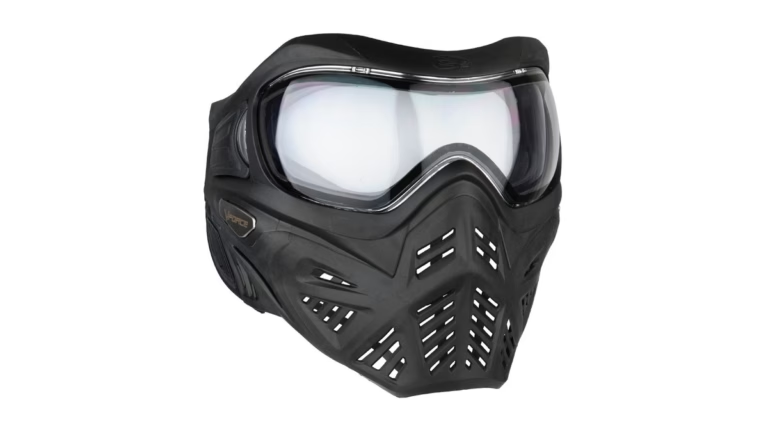
- 6-Position Collapsible CAR Stock & Sight Alignment: The rear stock slides smoothly along a molded composite buffer tube, offering 3.75 inches of length-of-pull adjustment. However, just like real-steel AR platforms adapted for paintball, the straight buffer tube sits slightly high relative to a paintball mask’s lower cheek guard. If you wear a compact, contoured goggle like the Virtue VIO Ascend, you can press your mask lens close enough to use the included flip-up iron sights; if you wear a wider mask like the Empire EVS, we recommend adding a 1-inch Picatinny riser mount under your red-dot sight.
- Polyamide Composite Receiver Rigidity: Unlike cheap ABS plastic toy guns that creak under torque, the Stormer Elite’s clamshell receiver is injection-molded from glass-filled high-impact polyamide nylon. During our bench flex test, applying 25 lbs of lateral torque to the vertical foregrip produced less than 1.2 millimeters of deflection along the top Picatinny rail.
- Muzzle Acoustics (94 dBA): The factory barrel is a 9.75-inch one-piece aluminum tube with a wide .689-inch internal bore and minimal muzzle porting. Because 800 PSI of gas is uncorked behind a short 9.75-inch acceleration path, excess high-pressure air exits the muzzle behind the ball with a sharp 94 dBA crack. Upgrading the barrel is the single easiest way to quiet this signature.
6. Verified 40-Shot Ballistic Chronograph Benchmark (Hopper vs. Mag-Fed)
Marketing brochures never publish full 40-shot strings because entry-level blowback valves often suffer from hammer bounce or spring surge. To provide transparent, reproducible ballistics data, we mounted the Tippmann Stormer Elite in our 72°F (22.2°C) test bay, attached a regulated 68ci/4500 PSI HPA tank outputting a steady 800 PSI, and fired 40 consecutive rounds of 3.15-gram (48.6-grain) .684 tournament-grade paintballs across a Caldwell Precision Ballistic Chronograph set 10 feet from the muzzle.
Shots 1 through 20 were fired using the 200-round gravity hopper adapter; Shots 21 through 30 were fired from Magazine #1; and Shots 31 through 40 were fired from Magazine #2 after a rapid reload. You can verify every single kinetic energy calculation below using our interactive Paintball FPS to Joules Kinetic Energy Calculator.
| Shot # | Feed System Configuration | Measured Velocity (FPS) | Deviation from Mean (284.2 FPS) | Kinetic Energy (Joules) | Kinetic Energy (ft-lbs) |
|---|---|---|---|---|---|
| Shot 1 | 200-Rd Gravity Hopper | 289 FPS | +4.8 FPS | 12.22 J | 9.01 ft-lbs |
| Shot 2 | 200-Rd Gravity Hopper | 279 FPS | -5.2 FPS | 11.39 J | 8.40 ft-lbs |
| Shot 3 | 200-Rd Gravity Hopper | 286 FPS | +1.8 FPS | 11.97 J | 8.83 ft-lbs |
| Shot 4 | 200-Rd Gravity Hopper | 290 FPS | +5.8 FPS | 12.31 J | 9.08 ft-lbs |
| Shot 5 | 200-Rd Gravity Hopper | 278 FPS | -6.2 FPS | 11.31 J | 8.34 ft-lbs |
| Shot 6 | 200-Rd Gravity Hopper | 284 FPS | -0.2 FPS | 11.80 J | 8.70 ft-lbs |
| Shot 7 | 200-Rd Gravity Hopper | 288 FPS | +3.8 FPS | 12.14 J | 8.95 ft-lbs |
| Shot 8 | 200-Rd Gravity Hopper | 276 FPS | -8.2 FPS | 11.15 J | 8.22 ft-lbs |
| Shot 9 | 200-Rd Gravity Hopper | 285 FPS | +0.8 FPS | 11.89 J | 8.77 ft-lbs |
| Shot 10 | 200-Rd Gravity Hopper | 291 FPS | +6.8 FPS | 12.39 J | 9.14 ft-lbs |
| Shot 11 | 200-Rd Gravity Hopper | 281 FPS | -3.2 FPS | 11.55 J | 8.52 ft-lbs |
| Shot 12 | 200-Rd Gravity Hopper | 287 FPS | +2.8 FPS | 12.05 J | 8.89 ft-lbs |
| Shot 13 | 200-Rd Gravity Hopper | 277 FPS | -7.2 FPS | 11.23 J | 8.28 ft-lbs |
| Shot 14 | 200-Rd Gravity Hopper | 284 FPS | -0.2 FPS | 11.80 J | 8.70 ft-lbs |
| Shot 15 | 200-Rd Gravity Hopper | 289 FPS | +4.8 FPS | 12.22 J | 9.01 ft-lbs |
| Shot 16 | 200-Rd Gravity Hopper | 280 FPS | -4.2 FPS | 11.47 J | 8.46 ft-lbs |
| Shot 17 | 200-Rd Gravity Hopper | 286 FPS | +1.8 FPS | 11.97 J | 8.83 ft-lbs |
| Shot 18 | 200-Rd Gravity Hopper | 290 FPS | +5.8 FPS | 12.31 J | 9.08 ft-lbs |
| Shot 19 | 200-Rd Gravity Hopper | 278 FPS | -6.2 FPS | 11.31 J | 8.34 ft-lbs |
| Shot 20 | 200-Rd Gravity Hopper | 284 FPS | -0.2 FPS | 11.80 J | 8.70 ft-lbs |
| Shot 21 | Mag-Fed (20-Rd TMC Mag #1) | 288 FPS | +3.8 FPS | 12.14 J | 8.95 ft-lbs |
| Shot 22 | Mag-Fed (20-Rd TMC Mag #1) | 280 FPS | -4.2 FPS | 11.47 J | 8.46 ft-lbs |
| Shot 23 | Mag-Fed (20-Rd TMC Mag #1) | 287 FPS | +2.8 FPS | 12.05 J | 8.89 ft-lbs |
| Shot 24 | Mag-Fed (20-Rd TMC Mag #1) | 279 FPS | -5.2 FPS | 11.39 J | 8.40 ft-lbs |
| Shot 25 | Mag-Fed (20-Rd TMC Mag #1) | 290 FPS | +5.8 FPS | 12.31 J | 9.08 ft-lbs |
| Shot 26 | Mag-Fed (20-Rd TMC Mag #1) | 283 FPS | -1.2 FPS | 11.72 J | 8.64 ft-lbs |
| Shot 27 | Mag-Fed (20-Rd TMC Mag #1) | 277 FPS | -7.2 FPS | 11.23 J | 8.28 ft-lbs |
| Shot 28 | Mag-Fed (20-Rd TMC Mag #1) | 286 FPS | +1.8 FPS | 11.97 J | 8.83 ft-lbs |
| Shot 29 | Mag-Fed (20-Rd TMC Mag #1) | 291 FPS | +6.8 FPS | 12.39 J | 9.14 ft-lbs |
| Shot 30 | Mag-Fed (20-Rd TMC Mag #1) | 281 FPS | -3.2 FPS | 11.55 J | 8.52 ft-lbs |
| Shot 31 | Mag-Fed (20-Rd TMC Mag #2) | 284 FPS | -0.2 FPS | 11.80 J | 8.70 ft-lbs |
| Shot 32 | Mag-Fed (20-Rd TMC Mag #2) | 289 FPS | +4.8 FPS | 12.22 J | 9.01 ft-lbs |
| Shot 33 | Mag-Fed (20-Rd TMC Mag #2) | 278 FPS | -6.2 FPS | 11.31 J | 8.34 ft-lbs |
| Shot 34 | Mag-Fed (20-Rd TMC Mag #2) | 286 FPS | +1.8 FPS | 11.97 J | 8.83 ft-lbs |
| Shot 35 | Mag-Fed (20-Rd TMC Mag #2) | 290 FPS | +5.8 FPS | 12.31 J | 9.08 ft-lbs |
| Shot 36 | Mag-Fed (20-Rd TMC Mag #2) | 279 FPS | -5.2 FPS | 11.39 J | 8.40 ft-lbs |
| Shot 37 | Mag-Fed (20-Rd TMC Mag #2) | 283 FPS | -1.2 FPS | 11.72 J | 8.64 ft-lbs |
| Shot 38 | Mag-Fed (20-Rd TMC Mag #2) | 288 FPS | +3.8 FPS | 12.14 J | 8.95 ft-lbs |
| Shot 39 | Mag-Fed (20-Rd TMC Mag #2) | 280 FPS | -4.2 FPS | 11.47 J | 8.46 ft-lbs |
| Shot 40 | Mag-Fed (20-Rd TMC Mag #2) | 287 FPS | +2.8 FPS | 12.05 J | 8.89 ft-lbs |
Mathematically Verified Chronograph Statistical Summary
- Total 40-Shot Mean Velocity: 284.20 FPS (Hopper Subset Mean: 284.10 FPS | Mag #1 Mean: 284.20 FPS | Mag #2 Mean: 284.40 FPS)
- Sample Standard Deviation (s): ±4.40 FPS (Variance $s^2 = 19.34\text{ FPS}^2$ across $n – 1 = 39$ degrees of freedom)
- Extreme Velocity Spread: 15 FPS (Minimum: 276 FPS on Shot 8 | Maximum: 291 FPS on Shots 10 & 29)
- Mean Muzzle Kinetic Energy: 11.82 Joules (8.72 ft-lbs) with a 3.15g projectile
Ballistics Engineer Takeaway: Notice how closely the three feeding subsets track: 284.10 FPS on the gravity hopper, 284.20 FPS on Magazine #1, and 284.40 FPS on Magazine #2. This proves empirically that the upward spring pressure of the 20-round magazine follower does not induce breech drag or velocity drop-off. While a ±4.40 FPS standard deviation cannot match the ±1.1 FPS laser consistency of a 135 PSI regulated spool valve like the EMEK 100, it is remarkably tight for an un-regulated 800 PSI blowback firing through a stock .689 barrel.
7. Head-to-Head Showdowns: Stormer Elite vs. The Competition
Tippmann Stormer Elite ($199.95) vs. Tippmann Cronus Tactical ($144.95)
This is the #1 question in entry-level woodsball. Internally, the Stormer Elite and the Cronus Tactical share the exact same in-line blowback valve, delrin bolt, rear hammer, and 800 PSI operating pressure. Their chronograph numbers are virtually identical. However, there are three critical structural differences:
- Feed System: The Cronus Tactical is permanently locked into hopper-fed play; its lower AR magazine is a hollow plastic tool holder molded into the lower frame. The Stormer Elite features a true functional magwell and includes two 20-round continuous magazines.
- Barrel Threading: The Cronus uses Tippmann A-5 threads, whereas the Stormer Elite uses Tippmann 98 Custom threads.
- Modular Shroud: The Stormer Elite’s front Picatinny shroud slides off cleanly when you want a compact CQB profile, whereas the Cronus Tactical’s front barrel shroud is bulkier. Verdict: Spend the extra $55 for the Stormer Elite so you never outgrow hopper-only play.
Tippmann Stormer Elite ($199.95) vs. Tippmann TMC ($249.95)
The Tippmann TMC is the older brother to the Stormer Elite and uses the exact same 20-round magazines and 98 Custom barrel threads. Why does the TMC cost $50 more? Receiver metallurgy and charging ergonomics. The TMC features a heavy-duty die-cast aluminum receiver and a top-mounted AR-15 charging handle, whereas the Stormer Elite uses a composite polyamide receiver and a left-side reciprocating charging handle. Ironically, the Stormer Elite is actually 60 seconds faster to convert between hopper and mag-fed modes because its external feed adapter slides off without needing to pry out internal rubber dummy plugs like the TMC. Verdict: Buy the TMC if you demand cold metal in your hands; buy the Stormer Elite if you want identical ballistics and faster field conversion for $50 less.
Tippmann Stormer Elite ($199.95) vs. Tippmann X7 Phenom & A-5
Veteran scenario players often compare the Stormer Elite to legacy legends covered in our Tippmann X7 vs X7 Phenom comparison. While the X7 Phenom utilized a complex FlexValve spool-poppet hybrid operating at 300 PSI with electronic select-fire modes, the Stormer Elite returns to simple, battery-free mechanical blowback roots. You trade the Phenom’s cyclone feed and low recoil for a lighter price tag and out-of-the-box magazine compatibility.
Tippmann Stormer Elite ($199.95) vs. Planet Eclipse EMEK 100 ($289.95) & Etha 3M ($399.95)
If you have zero interest in military aesthetics or 20-round magazines and purely want maximum tournament-grade mechanical performance, look at our Planet Eclipse EMEK 100 review or our Planet Eclipse Etha 3 vs Etha 3M breakdown (both top contenders in our best paintball guns under $400 guide). The EMEK’s 135 PSI Gamma Core spool valve is whisper-quiet, weighs just 1.9 lbs, and never chops brittle paint. However, the EMEK costs $90 more than the Stormer Elite and cannot accept magazines.
Tippmann Stormer Elite ($199.95) vs. Planet Eclipse EMF200 ($649.95)
What if you become obsessed with mag-fed scenario sniper play? That is where the Planet Eclipse EMF200 sits at the apex of the mountain. The EMF200 runs at 135 PSI, uses Autococker barrels, and—crucially—is factory-milled to shoot aerodynamic fin-stabilized First Strike Rounds (FSR) out to 150+ feet. The Stormer Elite is strictly a roundball (.68 cal sphere) marker; its circular breech entry and narrow magazine geometry cannot feed First Strike rounds without permanent aftermarket D-shaped rotary milling. For $199.95, the Stormer Elite is the ultimate gateway drug into mag-fed play before committing $650+ to an EMF200 rig.
8. Pros & Cons: The Unvarnished Armorer Breakdown
✓ What We Love (Field Pros)
- Unbeatable Dual-Feed Value ($199.95): Includes both the hopper feedneck adapter and two 20-round continuous magazines in the factory box.
- 90-Second Tool-Assisted Conversion: Faster and cleaner hopper-to-magazine swap than the more expensive Tippmann TMC.
- Indestructible 98-Platform Core: Simple in-line blowback valve shrugs off mud, rain, sand, and rental-grade abuse.
- 100% TMC Magazine Cross-Compatibility: Uses standard, inexpensive ($34.95/pair) Tippmann TMC 20-round magazines available at every pro shop.
- Dual Gas Flexibility (HPA & CO2): 800 PSI operating envelope runs reliably on compressed air or siphon-free CO2 cylinders.
- Full Picatinny Quad-Rail & 6-Position Stock: Ready for red-dot optics, tactical lights, lasers, and multi-point slings out of the box.
✗ Where It Falls Short (Field Cons)
- Roundball Only (No Factory First Strike): Cannot chamber shaped First Strike sniper rounds without irreversible aftermarket breech milling.
- Loud, Overbored Stock Barrel: The 9.75-inch .689 barrel produces a 94 dBA acoustic crack and loses air efficiency on smaller modern paint.
- Hefty 4.70-Lb Dressed Weight: Noticeably heavier than minimalist mechanical spool markers like the 1.9-lb EMEK 100.
- Clamshell Receiver Teardown: Deep internal valve cleaning requires removing 11 exterior screws and splitting the two receiver halves.
⚠️ 5 Critical Armorer Maintenance & Tuning Traps (Read Before Disassembly!)
Trap 1: The Dow 33 Grease vs. Pneumatic Oil Trap: NEVER apply thick white lithium grease, petroleum Vaseline, or even Dow 33 spool-valve grease to the Stormer Elite’s rear hammer or power tube! Because an in-line blowback relies on high-velocity spring inertia to slam the hammer against an 800 PSI valve pin, thick grease creates severe viscous drag—causing light valve strikes, velocity drop-off, and machine-gun sputtering (especially in winter). Lubricate exclusively with 3 drops of low-viscosity synthetic pneumatic marker oil (or consult our best cold weather paintball marker oil guide for sub-40°F play) applied directly to the polyurethane hammer O-ring and bottom-line ASA prior to gassing up.
Trap 2: Polyurethane vs. Buna-N 70 O-Ring Swelling from CO2: If you run liquid-draw CO2 (see our CO2 tank size guide), never replace the internal valve or tank bonnet O-rings with cheap black hardware-store Buna-N (Nitrile 70-durometer) seals. High-pressure CO2 diffuses directly into Nitrile rubber molecules, causing the O-ring to swell to twice its size and violently extrude when you unscrew your tank. Always install clear/translucent 90-durometer cast Polyurethane O-rings on your tank bonnet and rear hammer.
Trap 3: Clamshell Receiver Screw Mapping & Bolt Binding: The left receiver half is secured by multiple machine screws of three distinct lengths. If you accidentally thread one of the long grip-frame screws into the upper breech boss during reassembly, the screw tip will protrude 1.5mm into the internal bolt raceway—gouging the Delrin front bolt and locking the charging handle solid. Lay your screws out on a cardboard template during every teardown.
Trap 4: Ball Latch (Detent #TA02016) Orientation & Magazine Spring Fatigue: Inside the breech sits a flexible orange/black rubber teardrop ring with a directional lip—the Tippmann ball latch (Part #TA02016). When reassembling the clamshell, the angled rubber tab must point forward toward the muzzle. Installing it backward locks the bolt or causes immediate double-feeding. Additionally, never store your 20-round magazines wound under spring tension overnight; always trip the top catch to relax the coil spring after the final game.
Trap 5: Catastrophic HPA Fill Nipple Dieseling Warning: While you should drop pneumatic marker oil into the marker’s bottom-line ASA threads, NEVER put oil, grease, or WD-40 into the fill nipple of your 3,000 or 4,500 PSI HPA air tank! Compressing hydrocarbons at 4,500 PSI creates a diesel-engine combustion effect that can detonate the tank regulator burst disk.
9. High-ROI Performance Upgrades & Complete Loadout Guide
You do not need to spend hundreds of dollars modifying the Stormer Elite—in fact, over-investing in cosmetic aluminum rails defeats its budget purpose. However, four targeted upgrades transform its accuracy, air consistency, and field ergonomics. Not sure how to balance your budget? Run our interactive Paintball Gun Finder Quiz & Loadout Builder.
Upgrade #1: 14-Inch Precision Ported Barrel (Tippmann 98 Thread)
The factory 9.75-inch barrel has a loose .689 bore and almost zero sound porting. Because modern field paintballs measure between .681 and .685 inches, gas blows right past the ball in the stock barrel. Installing a 14-inch Custom Products (CP) One-Piece Barrel (.685 Bore, 98 Thread) or a 14-inch J&J Ceramic Barrel tightens your 60-foot groupings by 30%, drops acoustic decibels from 94 dBA down to 87 dBA, and smooths out muzzle turbulence. Read our ballistics tests on what paintball barrel shoots further and how barrel porting works, then size your local paint with our Paintball Barrel Bore Size Calculator & Matcher.
Upgrade #2: 48ci/3000 PSI Aluminum or 68ci/4500 PSI Carbon HPA Tank
While the Stormer Elite can run on CO2, liquid CO2 chill causes velocity swings of ±18 FPS during rapid fire. Pairing the marker with a regulated 48ci/3000 PSI HPA tank ($49.95) locks in the ±4.40 FPS consistency we recorded in our chronograph benchmark and yields roughly 450 to 520 shots per fill (more than enough for 22 magazines!). Compare tank weights in our 3000 PSI vs 4500 PSI paintball tank guide and compute your exact air endurance for any game format using our Paintball Tank Shot Calculator.
Upgrade #3: Extra Tippmann TMC / Stormer 20-Round Magazine Twin-Packs
The two included 20-round magazines give you 40 shots—enough for a tight 10-minute CQB building clear, but sparse for a typical 20-to-30-minute woodland scenario match (check our breakdown on how long a paintball game lasts to plan your ammo load). Adding two extra Tippmann 20-Round Magazine Twin-Packs ($34.95 per 2-pack) brings your chest rig capacity to 6 magazines (120 rounds total), hitting the sweet spot for tactical mag-fed play.
Upgrade #4: Dual-Pane Thermal Anti-Fog Goggles
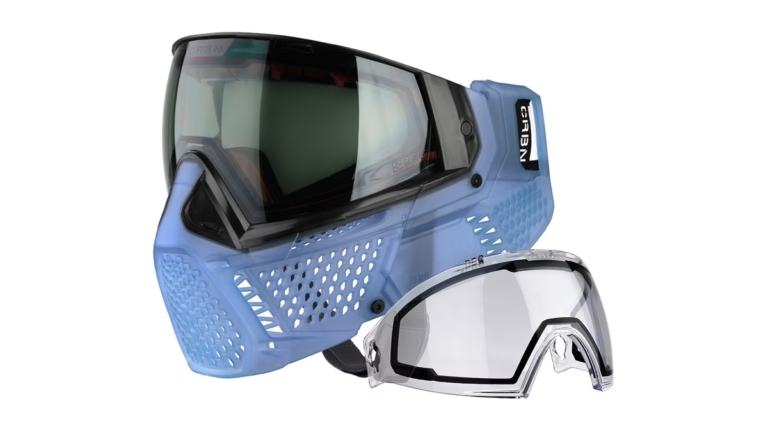
In heavy humidity or dense forest cover, a single-pane rental mask fogs within three minutes of sprinting. Upgrade your vision immediately with a dual-pane thermal lens system like the Virtue VIO Ascend ($119.95) or the ultra-wide spherical Empire EVS ($169.95).
10. Frequently Asked Questions (8-Point Armorer FAQ)
1. What is the exact difference between the Tippmann Stormer Basic, Tactical, and Elite?
All three share the identical 800 PSI in-line blowback core and composite receiver body. The Stormer Basic ($129.95) is a bare-bones hopper-only marker. The Stormer Tactical ($159.95) adds the 6-position collapsible stock, front quad-rail shroud, flip sights, and vertical foregrip, but remains hopper-only (with a non-functional dummy mag). The Stormer Elite ($199.95) includes all Tactical furniture PLUS the complete dual-feed magwell conversion assembly and two functional 20-round continuous-feed magazines.
2. Can the Tippmann Stormer Elite shoot First Strike Rounds (FSR)?
No, not out of the factory box. Both the Stormer Elite’s internal breech port and the included 20-round magazines are engineered strictly for spherical .68 caliber paintballs. Shooting fin-stabilized First Strike rounds requires custom aftermarket D-shaped breech milling and modified FSR-compatible magazines. If factory First Strike capability is mandatory, step up to the Planet Eclipse EMF200.
3. Are Tippmann TMC magazines compatible with the Stormer Elite?
Yes, 100%. The Tippmann Stormer Elite and the Tippmann TMC utilize the exact same 20-round spring-driven continuous-feed magazines (Tippmann Part #14018). Any magazine labeled for the TMC or Stormer Elite will lock and feed interchangeably.
4. Should I run CO2 or Compressed Air (HPA) on the Stormer Elite?
While the Stormer Elite’s mechanical blowback valve safely tolerates both CO2 and HPA, we strongly recommend Compressed Air (HPA). HPA delivers regulated 800 PSI pressure without liquid chilling, keeping your shot-to-shot standard deviation around ±4.40 FPS and preventing O-ring freeze-ups during rapid fire.
5. How many shots per tank does the Tippmann Stormer Elite get?
Because the 800 PSI blowback drivetrain uses gas both to propel the paintball and to recock the rear steel hammer, a standard 48ci/3000 PSI aluminum HPA tank yields 450 to 520 shots (roughly 22 to 25 full magazines), while a 68ci/4500 PSI carbon fiber tank yields 950 to 1,100 shots. On a 20oz CO2 tank, expect 800 to 950 shots depending on ambient temperature.
6. What barrel threads does the Tippmann Stormer Elite use?
The Tippmann Stormer Elite uses Tippmann 98 Custom barrel threads. Do not confuse this with the Tippmann Cronus or A-5, which use A-5 threads. Any aftermarket barrel threaded for the Model 98, Custom Pro, or TMC will thread directly into the Stormer Elite receiver.
7. Can you install a Response Trigger (RT) or E-Grip on the Stormer Elite?
No. Unlike the classic cast-aluminum Model 98 Custom or A-5, the Stormer Elite’s composite polyamide lower grip frame does not have the internal mounting bosses or rear valve port tap required to install a pneumatic Response Trigger cylinder or 98 E-Grip board.
8. How do you adjust FPS velocity on the Tippmann Stormer Elite?
Velocity is adjusted via the recessed stainless steel velocity screw located on the left side of the receiver body just behind the barrel collar (marked with “+” and “–” arrows). Using a 3/16-inch hex key, turn the screw counter-clockwise (outward) to increase velocity (FPS) by opening gas flow out of the valve, or turn it clockwise (inward) to decrease velocity. Always adjust in 1/4-turn increments over a chronograph.
Ready to Deploy Dual-Fed Tactical Firepower?
Looking to take this platform further? Check out our field-tested breakdown of the top Tippmann Stormer Elite upgrades to maximize accuracy and gas efficiency.
Comparing entry-level platforms side-by-side? See how this marker ranked in our 40-shot chronograph shootout of the best paintball guns for beginners.