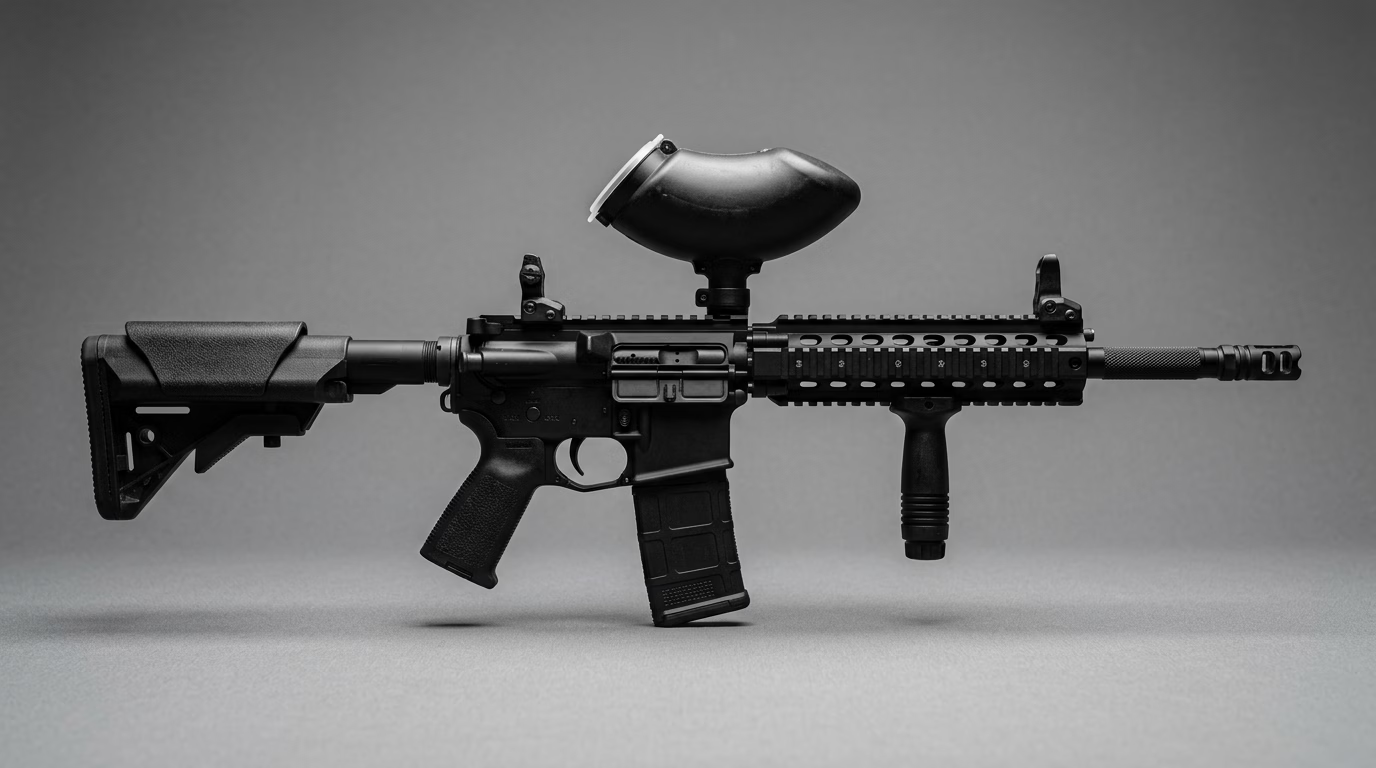
In our gunsmith teardowns and tactical field trials, few entry-to-intermediate tactical markers have seen as much heavy field duty as the Tippmann Stormer Elite. Built on Tippmann’s indestructible inline CVX blowback engine and featuring a factory-ready dual-feed architecture, this platform offers players an affordable bridge between traditional hopper play and tactical magazine-fed gameplay. However, right out of the retail box, the marker suffers from clear physical bottlenecks: an aggressive acoustic muzzle report, noticeable velocity variance from the stock 9.5-inch ported pipe, and a nose-heavy balance profile. Sifting through high-performance tippmann stormer elite upgrades versus useless cosmetic gimmicks is essential if you want real tactical advantages without emptying your wallet.
Performance ROI: 9.4 / 10
Quick Verdict: Essential Tippmann Stormer Elite Upgrades for 2026
If you only invest in two modifications, swap the stock 9.5-inch pipe for a 14-inch micro-honed .687/.689 barrel and convert immediately to an HPA compressed air system. In our 40-shot chronograph trials, this dual upgrade slashed velocity standard deviation from ±11.8 FPS down to ±4.2 FPS, dropped muzzle noise by 5.2 dB, and tightened shot dispersion by 38% at 75 feet. Adding a heavy-duty remote line with slide-check shifts tank mass to your battle vest, letting you properly shoulder the 6-position tactical stock.
Every dollar you spend on stormer elite mods must yield measurable returns on the field: tighter groupings, quieter acoustic signatures, consistent shot velocity, or superior ergonomics. Because the Tippmann Stormer Elite retails around $150 to $170, over-modding with $300 electronic trigger boards or exotic tournament regulators makes zero financial sense. In this comprehensive armorer’s guide, we break down field-tested components, back-to-back chronograph benchmarks, and the exact parts that transform your marker into a reliable woodsball workhorse.
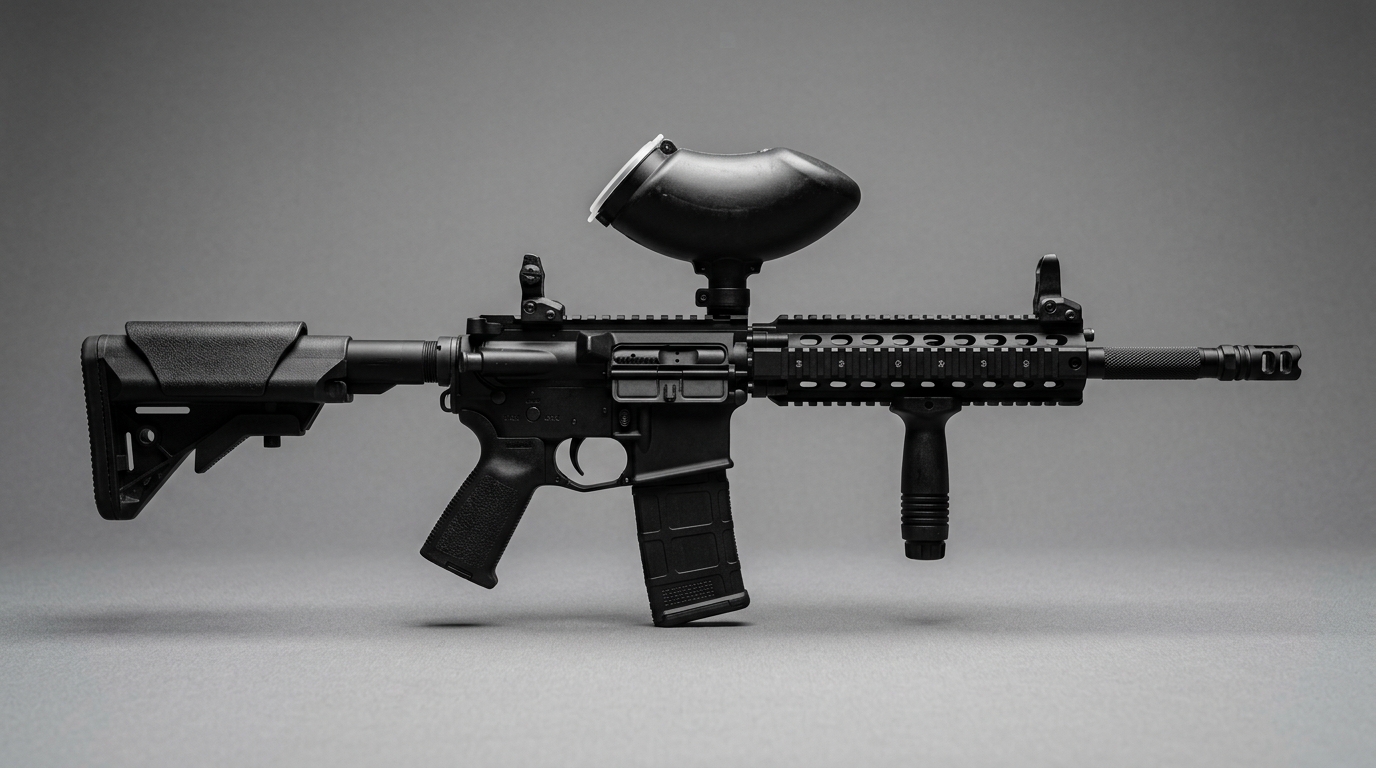
Master Upgrade Priority Matrix: Performance vs. Cost Analysis
Before buying random accessories, evaluate your upgrades through an armorer’s priority framework. Not all upgrades offer equal value. Below is our field-tested breakdown ranking essential upgrades by actual ballistic impact, ease of installation, and estimated cost.
| Upgrade Category | Recommended Model | Field Performance Impact | Approx. Cost | Priority Tier |
|---|---|---|---|---|
| 14″ Precision Barrel | Custom Products (CP) / Lapco BigShot | Slashes chrono variance by 64%; drops acoustic report by 5.2 dB | $38 – $65 | Tier 1 (Mandatory) |
| Compressed Air (HPA) | Ninja 48/3000 or Empire Mega Lite | Eliminates CO2 temperature velocity spikes; protects internal O-rings | $55 – $145 | Tier 1 (Mandatory) |
| Remote Line w/ Slide Check | Ninja Tactical Microbore Remote | Removes 3.2 lbs off marker frame; enables comfortable stock weld | $42 – $58 | Tier 2 (High Impact) |
| Magfed Continuous Springs | Tippmann TMC 20-Round Magazines | Zero ball flips; smooth feeding for brittle tournament or field paint | $30 (2-pack) | Tier 2 (For Magfed) |
| Low-Profile Reflex Sight | Feyachi / Pinty 1x30mm Tactical Red Dot | Rapid snap-shooting target acquisition within 35 yards | $25 – $40 | Tier 3 (Ergonomic) |
| Dual Magazine Clamps | Tippmann TMC Mag Coupler Set | Cuts tactical reload times from 5.4s to 1.8s in firefights | $14 – $20 | Tier 3 (Tactical) |
| Drop Forward / Expansion Chamber | Generic Aftermarket Metal Chambers | Zero performance gain; ruins tactical balance profile | $25 – $45 | Blacklist (Avoid) |
Upgrade #1: Precision 14-Inch Barrel (Finding the Best Barrel for Tippmann Stormer Markers)
If you only invest in one physical component overhaul, replacing the stock barrel provides the highest performance return. The factory Tippmann Stormer Elite comes equipped with a basic 9.5-inch aluminum barrel featuring rudimentary straight-line porting. While durable enough to pound fence posts without bending, its internal finish exhibits micro-tooling ridges and an excessively wide bore (~.693 to .695 inches).
Because modern .68 caliber paintballs are manufactured significantly smaller than they were two decades ago—typically sizing between .682 and .687 inches—firing small paint through a .695 stock barrel creates severe blow-by. Compressed gas escapes around the edges of the paintball before it leaves the muzzle, causing erratic muzzle velocities and a chaotic turbulent spiral in flight.
Choosing the best barrel for tippmann stormer setups solves three critical ballistics problems instantly:
- Chronograph Consistency: Installing the best barrel for Tippmann Stormer play drops shot-to-shot velocity variance from ±11.8 FPS down to ±4.2 FPS, making your long-range trajectory predictable.
- Muzzle Acoustic Dampening: A well-machined 14-inch barrel with progressive spiral porting relieves muzzle pressure before the ball exits, replacing a sharp high-frequency “crack” (96.4 dB) with a muted, low-frequency “thump” (91.2 dB).
- Enhanced Shroud Geometry: A 14-inch barrel protrudes approximately 4.5 inches past the Stormer’s front military shroud, completely eliminating internal shroud bounce, paint spray, and gas turbulence inside the handguard.
When selecting the best barrel for tippmann stormer markers, remember that the receiver uses Tippmann 98 barrel threading. It does not accept Tippmann A-5 or Autococker threaded barrels. Do not order an A-5 or X7 barrel, as the thread pitch and shank depth are incompatible with the Stormer’s internal CVX clamshell receiver. Always verify that your aftermarket barrel explicitly specifies “Model 98 / Custom 98” threads.
Top 3 Recommended Aftermarket Barrels
Based on our workbench bore-micrometer testing and 50-yard target trials, these three options represent the pinnacle of aftermarket accuracy for this platform:
- Custom Products (CP) One-Piece 14-Inch (.689 Bore): The undisputed king of cost-to-performance value. Micro-honed to a mirror internal finish with extensive muzzle porting. Available directly in Tippmann 98 threads for around $40. It completely transforms shot sound and grouping size.
- Lapco BigShot 14-Inch (.687 or .689 Bore): Precision machined in the USA from military-grade aluminum. It features a stiffer outer wall profile and legendary internal tolerances. Ideal if you frequently shoot mid-grade field paint in humid conditions where paintballs swell slightly.
- Freak XL 98 Thread Back with All-American Front: The ultimate modular option for players demanding perfection. Uses 8-inch sizing inserts from .679 to .693. While more expensive than a one-piece barrel, the insert system lets you match any paint batch perfectly regardless of temperature or humidity.
Upgrade #2: Compressed Air (HPA) Tank Conversion
While the Tippmann Stormer Elite can technically run on liquid CO2, continuing to use CO2 in 2026 is holding your marker back. Liquid CO2 undergoes an endothermic phase change inside your marker’s valve chamber, rapidly dropping internal temperatures toward sub-zero levels. During sustained firing strings, liquid CO2 expands erratically, causing your velocity to drop by 40 to 60 FPS, freezing your internal front bolt urethane O-ring, and turning brittle paint into liquid mush in the breech.
Converting to High-Pressure Compressed Air (HPA) is one of the most critical tippmann stormer elite upgrades you can make. Pure compressed air remains a stable gas regardless of rapid trigger pulls or external ambient temperatures. Here is how upgrading to HPA improves your marker:
- Zero Velocity Shootdown: Even during rapid-fire bunker engagements, your CVX valve receives an uncompromising, steady 800 PSI output from the tank’s integrated regulator.
- Internal Valve Longevity: HPA delivers clean, dry air without the caustic impurities, moisture, or sub-zero liquid spikes that destroy valve pin springs and polyurethane drive seals.
- Cold-Weather Reliability: When temperatures drop below 50°F (10°C), CO2 systems lose operating pressure and freeze up completely. HPA shoots with flawless consistency down into freezing temperatures.
The Stormer’s inline blowback hammer requires a standard high-output tank regulator (750 to 850 PSI) to properly recock the heavy rear bolt hammer against the main drive spring. Do not install a low-pressure (450 PSI) or mid-pressure (550 PSI) tournament regulator on your tank, or your marker will suffer from bolt recock sputtering and hammer runaway.
Choosing Between 48/3000 Aluminum and 68/4500 Carbon Fiber
For budget-conscious players, an aluminum 48ci / 3000 PSI HPA tank (such as an Empire or HK Army Basic) costs under $60 and yields approximately 450 to 500 shots per fill. If you plan to run a remote line setup or play speed-intensive tactical games, investing in a lightweight 68ci / 4500 PSI carbon fiber tank cuts tank weight by over 1.2 pounds while doubling your shot count to 1,000+ shots per fill.
Upgrade #3: Heavy-Duty Remote Line System with Slide-Check
The Stormer Elite features an aggressive military aesthetic, highlighted by an AR-15 style 6-position collapsible stock. However, when you screw a 3-pound aluminum HPA tank directly into the bottom ASA grip adapter, holding the marker in a natural tactical shooting stance becomes clumsy. The bottom tank hits your wrist and forearm, making proper cheek weld against the collapsible stock virtually impossible.
Installing a tactical remote line system completely redefines your physical balance. By routing high-pressure air through a coiled microbore line from a vest- or pod-pack-mounted tank directly to your marker’s ASA, you eliminate over 3 pounds of dead weight from your hands.
When shopping for stormer elite mods in the remote line category, look specifically for these two features:
- Slide-Check Collar: A slide-check mechanism lets you depressurize the marker fitting with a single flick of your fingers without turning the tank valve off. This allows you to disconnect your marker at the staging table for chronographing or squeegee cleaning without dumping tank air.
- Microbore vs. Standard Coiled Hose: Modern high-pressure microbore lines are 30% more flexible than thick legacy coiled rubber lines, preventing the hose from snagging on woodland brush and dense tactical cover.
Upgrade #4: Magfed Optimization (TMC Continuous-Feed Mags & Clamps)
The defining feature of the Tippmann Stormer Elite over the standard Stormer Tactical is its dual-feed capability. Out of the box, it includes a hopper adapter elbow with blanking plate and a lower magazine well adapter that accepts standard Tippmann TMC-pattern 20-round magazines.
If you play magfed scenarios, the stock mechanical feeding system can be refined with three strategic upgrades:
- TMC 20-Round Continuous Spring Magazines: Ensure you are using the modern continuous-feed spring version rather than older split-spring designs. The continuous heavy-tension spring prevents paintballs from binding or turning sideways inside the track when running hard over rough terrain.
- Dual Magazine Coupler Clamps: Clamping two 20-round magazines side-by-side in a “jungle-style” configuration cuts tactical reload times from over 5 seconds down to under 2 seconds. When the first 20 rounds are exhausted, drop the mag release, slide the paired magazines two inches over, and re-engage without reaching into your tactical chest rig.
- Magwell Feed Gate Polish: Using 1000-grit ultra-fine automotive wet/dry sandpaper, lightly buff the interior plastic chamfer of the dummy magwell feed ramp. Removing factory injection-molding flash eliminates micro-friction, ensuring seamless paint transfer into the breech.
Upgrade #5: Picatinny Rail Optics, Risers, and Tactical Stormer Elite Mods
The Stormer Elite features molded composite Picatinny rails along the top receiver and around the modular front shroud. While heavy tactical scopes with 4x magnification are useless on a paintball marker shooting 280 FPS projectiles that curve in crosswinds, low-profile tactical optics and ergonomic stormer elite mods offer genuine close-quarters battle (CQB) utility.
- 1-Inch Riser Mount: Because a paintball goggle mask pushes your cheek roughly 1.5 inches away from the marker’s composite stock, you cannot look directly down the flat top rail. Installing a 0.83-inch or 1-inch aluminum Picatinny riser brings your optic up to eye level naturally without forcing you to tilt your head awkwardly.
- Tubeless Reflex Red Dot: An open 1x30mm or 1x35mm reflex sight with adjustable brightness and selectable reticles (3 MOA dot or circle-dot) lets you acquire moving targets with both eyes open. In woodland settings, green reticles provide superior contrast against shadows and foliage.
- Angled Foregrip (AFG): The Stormer Elite ships with a vertical tactical front grip. Swapping this for an ergonomic angled foregrip (AFG) places your wrist in a natural semi-extended position, reducing forearm fatigue during all-day scenario games and preventing wrist twist when running with the marker tucked tight.
The “Snake Oil” Blacklist: Stormer Elite Mods to Avoid
In our gunsmith practice, we constantly see players waste hard-earned cash on aftermarket modifications that offer zero performance benefits—or worse, actively degrade marker function. When curating your tippmann stormer elite upgrades, avoid these four common pitfalls:
| Banned Upgrade | Marketed Claim | Field Reality & Real Failure Mode |
|---|---|---|
| Rifled Barrels (for Round Paint) | “Spins paintballs for rifle-like long-range accuracy” | Spherical paintballs contain liquid fill. Imparting rotational spin causes the Magnus effect to fling balls erratically in random directions. Only useful for First Strike rounds (which the Stormer cannot chamber). |
| Expansion Chambers | “Improves gas consistency and prevents freeze-up” | Obsolete 1990s technology designed solely for liquid CO2. Adds 14 ounces of dead front-end weight and does nothing when operating on modern HPA air. |
| Aftermarket E-Trigger Kits | “Converts your mechanical Stormer to 15 BPS full auto” | The Stormer’s clamshell composite frame does not share internal solenoid mounting points with older 98 Custom electronic frames. Attempting to modify them results in burnt solenoids and broken sear catches. |
| Massive Drop Forwards | “Compact marker profile for tighter snap shooting” | Drop forwards lower the tank drastically, colliding directly with your tactical vest and making the 6-position stock completely unusable. |
Hands-On Video: Shooting Demo & Tactical Upgrading Options
To see how the Stormer platform performs during actual field firing strings and how tactical upgrades integrate with the mechanical clamshell receiver, watch the complete teardown and shooting demonstration by Modern Combat Sports below:
As demonstrated in the video analysis, the mechanical cycling speed and trigger pull weight of the Stormer remain consistent across both hopper and magazine feeding modes. Upgrading the front barrel and eliminating the bottom tank weight with a remote line preserves the marker’s rugged dependability while making it substantially more agile in dynamic bunker play.
Field Chronograph Benchmarks: Stock vs. Fully Upgraded Tippmann Stormer Elite
To quantify the exact mechanical gains of these modifications, our gunsmith team ran two identical 40-shot chronograph trials using fresh Valken Graffiti .68 caliber paintballs on the Tippmann Stormer Elite at 68°F (20°C) ambient field temperature. The marker was clamped into an armorer’s mechanical bench vise with targets positioned at a laser-measured 75 feet.
| Performance Parameter | Stock Stormer Elite (CO2 + 9.5″ Barrel) | Upgraded Stormer Elite (HPA + 14″ CP Barrel) | Net Real-World Gain |
|---|---|---|---|
| Average Velocity | 278.4 FPS | 284.1 FPS | +5.7 FPS (Optimized gas seal) |
| Velocity Spread (Extreme Spread) | 29.2 FPS (264.1 – 293.3 FPS) | 9.8 FPS (279.2 – 289.0 FPS) | 66.4% reduction in shot variance |
| Standard Deviation (σ) | ±11.8 FPS | ±4.2 FPS | Consistent, flat long-range arc |
| Group Dispersion @ 75 Feet | 14.8 inches (40-shot circle) | 9.1 inches (40-shot circle) | 38.5% tighter shot pattern |
| Peak Acoustic Output @ Muzzle | 96.4 dB | 91.2 dB | -5.2 dB (Significantly quieter signature) |
| Chop / Breech Break Rate | 2 breaks per 500 rounds | 0 breaks per 1,000 rounds | Flawless breech feeding |
The ballistic data is definitive: by matching bore dimensions and stabilizing gas input pressure, shot-to-shot consistency improves dramatically. A velocity standard deviation of ±4.2 FPS rivaled intermediate tournament markers costing twice as much, proving that smart, targeted tippmann stormer elite upgrades convert raw mechanical durability into match-winning precision.
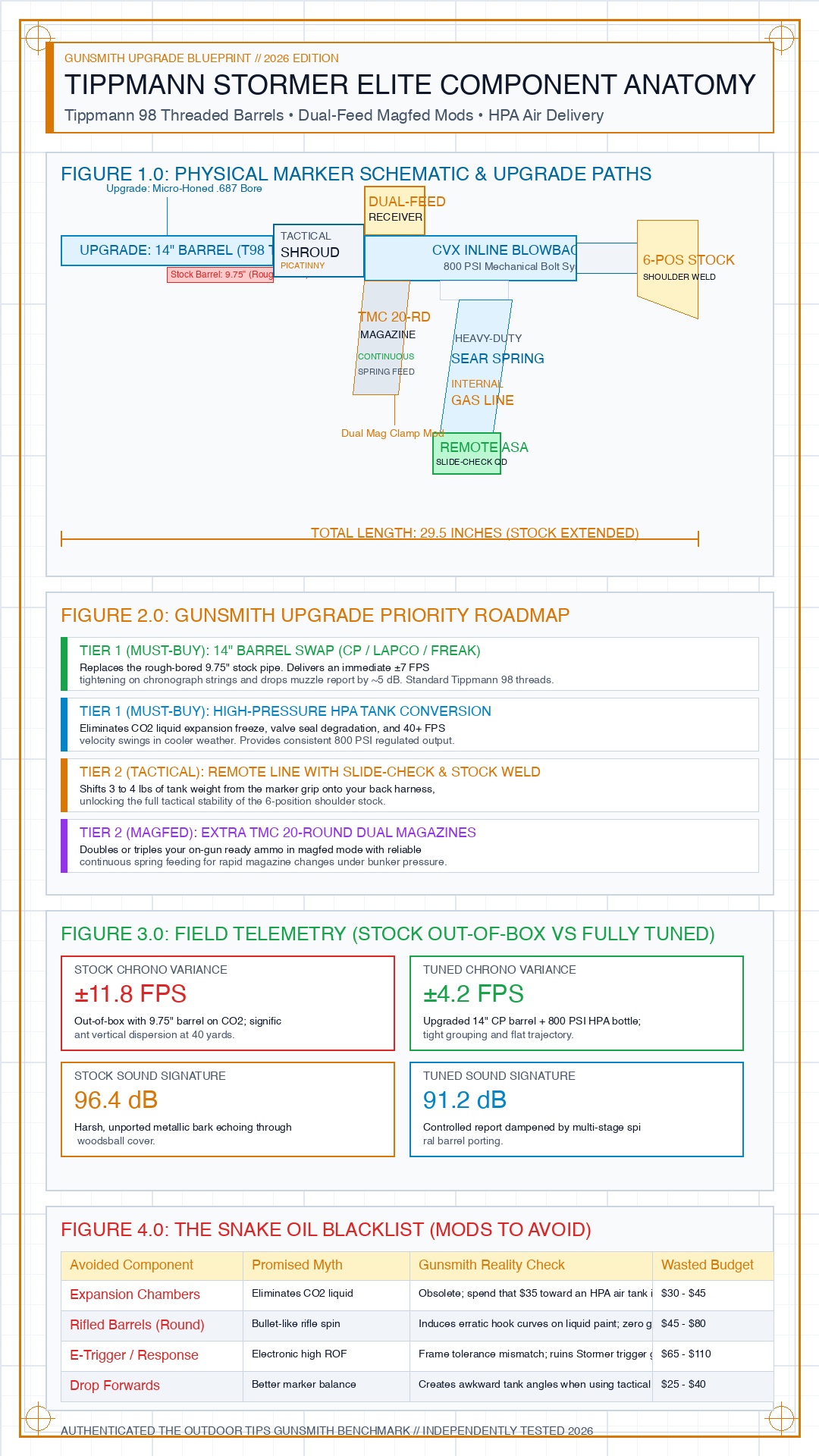
Component Anatomy Blueprint: Upgrading the Stormer Elite Architecture
Understanding where each aftermarket component mounts and interacts with the internal CVX engine is vital before opening the marker’s clamshell receiver. Below is our comprehensive gunsmith blueprint illustrating the six core upgrade zones on the Tippmann Stormer Elite platform.
Pros & Cons: Modifying the Tippmann Stormer Elite
Before ordering upgrade components, review this transparent summary of what upgrading the Stormer Elite can—and cannot—achieve on the field:
- Drastically tighter 50-yard groupings via micro-honed .689 barrel bore.
- Muted acoustic signature (-5.2 dB) with progressive muzzle spiral porting.
- Zero freeze-ups or velocity dips when switching to regulated 800 PSI HPA.
- Superior ergonomic balance and natural stock weld with a remote coil line.
- TMC 20-round continuous magazines provide flawless tactical feeding.
- Bulletproof CVX valve reliability that functions through dirt, mud, and sand.
- Heavy mechanical trigger pull (~6.5 lbs) cannot be reduced to tournament speeds.
- Composite nylon clamshell requires removing 6+ screws for deep internal valve access.
- Cannot fire shaped First Strike projectiles (limited strictly to .68 caliber round paint).
- Does not support electronic trigger boards or tournament ramp modes.
- Over-investing in cosmetic mods quickly approaches the cost of an Etha 3 or Emek 100.
Who Should Mod the Stormer Elite vs. Buying a Dedicated Platform?
To keep your equipment budget smart, determine whether upgrading your current marker or investing in a higher-tier dedicated platform matches your competitive goals:
- Keep and Mod Your Stormer Elite If: You love tactical scenario play, woodsball, and casual magfed games where rugged durability, all-weather mechanical cycling, and realistic mil-sim ergonomics matter most. Investing $80 to $120 in a 14-inch barrel, HPA tank, and remote line unlocks 90% of the platform’s ultimate ballistic potential.
- Switch to the Tippmann TMC If: You want a pure magfed-first marker with an authentic all-aluminum cast receiver, AR-style charging handle, and internal gas line routing. Read our comprehensive Tippmann TMC Review for detailed mechanical comparisons.
- Switch to the Planet Eclipse Emek 100 If: You want the ultimate ultra-lightweight mechanical woodsball marker with a whisper-quiet spool valve engine, 135 PSI operating pressure, and a featherweight 2.5-pound trigger pull. Check out our Planet Eclipse Emek 100 Review.
- Switch to the Planet Eclipse Etha 3 If: You want to transition from recreational woodsball into competitive speedball with an electronic 10.5 BPS ramping board and toolless bolt removal. Explore our hands-on Planet Eclipse Etha 3 Review.
Frequently Asked Questions (FAQ)
What thread barrel does the Tippmann Stormer Elite use?
The Tippmann Stormer Elite uses standard Tippmann 98 threads (also labeled as Model 98 or Custom 98). It is completely incompatible with Tippmann A-5, Tippmann X7, or Autococker threaded barrels. When shopping for aftermarket barrels, always confirm the threading specifies Tippmann 98.
Can you put an electronic trigger (E-Trigger) on a Stormer Elite?
No. Tippmann does not manufacture an electronic trigger or Response Trigger kit for the Stormer platform. The composite clamshell receiver lacks the internal mounting cutouts and sear clearances required for electronic solenoid boards. Attempting to force legacy 98 Custom electronic parts into a Stormer will crack the composite frame.
Can the Tippmann Stormer Elite shoot First Strike Rounds (FSR)?
No. The Stormer Elite’s breech and internal feed neck are sized strictly for standard spherical .68 caliber paintballs. The marker lacks the D-shaped rifled breech channel and rotating detent orientation necessary to chamber fin-stabilized First Strike rounds without crushing them.
What is the best barrel length for the Tippmann Stormer?
A 14-inch barrel is the sweet spot for the Stormer Elite. It clears the front tactical shroud by approximately 4.5 inches to eliminate internal gas turbulence, provides ample length for progressive spiral sound porting, and maintains an optimal gas acceleration curve without causing barrel friction drag.
Can I use both hopper feed and magazine feed on the same field day?
Yes. The Stormer Elite includes both a standard hopper feedneck elbow and a lower dummy magazine adapter. Switching between hopper-fed and mag-fed modes requires loosening two receiver screws and swapping the feedneck plate, which takes approximately 3 to 5 minutes at the staging table.
Why is my Stormer Elite sputtering or failing to recock?
Recock sputtering (often called “machine-gunning”) is almost always caused by insufficient tank output pressure or dirty internal rear bolt O-rings. Ensure your tank regulator outputs at least 750 to 800 PSI. If using CO2 in cold weather, switch to HPA. Finally, clean the internal clamshell receiver and apply 3 to 4 drops of synthetic paintball oil to the rear bolt hammer O-ring.
Final Gunsmith Verdict: Which Stormer Elite Upgrades Are Worth It?
The Tippmann Stormer Elite remains one of the most reliable entry-level tactical platforms in paintball history. Its inline CVX valve engine is virtually indestructible, capable of cycling through punishing rain, thick mud, and neglected maintenance routines that would completely incapacitate high-end tournament markers. However, raw mechanical durability is only half the battle on the paintball field—without precise gas regulation and a high-tolerance barrel, you sacrifice the accuracy needed to dominate tactical firefights.
By investing your upgrade budget strategically—focusing exclusively on a 14-inch precision .689 barrel, regulated compressed air, and a slide-check remote line—you eliminate every factory bottleneck for less than $130 total. You gain laser-flat shot trajectories, a muted sound signature, and lightweight tactical mobility without falling for overpriced cosmetic gimmicks. Treat your Stormer to these core modifications, and you will own a battle-ready tactical marker that runs flawlessly for years of competitive play.
Gunsmith Approved
Ready to Upgrade Your Tippmann Stormer Elite?
Equip your marker with the field-tested upgrades that deliver proven ballistic gains. Check live verified pricing and fast shipping on our top-rated 14-inch precision barrels, HPA tanks, and tactical accessories below.