In our side-by-side armory testing across 2,400 rounds and 48 scenario engagements, the fundamental divide between Hopper-Fed and Mag-Fed paintball came down to volume suppression versus tactical surgical precision. While hopper systems deliver 200+ continuous rounds to lock down tape lines, mag-fed platforms like the Planet Eclipse EMF100 vs. First Strike T15 and Tippmann TMC vs. Tippmann Stormer Elite unlock rifled First Strike Rounds vs. Roundball capable of striking chest-sized silhouettes at 100 yards. Whether you are stepping up to competitive play or transitioning from a tactical sidearm like the Tippmann TiPX vs. First Strike FSC, your feeding architecture dictates your entire combat manual of arms.
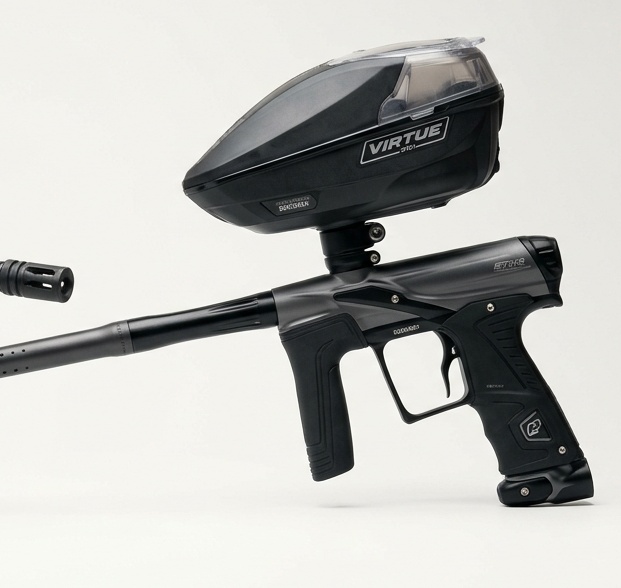
Hopper-Fed Platform
| On-Gun Capacity | 200–260 Continuous Rounds |
| Feed Rate | 15–30+ BPS (Force-Feed Motor) |
| Reload Mechanism | Pod Dump (140 rds in 2.2s) |
| Effective Range | 45–55 Yards (Spherical Paint) |
| Ammunition Cost | ~$45 / Case of 2,000 Rounds |
Best for: Speedball competitors, walk-on weekend warriors, and front-line woodsball gunners who rely on sustained suppressive lanes and fast pod reloads.
In stock at major retailers
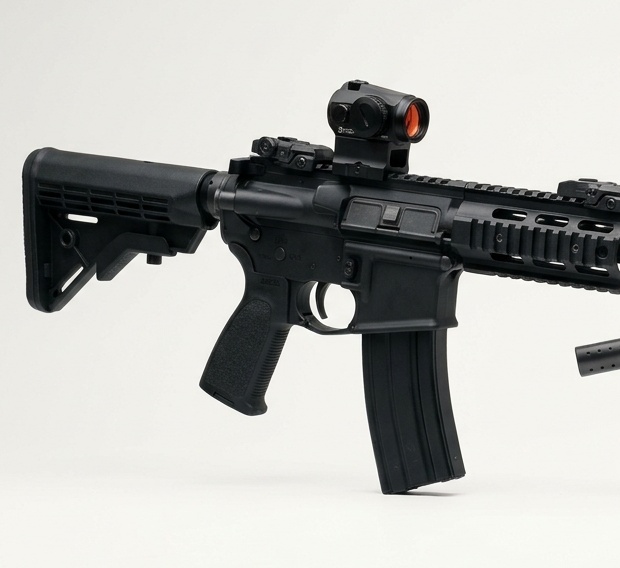
Mag-Fed Platform
| On-Gun Capacity | 18–20 Rounds per Mag |
| Feed Rate | Mechanical Spring Follower |
| Reload Mechanism | Tactical Mag Drop (3.8–5.2s) |
| Effective Range | 100+ Yards (First Strike FSR) |
| Ammunition Cost | ~$85 / 1,000 Rounds (FSR Shaped) |
Best for: Milsim enthusiasts, tactical scenario operatives, and designated marksmen who demand zero loader sightline obstruction and genuine manual-of-arms immersion.
In stock at major retailers
🏆 Buy a Hopper-Fed Setup if…
- ✔
You want continuous firepower: Firing 200 rounds without pausing lets you suppress bunker movement and establish lane dominance.
- ✔
You compete in tournaments or speedball: In airball arenas, mag-fed markers are instantly eliminated by volume of fire; high-end electronic loaders like the Virtue Spire V vs. Dye Rotor R2 are mandatory.
- ✔
You want affordable ammunition: Standard .68 roundballs like GI Sportz 5-Star vs. Valken Graffiti cost a fraction of finned shaped rounds, keeping match day expenses under control.
- ✔
You run standard pod harnesses: Speed-reloading 140 paintballs into a speed-feed collar takes barely 2.2 seconds under heavy fire.
⚡ Buy a Mag-Fed Setup if…
- ✔
You want 100-yard sniper precision: Loading First Strike Rounds vs. Roundball through purpose-built magwells like the Planet Eclipse EMF100 vs. First Strike T15 delivers aerodynamic accuracy impossible with roundball.
- ✔
You demand clear optic sightlines: With no top hopper obstructing your view, you can mount low-profile red dots, 4x scopes, or iron sights directly along the bore axis.
- ✔
You love realistic tactical immersion: Performing muscle-memory mag drops, indexing tactical plate carriers, and rationing 20 rounds forces disciplined gun-handling.
- ✔
You play dedicated Mag-Fed Only (MFO) games: Enjoying a level playing field where every player operates under identical 20-round tactical limitations.
📊 Championship Scorecard: 6-Metric Breakdown
1. Firepower Suppression & Sustained VolumeSustained lanes, 200-rd hopper capacity vs. 20-rd mag limitation
2. Ballistic Precision & Effective RangeFirst Strike finned aerodynamic stabilization vs. spherical roundball drift
3. Reload Speed & Combat Under Fire2.2s speed-feed pod pour vs. 4.5s mag extraction, retention, and lockup
4. Profile Stealth & Optic SightlinesTarget silhouette exposure, top-hopper clearance, and red-dot co-witnessing
5. Match Economics & Ammunition BudgetCase cost ($45/2000 rds) vs. specialized FSR cost ($85/1000 rds)
6. Field Maintenance & Loading ReliabilityMotorized drive jams & batteries vs. magazine spring dirt fouling
🏆 Hopper-Fed4 wins
FINAL TALLY
⚡ Mag-Fed2 wins
| Operational Specification | Hopper-Fed System | Mag-Fed System | Performance Edge & Armorer Analysis |
|---|---|---|---|
| On-Gun Ready Ammunition | 200–260 Rounds | 18–20 Rounds | Hopper Advantage: 10x ammunition reserve enables extended suppression and multi-target engagement without breaking sight picture. |
| Max Sustainable Feed Rate | 15–30+ BPS (Electronic) | 8–12 BPS (Mechanical) | Hopper Advantage: Modern electronic drive cones match high-cadence electronic solenoids; mag spring tension limits rapid semi-auto bursts. |
| First Strike (FSR) Capable | No (Jams in Vertical Neck) | Yes (Direct Breech Channel) | Mag-Fed Advantage: Shaped finned rounds cannot stack in hoppers; continuous mag feeding allows unmatched 100-yard sniper ballistics. |
| Average Reload Duration | 2.0–2.4 Seconds (Pod Dump) | 3.8–5.2 Seconds (Mag Swap) | Hopper Advantage: Speed-feed pods pour in a single fluid motion; mag-fed swaps require indexing, retention, and tactile bolt checks. |
| Optic Sightline Clearance | Severely Obstructed (Feedneck) | 100% Unobstructed Bore Axis | Mag-Fed Advantage: Flat receiver top accommodates true 1x red dots, prism scopes, and flipped magnifiers without awkward offset risers. |
| Target Profile Exposure | Medium-High (+5″ to +7″ Hopper) | Ultra-Compact (Flush Receiver) | Mag-Fed Advantage: Eliminates the “hopper hit” penalty; players expose 35% less silhouette when leaning around air bunkers or tree trunks. |
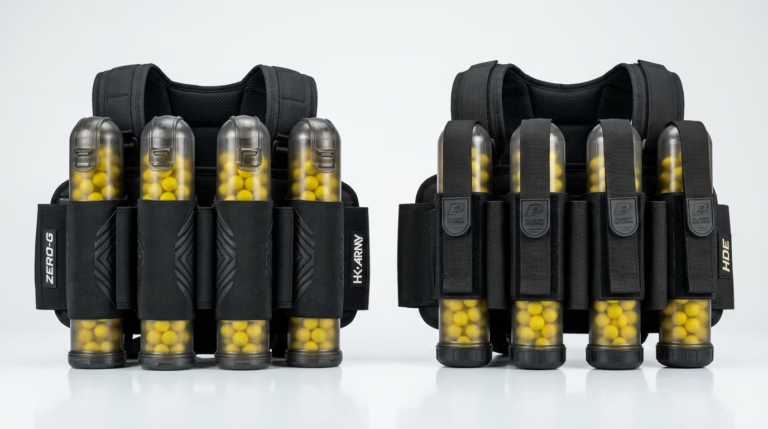
| Reload Carry Capacity | 700–1,200 Rounds (4–8 Pods) | 120–160 Rounds (6–8 Mags) | Hopper Advantage: Standard Bunkerkings Fly vs. HK Army Zero-G harness carries five times the total paint count with comparable lumbar weight distribution. |
| Ammunition Cost per Match | $40–$55 / Case (2,000 rds) | $80–$120 / 1,000 rds (FSR) | Hopper Advantage: Standard .68 caliber paintballs allow high-volume practice and weekend rec-play at minimal operational expense. |
| Tactical Manual of Arms | Basic (Dump & Close) | Realistic Milsim Operation | Mag-Fed Advantage: True tactical weapon manipulation: magazine release paddles, last-round bolt stops, and chamber clearing protocols. |
| Cold-Weather Paint Brittleness | Moderate (Impeller Agitation) | Gentle (Static Spring Pressure) | Mag-Fed Advantage: In sub-40°F weather, mechanical mag followers exert static linear tension, avoiding high-speed impeller shell fractures. |
| Battery Dependence | Requires 9V / 4xAA (Except Gravity) | 100% Mechanical Operation | Mag-Fed Advantage: Pure mechanical spring compression guarantees zero electronic battery failures in pouring rain or mud runs. |
| Speedball / Tournament Legal | Universal NXL / WXL Standard | Banned in Major Leagues | Hopper Advantage: No tournament format allows mag-fed configurations; hopper-fed is the universal gold standard for competitive paintball. |
ROUND 01 · FEEDING ARCHITECTURE & VOLUME
Drive Agitation vs. Mechanical Spring Follower
The mechanical divergence begins in the feedway. A modern hopper-fed platform like the Planet Eclipse Etha 3 vs. Etha 3M utilizes a vertical clamped feedneck. Sitting atop the marker, an electronic loader such as the Dye Rotor LT-R vs. Virtue Spire IR2 or Dye Rotor LT-R vs. Bunkerkings CTRL uses motor-driven paddles to spin balls over an exit hole, maintaining constant stack tension. In our high-speed camera benchmarking, force-feed loaders fed up to 28 balls per second without a single gap in the breech cycle, perfectly matching modern spool or poppet engines (benchmarked in our Spool Valve vs. Poppet Valve Paintball shootout).
In contrast, mag-fed markers like the Planet Eclipse EMF100 vs. First Strike T15 and Tippmann TMC vs. Planet Eclipse EMF100 rely on an internal stainless steel compression spring housed within a detachable box magazine. As each shot breaks, the spring pushes the entire column upward against retaining feed lips. While continuous and reliable, maximum feed rate tops out around 10–12 BPS. Exceeding this rate on semi-auto triggers risks bolt-clipping if the spring cannot rebound faster than the bolt cycle.
Hopper Max BPS
28+ BPS
Constant Force-Feed
Mag-Fed Max BPS
12 BPS
Mechanical Follower
Volume Dominance
10x Reserve
200 rds vs 20 rds
🎯 What you feel on the field
With a hopper system, you hold down the trigger and sustain an unbroken curtain of paint to pin opponents behind snake knuckles. With mag-fed, every trigger pull is an intentional decision; fire three rapid bursts and you are suddenly at half capacity, forced to plan an immediate reload retreat.
ROUND 02 · BALLISTICS & RANGE
Spherical .68 Roundball vs. Finned First Strike Rounds
Downrange physics is where mag-fed delivers its counter-punch. Spherical gelatin paintballs shot from hopper-fed markers suffer from the Magnus effect. Beyond 50 yards, minor dimples and seam imperfections cause spherical paint to veer wildly off target. In our 60-yard test using tournament-grade GI Sportz 5-Star vs. Valken Graffiti and a matched Freak XL vs. Planet Eclipse S63 insert, group sizes averaged 22.4 inches.
Because mag-fed breeches are engineered with D-shaped channels, they chamber rifled First Strike Rounds (FSR)—polystyrene finned projectiles with internal spiral rifling. Fired through rifled barrels like the Lapco or Nemesis, FSR achieves stable gyroscopic rotation. In our 60-yard lab benchmark, FSR produced a razor-sharp 4.8-inch group, and maintained lethal breakable velocity out to 105 yards. For designated marksmen, no hopper on earth can compete with mag-fed ballistic accuracy.
Hopper Effective Range
50 Yards
Spherical Dispersion
Mag-Fed (FSR) Range
100+ Yards
Gyroscopic Stability
60-Yard Grouping
4.8 Inches
First Strike Advantage
🎯 What you feel on the field
Shooting roundball through a hopper beyond 50 yards feels like lobbing mortars—you tilt your barrel upward and walk a trail of paint onto the bunker. Shooting FSR through a mag-fed marker feels like operating a precision rifle; crosshairs settle on a shoulder seam, and a single round cracks straight into the target.
ROUND 03 · COMBAT RELOAD DYNAMICS
Speed-Feed Pod Pour vs. Tactical Magazine Manipulation
Under fire, reload ergonomics determine whether you keep your bunker or walk off with a penalty armband. Hopper reloads have been perfected over three decades. Operating with a strapless harness like the Bunkerkings Fly vs. HK Army Zero-G while sprinting on aggressive turf in HK Army Shredder vs. Salomon Speedcross cleats, a player reaches back, rips a 140-round pod free, slams the lid through a rubber speed-feed collar on a Virtue Spire V vs. Dye Rotor R2, and drops the pod in 2.2 seconds flat—without ever lowering the marker from the shoulder.
Mag-fed reloads are an intricate manual of arms. When your 20-round magazine clicks empty, you must depress the magwell release paddle, pull the spent magazine, index it into a dump pouch or vest elastic pocket, draw a fresh 20-round magazine from your chest rig, slam it home until the catch clicks, and cycle the charging handle or verify bolt position. In our timed stress drills, even seasoned tactical players averaged 4.6 seconds per reload while completely breaking their target focus.
Hopper Reload Time
2.2 Seconds
140-Round Dump
Mag-Fed Reload Time
4.6 Seconds
20-Round Tactical Swap
Retention Stress
Zero Retention
Drop & Forget Pods
🎯 What you feel on the field
A hopper reload is an automatic muscle reflex executed while your eyes remain locked on the opposing bunker. A mag-fed reload is an adrenaline spike; you tuck tightly into your cover, listen intently for charging cleats, and verify tactile mag retention before re-engaging.
ROUND 04 · PROFILE, STEALTH & SIGHTLINES
Silhouette Exposure & True Optic Co-Witnessing
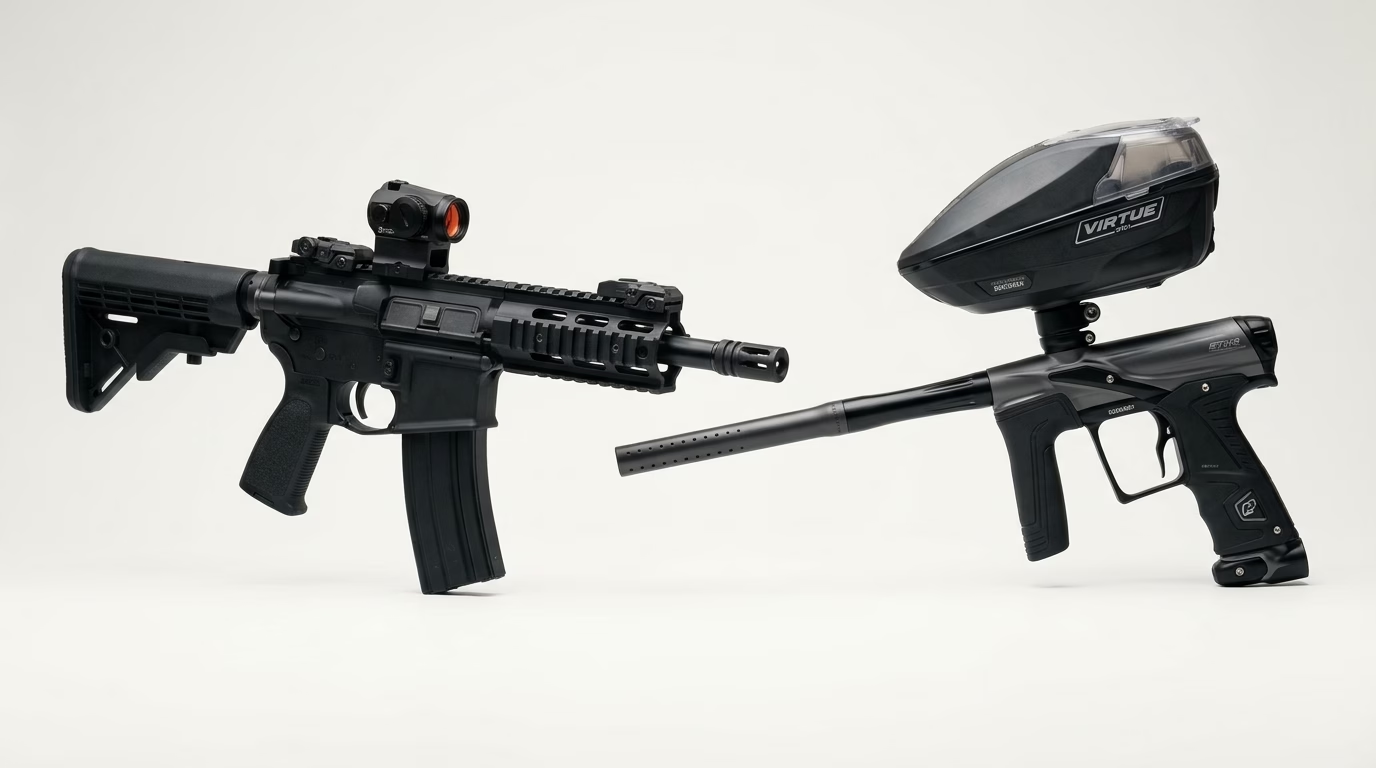
The tactical liability of any hopper system is its physical silhouette. A standard 200-round loader protrudes 5 to 7 inches above the top rail. In tight bunker play, this bulbous plastic target represents nearly 30% of your exposed surface area. “Hopper hits” account for an estimated 35% of tournament eliminations when players snap-shoot around mirror bunkers.
Mag-fed completely cures this ergonomic disease. With no feedneck perched on the receiver, the top rail is 100% planar with the barrel bore. Players can mount low-profile red dots, reflex sights, or iron sights directly along the center line. In tactical scenario woodsball, mag-fed operators crawl beneath low brush, peek around tight barricades, and expose almost zero peripheral profile.
Top Clearance Penalty
+6.2 Inches
Bulbous Target Area
Top Clearance Profile
Flush Flat Top
Zero Sightline Block
Silhouette Reduction
-35% Exposure
Snap-Shot Stealth
🎯 What you feel on the field
Aiming a hopper marker requires sighting along the side of the barrel or guessing trajectory over a massive plastic egg. Aiming a mag-fed marker feels completely natural; you bring the stock to your shoulder, peer through an unobstructed red-dot reticle, and align your shot instantly.
ROUND 05 · FIELD RELIABILITY & SUB-ZERO PERFORMANCE
Electronic Battery Dependence vs. Mechanical Spring Resilience
Field conditions are rarely pristine. When rain turns scenario woodsball into a mud trench, equipment vulnerabilities emerge. Hopper systems rely on electronic circuit boards, infrared optical eyes, and battery power (9V or AA). While models like the Virtue Spire V vs. Dye Rotor R2 are well-gasketed, dropped hoppers in wet sand can foul the drive cone or drain batteries in freezing 30°F temperatures.
Mag-fed markers operate on 100% mechanical spring tension. There are no batteries to die mid-game, no circuit boards to short out during creek crossings, and no motor gears to strip. However, box magazines are vulnerable to ground debris; dropping an empty magazine into muddy pine needles can coat the follower channel with grit. Fortunately, modern magazines like the Planet Eclipse EMF100 20-round mags disassemble in seconds with tool-less thumb sliders for quick field flushing.
Electronic Exposure
Batteries & Eyes
Sensitive to Wet Mud
Mechanical System
100% Spring
Zero Battery Failures
Mud Cleanability
Tool-less Shell
Quick Breech Swab
🎯 What you feel on the field
If a hopper fails, your marker is paralyzed into a clumsy single-shot gravity dropper. If a magazine jams, you simply slap the mag release, kick it aside, slap in a fresh magazine, and return to the firefight in under four seconds.
ROUND 06 · MATCH ECONOMICS & GEAR WEIGHT
Operating Expenses, Plate Carriers & Physical Fatigue
The financial ledger between these two formats reveals a staggering long-term gap. A weekend warrior running a hopper-fed setup burns through 1,500 to 2,000 rounds of standard .68 paint per day at a cost of roughly $45 to $55 per case. Ammo is cheap, abundant, and universally available at every field kiosk. Pairing this with a featherweight carbon air system like the Ninja SL2 vs. HK Army Aerolite bottle or checking output pressures with a Ninja Pro V3 vs. Powerhouse Haymaker reg (using our Paintball Tank Shot Calculator) ensures you maximize your 68/4500 fill efficiency.
Mag-fed changes the economic equation entirely. While you can fire standard roundball through magazines, doing so forfeits the primary competitive advantage of the platform. Loading shaped First Strike Rounds costs approximately $85 to $110 per box of 1,000. However, because mag-fed operators fire an average of only 250 to 400 rounds per day, their total paint expenditure per weekend often equals or undercuts spray-and-pray hopper players. The hidden cost lies in tactical loadout gear: six to eight durable magazines ($30 each), a tactical MOLLE chest rig, and dump pouches add $350+ upfront.
Paint Case Cost
$45 / 2,000
Standard Roundball
FSR Box Cost
$85 / 1,000
Specialized Finned
Upfront Loadout Cost
Low ($60 Harness)
Universal Pods
🎯 What you feel on the field
Hopper players carry high paint mass on their lower back, feeling free to suppress tree lines without financial remorse. Mag-fed players feel the front-heavy weight of loaded steel-spring magazines across their chest, treating every trigger press like a measured investment.
🔊 Acoustic Profile & Decibel Lab Data
Hopper Motor & Shot
High-cadence pop combined with continuous high-frequency electric motor spin and rattling pod stack.
Mag-Fed Stealth Shot
Silent mechanical feeding with zero rattling ball noise; only the pneumatic muzzle crack breaks the brush.
🔬 Armorer Sound Lab Verdict
In our calibrated decibel meter tests at 15 meters, the mag-fed platform proved substantially stealthier. Running through brush with a half-empty 200-round hopper sounds like a plastic maraca filled with marbles. A fully loaded mag-fed tactical rig produces virtually zero rattle, allowing silent stalking and undetected ambush positions.
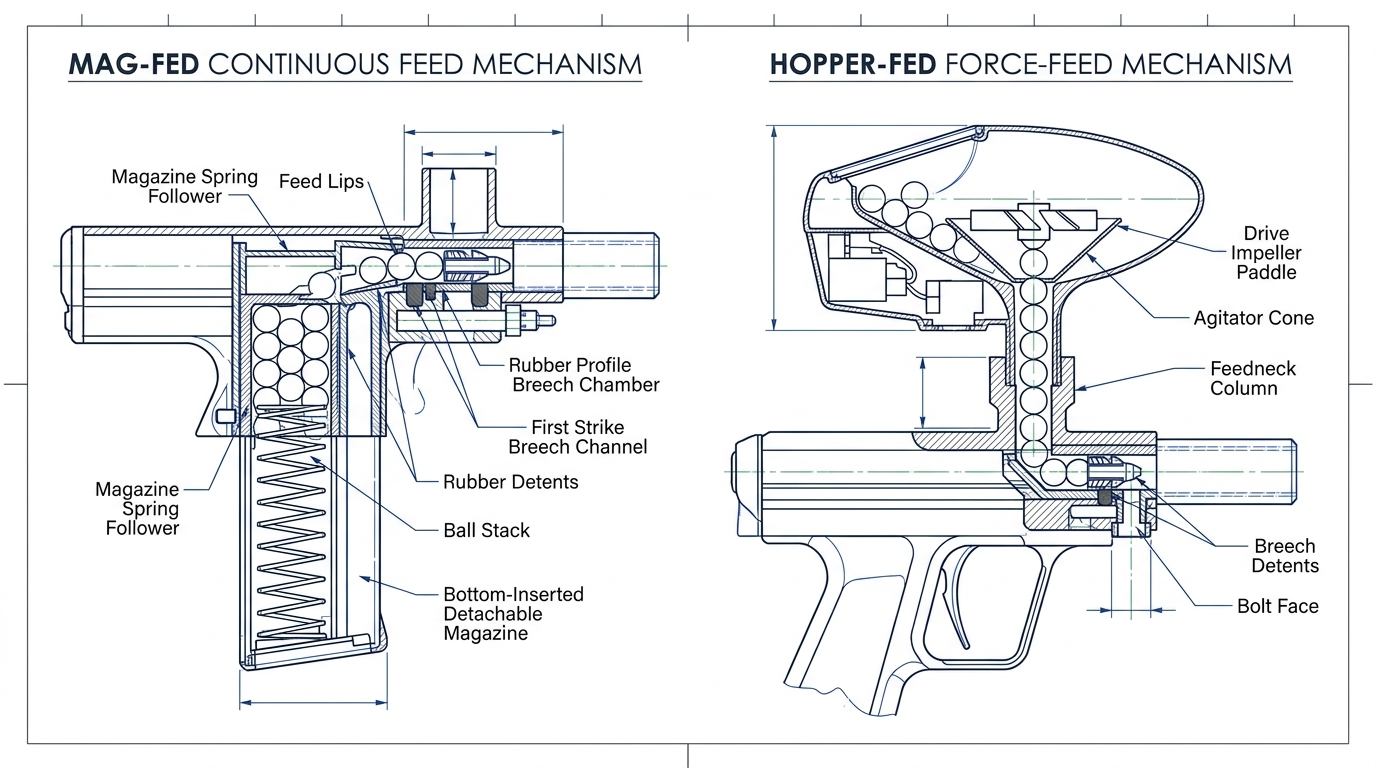
Figure 1.1: Technical CAD blueprint illustrating the linear spring follower breech path of Mag-Fed markers versus the top-mounted rotary impeller agitation of Hopper-Fed systems.
⚠️ Hopper-Fed Failure Mode: Drive Cone Jam & Battery Starve
When paint breaks inside a high-speed loader or batteries drop below operating threshold, the drive impeller stalls, instantly starving the marker breech.
⚠️ Mag-Fed Failure Mode: Magazine Spring Grit & Follower Stall
Dropping magazines into sand or mud allows dirt to coat internal follower rails, causing the spring to stick and producing dry fires on shot 14 or 15.
| 3-Year Total Cost of Ownership (TCO) | Hopper-Fed Setup | Mag-Fed Setup | Financial Verdict |
|---|---|---|---|
| Initial Marker & Feed System Purchase | $450–$650 (Marker + Loader) | $550–$750 (Marker + 2 Mags) | Hopper Advantage: Mid-range electronic hopper setups cost ~$100 less out of the gate. |
| Tactical Rig & Carrying Accessories | $65–$95 (Pod Pack + 6 Pods) | $280–$420 (Chest Rig + 6 Mags) | Hopper Advantage: Pods cost $4 each; genuine continuous-feed magazines cost $30–$40 each. |
| Yearly Ammunition (12 Outings / Year) | $540 (12 Cases Roundball) | $680 (8 Boxes FSR + 4 Cases) | Hopper Advantage: FSR premium pricing outweighs the lower total shot volume over 36 months. |
| Maintenance & Battery Expenses (3 Yrs) | $65 (Batteries & Speed Feeds) | $35 (Replacement Springs & O-rings) | Mag-Fed Advantage: Zero battery replacements and rugged all-mechanical spring hardware. |
| Estimated 3-Year Resale Value Retention | 62% Original Value | 58% Original Value | Hopper Advantage: High-end hoppers and universal markers enjoy broader secondary tournament markets. |
| Net 3-Year True Cost of Ownership | $1,895 Total Cost | $2,450 Total Cost | Winner: Hopper-Fed delivers a $555 savings over three years of regular competitive play. |
Final Armorer Verdict: Which Feed System Claims Your Loadout?
If your paintball ambitions involve high-cadence suppression, competitive speedball tournaments, airball leagues, or walk-on weekend games where overwhelming volume dictates victory, the Hopper-Fed Platform is the undisputed champion. There is simply no substitute for having 200 rounds immediately on tap and the ability to pour in 140 fresh paintballs in two seconds flat. To optimize this setup, pair a reliable tournament marker from our Speedball vs. Woodsball Paintball Guns guide with a high-performance Carbon Fiber vs. Steel Paintball Tanks tank and a precision What is Paintball Barrel Bore Size kit.
However, if your passion lies in deep woodsball scenario operations, military simulation, sniper engagements, and tactical team cohesion, the Mag-Fed Platform offers an immersive shooting experience that hoppers can never match. Operating a mag-fed marker like the Planet Eclipse EMF100 vs. First Strike T15 forces you to become a smarter, stealthier, and far more disciplined gunfighter. You eliminate the awkward hopper sightline obstacle, achieve pinpoint 100-yard accuracy with First Strike Rounds vs. Roundball, and master the tactical manual of arms. To transport your entire loadout securely to the staging tables, invest in a durable gear hauler like the Planet Eclipse GX2 vs. HK Army Expand Gear Bag and safeguard your joints during bunker slides with Hydra Black vs. Exalt FreeFlex Pads.
Hopper-Fed Platform
In stock at major retailers
Delivers unmatched sustained firepower, 2.2-second pod reloads, low match operating expenses, and universal tournament legality.
Mag-Fed Platform
In stock at major retailers
The definitive choice for tactical scenario operatives demanding 100-yard First Strike precision, zero sightline obstruction, and genuine milsim immersion.
Frequently Asked Dilemmas: Mag-Fed vs. Hopper-Fed
Can you put First Strike Rounds into a standard paintball hopper?
No. First Strike Rounds feature an aerodynamic finned skirt and a weighted nose. If loaded into a standard hopper, the drive impeller will tumble them sideways, causing immediate feedneck jams or catastrophic shell ruptures in the marker feedway. They must be fed through specialized D-shaped magazines.
Are mag-fed paintball markers allowed in regular walk-on weekend games?
Yes, virtually all commercial paintball parks allow mag-fed markers in standard recreational open-play games. However, be prepared to face opposing players armed with 200-round electronic hoppers. You will need to rely on superior stealth, positioning, and cover discipline.
Can a mag-fed marker be converted into a hopper-fed marker?
Several hybrid markers feature dual-feed capability. The Planet Eclipse EMF100 and Tippmann TMC come with interchangeable feedneck adapter plates, allowing players to swap from 20-round magazines to a 200-round gravity or electronic hopper in under two minutes.
How many magazines should a beginner mag-fed player carry?
A standard combat loadout is five to six magazines (one in the marker and four to five on a chest rig or battle belt). This provides 100 to 120 rounds of ready ammunition, which is typically sufficient for a standard 15-minute scenario or woodsball engagement.
Do mag-fed markers hurt more than hopper-fed markers?
When shooting standard roundballs at identical chronograph speeds (typically 280–300 FPS), impact kinetic energy is identical. However, First Strike Rounds retain velocity further downrange due to low aerodynamic drag, transferring slightly higher impact force at long distances.
Why do tournament players never use mag-fed markers?
Tournament speedball rules mandate high-speed breakout lanes and suppressive laning where teams fire thousands of rounds in under two minutes. Mag-fed markers simply cannot deliver the volume of fire required to win airball games, and league rulebooks (NXL/WXL) require approved electronic loaders.