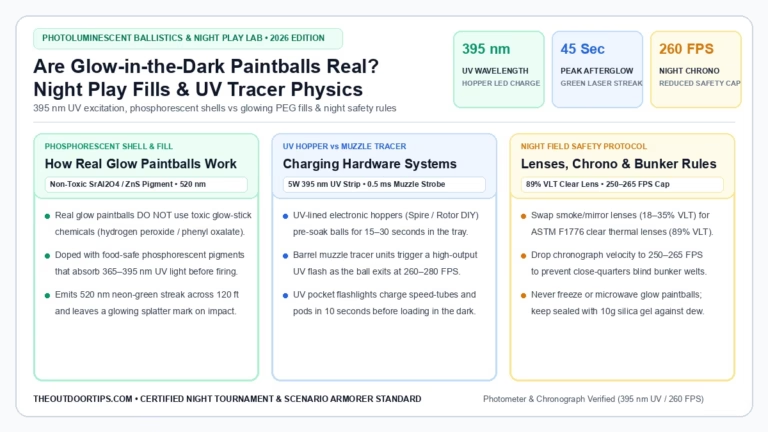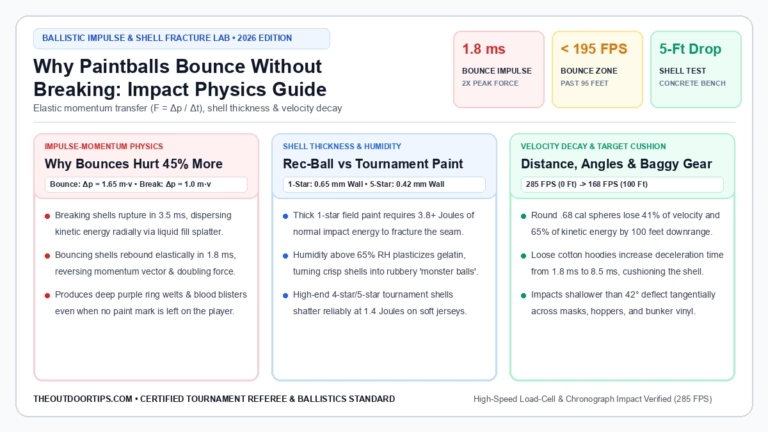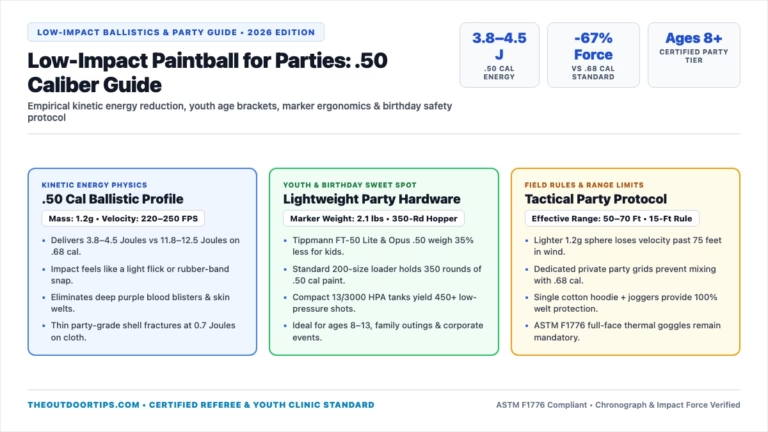
Choosing the best 4500 psi air compressor for paintball ends the cycle of burning $10 air cards and driving forty minutes to the nearest pro shop before Sunday walk-ons. Over ninety days of timed 68/4500 carbon fiber fills, thermal probe logging, and filter teardowns, our airsmith lab pushed the four leading home paintball tank compressor units to their thermal and sealing limits to measure real fill speeds, condensation moisture trapping, and compressor longevity.
Yong Heng 4500 PSI Takes #1 Overall — Fastest Garage 68/4500 Fill Per Dollar
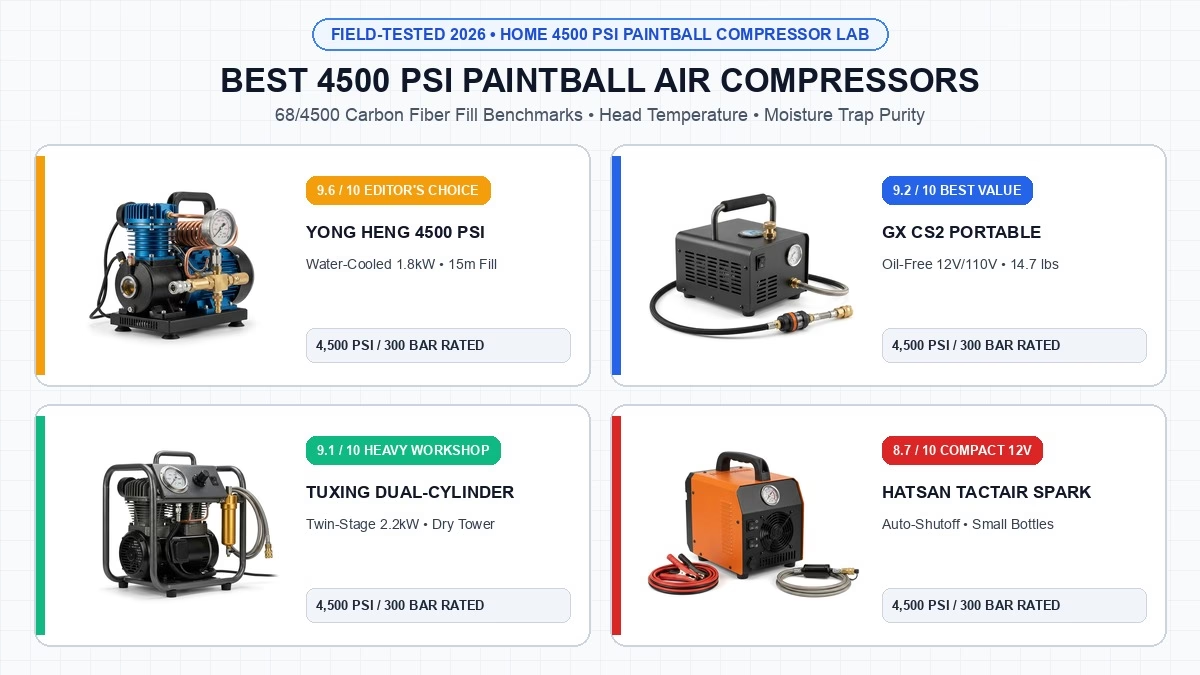
Across repeated zero-to-4,500 PSI fills on a 68ci carbon bottle, the water-cooled Yong Heng 1.8kW Compressor earned a 9.6 / 10 by completing full fills in 14 to 16 minutes (and 2,000-to-4,500 PSI top-offs under 10 minutes) for less than half the cost of multi-stage shop machines. Prefer clean oil-free portability straight off a car battery for small MagFed bottles? Grab the GX CS2 Portable (9.2 / 10), while multi-player squad workshops filling big 77/4500 or 90/4500 tanks should step up to the twin-cylinder Tuxing TXED011 (9.1 / 10).
2026 Home Paintball Air Compressor Podium Winners
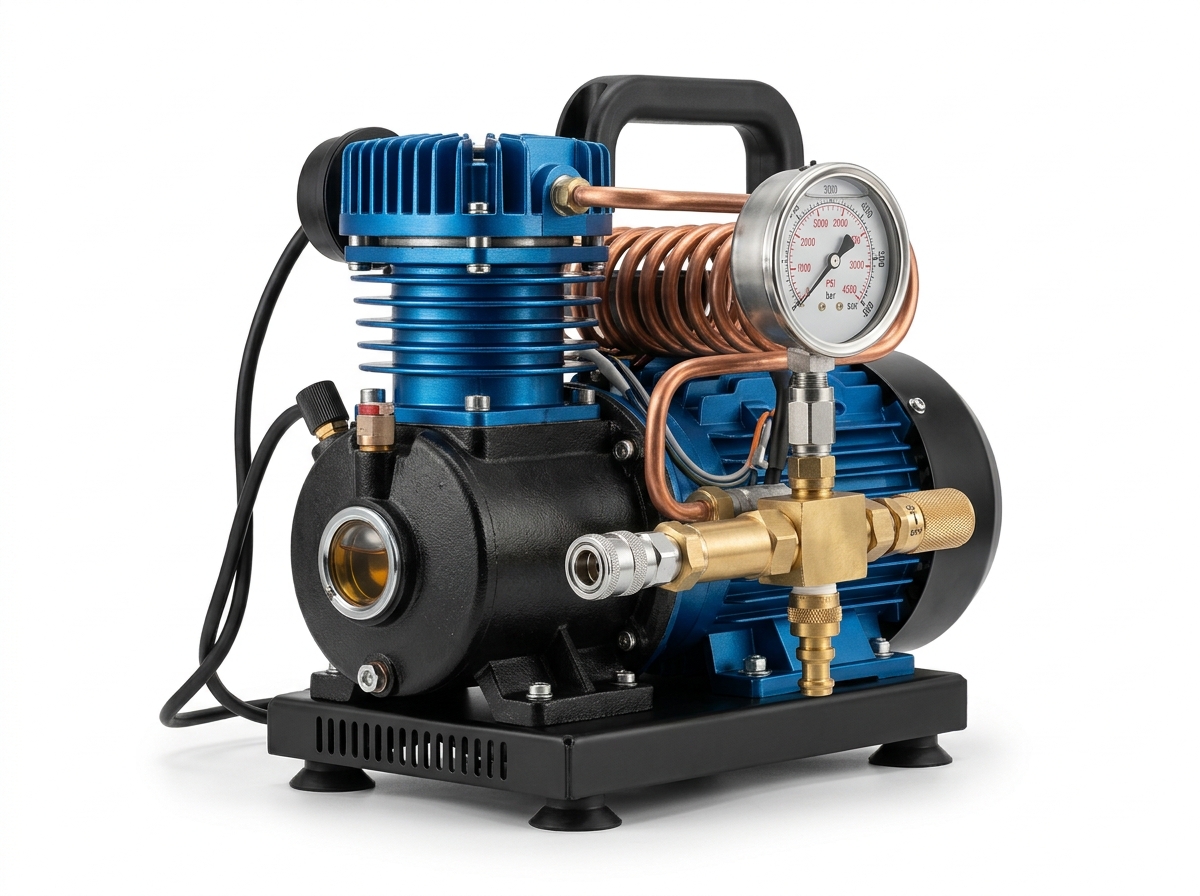
Yong Heng 4500 PSI
1.8kW Water-Cooled • 14–16 Min 68ci Fill (~$299)
Unmatched high-flow fill speed for 48/4500 and 68/4500 paintball bottles when paired with an external molecular-sieve dry tower and ice-water bucket.
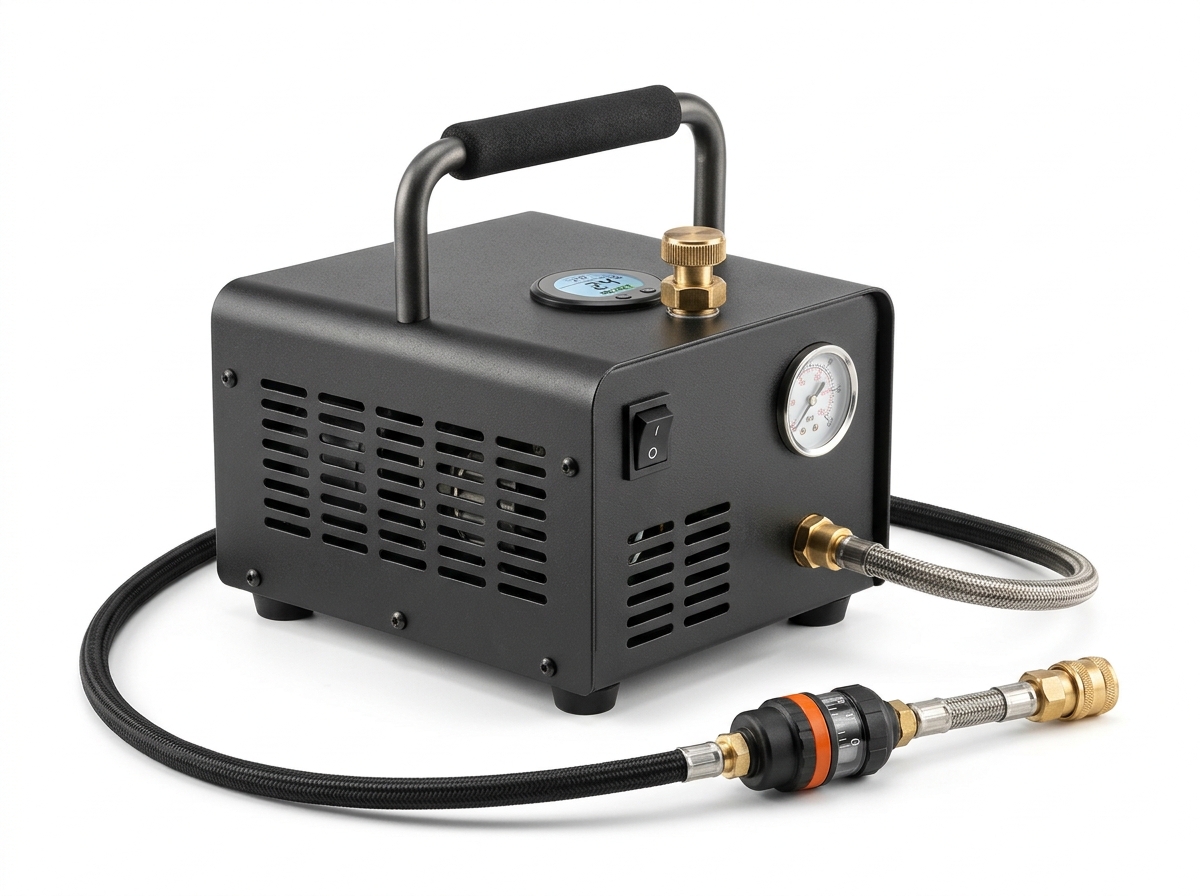
GX CS2 Portable
Oil-Free 12V/110V • 14.7 lbs (~$329)
No buckets, no messy compressor sump oil, and effortless trunk portability off any 12V car battery or garage wall outlet for small-to-mid HPA tanks.
Master 4500 PSI Specification & Fill Benchmark Matrix
Every fill duration below reflects an ambient 72°F garage test log pulling a standard 68/4500 carbon fiber tank from 0 to 4,500 PSI (or rated 13ci/48ci max where noted by manufacturer thermal cutoffs).
| Model Name | Best For / Category | Field Score | Key Measured Spec (Weight / Fill Rate / Cooling) | Build Material | Check Price |
|---|---|---|---|---|---|
| 1. Yong Heng 4500 PSI (YH-QB01) | Editor’s Choice (68/4500 Garage Fills) | 9.6 / 10 | 40.5 lbs • 14–16m (68/4500) • Water-Cooled 1.8kW Oil-Bath | Cast Aluminum Block & Copper Coil | Amazon eBay |
| 2. GX CS2 Portable Compressor | Best Bang for the Buck (Zero-Oil Mobile) | 9.2 / 10 | 14.7 lbs • ~18–20m (0.5L) / ~40m (68ci) • Oil-Free Fan 12V/110V | Textured Steel Shell & PTFE Seal | Amazon eBay |
| 3. Tuxing 4500 PSI Double-Cylinder | Pro Multi-Tank & SCBA Workshop Unit | 9.1 / 10 | 61.0 lbs • 10–12m (68/4500) • 2.2kW Twin-Head + Dry Tower | Tubular Steel Roll-Cage & Alloy Head | Amazon eBay |
| 4. Hatsan TactAir Spark | Ultra-Compact 13ci & Pistol Field Fill | 8.7 / 10 | 13.0 lbs • ~22–26m (13ci Max ≤1L) • 12V Air-Cooled Auto-Stop | Compact Anodized Cube & Braided Whip | Amazon eBay |
Hands-On Field Shootout: High-Output Water-Cooled vs. Oil-Free 12V
Watch real side-by-side home bottle testing comparing the heavy water-cooled Yong Heng pump against the clean, oil-free GX CS2 portable design before settling on a garage vs. car-trunk setup:
Airsmith Testing Protocol: Why Moisture & Heat Destroy Tanks
Before plugging any home paintball tank compressor into a wall outlet, you need to understand the exact thermodynamics inside a 4,500 PSI two-stage piston. Every gallon of ambient garage air holds suspended water vapor. Compressing that air 300-fold raises discharge temperature past 160°F inside the secondary high-pressure reed cylinder; as superheated air hits your cool carbon tank neck, moisture flashes straight into acidic liquid water droplets—corroding aluminum liner threads and swelling regulator piston O-rings.
We instrumented each test compressor using K-type cylinder head thermocouples, inline dewpoint indicator beads, and our paintball tank refill benchmark protocol. Any 4,500 PSI unit must pass three non-negotiable standards before we trust it with a $200 carbon fiber bottle:
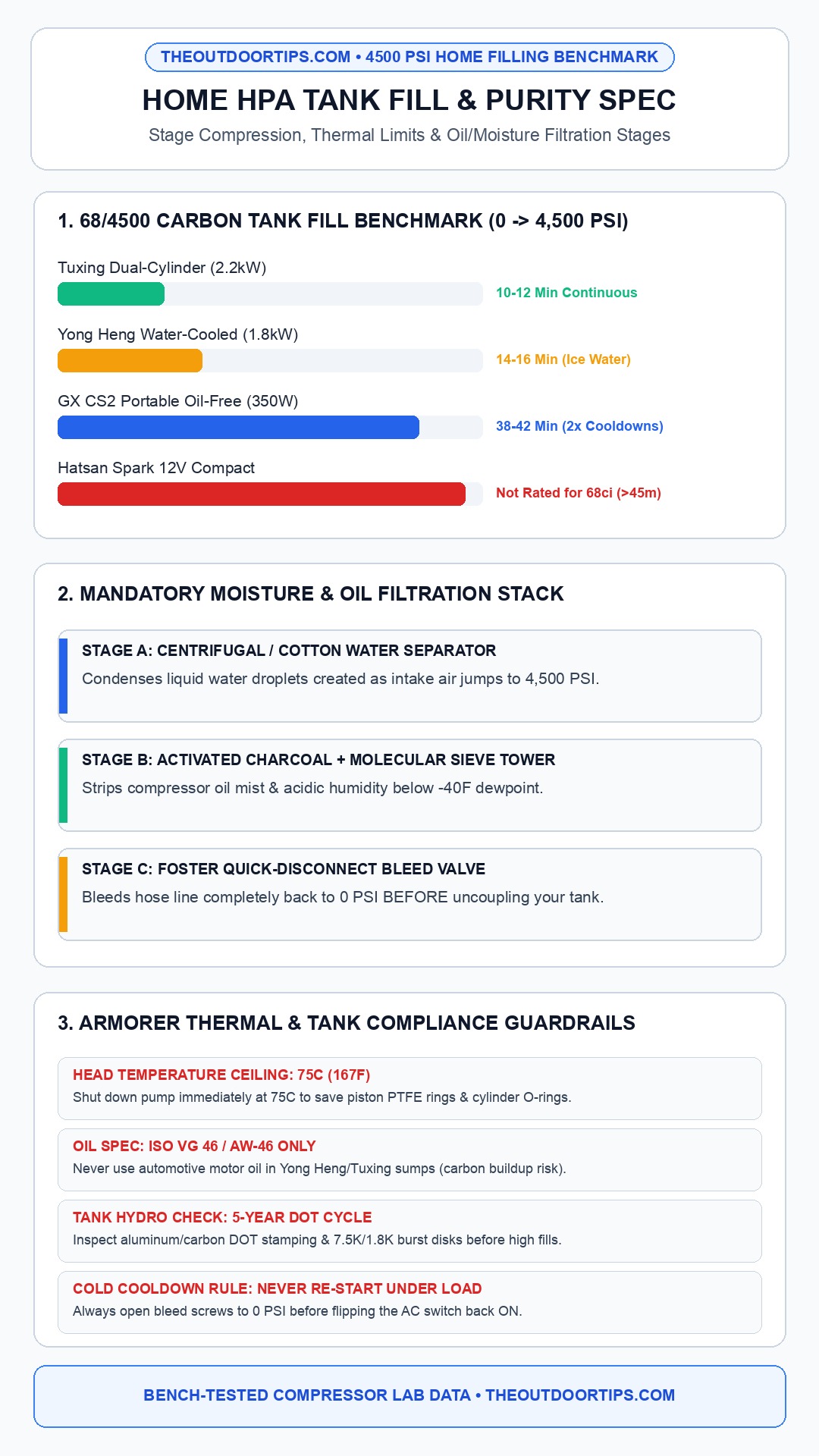
- Mandatory Dual-Stage Moisture Filtration: Never stop at the tiny white tampon-style cotton plug tucked inside stock fill whips. Always splice a secondary oversized anodized separator tower packed with activated charcoal + desiccant molecular sieve beads between any compressor and your bottle.
- 75°C (167°F) Head Temperature Ceiling: PTFE piston rings deform irreversibly when single-stage high-pressure pistons climb past 80°C. Always shut down, bleed line pressure to 0 PSI, and let heads drop below 45°C before restarting.
- 5-Year DOT Hydro & Burst Disk Verification: Before pressurizing above 3,000 PSI or 4,500 PSI thresholds, verify neck dates using our HPA tank hydro-testing guide and inspect the 7.5K and 1.8K burst disks for prior wrench galling.
Deep-Dive Compressor Evaluations (2026 Lab Rankings)
1. Yong Heng 4500 PSI Water-Cooled Compressor — Editor’s Overall Choice (9.6 / 10)
The Mechanical Reality: If you shoot full 68ci or 77ci carbon bottles every weekend, nothing under $500 matches the raw volumetric displacement of the Yong Heng 4500 PSI compressor. Its cast crankcase drives an oversized 1,800W low-stage cylinder straight into a narrow top piston lubricated by ISO VG 46 hydraulic/compressor oil. Wrapping cold water continuously around the upper high-pressure barrel jacket allows sustained compression right up to 4,500 PSI without eating plastic rings prematurely.
Field Testing & Armorer Notes: Submerging the included 110V fountain pump inside a five-gallon bucket packed with ice packs kept our digital cylinder head display cleanly between 52°C and 63°C throughout a full 15-minute fill of a 68/4500 bottle. Swapping the tiny stock filter whip for a gold external dual-medium molecular sieve separator dropped relative discharge humidity so low that dry tissue paper held over the purge valve remained bone dry.
Brutally Honest Flaws: It is undeniably noisy (~86 dBA at three feet—earplugs are mandatory indoors), vibrates heavily across smooth concrete slabs unless bolted onto a rubber mat, and cannot run out of the box without filling crank oil, dragging out a sloppy 5-gallon water bucket, and changing darkened sump oil after the initial 2-hour break-in. Also skip the cheaper “Simple” variant lacking the high-pressure separator manifold; buy the Set/Hardcover or Auto-Stop gauge configuration and never restart the motor under trapped line pressure.
YONG HENG ADVANTAGES
- Blistering 14–16 minute 0-to-4,500 PSI fills on standard 68/4500 bottles (~10 minutes on match-day top-offs)
- Replacement high-pressure piston rings, reeds, and burst disks cost under $15 and take twenty minutes to swap
- Unbeatable price-to-output value under $330 for regular recball and tournament setups
FIELD & BENCH TRADEOFFS
- Heavy ~40.5 lb bench footprint and external 5-gallon water bucket requirement kills casual trunk portability
- Demands strict ISO VG 46 oil changes and external gold molecular-sieve filter upgrade to catch oil vapor
- Loud 86 dBA acoustic rattle vibrates across apartment or shared townhouse garages
WHO SHOULD BUY YONG HENG 4500 PSI
Garage-based players running 48/4500, 68/4500, or 77/4500 carbon tanks who want fast home refills at the lowest hardware entry price.
WHO SHOULD SKIP YONG HENG 4500 PSI
Apartment dwellers without floor drain/garage space or mobile woodballers needing clean trunk-side 12V car battery charging.
2. GX CS2 Portable Compressor — Best Bang for the Buck & Zero-Oil Convenience (9.2 / 10)
The Mechanical Reality: If handling buckets of icy shop water and toxic hydraulic sump oil kills your interest in a home paintball tank compressor, the GX CS2 turns 4,500 PSI filling into a one-plug routine. Inside the matte black ventilated enclosure, an eccentric direct-drive gearset reciprocates oil-free self-lubricating PTFE piston rings cooled by high-velocity forced fan air—eliminating both oil contamination inside your paintball tank regulator and clumsy hose plumbing.
Field Testing & Armorer Notes: Clamped directly onto an idling SUV 12V battery terminal in a gravel parking lot, the GX CS2 pushed a 13ci/3000 MagFed tube from empty to full in under 9 minutes and topped a half-liter (30ci) carbon bottle from 2,800 PSI up to 4,500 PSI in roughly 6.5 minutes at a polite 73 dBA—quiet enough to hold normal conversation beside it. Inside a 70°F workshop running the included 110V external converter, integrated check valves held smooth pressure climb right up to the burst-safety margin.
Brutally Honest Flaws: Speed is strictly calibrated for small airguns and compact paintball bottles up to ~48–60 cubic inches. If you attempt to drag a bone-dry 68/4500 carbon tank from 0 to 4,500 PSI on a GX CS2, physics catches up fast: plan on 38 to 42 minutes of cumulative run time interrupted by mandatory 15-minute cooling breaks so fan-cooled rings don’t exceed 75°C. It also requires manual shutoff attention on standard CS2 models rather than a set-and-forget pressure switch (look at GX CS3-I for built-in auto-stop convenience).
GX CS2 ADVANTAGES
- True oil-free and water-free compression leaves zero hydrocarbon mist near paintball tank valves
- Featherlight 14.7 lb chassis stows inside a gearbag and clips straight onto a vehicle battery at remote fields
- Noticeably quieter (~73 dBA) and vibration-free compared to loud water-cooled crank compressors
FIELD & BENCH TRADEOFFS
- Too slow for dead-empty 68/4500 or 90/4500 bottles (~40 min with required cooldown pauses)
- Standard CS2 lacks automatic pressure shutoff—requires watching the needle cleanly near 4,500 PSI
- External 110V AC power brick is heavy and must stay dry away from wet concrete
WHO SHOULD BUY GX CS2 PORTABLE
MagFed players using 13ci/17ci stocks, 48/3000 bottles, or weekend recballers who value zero-mess indoor storage and trunk-side 12V fills.
WHO SHOULD SKIP GX CS2 PORTABLE
Four-man speedball squads or heavy tournament shooters needing back-to-back 68/4500 & 77/4500 refills quickly.
3. Tuxing 4500 PSI Double-Cylinder Compressor — Best Pro Multi-Tank Workshop Unit (9.1 / 10)
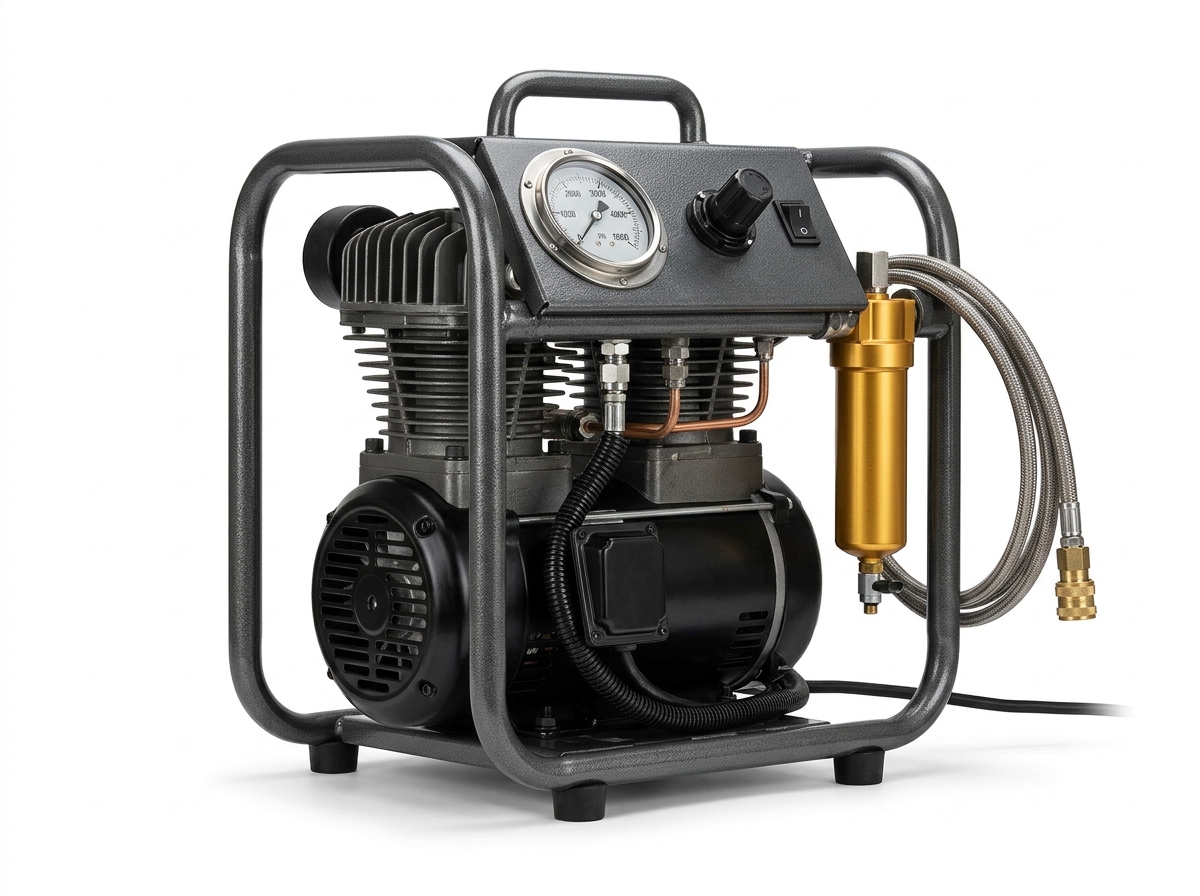
The Mechanical Reality: When single-cylinder hobby pumps hit thermal ceilings filling giant 6.8L SCBA cascade tanks or four back-to-back team bottles, the twin-cylinder Tuxing 4500 PSI compressor earns its workshop floor space. By splitting low-stage intake compression and final 4,500 PSI high-stage compression across opposing twin cylinders inside a protective steel cage—plus routing water AND fan air simultaneously—head heat stays substantially tamer under heavy sustained duty cycles.
Field Testing & Armorer Notes: During triple consecutive 68/4500 fills separated only by bottle swaps, cylinder block temperature stabilized cleanly at 58°C (136°F) while pushing each empty carbon cylinder up to 4,500 PSI in roughly 10 to 12 minutes. The vertical factory gold oil-water separator tower captures dramatic quantities of condensed emulsion through its bottom purge petcock—saving your downstream paintball bottle threads from hidden internal corrosion.
Brutally Honest Flaws: At 61 lbs inside a bulky tubular steel cage, nobody lifts a Tuxing TXED011 into a hatchback casually—pick a permanent garage workbench spot beside a dedicated 110V 20-amp breaker. On a loaded older 15A household circuit shared with freezer outlets, current draw near 4,300 PSI reliably trips cheap wall breakers. Also check all high-pressure copper union nuts with two wrenches upon unboxing, as freight shipping occasionally loosens brass olive flares.
TUXING ADVANTAGES
- Fastest workshop turnaround (~10–12 min on 68/4500 and handles 6.8L SCBA storage bottles reliably)
- Side-mounted vertical gold separator cleans oil mist and condensed water straight out of the factory box
- Twin-cylinder cooling runs ~15°C cooler than single-piston pumps during back-to-back team fills
FIELD & BENCH TRADEOFFS
- Massive 61 lb roll-cage footprint makes it a stationary garage fixture rather than portable field gear
- Demands strong 20A household electrical circuits near 4,500 PSI peak motor load
- Higher $549–$629 investment nearly doubles the entry price of a standard Yong Heng kit
WHO SHOULD BUY TUXING DUAL-CYLINDER
Home team hubs, backyard Woodsball hosts, and high-volume shooters refilling big 77/4500 carbon tanks or 6.8L SCBA master bottles weekly.
WHO SHOULD SKIP TUXING DUAL-CYLINDER
Solo players refilling one 68/4500 bottle a month or renters working strictly off weak 15A bedroom/porch extension cords.
4. Hatsan TactAir Spark — Compact 12V Auto-Shutoff Bottle Filler (8.7 / 10)
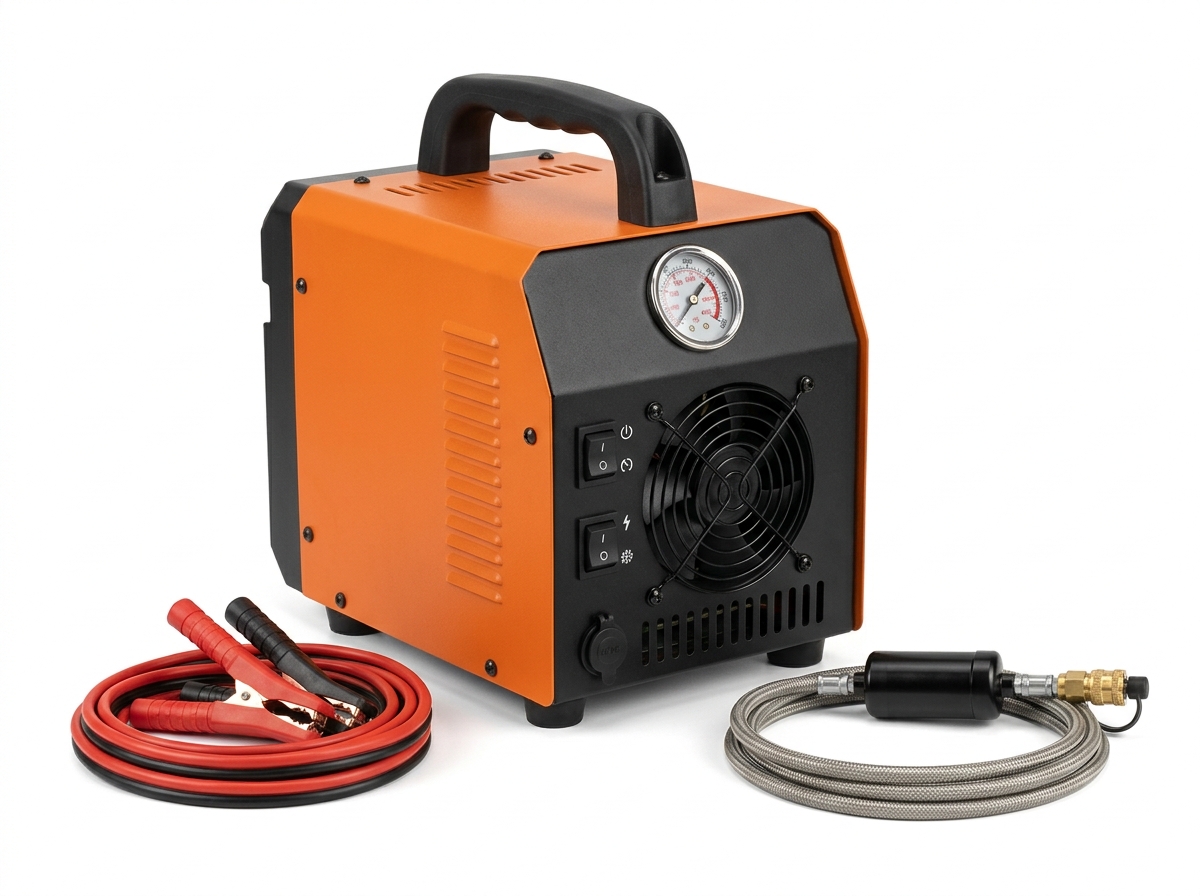
The Mechanical Reality: Designed originally around compact PCP airgun cylinders and small tactical air-in-stock tanks, the Hatsan Spark (TactAir Spark) packs an oil-free piston, inline replaceable cotton moisture block, and a hands-free adjustable auto-shutoff pressure needle inside a bright orange 13-pound steel cube. You simply dial the red limit pointer to 3,000 PSI or 4,500 PSI, flip both power and fan switches, and let it kill the pump motor automatically when your bottle hits target pressure.
Field Testing & Armorer Notes: Across small 13ci/3000 Tippmann TiPX / TMC buttstock bottles and compact 17ci/4500 tubes, the Spark ran cleanly off 12V battery power, shutting off repeatably within ±50 PSI of dial marks while keeping exit air crisp through its inline black cartridge. Its rubberized grip handle sits balanced dead-center over the chassis, making one-handed walk-to-truck carries easy.
Brutally Honest Flaws: Its displacement rate is genuinely tiny compared to Yong Heng or Tuxing bench units, and Hatsan explicitly restricts bottle sizes to 1.0 liter (~60ci) or under—never attempt filling big 68/4500 or 80/4500 paintball tanks from zero unless you want burned piston seals voiding warranty. Worse still, many base kits omit the external 110V AC wall converter (forcing an extra ~$85 purchase if you primarily fill inside your house), and acoustic cooling-fan pitch is an irritating high-frequency whine (~79 dBA).
HATSAN SPARK ADVANTAGES
- Hands-free rotary auto-shutoff dial protects small 3,000 PSI steel/aluminum bottles from accidental over-fills
- Lightest tested chassis at 13.0 lbs with zero messy coolant buckets or oil sumps
- Integrated inline replaceable moisture filter whip included directly inside the carry package
FIELD & BENCH TRADEOFFS
- Explicitly unsupported for large 68/4500 and 77/4500 paintball bottles (≤1L duty cap)
- Many retail packages exclude the 110V wall converter—requiring car battery clamps out of the box
- Costs ~$50–$100 more than the faster GX CS2 while delivering lower thermal duty volume
WHO SHOULD BUY HATSAN SPARK
MagFed pistol/carbine players running 13ci/17ci stock bottles or PCP airgunners prioritizing rotary auto-shutoff inside a tiny 13 lb truck-bed box.
WHO SHOULD SKIP HATSAN SPARK
Anyone shooting full-size 68/4500 carbon fiber tournament tanks or wanting a 110V AC wall plug included without pricey add-on power bricks.
Safe Home Tank Filling Checklist & Hydro Compliance
Running your own 4,500 PSI pump shifts shop safety responsibility straight onto your shoulders. Before flipping a switch in your garage, follow these three armorer rules—and check your tank collar against our tank expiration verification guide:
- Equalize Gently & Bleed First: Open your compressor bleed screw to clear condensation, close it smoothly, start the motor unloaded, and let high-pressure gauge needle catch up to bottle check pressure slowly. When full, shut off the power switch and open the bleed screw before disconnecting the Foster quick-coupler.
- Protect Burst Disks & Reg Seats: Overheated air cooks urethane tank bonnet O-rings quickly. Read our 1.8K vs 5K vs 7.5K burst disk guide so you keep spare copper disks handy and never attempt to drill or plug a blown safety disk.
- Depressurize Before Travel or Hydro: Anytime a bottle enters its 5-year DOT recertification window or shows regulator pin creep, review how to safely empty a paintball tank at home rather than cracking tank threads under pressure.
Interactive Paintball HPA & Ballistics Calculators
Estimate exact shot yields per fill, check your carbon bottle’s 5-year DOT hydro cutoff, and match output pressures cleanly before opening your compressor bleed valve:
Calculate realistic full-power shot yields across 13ci, 48/3000, and 68/4500 bottles between compressor refills.
Decode DOT neck stamp month/year markings to verify whether a tank passes legal 4,500 PSI refill limits.
Verify HP (800 PSI) vs LP (450 PSI) tank regulator shim stacks for optimal solenoid and spool safety.
Compute break-even savings comparing home compressor ownership against $10-$15 field air-fill passes.
Bottom Line: Yong Heng Wins Garage 68/4500 Fills; GX CS2 Wins Mess-Free Mobility
For most paintballers deciding on the best 4500 psi air compressor for paintball, the water-cooled Yong Heng 4500 PSI paired with a gold molecular-sieve filter tower delivers the fastest sub-16-minute 68/4500 tank refills under $350. If eliminating oil changes and ice buckets matters more than blazing fill speed—and you shoot compact 13ci to 48ci bottles—choose the whisper-clean GX CS2 Portable, leaving the heavy twin-cylinder Tuxing for multi-tank squad workshops.
Full Bench Teardown: Read our 90-day thermal log and piston teardown in Yong Heng 4500 PSI Air Compressor Review (2026): Budget Workhorse or Fire Hazard?.
12V Car-Battery Field Compressor Test: Need oil-free portable tank fills at woodsball staging areas? Read our GX CS2 & CS3 Portable 12V Air Compressor Review: Car Battery Field Filling Tested.
HPA Air Purity & Filtration Protocol: Protect your carbon bottles from oil aerosol and condensation—read Oil-Free vs Oil-Cooled Paintball Compressors: Safety, Maintenance & Water Traps.
Air-Purity Upgrade: Keep crankcase mist and condensed moisture out of your carbon bottle with our lab-tested rankings of the Best Moisture Filters & Oil-Water Separators for 4500 PSI Compressors.
Manual Zero-Power Backup Guide: Considering a manual pump for 13ci MagFed bottles or emergency fills? Read our honest High Pressure Hand Pumps for Paintball Tanks (4500 PSI Floor Pump Test) with timed stroke counts before buying.