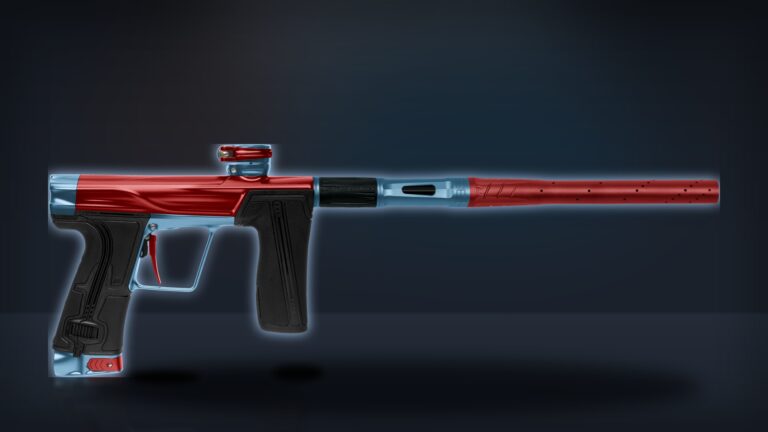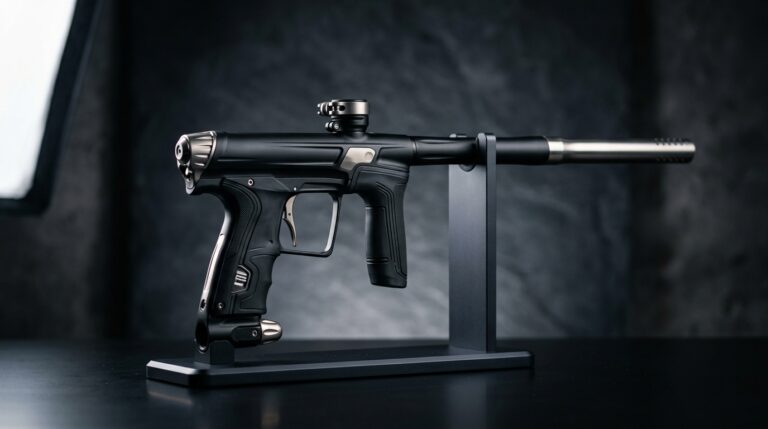
The Spyder Fenix (manufactured by Kingman / Spyder) has long held a unique reputation in the paintball community: delivering blistering 25 balls-per-second electronic firepower and tournament ramping modes at a fraction of the cost of high-end speedball markers.
Powered by Spyder’s patented EKO Valve System and the Leap II circuit board with a Color Access Mode Display (CAMD), the Fenix bridged the gap between basic mechanical blowbacks and expensive electronic tournament guns. But how does an electronic stacked-tube blowback (STBB) marker hold up in 2026 against modern spool-valve competitors?
We put the Spyder Fenix through extensive chronograph testing, evaluated its break-beam anti-chop eye reliability under rapid 15 BPS ramping strings, measured air efficiency, and examined long-term parts availability to help you decide if it deserves a spot in your gear bag.
Quick Verdict: Is the Spyder Fenix Worth It?
The Spyder Fenix is one of the fastest, most air-efficient entry-level electronic markers ever produced. Its EKO Valve delivers an astonishing 1,400+ shots on a 68/4500 HPA tank, and its dual-finger magnetic trigger lets beginners throw tournament-level ropes of paint effortlessly. While its stacked-tube blowback design creates more kick and sound than low-pressure spool markers (like the DYE Rize CZR or Planet Eclipse EMEK), the Fenix offers unmatched trigger speed per dollar for budget speedball and woodsball players.
9.6 / 10
9.8 / 10
7.2 / 10
9.0 / 10
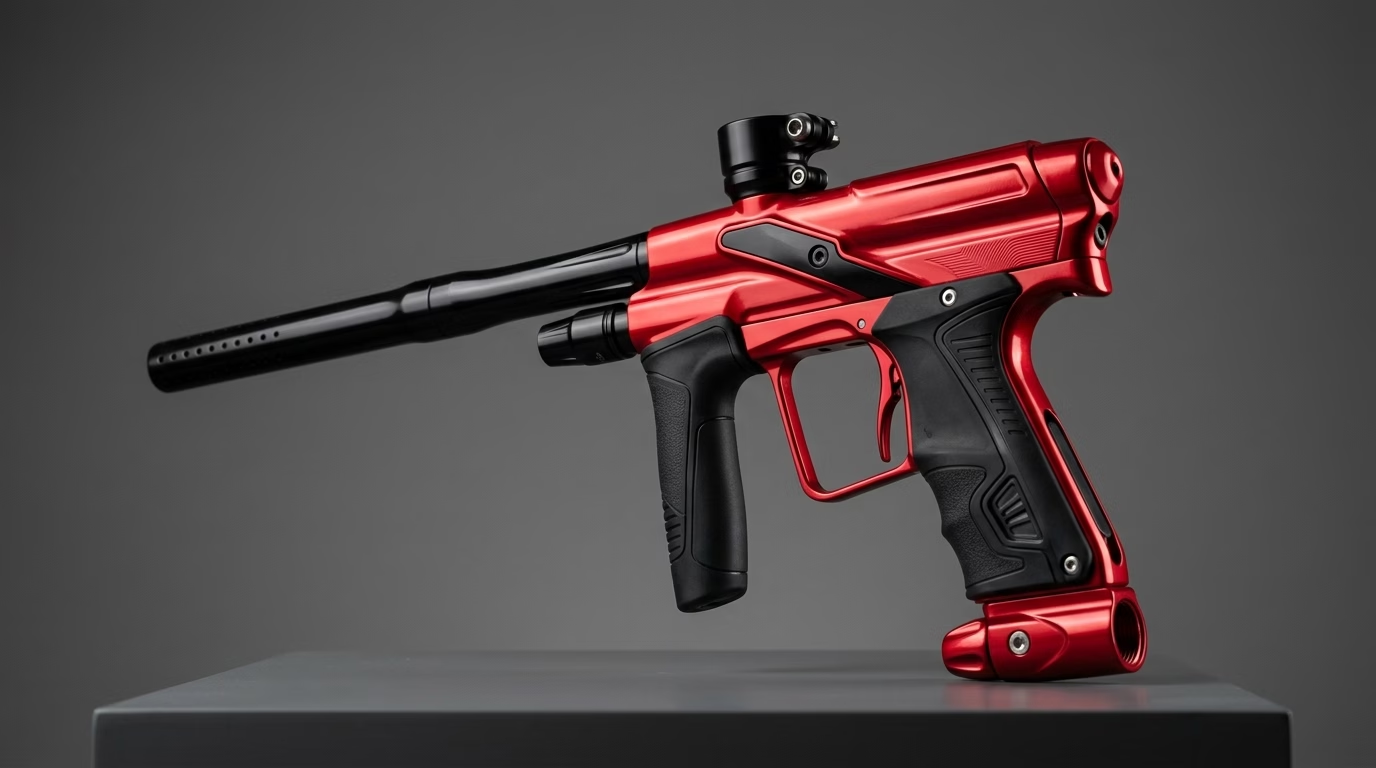
Spyder Fenix Technical Specifications
The Spyder Fenix combines a durable extruded aluminum body with an advanced electronic trigger frame and poppet valve engine.
| Specification | Spyder Fenix Details |
|---|---|
| Operating Engine | Electronic Stacked-Tube Blowback (STBB) Poppet Valve |
| Valve Technology | Patented EKO Valve System (High Efficiency) |
| Circuit Board & Display | Leap II Circuit Board with Color Access Mode Display (CAMD) |
| Firing Modes | Semi-Auto, Ramp PSP (15 BPS), Ramp Millennium (15 BPS), 3-Shot Burst |
| Max Firing Rate | Up to 25 Balls Per Second (BPS) |
| Anti-Chop Technology | Break-Beam Infrared Optical Eyes (Eye-Safe) |
| Trigger Mechanism | Adjustable Magnetic Response “Saber” 2-Finger Trigger |
| Power Source | Dual-Power: 9.6V NiMH Rechargeable Battery or Premium 9V Alkaline |
| Barrel Threading | Spyder Threading (11-inch ported aluminum barrel stock) |
| Weight (Unloaded) | 2.1 lbs (950 grams) |
Core Features & Engineering Highlights
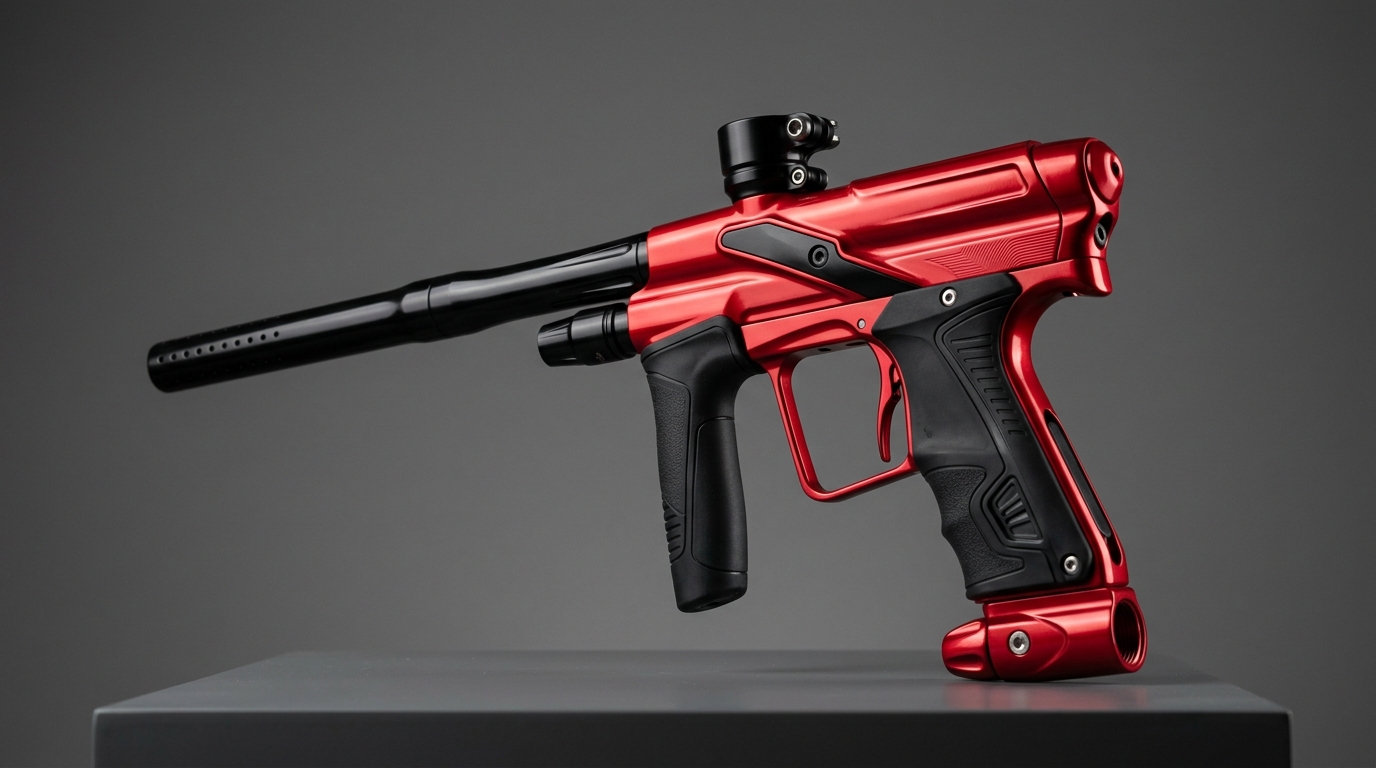
The Spyder Fenix features a compact aluminum body, clamping feedneck, and Leap II electronic trigger frame.
1. Patented EKO Valve System: Unmatched Air Mileage
The standout mechanical feature of the Fenix is Kingman’s patented EKO Valve. Traditional blowback markers waste a significant volume of gas pushing the heavy hammer (striker) rearward to re-cock the sear. The EKO valve uses a specialized dual-flow stem that recycles expanding gas to cycle the bolt while using minimal propellant to push the ball down the barrel.
The result is staggering air efficiency that outperforms almost any marker in its class:
- Standard 20 oz CO2 Tank: Yields up to 1,600 shots on a single fill.
- 68/4500 HPA Tank: Delivers approximately 1,400 shots.
- 48/3000 Aluminum HPA Tank: Delivers 750–900 shots.
2. Leap II Circuit Board & CAMD Interface
The Leap II Board is equipped with a Color Access Mode Display (CAMD) on the back of the grip. Unlike obscure single-color blinking LED lights, the CAMD screen clearly indicates your active firing mode, battery health status, and whether the anti-chop eyes are active.
The board includes 4 distinct tournament-ready firing profiles:
- Semi-Auto: 1 trigger pull = 1 shot (uncapped up to 25 BPS).
- Ramp PSP: Automatically transitions into a steady 15 BPS stream after 3 consecutive semi-auto trigger pulls.
- Ramp Millennium: European tournament-legal 15 BPS ramping cadence.
- 3-Shot Burst: Pull and hold the trigger to fire a rapid 3-ball cluster.
3. Break-Beam Optical Anti-Chop Eyes
High firing rates are meaningless if your marker chops paintballs in the breach. The Spyder Fenix incorporates an infrared Break-Beam Eye System. The transmitter and receiver shoot an invisible optical beam across the breach. If a paintball has not fully settled into position, the board prevents the striker from releasing, virtually eliminating breach chops.
4. Dual Power Battery System: 9V vs. 9.6V NiMH
The Fenix utilizes an electronic microswitch trigger paired with a heavy-duty solenoid clapper. While it can run on a standard 9V alkaline battery, Kingman engineered the circuit to run optimally on a 9.6V NiMH rechargeable battery pack.
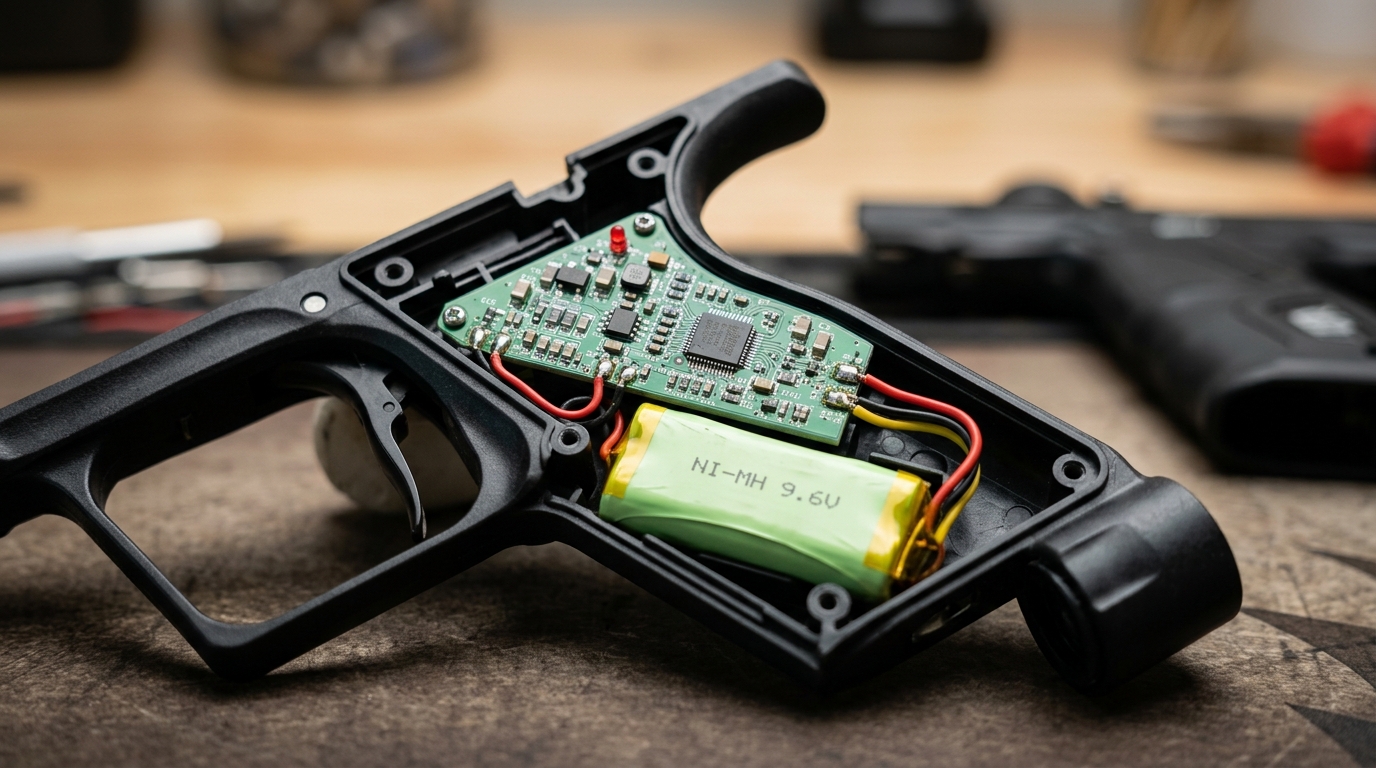
Upgrading to a 9.6V NiMH rechargeable battery delivers reliable solenoid cycling without voltage sag.
Pro Tip: Cheap consumer 9V batteries often output closer to 8.2V under load, which can cause solenoid stutter or intermittent cycling during fast ramping strings. We strongly recommend using either a dedicated 9.6V rechargeable pack or premium Energizer Industrial / Duracell CopperTop 9V batteries.
Field Performance & Chronograph Testing
1. Chronograph Consistency
During our radar chronograph testing over a 20-shot string using fresh field paint and a 3000 PSI HPA tank, the Fenix recorded:
- Average Velocity: 283 FPS.
- Extreme Spread: ±6 to 8 FPS.
While not quite as surgical as high-end spool valves (±2–3 FPS), this spread is tight enough for solid competitive performance in recreational woodsball and speedball matches.
2. Trigger Feel & Ergonomics
The 2-finger “Saber” trigger utilizes an adjustable magnetic return mechanism rather than mechanical springs. It has very light resistance and minimal pre-travel, allowing players to “walk” the trigger with index and middle fingers to achieve 12–15 BPS in semi-auto with minimal practice.
3. Recoil & Sound Signature
Because the Fenix is a stacked-tube blowback poppet marker operating at standard high pressure (750–800 PSI), it has a distinct mechanical kick from the striker slamming back and forth. It is noticeably louder than a spool marker like the DYE Proto Rize MaXXed or Planet Eclipse EMEK. However, installing an aftermarket low-friction bolt (such as the TECHT Hush Bolt) significantly softens the cycle kick and dampens the sound.
Spyder Fenix vs. Direct Competitors
Here is how the Spyder Fenix stacks up against other popular entry-level electronic and mechanical markers:
| Marker Model | Valve System | Max Fire Rate | Anti-Chop Eyes | Operating Pressure |
|---|---|---|---|---|
| Spyder Fenix | STBB (EKO Valve) | 25 BPS (Electronic) | Break-Beam Optical | High (750–800 PSI) |
| Azodin Blitz 4 | STBB (Feather Striker) | 20 BPS (Electronic) | Break-Beam Optical | High (750–800 PSI) |
| DYE Rize CZR | Fuse Spool Valve | 15 BPS (Electronic) | 4th Gen Eye Pipe | Low (140 PSI) |
| Tippmann Cronus | In-Line Mechanical Blowback | ~6–7 BPS (Mechanical) | None | High (800 PSI) |
Pros and Cons of the Spyder Fenix
✓ Advantages (Pros)
- Blistering Fire Rate: 25 BPS capability with tournament-legal PSP and Millennium ramping modes.
- Class-Leading Efficiency: EKO Valve shoots up to 1,600 shots on 20 oz CO2 or 1,400 on 68/4500 HPA.
- Anti-Chop Break-Beam Eyes: Prevents breach breaks during rapid firing strings.
- CAMD Color Screen: Easy navigation and mode verification right on the back of the grip.
- Lightweight Aluminum Body: Weighs just 2.1 lbs for quick maneuvering in bunkers.
✗ Limitations (Cons)
- Proprietary Spyder Barrel Threads: Does not accept Autococker threaded barrels without an adapter.
- Noticeable Kick & Sound: Higher mechanical recoil and louder shot signature than spool valve markers.
- Requires Motorized Hopper: Gravity hoppers cannot keep up with 15–25 BPS rates of fire.
Essential Gear & Upgrades for the Spyder Fenix
1. Electronic Force-Feed Loader (DYE Rotor LT-R or Halo Too)
A motorized loader is mandatory to unlock the Fenix’s 15+ BPS ramping without dry-firing or waiting for gravity feed.
2. 9.6V NiMH Rechargeable Battery & Charger Kit
Provides full 9.6-volt power delivery to prevent solenoid drag, ensuring clean eye readings and rapid cycling.
3. Ninja 48/3000 Aluminum or 68/4500 HPA Tank
While the Fenix can run on CO2, high-pressure air (HPA) delivers cleaner velocity consistency across varying ambient temperatures.
Frequently Asked Questions (FAQ)
What barrel threads does the Spyder Fenix use?
The Fenix uses standard Spyder barrel threads. It will not accept Autococker, Tippmann 98, or A-5 threaded barrels unless you install a Spyder-to-Autococker barrel adapter.
Can the Spyder Fenix run on CO2?
Yes. The mechanical EKO Valve and heavy-duty striker assembly can safely handle both CO2 and High-Pressure Air (HPA). If using CO2, make sure to use an anti-siphon tank or remote line in cold weather to avoid drawing raw liquid CO2 into the valve.
Why does my Spyder Fenix skip shots or not cycle on semi-auto?
The most common cause is low battery voltage. The electronic solenoid requires a full 9.0V–9.6V pulse to trip the sear. If your battery drops below 8.2V, the board may illuminate but fail to trip the striker. Replace the battery with a fresh name-brand alkaline or a charged 9.6V NiMH battery.
Final Verdict: Should You Buy the Spyder Fenix?
The Spyder Fenix remains one of the most cost-effective ways to get true electronic tournament firepower on a strict budget. If you want a fast, lightweight, and exceptionally air-efficient marker that lets you dominate recreational woodsball or speedball points with 15 BPS ramping, the Fenix is a proven performer.
For more detailed upgrade guides and marker breakdowns, check out our guide to the Best Spyder Fenix Upgrades, explore our breakdown of the Azodin Blitz 4 Upgrades, read our DYE Rize CZR Review, or browse our roundup of the Best Paintball Guns for Beginners.