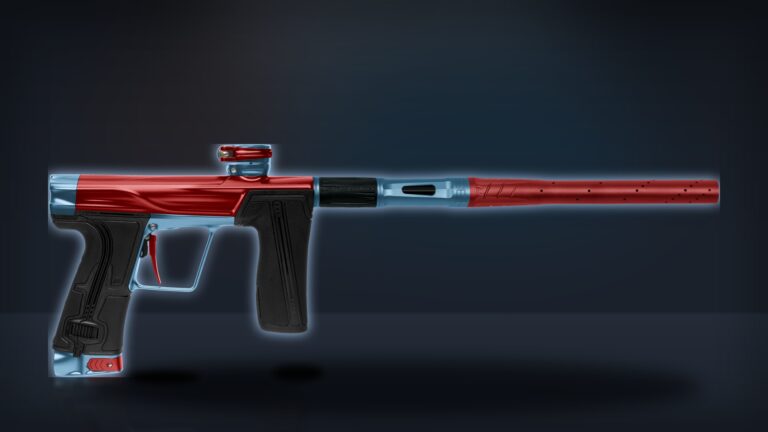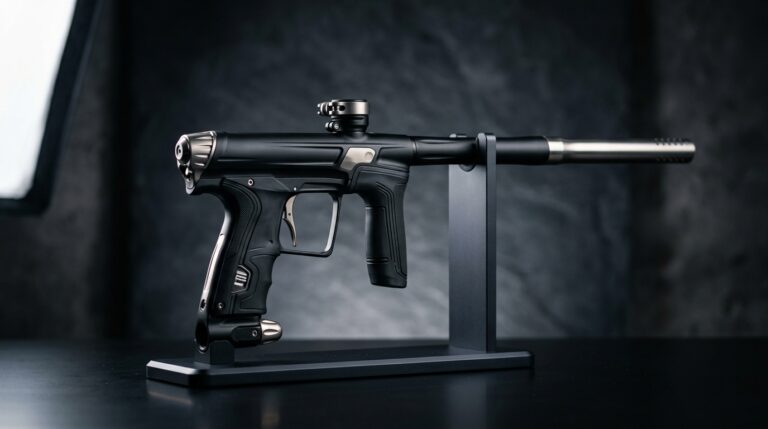
If you are searching for an affordable entry into electronic tournament firepower without spending $400+ on a high-end speedball marker, the Azodin Blitz 4 and the Spyder Fenix represent the two most prominent contenders in the electronic stacked-tube blowback (STBB) category.
Both markers combine a fast-cycling electronic trigger frame, break-beam anti-chop eyes, and tournament-legal 15 BPS ramping modes with high-pressure poppet valves that can run on either Compressed Air (HPA) or CO2. However, beneath the surface, their engineering diverges significantly in barrel thread compatibility, air efficiency, battery management, and feedneck design.
We put the Azodin Blitz 4 and Spyder Fenix head-to-head across multiple field trials, chronographed their shot consistency, measured air consumption, and stress-tested their electronics under rapid ramping strings to determine which marker delivers the best performance for your money.
Quick Verdict: Which Electronic Marker Wins?
The Azodin Blitz 4 wins overall for long-term usability and upgradeability primarily due to its industry-standard Autococker barrel threads, lighter Feather Striker recoil, and hassle-free 9V battery operation. However, the Spyder Fenix remains an air efficiency champion thanks to its patented EKO Valve (yielding 1,400+ shots per tank) and built-in CAMD color screen, making it a compelling secondary-market purchase if you run a 9.6V rechargeable battery pack.
Best for Modern Upgrades
Autococker threads, Feather Striker, standard 9V power.
Best for Extreme Air Mileage
EKO Valve (1,400+ shots), CAMD screen, clamping feedneck.
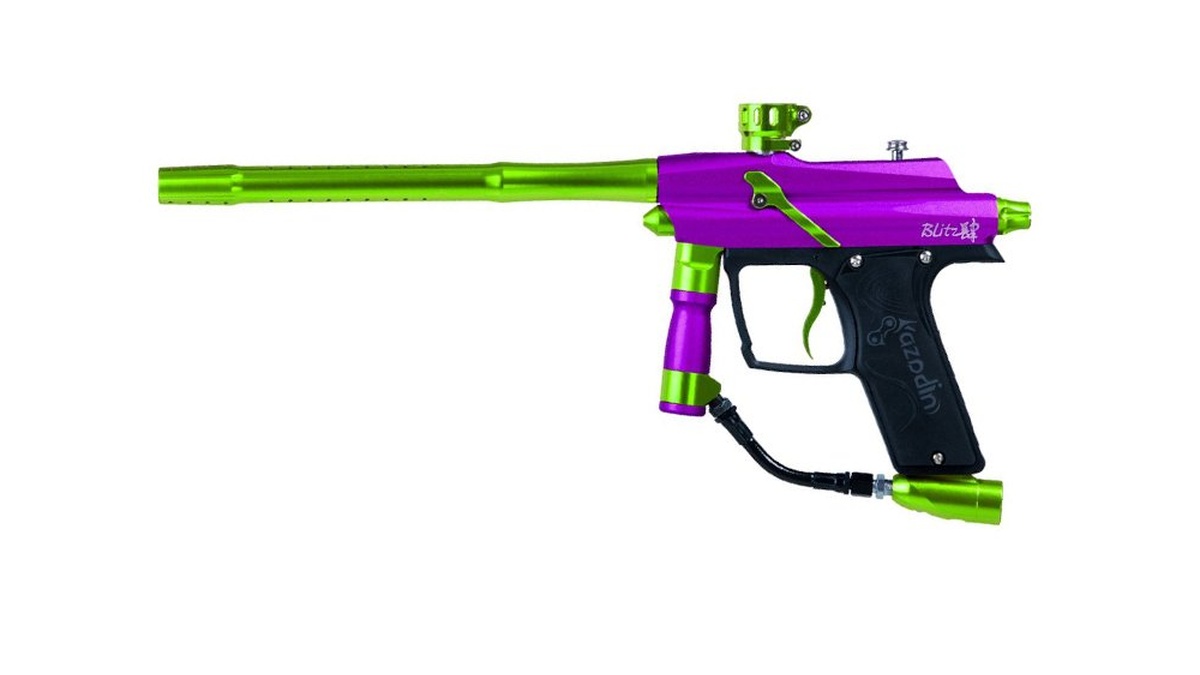
Azodin Blitz 4 vs. Spyder Fenix: Head-to-Head Specifications
While both markers share the stacked-tube blowback layout, their component specifications differ in several critical operational areas:
| Feature / Spec | Azodin Blitz 4 | Spyder Fenix |
|---|---|---|
| Operating Engine | STBB (Feather Striker + Mass Flow Valve) | STBB (EKO Valve System) |
| Barrel Threading | Autococker Threads (Universal) | Spyder Threads (Phasing Out) |
| Circuit Board | Zen 3 Board (Multi-Color LED) | Leap II Board with CAMD Color Screen |
| Firing Modes | Semi, PSP Ramp, Millennium Ramp, Full Auto | Semi, PSP Ramp, Millennium Ramp, 3-Shot Burst |
| Max Cycle Rate | 20 Balls Per Second | 25 Balls Per Second |
| Anti-Chop System | Break-Beam Infrared Eyes | Break-Beam Infrared Eyes |
| Feedneck Type | Screw-Lock Thumb Collar | Lever Clamping Feedneck |
| Power Requirement | Single 9V Alkaline Battery | 9.6V NiMH Rechargeable (or 9V Alkaline) |
| Air Efficiency (68/4500) | ~800–900 Shots | ~1,400+ Shots (EKO Valve) |
| Weight (Unloaded) | 2.15 lbs (975 g) | 2.10 lbs (950 g) |
Detailed Category Breakdown
1. Barrel Threading & Upgrade Ecosystem
This is arguably the most decisive difference between the two markers for modern paintball players.
The Azodin Blitz 4 features industry-standard Autococker threads, allowing instant installation of precision barrel kits.
- Azodin Blitz 4 (Winner): Azodin built the Blitz 4 around Autococker barrel threads—the universal gold standard in modern paintball. You can screw in high-end multi-bore kits (like the DYE UL-I, Freak XL, or Custom Products Advantage) immediately, and those barrels will seamlessly transfer to any future mid-tier or high-end marker you buy.
- Spyder Fenix: Uses proprietary Spyder barrel threads. Because major barrel manufacturers have phased out Spyder-threaded production, finding new aftermarket barrels is increasingly difficult. Upgrading requires hunting for old stock on eBay or using bulky thread adapters that disrupt bore alignment.
2. Air Efficiency & Valve Technology
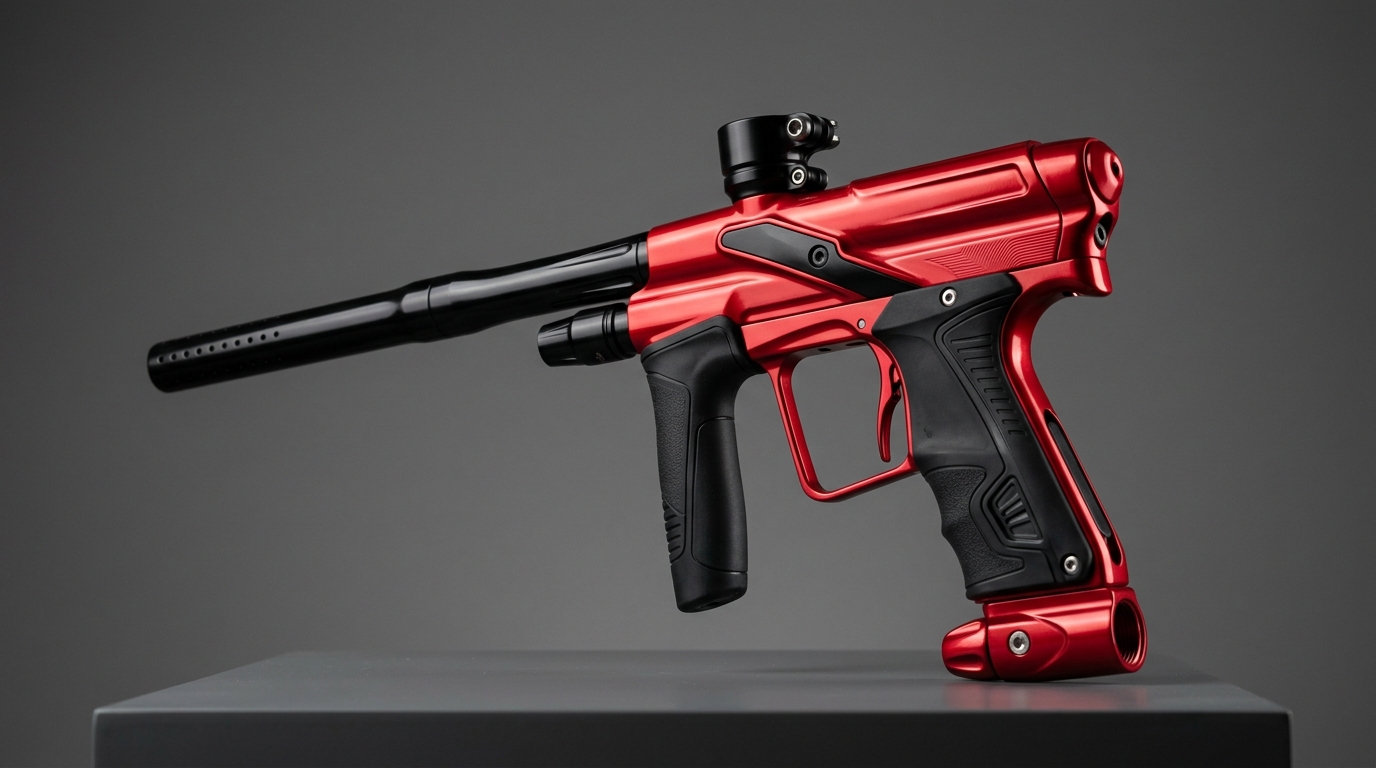
The Spyder Fenix’s EKO Valve recycles exhaust gas to achieve industry-leading air efficiency.
- Spyder Fenix (Winner): Kingman’s patented EKO Valve is a masterpiece of mechanical efficiency. By siphoning exhaust gas to re-cock the striker, it achieves up to 1,400+ shots on a 68/4500 HPA tank or 1,600 shots on a standard 20 oz CO2 tank. You can comfortably play entire scenario points without refilling air.
- Azodin Blitz 4: Utilizes the Mass Flow Valve (MFV) paired with a Feather Striker. While it delivers consistent velocity, air consumption is higher, yielding roughly 800–900 shots on a 68/4500 tank.
3. Electronics, Firing Modes & Display
Both markers feature electronic trigger frames with optical break-beam anti-chop eyes to prevent ball breaks, but their user interfaces take different approaches:
- Azodin Blitz 4: Powered by the Zen 3 Board. It uses an intuitive tri-color LED light inside the grip frame to signal modes, eye status, and battery health. It includes Semi-Auto, PSP Ramp (15 BPS), Millennium Ramp (15 BPS), and Full Auto (15 BPS). Programming is simple, foolproof, and rugged.
- Spyder Fenix: Equipped with the Leap II Board with CAMD (Color Access Mode Display). The full-color screen on the rear of the grip displays your firing mode, exact battery status, and eye readouts in clear text, making mode switching effortless. It is rated up to 25 BPS max cycle speed.
4. Battery Power & Solenoid Reliability
Electronic blowbacks require high peak current pulses to actuate the mechanical sear:
- Azodin Blitz 4 (Winner): Operates flawlessly on standard 9V alkaline batteries (like Duracell Procell or Energizer Industrial). Its circuit handles voltage drop well without skipping cycles.
- Spyder Fenix: The Fenix solenoid clapper is power-hungry. When a standard 9V battery drops below ~8.4V, the solenoid may stutter or fail to release the striker. The Fenix performs best when powered by a dedicated 9.6V NiMH rechargeable battery pack.
5. Recoil, Handling & Chronograph Consistency
Because both markers are open-bolt stacked-tube blowbacks, they have noticeable mechanical recoil compared to low-pressure spool valves like the DYE Rize CZR or Planet Eclipse EMEK.
- Azodin Blitz 4: Incorporates a Feather Striker that is 30% lighter than standard blowback hammers. This noticeably dampens kick and reduces muzzle climb during sustained 15 BPS ramping strings. Chrono consistency averaged ±6 to 8 FPS on compressed air.
- Spyder Fenix: The slightly heavier hammer generates a stronger kick and louder sound signature, though shot consistency remains solid at ±7 to 9 FPS on HPA.
Pros and Cons Comparison
Azodin Blitz 4
Pros:
- Universal Autococker barrel threads.
- Lighter Feather Striker softens kick.
- Reliable on standard 9V alkaline batteries.
- Active factory support and replacement parts.
Cons:
- Lower air efficiency than EKO Valve.
- Thumb-screw feedneck requires manual tightening.
Spyder Fenix
Pros:
- Exceptional EKO Valve air mileage (1,400+ shots).
- Built-in CAMD full-color screen display.
- Factory lever-clamping feedneck.
- Fast 25 BPS max cycle rating.
Cons:
- Dwindling Spyder-thread barrel market.
- Demands 9.6V NiMH battery for peak reliability.
Recommended Gear & Upgrades
1. Azodin Blitz 4 Electronic Paintball Marker
Featuring Autococker threads, Feather Striker, Zen 3 electronic board with 15 BPS tournament ramping, and break-beam eyes.
2. Spyder Fenix Electronic Paintball Marker
Featuring the high-efficiency EKO Valve, Leap II CAMD color screen, break-beam eyes, and clamping feedneck.
3. DYE Rotor LT-R Electronic Loader
Mandatory for both markers to feed 15–20 BPS ramping strings without dry-firing or breach chopping.
Frequently Asked Questions (FAQ)
Can I use an Autococker barrel on a Spyder Fenix?
Not directly. The Spyder Fenix has proprietary metric Spyder barrel threads. You would need a Spyder-to-Autococker barrel thread adapter, which adds extra length and can compromise ball-to-bore alignment.
Can both markers shoot in cold winter weather?
Yes. Because both use mechanical high-pressure poppet valves, they are less prone to bolt stick than low-pressure spool valves in sub-freezing temperatures. However, you should run Compressed Air (HPA) rather than CO2 in the winter to prevent solenoid freeze.
Which marker has a better trigger for rapid walking?
Both markers feature adjustable magnetic return two-finger triggers that are easy to walk. The Spyder Fenix Saber trigger has slightly less resistance out of the box, but the Azodin Blitz 4 trigger can be adjusted just as short with an Allen key.
Final Verdict: Which One Should You Buy?
When choosing between the Azodin Blitz 4 and the Spyder Fenix, the decision comes down to upgrade compatibility vs. raw air efficiency:
- Choose the Azodin Blitz 4 if: You want a modern marker with universal Autococker barrel threads, active manufacturer support, less mechanical kick, and standard 9V battery convenience. It is the smarter long-term investment for new players.
- Choose the Spyder Fenix if: You prioritize maximum air efficiency (EKO Valve) for long games on small air tanks and want a full-color CAMD screen. If you find a clean used Fenix on eBay and run it with a 9.6V rechargeable battery, it remains a formidable budget speedball machine.
For more detailed upgrade guides and marker reviews, check our in-depth Azodin Blitz 4 Upgrades Guide, read our full Spyder Fenix Review and Spyder Fenix Upgrades Guide, or explore our complete roundup of the Best Paintball Guns for Beginners.