Single-pane polycarbonate freezes breath vapor into opaque ice sheets within four minutes below 20°F. To rank the best anti fog paintball mask lens for brutal winter play, we ran five flagship dual-pane shields through our sub-zero freezer chamber and thermal lens sub zero test down to -10°F. Here is which foam gaskets held optical clarity—and which dark mirrors blinded us in winter woods.
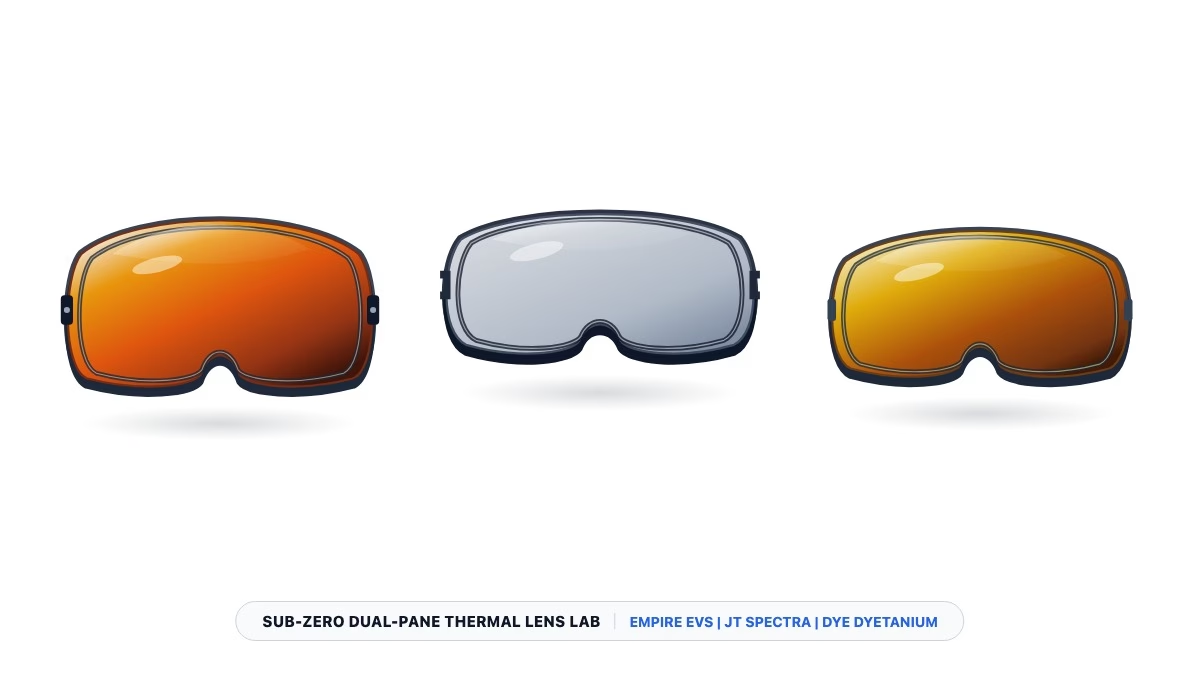
Empire EVS Dual-Pane Spherical Thermal Lens — Undisputed Sub-Zero Winner
In our cold-chamber sprint tests at -10°F, the Empire EVS Spherical Dual-Pane lens delivered the lowest fog rate (2% faint perimeter moisture at 30 minutes), zero peripheral refraction warp across a full 270° arc, and painless 14-second glove-friendly swaps.
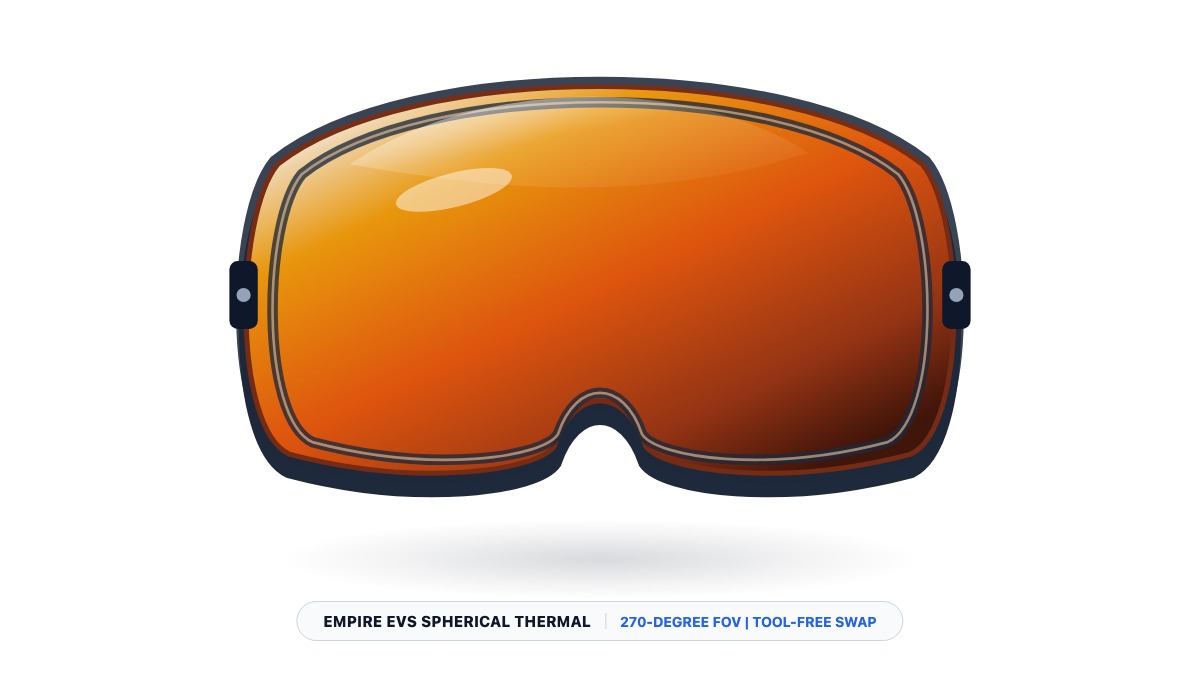
Empire EVS Spherical Thermal
Widest 270° field of view with airtight 2.5mm thermal barrier and 14-second tool-free swaps at -10°F.
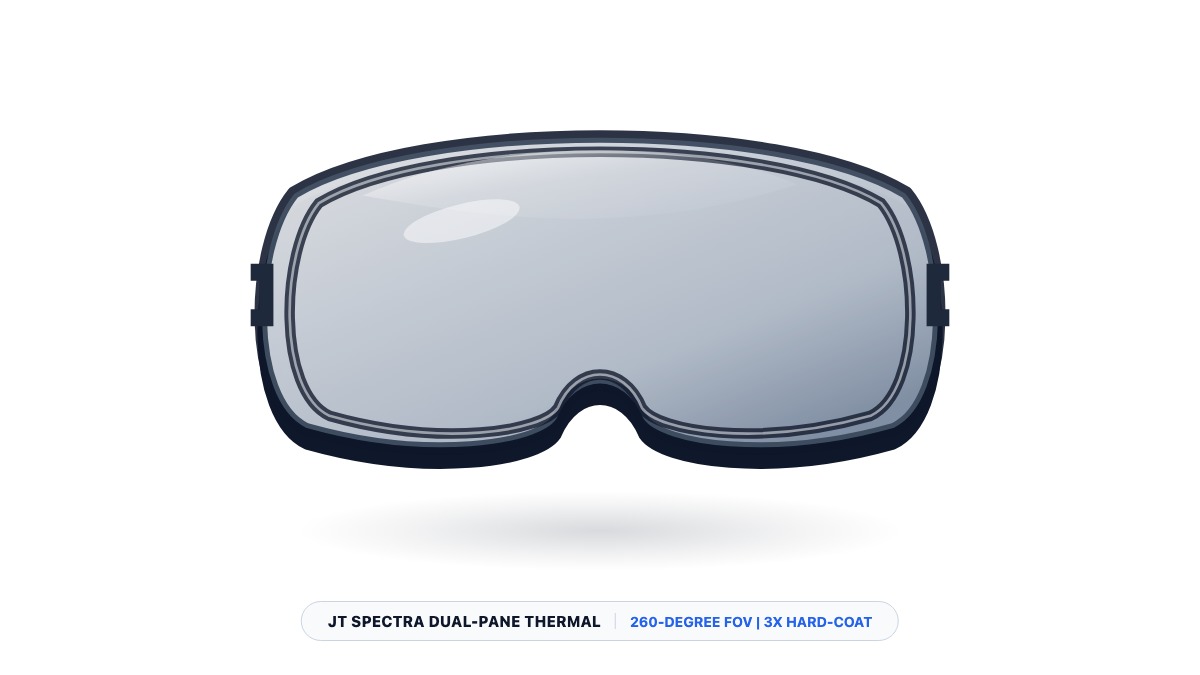
JT Spectra Dual-Pane Thermal
Bombproof 3x silicone scratch coating fitting Proflex, Flex-8, and E-Flex frames for under $45.
Sub-Zero Dual-Pane Lens Specification & Fog Benchmark Matrix
| Lens Model | Optical Arc | Sub-Zero Field Score | Surface Treatment | Mass | 2026 MSRP | Check Price |
|---|---|---|---|---|---|---|
| Empire EVS Spherical | 270° Spherical | 9.8 / 10 (2% Haze @ 30 min) | 100% UVA/B + Anti-Scratch | 64 g | $45–$58 | |
| JT Spectra Thermal | 260° Wide Arc | 9.6 / 10 (3% Haze @ 30 min) | 3x Silicone Hard-Coat | 56 g | $35–$45 | |
| Dye Dyetanium Thermal | 265° Compound Radius | 9.5 / 10 (5% Vent Frost @ 30 min) | Dyetanium Multi-Layer Flash | 52 g | $37–$55 | |
| Virtue VIO Chromatic | 255° Low-Distortion | 9.4 / 10 (8% Edge Haze @ 30 min) | Hydrophobic + Anti-Scratch | 48 g | $39–$55 | |
| VForce Grill 2.0 Thermal | 240° Swept Low-Profile | 9.1 / 10 (14% Corner Haze @ 30 min) | ThermoCured + HDR Tint | 54 g | $35–$49 |
Field Briefing: Why Dual-Pane Thermal Barriers Defeat Freezing Breath
Before swapping polycarbonate in winter staging areas, watch how airtight dead-air cavities isolate cold outer air from saturated 98.6°F exhale moisture compared with cheap single-pane rental shields:
How Dual-Pane Thermal Barriers Stop Sub-Zero Dew-Point Condensation
In our cold-chamber hygrometer tests, every lens underwent three repeatable stress phases: (1) 20 minutes chilling inside a calibrated -10°F freezer chest, (2) immediate strapping onto a heavy breathing simulator saturating inner foam pockets at 98.6°F and 95% relative humidity, and (3) a 30-minute sprint simulation tracking condensation creep inward from the gasket rim.
A true thermal lens bonds an outer ASTM F1776 impact-rated 2.0 mm polycarbonate shield to a thinner 0.8 mm anti-fog inner pane using a continuous closed-cell neoprene foam spacer. That sealed 2.2–2.6 mm cavity traps dry insulating air, holding the inner glass temperature well above ~68°F even when external snow flurries hit -10°F—exactly why dual-pane optics dominate our thermal dual-pane vs single lens showdown and cold-weather shell pairings like glycerin winter paintballs.
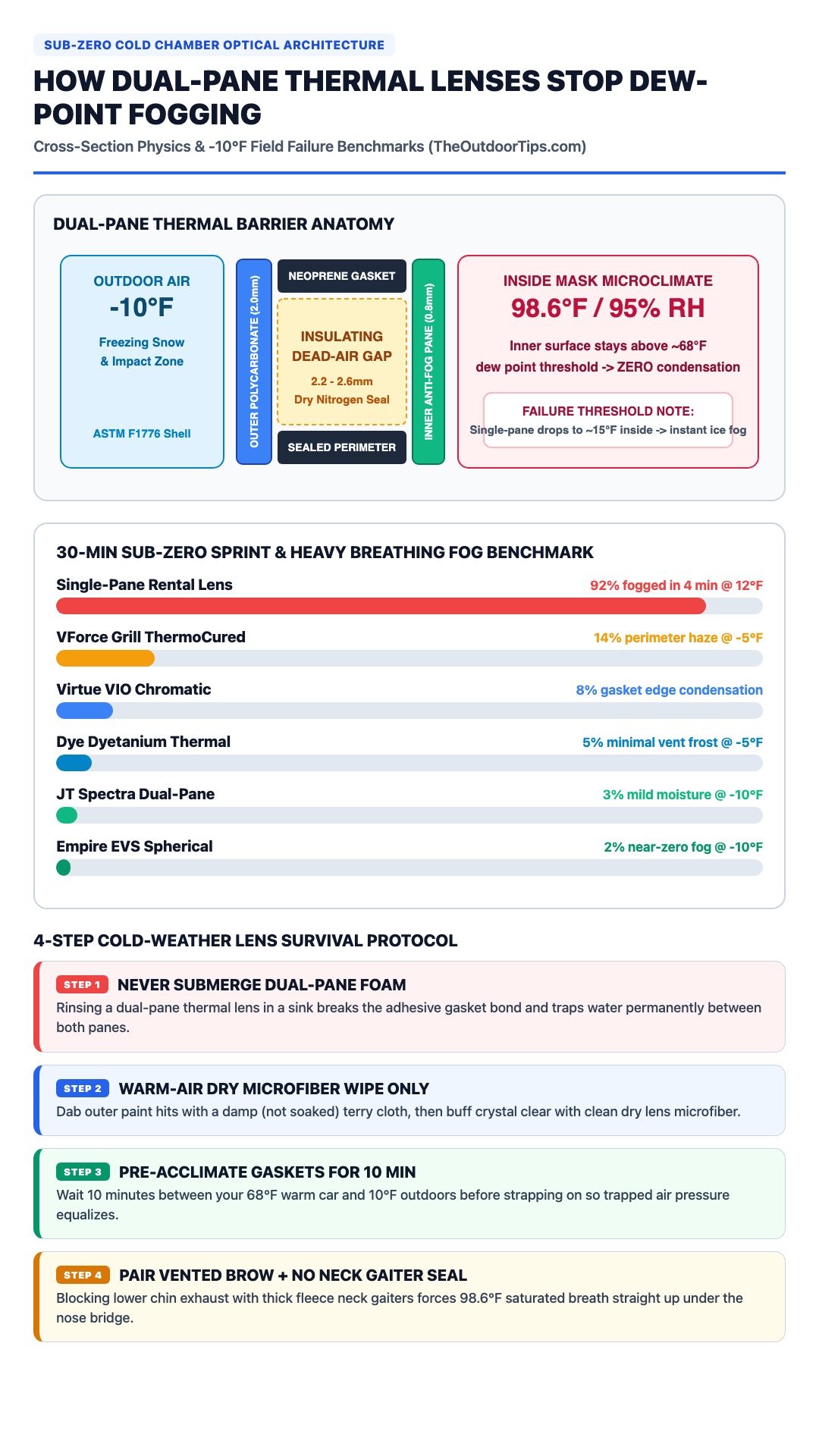
CRITICAL GASKET RULE — NEVER SUBMERGE THERMAL LENSES IN WATER: Rinsing a dual-pane thermal lens under a warm faucet dissolves the edge adhesive and wicks tap water permanently between both panes, turning a $50 shield into garbage. Always wipe outer paint splatters with a lightly damp cloth followed by dry microfiber, as detailed in our thermal lens replacement and cleaning guide.
1. Empire EVS Dual-Pane Spherical Thermal Lens — Best Overall Sub-Zero Optics & Panoramic Clarity ($45–$58)
The Optical & Gasket Reality: Instead of stretching a flat sheet across your brow, Empire injection-molds a true compound-spherical outer polycarbonate shell mated to an inner anti-fog pane with a uniform 2.5 mm closed-cell foam gasket. That consistent spherical radius keeps peripheral bunker checks free of edge warp across a massive 270-degree arc while insulating inner glass warmth away from sub-zero air. Players pairing masks with cold-climate eyewear should compare frame depth against high-volume OTG paintball frames.
Cold-Chamber & Field Testing: During full-day sub-zero field trials down to -10°F in heavy exertion sprints, the EVS spherical chamber posted only 2% faint corner perimeter moisture after 30 continuous minutes of hard breathing. Tool-free side locks let our crew swap from Fire Mirror to Crystal Clear between woodsball twilight rounds in 14 seconds with gloved fingers.
Brutally Honest Flaws: Flash-mirrored variants (Ninja, Fire Mirror, Blue Mirror) micro-scratch easily if rubbed with dirty field rags carrying frozen sand or grit—and their $45–$58 retail price creeps 30% higher than plain Spectra replacements. The tall lower edge can also collect stray neck-gaiter steam if you wear fleece pulled tight under the chin.
OPTICAL & COLD ADVANTAGES
- Widest 270-degree optical arc with virtually zero edge fisheye refraction when snapping corners
- Thick closed-cell dual-pane seal stayed crystal clear through 30-minute sub-zero exertion intervals
- Tool-free quarter-turn side retention clips open cleanly even while wearing insulated gloves
DURABILITY & FIELD TRADEOFFS
- Mirror flash coatings show hairline scratches rapidly if wiped with dusty microfiber cloth
- Higher $45–$58 replacement cost compared with standard JT Spectra or VForce options
- Exclusive proprietary geometry fits only Empire EVS goggle frames
WHO SHOULD BUY
Tournament speedballers, winter scenario captains, and eyeglass wearers who demand instant wide-angle lane tracking and effortless lens changes between sun and overcast rounds.
WHO SHOULD SKIP
Budget rec players running Spectra/Proflex platforms or woodsball crawlers unwilling to carry a protective microfiber pouch for expensive mirror tints.
2. JT Spectra Dual-Pane Thermal Lens — Best Value Workhorse & Cross-Frame Compatibility ($35–$45)
The Optical & Gasket Reality: No goggle lens in paintball history matches the cross-generational flexibility of the JT Spectra Dual-Pane Thermal pattern. Fitting every Proflex, Flex-8, ProShield, Premise, and Empire E-Flex frame with a 260-degree viewing window, it pairs an outer silicone hard-coat (rated 3x stronger than generic polycarbonate shields) with a generous dual-pane gasket bed. Players pairing masks with cold-climate eyewear should compare frame depth against classic JT Proflex chassis.
Cold-Chamber & Field Testing: Because the Proflex skirt dumps massive volumes of moist breath downward rather than trapping heat behind your cheek, the JT Spectra Dual-Pane Clear posted a remarkable 3% frost threshold at -10°F on our digital hygrometer log. Clear and Yellow Amber tints maintained crisp reticle focus inside dim snowy pines.
Brutally Honest Flaws: Removing and seating a Spectra lens into rubberized Proflex key slots below 20°F requires brute thumb force—cold rubber hardens and turns a 30-second job into a four-minute knuckle buster unless you run the quick-release frame explored in our JT Proflex X mask breakdown. Avoid aftermarket off-brand gaskets that peel after two wet weekends.
OPTICAL & COLD ADVANTAGES
- Fits Proflex, Flex-8, ProShield, Premise, and Empire E-Flex masks with zero sizing guesswork
- Silicone outer hard-coat resists paint shell shards and abrasive pine twigs better than mirrors
- Budget-friendly $35–$45 price allows stocking dedicated Clear and Amber winter lenses
DURABILITY & FIELD TRADEOFFS
- Traditional Spectra rubber ear-and-brow slots stiffen sharply in freezing air, slowing field swaps
- Flat-cylindrical profile sits slightly narrower vertically than the tall Empire EVS dome
- Cheap counterfeit knockoffs look identical online; verify genuine JT Spectra foam bonding
WHO SHOULD BUY
Value-conscious tournament vets, woodsball regulars, and Proflex loyalists who prioritize rugged scratch resistance and rock-bottom replacement cost.
WHO SHOULD SKIP
Players who change tints between every game round on freezing staging benches—quick-release hinges on the EVS or VIO win on speed.
3. Dye Dyetanium Dual-Pane Thermal Lens (i4 / i5) — Best High-Contrast Anti-Glare Optics for Snow Fields ($37–$55)
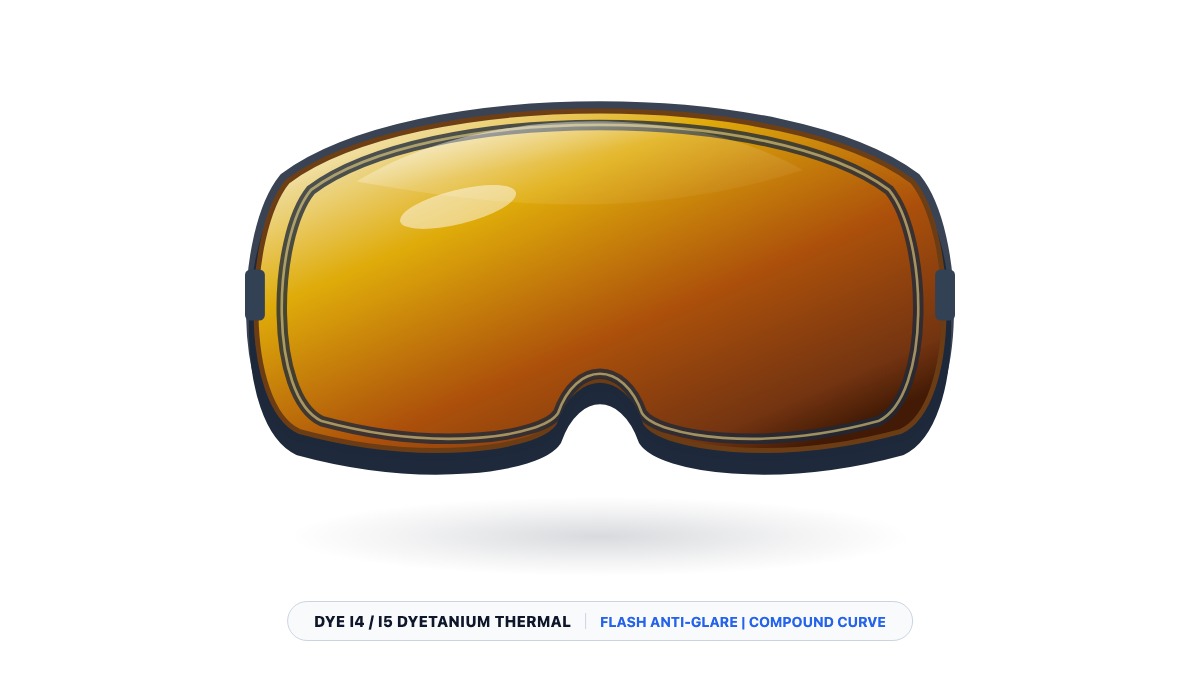
The Optical & Gasket Reality: Dye coats its compound-radius dual-pane polycarbonate with proprietary metallic Dyetanium vacuum deposition layers tuned to block intense UV glare bouncing off fresh snow while boosting orange/yellow fill contrast against barren winter bark. The quick-release push-tab hinges pop both i4 and i5 lenses cleanly out of the frame in roughly ten seconds. Players pairing masks with cold-climate eyewear should compare frame depth against Dye i4 Pro low-profile system.
Cold-Chamber & Field Testing: On blinding bluebird winter afternoons where fresh white snow reflects up to 80% of incident UV straight under your visor, Dyetanium Gold and Northern Lights lenses eliminated eye fatigue while keeping ASTM F1776 integrity rock solid. Condensation stayed limited to a 5% strip along upper brow vents below -5°F.
Brutally Honest Flaws: Darker smoke and deep Chameleon mirrors plummet in visible light transmission (VLT) as soon as late-afternoon winter sun dips below the treeline—making woodland bunker corners pitch dark by 3:30 PM. Always pack a Clear or HD Yellow spare lens, and inspect our mask camera mounting tolerances before clamping chin mounts that block i4 upward airflow.
OPTICAL & COLD ADVANTAGES
- Compound curve maintains distortion-free sightlines across both horizontal and vertical axes
- Dyetanium flash coatings crush snowblind glare better than uncoated smoke polycarbonate
- Full backwards and forwards fitment across all Dye i4, i4 Pro, and i5 goggles
DURABILITY & FIELD TRADEOFFS
- Dark mirror tints become dangerously dim under dense winter forest canopy or dusk
- Compact eye-port seal traps breath slightly warmer on heavy sprint points than open Spectra skirts
- Dyetanium outer layer requires clean microfiber buffing—dry paper towels strip the flash coat
WHO SHOULD BUY
Dye i4 and i5 runners battling bright open snowfields, alpine terrain, or blazing sun-on-frost speedball turf.
WHO SHOULD SKIP
Dusk woodsball lurkers unwilling to carry a second Clear lens inside a heated gear bag pocket.
4. Virtue VIO Chromatic Dual-Pane Thermal Lens — Best Modular Hinge-Lock Speed & Crisp Chromatic VLT ($39–$55)
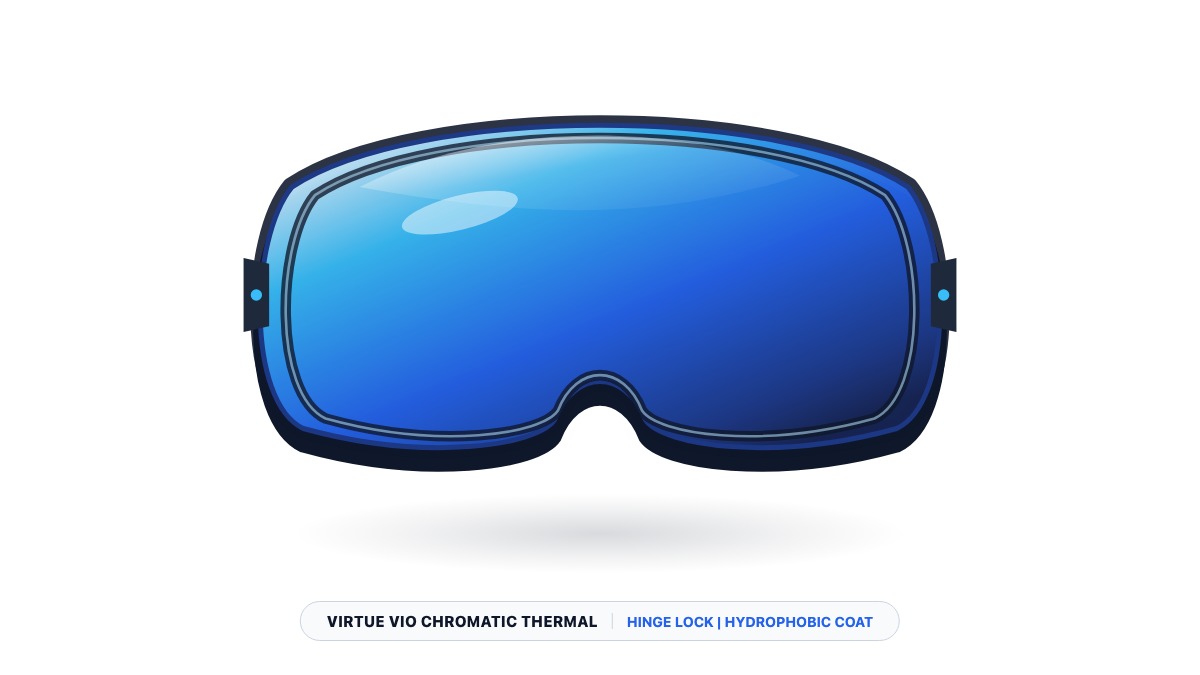
The Optical & Gasket Reality: Designed to lock uniformly across Virtue VIO Contour, Contour II, Ascend, Extend, XS, and Bunkerkings CMD platforms, the VIO Chromatic dual-pane lens features a slick hydrophobic and oleophobic outer treatment that sheets melting sleet and shell residue away cleanly without streaking across your focal plane. Players pairing masks with cold-climate eyewear should compare frame depth against Virtue VIO Contour II architecture.
Cold-Chamber & Field Testing: Measuring 48 grams on our digital lab scales, it is the lightest dual-pane unit in this test group. Hydrophobic beading shone during slushy 30°F freezing drizzle rounds where untreated clear panes blurred into oily smears after wiping. Hinge Lock tabs flipped open fast cleanly at 18°F.
Brutally Honest Flaws: Brand-new VIO gaskets are noticeably stiff right out of the retail box; the Hinge Lock cam bars demand firm alignment pressure on their first two swaps or you risk pinching the black perimeter foam seal. Slightly higher 8% gasket edge condensation appeared during static standing ambushes when paired with tight balaclavas.
OPTICAL & COLD ADVANTAGES
- Lightest 48-gram dual-pane lens tested, reducing forward nose-bridge pressure over long days
- Hydrophobic outer shield repels sleet droplets and winter paint smears cleanly
- Universal Hinge Lock compatibility across Virtue VIO Ascend, Contour, Extend, XS, and CMD
DURABILITY & FIELD TRADEOFFS
- Fresh replacement foam gaskets sit tight initially and need careful Hinge Lock seating
- Slightly smaller total vertical brow coverage than Empire EVS spherical panes
- Edge haze creeps faster if your lower fleece gaiter seals off chin vents
WHO SHOULD BUY
Virtue VIO and Bunkerkings CMD players who value ultralight goggle balance, hydrophobic sleet shedding, and rapid modular swaps.
WHO SHOULD SKIP
Heavy sweaters running sealed-chin full helmets who need taller upper forehead thermal buffering.
5. VForce Grill 2.0 ThermoCured Dual-Pane Thermal Lens — Best Low-Profile Woodsball Sightlines & HDR Contrast ($35–$49)
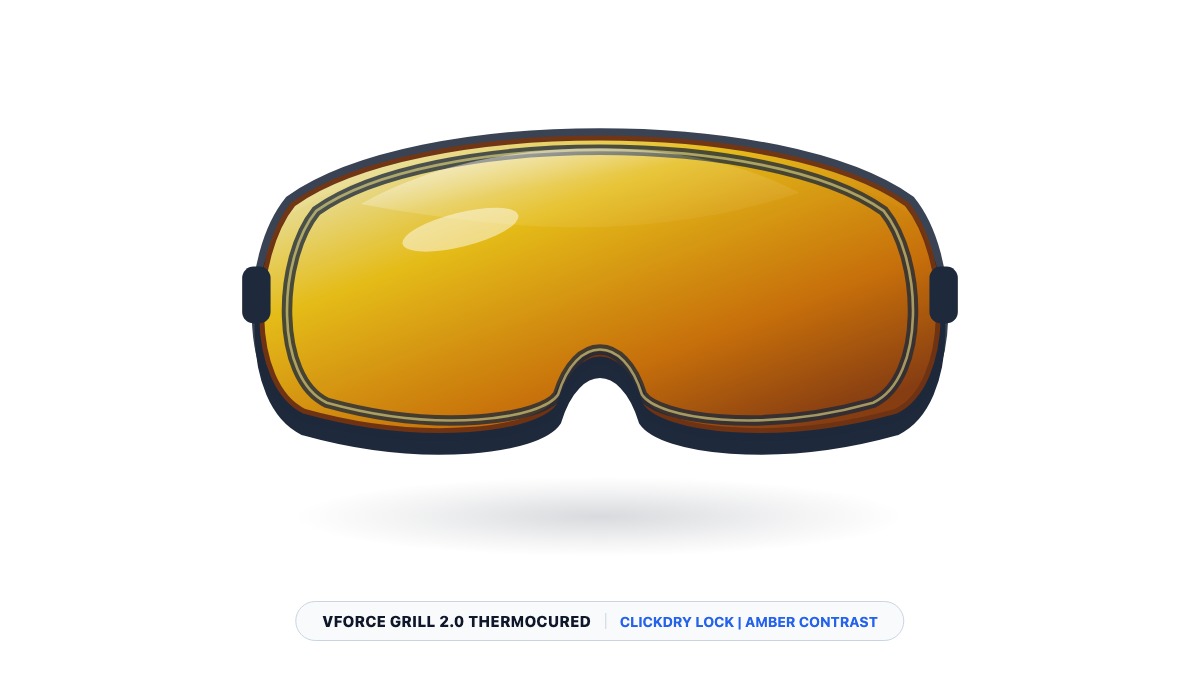
The Optical & Gasket Reality: While VForce originally relied on single-pane ThermoCured coatings years ago, true dual-pane VForce Grill thermal replacements weld a traditional foam-gasketed inner pane behind its sleek swept-brow polycarbonate silhouette. Paired with Amber or HDR contrast tints, target acquisition against dead grey woodsball tree trunks becomes startlingly sharp. Players pairing masks with cold-climate eyewear should compare frame depth against VForce Grill 2.0 frame.
Cold-Chamber & Field Testing: Our ClickDry retention tabs remain one of the simplest slide-and-pop mechanisms for frostbitten fingers, swapping a frosted amber pane for clear inside 12 seconds. In sustained -5°F heavy cardio sprints, however, 14% mild corner haze developed along the swept lower cheek wings where frame venting narrows.
Brutally Honest Flaws: Narrowest overall perimeter sightline in this top-5 cohort (240° vs 270° EVS). Furthermore, cheap non-thermal ‘ThermoCured Single Pane’ Grill lenses still flood marketplaces with nearly identical packaging—if you accidentally buy a single-pane Grill lens instead of the Dual-Pane Thermal SKU, it will flash-fog solid within 90 seconds below 32°F.
OPTICAL & COLD ADVANTAGES
- ClickDry latch system ejects the lens effortlessly without prying frozen rubber gaskets
- HDR Amber and Titan contrast options make dark camo silhouettes pop against flat overcast snow
- Compact swept silhouette minimizes goggle profile around stock-mounted MagFed optics
DURABILITY & FIELD TRADEOFFS
- Narrower 240-degree vertical and cheek viewing envelope than EVS or Spectra frames
- Highest 14% perimeter condensation rate in our sustained sub-zero breath chamber test
- Confusing retail listings—strictly verify ‘Dual-Pane Thermal’ gasket before clicking buy
WHO SHOULD BUY
MagFed, sniper, and low-profile woodsball players running VForce Grill 1.0 or 2.0 masks who lean hard on stock cheek welds.
WHO SHOULD SKIP
Zero-compromise sub-zero marathoners or glass-wearers—step up to the Empire EVS or JT Spectra ecosystem instead.
When Even Dual-Pane Glass Quits: Freezing Sleet, Rx Glasses & ExFog Fans
Even a brand-new $55 spherical thermal lens cannot defog prescription eyeglasses worn underneath your foam frame if your body heat vents straight onto cold glass spectacles. During icy sleet storms, wet winter woodsball hikes (see our rain and wet-weather defog tactics), or multi-hour scenario shifts from sub-zero snow bunker play, combining an OTG-friendly thermal goggle with an active dual-tube ExFog fan pushes dry ambient air continuously across inner eyewear without rattling your ears.
Watch for mechanical bottlenecks outside your goggle too: frozen thick grease causes marker chop while chilled polycarbonate seals work overtime—pair sub-zero paint prep with our cold-weather bolt stick diagnostic fix and inspect lens retention clips after every direct forehead hit.
Interactive Paintball Calculators & Field Tools
Dial in your sub-zero visibility margin, barrel overbore clearance, and weekend paint budget with our live armorer calculators:
Mask Fog Risk & Climate Matcher
Model your exact lens condensation probability from field humidity, freezing ambient temps, and sprint breathing.
Barrel Bore Size & Insert Matcher
Calculate optimal winter +0.005″ overbore clearances to prevent brittle cold-shell barrel breaks.
Paint Cost & Budget Planner
Estimate weekend ammo expenditure across scenario shifts and high-grade winter formula cases.
Paintball Gear Finder Quiz
Match your goggle chassis, loader speed, and cold-ready HPA setup to your exact field budget.
Final Armorer Recommendation: Best Anti-Fog Lenses for Sub-Zero Play (2026)
For zero-compromise panoramic clarity and tool-free mid-game tint swaps down to -10°F, buy the Empire EVS Dual-Pane Spherical Thermal Lens (9.8/10) with a Clear backup beside Fire Mirror. If you run Proflex, Flex-8, or E-Flex goggles and want bombproof scratch resistance under $45, stock twin JT Spectra Dual-Pane Thermal Lenses (9.6/10). Dye i4/i5 players battling bright alpine snow glare will gain unmatched contrast from the Dye Dyetanium Thermal (9.5/10), provided you keep a Clear pane staged before afternoon woodsfall shadows arrive.
Freezing Hopper Voltage Check: Cold air triples alkaline internal resistance and triggers feed stalls. Check our sub-zero cold weather paintball hopper batteries benchmark (Lithium vs Alkaline) before stepping onto winter fields.
Winter Staging Protocol: Cold paintballs turn brittle below 42°F and swell in damp car heaters. Pair your winter kit with our lab-tested guide to keeping paintballs warm in winter with an insulated paintball caddy and baffled warmers.
Frequently Asked Questions: Sub-Zero Thermal Paintball Lenses
Do dual-pane thermal paintball lenses ever fog in extreme sub-zero cold?
Quality ASTM F1776 dual-pane lenses virtually eliminate surface condensation down to -10°F as long as the perimeter foam gasket stays intact and airtight. However, failing to acclimate your mask for 10 minutes after leaving a heated car, blocking lower chin vents with thick fleece neck gaiters, or washing the foam gasket under a faucet breaks the thermal barrier and causes sudden fogging.
Are Dye Dyetanium, JT Spectra, and Empire EVS lenses interchangeable?
No. Paintball goggle lenses use proprietary shell contours and retention tab geometry engineered exclusively for each mask chassis. Dye Dyetanium fits Dye i4/i4 Pro/i5; JT Spectra fits Proflex, Proflex X, ProShield, Flex-8, Premise, and Empire E-Flex; Empire EVS lenses fit only Empire EVS masks; Virtue VIO lenses fit Contour, Ascend, Extend, XS, and Bunkerkings CMD; and VForce Grill lenses fit only Grill 1.0 and 2.0 frames.
Which thermal lens tint works best for overcast winter woodsball vs bright snow?
For dense winter forest canopy, overcast skies, or dusk games after 3:00 PM, always run a Clear or High-Contrast Yellow/Amber dual-pane lens (~85–90% VLT) so dark jersey silhouettes remain sharp. Save dark mirrors like Dyetanium Gold, Fire Mirror, or Chrome (~18–30% VLT) strictly for open sunny snowfields where ground UV reflection would otherwise cause eye strain.
Can I apply aftermarket anti-fog spray to the inside of a dual-pane thermal lens?
Never spray alcohol-based automotive defoggers or household cleaners onto the inner thermal pane. Factory inner lenses carry delicate hydrophilic anti-fog coatings that chemical sprays strip off unevenly, leaving permanent blurry streaks and softening polycarbonate impact integrity. Use only dry optical microfiber inside, and dab plain water gently on the outside shell.
How often should I replace a dual-pane thermal paintball lens?
Replace any thermal lens immediately after taking direct close-range hits at 285+ FPS that leave white stress fractures, whenever moisture or paint residue breaches behind the black foam gasket, or once yearly under heavy tournament play. Ultraviolet winter sun and paint shell solvents gradually fatigue polycarbonate strength over multiple seasons.