NXL Regulation • Front Wire Protocol
Rapid Field Diagnostic: Speedball Snake Bunker Strategy
Excelling as a dedicated speedball snake player requires mastering aggressive breakout sprint timing, sub-18-inch belly-seal crawls, and lethal cross-field shooting angles. In competitive tournament play, the snake wire represents the most influential attacking lane on the grid. Over 80% of snake eliminations occur not during close-quarters bunker duels, but during the initial 3.2-second breakout dive when players fail to read opposing back-center lane streams or over-expose their loaders above the inflatable knuckle seam.
In our tournament clinics and competitive scrimmages, coaches recognize that a disciplined front wire attacker dictates match tempo. When an aggressive speedball snake player successfully breaches Snake 1 and bumps past the 50-yard line, the opposing defense collapses into reactive disarray. However, navigating horizontal beams while maintaining weapon stability under incoming 300 FPS fire demands rigorous physical conditioning, precise sliding form, and situational tactical awareness.
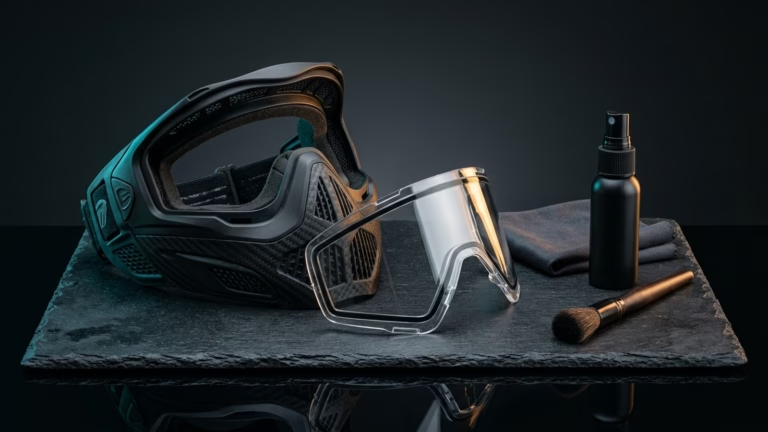
Whether you compete in regional divisional circuits or aspire to pro-level speedball, mastering horizontal bunker warfare is an essential competitive milestone. If you are also fine-tuning your marker’s pneumatic response for high-speed wire duels, cross-reference our diagnostic walkthroughs on how to install aftermarket trigger on Planet Eclipse, check our guide on Planet Eclipse POPS ASA service, and review our armorer protocol for how to change paintball lens assemblies to guarantee crystal-clear field vision.
1. Field Geometry: Anatomy of the Speedball Snake Wire
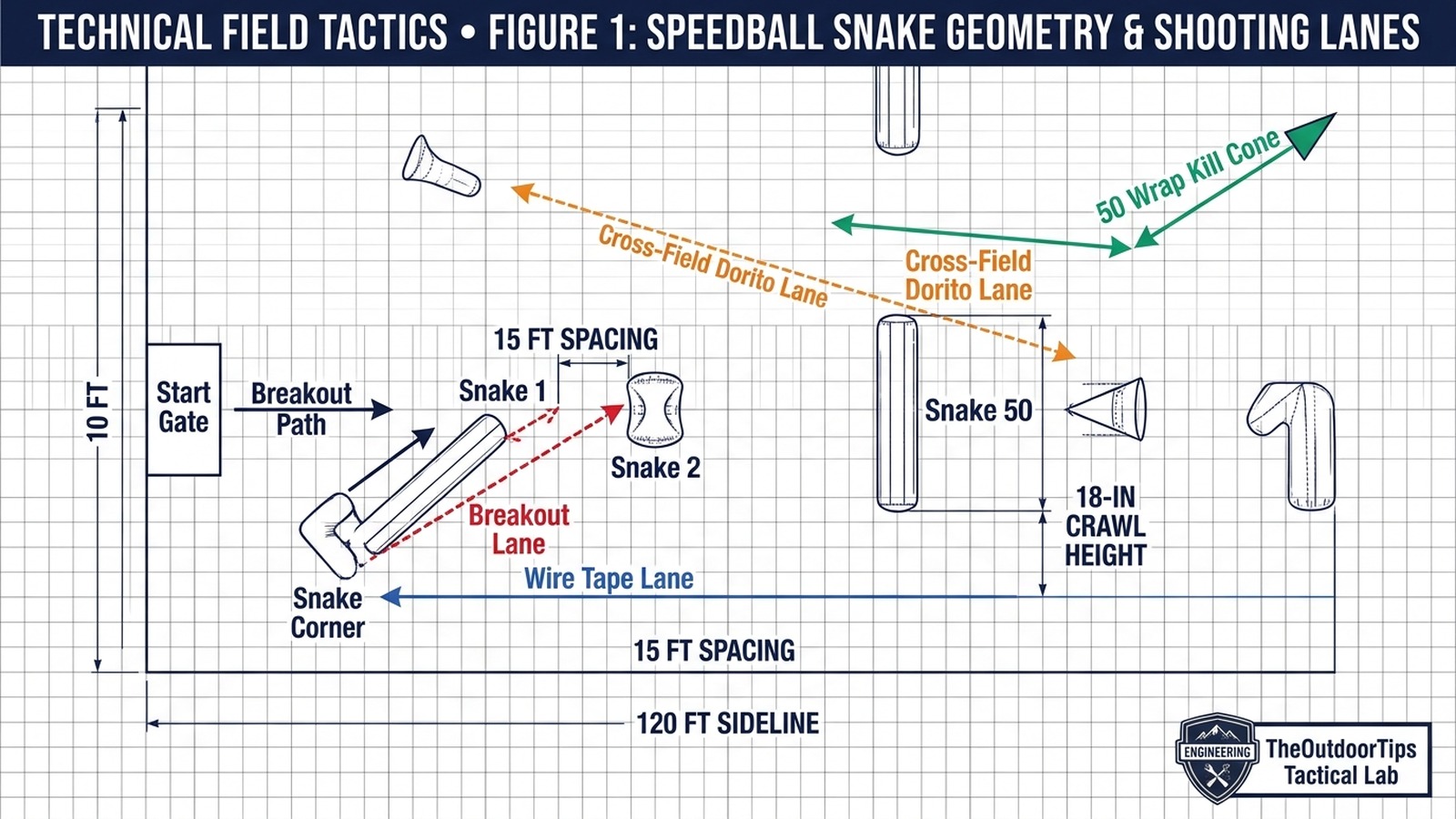
The speedball snake is a continuous or segmented chain of low-profile inflatable horizontal beams running along one entire sideline of an NXL regulation 120-foot by 150-foot tournament field. Unlike vertical upright bunkers such as stand-up cans, giant temples, or tall doritos where players stand or crouch, the snake forces players to operate in an entirely horizontal plane.
An effective speedball snake player must understand the three distinct zones of the snake structure:
- Snake Corner / God Bunker: The defensive staging bunker located behind Snake 1 on the sideline wire. Serves as a delayed breakout refuge when the opposing team dedicates heavy breakout lane suppression.
- Snake 1 (The Entry Beam): The primary horizontal beam on your side of the field. Reaching Snake 1 safely off the break gives your team initial wire control.
- Snake Knuckles / Transition Gaps: The 10-to-15-foot gaps or raised mini-bunkers separating snake segments. Crossing these gaps (bumping) requires explosive low-crawling bursts.
- Snake 50 & Opposing Snake: The mid-field threshold. Crossing the 50-yard line transforms the snake attacker into a lethal flanker who can shoot into the blind backs of opposing players across the entire field.
To understand how marker accuracy and ball detent health affect these high-velocity wire exchanges, review our troubleshooting guide on paintball ball detent replacement and learn how to prevent velocity spikes by studying paintball gun velocity spikes troubleshooting.
2. Tactical Matrix: Common Snake Scenarios & Armorer Adjustments
Operating on the wire presents extreme physical demands and rapid-fire tactical dilemmas. The matrix below outlines primary in-game scenarios encountered by a frontline speedball snake player, diagnosing root physical mechanisms and field adjustments.
| Field Condition / Scenario | Root Cause / Ballistic Mechanism | Tactical Counter & Field Drill | Essential Gear Spec |
|---|---|---|---|
| Eliminated on Breakout Sprint | Opposing back-center lane stream intersects dive entry at 300 FPS (420ms flight time). | Execute delayed breakout into Snake Corner, or lower dive commitment point 5 feet earlier. | Compression Slider Elbow Pads |
| Loader Hit While Low-Crawling | Holding marker vertical raises hopper profile >18 inches above beam apex. | Turn marker 45° horizontal on its side (canting) and rest barrel along bunker seam. | Low-Profile Spire Electronic Loader |
| Opposing Snake Duels Your Wire | Both front wire players establish mirror control down the 120-ft sideline tape. | Snap-shoot off the inside knuckle rather than outside tape; communicate with back player for cross-lane help. | Thermal Dual-Pane Goggle Lens |
| Turf Burn & Joint Bruising | Frictional heat on turf during 15 mph slides damages unprotected skin and joints. | Wear high-density neoprene compression padding with low-friction Kevlar slide caps. | Kevlar Slider Pants & Knee Braces |
| Pods Catching on Bunker Edges | Bulky vertical harness catches on rubber seams and ground turf while crawling. | Switch to a strapless horizontal low-profile pack (4+7 configuration) cinched tight to lumbar spine. | Strapless Elastic Tournament Pack |
When conducting tournament clinics, coaches emphasize that an alert front wire attacker must act as the primary eyes for the entire team. Because you occupy the lowest position on the field, your line of sight underneath horizontal bunkers reveals opposing player feet, pod drops, and secondary movements that back players cannot see.
3. Armorer Workbench: Essential Speedball Snake Gear & Tooling
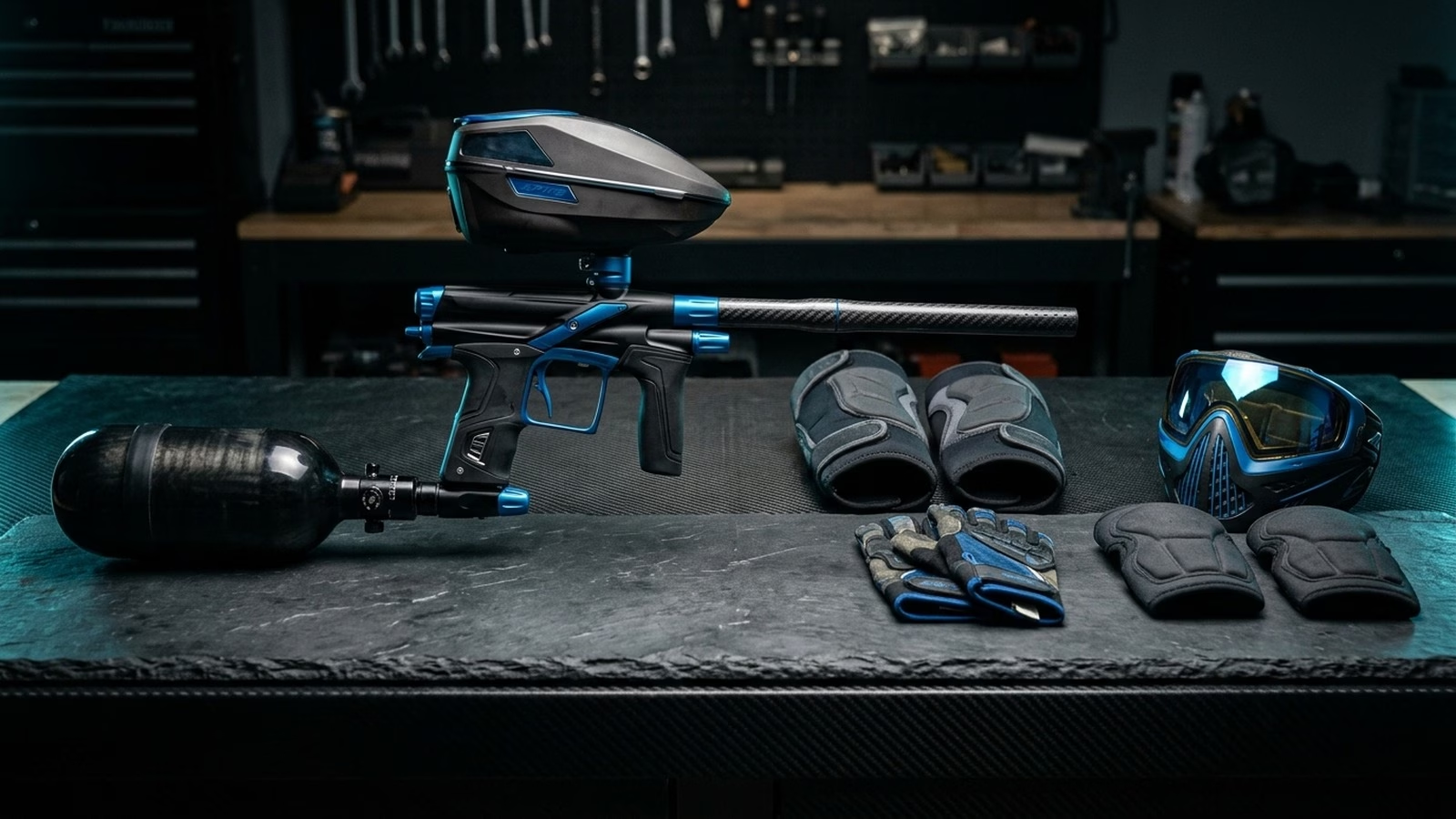
Surviving the physical rigors of aggressive wire play demands purpose-built equipment. A typical speedball snake player slides, dives, and crawls across abrasive artificial turf thousands of times per season. Standard recreational gear will rip within a single weekend; invest in competition-grade protection and streamlined marker setups.
- Compression Slider Elbow Pads: Form-fitting neoprene arm sleeves with Kevlar forearm plating to absorb high-velocity baseball slides into bunker turf.
- Low-Profile Tournament Knee Pads: Anatomically hinged pads that protect kneecaps during repetitive low-crawl transitions without slipping down your shins.
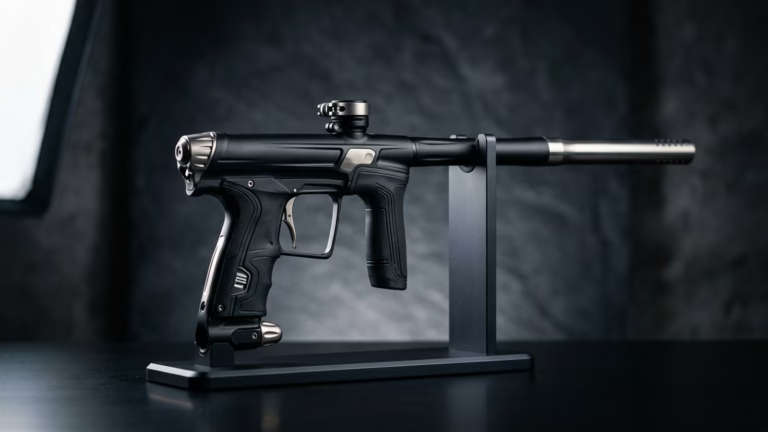
- Ultra-Light Carbon Fiber 68ci/4500 PSI Air Tank: Compact tank configuration allowing you to tuck the bottle tightly into your shoulder pocket without dragging on turf.
- Microfiber Barrel Swabs & Squeegees: Essential for clearing barrel breaks immediately during match breaks without disassembling the marker.
- Tournament Slide Shorts: Compression shorts with integrated padded tailbone, hip, and groin guards to prevent turf burns during aggressive hip-checks.
To ensure your tournament electronic loader feeds flawlessly without jamming during aggressive slides, study our troubleshooting walkthrough on paintball hopper jamming solutions and learn how to optimize regulator recharge rates with our guide on how to service paintball regulator assemblies.
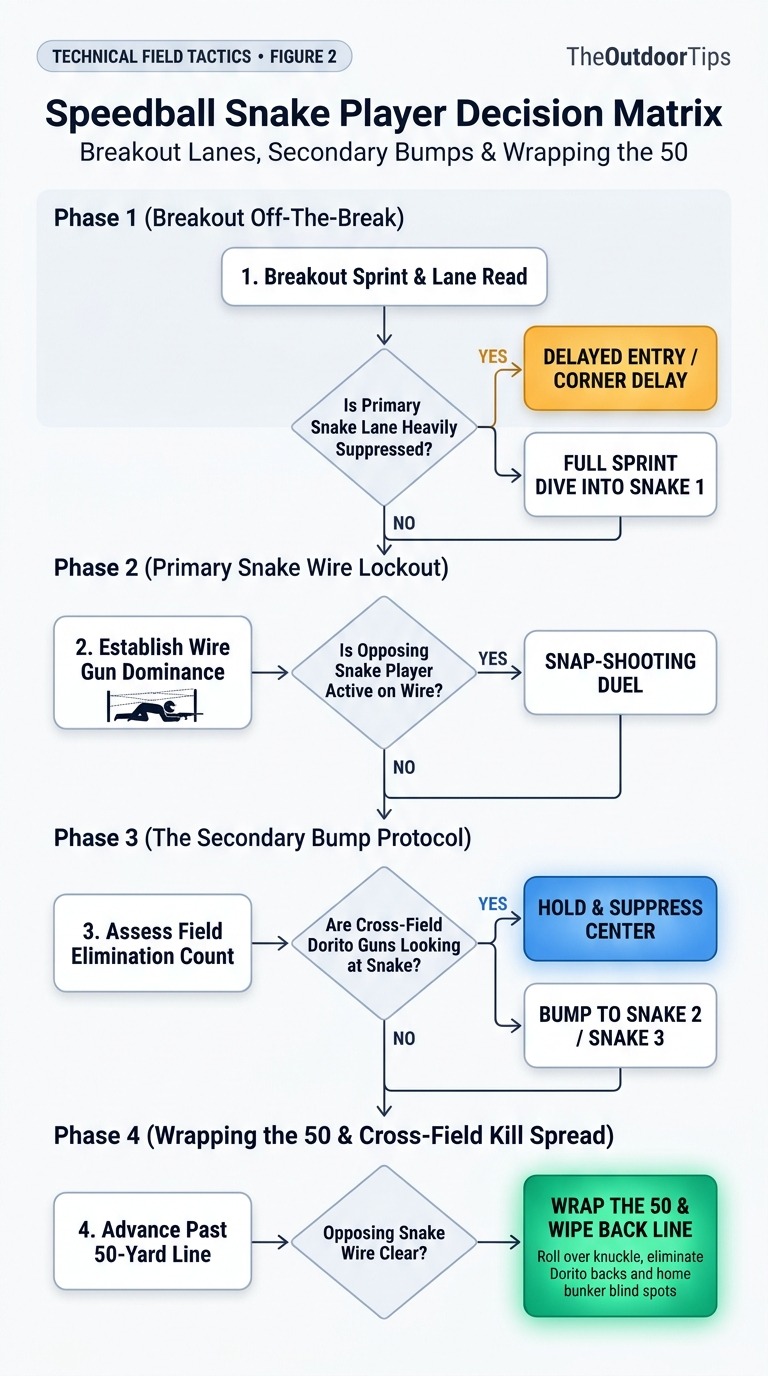
4. Step-by-Step Tactical Protocol: Executing the Snake Run
Mastering the role of a premier speedball snake player requires breaking the point down into calculated tactical phases. Executing this disciplined five-step protocol ensures maximum survival off the break and decisive eliminations downfield.
Phase 1: The Breakout Sprint & Visual Lane Read
At the horn, explode from the start gate with an aggressive forward lean. Accelerate to top sprint speed (16 to 18 mph) in your first three strides. Keep your eyes up, scanning the opposing back line. If the opposing back-center player is already streaming paint across your primary entry lane, do not attempt a hero dive into Snake 1. Cut your sprint hard to the sideline and tuck safely into Snake Corner. If the lane is clear, commit 100% to your dive.
Phase 2: The Superman Slide & Belly-Seal Landing
Initiate your dive approximately 8 to 10 feet before the bunker entrance. Extend your marker forward in your dominant hand, keeping the barrel pointed downfield. Push your chest and hips forward into a controlled baseball slide, contacting the turf with your padded forearms and thighs simultaneously. Flatten your entire body immediately upon landing, sealing your stomach against the turf to keep your profile under 18 inches.
Phase 3: Securing the Tape & Gun-Fighting
Once settled in Snake 1, establish weapon control immediately. Post your barrel down the outside sideline tape to prevent the opposing front player from advancing uncontested. If the opposing player also reached their snake, prepare for a snap-shooting wire duel. Cant your marker 45 degrees so your electronic hopper stays shielded behind the inflatable curvature. Peek tight around the knuckle seam and shoot 3-to-4 ball bursts at their exposed shoulder.
Phase 4: The Secondary Bump across Knuckles
Listen for communication calls from your back-center insert player. When your teammates confirm that the opposing wire gun is suppressed or eliminated, initiate the secondary bump to Snake 2 or Snake 3. Stay in a rapid low crawl, pulling with your elbows and driving forward with your toes. Never stand up or raise your hips during the transition. Re-establish your low-crawl seal immediately upon entering the next beam section.
Phase 5: Wrapping the 50 & Cross-Field Elimination
Once you breach the Snake 50, the match shifts into an endgame rout. Pivot your hips inward and elevate your marker over the inside knuckle. From this forward flank, you possess unobstructed line-of-sight into the open backs of the opposing Dorito players, insert towers, and home bunker defenders. Systematically eliminate opposing players from the back forward, shouting clear kill confirmations to your team.
During high-tempo tournament matches, a front wire runner must also manage air supply efficiently. Because you cannot easily retreat to the pits, verify your tank regulator output before play by reading our diagnostic guide on how to fix paintball tank regulator leak and check tank certification via our how to tell if paintball tank is expired manual.
NXL TOURNAMENT RULES & ASTM F1776 SAFETY COMPLIANCE
Under official NXL Rule 7.2 and ASTM F1776 safety protocols, all speedball players must maintain ASTM-certified eye protection securely fastened with dual goggle straps at all times inside the netting. Markers must be chronographed below 300 FPS with electronic ramping capped at 10.5 balls per second. When diving into inflatable bunkers, avoid leading with your goggle faceplate or barrel tip into turf, which can dislodge lens retention locks or pack dirt into your barrel bore.
5. Video Walkthrough: Pro Speedball Snake Diving & Gun Skills
Watch this masterclass breakdown demonstrating proper baseball slide mechanics, marker positioning, and low-profile crawling technique on tournament turf.
6. Four Fatal Mistakes That Get Front Wire Players Eliminated
Even elite athletes with blistering breakout speed will struggle if they commit basic tactical blunders. In our tournament post-match reviews, we observe four consistent tactical mistakes that undermine a frontline speedball snake player:
Fixating entirely on the opposing snake bunker blinds you to cross-field shots originating from the opposing Dorito side. High-level insert players will lane through the center gaps specifically targeting stationary snake players.
When crawling forward, players instinctively raise their trailing elbow or shoulder above the 18-inch bunker crest. An exposed elbow offers an easy target for cross-field guns. Keep both arms tucked tightly beneath your chest.
Advancing across snake knuckles without confirming that your back player is suppressing the opposing lane is reckless. Always listen for your back player’s confirmation call before committing to a forward crawl.
When leaning over a knuckle to shoot, keeping your marker completely upright exposes the 4-inch profile of your electronic loader. Cant your marker 45 degrees so only the barrel tip and goggle lens breach the bunker seam.
For complete field maintenance and pneumatic reliability, explore our technical armorer manuals on how to rebuild Tippmann cyclone feed, resolve solenoid click failures via how to diagnose solenoid clicks but gun won’t fire, or review our guide on paintball chopping paint troubleshooting.
7. Final Coach Verdict: The True Role of the Front Wire Attacker
Patience Wins Matches, But Aggression Closes Points
Becoming an elite speedball snake player is not merely about sprinting fast off the breakout horn; it is about reading ballistic lanes, preserving your tournament life, and striking at the precise millisecond when the opposing defense blinks. When you enter Snake 1, prioritize low-crawl discipline and wire security over reckless aggression. Let your back-center teammates duel the opposing guns, communicate field positions constantly, and execute forward bumps only when the lane opens.
Once you cross the 50-yard line, deliver decisive cross-field eliminations that win championships. With proper sliding technique, dedicated tournament padding, and disciplined field awareness, you will dominate the snake wire across every competition.
8. Frequently Asked Questions (FAQ)
What is the primary objective of a speedball snake player during a match?
The primary objective of a front wire attacker is to establish dominant control of the sideline wire, push past the 50-yard line, and flank the opposing defense. Once inside opposing territory, the snake attacker shoots into the open blind spots of opposing back and Dorito bunkers, delivering multi-kill sweeps that close out points.
How do you safely slide into the snake without getting eliminated off the break?
To survive the breakout sprint, read the opposing lane fire as you accelerate. If the lane is hot, delay your entry in the Snake Corner bunker. When diving, commit 8 to 10 feet before the bunker, extending your marker forward and sliding on your padded forearms and thighs to keep your vertical profile under 18 inches upon impact with the turf.
What gear is essential for a dedicated front wire player?
Front players require compression slider elbow pads with Kevlar forearms, low-profile hinged knee pads, slide shorts, a compact 68ci/4500 PSI carbon fiber air tank, a low-profile electronic loader, and a strapless horizontal harness that will not snag on bunker seams or turf.
How do you duel an opposing snake player who is holding your tape?
Cant your marker 45 degrees to tuck the electronic loader behind the inflatable knuckle. Snap-shoot off the inside knuckle rather than exposing your head down the outside tape, and coordinate with your back player to establish a cross-field suppression lane that forces the opponent to tuck.
When should a front wire player make the decision to bump past the 50-yard line?
Bump past the 50 only after confirming that the opposing snake player is eliminated or fully suppressed, and your back player has called out that the cross-field Dorito guns are looking elsewhere. Crawl aggressively on elbows and toes, keeping your body flat to the ground until entering the 50 knuckle.
To coordinate simultaneous two-sided field pressure against opposing defenses, study our parallel guide on dorito side paintball aggression and bunker geometry.