NXL Regulation • Dorito Wire Protocol
Rapid Field Diagnostic: Dorito Side Aggression & Bunker Geometry
Dominating the dorito side paintball lane requires an acute mastery of 60-degree pyramid deflection angles, rapid vertical snap-shooting transitions, and explosive sideline lane timing. While snake players rely on horizontal crawl seals, the D-side demands standing elevation advantages, lateral speed, and ruthless gun-fighting down the wire tape. Over 75% of D-side eliminations occur when attackers expose their elbows beyond the sloped triangular apex or mirror-peek at predictable standing eye-levels.
In our competitive coaching clinics and national tournament breakdowns, teams that control the D-side wire dictate the offensive tempo of the entire layout. The triangular pyramid geometry provides natural ballistic deflection against incoming fire, allowing aggressive front attackers to pinch opposing center bunkers while simultaneously establishing a lethal cross-field shooting lane directly into opposing snake knuckles.
Whether you run divisional NXL circuits or compete in local speedball series, understanding dorito side paintball fundamentals transforms your field presence. If you also coordinate dual-wire pressure with your snake specialist, cross-reference our tactical guide on speedball snake player fundamentals, check our armorer breakdown of how to install aftermarket trigger on Planet Eclipse, and review how to change paintball lens assemblies to eliminate optical distortion during high-speed snap-shooting duels.
1. Triangular Ballistics: The Physics of Dorito Bunker Geometry
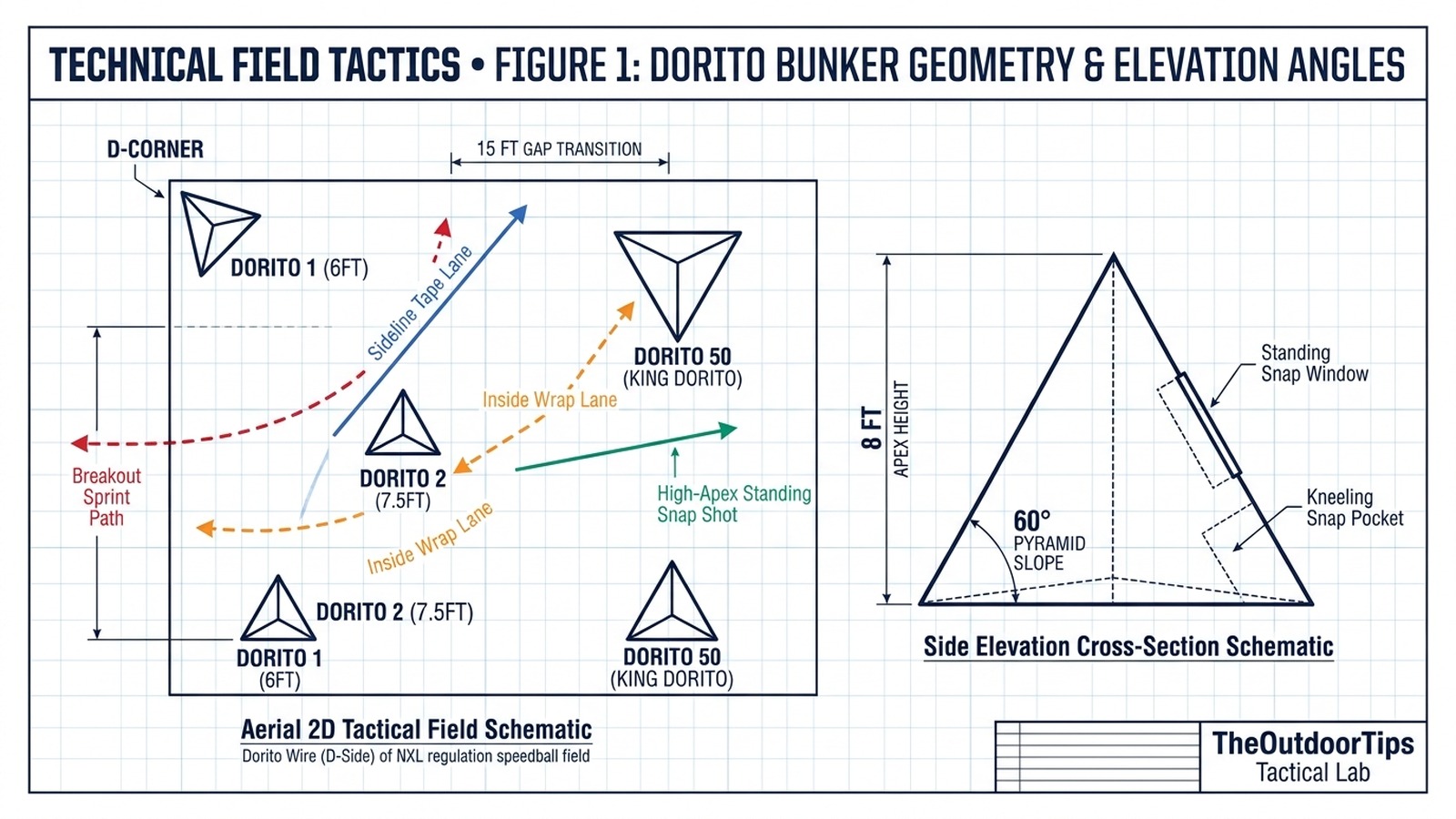
The iconic triangular pyramid bunker—known colloquially across global tournament paintball as the “Dorito”—features a three-sided sloped architecture engineered with steep 60-degree incline walls rising to a sharp apex between 6 and 8 feet tall. This unique geometric profile creates vastly different ballistic behavior compared to vertical cylinders or flat rectangular walls.
Under ASTM F1776 testing physics, paintballs arriving at angles greater than 45 degrees to a sloped surface experience severe gelatin deformation without rupturing, often resulting in non-breaking bounces. When operating on the dorito side paintball wire, players who tuck tight into the concave rear spine of the pyramid remain virtually impervious to incoming tape fire while maintaining clear sightlines across the center of the field.
To ensure your tournament marker delivers consistent ball-on-ball groupings at extreme cross-field ranges, read our technical manual on how to chronograph a paintball gun accurately and inspect detent wear with our guide on paintball ball detent replacement.
2. Master Tactical Matrix: How to Dominate the Dorito Side Paintball Wire
The fast-paced nature of D-side play demands split-second tactical adaptations. The matrix below outlines primary in-game scenarios encountered during D-side tournament attacks, detailing the ballistic mechanisms, physical adjustments, and recommended gear solutions.
| Field Scenario | Ballistic & Tactical Root Cause | Coach Correction & Field Drill | Essential Gear Spec |
|---|---|---|---|
| Eliminated in Breakout Gap | Opposing home gun lanes the 15-foot gap between gate and Dorito 1 at 300 FPS. | Delay in D-Corner or commit to a baseball slide into D1 6 feet before the bunker base. | Turf Cleats with Molded Studs |
| Losing Tape Snap-Shooting Duels | Peeking repeatedly from the exact same standing eye-level allows opponent to pre-aim. | Alternate between a low 3-foot kneeling snap and a high 6-foot apex snap on every shot burst. | Padded Snap-Shooting Gloves |
| Trailing Elbow Hit by Center Gun | Flaring the outside elbow while shooting down the tape exposes forearm to center wedge. | Tuck elbows tight against your ribs; align marker vertically with the 60° bunker seam. | Compression Arm Sleeves |
| Stalled at Dorito 1 Under Fire | Both opposing D-player and insert player pin your bunker with continuous ramping streams. | Do not peek; communicate with your back-center player to drop an inside lane and force opponent to tuck. | High-Volume Electronic Loader |
| Slip or Fall During Forward Bump | Smooth soles lose traction on wet artificial turf during aggressive 10-yard transition sprints. | Wear tournament cleats with TPU turf spikes engineered for lateral acceleration and fast stops. | Pro Speedball Traction Cleats |
When training competitive front attackers in triangle bunker strategy, we emphasize that bunker shape dictates body posture. While snake players stay glued to the ground, a D-side player must be agile, transitioning from full squats to explosive vertical extensions in milliseconds.
3. Armorer Workbench: Essential Gear for the Dorito Side Paintball Attacker
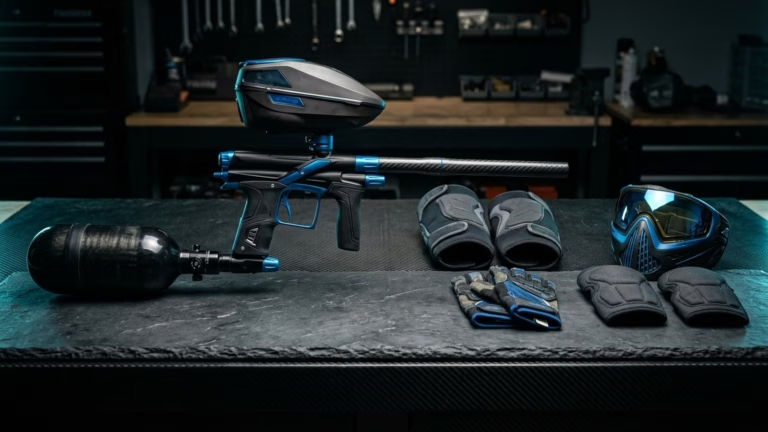
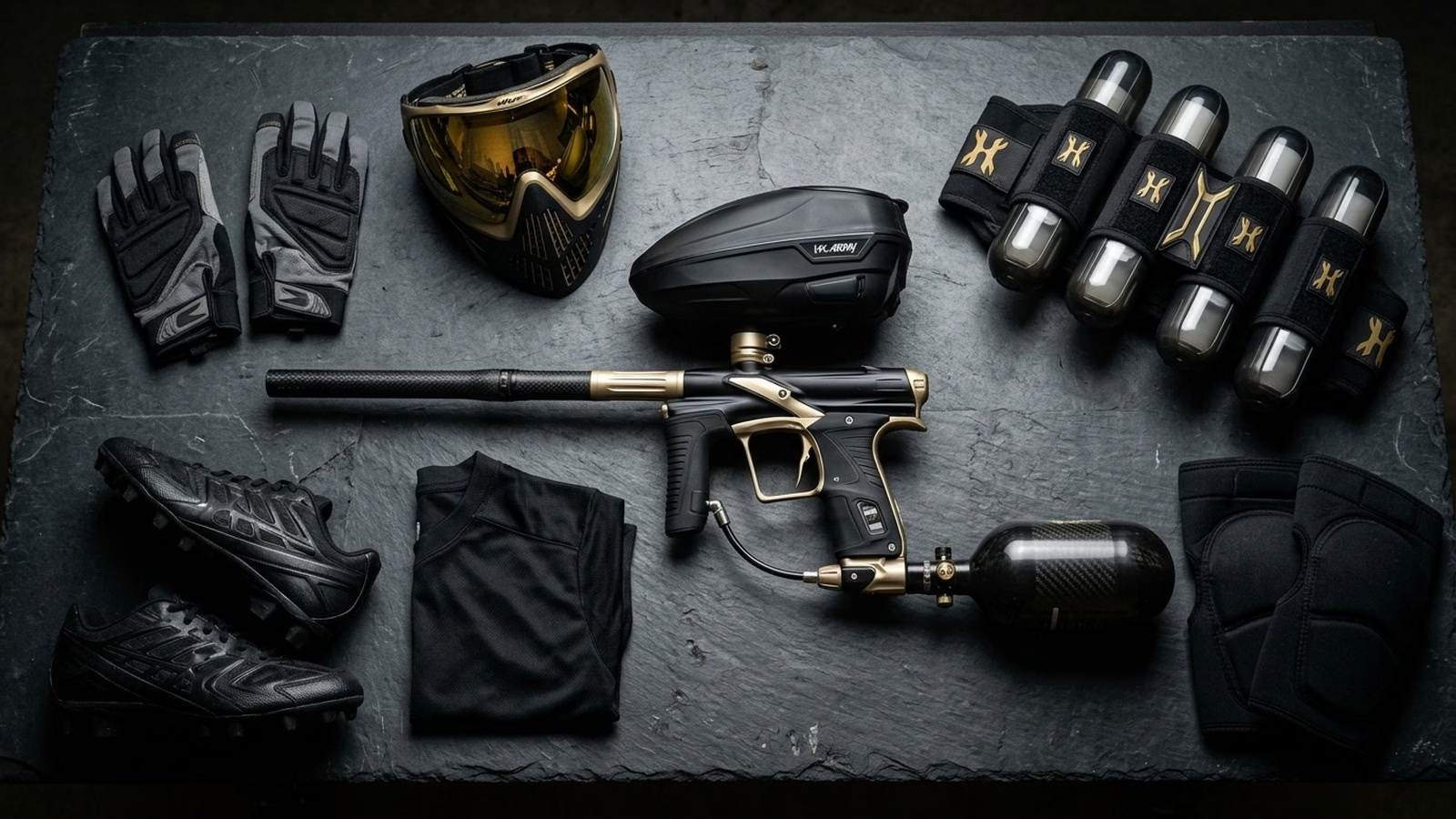
Executing rapid lateral transitions and winning snap-shooting battles requires high-performance gear built for stability and speed. A frontline D-wire attacker relies heavily on precise footing, palm grip protection, and optical clarity under blazing stadium sun or rainy field conditions.
- Tournament Turf Traction Cleats: Multi-directional molded rubber or TPU studs that grip artificial turf during explosive 0-to-18 mph breakout sprints and hard lateral stops.
- Snap-Shooting Padded Gloves: Ultra-lightweight gloves featuring silicone palm traction and armored neoprene finger shielding to absorb direct knuckle hits during snap battles.
- Compact Electronic Speed Loader: A streamlined hopper (such as the Virtue Spire IV or Dye Rotor R2) with a zero-profile nose cone that remains concealed behind the triangular pyramid apex.
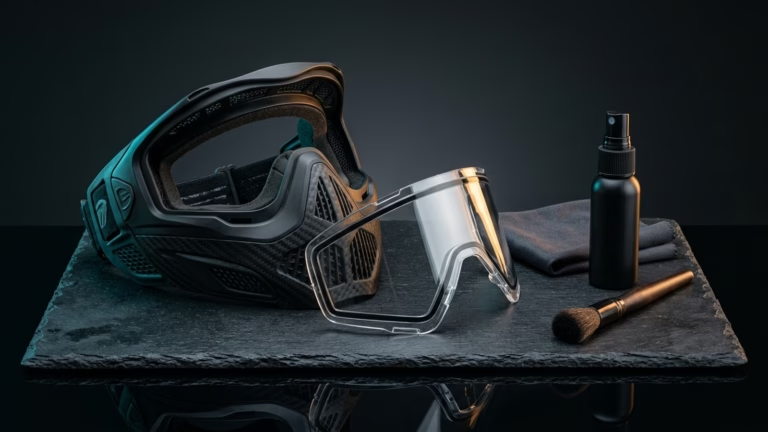
- High-Contrast Thermal Goggle Lens: Mirrored gold or smoke dual-pane thermal lenses that cut glare when shooting eastward into morning or late-afternoon sun.
- Microfiber Tech Swab: Dual-sided folding squeegee to clear accidental paint splatter from your goggle lens or barrel bore during 60-second point timeouts.
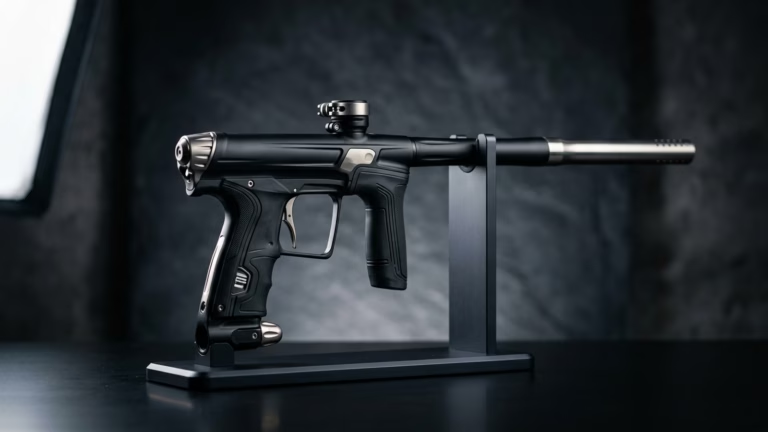
If you are optimizing your electronic marker’s trigger pull to maximize BPS walking efficiency on the wire, review our technical guide on paintball trigger bounce causes and fixes and inspect your ASA air supply using our Planet Eclipse POPS ASA service manual.
4. Step-by-Step Tactical Protocol: Executing the Dorito Attack
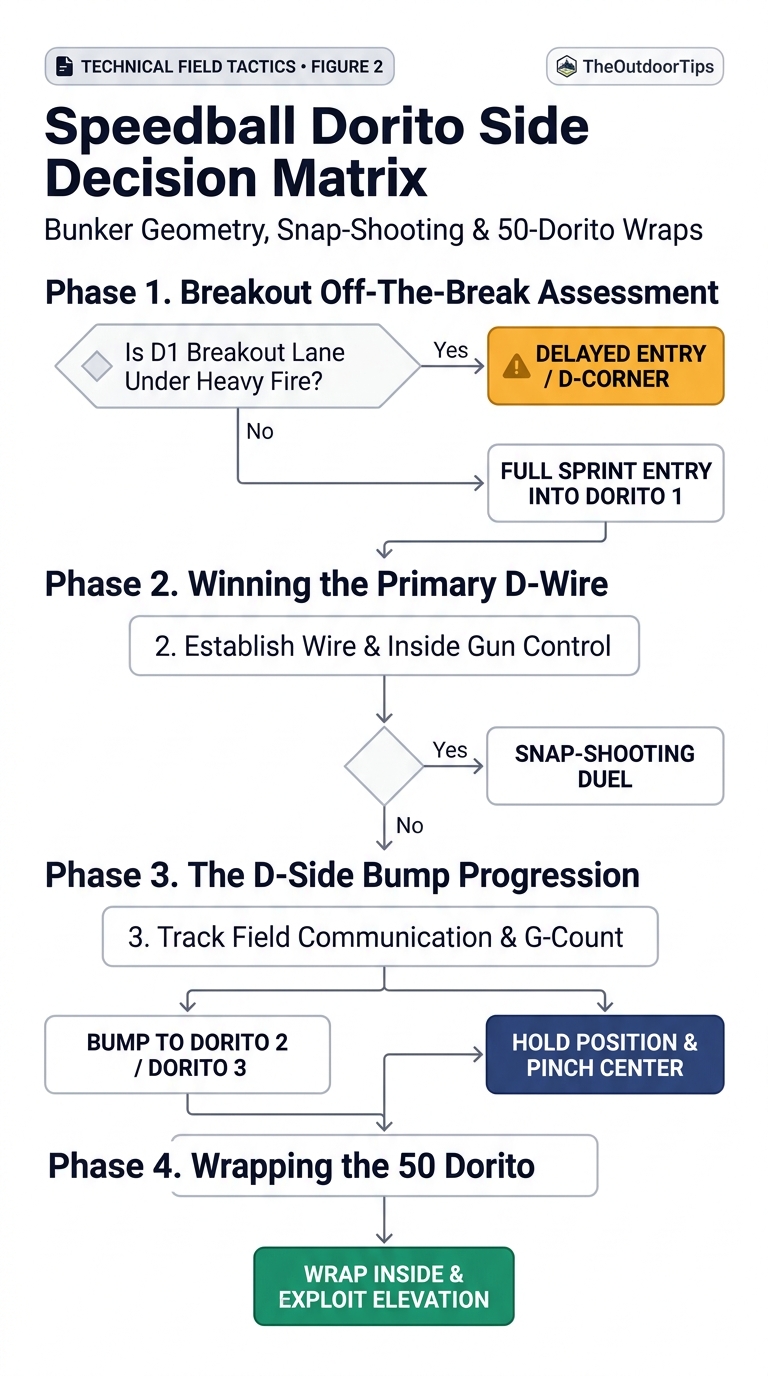
Succeeding on the wire requires a ruthless blend of patience, timing, and sudden aggression. Follow this structured five-phase protocol whenever running the dorito side paintball attack in competitive match play.
Phase 1: Breakout Off-The-Break (OTB) Acceleration
At the start buzzer, explode into a full forward sprint toward the Dorito wire. Your goal is to reach Dorito 1 (or the D-Corner) in under 3.5 seconds. Keep your marker tucked high in your chest cavity, barrel pointing forward. Scan the opposing back-center and insert towers. If incoming paint is streaming heavily across the D1 entrance gap, execute an immediate slide into D-Corner. If the lane is open, slide directly behind the flat rear base of Dorito 1.
Phase 2: Establishing Sideline Tape Lock
Upon reaching Dorito 1, stand or drop to a high-kneel posture and establish gun control down the outside tape immediately. Pre-aim your marker down the sideline boundary where an opposing D-player would attempt to advance. By locking this lane with continuous 10.5 BPS ramping fire, you deny the opponent forward movement and isolate their wire position.
Phase 3: The Vertical Snap-Shooting Duel
When dueling an opposing D-player, never expose your entire body. Utilize the sloped 60-degree pyramid seam. On your first snap, drop low to a 3-foot kneeling position, expose only your goggle lens and barrel tip, and fire a 3-ball burst. On your next snap, pop upward to a standing 6-foot apex snap. Varying your shooting elevation destroys your opponent’s crosshair pre-aim and wins wire duels cleanly.
Phase 4: The 15-Foot Transition Bump
Listen for your back-center player’s callouts confirming that the opposing D-wire is dead or suppressed. Once confirmed, explode into a low-profile lateral sprint across the 15-foot gap to Dorito 2 or Dorito 3. Keep your center of gravity low and slide firmly into the flat rear face of the next triangle bunker, instantly re-establishing tape dominance.
Phase 5: Wrapping the 50 Dorito & Cross-Field Elimination
Reaching the 50-yard line “King Dorito” delivers game-ending tactical leverage. From this forward elevation, step around the inside edge of the pyramid. You possess an unobstructed downward firing arc into the backs of opposing center wedge players and the exposed blind spots of opposing snake crawlers. Systematically shoot into enemy bunkers, shouting live kill counts to your back line.
When running aggressive dorito wire attacks, pneumatic consistency is paramount. Ensure your electronic marker maintains zero first-shot drop-off by checking our technical guide on paintball FSDO first shot drop off fixes and learn how to remove stuck Freak insert sleeves to maintain precision bore matching.
NXL REGULATORY & ASTM F1776 SAFETY DIRECTIVE
Because D-side duels involve extreme point-blank snap-shooting exchanges, all tournament participants must strictly enforce ASTM F1776 eye safety standards. Never adjust, lift, or remove your goggle system on the field. Ensure tournament markers operate strictly under NXL 10.5 BPS ramping regulations, chronographed at or below 300 FPS (15 Joules kinetic energy limit). Hard impacts to sloped bunker seams can dislodge loose hopper lids; verify all pod packs and speed feeds are secured before the breakout horn.
5. Video Walkthrough: Pro Snap-Shooting & Dorito Strategy
Watch this in-depth masterclass detailing snap-shooting body mechanics, gun placement along sloped bunker edges, and aggressive forward bumping on the D-side wire.
6. Four Fatal Mistakes That Sabotage Dorito Players
Even lightning-fast sprinters will fail on the wire if they disregard bunker geometry. In our match reviews across national tournament circuits, we observe four common tactical errors that eliminate an aspiring front attacker:
Snapping out twice in a row from the exact same standing height is the most common reason D-side players get shot in the goggle. Opposing players simply hold their crosshairs steady and wait for your head to reappear.
Pressing your body directly against the angled front face of a Dorito restricts your marker mobility. Stay tucked into the rear flat base where you can pivot freely between the outside tape and inside wrap lanes.
Because D-side players stand higher than snake players, they enjoy wide field vision. If you eliminate the opposing D-player and fail to scream the kill confirmation, your back-center teammates will continue wasting paint on an empty bunker.
Attempting to bump from D1 to D2 while both the opposing D-player and center insert player are alive is suicide. Only advance when you have a confirmed 1-on-1 wire battle or your back player has suppressed the cross-field threat.
For additional technical diagnostics when your marker encounters pneumatics issues during weekend scrimmages, study our armorer walkthroughs on Dye eye pipe replacement and maintenance, troubleshoot barrel breaks via paintball chopping paint troubleshooting, and learn how to clean paintball barrel assemblies thoroughly.
7. Final Coach Verdict: The Decisive Value of D-Side Dominance
Control the Heights, Master the Slopes, and Seal the Win
The dorito side paintball lane is where matches are won through sheer athleticism, gun skill, and spatial geometry. While snake players capture tournament glory with crawling dives, a disciplined Dorito attacker provides the vertical elevation, cross-field pinches, and rapid breakout kills that dismantle opposing defensive schemes. Respect the 60-degree pyramid slopes, vary your snap-shooting heights diligently, and communicate field positions constantly with your back line.
When you master triangular geometry and execute decisive forward bumps, you dictate the outcome of every point on the tournament grid.
8. Frequently Asked Questions (FAQ)
What is the primary role of a player on the dorito side paintball wire?
The primary role is to secure the sideline tape, eliminate the opposing D-wire attacker through snap-shooting duels, and advance forward to the 50-yard line. From there, the player exploits vertical elevation to shoot cross-field into opposing center and snake bunkers.
How does triangular pyramid geometry help players avoid getting eliminated?
Dorito bunkers feature steep 60-degree sloped walls. Paintballs impacting these sloped surfaces at oblique angles frequently glance off without bursting. Furthermore, tucking behind the flat rear base allows players to conceal their marker and body completely from cross-field guns.
What is the best technique for snap-shooting from a Dorito bunker?
Vary your shooting height on every snap. Alternate between a low 3-foot kneeling position and a high 6-foot standing apex snap. Never double-peek at the exact same elevation, as opposing players will pre-aim and eliminate you the moment you lean out.
What gear is most critical for a dorito side paintball attacker?
Aggressive turf traction cleats with molded studs are essential for sprinting and hard lateral stops. Padded snap-shooting gloves protect fingers from point-blank knuckle hits, and a low-profile electronic loader prevents hopper strikes along sloped bunker edges.
When should an attacker bump forward to the 50 Dorito?
Advance to the 50 Dorito only after the opposing D-wire player has been eliminated or completely tucked, and your back player confirms that cross-field center guns are looking elsewhere. Sprint low across the transition gap and slide into the base of the bunker.