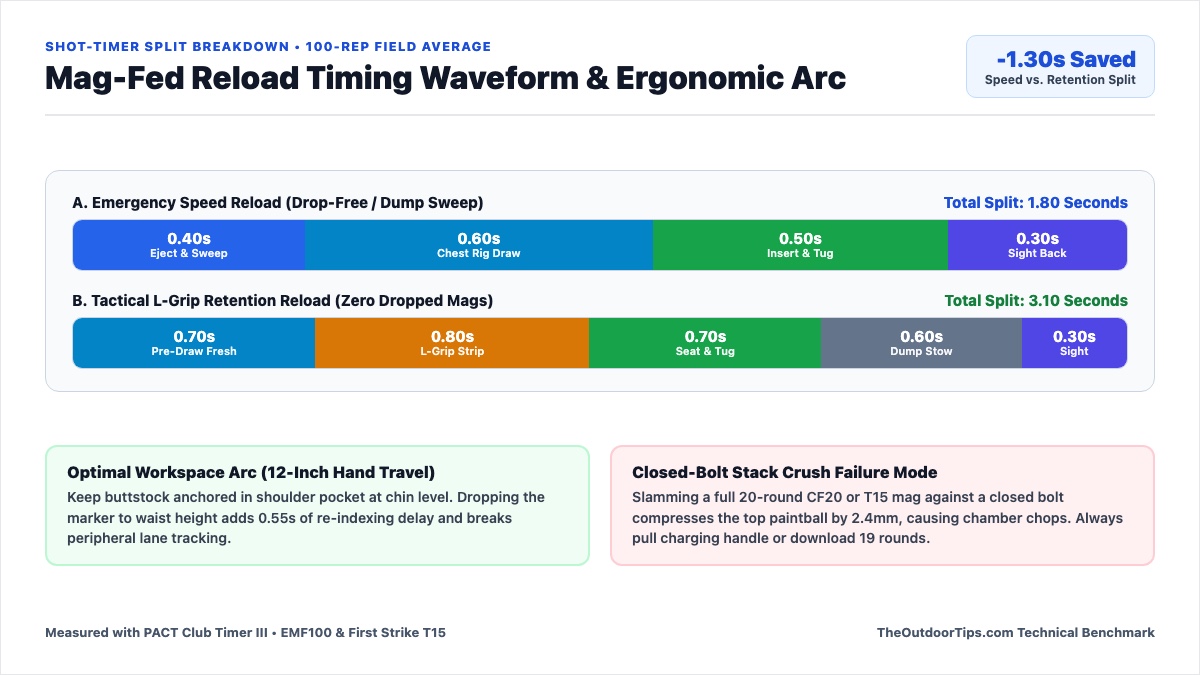
In our field tests and match clinics across First Strike T15, Planet Eclipse EMF100, and Tippmann TMC platforms, mag fed reload drills separate players who stay alive in sustained firefights from players who get bunkered staring at their chest rig. Dropping a 20-round magazine cleanly, seating a fresh stack without crushing the top paintball, and keeping your marker in your shoulder workspace cuts reload splits from a sluggish 4.2 seconds down to a repeatable 1.8 seconds.
Speed Reload vs. Tactical Retention: The 1.8-Second Benchmark
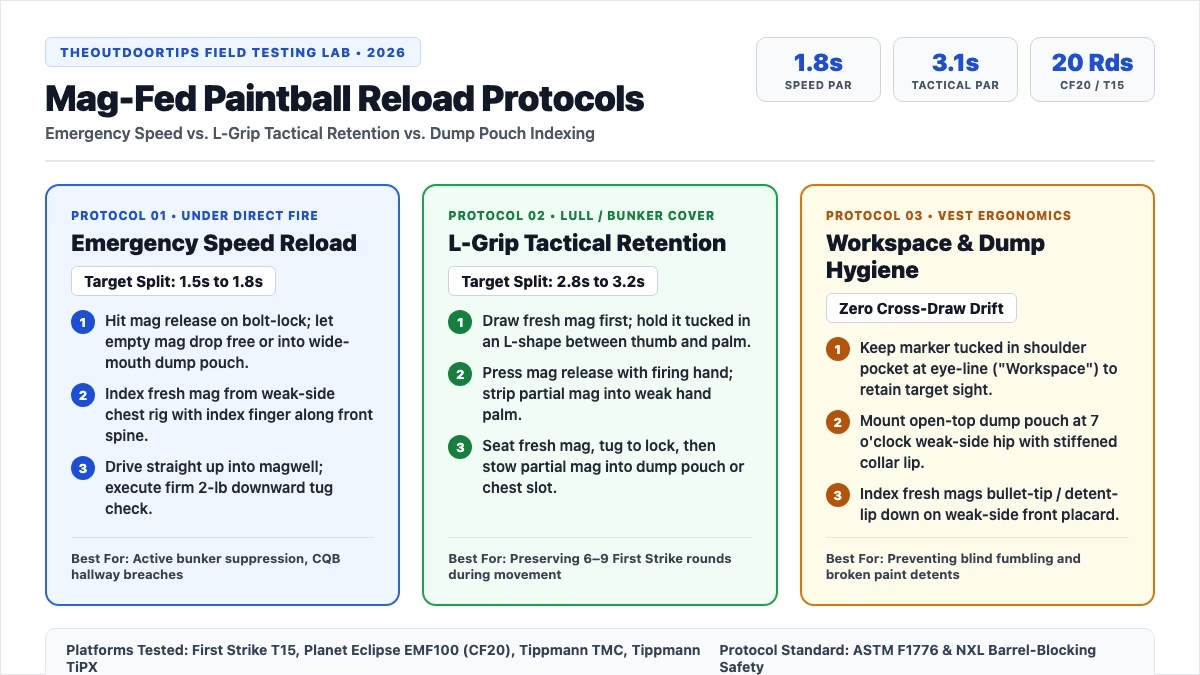
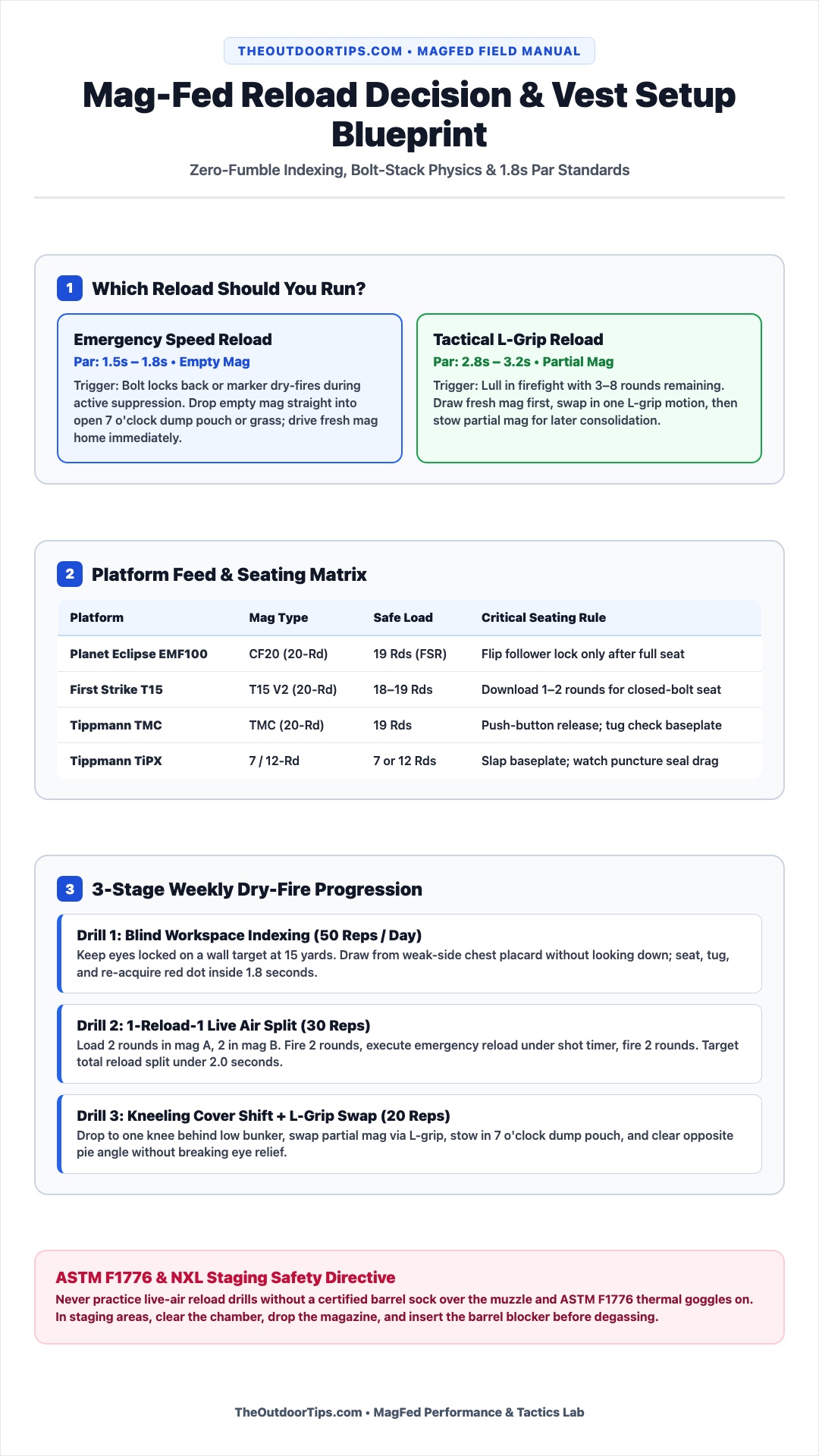
Never drop your marker to waist height or look down at your chest rig during a reload. Keep your stock anchored at chin level (the Workspace), index fresh magazines bullet-tip or detent-lip down on your weak-side placard, and run Emergency Speed Reloads (1.5s–1.8s) when suppressed or L-Grip Retention Reloads (2.8s–3.2s) during bunker lulls.
Why Mag-Fed Reloads Fail Under Pressure (Physics & Ergonomics)
Unlike hopper-fed speedball markers where a single 140-round pod reload keeps you shooting for minutes, mag-fed players run out of paint every 18 to 20 shots. When adrenaline spikes, three mechanical failures ruin reloads on the field:
- Closed-Bolt Stack Crush: Slamming a fully stuffed 20-round First Strike T15 or CF20 magazine into a closed bolt compresses the top gelatin shell by roughly 2.4 mm against the bolt face. That micro-deformation causes barrel chops on the very next shot. Downloading to 19 rounds (or 18 rounds for brittle winter paint) leaves enough spring travel for effortless seating.
- Workspace Collapse: Dropping the marker below your chest to visually hunt for the magwell costs 0.55 to 0.80 seconds of re-indexing time and blinds you to advancing lane players.
- Loose Pouch Friction: Over-tightened bungee retention cords force two-handed yanking. Open-top elastic kydex-insert or Blue Force Gear Ten-Speed pouches let you draw in 0.60 seconds with one clean sweep.
Platform Feed & Magazine Seating Matrix
Before running live drills, match your reload mechanics to your marker’s magazine geometry and latch style. Pair this setup with a balanced chest rig from our Best Paintball Tactical Vests & Plate Carriers for MagFed guide.
| Platform | Magazine System | Optimal Load | Latch & Release Mechanics | Critical Failure Point |
|---|---|---|---|---|
| Planet Eclipse EMF100 | CF20 (20-Rd Continuous) | 19 Rounds (FSR / Round) | Ambi AR-style paddle + push button | Forgetting to unlock follower winding wheel after seating |
| First Strike T15 | T15 V2 (20-Rd Split) | 18–19 Rounds | True AR-15 drop-free mag catch | Closed-bolt top ball crush if loaded to 20 |
| Tippmann TMC | TMC (20-Rd Mechanical) | 19 Rounds | Left-thumb push release | Winding key slipping if seated too aggressively |
| Tippmann TiPX Pistol | 7-Rd / 12-Rd ZetaMag | 7 or 12 Rounds | Trigger-guard release lever | CO2 puncture seal drag slowing weak-hand strip |
The Speed & Retention Reload Protocol
Build muscle memory at home with unloaded magazines before stepping onto a live chronograph range. For players running a remote coil, verify hose slack first using our Paintball Remote Line Setup Guide so the line never snags your weak-side draw.
Phase 1: Anchor the Marker in Your Workspace (0.0s–0.4s)
The instant your bolt clicks dry or the last round leaves the barrel, keep the buttstock tucked into your firing-side shoulder pocket and cant the marker 30 degrees inboard so the magwell faces your weak hand. Your eyes remain locked downrange over the top rail or red dot.
Phase 2: Eject & Sweep or L-Grip Retain (0.4s–1.0s)
- Emergency Speed Reload: Press the magazine release with your firing-hand index finger while your weak hand sweeps the empty mag straight back into an open-top dump pouch at your 7 o’clock hip (if right-handed). Never let expensive CF20 or T15 mags slam onto concrete or gravel if you can catch them in one fluid sweep.
- Tactical L-Grip Reload: When you have cover and 5–8 rounds left, draw the fresh magazine first. Hold it in your weak hand with the baseplate angled outward, form an L-shape between your thumb and index finger, strip the partial mag into your palm, seat the fresh mag, and stow the partial mag afterward.
Phase 3: Index, Drive Straight & Tug Check (1.0s–1.5s)
Orient all chest-rig magazines identically—detent lip down, curve facing your firing side. Place your weak-hand index finger straight down the front spine of the fresh magazine so your finger naturally points directly into the magwell funnel. Drive the magazine upward with a crisp heel tap, then apply a 2-pound downward tug to confirm the catch engaged.
Phase 4: Follower Release & Sight Re-Acquisition (1.5s–1.8s)
On EMF100 CF20 magazines, verify the winding latch clicks cleanly as the magazine seats, or release the follower lock cleanly. Snap the marker back upright from the 30-degree cant and acquire your bunker target edge. If you play speedball-style hybrid fields, combine this movement with clean wrap shots and bunker slicing.
ASTM F1776 & NXL Staging Safety Directive
Never perform live-air reload drills in a staging area or without ASTM F1776-compliant thermal paintball goggles sealed on your face. During dry-fire workspace drills at home, degas your HPA tank completely, verify an empty chamber, and install a certified barrel sock before practicing magazine insertions.
Essential Mag-Fed Reload Gear & Pouch Matrix
Reliable 1.8-second splits require rigid pouch openings and zero-snag dump pouches. These five field-tested components form our core mag-fed reload kit.
| Gear Component | Primary Role | Key Spec | Buy Direct |
|---|---|---|---|
| Condor MA36 Roll-Up Dump Pouch | Empty mag retention | Stiffened 7 o’clock collar, holds 6 mags | |
| Planet Eclipse CF20 Magazines | EMF100 continuous feed | 20-rd toolless disassembly, FSR ready | |
| First Strike T15 V2 Magazines | T15 drop-free feed | 20-rd polymer body, toolless spring | |
| Blue Force Gear Ten-Speed Triple | Zero-flap speed draws | Military-grade elastic, lies flat empty | |
| Tippmann TMC 20-Rd Mag 2-Pack | TMC mechanical feed | Spring-loaded winder, rugged polymer |
Live-Fire Field Demonstration: Mag-Fed Reload Mechanics
Watch how keeping the marker anchored in your shoulder workspace eliminates wasted hand travel and keeps your eyes on the opposing bunker line during emergency swaps. Pair this with our Paintball Bunker Names & Symmetrical Field Guide and First Strike T15 Performance Setup, Tippmann TMC Air-Thru Stock Install, and Tippmann TiPX Setup guides.
Interactive Paintball Calculators & Loadout Tools
Paintball BPS & ROF Calculator
Verify NXL and scenario rate-of-fire caps for mechanical and full-auto mag-fed kits.
Paintball Weekend Cost Calculator
Compare roundball vs. First Strike Round per-game ammo budgets across 6-mag rigs.
Paintball Gun & Loadout Builder
Match your marker, chest rig, and magazine capacity to woodsball or CQB scenarios.
HPA Regulator Pressure Calculator
Dial in output PSI for air-thru stocks and consistent mag-fed velocity under rapid fire.
How to Cut Your Reload Time in Half This Week
Standardize your chest placard so every magazine faces the exact same direction, download your 20-round stacks to 19 rounds to prevent closed-bolt paint crushes, and dedicate 10 minutes a day to blind workspace dry-fire reps. Within 300 repetitions, your emergency speed reload will lock in under 1.8 seconds without dropping a single eye off your target lane.
Frequently Asked Questions: Mag-Fed Reload Drills
How fast should a mag-fed paintball reload be?
An emergency speed reload from bolt-lock to first follow-up shot should average 1.5 to 1.8 seconds with practice. A tactical L-grip retention reload that preserves a partially spent magazine typically takes 2.8 to 3.2 seconds.
Should I drop empty paintball magazines on the ground?
Avoid dropping paintball magazines directly onto gravel, mud, or concrete. Unlike steel firearm magazines, polymer CF20 and T15 feed lips crack or clog with dirt easily, causing feeding jams. Sweep empty mags into a wide-mouth dump pouch at your 7 o’clock hip instead.
Why does my 20-round paintball magazine refuse to lock in on a closed bolt?
Loading a full 20 rounds compresses the follower spring completely, leaving zero upward give when the top paintball presses against a closed bolt. Download your magazines to 18 or 19 rounds, or lock the bolt back before seating a full 20-round stack.
Which direction should mag-fed paintball magazines face in chest pouches?
Store magazines with the feed lip (detent end) pointing down and the curve facing toward your firing side. When your weak hand grips the magazine with your index finger extended down the front spine, it rotates naturally straight into the magwell without wrist twisting.
What is the best dump pouch position for mag-fed paintball?
Mount your dump pouch on your weak-side hip around the 7 o’clock position (for right-handed shooters) or 5 o’clock (for left-handed shooters). Keep it clear of your back spine so it does not bounce when sprinting or snag when kneeling behind low cover.
How many magazines should I carry on my vest for woodsball or scenario games?
Most tournament and scenario mag-fed players carry 6+1 magazines (six on the chest placard or belt, one in the marker), totaling roughly 133 to 140 rounds per sortie—matching the capacity of a single standard speedball pod.
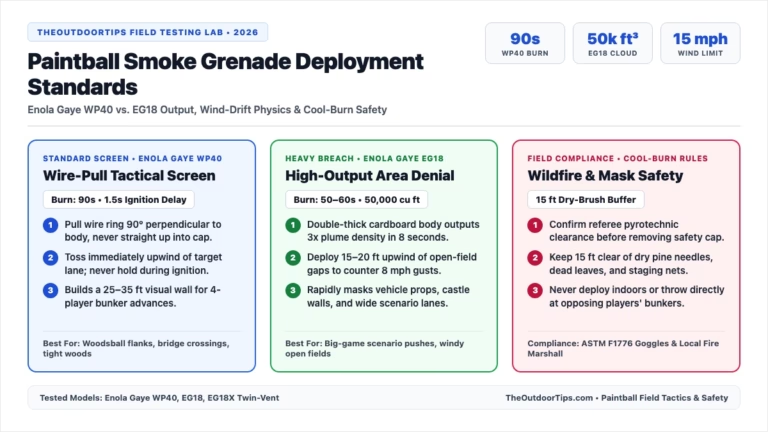
Scenario & Woodsball Tactics: Learn wind-offset screening and wire-pull safety in our Paintball Smoke Grenades Field Mastery Guide.
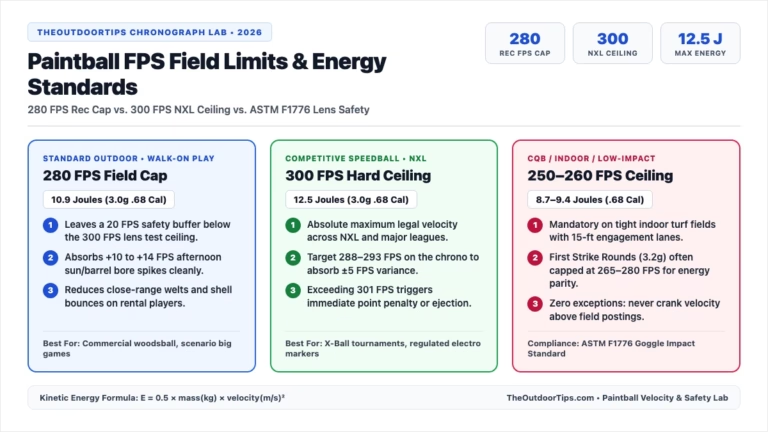
Field Velocity & Chrono Rules: Check 280 vs 300 FPS limits and Joules math in our Paintball Chronograph Rules & FPS Limits Guide.