In our field tests and match clinics across tournament stadiums and commercial woodsball fields, the single most common question from new players and parents is straightforward: what are paintballs made of, and will they permanently ruin clothes or poison local wildlife? The answer surprises almost everyone outside the paintball industry: modern paintballs contain zero real paint, zero petroleum oil, and zero toxic chemicals.
A modern .68-caliber paintball is essentially a soft-gel pharmaceutical capsule engineered to survive high-pressure pneumatic launch at 280 FPS and fracture instantly upon striking human target tissue. Built from pharmaceutical-grade gelatin, food-grade plasticizers (sorbitol and glycerin), and a water-soluble polyether liquid fill (polyethylene glycol 400), every component is 100% non-toxic, water-washable, and fully biodegradable in natural soil within 2 to 3 weeks.
Key Technical Takeaways (TL;DR)
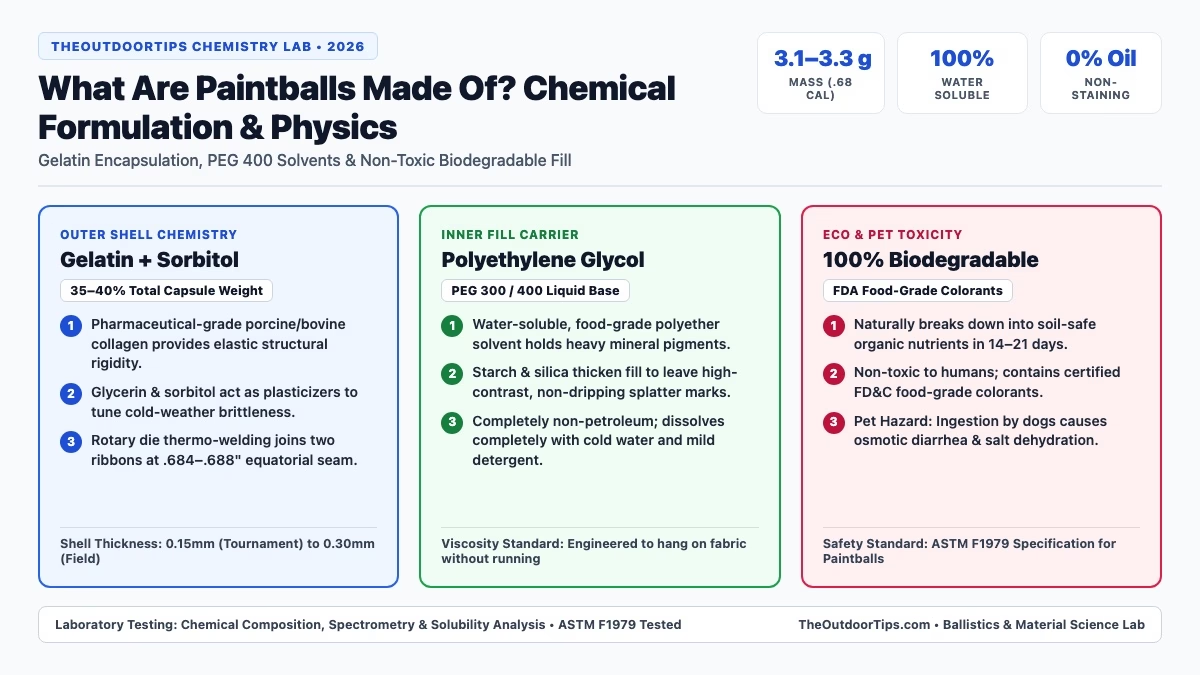
A standard .68-caliber paintball weighs 3.00 to 3.25 grams, comprising an outer gelatin-sorbitol shell (35–40% total mass) and an inner polyethylene glycol (PEG 400) liquid fill (60–65% total mass) colored with FDA food-grade dyes. The formulation contains zero oil or VOC solvents, washes completely out of tactical apparel with plain cold water, and naturally biodegrades outdoors within 14 to 21 days.
- Pharmaceutical Technology: Paintballs are manufactured on rotary die encapsulation machines identical to those used for vitamin E and ibuprofen softgels.
- Fabric Washability: Because the fill is water-soluble polyether rather than oil paint, dried marks dissolve instantly in cold water without staining Cordura or synthetic jerseys.
- Pet Safety Alert: While harmless to humans, dogs that consume hundreds of dropped paintballs can suffer severe osmotic dehydration from PEG and sorbitol ingestion.
The Anatomy of a Paintball: Shell vs. Fill Chemistry
Every commercial .68-caliber paintball divides cleanly into two distinct engineered components: the rigid protective shell and the vibrant marking fill. Understanding how these chemical systems interact explains why paint behaves differently in varying weather—a subject we explored in our winter paintballs vs regular paintballs guide.
The Shell: Structural Collagen & Moisture Plasticizers
The exterior capsule represents approximately 35 to 40 percent of the total projectile weight (roughly 1.1 to 1.3 grams). It consists of four core ingredients:
- Gelatin (150–250 Bloom Strength): High-purity animal collagen derived from porcine or bovine skin and bone tissue. The Bloom rating measures the gel rigidity; higher Bloom gelatins create crisp tournament shells that break on light jersey contact, while lower Bloom gelatins produce rugged recreational shells that resist hopper jams.
- Glycerin (Glycerol) & Sorbitol: Food-grade sugar alcohols that serve as plasticizers. Without plasticizers, pure dried gelatin turns into brittle, glass-like shards that would shatter inside your marker’s breech upon bolt impact—a failure mechanism detailed in our barrel break analysis. Adding 15% to 25% plasticizer gives the shell flexible tensile strength.
- Residual Water (8%–12%): Controlled moisture remaining after industrial tumble drying. If humidity drops below 8%, shells turn hyper-brittle; if moisture climbs past 14%, shells turn rubbery and bounce—as analyzed in our paintball shelf life test.
- Mineral Colorants & Mica: Titanium dioxide and mica minerals added to make the outer shell opaque, metallic, or two-toned for branding.
The Fill: Non-Toxic Marking Emulsion
The internal liquid core represents 60 to 65 percent of the total mass (roughly 1.9 to 2.0 grams). Unlike industrial oil paint, the fill is a food-grade suspension:
- Polyethylene Glycol (PEG 300 to PEG 400): The primary liquid solvent and carrier. PEG is an inert, odorless, clear polyether compound widely used in skin lotions, eye drops, and pharmaceutical syrups. It has a low freezing point (preventing paint from solidifying in cold weather) and dissolves completely in water.
- Calcium Carbonate & Corn Starch: Finely ground natural limestone chalk or modified food starches that thicken the liquid PEG. These minerals transform the clear solvent into a bright, thick, opaque paste that clings to jerseys rather than running off like colored water.
- Polysorbate 80 / Food-Grade Surfactants: Surface-active emulsifiers that keep pigments evenly suspended in PEG and allow water molecules to penetrate and lift the chalk from cloth fibers during laundry cycles.
- FD&C Certified Food Dyes: Standard edible pigments (such as FD&C Yellow #5, Blue #1, and Red #40) that create neon tournament markings without toxic heavy metals like lead or cadmium.
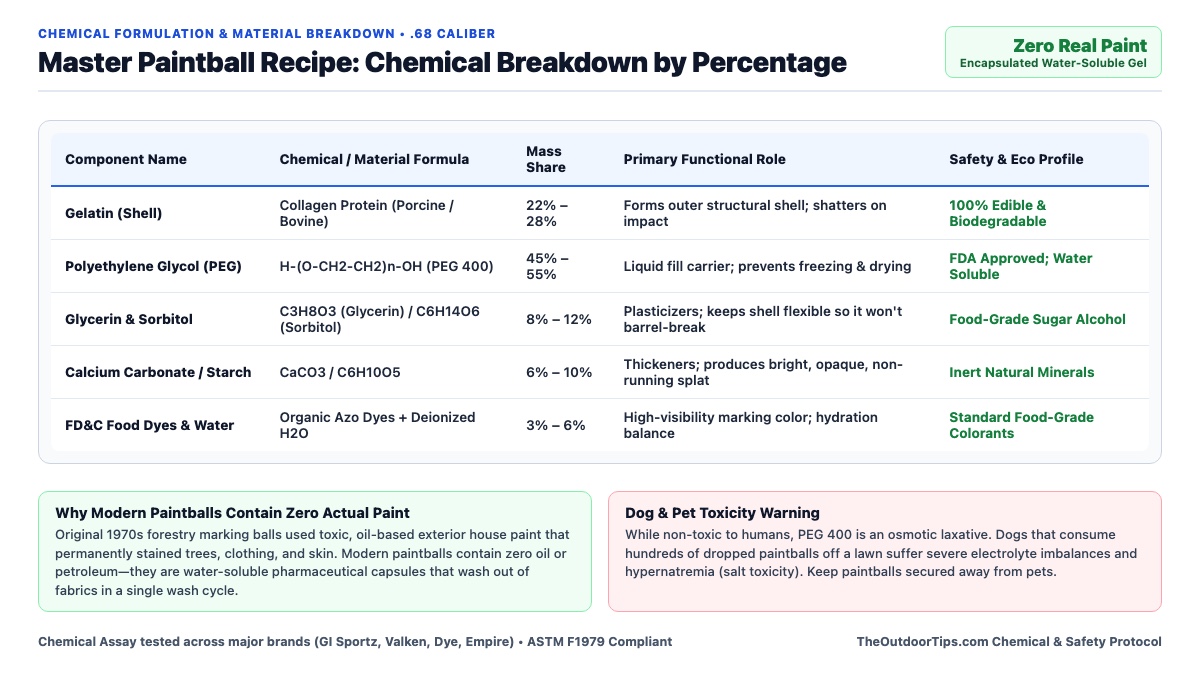
Chemical Recipe & Material Breakdown Table
The structured chemical matrix below outlines the primary active ingredients, physical functions, and safety profiles found across major tournament brands like GI Sportz, Valken, Dye, and Empire.
| Chemical / Ingredient | Formula / Origin | Mass Share | Armorer & Field Role | Environmental / Washability Profile |
|---|---|---|---|---|
| Pharmaceutical Gelatin | Collagen Protein (Bovine/Porcine) | 22% – 28% | Forms outer .684–.688" shell; shatters on 11J target impact. | 100% Natural; breaks down into soil nitrogen. |
| Polyethylene Glycol (PEG 400) | H-(O-CH2-CH2)n-OH (Polyether) | 45% – 55% | Liquid solvent base; resists freezing down to 20°F. | Zero petroleum; dissolves 100% in cold water. |
| Glycerin & Sorbitol | C3H8O3 / C6H14O6 (Sugar Alcohols) | 8% – 12% | Internal shell plasticizers; prevents breech brittle-chops. | Food-grade; non-toxic sugar alcohol. |
| Calcium Carbonate / Chalk | CaCO3 (Inert Mineral) | 6% – 10% | Opacifying thickener; creates bright, visible splat mark. | Natural mineral; safe for plants and grass. |
| FD&C Certified Food Dyes | Organic Food Colorants | 1% – 2% | High-visibility target marking (Neon Pink, Yellow, Orange). | FDA approved; non-toxic to soil and waterways. |
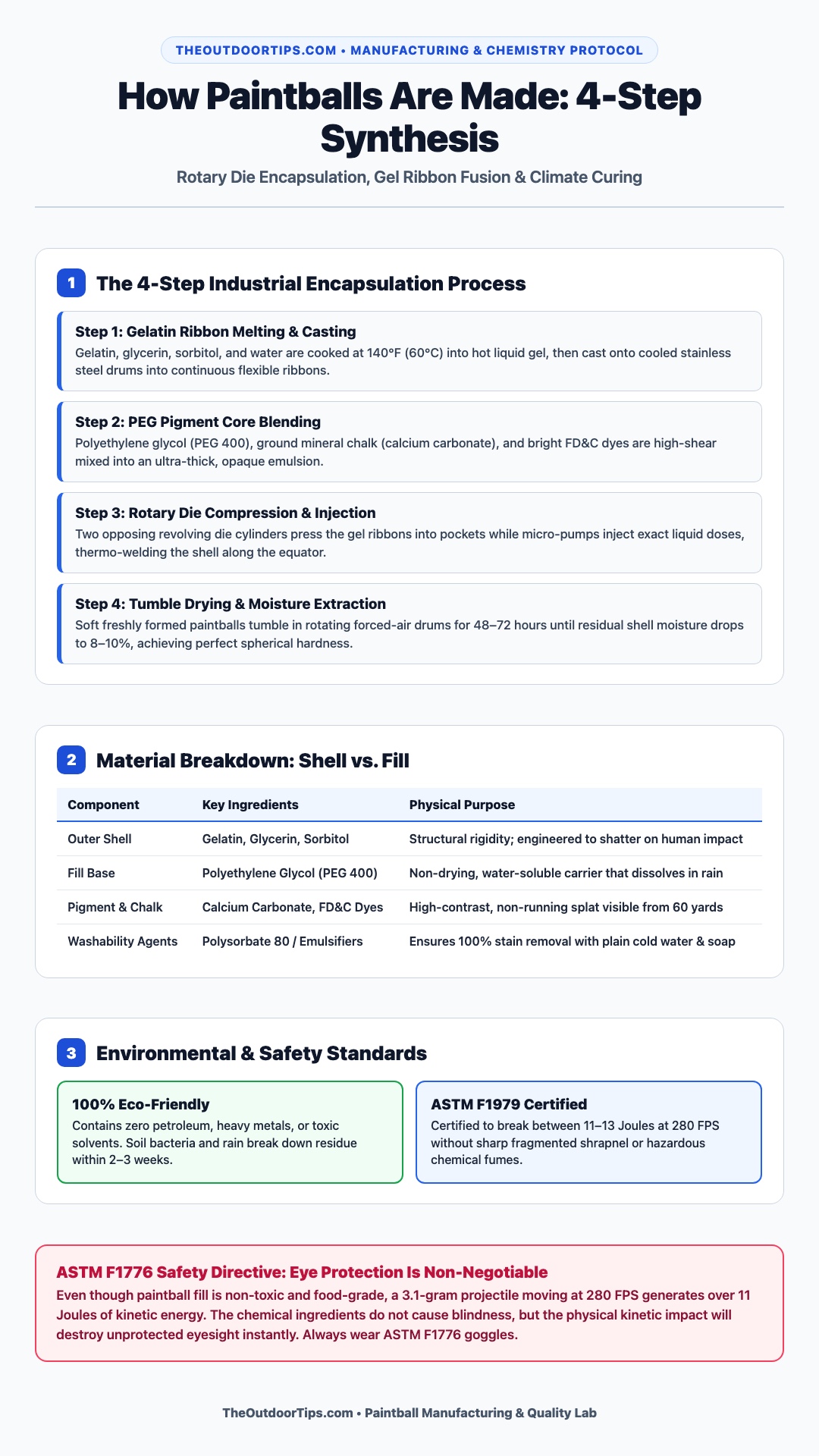
How Paintballs Are Manufactured: 4-Step Synthesis
Paintball manufacturing takes place in sterile, climate-controlled cleanrooms that resemble pharmaceutical factories rather than ammunition plants. Watch the process step-by-step:
- Gel Ribbon Preparation: High-grade dry gelatin powder is mixed with deionized water, liquid glycerin, and sorbitol inside stainless steel vacuum cookers heated to 140°F (60°C). Once dissolved into a viscous honey-like gel, the mixture flows over chilled chrome rollers, solidifying into two continuous flexible gelatin ribbons roughly 0.20mm thick.
- Pigment Fill Homogenization: In separate high-shear mixing vats, liquid PEG 400 is blended with ground calcium carbonate, thickeners, and vibrant FD&C pigments. The mixture passes through colloidal mills to ensure particle sizes remain under 5 microns, preventing nozzle clogs and uneven density.
- Rotary Die Encapsulation: The two gelatin ribbons converge between a pair of revolving precision die cylinders. Each cylinder contains hundreds of half-sphere pocket molds. As the dies compress the ribbons together, timed micro-metering pumps inject exactly 1.95ml of liquid fill between the gel sheets. The combination of mechanical pressure and thermal heat seals the two halves along an equatorial seam, ejecting perfectly spherical, soft liquid-filled capsules.
- Controlled Tumble Drying & Inspection: Freshly formed paintballs are too soft to shoot. They pass through a cascade of rotating heated-air tumble dryers for several hours to remove initial moisture, then rest on drying trays in humidity-controlled cleanrooms (20% RH at 68°F) for 48 to 72 hours. Once the shell reaches 8% to 10% moisture content, automatic optical sorters inspect each ball for seam flaws and size tolerances before vacuum packaging.
HK Army Factory Tour: How Paintballs Are Made
Watch professional tournament player and industry veteran Mark Kressin tour an active high-capacity paintball manufacturing plant, showcasing rotary dies, gel ribbons, and quality-control drop tests:
Essential Gear for Cleaning Paintball Residue from Gear & Barrels
Because paintballs are water-soluble, cleaning your marker, goggles, and apparel requires four simple armorer maintenance tools:
Plush Microfiber Barrel Swab & Squeegee
Pulls broken gelatin shells and PEG fill out of your barrel instantly without scratching anodized bore surfaces.
Stain-Lifting Sports Detergent (Enzyme Based)
Breaks down gelatin protein and lifts food dye pigments from jerseys and pants in a standard cold-water wash cycle.
Anti-Fog Goggle Lens Cleaner & Microfiber
Specialized alcohol-free spray dissolves dried paint splatter without stripping sensitive dual-pane thermal coatings.
Are Paintballs Safe for Players, Gear & Nature?
Modern paintballs represent one of the safest chemical formulations in outdoor sports. Formulated strictly from pharmaceutical gelatin, polyethylene glycol (PEG 400), food-grade sugar alcohols, and non-toxic dyes, paintballs dissolve in plain cold water, break down harmlessly in soil within 3 weeks, and leave zero permanent stains on gear. Just remember: while the ingredients are non-toxic, the 11-Joule kinetic impact demands certified ASTM F1776 goggles every second you are near a live firing line.
Frequently Asked Questions: Paintball Chemical Composition
What are paintballs actually made of?
Paintballs are made of an outer gelatin shell (the same animal protein used in gummy candy and vitamin capsules) softened with glycerin and sorbitol, enclosing an inner water-soluble liquid fill made from polyethylene glycol (PEG 400), ground mineral chalk (calcium carbonate), and non-toxic FD&C food dyes.
Do paintballs contain real paint or oil?
No. Modern paintballs contain zero oil paint and zero petroleum. The original 1970s forestry marking balls used oil-based house paint, but modern sport paintballs use 100% water-soluble polyether gels that wash out completely with plain cold water.
Are paintballs toxic if swallowed?
Paintballs are non-toxic to humans, but swallowing them is strongly discouraged. The high concentration of polyethylene glycol (PEG) and sorbitol acts as a strong osmotic laxative, leading to severe stomach cramps, nausea, and diarrhea.
Are paintballs toxic to dogs and pets?
Yes, paintballs pose a serious hazard to dogs. Because dogs will eagerly eat hundreds of dropped paintballs off a lawn, the massive dose of PEG 400 and sorbitol draws water into their intestines, causing rapid dehydration, acute electrolyte imbalances, and potentially fatal salt poisoning (hypernatremia). Always store paintballs securely away from pets.
How long does it take for paintballs to biodegrade?
In outdoor environments exposed to rain and soil microorganisms, the gelatin shell softens and dissolves within 2 to 5 days, while the liquid PEG fill breaks down completely into harmless organic matter within 14 to 21 days.
Will paintball fill permanently stain clothes or car paint?
Standard paintballs will not permanently stain clothing if washed promptly in a standard cold-water wash cycle with normal detergent. On vehicle clear coats, wipe dried fill off immediately with warm water and microfiber; leaving bright pigments in scorching direct sunlight for weeks can occasionally discolor automotive wax layers.
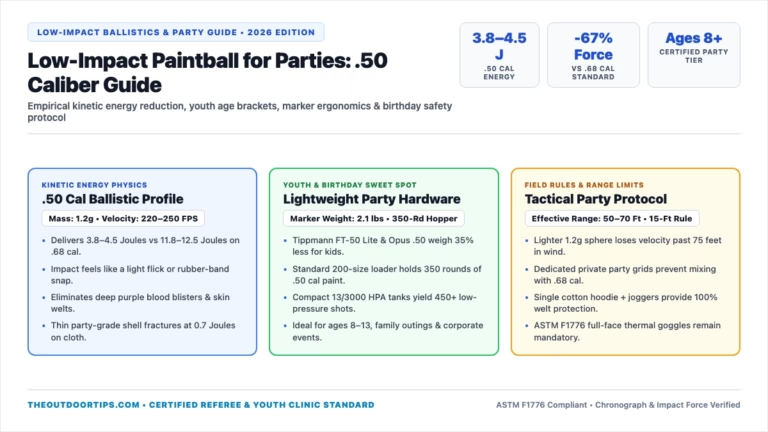
Related Caliber Comparison: Unsure whether to choose low-impact or standard ammo? Read our 50 Cal vs 68 Cal Paintball Guide for kinetic energy tests and pain comparisons.
Related Ammo Guide: Planning your gear and ammo budget? Read our comprehensive breakdown on How Many Paintballs for a Day of Play to avoid running dry or overspending at the counter.
Related Manufacturer Guide: Deciding between top gear makers? Read our definitive showdown on the Best Paintball Brands Ranked comparing GI Sportz, Valken, Empire, and Planet Eclipse.
Related Thermal Storage Guide: Playing in summer temperatures or worried about leaving paintballs in a hot car? Read our empirical sun-damage and cooler preservation tests to prevent flat spots and mid-barrel breaks.
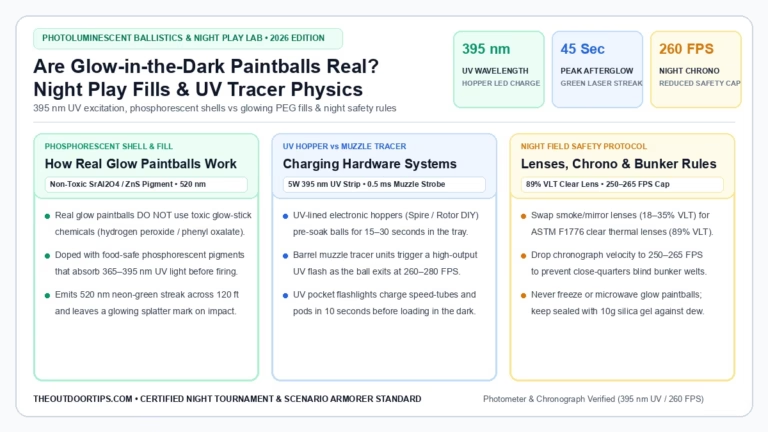
Related Night Scenario & Tracer Guide: Planning an after-dark woodsball or blacklight scenario event? Read our glow-in-the-dark paintballs & night play guide to compare 395 nm UV-charged phosphorescent shells, DIY UV hopper strips, and night chronograph rules.