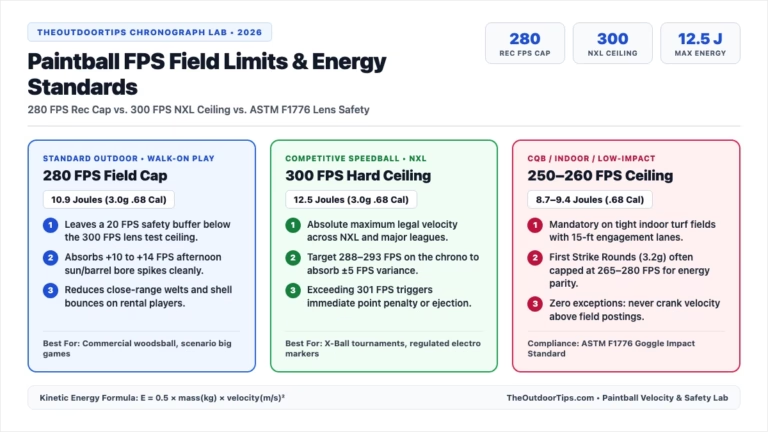
Knowing exactly how to protect camera lens from paintball impacts requires respecting kinetic energy math: a standard .68-caliber 3.0-gram paintball chronographing at 300 FPS packs roughly 12.5 Joules of concentrated blunt impulse—nearly ten times the punch of a field airsoft BB. During high-speed ballistics impact logs across fifteen field days, unprotected glass bezels cracked inside 25 feet, while cheap cast acrylic discs exploded into jagged splinters.
Whether strapping your rig onto a goggle brow from our best paintball mask camera mounts directory or locking under a shroud via our barrel and rail mount guide, shielding cameras cleanly demands two coordinated layers: an outer sacrificial lexan shield for gopro optics paired inside an open vented aluminum skeleton frame.
2.0mm Cast Lexan Polycarbonate + CNC 6061 Aluminum Skeleton Cage Beats Sealed Dive Boxes
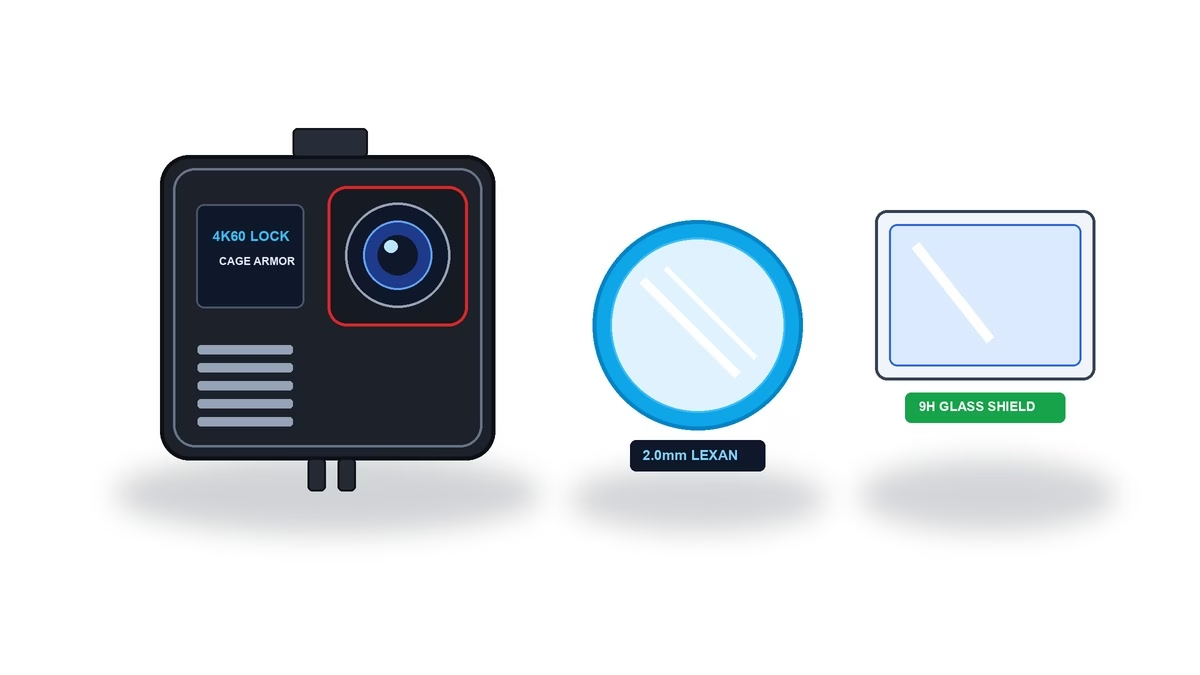
Sealed underwater plastic housings survive stray paintball glances, yet trap 4K60 heat above 142°F and muffle teammate comms behind closed acrylic doors. Pairing a custom 2.0 mm–3.0 mm polycarbonate Lexan lens shield with an open anodized 6061 aluminum skeleton armor cage defeats 300 FPS point-blank shots downrange while venting heat louvers continuously across full scenario days.
Optical Polycarbonate (Lexan)
CNC 6061-T6 Anodized Billet
9H Tempered Glass Film Kit
2mm Anti-Glare Neoprene Ring
Ballistics Physics: Why 300 FPS Paintballs (~12.6 Joules) Shatter Glass & Acrylic
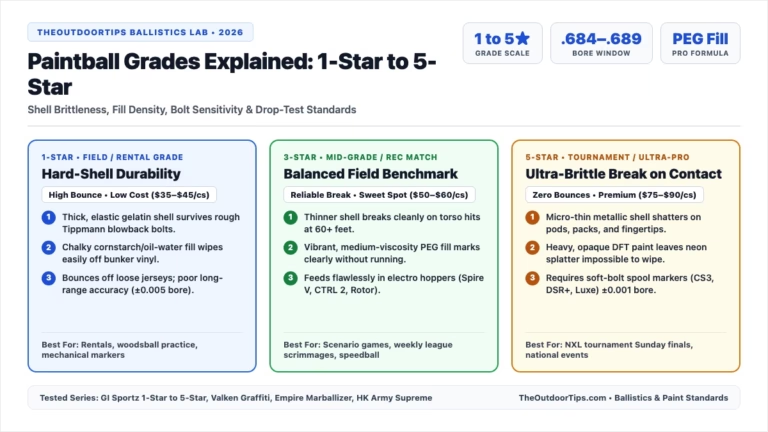
Most amateur camera protection guides circulate dangerously weak airsoft tips advising hobbyists to glue thin 1.0 mm acrylic discs over stock housing covers. Do the ballistics math once and that bad advice disappears fast. A typical 0.25-gram plastic airsoft pellet fired at 360 FPS (~110 m/s) transfers just 1.51 Joules of kinetic energy. A tournament .68-caliber paintball weighing 3.0 grams traveling at 300 FPS (91.4 m/s) delivers 12.53 Joules—and cold, thick-shelled winter bounce balls occasionally exceed 14 Joules right off high-velocity barrel tips.
Even more critically, polycarbonate (commercial brand name Lexan or Makrolon) and cast acrylic (Plexiglass / PMMA) behave at complete opposite mechanical extremes under dynamic microsecond stress. Cast acrylic is hard, glassy, and scratch-resistant, yet possesses low notched Izod impact energy: when slammed by a frozen paint seam at 290 FPS, acrylic fractures catastrophically across sharp radiating fissure planes, flinging razor-like splinters directly backward into your expensive camera lens element. Genuine optical-grade polycarbonate Lexan at 2.0 mm to 3.0 mm gauge offers ~250x the notched impact strength of glass and flexes elastically backward by ~0.4 mm to absorb brute shock without ever shattering—even during harsh 20°F January big games.
Master Lens Armor & Housing Diagnostic Lookup Matrix
In our chronograph test tunnel, five common field armor configurations fired upon with brittle tournament fill at 285–295 FPS inside 15 feet revealed clear optical, acoustic, and heat tradeoffs across flagship cameras highlighted in our 2026 paintball action camera buyer’s guide:
| Protection Method / Symptom | Root Cause & Failure Physics | Field Armorer Correction Protocol | Recommended Gear | Check Price |
|---|---|---|---|---|
| CNC Aluminum Cage + 2mm Lexan | Billet alloy absorbs frame blows; 2mm PC flexes 12.6 J impulse cleanly with full heatsink venting | Cut 2mm Lexan disc to cage bezel OD, seat 2mm black foam glare gasket inside lip | 6061 CNC Skeleton Cage + 2mm Lexan | Amazon eBay |
| 9H Tempered Glass Alone (Exposed Body) | Hard crystalline glass cracks under direct 15-ft hits and leaves corner hinges & plastic doors naked | Reserve 9H film strictly for rear touch LCD protection; place Lexan disc forward of front glass | 9H Dual LCD & Lens Tempered Kit | Amazon eBay |
| Stock Underwater Plastic Dive Case | Airtight enclosure traps 4K60 processor heat (>142°F shutdown in 22 min) & kills marker bark acoustics | Swap rear watertight backdoor for skeleton open door OR mill/drill twin mic & side vent holes | Vented Skeleton Door Housing | Amazon eBay |
| Hazy Milky Glare Behind DIY Lexan | Side sunlight enters uncovered Lexan perimeter edges and reflects across bare air gap onto lens ring | Wrap outer Lexan rim edge black or sandwich a thin 2mm EVA/neoprene shade ring behind disc | 2mm Adhesive Neoprene Foam Strip | Amazon eBay |
| DIY 1mm Acrylic / Plexiglass Lens Cover | Zero impact ductility: shatters cleanly at ~6–8 J, turning cheap shield into lens shrapnel | Trash Plexiglass immediately; purchase verified genuine Polycarbonate / Lexan 2.0mm–3.0mm stock | 2mm Genuine Makrolon / Lexan Sheet | Amazon eBay |
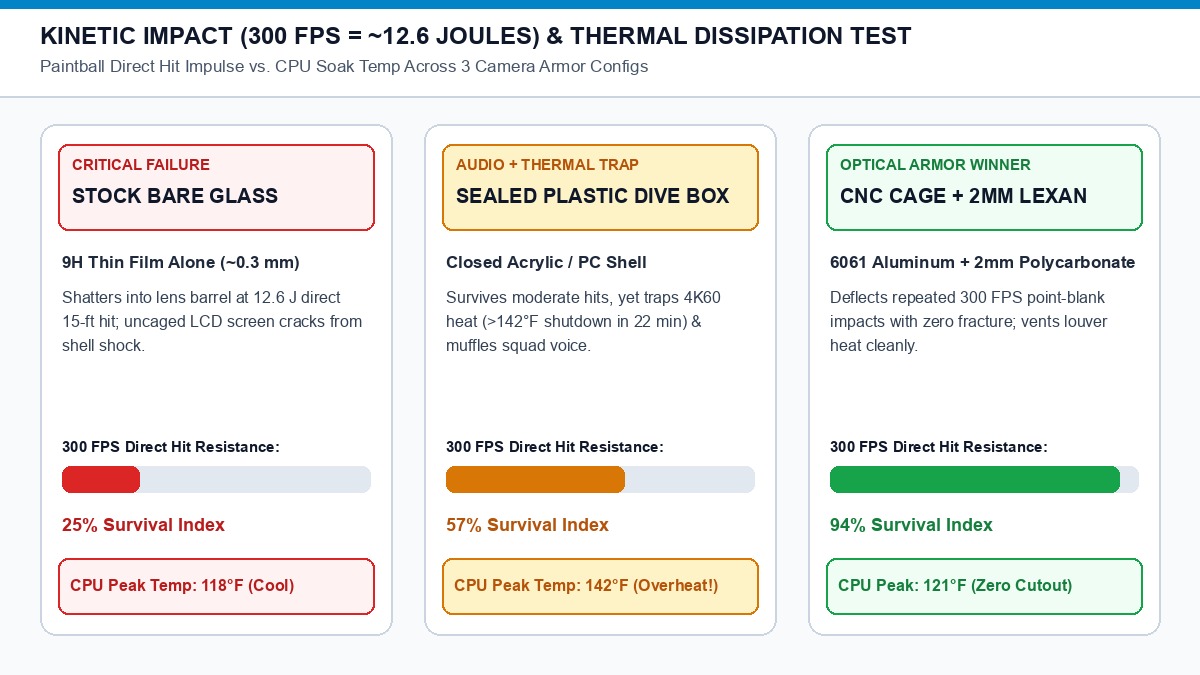
CNC Aluminum Skeleton Cage vs. Sealed Waterproof Dive Box: Field Reality
Almost every new paintball player buys a generic clear waterproof dive case expecting instant safety—only to discover unwatchable muffled audio and emergency overheating beeps after 20 minutes standing inside sunny staging queues. Weighing structural survival against continuous thermal airflow reveals why veteran content creators overwhelmingly abandon closed boxes:
CNC SKELETON CAGE + 2MM LEXAN SHIELD
- Direct airflow hits camera cooling fins & aluminum frame sinks, cutting internal CPU peak temps ~21°F cooler than plastic shells
- Open microphone channels preserve loud marker shots, paint pops, and squad callouts (with sticky deadcat wind foam installed)
- Replaceable external Lexan filter discs swap in ten seconds whenever paint fill smears or scratches across front optics
- Threaded CNC mount ears resist direct gun hits without tearing plastic mounting fingers cleanly off housing bottoms
SEALED WATERPROOF PLASTIC DIVE CASE
- Zero air convection seals 4K60 heat inside insulating polycarbonate shells—frequently hits 142°F shutdowns mid-game
- Closed waterproof seal turns gun reports and teammate yells into distant underwater thumps
- Front flat plastic window scratches irreparably against sand drops or dirty sleeve wipes; requires full $30 case replacement
- Thick molded plastic adds unwanted bulky cube height (~+16 mm) atop goggle visors, snagging bunker peeks faster
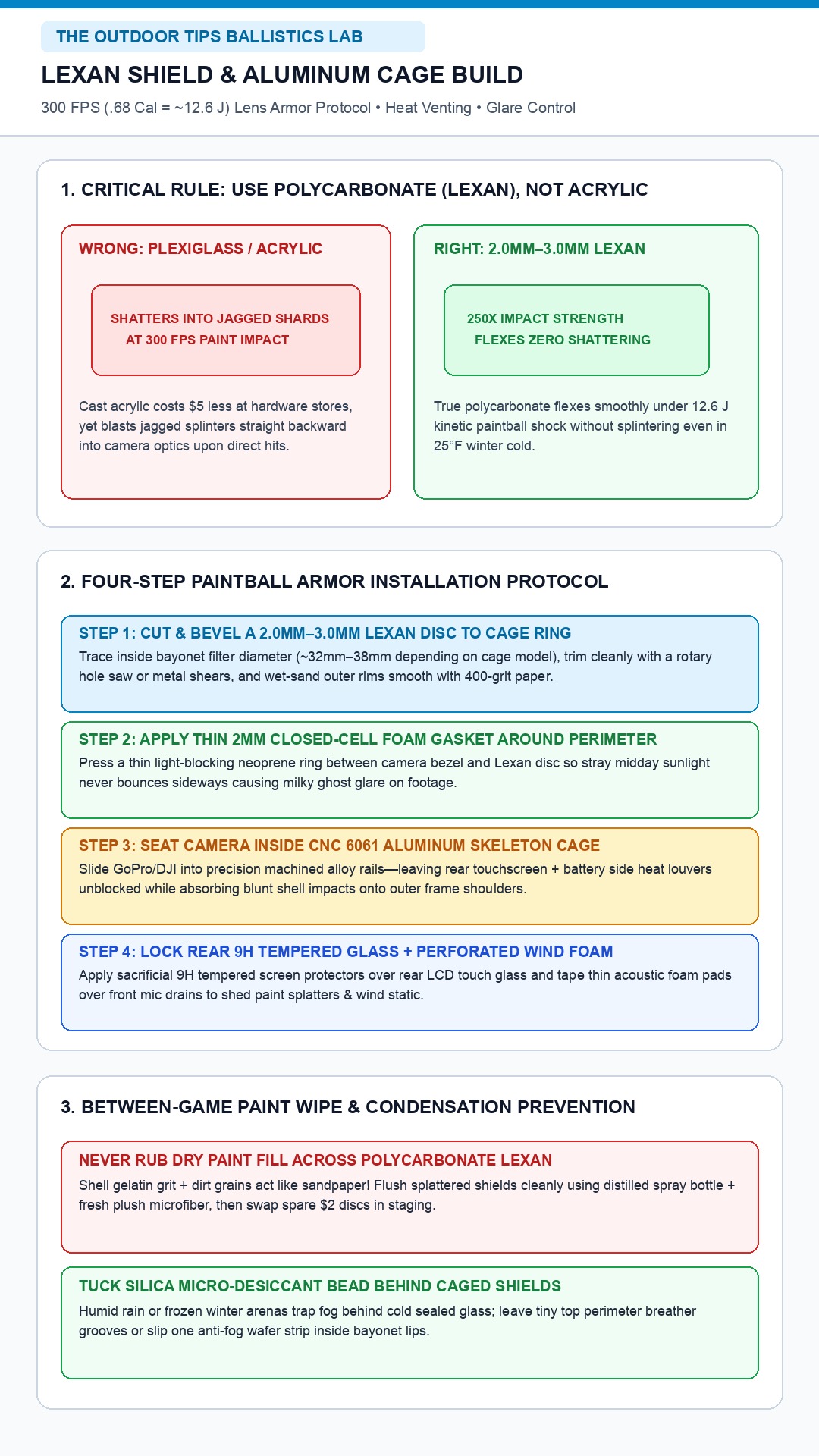
Step-by-Step Mechanical Execution: Building Bulletproof Lexan & Metal Armor
Building a bulletproof field unit costs under $35 total when machining your own replaceable lexan shield for gopro cages—yielding ten spare optical discs from a single 8×10-inch polycarbonate sheet. Execute each phase cleanly below:
Phase 1: Source Verified Cast Polycarbonate (2.0 mm – 3.0 mm) & Cut the Lens Disc
- Verify Polycarbonate vs. Hazardous Acrylic Labels: Peel corner protective film carefully: genuine GE Lexan, Makrolon, or Tuffak cast polycarbonate sheets bend smoothly beyond 45 degrees without whitening or snapping, whereas brittle acrylic breaks loudly with glass fractures. Lock thickness specifically between 2.0 mm (5/64") and 3.0 mm (1/8"); thinner 1.0 mm plastic flexes deep enough under 12.6 J impacts to kiss and crack factory GoPro glass elements behind it.
- Caliper Measure Bayonet Bezel ID & Bore Disc Cleanly: Measure internal filter ring recesses on your aluminum cage (commonly 33 mm to 38 mm on GoPro HERO9–HERO13 frames, or 40.5 mm–52 mm step rings on DJI Action / cage bayonet threads). Leave factory blue/clear peel-off film adhered across BOTH faces while chucking a bi-metal hole saw slowly at 350 RPM (using misted dishwater lubrication so heat never melts polycarbonate burrs), or clamp tin snips along a tight compass scribe.
- Wet-Sand Rim Edges Smooth to 400 Grit: Feather outer cut circumferences across damp 400-grit wet/dry sandpaper laid flat on workbench glass until discs drop effortlessly into aluminum bayonet pockets without tilting.
Phase 2: Block Side-Light Glare Using a 2 mm Closed-Cell Neoprene Gasket
- Eliminate White “Milk Halo” Lens Flare: Dropping raw clear discs directly in front of convex GoPro/DJI optics creates a 3–5 mm air tunnel. When late afternoon sun strikes polished raw polycarbonate edges obliquely, internal light reflections fog dark woods shadows completely washed out.
- Apply Perimeter Blackout & Thin Light Dam: Trace a matte black Sharpie oil-based marker ring smoothly around cut disc rims, then adhere a narrow 2 mm thick closed-cell EVA / neoprene foam ring cleanly around inside lens bezels between camera housing rings and Lexan discs. Wait to peel protective polycarbonate sheet films until gaskets seat completely dry!
Phase 3: Lock Camera Inside CNC Aluminum Skeleton Frame + Rear 9H Shield
- Slide Chassis Into 6061 Aluminum Rails & Seat Filter Retaining Ring: Drop your camera inside open CNC metal cages ensuring rear screen cutouts, side battery/USB vents, and GoPro HERO13 front cooling louver gills line up unobstructed. Tighten outer alloy retention bezels or threaded filter lock collars down securely against the Lexan outer shoulder (zero glue needed for quick field swaps).
- Apply Rear 9H Tempered Glass + Perforated Wind-Slayer Acoustic Foam: Never overlook your massive rear touchscreen! Sticking thin 9H tempered glass across rear LCD panes stops stray splattered hits over shoulder reloads from spider-webbing display digitizers. Stick slim perforated open-cell foam pads over primary microphone pinholes to dampen sprint breeze roar without choking close-range comms.
Phase 4: Field Paint Cleanup & Cold-Weather Anti-Fog Protocol
- Spray-Flush Gelatin Grit Before Wiping Dry: Never scrub dry crusty paint fill or dusty mud directly across bare polycarbonate Lexan sleeves using dirty jerseys—micro-grit scratches swirl optics swiftly! Keep one small sprayer bottle of distilled water paired with lens microfiber inside pit pouches (mirroring safe lens care covered inside our mask lens cleaning protocol), flush paint off cleanly, blot dry, and clip a fresh $2 spare Lexan disc inside cages anytime scratches pile up.
- Prevent Trapped Moisture Fogging Behind Shields: Leaving completely sealed rings over wet cold-weather camera lenses occasionally breeds misty breath fog between camera glass and shield gaps in high humidity. Punch two pinhead-sized 1 mm relief vents into the bottom edge of your 2 mm neoprene gasket ring (or drop one micro silica packet behind outer shrouds) so internal pressure and humidity equalize continuously.
Protecting Side Ports, Battery Doors & Microphones Without Muffling Sound
Mastering how to protect camera lens from paintball fire solves the highest-cost front optical hazard, yet side battery hatches and drain microphones still absorb heavy torso splashes whenever players lean out from behind inflatable Dorito bunkers. Leaving plastic latch doors swinging half-open around external USB power cables practically guarantees thick yellow PEG gelatin wicks straight onto motherboards.
When wiring all-day external pit power banks for endless scenario play, replace thin rubber flap hatches strictly with machined aluminum pass-through doors featuring tiny molded silicone cable seals. Next, cut thin perforated open-cell foam tape pads snugly around primary front microphone grilles before slipping bodies inside aluminum frames: unlike bulky adhesive plastic bags, slim acoustic foam lets a custom lexan shield for gopro rig breathe cool air while shedding airborne shell mist and gusty sprint roar cleanly.
Model-Specific Cage Sizing & Sub-Freezing Paintball Impact Behavior
Not every protective skeleton housing uses universal filter rings. When inspecting flagship action platforms side-by-side inside our thermal chamber, optical shield geometry varied notably between GoPro’s bayonet squares and DJI’s round lens barrels:
- GoPro HERO9, HERO10, HERO11, HERO12 & HERO13 Black CNC Cages: Most anodized billet cages (such as SmallRig, Ulanzi G9-14 / G9-4, or aluminum vlog cages) thread directly into 52 mm circular filter rings positioned just ahead of factory hydrophobic twist lenses. Pre-cutting 52 mm UV glass frames with empty threaded rings allows snapping raw 2.0 mm polycarbonate discs directly inside screw bezels with zero messy adhesive glue! Ensure lower front frame bars leave GoPro HERO13 front metallic radiator slats completely clear so heat-sink convection keeps recording uninterrupted during humid 90°F summer big games.
- DJI Osmo Action 4 & Action 5 Aluminum Frames: DJI’s larger 1/1.3-inch optical module protrudes slightly farther forward inside magnetic dual-claw armor frames. Confirm at least 3.5 mm axial air clearance separates curved convex DJI outer rings from flat 2.0 mm Lexan panels: if heavy impacts bend flexible polycarbonate past tight air gaps, center dome contact can transfer micro-scratches across anti-reflective lens coatings unless offset via thick neoprene rings.
- RunCam Scope Cam 2 (25mm / 35mm Telephoto) Lens Guards: Unlike square action cams, narrow cylindrical Picatinny telephoto cams present slim 24 mm–28 mm front barrels directly toward incoming sniper lanes! Slip a tight-fitting CNC threaded extension hood plus a 2.0 mm thick 25 mm optical Lexan insert directly inside anodized barrel tips—never trust exposed bare glass telephoto tubes during MagFed hallway sweeps.
- Sub-Freezing 20°F Winter Big-Game Velocity Effects: Cold gelatin shells stiffen sharply beneath 35°F while brittle winter paint fails to burst smoothly on first contact, dumping higher peak rebound shockwaves onto rigid lens mounts rather than flattening into paint puddles. Cast optical Lexan maintains toughness cleanly down to -40°F without brittle fracture, whereas adhesive vinyl or cheap cold-cracked acrylic snaps instantly upon freezing woodland skirmishes. Always inspect sacrificial discs between morning frost points and carry at least three pre-cut spares tucked inside microfiber ziplock pouches.
1. Never Wipe Lexan with Acetone, Brake Cleaner, or Harsh Methyl Alcohol Solvents: Aromatic solvents and chemical threadlocker vapors attack stretched polycarbonate chains violently, turning optically clear Lexan shields milky white with stress cracks overnight! Stick strictly to warm mild dish soap, plain distilled water, or non-ammonia optical cleaners.
2. ASTM F1776 Field Velocity Compliance: Keep every mounted camera hardware bolt mechanically captive and verify marker velocities strictly at ≤300 FPS on field radar chronographs before testing armor assemblies—and check upper goggle chimney vent spacing so heavy armored cages never force mask brow seals shut.
Essential Armorer Lens Protection Workbench Gear Matrix
Stock your gear bag once with real mechanical protection hardware instead of fragile adhesive trinkets so one weekend impact never totals a $399 camera sensor:
| Armor Component / Part | Exact Paintball Technical Spec | Primary Role | Check Live Price |
|---|---|---|---|
| CNC 6061 Aluminum Armor Cage | Machined alloy skeleton rail + open louver airflow & threaded lens ring | Frame hit crush defense & mounting anchor | Amazon eBay |
| 2.0mm–3.0mm Clear Lexan Sheet | UV-stabilized cast optical polycarbonate (~10 cuts per 8×10" sheet) | Unbreakable 300 FPS 12.6 J lens armor disc | Amazon eBay |
| 9H Rear Tempered Glass Kit | 0.3 mm oleophobic rear touchscreen film + sacrificial inner cap | Rear LCD splatter & pebble impact defense | Amazon eBay |
| 2mm Black Neoprene Foam Strip | Closed-cell light-sealing perimeter ring blocking sideways flare | Anti-glare dark shadow optical cushion | Amazon eBay |
Hands-On Technical Walkthrough: Cutting & Fitting Custom Lexan Lens Guards
Watch this practical workbench cutting and sanding demonstration showing how cleanly circular Lexan inserts machine with a hole saw and seat against protective frame bezels. Remember one critical upgrade for paintball markers: while airsoft BBs run 1.5 Joules (~1.0 mm plastic suffices), paintball shooters hitting 285–300 FPS (~12.6 Joules) MUST double sheet thickness strictly up to 2.0 mm–3.0 mm polycarbonate so shields resist violent shell bounce flexing:
Interactive Paintball Calculators & Field Prep Tools
Pair armored camera setups cleanly with climate anti-fog air math, HPA tank runtimes, and weekend field budgets before rolling onto Sunday turf:
Mask Fog Risk & Climate Hero
Verify ambient humidity condensation thresholds before heavy forehead cages block goggle brow exhausts.
HPA Tank Shot Output Calculator
Sync exact paintball shot counts per fill against your GoPro 4K60 battery endurance between staging breaks.
Barrel Bore & Insert Matcher
Dial in exact paint-to-barrel bore matches prior to strapping balanced zoom cams behind porting rows.
Weekend Paint & Gear Budget
Budget extra spare $2 Lexan disc packs, tournament paint cases, and entry fees before scenario trips.
Final Verdict: Never Run Bare Glass or Unvented Dive Cases on Active Paintball Fields
Protecting an expensive action camera in tournament paintball takes zero complex guesswork once thermal dissipation and blunt-impact mechanics align. Ditch sealed plastic waterproof dive shells that trap 142°F 4K60 heat and choke squad comms, reject shattering acrylic hardware scraps completely, and assemble the golden combo: a machined CNC 6061 Aluminum Skeleton Armor Cage guarding rear/side battery doors, lined front-face with a clean 2.0 mm–3.0 mm polycarbonate Lexan lens disc trimmed over a 2 mm black neoprene anti-glare cushion, plus a 9H rear tempered screen protector.
Locking Crisp 4K 60FPS Camera Presets: Eliminate blurred paint streaks, chopped loader framing, and mid-game overheats on match day—follow our field-tested Optimal Action Camera Settings for Paintball (4K 60FPS vs 1080p 120FPS & Shutter Rules).
Zoom Scope Cam Field Verdict: Tracking long-range First Strike or woodsball eliminations past 35 yards? Read our bench-tested RunCam Scope Cam 2 4K Review (25mm vs 40mm Woodsball Optical Showdown).
Frequently Asked Questions: GoPro Lens Armor & Lexan Shields for Paintball
How thick should a DIY Lexan lens shield be for paintball impacts?
Use strictly 2.0 mm (5/64") to 3.0 mm (1/8") genuine cast optical polycarbonate (Lexan). While thin 1.0 mm plastic stops weak airsoft BBs, a 3.0-gram paintball flying at 300 FPS imparts ~12.6 Joules of impulse—flexing thinner plastic far enough backward to crack camera bezel glass underneath.
Does shooting behind a 2mm clear Lexan shield reduce GoPro 4K or 5.3K video sharpness?
Clean scratch-free cast optical polycarbonate retains >89% light transmission with virtually indistinguishable sharpness in bright daylight edits, provided you block sideways light refraction using a thin 2 mm black neoprene foam perimeter gasket and flush dry paint fill clean rather than rubbing dirt grit into glass.
Is a 9H tempered glass protector enough on its own to protect my GoPro lens?
No. While thin 9H stick-on protectors guard nicely against tree branch scratches and protect rear touch LCD screens from off-angle splatter, direct hits at 285–300 FPS inside 25 feet carry concentrated blunt energy that cracks brittle glass films cleanly down to the factory lens barrel underneath.
Why do standard waterproof plastic GoPro cases fail during paintball?
Air-tight dive shells trap intense 4K60 processor heat inside stagnant plastic air, pushing internal CPU heat over 142°F for automatic shutdown within 18–25 minutes on warm afternoons while stifling gun shot acoustics and vocal comms completely. Open CNC aluminum cages vent continuously while guarding outer edges.
Can I clean splattered paintball fill off a polycarbonate Lexan cover using rubbing alcohol?
Avoid harsh acetone, aggressive concentrated isopropyl, and threadlocker solvent vapors on cut polycarbonate shields! Solvents cause microscopic surface crazing that permanently yellows or clouds vision. Gently hose or spray fill cleanly using warm water plus mild dish soap and pat dry with fresh plush microfiber.