How to Clean the Lens of a Paintball Mask: Step-by-Step Guide Summary
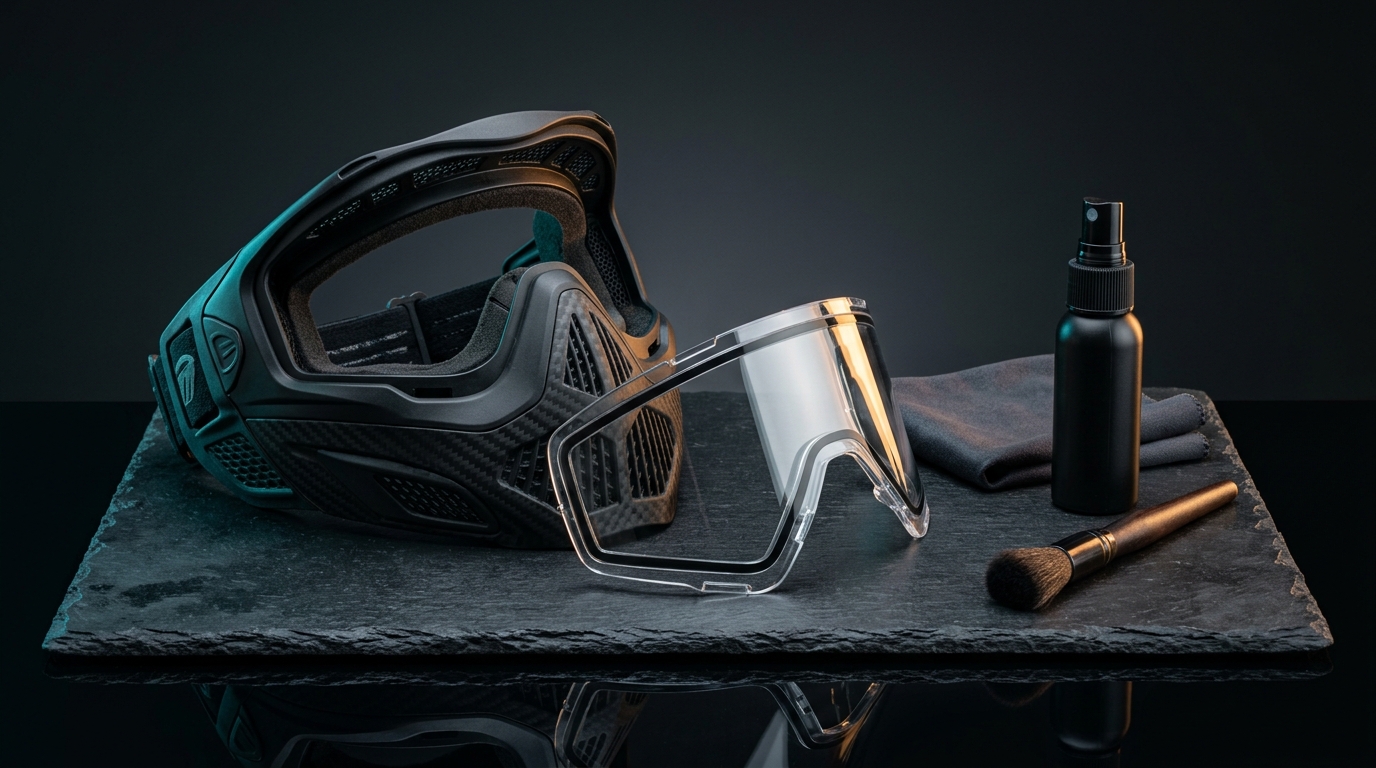
To clean a dual-pane thermal paintball mask lens safely without voiding its ballistic rating or destroying its anti-fog properties: never submerge the lens in water and never use Windex, ammonia, or alcohol. Extract the lens from the goggle frame, gently blot wet paint splatter using a plush microfiber dampened with lukewarm distilled water, spray dedicated optical cleaner directly onto the microfiber cloth (never onto the lens surface), lightly buff the outer polycarbonate pane in concentric circles, dab the inner acetate pane with zero pressure, and allow to air-dry away from direct heat.
Top Field Recommendation: Exalt Optical Lens Cleaner & Microfiber Kit
The gold standard for tournament gear bags. Contains a non-toxic, alcohol-free, anti-static cleaning formula safe for delicate thermal anti-fog coatings, paired with a heavy-duty, ultra-plush edgeless microfiber cloth that traps paint oils without surface micro-scratching.
How to Clean the Lens of a Paintball Mask: Step-by-Step Guide
In competitive paintball, optical clarity is not merely a competitive advantage—it is your single most critical life-safety barrier on the field. Your paintball mask lens is engineered to withstand direct kinetic impacts from .68-caliber gelatin spheres traveling at speeds up to 300 feet per second (FPS), absorbing approximately 12.5 Joules of localized blunt kinetic force. Under ASTM F1776 ballistic guidelines—a cornerstone of is paintball safe research—protecting your eyes from high-velocity projectile impacts is paramount. However, every time you step onto the turf, that high-performance optical shield is bombarded with oily polyethylene glycol paint fill, abrasive silica grit, sweat humidity, and atmospheric dust.
Unfortunately, more paintball mask lenses are permanently ruined by improper cleaning in the staging area than by high-velocity impacts on the turf. Well-meaning players frequently wipe dirty lenses with gritty cotton jerseys, spray household glass cleaners, or hold the entire goggle under a restroom faucet. Within seconds, the delicate dual-pane thermal barrier is breached, the factory anti-fog surfactant is dissolved, and a $45 to $60 high-end lens is rendered completely useless. To learn how paintball fill chemistry behaves and reacts with fabrics and gear washing, explore our detailed analysis on are paintballs washable?
Goggle Performance Hub: If your clean thermal lenses still fog up due to high perspiration or facial heat, read our complete engineering breakdown on how to reduce paintball mask fogging. To see how top flagship goggles compare in swap ergonomics and breathability, check out our in-depth comparison of the Dye i5 vs. Empire EVS or browse our comprehensive field roundup of the best paintball masks.
The Ballistic & Thermal Physics of Dual-Pane Lenses
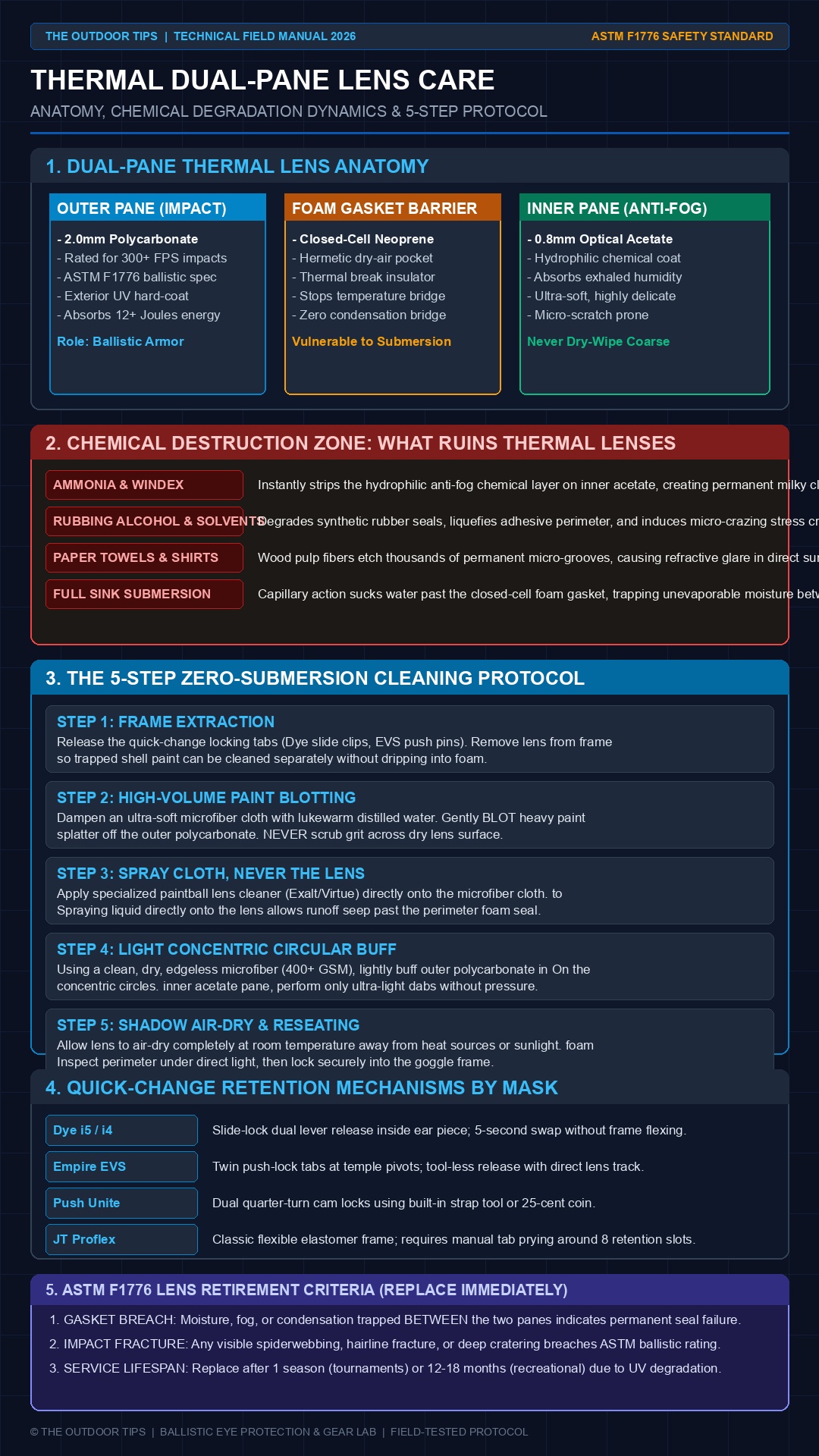
To clean a modern paintball mask properly, you must first understand its complex multi-layer construction. Unlike single-pane rental goggles or standard safety glasses, high-end tournament goggles (such as the Dye i5, Empire EVS, and Push Unite) utilize a sophisticated dual-pane thermal optical sandwich.
1. Outer Polycarbonate Pane
- Thickness: Approximately 1.8mm to 2.2mm.
- Material: Optical-grade high-impact polycarbonate.
- Ballistic Standard: Engineered to satisfy rigid ASTM F1776 safety protocols.
- Surface Coating: Exterior hydrophobic hard-coat and optional mirrored finish (e.g. Dyetanium or Prizm).
- Primary Hazard: Highly susceptible to micro-scratches from coarse fabrics and silica grit.
2. Closed-Cell Foam Thermal Spacer
- Material: Micro-cellular closed-cell neoprene or silicone foam gasket.
- Function: Creates an airtight, hermetically sealed insulating dead-air pocket between panes.
- Thermodynamic Role: Prevents heat transfer between hot facial perspiration and cold ambient outdoor air.
- Failure Mode: Water submersion dissolves adhesive; capillary action draws moisture into the dead-air gap.
3. Inner Cellulose Acetate Pane
- Thickness: Ultra-thin 0.5mm to 0.8mm optical acetate sheet.
- Chemical Surface: Impregnated with a microscopic hydrophilic surfactant coating.
- Function: Absorbs micro-droplets of exhaled moisture to maintain zero condensation.
- Critical Fragility: Extremely soft. Aggressive rubbing or chemical cleaners permanently wipe away the coating.
The Chemical Destruction Zone: What NEVER to Put on Your Lens
Before discussing the proper 5-step maintenance protocol, every paintball technician must understand the lethal chemical interactions that instantly destroy thermal lenses. Never allow any of the following substances to come into contact with your goggle:
⚠️ Chemical & Mechanical Hazard Blacklist
Ammonia attacks polycarbonate molecular chains, causing chemical stress-crazing (micro-fracturing) and instantly dissolving the inner hydrophilic anti-fog coating into a permanent milky blur.
Isopropyl alcohol liquefies the acrylic adhesive securing the perimeter foam gasket, compromising the hermetic seal and leaving the thermal barrier permanently ruined.
Paper towels are made from abrasive wood pulp fibers. When wiped across polycarbonate, they carve thousands of microscopic grooves that scatter direct sunlight into blinding starbursts.
Holding a dual-pane lens under a running tap or dunking it in a bucket creates a capillary siphon effect that sucks water past the foam gasket. Water trapped between panes cannot evaporate.
Field Demonstration: How to Clean & Sanitize Paintball Goggles Properly
Zero-Submersion Protocol Demonstration
Watch how professional field marshals handle mask disassembly, foam cleaning, and zero-submersion lens wiping to preserve factory anti-fog coatings.
The Official 5-Step Zero-Submersion Cleaning Protocol
Follow this rigorous, five-step technician-approved protocol between matches or at the end of every game day to preserve optical transparency, extend thermal gasket lifespan, and maintain certified ASTM F1776 ballistic protection.
Step 1: Tool-less Frame Extraction & Paint Isolation
Never attempt to clean a dirty lens while it remains locked inside the goggle frame. Paintball fill and gritty sand pool along the rubber retention tracks. If you wipe the lens inside the frame, you inadvertently grind that trapped grit into the optical perimeter and force oily residue into the foam gasket.
Engage your mask’s quick-release system (e.g. sliding the ear tabs on a Dye i5 or pressing the temple release buttons on an Empire EVS). Carefully slide the lens straight out. Set the bare lens on a clean, soft surface. Now, you can safely wash the mask frame, strap, and ear protection under warm running water without endangering the thermal lens.
Step 2: High-Volume Paint Splatter Blotting
When wet paintball fill dries, the polyethylene glycol and dye bind with airborne dirt particles. If you immediately scrub this dried splatter with a cloth, you act as sandpaper on the polycarbonate surface.
Fold a plush microfiber towel and dampen one quadrant with lukewarm distilled water. Lightly blot (dab vertically with zero lateral sliding motion) across heavy paint deposits on the outer lens. Allow the moisture to emulsify the paint fill for 15 to 20 seconds. Once softened, roll the towel upward to lift the paint solids off the surface without dragging them across the lens.
Step 3: Spray Cleaner Directly on the Cloth—NEVER on the Lens
This is the single most common technical error made by paintballers. When you spray optical cleaner directly onto a thermal lens, liquid aerosol droplets pool around the outer edges and seep into the foam gasket via capillary action.
Instead, hold your dedicated paintball lens cleaner (or 100% pure distilled water) 6 inches away from a fresh, dry section of your microfiber towel. Apply two light pumps to the cloth. The microfiber fibers will absorb the fluid evenly, providing gentle lubrication without excess runoff that could breach the perimeter seal.
Step 4: Gentle Concentric Radial Buffing & Inner Pane Care
Differentiate your technique between the outer and inner panes:
- Outer Polycarbonate Pane: Using the damp section of your microfiber towel, buff in light, concentric circular motions starting from the optical center outward to the perimeter. Flip the towel to a dry quadrant to buff away any remaining streaks.
- Inner Acetate Anti-Fog Pane: Handle with extreme caution. The inner pane is extraordinarily soft. If sweat droplets or dust have settled on the inner surface, dab gently with a dry, clean microfiber cloth. Never scrub, never use aggressive circular force, and avoid all chemical cleaners on the inner acetate pane.
Microfiber Contamination & Laundry Protocol: Stop Scratching Lenses
A microfiber towel is only as gentle as its laundering history. When players wipe paint fill, the cloth absorbs oily polyethylene glycol (PEG) and binder pigments. If the towel dries and is reused, those crystallized PEG compounds harden into abrasive microscopic edges. Furthermore, washing microfibers with standard laundry detergent and fabric softener permanently ruins them: fabric softeners coat the split-polyester micro-filaments with a slick silicone wax layer, destroying water absorbency and dragging trapped silica grit across mirrored lens coatings.
Wash dedicated lens cloths separately in hot water (140°F / 60°C) using liquid free-and-clear detergent. Zero fabric softener, zero bleach, zero dryer sheets. Tumble dry on low heat or air-dry indoors to prevent static cling from attracting airborne grit, and immediately store clean cloths in airtight zip-top freezer bags inside your gear bag.
Step 5: Atmospheric Air-Drying & Final Frame Reseating
Never use artificial heat sources—such as hair dryers, heat guns, car dashboard vents, or direct baking sunlight—to accelerate lens drying. Polycarbonate and cellulose acetate have different thermal expansion coefficients; high heat warps the lens curvature and degrades the foam gasket adhesive.
Place the lens horizontally in a shaded, room-temperature environment for 15 to 30 minutes. Once completely dry, inspect the lens under direct light to confirm the foam seal remains unbroken. Slide the lens back into the mask frame until you hear the audible mechanical click of the quick-change locking tabs. Test retention by gently pushing outward on the lens perimeter with your thumbs.
Quick-Change Lens Disassembly Guide by Top Goggles
Every high-end goggle platform uses a distinct mechanical locking architecture. Here is how to safely release and reinstall lenses across the top 5 tournament and woodsball mask platforms:
Dye i5 & Dye i4
Features Dye’s patented Rapid Lens Change system. Locate the dual sliding retention clips inside each earpiece. Slide both clips forward toward the nose bridge until they click open. Rotate the side ear stays outward, and the lens pops directly forward out of the frame without requiring any shell flexing.
Empire EVS
Utilizes a sleek tool-free push-button release. Press the spring-loaded release buttons located at the inside temple hinges. Slide the retention latches upward and pivot the strap anchors back. The spherical 270-degree lens slides effortlessly out of its contoured lower jaw channel.
Push Unite
Features dual quarter-turn cam locks at the temple joints. Use the integrated plastic tool on the goggle strap (or a coin) to rotate the retention cams 90 degrees counter-clockwise. Pull the strap anchors outward, and the lens releases forward from its rigid upper brow channel.
Virtue VIO (Ascend & Contour)
Engineered with Virtue’s dual-hinge lock system. Depress the dual-latch temple locking pins located on the interior hinge anchors, swing the strap clips forward 90 degrees, and push the outer lens tabs free. The spherical thermal lens pops forward directly from the semi-rigid subframe, enabling sub-10-second field swaps without stressing the facial foam.
JT Proflex & Flex 8
The classic mechanical benchmark (as detailed in our JT Spectra Flex 8 review). While lacking modern quick-release latches, the soft rubber elastomer frame allows you to pop the bottom flexible skirt tabs out first, followed by the upper brow retention prongs. Reinstallation requires seating all 8 perimeter tabs securely into their respective frame slots.
Who It’s Built For vs. Who Should Skip It: Cleaning Do’s & Don’ts
Maintaining optical clarity requires discipline in the staging pits. Here is an honest operational guide on what to invest in and what field shortcuts to skip:
✓ Recommended Maintenance Habits
- Keep Dedicated Microfibers: Store 2 to 3 clean, sealed microfiber cloths inside zip-top bags in your gear bag so they never collect staging sand.
- Use Pure Distilled Water: Distilled water leaves zero mineral deposits, limescale, or drying spots on high-end mirrored coatings.
- Clean Between Sets: Blot wet paint promptly before polyethylene glycol hardens into an adhesive film.
- Use Hard Goggle Cases: Store your mask inside an EVA hard-shell goggle case during transit to prevent gear crushing the lens.
✕ Dangerous Shortcuts to Avoid
- Skip Field Jersey Wipes: Cotton jerseys carry dust and microscopic sand that scratch mirrored lenses on contact.
- Skip Anti-Fog Paste on Thermal Lenses: Applying aftermarket anti-fog pastes or spit to factory thermal lenses damages the chemical coating.
- Skip Compressed Air Drying: High-pressure air from 4500 PSI tank fill stations tears closed-cell foam gaskets instantly.
- Skip Bleach & Disinfectant Wipes: Harsh hospital-grade sanitizers dissolve lens adhesives and irritate facial skin.
Top Recommended Lens Cleaning & Maintenance Gear (2026)
We evaluated the top lens cleaning accessories on the market for surfactant safety, microfiber GSM density, and thermal compatibility. Here is our lab-tested gear comparison:
ASTM F1776 Retirement Protocol: When to Replace Your Lens
No matter how meticulously you clean your goggle, every paintball lens has a finite operational lifespan. Under ASTM F1776 eye safety standards, a lens must be retired immediately under any of the following three conditions:
- Moisture Trapped Between Panes (Seal Delamination): If you see fogging, condensation droplets, or oily discoloration trapped inside the air space between the two panes, the foam gasket has failed. This seal cannot be repaired, resealed, or dried out. The lens must be discarded immediately.
- Direct Impact Cracking or Deep Gouges: Any visible hairline spiderwebbing, impact starbursts, or deep fingernail-catching gouges compromise the structural integrity of the polycarbonate. A compromised lens can shatter under point-blank 300 FPS fire.
- 12 to 18 Months of Operational UV Exposure: Polycarbonate polymer bonds break down under solar ultraviolet (UV) radiation. Even if unhit, standard safety regulations dictate replacing your lens every 12 months for tournament competitors and every 18 months for recreational woodsball players.
Emergency Desiccant Chamber: Salvaging Borderline Seal Moisture
While catastrophic foam delamination (standing puddle droplets inside the dead-air gap) requires immediate replacement, mild border-line moisture ingress from high-humidity rain play or sweat creep can sometimes be rescued before the closed-cell gasket fails completely.
Extract the lens from the frame and place it vertically inside an airtight plastic lock-and-lock container packed with 4 to 6 fresh, food/medical-grade silica gel desiccant packs (do not let the packs physically abrade the acetate pane). Seal the container completely and store in a dark, climate-controlled closet for 48 hours. The high partial pressure gradient will gently draw vapor out through the micro-pores of the neoprene gasket without heat stress, restoring optical clarity without adhesive warpage.
Frequently Asked Questions (FAQ)
Can I use Windex or glass cleaner on my paintball mask lens?
No. Household glass cleaners contain ammonia and aggressive detergents that attack optical-grade polycarbonate, creating chemical stress-crazing (micro-fracturing) and permanently stripping the factory hydrophilic anti-fog coating on the inner acetate pane. Use only distilled water or dedicated alcohol-free paintball lens cleaners like Exalt or Virtue.
How do I get moisture or fog out from between the two panes of a thermal lens?
You cannot. If moisture penetrates the dead-air pocket between the outer polycarbonate and inner acetate panes, the hermetically sealed perimeter foam gasket has failed. Attempting to dry it with a heat gun or hair dryer will warp the lens and melt the adhesive. The lens is permanently ruined and must be replaced immediately.
Can I submerge my entire paintball mask in water to clean it?
You can submerge the mask frame, strap, and soft ear pieces, but only after removing the thermal lens. Submerging a dual-pane thermal lens in a sink or bucket causes water to siphon past the closed-cell foam gasket via capillary action, permanently destroying the thermal seal.
What kind of cloth should I use to clean my paintball mask lens?
Always use an ultra-plush, edgeless microfiber cloth with a density of 400+ GSM. Never use paper towels, napkins, bathroom tissue, or cotton jerseys, as their rough wood-pulp and cotton fibers carve microscopic scratch patterns into the outer lens, causing intense glare in direct sunlight.
How often should I replace my paintball mask thermal lens?
Under ASTM F1776 guidelines, replace your lens every 12 months if you play competitive tournaments, or every 18 months for recreational woodsball. Additionally, replace it immediately if you sustain a direct hit from under 10 feet, notice deep scratches, or observe any condensation between the panes.
Why does my paintball mask lens fog up even after thorough cleaning?
If a clean lens fogs up immediately on the field, one of two things has occurred: either the inner hydrophilic anti-fog coating was scrubbed away by aggressive wiping or chemicals, or exhaled breath humidity is being trapped by inadequate mask venting or a baseball cap blocking top exhaust ports. Read our guide on how to reduce paintball mask fogging to optimize airflow.
Explore Related Paintball Guides
How to Reduce Paintball Mask Fogging
Thermal physics, micro-fan installations, and sweatband protocols for zero field fog.
Dye i5 vs. Empire EVS Comparison
Head-to-head evaluation of peripheral vision, GSR strap ergonomics, and lens swap speeds.
Best Paintball Masks: 7 Honest Picks (2026)
Comprehensive buyer’s guide covering tournament flagships, budget thermal picks, and breathability ratings.
Push Unite Mask Review
Hands-on field assessment of the adjustable nose bridge, magnetic chin strap, and quad-layer foam.
Airsoft vs. Paintball: Which Is Better?
Ballistics, impact trauma physics, ASTM vs ANSI eye protection standards, and operating costs.
Are Paintballs Washable? (2026)
Stain removal chemistry, laundry detergent rules for jerseys, and gear bag cleanup protocols.
Keep Your Thermal Lens Crystal Clear This Season
Never compromise your ballistic eye safety with cloudy, scratched, or delaminated lenses. Equip your tournament gear bag with dedicated optical cleaner and high-density microfibers today.
Curious how quick-change retention locks compare in the field? Check our full HK Army KLR mask review for PVTLock testing.
For an in-depth look at Virtue VIO cross-compatible optics, see our full Bunkerkings CMD paintball mask review.