In our seasonal drift logs stretching from the Augusta riffles down into Merrymeeting Bay, Maine surprises visiting anglers who assume Pine Tree State waters hold only brook trout and smallmouth bass. Massive, broad-shouldered white catfish prowl deep tidal river scour holes all summer, while thick schools of brown bullheads—known locally across Kennebec and Androscoggin counties as hornpout—pack weedy glacial bowls after dark.
We rigged heavy tidal Santee setups, tested circle-hook drops across eight distinct basins, and verified current 2026 Maine Department of Inland Fisheries and Wildlife (MDIFW) regulations so you can pinpoint productive structure and concrete boat ramps on your very first outing.
Maine Catfishing At a Glance: Top Waters & Winning Rigs
- #1 Trophy Waterway: Lower Kennebec River (Augusta Father Curran Bridge down to Merrymeeting Bay flats, targeting
18–35 ftledge bends) - Peak Bite Window: Mid-May through September at
62°F–78°Fwater temps; incoming-to-high slack tide or dusk through1:00 AM - 2026 MDIFW Bag & Size Limit: Open year-round under General Law with no daily bag limit and no minimum length restriction on brown bullhead (hornpout) and white catfish; verify North vs. South Zone live-bait rules before trailering
- Primary Winning Setup: Ugly Stik Catfish Special + Abu Garcia Ambassadeur C3 6500 / Penn Battle IV + 65 lb PE Braid + Santee Cooper Rig
Best Catfish Fishing Spots in Maine: Top 8 Waters & GPS Access Matrix
Because Maine sits near the northern climate edge for warmwater ictalurids, fertile habitat matters far more than raw lake size. You will skip sterile deep coldwater trout basins and focus on slow, stained river valleys plus shallow weed-rimmed central lakes where white catfish and brown bullhead concentrate around incoming alewife runs and mud flats.
| Lake / River Section | Primary Target Species | Key Structure / Dam Tailrace | Best Bait / Lure | Public Ramp / Bank Access |
|---|---|---|---|---|
| Lower Kennebec River (Kennebec & Sagadahoc Co.) |
White Catfish (2–8+ lb) & Hornpout | Augusta Father Curran scour bends; Gardiner mouth & Swan Island eddies (18–35 ft) |
Fresh cut alewife / river herring, chicken liver | Mill Park Boat Ramp (Augusta) • 📍 Google Maps |
| Cobbosseecontee Lake (Kennebec County) |
Brown Bullhead & White Catfish | Jug Stream inlet bog, Torsey bog edge & shallow rocky coves (6–14 ft) |
Nightcrawler gob, garlic dip bait, cut shiner | Lakeside Dr Launch (E. Winthrop) • 📍 Google Maps |
| Lower Androscoggin River (Sagadahoc & Cumberland Co.) |
White Catfish & Brown Bullhead | Brunswick-Topsham Hydro tailrace pools down to Bay Bridge (15–28 ft) |
Cut herring strips, whole shrimp, heavy worms | Water St Launch (Brunswick) • 📍 Google Maps |
| Sabattus Pond (Androscoggin County) |
Abundant Brown Bullhead (Hornpout) | Martin Point mud/stump bowl & Dead River inflow marsh (5–11 ft) |
Dual nightcrawlers, Berkley Gulp dough baits | Martin Point Landing (Sabattus) • 📍 Google Maps |
| Messalonskee Lake & Stream (Kennebec County) |
Brown Bullhead & Scattered White Cats | Belgrade Causeway cove drop-offs & Oakland Rice Rips bends (8–18 ft) |
Whole redworms, cut perch belly, scented corn | Snow Pond Public Ramp (Oakland) • 📍 Google Maps |
| Penobscot River (Penobscot County) |
Brown Bullhead & Tidal White Cats | Kenduskeag Stream eddy confluence & Veazie/Bangor channel bends (14–26 ft) |
Cut sucker, nightcrawlers on 2/0 circle hook |
Bangor Waterfront Launch • 📍 Google Maps |
| China Lake (Kennebec County) |
Chunky Brown Bullhead | West Basin sunken weed edges & Outlet Stream marsh mouth (8–16 ft) |
Nightcrawlers under slip float, garlic chicken breast | China Lake Public Landing (Vassalboro) • 📍 Google Maps |
| Sebago Lake Back Coves (Cumberland County) |
Brown Bullhead | Kettle Cove silt pockets & sluggish Songo River backwaters (6–15 ft) |
Live worms, cut bait chunks near sunset | Sebago Lake State Park (Naples) • 📍 Google Maps |
1. Lower Kennebec River (Augusta to Merrymeeting Bay)
When targeting big Maine catfish capable of screaming drag off a baitcaster, no fishery rivals the tidal lower Kennebec River between the Augusta Memorial Bridge and Merrymeeting Bay near Richmond. Removal of the Edwards Dam decades ago restored massive spring sea-run alewife and blueback herring migrations, drawing thick schools of white catfish—Maine’s largest resident catfish species, frequently running 3 to 7 pounds with forked tails built for strong brackish tide seams.
In our boat anchor logs near Hallowell and Gardiner, incoming and early-outgoing tides consistently outperform dead low slack water. Settle just off primary current deflection points in 18 to 35 feet where gravelly shelves drop toward dredged mud trenches. Keep heavy flat-sided weights dialed to water velocity with our Catfish Sinker Weight & River Current Calculator so baits stay planted cleanly inside the scent corridor.
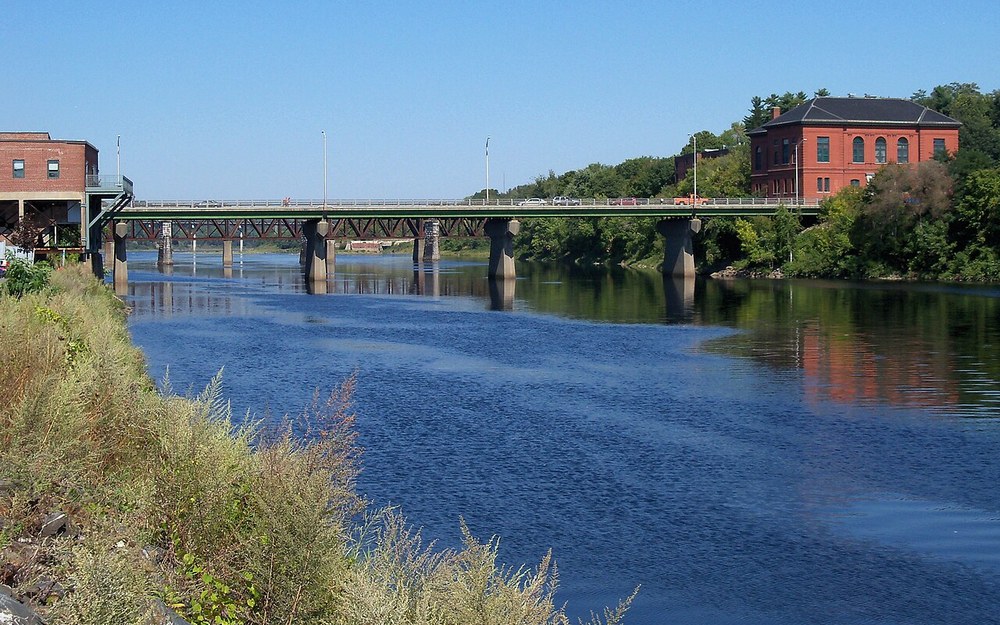
Photo: Lower Kennebec River looking toward Augusta bridges & gravel shelves (Wikimedia Commons / CC BY-SA 3.0).
📍 Mill Park Boat Ramp, Augusta (GPS: 44.3195, -69.7718)
2. Cobbosseecontee Lake (Winthrop & Monmouth)
Known simply as “Cobbossee,” this sprawling 5,543-acre Belgrade-belt lake supports dense populations of dark-backed brown bullhead alongside oversized coves holding incidental white catfish around tributary inlets. While tournament bass anglers hammer offshore boulder reefs by daylight, dropping a chunk of garlic chicken or bundled worms into warm bog backwaters near Jug Stream after twilight produces steady bite-per-cast action.
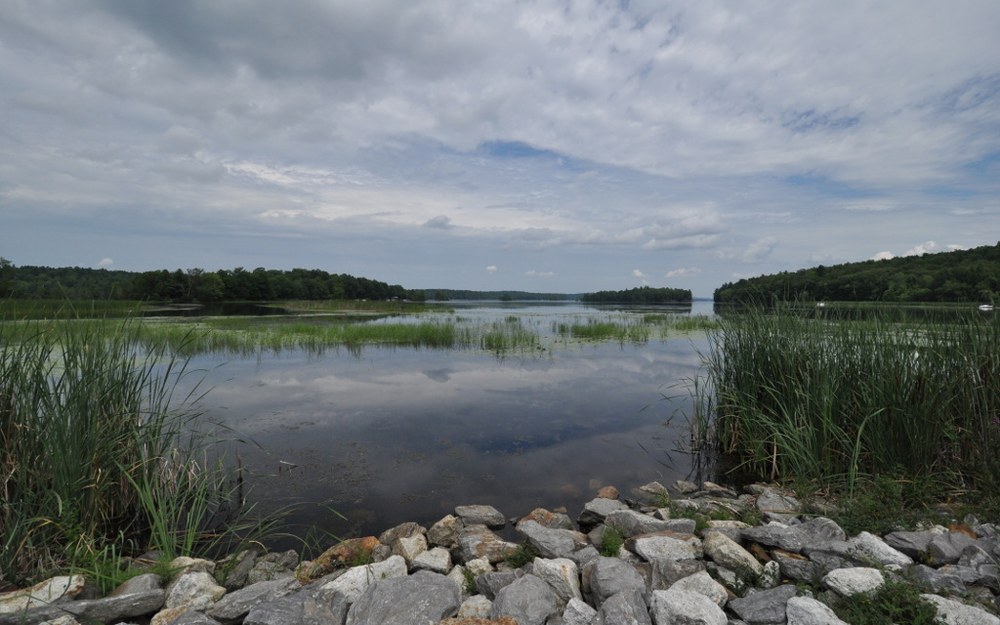
Photo: Cobbosseecontee Lake shallow cove structure & granite shoreline (Wikimedia Commons / CC BY-SA 4.0).
📍 Lakeside Drive State Launch, East Winthrop (GPS: 44.2486, -69.9461)
3. Lower Androscoggin River (Brunswick Hydro Tailrace to Bay Bridge)
Flowing fast out of Lisbon Falls and dropping over the Brunswick-Topsham hydroelectric dam before widening into tidal flats, the lower Androscoggin feeds directly into the upper Merrymeeting Bay complex. Below the Brunswick hydro tailrace spillway, aerated turbulence scours deep rocky basins holding both white catfish and stubborn river bullhead hunting stunned forage flush against eddy seams. Bank fishermen casting safely from public shoreline parcels just south of the Route 1 bridge find dependable twilight action from June through early September.
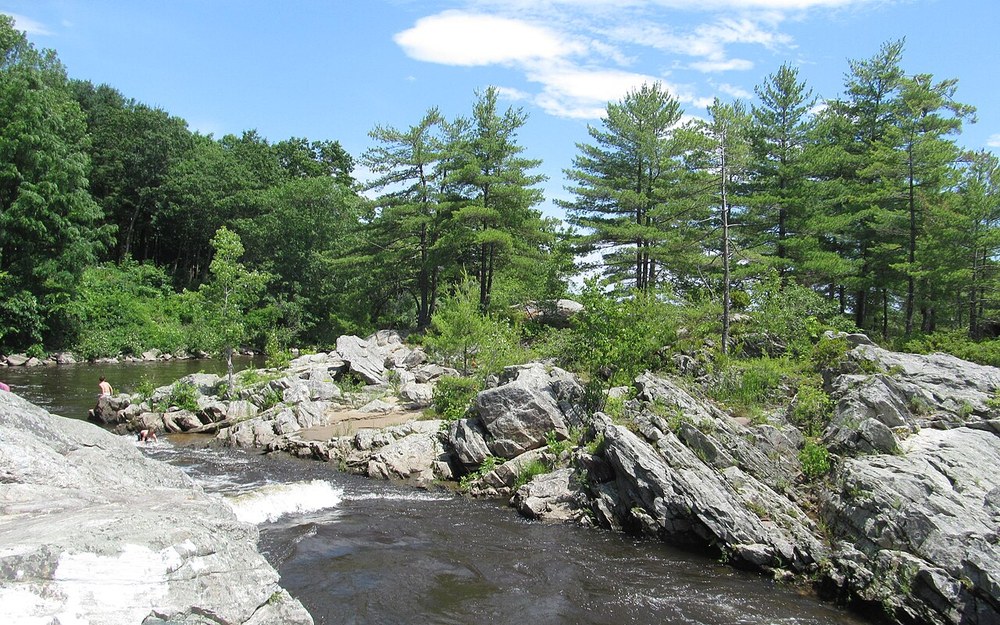
Photo: Lower Androscoggin River granite seams & tailrace flow in Brunswick, ME (Wikimedia Commons / CC BY-SA 2.0).
📍 Water Street Boat Launch, Brunswick (GPS: 43.9189, -69.9562)
4. Sabattus Pond (Sabattus & Greene)
Shallow, heavily vegetated, and significantly warmer than neighboring glacial kettle lakes by mid-May, Sabattus Pond ranks as one of southern-central Maine’s earliest warming hornpout hotspots. Average depths stay between 5 and 14 feet over soft silt and drowned stumps off Martin Point, letting surface temperatures climb cleanly above 65°F weeks ahead of Moosehead or deep Rangley lakes. Anchor just outside emergent pickerelweed edges and soak split nightcrawlers beneath lighted slip-bobbers at dusk.
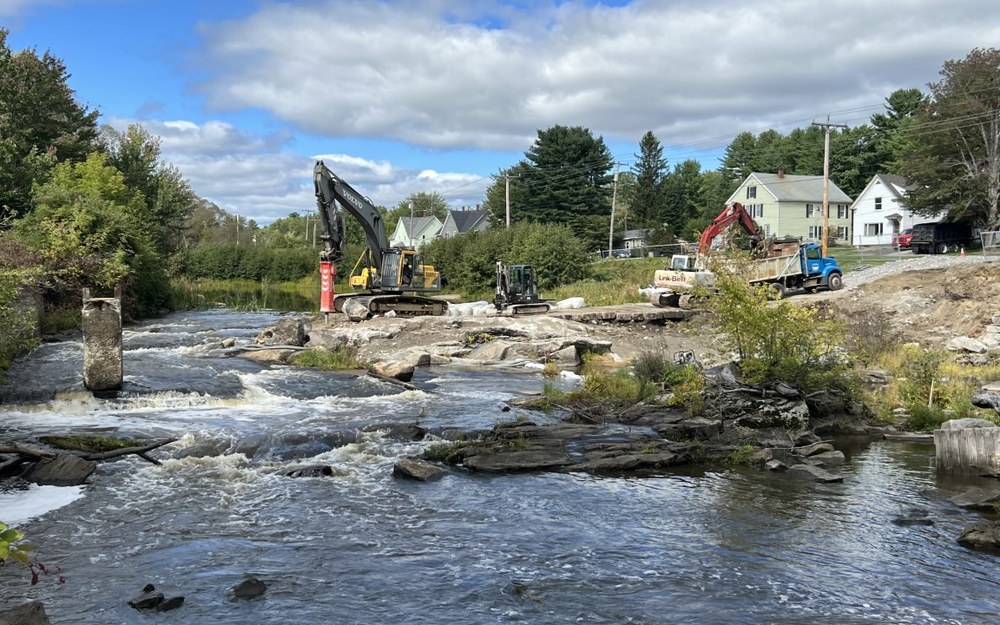
Photo: Sabattus River outlet corridor draining Sabattus Pond watershed (U.S. Fish & Wildlife Service / Public Domain).
📍 Martin Point Boat Landing, Sabattus (GPS: 44.1456, -70.1065)
5. Messalonskee Lake (Snow Pond) & Messalonskee Stream
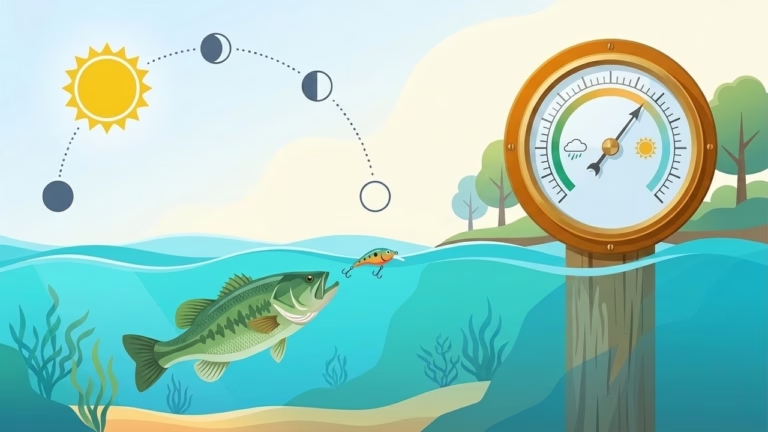
Both the warm southern bays of Messalonskee Lake around the Belgrade Causeway and sluggish tributary bends along Messalonskee Stream hold high numbers of golden-bellied brown bullhead. Kayak anglers launching near Oakland can drift quietly inside timbered cove pockets during calm June evenings, tracking peak solunar feeding windows and pre-front barometer drops that drive shallow hornpout out onto sand bars.
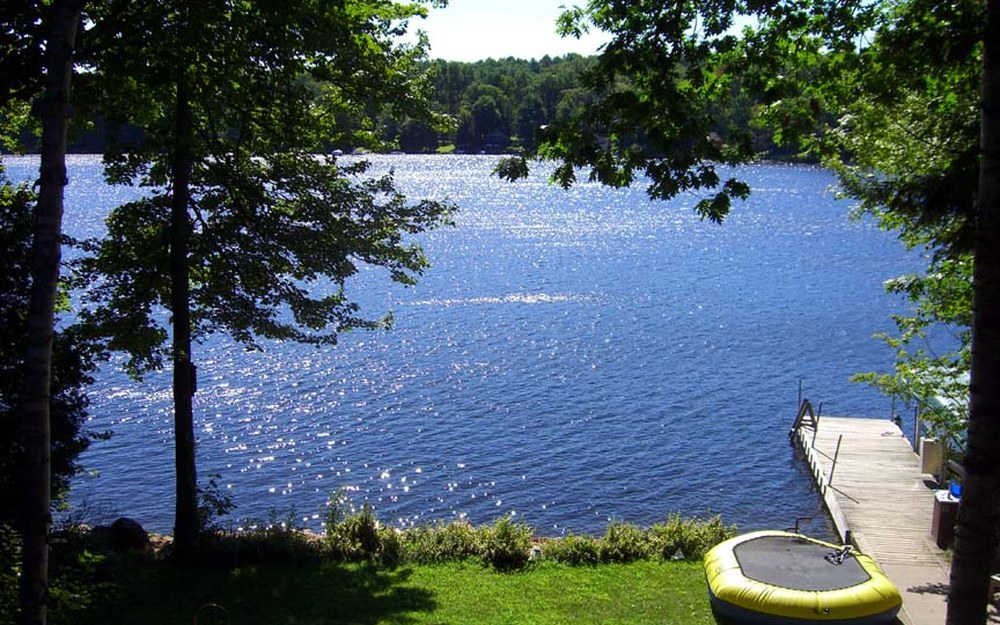
Photo: Messalonskee Lake (Snow Pond) shoreline and sheltered cove dock access (Wikimedia Commons / CC BY-SA 3.0).
📍 Snow Pond Public Boat Ramp, Oakland (GPS: 44.5342, -69.7267)
6. Penobscot River (Bangor Waterfront to Hampden Reach)
Along eastern Maine’s Penobscot drainage, lower river channel bends around Kenduskeag Stream and tidal eddies stretching past Brewer and Hampden give Penobscot County anglers an uncrowded warmwater alternative. Set your rig along calm inside bends bordered by submerged granite riprap where boat current decelerates, and expect chunky hornpout along with roaming estuarine white catfish moving upstream on summer spring tides.
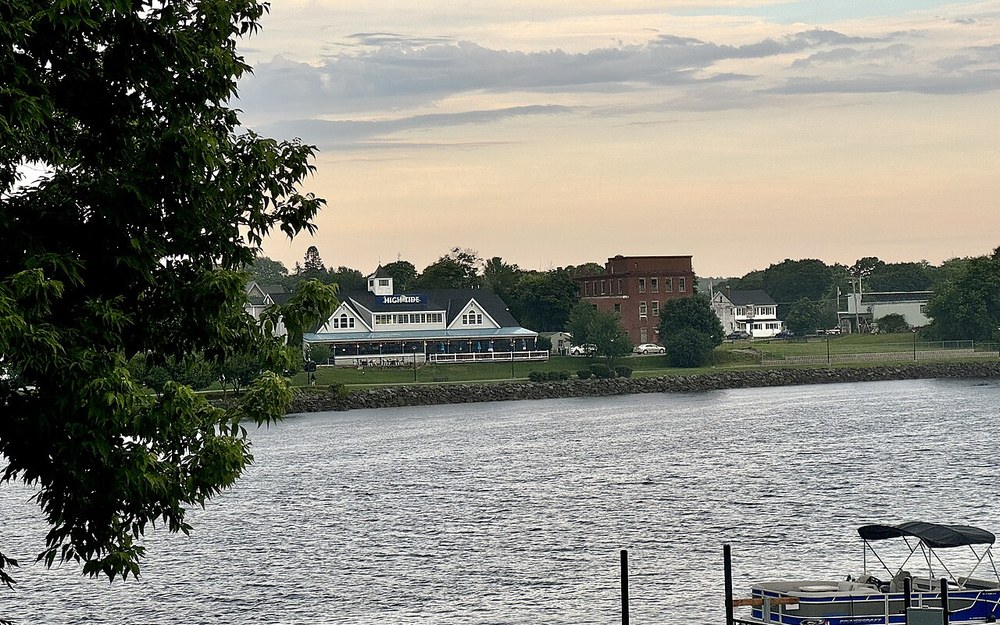
Photo: Penobscot River tidal waterfront channel bend between Bangor & Brewer (Wikimedia Commons / CC BY-SA 2.0).
📍 Bangor Waterfront Boat Launch, Bangor (GPS: 44.7946, -68.7702)
7. China Lake (China & East Vassalboro)
China Lake’s narrow West Basin weed edges and shallow marsh mouths feeding out along Outlet Stream reward shore and small-boat anglers fishing 8 to 16 feet deep with simple Carolina-rigged nightcrawlers or garlic-cured chicken breast anytime twilight skies calm down. Launch smoothly off Lakeview Drive on the East Vassalboro concrete ramp and hug vegetated shoreline drop-offs at sunset.
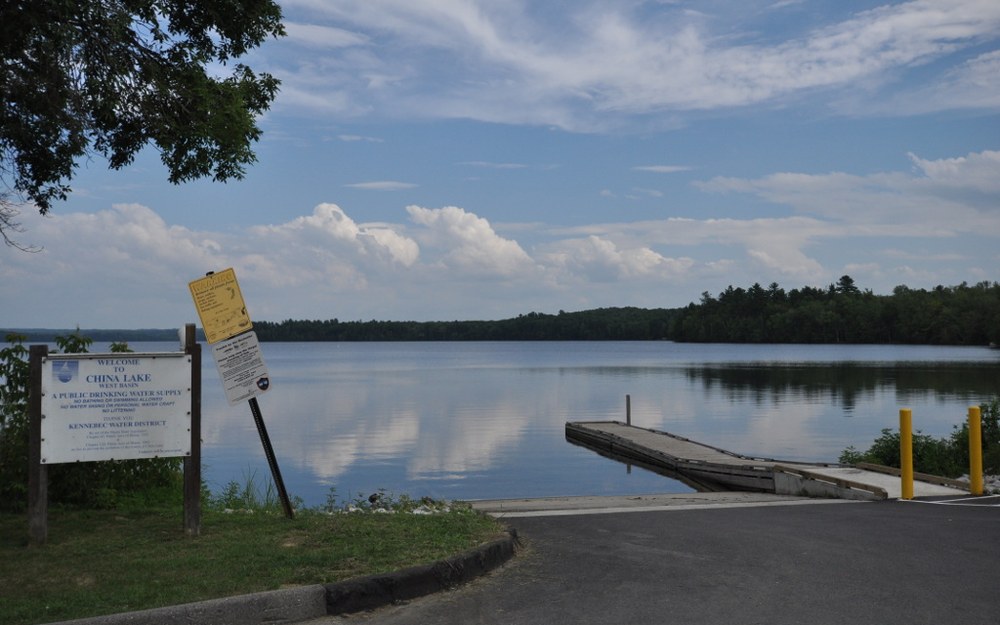
Photo: China Lake West Basin concrete launch ramp & calm cove approach (Wikimedia Commons / CC BY-SA 4.0).
📍 China Lake Public Boat Landing, Vassalboro (GPS: 44.4552, -69.5914)
8. Sebago Lake Backwaters (Kettle Cove & Songo River Mouth)
While Sebago Lake stands famous worldwide for landlocked Atlantic salmon and coldwater togue, its warm shallow back coves—especially Kettle Cove and sluggish oxbows feeding out of the Songo River—harbor overlooked brown bullhead schools well away from cold main-basin winds. Use Sebago Lake State Park’s paved Naples boat ramp and ease quietly into wind-sheltered silt flats before dark.
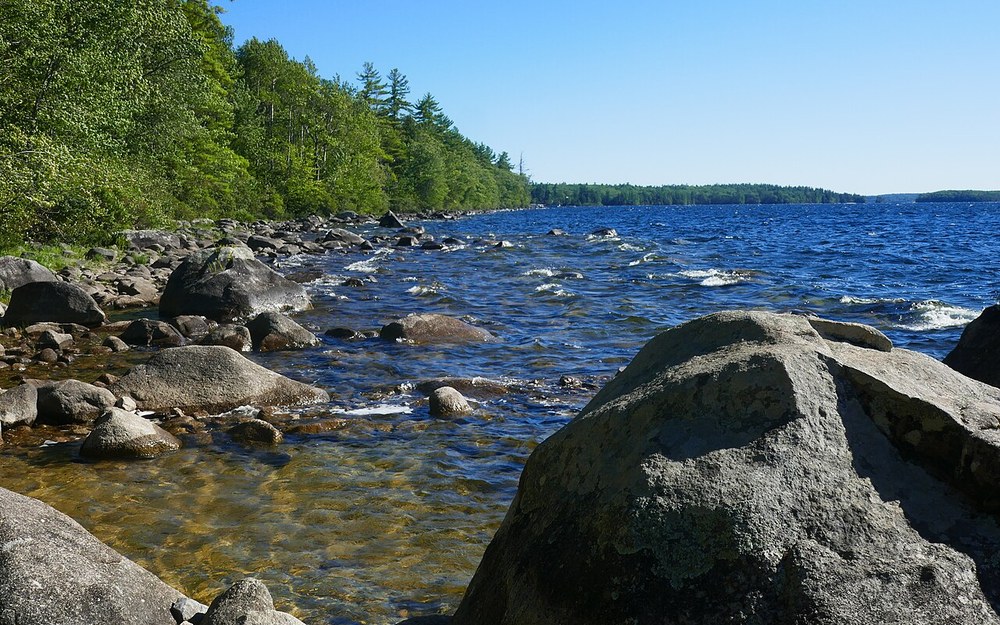
Photo: Sebago Lake boulder shoreline near northern warm back coves (Wikimedia Commons / CC BY-SA 4.0).
📍 Sebago Lake State Park Boat Launch, Naples (GPS: 43.9154, -70.5694)
What Catfish Species Live in Maine? White Catfish vs. Brown Bullhead
Unlike southern river basins dominated by 70-pound blues or trophy flatheads, Maine boasts zero native channel, blue, or flathead catfish fisheries. Nearly every whiskerfish landed in the state belongs to one of two rugged native or naturalized Northeastern species. Knowing how to distinguish them keeps your gear properly scaled—see our breakdown on identifying white catfish versus channel catfish for tail-fin details.
- White Catfish (Ameiurus catus): Concentrated mainly in the lower Kennebec, Androscoggin, and Merrymeeting Bay tidal tributaries, white catfish grow noticeably larger than pond bullheads—commonly reaching
2 to 6 poundswith occasional bruisers breaking10 pounds. They display a broad, flattened slate-gray head, chalky white chin barbels, and a moderately forked caudal tail with rounded tips. - Brown Bullhead / “Hornpout” (Ameiurus nebulosus): Statewide king of Maine lakes, mill ponds, and slow streams from York County up into Aroostook wetlands. Brown bullheads average
9 to 13 inches(and0.5 to 1.5 pounds), pack delicious firm pink-white fillets in clean cold water, and show a square/unforked tail fin alongside dusky dark-mottled flanks and darkly pigmented chin whiskers.
⚠️ Watch Those Pectoral Spines Around Hornpout & White Cats
Both Maine white catfish and brown bullhead lock razor-sharp pectoral and dorsal spines coated with mildly irritating skin mucus when startled. Slide your fingers smoothly from head-to-tail directly behind the pectoral fins rather than grabbing down across the back, and always carry long stainless forceps plus thick rubber grip gloves inside your tackle bag.
Tackle, Rods, Rigs & Best Baits for Maine Rivers and Ponds
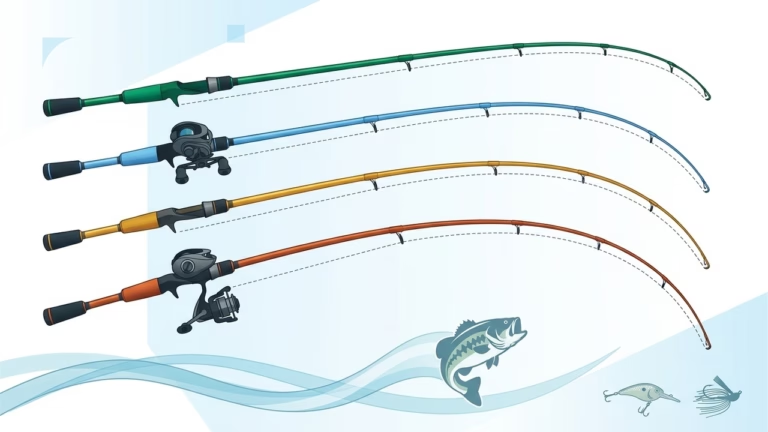
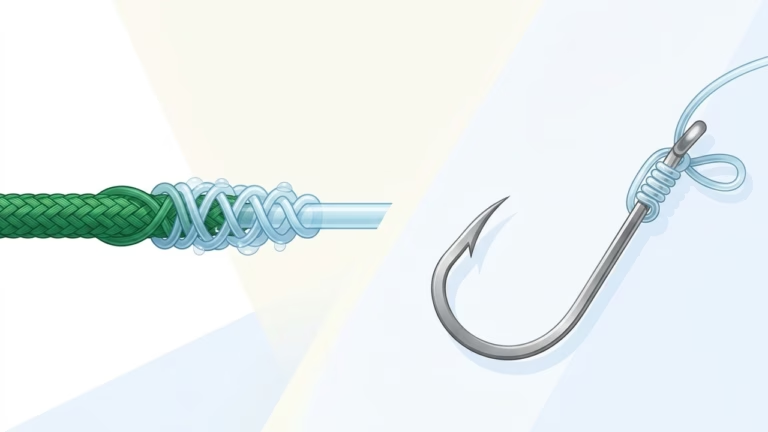
Splitting Maine catfishing into two gear tiers prevents hauling broomsticks to an evening farm pond or getting spooled along Augusta river riprap. Tidal Kennebec currents drag loose moss, drifting eelgrass, and heavy water push across 3 to 6 oz sinkers; match spool backing cleanly with our Fishing Reel Line Capacity & Backing Calculator, test tip deflection using our Fishing Rod Power & Action Quiz, and check terminal break efficiency through our Fishing Knot Strength & Line Matcher.
| Gear Component | Recommended Model | Exact Spec (Power / Ratio / LB) | Why It Works in Maine | Check Live Price |
|---|---|---|---|---|
| Tidal River Rod | Ugly Stik Catfish Special | 7′6″–8′0″ Medium-Heavy / Mod-Fast | Forgiving Clear Tip loads circle hooks cleanly in strong Kennebec current while chucking 4 oz lead. | |
| Lake & Bank Spinning | St. Croix Triumph / Mojo Cat | 7′0″ Medium / Fast (8–17 lb) | Detects feather-light spring bullhead taps off muddy pond flats with crisp lightweight graphite feel. | |
| Heavy Casting Reel | Abu Garcia Ambassadeur C3 6500 | 5.3:1 Ratio | 255 yd / 17 lb | Bait Clicker | Built-in mechanical clicker alerts boat/shore anglers immediately when tidal white cats grab bait. | |
| Tidal Spinning Reel | Penn Battle IV 4000 / 5000 | 6.2:1 Ratio | Sealed HT-100 Drag | Resists brackish tidal spray in Merrymeeting Bay while hauling heavy sinkers over rock shelves. | |
| Abrasion Mainline | PowerPro / Sufix 832 Braid | 50–65 lb PE Braid (Tidal) / 20 lb (Ponds) | Slices cleanly through current drag without bellied slack lines and pulls free from granite snags. | |
| Hooks & Sinkers | Gamakatsu Octopus Circle + No-Roll Leads | 3/0–5/0 (White Cats) / #2 (Bullhead) + 3–5 oz Lead | Wide-gap offset circle points corner-hook fish cleanly, minimizing deep gut-hooking on release. |
Step-by-Step Rigging: Santee Cooper Rig vs. Slip-Float Hornpout Rig
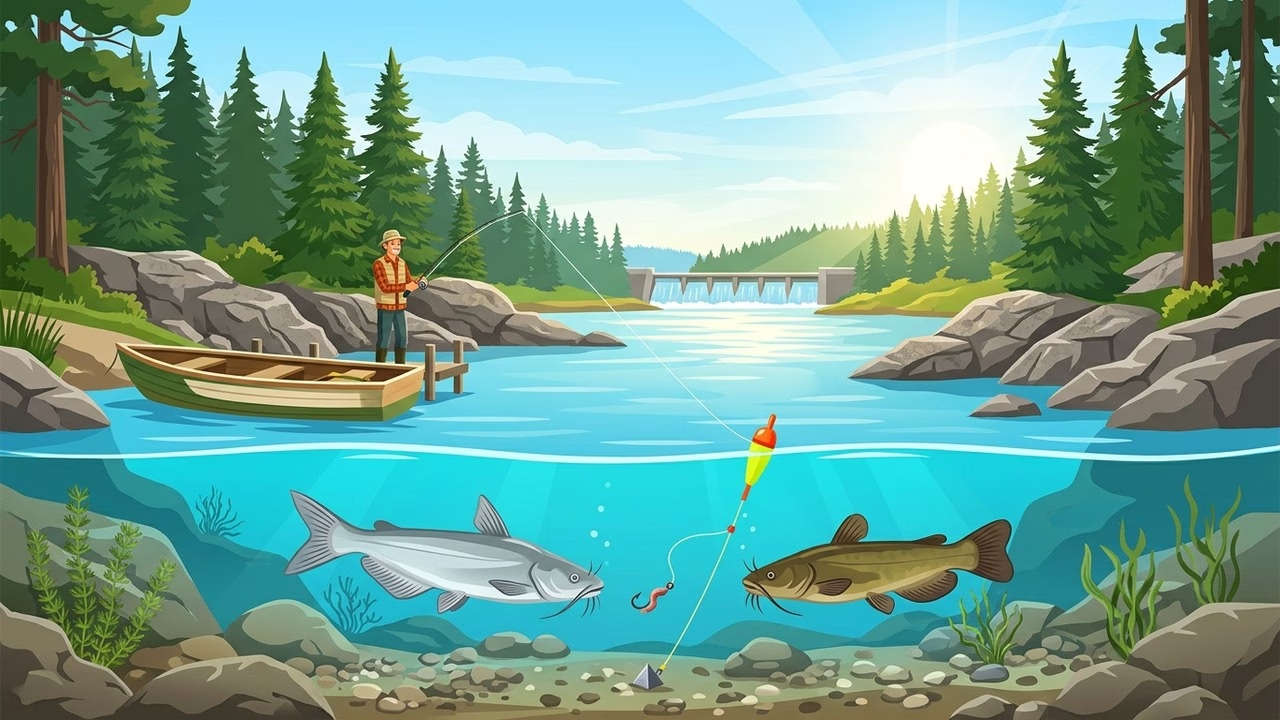
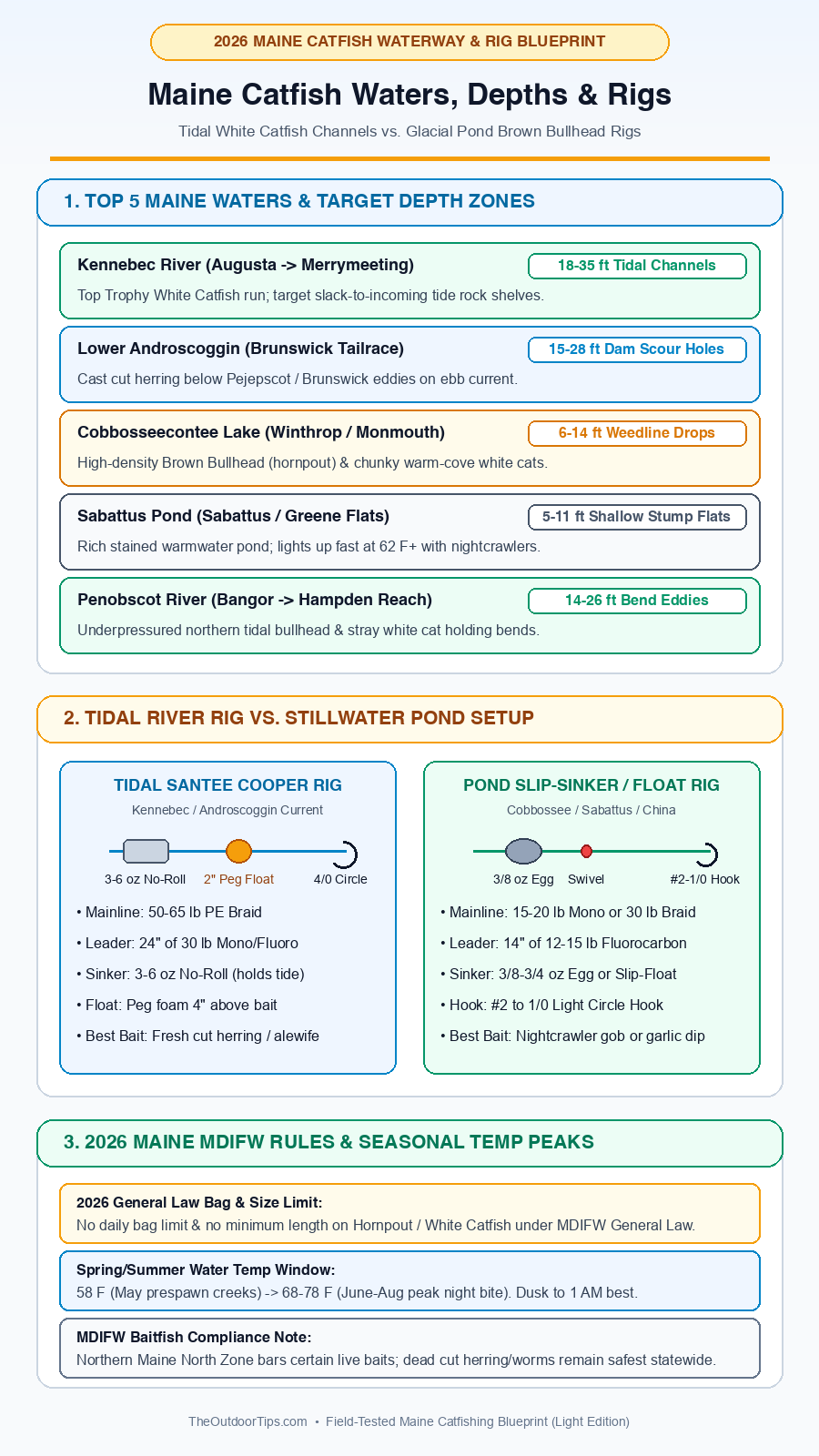
When fishing the Kennebec or Androscoggin tide bends, heavy mud silt and roaming American eels shred stationary baits resting directly on bottom. Our crew solves that problem with a simple Santee Cooper Rig: slide a 3 to 6 oz no-roll sinker above a heavy barrel swivel, tie 22 inches of 30 lb mono leader, peg a compact 2-inch foam cigar float about 4 inches ahead of a 4/0 circle hook, and bait up with a fresh oily strip of sea-run alewife or mackerel. That small float elevates the cut bait neatly above bottom crabs and eels directly inside cruising white catfish sightlines. Compare heavy-cover sticks in our bank catfish rod guide, full catfish rod review, and Ugly Stik catfish breakdown.
For tranquil ponds like Sabattus, China Lake, or Cobbosseecontee coves, trade out the Santee setup for a finesse 3/8 oz sliding egg sinker or a lighted slip-bobber tuned to suspend two nightcrawlers cleanly 6 inches above weed tops. If bullhead action slows during midsummer dog days, brush up on proven scent recipes in our live, cut, and dip catfish bait guide and top catfish attractant science, or run controlled channel drifts using tactics from our catfish drift fishing handbook. Planning a wider New England road trip? Compare neighboring access in our New Hampshire catfish waters, Vermont catfish lakes, and Massachusetts catfish spots.
2026 Maine MDIFW Catfish Rules, Seasons & Water Temperature Strategy
- Open Season & Limits: Under 2026 MDIFW General Law open-water regulations, Maine imposes no closed season, no minimum length limit, and no daily creel cap on brown bullhead (hornpout) or white catfish. Anyone age
16 or oldersimply needs a valid Maine resident or non-resident freshwater fishing license (and verify tidal demarcation boundaries along the lower Kennebec/Penobscot if casting below the head-of-tide salt line). - North Zone vs. South Zone Live-Bait Rules: Many coldwater Maine North Zone lakes prohibit using live fish as bait altogether to protect native brook trout. Always inspect the official annual MDIFW Open Water Law Book for special water codes before transporting live shiners; freshly cut dead alewife, chicken liver, and garden nightcrawlers remain trouble-free nearly everywhere.
- Optimal Seasonal Thermal Windows: Action wakes up along shallow dark mud bays around
55°Fin May, spikes sharply through spawning aggregations at64°F–74°Facross June and July, and stays fast along deeper tidal river bends all the way until early October cooling reaches54°F.
✅ Final Captain’s Verdict: How to Fish Maine for Catfish Tomorrow
1. Target Kennebec Tide Bends for Size: Launch at Augusta Mill Park or Gardiner two hours prior to high slack tide, anchor edge ledges in 20–30 feet, and pitch fresh cut herring on a pegged Santee Cooper Rig for 3–7 lb white catfish.
2. Target Central Warm Ponds for Nonstop Action: Head to Sabattus Pond or Cobbosseecontee mud coves after sunset with 1/0 hooks, bundled nightcrawlers, and garlic scent for limits of clean-tasting brown bullhead.
Frequently Asked Questions About Catfishing in Maine
Do you need a fishing license and are there bag limits for catfish in Maine?
Yes—anglers aged 16 and older must carry a valid Maine fishing license on inland waters. Under 2026 MDIFW General Law rules, both brown bullhead (hornpout) and white catfish have no daily bag limit and no minimum size restriction, though individual special-regulation ponds should always be checked in the annual law book.
Are there channel catfish or flathead catfish in Maine?
No established breeding populations of channel catfish, blue catfish, or flathead catfish exist in Maine waters. Maine anglers catch white catfish (largest species, often reaching 2 to 7+ pounds in coastal rivers) and brown bullhead hornpout statewide.
What is the single best river for trophy white catfish in Maine?
The tidal stretch of the Lower Kennebec River from Augusta downstream through Gardiner, Swan Island, and Merrymeeting Bay consistently produces Maine’s heaviest white catfish due to abundant spring alewife forage and deep brackish channel bends.
What is the best bait for Maine brown bullhead hornpout vs. white catfish?
For pond brown bullheads, gobbed nightcrawlers, chicken liver wrapped in elastic thread, and garlic dip baits dominate after dusk. For bigger tidal white catfish, freshly netted cut alewife, river herring, or whole frozen shrimp outfish worms and shrug off nuisance bait-stealing eels longer.