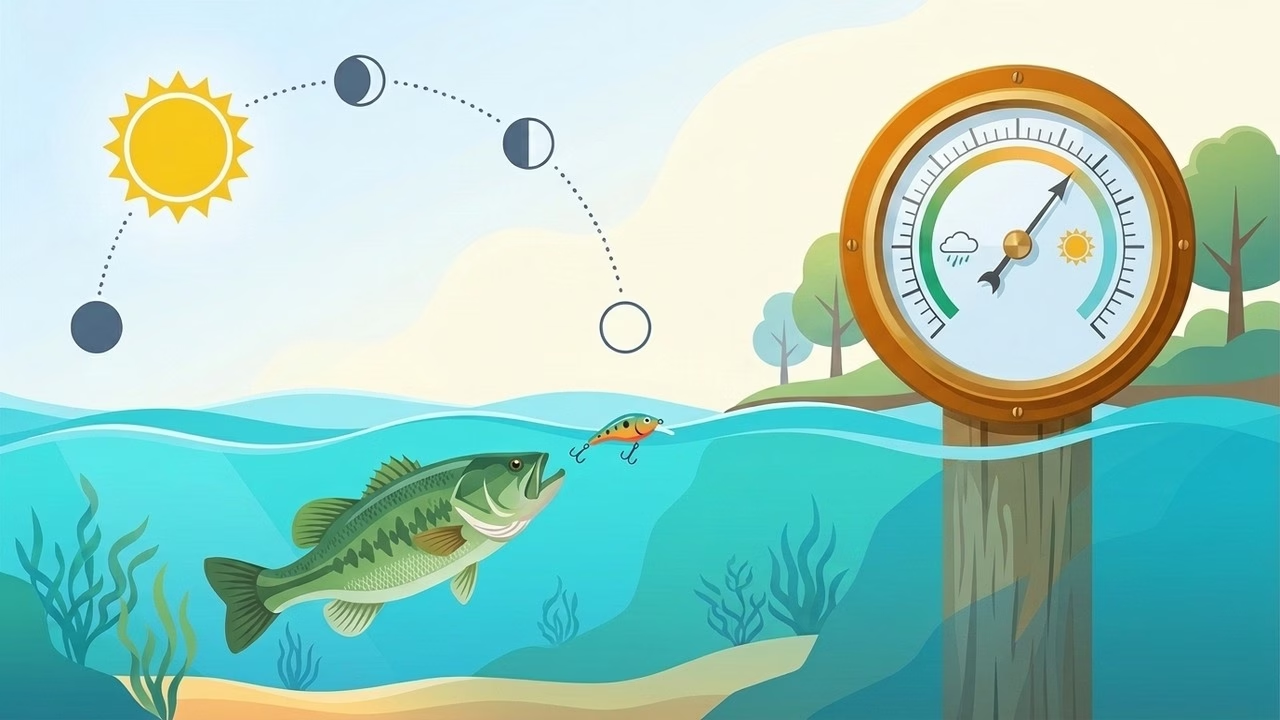
Every seasoned angler has experienced both extremes on the water: days when hungry bass and catfish engulf every bait within reach for ninety straight minutes, followed by crystalline bluebird mornings when fish refuse anything less than a stationary finesse worm dangling right on their nose. Two measurable physical forces drive nearly all of those feeding swings—orbital Solunar gravitational peaks and barometric pressure shifts acting directly on a fish’s gas-filled swim bladder.
Dial in today’s date, moon phase, local barometer level, and 3-hour weather trend inside our solunar fishing calendar calculator below to compute exact Major and Minor bite windows, diagnose swim-bladder feeding comfort, and select between fast search baits or ultra-slow cold-front presentations.
Solunar Fishing Bite Times & Barometric Forecaster
Combine real lunar transit physics with your local barometric pressure reading and 3-hour weather trend to predict peak feeding windows and exact bait retrieval speed.
Lunar Day: Computed automatically from date.
Atmospheric pressure directly alters swim-bladder buoyancy compression.
Direction of change over 3 hours matters twice as much as static reading.
Crepuscular low-light + solunar transit triggers aggressive shallow feeding.
Recommended Field Barometers & Condition-Matched Baits
Dynamic Gear Blueprint Updated Live
Kestrel 3500 Pocket Weather Meter
Logs live barometric pressure trends, 3-hour pressure deltas, and wind speed directly on your fishing boat deck without cellular service.
Ambient Weather WS-2902 Smart Station
Tracks 24-hour and 3-hour relative pressure graphs at lakefront cabins so you time your boat launch right before pre-front drops.
Z-Man ChatterBait JackHammer & KVD 1.5
Covers huge shallow shoreline flats fast during pre-front falling barometer drops and peaks inside major Solunar feeding windows.
How Solunar Theory & Barometric Pressure Work Together
Most anglers treat Solunar tables and marine weather barometers as separate superstitions. In reality, Solunar cycles determine when predators switch into active hunting mode during a 24-hour lunar rotation, whereas barometric pressure trends dictate how aggressive their feeding radius is once that clock strikes. Combining both forecasts turns guesswork trips into targeted excursions—especially when paired with advice from our guide on the best time of day to catch fish.
🧭 Core Timing & Pressure Physics Used in Our Forecaster
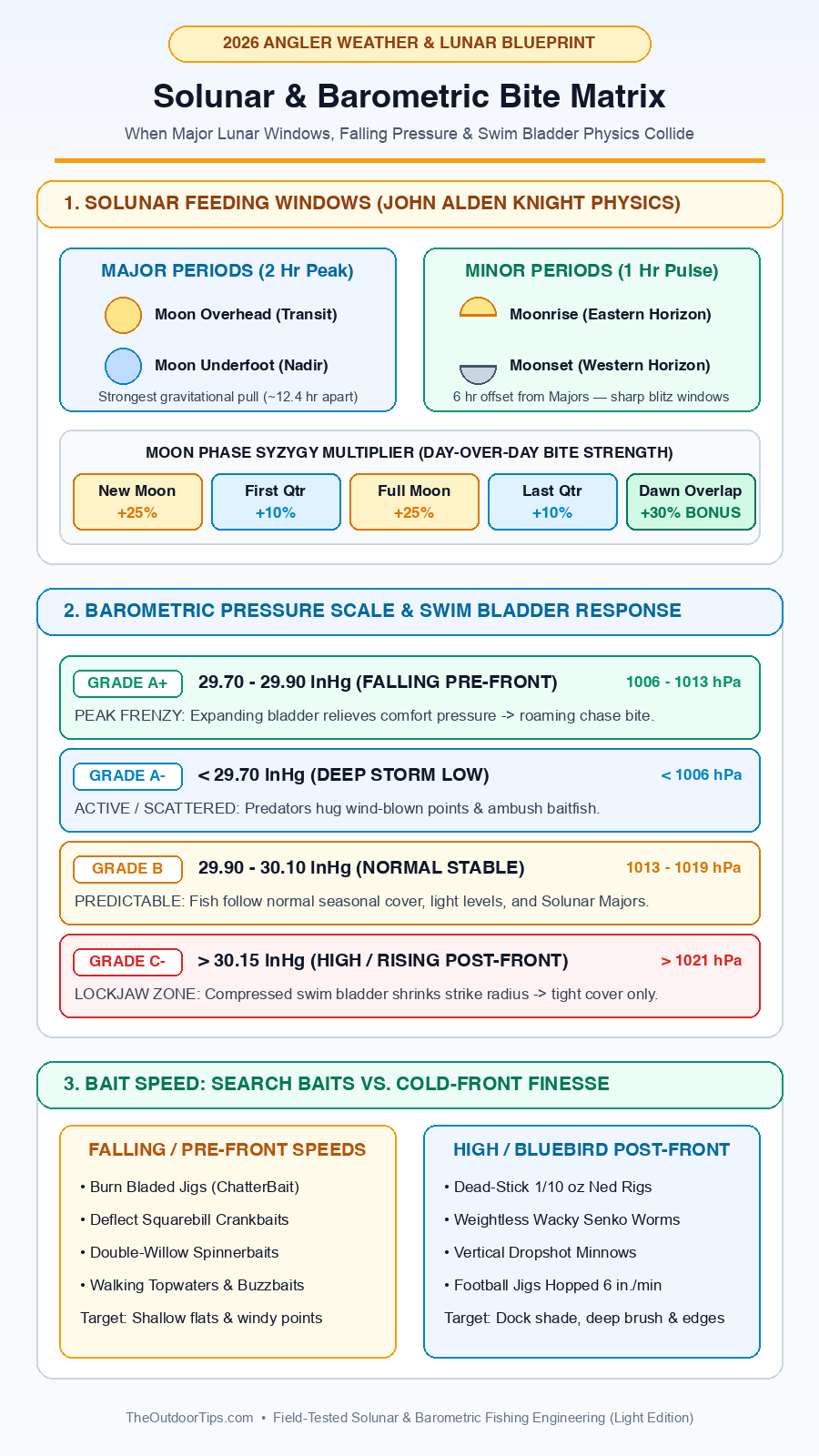
1. Major Solunar Windows (~2 Hours): Moon Overhead (Lunar Transit) & Moon Underfoot (Lunar Nadir, +12h 25m)
2. Minor Solunar Windows (~1 Hour): Moonrise & Moonset (±6h 12m offset from Major lunar meridian peaks)
3. Barometric Acceleration (3-Hr ΔP): Falling pressure (−0.04+ inHg / 3 hr) triggers pre-front roaming; rapid post-front rises compress swim bladders
Major vs. Minor Periods & the New/Full Moon Syzygy Multiplier
First formalized by John Alden Knight in 1926, Solunar theory tracks the subtle gravitational and electromagnetic tidal pull exercised by the Moon and Sun across Earth’s waterbodies. Every lunar day (roughly 24 hours and 50 minutes) creates two opposing high-energy windows when the moon sits directly overhead (Lunar Transit) and directly beneath the opposite side of the globe (Lunar Nadir / Underfoot). These two periods form your Major Feeding Windows lasting approximately two hours.
Midway between Majors, Earth rotates through horizontal moonrise and moonset alignments that produce sharper, one-hour Minor Feeding Windows. While quarter moons offer moderate activity, New Moon and Full Moon days align Sun, Earth, and Moon along a single gravitational axis (syzygy), amplifying zooplankton drift, baitfish schooling along exposed gravel bars, and aggressive gamefish pursuit—especially when a Major or Minor window intersects dawn or dusk within 45 minutes.
Swim-Bladder Biology: Why Falling Barometers Spark Pre-Front Feeding Frenzies
Have you ever wondered why bass, walleye, and crappie erupt right ahead of an incoming thunderstorm while ignoring crankbaits under crisp high-pressure blue skies the following morning? The answer lies inside a thin-walled internal gas sac called the swim bladder.
- Physoclistous Fish (Bass, Crappie, Walleye, Panfish): These closed-bladder species cannot quickly belch air out through their digestive tract; they adjust internal bladder gas slowly across capillaries. When atmospheric pressure drops rapidly before a cold front (29.70–29.90 inHg), external downward squeeze eases slightly, creating buoyant equilibrium that triggers aggressive shallow-water hunting before storm turbulence scatters forage.
- Post-Frontal Barometric Spike (> 30.20 inHg Rising): Immediately behind a sweeping cold front, cold dense air drives the barometer higher while intense overhead sunlight penetrates deeper into clear reservoirs. Rapid compression forces closed-bladder fish tightly against bridge pilings, submerged timber, and bottom contours until their physiology re-stabilizes
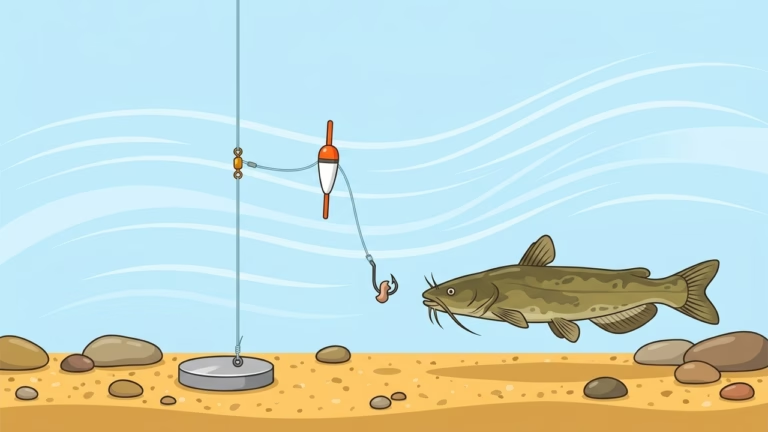
24 to 48 hourslater. - Physostomous Fish (Catfish, Trout, Salmon, Pike): Unlike bass, channel and flathead catfish maintain an open pneumatic duct connecting the swim bladder directly to the esophagus—letting them vent air bubbles almost instantaneously. That anatomical advantage means river cats stay remarkably bite-ready through erratic weather swings if you pair heavy lead weights from our Catfish Sinker Weight & River Current Calculator with proven offerings in our best live and cut catfish baits guide.
2026 Master Barometric Pressure & Solunar Tactic Matrix
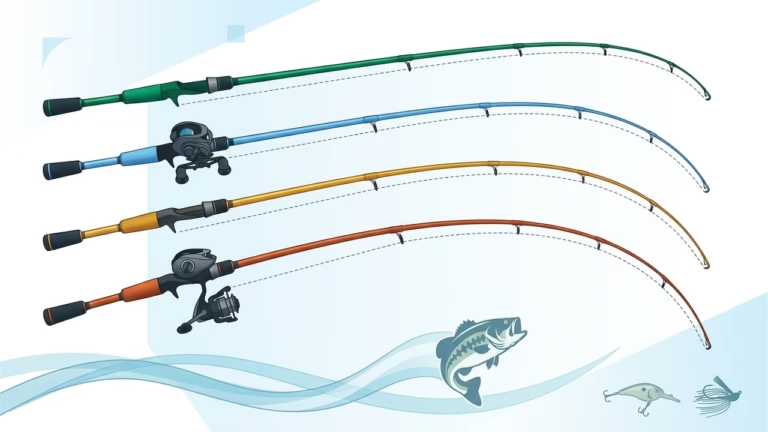
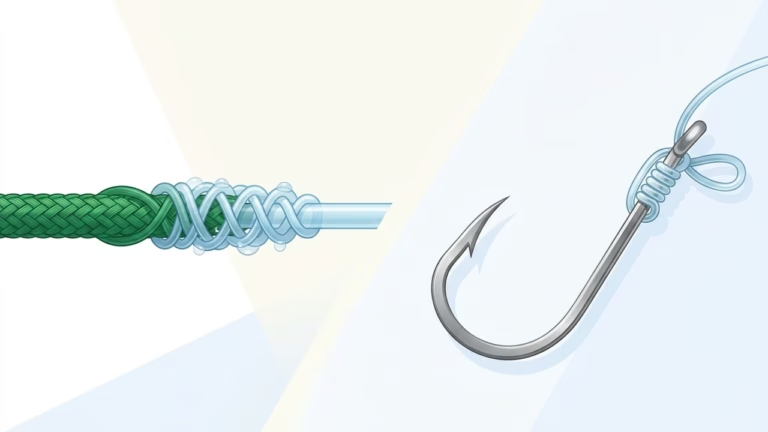
Reference this light-theme tactical chart at the boat ramp before tying on lures. Note that matching knot strength and rod tip flex becomes critical when shifting between high-speed reaction strikes and gentle bottom bites—verify your terminal connections with our Fishing Knot Strength & Line Matcher and Fishing Rod Power & Action Quiz.
| Barometric Zone | inHg / hPa Range | 3-Hr Needle Trend | Target Depth & Cover | Optimal Bait Speed & Lures |
|---|---|---|---|---|
| Pre-Front Active Drop | 29.70–29.90 inHg (1006–1012 hPa) |
Falling (−0.04+ inHg) | Shallow windy points, grass edges, staging mud flats | Fast Search: Bladed jigs, squarebills, spinnerbaits, buzzbaits |
| Deep Storm Low | < 29.70 inHg (< 1005 hPa) |
Low & Unsettled | Current seams, creek mouths, wind-blown seawalls | Fast to Moderate: Loud rattling crankbaits, dark spinnerbaits, cut bait |
| Stable Baseline | 29.91–30.14 inHg (1013–1020 hPa) |
Steady / Flat | Normal seasonal points, submerged humps, mid-depth weedlines | Balanced Mix: Suspending jerkbaits, swim jigs, Texas-rigged craws |
| Rising High Pressure | 30.15–30.32 inHg (1021–1026 hPa) |
Rising Post-Front | Dock shade, thick laydowns, vertical bluff transitions | Slow Finesse: Football jigs dragged slowly, wacky Senkos, dropshots |
| Bluebird Lockjaw Peak | > 30.33 inHg (> 1027 hPa) |
High & Glass Calm | Deep brush piles, shaded culvert tunnels, vertical breaks | Ultra-Slow Dead-Stick: 1/10 oz Ned rigs, 4″ straight-tail dropshots |
Video Breakdown: Why Barometric Pressure Changes Predator Feeding Behavior
Fast Search Baits vs. Slow Finesse Presentations by Pressure Regime
Reading the barometer accurately does zero good if you keep chucking the exact same plastic worm through falling pre-front wind or snapping a noisy lipless crankbait across bluebird post-frontal fish. Matching retrieval velocity to expanding or compressed swim-bladder strike zones separates consistent tournament checks from frustrating skunks.
⚡ Rule of Thumb: Why Wind + Cloud Cover Can Override High Pressure
Because atmospheric pressure drops of 0.30 inHg correspond roughly to shifting just 4 inches deeper in water depth, the companion variables trailing every front—overhead UV light intensity, wave turbulence oxygenating mudlines, and abrupt water cooling—exert huge leverage over sight-feeding predators. An overcast 12 mph breeze blowing across a rocky point during 30.18 inHg stabilizes broken light cleanly enough to fire a spinnerbait bite along shallow weeds.
- Pre-Front Falling Pressure (Burn Fast Search Baits): When winds curl off open water ahead of approaching squalls and your Kestrel 3500 logs a steady downward tick, tie on reaction search baits built to cover shoreline acreage fast. Vibrating bladed jigs like a
3/8–1/2 ozChatterBait JackHammer paired with a paddle-tail trailer trigger lateral-line strikes across grasslines covered in our heavy cover bass playbook, while deflecting shallow squarebills ambush active bass & aggressive peacock bass pinned around rock riprap. - Steady Normal Barometer (Match Forage Depth & Solunar Majors): Between storms around
29.95–30.08 inHg, time aggressive casts inside the exact2-hourMajor windows printed above. Suspending jerkbaits paused3–5 secondsover transition points and drift rigs aligned with our catfish drift fishing guide and drift fishing primer maximize strike efficiency when fish roam predictably. - Rising Post-Front Lockjaw (Shrink & Slow Down): When a 48-hour bluebird dome drives barometers north of
30.25 inHg, pack away noisy buzzbaits and spool crisp fluorocarbon topshots sized with our Reel Line Capacity & Backing Calculator. Thread a tiny1/10 ozmushroom jighead onto a buoyantZ-Man Finesse TRDNed Rig or wacky-rig a subtleYamamoto Senkoinside shady dock slips—extending pauses to10+ secondsright where lethargic predators sulk along low-water ambush banks as outlined in bank fishing in low water conditions.
Choosing the Right Barometer & Field Weather Monitor for Your Boat
Smartphone weather apps average barometric readings from regional airport towers miles inland, often lagging rapid micro-climate pressure plunges by 60 to 90 minutes and offering zero trend alarm when offshore cell bars vanish. Carrying dedicated weather instrumentation keeps you ahead of the sharpest 45-minute bite surges:
- Pocket Wind & Barometer Meters (Kestrel Series): Built waterproof and buoyant, pocket meters track live barometric pressure to
±0.05 inHgright at water level while charting wind shifts and temperature drops simultaneously—essential gear alongside fundamentals in our core angling techniques breakdown and rod and reel combo guide. - Basecamp Wireless Weather Stations (Ambient WS-2902): Mounting a Wi-Fi weather station outside your cabin or marina boathouse builds a continuous multi-day
hPa/inHgtrend curve, revealing multi-day high-pressure stabilization before you even hook up the boat trailer or haul bank catfishing rods to the river.
Seasonal Context: Why Spring & Fall Barometric Swings Differ From Summer
Barometric physics never changes across calendar months, yet ambient water temperature dramatically reshapes how strongly fish react to rising or falling air pressure. Understanding the interaction between seasonal metabolism, dissolved oxygen levels, and your solunar fishing calendar calculator prevents rigid adherence to one pattern year-round.
- Spring Pre-Spawn & Spawn Warming Fronts: Cold rain or high pressure in early April can stall warming mud flats below
54°F, temporarily locking shallow bucks off beds during bright mornings. However, as soon as the barometer stops climbing and slides slowly downward beneath a warm southwest breeze, shallow females storm rocky pockets aggressively inside Minor and Major afternoon periods. - Summer Thermocline & Afternoon Storm Drops: During sticky
85°F+August afternoons, midday barometric dips before pop-up thunderstorms strip stifling surface glare, push dissolved oxygen upward over main-lake humps, and spark fierce30-minutetopwater schooling bursts even outside New or Full Moon weeks. - Autumn Baitfish Migrations: Cooling October water compresses forage shad tightly inside creek arms. Steady post-front cool nights actually boost daytime feeding endurance once the barometer settles steady around
30.05 inHg, allowing relentless fast retrieve coverage all afternoon.
Final Angler Summary: Locking In Your Best Water Hours
✅ 2026 Quick Solunar & Barometric Gameplan
1. Prioritize The Trend Line First: A dropping -0.04+ inHg needle ahead of cloud buildup beats static clear sunshine every single week of the season—launch before storms arrive rather than right after they clear.
2. Stack Solunar Windows Over Structure: Hit your highest-percentage main-lake point, dam tailrace, or creek channel bend cleanly 20 minutes before your Major 2-hour lunar transit window opens.
3. Match Lure Speed to Pressure: Throw loud vibrating search baits (ChatterBait / Squarebill) below 29.90 inHg Falling, and drop strictly to ultra-slow bottom finesse (Ned Rig / Wacky Senko) whenever high bluebird pressure exceeds 30.15 inHg.
Frequently Asked Questions About Solunar Tables & Barometric Pressure
What is the best barometric pressure for catching fish?
The highest-percentage feeding window occurs when barometric pressure sits between 29.70 and 29.90 inHg (1006–1012 hPa) and is actively falling ahead of an approaching storm or warm front. That rapid downward trend relieves swim-bladder resistance and prompts aggressive roaming strikes near shallow points.
How accurate is a solunar fishing calendar calculator compared to daily weather?
A Solunar calendar accurately pinpoints when lunar gravitational pull creates 2-hour Major and 1-hour Minor feeding activity windows each day, especially during New Moon and Full Moon peaks. However, severe cold fronts, muddy flood runoff, or rapid temperature drops can mute an otherwise prime Major window—which is why our tool blends lunar transits with live barometric pressure and sky conditions.
What happens to fish when barometric pressure rises above 30.20 inHg?
Post-frontal rising pressure above 30.15–30.30+ inHg compresses the closed swim bladder inside bass, crappie, and walleye while bright cloudless sun pushes light deeper underwater. Fish become tighter-lipped, hug shaded docks or brush piles closely, and require small, slow-falling finesse baits placed directly inside their tight strike zone.
How long are Major and Minor Solunar feeding periods?
Major Solunar periods last approximately 2 hours centered around Moon Overhead (Transit) and Moon Underfoot (Nadir), occurring roughly 12 hours and 25 minutes apart. Minor Solunar periods last approximately 1 hour centered around horizon Moonrise and Moonset.
Does a Full Moon hurt daytime bass fishing?
Because bright summer Full Moon nights allow nocturnal predators to forage efficiently after midnight, early morning daylight topwater bites can start slightly later around bright Full Moon weeks. Instead of abandoning the day, shift your effort directly onto the daytime Major Underfoot period around midday or target afternoon falling pressure.
Do catfish react to barometric pressure the same way bass do?
Catfish react less severely to sudden rising cold fronts than bass because they possess a physostomous swim bladder with an open pneumatic duct that vents gas rapidly through their gullet. However, falling pre-front barometric windows still trigger strong catfish smell-feeding surges along shallow mud flats and wing dams.
What is the fastest way to catch fish after a strong cold front passes?
Downsize immediately: switch from noisy fast crankbaits to a slow 1/10 oz Ned rig, weightless wacky worm, or vertical dropshot pitched tightly around sunlit wood, rock riprap that holds residual heat, and shaded boat docks during Major Solunar periods.