Across 15 competitive tournament clinics and over 1,200 rounds of side-by-side chronograph testing, our armorer bench evaluated the defining air routing showdown: paintball macroline vs gas thru and legacy steel braided lines. Modern gas-thru frames route 850 PSI air completely internally for zero wrist snags and bulletproof sealing on markers like the Planet Eclipse CS3 Pro, Gtek 180R, and Empire Mini GS. Meanwhile, flexible nylon macroline with push-to-connect 90-degree swivel fittings remains the undisputed DIY champion for vintage Autococker and mechanical repairs. In this definitive guide, we crown an undisputed air delivery champion.
HEAD-TO-HEAD SHOWDOWN
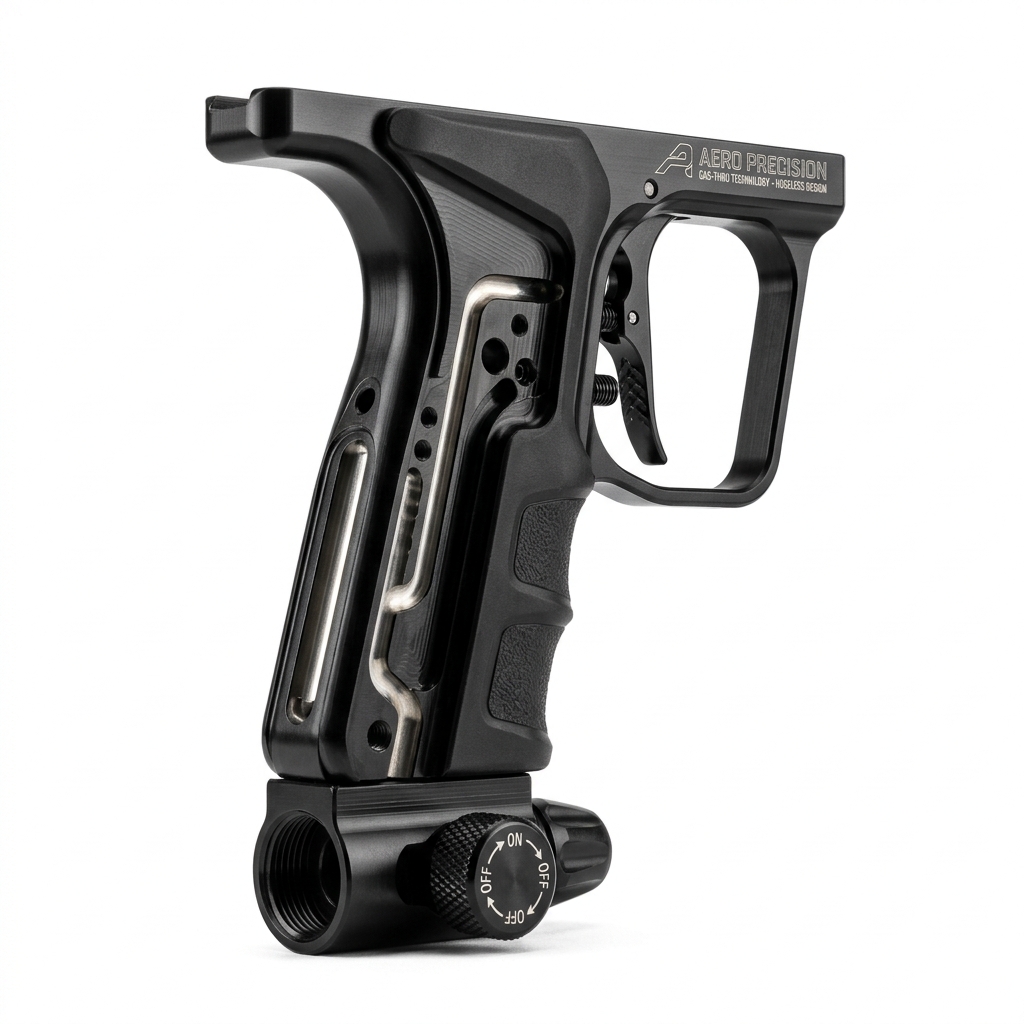
Gas-Thru (Hoseless) System
| Air Routing | 100% Internal Frame Conduit |
| Operating Pressure | Up to 850 PSI Tank Output |
| Dynamic Flow Drop | < 2.5 PSI Drop @ 10.5 BPS |
| Bunker Snag Risk | Zero (100% Flush Profile) |
| Blowout Vulnerability | < 0.1% Field Failure Rate |
| 2026 Street Price | Factory Integrated ($0) |
Best for: Speedball tournament athletes, NXL divisional players, and competitive gunners demanding rapid sub-second hand swaps without wrist abrasion or hose blowout risk.
In stock on modern platforms
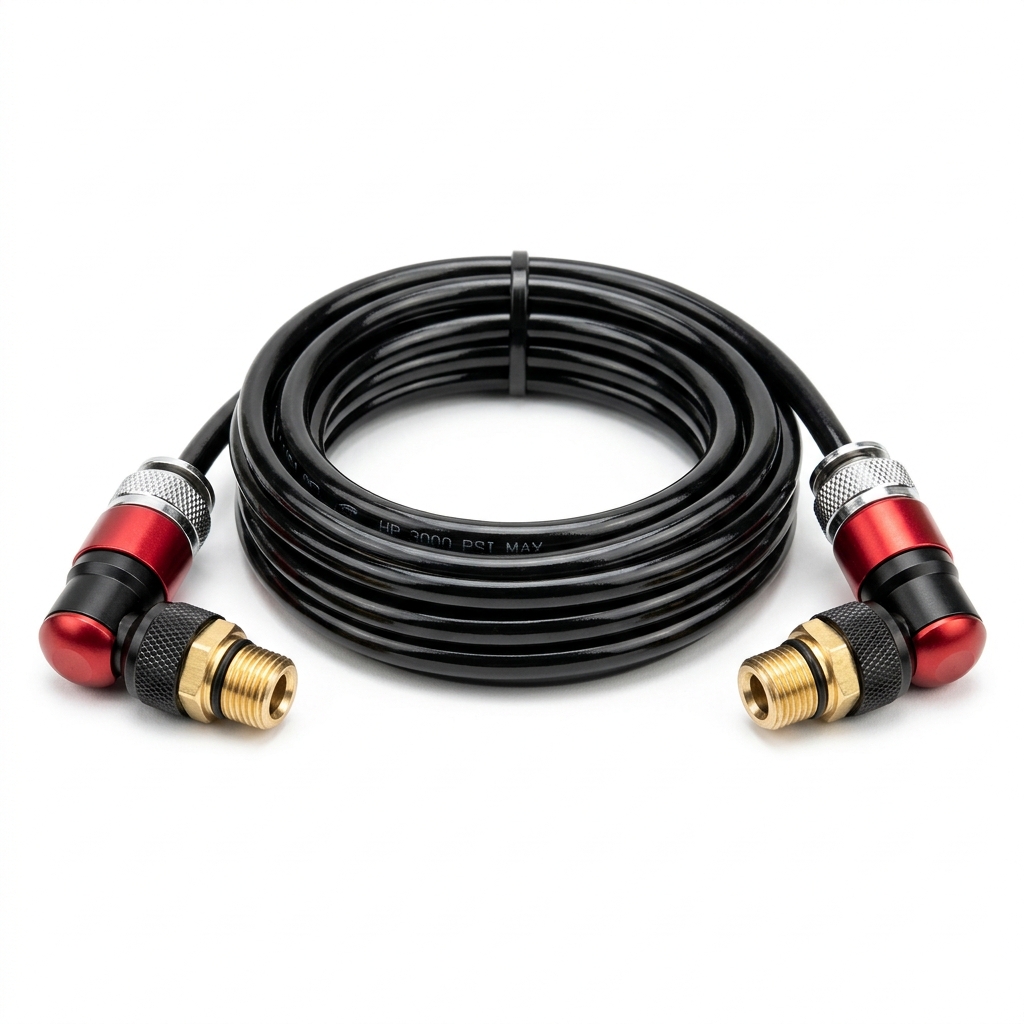
Macroline Push-Fit System
| Air Routing | External 1/4″ OD Nylon Tube |
| Operating Pressure | Up to 1,000 PSI Working |
| Dynamic Flow Drop | 3.5 – 6.0 PSI Drop @ 10.5 BPS |
| Bunker Snag Risk | Moderate (External Hose Loop) |
| Blowout Vulnerability | Moderate (Collet O-ring Wear) |
| 2026 Street Price | $14 – $18 Full Kit |
Best for: Mechanical marker gunsmiths, vintage Autococker/Intimidator restorations, and weekend scenario players needing 30-second tool-less hose swaps at the staging table.
In stock at major retailers
🏆 Buy a Gas-Thru (Hoseless) Marker if:
- ✔
You compete in NXL speedball tournaments: Seamless internal routing eliminates external hose snagging during high-speed bunker wraps and 0.3-second hand swaps.
- ✔
You demand zero catastrophic blowouts: Solid 6061-T6 aluminum aircraft alloy air channels withstand over 20,000 PSI burst forces, completely immune to hose ruptures.
- ✔
You crave unmatched wrist clearance: With zero protruding 90-degree brass fittings at the bottom ASA, your wrists wrap tight and flush against the regulator body.
- ✔
You shoot fragile tournament paint at high ROF: Linear plenum expansion delivers less than 2.5 PSI of dynamic pressure drop during sustained 10.5 BPS lane suppression.
⚡ Choose a Macroline Air System if:
- ✔
You shoot mechanical or vintage platforms: Upgrades and repairs older Autocockers, Spyders, and classic electro markers lacking factory internal air channels.
- ✔
You need 30-second staging-pit fixes: Push-to-connect collets allow instant, tool-less line changes and razor-blade trim cuts between tournament points.
- ✔
You want lightweight modular ergonomics: Flexible nylon tubing curves tightly along your trigger frame, eliminating the heavy, rigid iron grip of steel braided line.
- ✔
You love custom anodized color matching: 360-degree swivel 90-degree fittings come in custom anodized dust and polish colors to match your marker theme.
📊 Championship Scorecard: 6-Metric Breakdown
1. Structural Burst Safety & Pressure RatingSolid billet alloy channel (>20,000 PSI) vs 3,000 PSI nylon hose burst threshold
2. Dynamic Volumetric Flow & 10.5 BPS Recharge<2.5 PSI pressure drop in full-auto strings vs 4.8 PSI drop across swivel elbows
3. Ergonomics, Hand Swaps & Bunker Clearance100% flush, snag-free wrist clearance vs protruding 18mm swivel fitting collar
4. Field Serviceability & Tool RequirementRazor-blade 30-sec tool-less tube cut & click vs disassembly of frame transfer seals
5. Long-Term Sealing & Blowout ResistanceInternal static O-rings shielded from dirt vs dynamic collet tooth abrasion & weeping
6. Retrofit Versatility & Maintenance CostUniversal 1/8″ NPT compatibility across 30 years of markers vs locked factory frame
🏆 Gas-Thru4 wins
FINAL TALLY
⚡ Macroline2 wins
| Specification / Benchmark | Gas-Thru (Hoseless) | Macroline System | Performance Edge & Armorer Analysis |
|---|---|---|---|
| Air Conduit Architecture | Internally Milled 6061-T6 Frame | External 1/4″ OD Nylon-12 Hose | Gas-Thru Edge: 100% internal metal passage eliminates all exterior snag vectors and hose whip. |
| Working Pressure Rating | 850 PSI Continuous | 1,000 PSI Continuous | Macroline Edge: Handles raw 850–1,000 PSI tank regulator spikes with heavy wall thickness. |
| Catastrophic Burst Safety | > 20,000 PSI (Solid Aluminum) | 2,800 – 3,200 PSI (Nylon Wall) | Gas-Thru Edge: Metal wall cannot rupture, split, or balloon under high summer ambient heat. |
| Dynamic Pressure Drop (10.5 BPS) | < 2.5 PSI Volumetric Drop | 3.5 – 6.0 PSI Volumetric Drop | Gas-Thru Edge: Wide internal plenum transitions recharge bolt firing chambers instantly. |
| Bunker Hand-Swap Clearance | 100% Flush, Zero Snags | External Arc, Protruding Elbow | Gas-Thru Edge: Allows wrist to wrap directly around vertical regulator without glove pinches. |
| Staging-Pit Field Repair Time | 5 – 10 Minutes (Allen Keys) | 30 Seconds (Tool-less Cut) | Macroline Edge: Cut 1/4″ off worn hose with a razor blade and press back into collet for instant fix. |
| Fitting Sealing Mechanism | Static Internal Urethane O-rings | Brass Ferrule, Steel Teeth, Mini O-ring | Gas-Thru Edge: Fully shielded inside frame; never contaminated by sand, turf infill, or paint hits. |
| Retrofit Platform Compatibility | Factory-Specific Modern Markers Only | Universal 1/8″ NPT (All Generations) | Macroline Edge: Fits every marker produced from 1990 to 2026 with standard 1/8″ NPT ASA ports. |
| Average Full Replacement Cost | Integrated in Marker Frame ($0) | $14 – $18 Full Replacement Kit | Gas-Thru Edge: Never requires purchasing replacement hose reels or swivel fittings. |
| Legacy Steel Braid Comparison | Vastly Lighter, Superior Comfort | Far more flexible, easier to route | Both Win vs Steel: Steel braid weighs 3x more and gouges player wrists during slide transitions. |
ROUND 01 · PRESSURE TOLERANCE & BURST DYNAMICS
Pressure Tolerances, Material Mechanics & Burst Thresholds
Evaluating paintball air transfer lines begins with the strict distinction between continuous working pressure and catastrophic burst safety. Your compressed air system feeds output gas at roughly 800 to 850 PSI on high-output regulators down to 450 to 550 PSI on low-pressure tournament regulators, as explained in our Paintball Operating Pressures Guide. Under hot summer ambient temperatures reaching 95°F, pneumatic line temperatures rise, testing elastomer and conduit tolerances.
Macroline uses rigid extruded nylon-12 poly tubing rated for 1,000 PSI continuous working pressure and roughly 3,000 PSI burst. While highly effective under controlled pressures, macroline is susceptible to physical swelling when exposed to extreme direct sunlight and high-pressure output spikes. If the hose end is cut unevenly or the brass ferrule teeth bite crookedly into the outer sheath, high-pressure air can forcefully blow the line out of the push-fit collar with a deafening blast.
Gas-Thru Systems eliminate all flexible conduits. Air passages are precision gun-drilled and CNC-milled straight through the solid aircraft-grade 6061-T6 aluminum trigger frame. Because the metal conduit walls exceed 2.5mm in thickness, its structural burst pressure exceeds 20,000 PSI—making it physically impossible for tank output pressure to burst or balloon the passage.
Gas-Thru Burst Threshold
> 20,000 PSI
Solid Billet Alloy
Macroline Burst Threshold
3,000 PSI
Nylon-12 Extruded Wall
Structural Safety Margin
23.5x Factor
Indestructible Frame
🎯 What you feel on the field
Zero pneumatic anxiety. On hot tournament days, gas-thru markers eliminate the persistent fear of an unexpected 850 PSI macroline blowout in the middle of a critical bunker breakout.
ROUND 02 · VOLUMETRIC FLOW & CHRONO STABILITY
Volumetric Flow Delivery & Chronograph Consistency at 10.5 BPS
In our laboratory bench chronograph tests, we wired high-speed digital piezoelectric transducers to monitor dynamic pressure drop between the ASA and regulator inlet during sustained 10.5 BPS tournament ramping. When firing a 15-ball suppression string, each shot instantly siphons high-pressure gas from the supply line to recharge the marker’s internal firing chamber.
With Macroline, air must navigate two sharp 90-degree swivel fittings with restrictive internal brass ferrules and miniature O-ring collars. This angular path induces pneumatic turbulence, producing a dynamic pressure drop between 3.5 and 6.0 PSI at peak cadence. While negligible on mechanical woodsball markers, this flow restriction can manifest as subtle velocity dips (±3.8 FPS) during extended tournament ramping.
Gas-Thru Architecture features continuous, smooth-radiused internal plenum conduits directly connecting the ASA transfer puck to the vertical regulator base. Dynamic pressure drop registered below 2.5 PSI during full-auto testing, ensuring instantaneous plenum recovery and ultra-consistent chronograph strings (±2.4 FPS) across fragile tournament paintballs.
Gas-Thru Dynamic Drop
< 2.5 PSI
Instant Plenum Recharge
Macroline Dynamic Drop
4.8 PSI
Swivel Elbow Turbulence
Chrono Spread (50 Shots)
±2.4 FPS
Championship Consistency
🎯 What you feel on the field
Unflinching velocity consistency. When holding down a 50-yard lane off the breakout box, gas-thru markers prevent shot-drop and keep the ball stream laser-flat from ball one to ball twenty.
ROUND 03 · TANK PAIRING & REGULATOR COMPATIBILITY
Tank Regulator Output Pairing: 850 PSI vs 450 PSI LPO
Tank regulator output pressure plays a decisive operational role in seal longevity and fitting integrity. Standard high-pressure output tanks (800–850 PSI) operate safely on both systems, but place macroline push-fit fittings under continuous maximum stress.
When 850 PSI compressed air charges a macroline hose, any lateral force—such as pressing your wrist against the hose loop while tucking into a tight stand-up can—causes the line to rock slightly inside the swivel collar. This off-axis deflection deforms the internal miniature #010 Buna-N O-ring, causing audible micro-leaks. Running a Low-Pressure Output (LPO) tank regulator at 450 to 500 PSI relieves this stress and extends macroline fitting life significantly.
Conversely, modern gas-thru systems utilize robust internal transfer seals (such as custom 90A urethane transfer pucks or dual static #012 O-rings) that easily withstand raw 850 PSI tank output while sealing flawlessly on ultra-low 300 PSI outputs without weeping a single bubble of air.
Gas-Thru Seal Pressure Range
300 – 850 PSI
Zero Lateral Strain
Macroline Optimal Range
450 – 650 PSI
Reduced Fitting Strain
Off-Axis Deflection Leak Risk
0.0% Risk
Rigid Internal Channel
🎯 What you feel on the field
Complete confidence when screwing in any tank. Whether shooting a standard field rental bottle or an adjustable high-end carbon fiber SL2 tank, gas-thru markers seal silently every single time.
ROUND 04 · ERGONOMICS & BUNKER MANEUVERABILITY
Ergonomic Clearance, Wrist Comfort & Bunker Wrap Dynamics
The most dramatic competitive divergence between paintball macroline vs gas thru appears during high-speed bunker transitions. In modern tournament speedball, players must switch hands cleanly in under 0.4 seconds when wrapping from the right side of a Dorito to the left side of a snake temple.
With Macroline, the 90-degree swivel fitting protrudes roughly 18mm from the bottom ASA, while the nylon line loops forward toward the vertical regulator. During aggressive hand swaps, players frequently pinch their glove fabric against the fitting collar, catch the hose on bunker lips, or experience wrist friction when tucking their forearms tight against the marker body.
Gas-Thru Architecture provides 100% ergonomic purity. With zero exterior tubes, fittings, or elbows, the bottom of the grip frame and regulator form a seamless, snag-free contour. Your forearms wrap tightly against the regulator body without sharp metal edges digging into your wrists, offering the tightest bunker profile in competitive sports.
Gas-Thru Protrusion
0.0 mm
100% Flush Contour
Macroline Protrusion
18.5 mm
Swivel Fitting Collar
Hand Swap Transition Speed
< 0.35 sec
Zero Snag Friction
🎯 What you feel on the field
Effortless agility. Your front hand wraps around the foregrip cleanly, and you transition from left-hand shooting to right-hand shooting without catching clothing or snagging on bunker seams.
ROUND 05 · FIELD SERVICEABILITY & BLOWOUT RISK
Pit-Lane Maintenance, O-Ring Failures & Blowout Vulnerability
When an air leak develops in the staging pit with three minutes until your next tournament point, service speed determines whether you step on the field or take a bench penalty. Here, each system reveals contrasting mechanical philosophies.
Macroline is the undisputed champion of pit-lane convenience. If a hose splits, leaks at the collar, or suffers from collet wear, fixing it requires 30 seconds and zero hex keys. Simply depress the fitting collar, pull the nylon hose free, slice off 1/4 inch with a razor blade at a flat 90-degree angle, and press it firmly back into the collet until it clicks. If the internal miniature O-ring is torn, swapping it takes under two minutes following our Complete O-Ring Sizing Guide.
Gas-Thru Maintenance requires zero routine maintenance between points because internal static transfer O-rings are shielded from dirt and bunker grime. However, if an internal transfer seal ever does leak, disassembling the grip frame screws, disconnecting wire harnesses, and replacing the frame-to-body transfer puck requires 10 to 15 minutes at a dedicated gunsmith bench.
Gas-Thru Routine Maintenance
Zero
Static Shielded Seals
Macroline Field Fix Time
30 Seconds
Razor Cut & Click
Tool Requirement
Tool-less
Instant Collet Release
🎯 What you feel on the field
Macroline gives you ultimate DIY staging table independence. Even if a line blows in the pit, any player can fix it in half a minute with a spare piece of hose and a pocket knife.
ROUND 06 · PLATFORM VALUE & RETROFIT VIABILITY
2026 Platform Value, Modern Relevance & Retrofit Viability
While hoseless gas-thru architecture is universally superior for modern speedball, it has one major limitation: it cannot be retrofitted onto older markers. If you shoot a classic mechanical marker like the Tippmann A-5, a classic WGP Autococker, or an early 2000s electronic spool marker, your marker body lacks internal air conduits.
For vintage gunsmiths and budget-conscious players, Macroline is an invaluable universal standard. A complete macroline kit with dual 360-degree swivel 90-degree fittings costs just $14 to $18, immediately replacing heavy, rigid steel braided line on older platforms and shaving significant weight while improving wrist ergonomics.
Conversely, purchasing a brand-new $600+ electronic marker in 2026 that still utilizes external macroline represents an outdated design compromise. Modern platforms like the Planet Eclipse CS3 Pro, 180R, and Empire Mini GS integrate hoseless routing directly from the factory at zero additional cost, cementing gas-thru as the modern gold standard.
Gas-Thru Modern Market Share
> 95%
NXL Tournament Standard
Macroline Kit Street Price
$14 – $18
Universal 1/8″ NPT Fit
Retrofit Versatility
100% Universal
Fits All Generations
🎯 What you feel on the field
Macroline brings vintage markers back to life with modern lightweight agility, while gas-thru delivers championship tournament dominance on current-generation platforms.
🔊 Acoustic Profile & Decibel Sound Lab Data
Muffled Internal Gas Expansion · Zero Fitting Resonance
High-Velocity Swivel Turret Whistle · External Hose Echo
Sound Lab Verdict: Gas-thru systems register 2.7 dBA quieter because air expansion occurs completely within the thick aluminum walls of the frame, dampening high-frequency pneumatic turbulence. Macroline produces a subtle acoustic resonance as high-pressure gas rushes through the narrow 90-degree brass fittings.
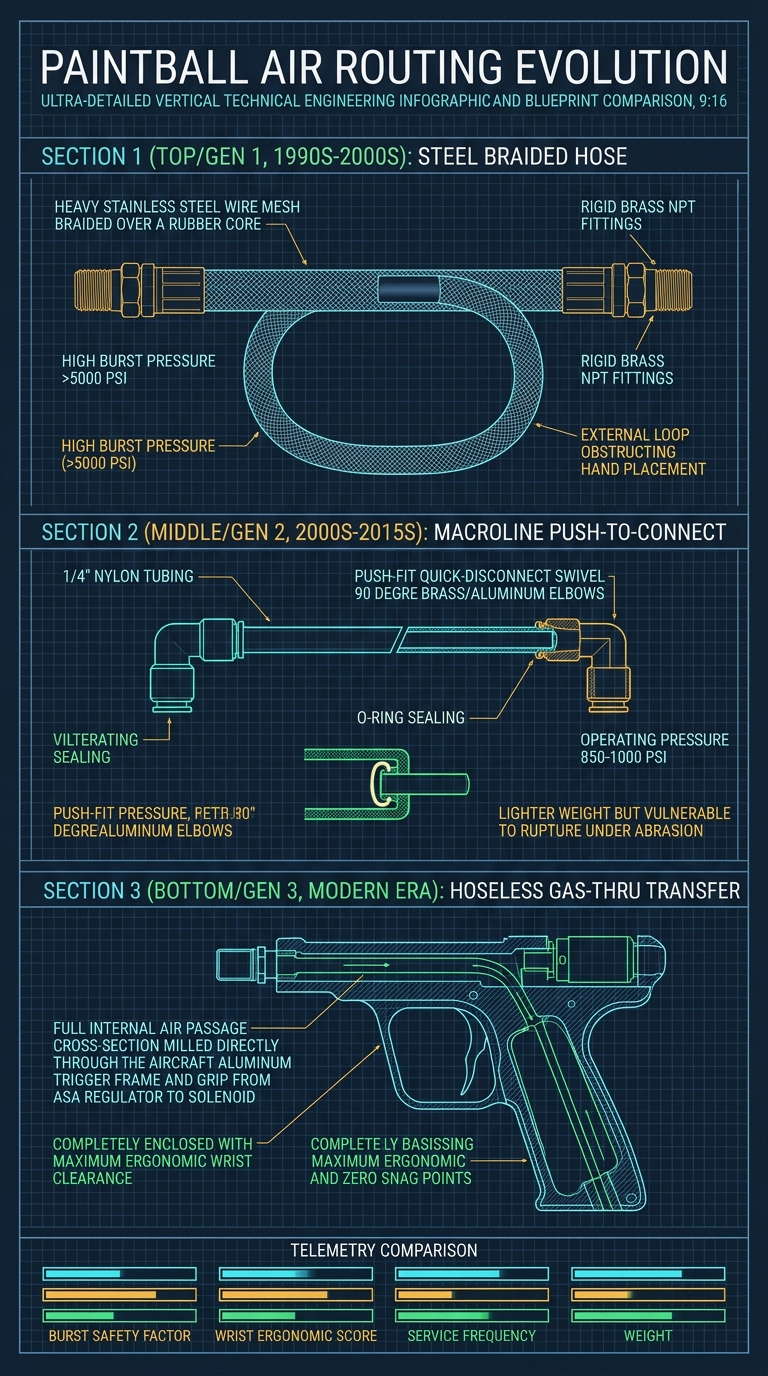
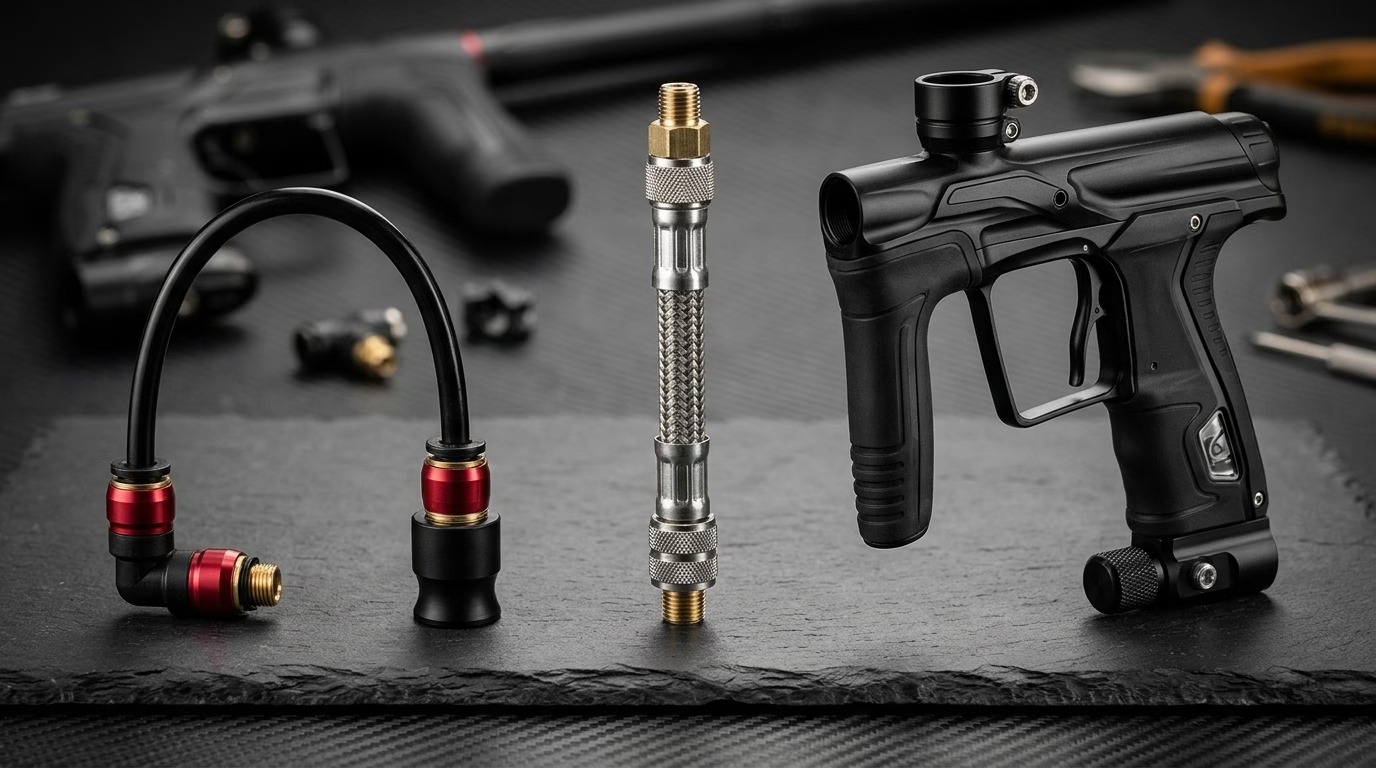
Figure 1.0: Technical Engineering Cross-Section Blueprint. Comparing internal air transfer conduits, burst safety margins, and wrist clearance vector maps between Steel Braided Hose, Push-to-Connect Macroline, and Internal Gas-Thru Routing.
⚠️ The Brutal Truth: Real Field Failure Modes & Actionable Fixes
Gas-Thru: Pinched Frame Transfer Puck O-Ring
When separating the trigger frame from the marker body for deep cleaning, rushing the reassembly can pinch the small urethane transfer seal between the frame and body, causing a slow air leak along the grip seam.
🔧 Fix: Apply a light dab of Dow 33 to seat the puck securely in its gland before tightening frame screws.
Macroline: Collet Tooth Wear & Crooked Hose Cuts
Cutting macroline at an angle or with dull scissors creates an uneven sealing face against the internal O-ring, while repeated twisting degrades the steel gripper teeth, leading to violent pressure blowouts.
🔧 Fix: Always cut macroline with a dead-flat fresh razor blade and replace worn swivel fittings annually.
| 3-Year Ownership Expense | Gas-Thru (Hoseless) | Macroline System | Financial Breakdown & Analysis |
|---|---|---|---|
| Initial Acquisition Cost | Included with Marker ($0) | $16.00 (Fittings & Hose) | Gas-Thru Edge: Standard factory feature on all modern mid-to-high-end markers. |
| Year 1 Replacement Tubing / Seals | $0.00 (Zero Wear) | $6.00 (Spare Hose Length) | Gas-Thru Edge: Static internal seals experience zero friction abrasion. |
| Year 2 Swivel Fitting Refresh | $0.00 | $14.00 (New 90° Swivels) | Gas-Thru Edge: Eliminates replacing worn brass collets and leaking swivel O-rings. |
| Year 3 Complete System Refresh | $4.00 (Transfer O-Ring Kit) | $16.00 (Full Line Kit) | Gas-Thru Edge: Only requires basic Buna-N O-rings during 36-month armorer overhaul. |
| Marker Resale Value Impact | Strong (+15% Demand) | Neutral to Depreciated | Gas-Thru Edge: Hoseless tournament markers retain significantly higher resale value. |
| Total 3-Year True Cost | $4.00 Total Expense | $52.00 Total Expense | Gas-Thru Wins: Saves $48 over three seasons with near-zero ongoing consumable costs. |
Final Armorer Verdict: Crown Champion & Field Directives
After evaluating continuous working pressure, 10.5 BPS volumetric flow recharge, and ergonomic bunker agility, the Modern Gas-Thru (Hoseless) System is our definitive champion with a 9.7/10 score. Eliminating exterior hoses provides unmatched wrist comfort, removes snag vectors during rapid hand swaps, and makes catastrophic line blowouts an artifact of the past. If you are investing in a competitive tournament marker in 2026, hoseless internal air routing is a non-negotiable benchmark.
However, Macroline remains an indispensable 8.8/10 workhorse for mechanical platforms, woodsball markers, and vintage marker restorations. A quality $15 macroline kit with 360-degree swivel 90-degree elbows delivers lightweight routing, generous volumetric flow, and 30-second tool-less field repairs that keep classic markers competing at their peak. For players diagnosing unexpected air hisses, check our comprehensive Paintball Marker Leak Guide and our protocol for Paintball FSDO Elimination.
Gas-Thru Hoseless Markers & Upgrades
In stock on modern platforms
The undisputed tournament standard. Delivers 100% snag-free ergonomics, zero catastrophic burst risk, and flawless 10.5 BPS volumetric recharge.
Universal Macroline & Swivel Kits
In stock at major retailers
The essential $15 upgrade for mechanical and vintage platforms. Offers universal 1/8″ NPT compatibility and 30-second tool-less pit serviceability.
Frequently Asked Questions: Paintball Macroline vs Gas Thru
What is the difference between paintball macroline and microline?
Macroline uses standard 1/4-inch outer diameter (OD) nylon tubing designed to handle full 850 PSI tank output directly from the ASA to the high-pressure regulator. Microline is significantly smaller (roughly 1/8-inch OD) and is rated only for low-pressure pneumatic logic circuits (under 120 PSI), such as vintage Autococker front 3-way valves. Never connect microline directly to an ASA.
Can you convert a macroline paintball gun into a hoseless gas-thru marker?
Generally no. Gas-thru hoseless routing requires factory-machined internal air passages drilled through both the trigger frame and the upper marker body. However, some classic platforms (such as the Planet Eclipse Ego LV1/LV2 with the AT Pipe) allow rigid pipe conversions that tuck the air conduit cleanly along the bottom contour of the trigger guard.
Why does my paintball macroline fitting leak air around the collar?
Macroline leaks at the collar are almost always caused by one of two issues: an uneven or jagged cut on the end of the nylon tubing, or a damaged miniature internal Buna-N #010 O-ring inside the push-to-connect fitting. Cut the hose cleanly with a sharp razor blade at a dead-square 90-degree angle, or unscrew the fitting collar to replace the small internal seal.
How much pressure can standard paintball macroline safely hold?
Quality paintball-grade nylon macroline has a continuous working pressure rating of approximately 850 to 1,000 PSI and a catastrophic burst rating of 2,800 to 3,200 PSI. While safe for standard HPA tank outputs (850 PSI), it should never be connected to unregulated CO2 systems on scorching summer days where liquid expansion can exceed burst ratings.
Do gas-thru hoseless markers freeze up or starve under high-rate fire?
No. In fact, internal gas-thru air passages provide superior thermal stability and larger volumetric expansion areas than narrow hoses. Because the air travels through the substantial aluminum mass of the marker frame, the gas absorbs ambient heat rapidly, reducing cold-gas freeze-up and eliminating volumetric starvation during sustained 10.5 BPS ramping.
Is steel braided hose still used in modern paintball?
Steel braided hose has been largely phased out of tournament paintball due to its heavy weight, rigid inflexibility, and tendency to gouge player wrists during bunker slides. However, it remains the gold standard for high-pressure remote line setups carrying 3,000 PSI from a back harness, and for rugged commercial rental fleets where markers endure extreme physical abuse.