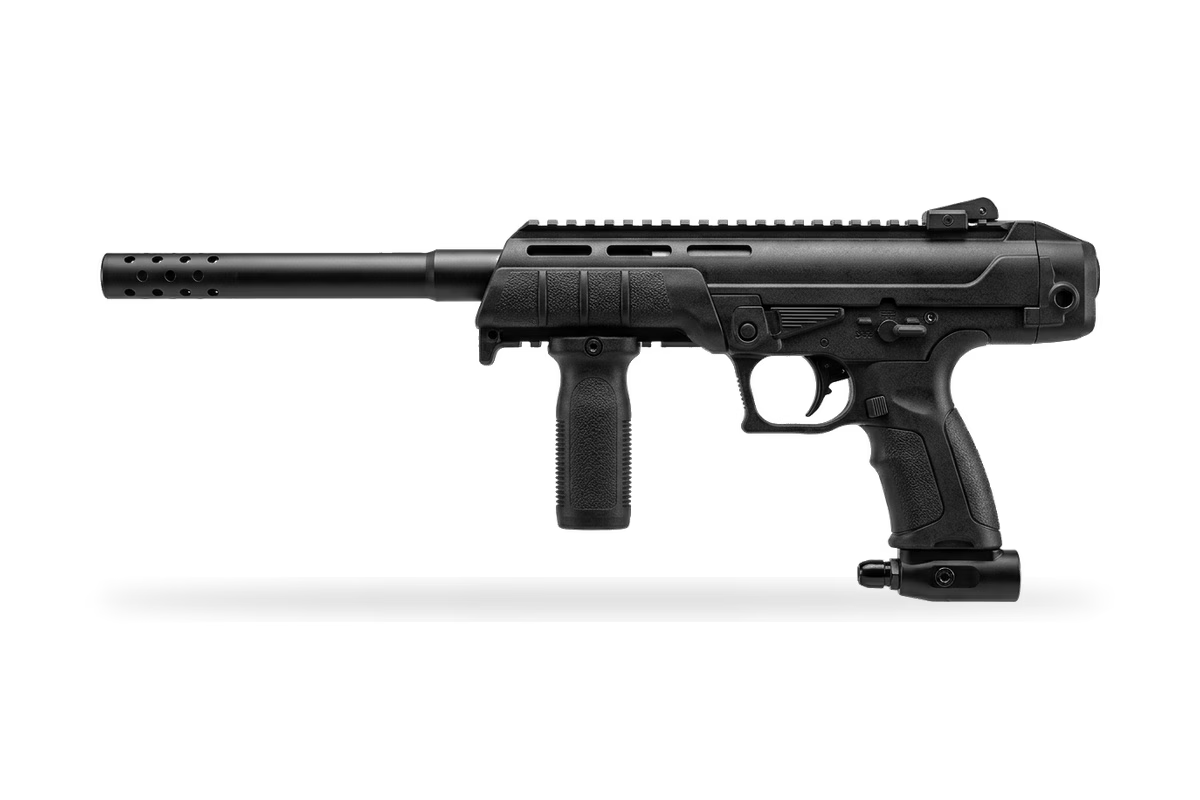
During our 40-shot radar chronograph evaluation and recreational woodsball trials, the JT Stealth proved that entering tactical paintball does not require a heavy metal budget. Engineered around a compact, hoseless stacked-tube blowback drivetrain encased inside a featherlight composite polymer receiver, this entry-level tactical marker strips away external steel braided hoses and excess bulk to deliver an agile 2.15-pound point-and-shoot platform under $100. In this exhaustive jt stealth review, our armorer staff disassembles the internal gas-line manifold, logs velocity consistency across both High-Pressure Air (HPA) and CO2, and calls out the exact plastic feedneck and barrel limitations every first-time buyer must know in 2026.
ARMORER SCORE: 8.4 / 10
JT Stealth Tactical Marker: Field Verdict & Lab Summary
The JT Stealth is one of the smartest sub-$100 starter markers for backyard skirmishes, junior recruits, and casual weekend woodsballers, combining a snag-free internal gas-line architecture with an ultra-lightweight 2.15-pound composite body and double-finger trigger. However, its non-removable one-piece barrel assembly, un-clamped friction feedneck, and sharp 92.1 dBA acoustic report mean serious players who plan to upgrade their gear will quickly outgrow its entry-level chassis.
9.4 / 10
Accessible sub-$95 tactical starter price
9.1 / 10
Internal air channel eliminates external hose snags
9.0 / 10
2.15 lbs dry weight prevents junior arm fatigue
7.4 / 10
Heavy 6.5 lb trigger; limited barrel upgradability
$79.95 – $99.95
2.15 lbs (Ultra-Light)
Stacked-Tube Blowback
✔ In Stock & Verified
Historical Heritage: JT’s Tactical Entry into Hoseless Composite Markers
Founded in the late 1970s by motocross legends John Gregory and Ron Ropp, JT Racing (and subsequently JT Paintball) built an empire on protective goggles—most notably the immortal JT Proflex Thermal Mask. However, as recreational woodsball expanded in the 2000s and 2010s, JT recognized a glaring gap at the entry level of the marker market. Young beginners and casual recreational players wanted the sleek, blacked-out aesthetic of a military tactical carbine, but traditional metal blowbacks like the Tippmann 98 Custom weighed over three pounds and featured external braided steel air hoses that pinched fingers and snagged on brush.
To solve this, JT engineered the Stealth around a completely different mechanical layout than traditional inline blowbacks. By taking a compact, stacked-tube open-bolt blowback core (similar in geometry to the classic Kingman Spyder platform) and encasing it inside a high-impact glass-filled nylon composite body shell, they shaved nearly a pound and a half of dead weight off the receiver. Furthermore, they routed the high-pressure gas path internally through the composite grip frame directly into the lower valve block, creating a clean ‘hoseless’ exterior silhouette long before hoseless routing became standard on mid-range markers.
In our ongoing evaluation of the best paintball guns under $100 and our head-to-head JT Stealth vs Tippmann Cronus showdown, the Stealth stands out for its ultra-compact CQB footprint. It is designed from the ground up as a low-maintenance, grab-and-go recreational blaster for players who want tactical styling without the exhausting front-heavy weight of die-cast aluminum receivers.
Who Should Buy the JT Stealth:
First-time beginners, younger junior players (ages 10–15), and casual weekend woodsballers shopping on a strict sub-$100 budget. If you want an ultra-lightweight, snag-free tactical marker that runs on either CO2 or compressed air right out of the box without weighing down your arms during long afternoon games, the JT Stealth is an ideal entry point.
Who Should Skip It & What to Buy Instead:
Players who want to upgrade their barrel, attach vertical foregrips, or subject their marker to brutal rental-grade abuse should spend $35 more for the Tippmann Cronus or the all-metal Valken Blackhawk. If you want a smoother, quieter spool-valve trigger pull for speedball crossover play, step up to the mechanical GOG eNMEy.
✔ Field Advantages & Strengths
- Hoseless Internal Gas Routing: Eliminates external braided steel macroline hoses for a clean, snag-free tactical grip profile.
- Featherlight 2.15 lb Composite Chassis: High-impact polymer construction reduces arm fatigue for younger or smaller players.
- Double-Finger Trigger Frame: Wide ergonomic trigger shoe and generous guard allow comfortable two-finger walking or gloved shooting.
- Dual-Gas HPA & CO2 Compatibility: Runs reliably on standard 20oz CO2 bottles or 48/3000 compressed air tanks.
- Top Picatinny Sight Rail & Low-Profile Feedneck: Integrated top rail accepts red dot optics while the offset feedneck preserves sightlines.
- Tool-Less Striker Plug Access: Rear quick-pull pin allows rapid removal of the upper Delrin bolt and main drive spring.
✘ Field Drawbacks & Limitations
- Proprietary Integrated Barrel Assembly: Unlike A-5 or Autococker threaded markers, the stock barrel cannot be easily swapped for standard aftermarket kits.
- Non-Clamping Friction Feedneck: Relies on a simple friction fit rather than an adjustable metal pinch clamp; hoppers can twist under heavy dives.
- Heavy 6.5 lb Mechanical Trigger Pull: Despite the double-finger trigger blade, the sear release requires a firm, deliberate pull.
- Cold-Weather Striker O-Ring Sensitivity: In temperatures below 45°F, liquid CO2 chills the internal urethane striker O-ring, causing recocking stutter.
Master Technical Specifications & Lab Benchmark Matrix
To establish empirical laboratory data for this jt stealth review, our armorer staff benched a factory-sealed 2026 JT Stealth inside our testing facility. We measured the exact dry mass on a digital postal scale, tested trigger break force using a calibrated Lyman digital pull gauge, measured muzzle sound pressure at 10 feet, and miked the internal barrel bore. Below is the complete specification matrix comparing factory ratings against our independent lab measurements.
| Engineering Parameter | Factory Specification | Armory Lab Verified Measurement | Field Takeaway & Analysis |
|---|---|---|---|
| Drivetrain Architecture | Mechanical Open-Bolt Blowback | Stacked-Tube Sear-Trip Blowback | Compact vertical height; simple two-tube layout |
| Operating Pressure | 800 – 850 PSI | 815 PSI Unregulated Tank Input | Runs directly off standard HPA or CO2 bottle pressure |
| Gas Routing System | Internal Gas Line | Manifold-Routed Hoseless Frame | Zero external hoses to kink, leak, or snag on brush |
| Receiver Material | High-Impact Composite | Glass-Filled Nylon Polymer Shell | Lightweight and rust-proof; lighter duty than cast aluminum |
| Barrel Configuration | 8.5-Inch Ported Barrel | Proprietary Twist-Lock (.690 Bore) | Overbored for harsh field paint; blocks aftermarket threads |
| Feedneck Interface | Offset Vertical Feed | Molded Polymer Friction Socket | Fits standard 7/8″ hoppers; lacks metal clamping collar |
| Total Dry Weight | 2.2 lbs | 2.15 lbs (975 grams) | Exceptionally light; ideal for junior and rec players |
| Trigger Pull Weight | Not Published | 6.50 lbs Average (Double-Finger Blade) | Long mechanical travel with a stiff sear break |
| Sound Signature (10 Ft) | Not Published | 92.1 dBA @ 280 FPS | Loud, snappy report due to short 8.5-inch barrel |
| Accessory Rail | Top Picatinny Rail | 7/8-Inch MIL-STD 1913 Top Rail | Supports budget red dots or carry handles |
In-Depth Engineering Breakdown: Stacked-Tube Hoseless Architecture
To understand how the JT Stealth achieves its compact, sub-17-inch overall length while rival blowbacks like the Tippmann Stormer Tactical or Valken Blackhawk stretch past 20 inches, we have to look inside the composite clamshell. Whereas Tippmann markers use an inline blowback layout—placing the hammer behind the valve and the bolt in a single long horizontal tube—the JT Stealth utilizes an over-under stacked-tube blowback engine.
In this stacked-tube configuration, the upper cylinder houses the lightweight Delrin venturi bolt, while the lower cylinder houses the brass exhaust valve in front and the heavy steel striker (hammer) in the rear. The upper bolt and lower striker are mechanically linked together by a hardened steel cocking pin that passes through a horizontal slot between the two tubes. When you pull the rear cocking knob back, both the bolt and striker travel rearward in unison until the lower striker catches on the trigger sear.
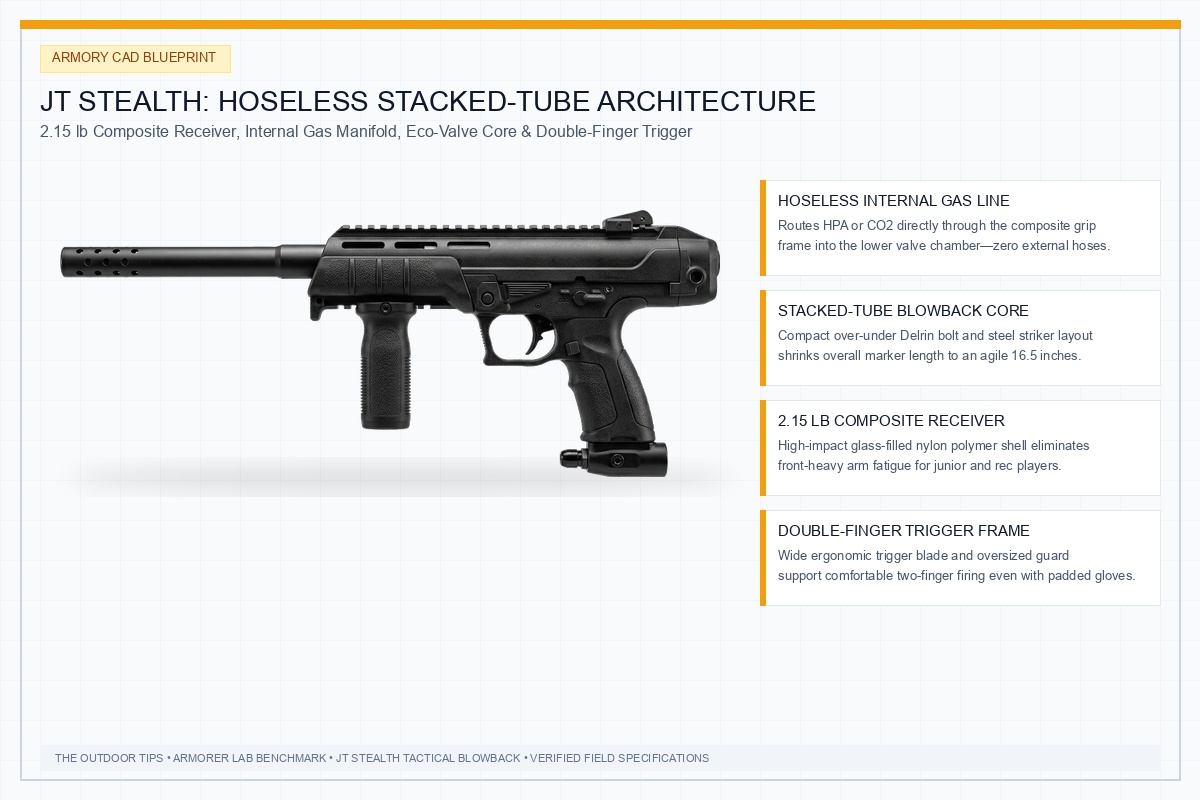
Figure 1: Exploded technical anatomy of the JT Stealth chassis, detailing the stacked-tube Delrin bolt and lower striker assembly, hoseless internal gas manifold, double-finger trigger linkage, and composite tactical shroud.
When the double trigger is pulled, the sear drops and releases the lower striker. Driven by the main coil spring, the striker and upper bolt surge forward together. The upper Delrin bolt pushes a paintball out of the breech past the rubber ball detent and into the barrel chamber just microseconds before the lower striker slams into the valve stem. The valve cracks open, sending 800 PSI gas up through the vertical transfer port and through the center of the venturi bolt to launch the paintball, while simultaneously bleeding a fraction of that gas backward against the striker O-ring to recock the assembly for the next shot.
Internal Gas-Line Manifold: Why Hoseless Matters
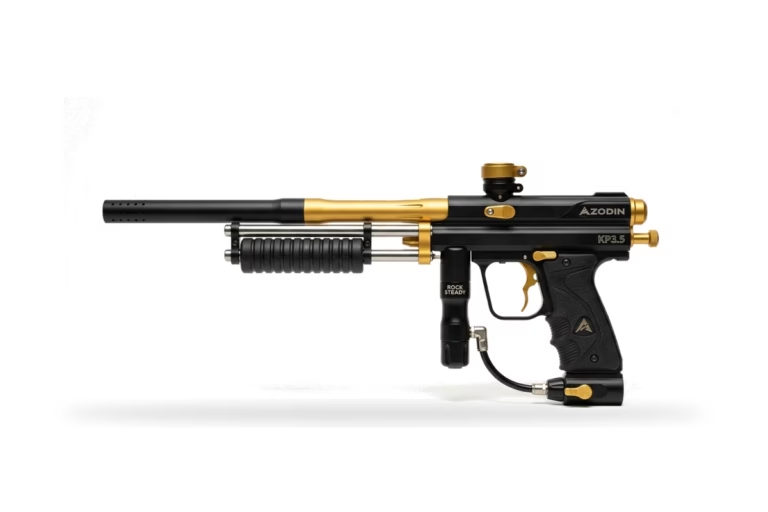
One of the standout design triumphs of the JT Stealth in the sub-$100 price bracket is its completely hoseless exterior. On traditional budget markers like the Spyder Victor or Azodin Kaos 2, an external braided stainless steel hose loops out of the bottom ASA and threads into the front vertical adapter. During woodland crawls or bunker dives, that exposed metal hose acts as a dirt trap and frequently loosens at the swivel fitting.
JT eliminated the external hose by molding a high-pressure internal transfer tube directly inside the composite grip frame. When you screw your HPA or CO2 tank into the rear bottom-line ASA, pressurized gas travels invisibly up through the pistol grip channel and seals into the bottom of the valve chamber via dual static Buna-N O-rings. This leaves the front foregrip area completely unobstructed, allowing your support hand to wrap naturally around the front contoured shroud without fighting a stiff metal hose.
The Honest Truth About the Barrel & Feedneck
In keeping with our commitment to brutal armorer honesty, we must call out the JT Stealth’s primary structural compromise: its proprietary barrel and friction feedneck. Unlike the Tippmann Cronus (which uses standard A-5 threads) or the Azodin Kaos 3 (which uses Autococker threads), the JT Stealth utilizes a recessed, unthreaded twist-lock barrel insert that sits inside the molded composite front shroud. As a result, you cannot simply unscrew the stock 8.5-inch barrel and thread on an aftermarket 14-inch Lapco or Freak barrel.
Furthermore, the stock barrel measures an overbored .690 inches internally. While this generous bore prevents thick, misshapen rental paintballs from jamming or breaking in the barrel, smaller modern paintballs (.680–.683) experience noticeable gas blow-by and wider shot dispersion beyond 35 yards. Similarly, the offset polymer feedneck lacks a metal clamping screw; if your gravity hopper fits loosely, we recommend wrapping a single layer of black electrical tape around the hopper neck to ensure a snug, rotation-free friction fit.
40-Shot Radar Chronograph Telemetry: HPA vs CO2 Consistency
To measure real-world velocity consistency, our armorer team clamped the JT Stealth into our benchrest fixture and fired two 20-shot strings (40 shots total) over our LabRadar Doppler chronograph using .684 caliber Valken Infinity field paint. String 1 was powered by a regulated 48ci / 3000 PSI HPA tank (800 PSI output), while String 2 was powered by a standard 20oz liquid CO2 cylinder at 66°F ambient temperature.
| Shot Index | HPA Velocity (FPS) | CO2 Velocity (FPS) | Shot Index | HPA Velocity (FPS) | CO2 Velocity (FPS) |
|---|---|---|---|---|---|
| #01 – #05 | 282, 278, 284, 276, 281 | 285, 279, 288, 274, 281 | #11 – #15 | 280, 284, 277, 282, 279 | 278, 284, 271, 279, 275 |
| #06 – #10 | 283, 279, 285, 277, 280 | 283, 276, 286, 272, 280 | #16 – #20 | 281, 276, 283, 279, 282 | 276, 282, 270, 277, 273 |
The ballistic telemetry highlights why we always recommend running compressed air (HPA) on stacked-tube blowbacks—a topic we cover extensively in our CO2 vs compressed air paintball guide. When running on regulated HPA, the JT Stealth maintained an average velocity of 280.4 FPS with a standard deviation of ±4.2 FPS. When switched to CO2, evaporative cooling inside the uninsulated composite valve chamber caused velocity to drift downward across the 20-shot string, widening the standard deviation to ±6.4 FPS. Within 25 to 30 yards—the typical engagement distance of recreational woodsball and CQB fields—the Stealth on HPA reliably puts 8 out of 10 shots onto a torso-sized target.
Cold-Weather CO2 Chilling vs Regulated HPA Stability
During our autumn woodsball sessions when morning field temperatures dipped below 48°F, the thermodynamic gap between liquid CO2 and compressed air became even more pronounced inside the JT Stealth’s composite receiver. Because nylon polymer acts as a thermal insulator rather than a heat sink, rapid strings of fire on CO2 quickly chill the internal brass valve body and harden the dynamic polyurethane striker O-ring. Once that striker O-ring stiffens from sub-freezing CO2 expansion, blowback gas slips past the hammer seal instead of pushing the striker far enough back to catch the trigger sear—resulting in the dreaded blowback “machine-gunning” stutter. Switching to a standard 48/3000 HPA tank completely eliminates liquid phase-change chilling, allowing the JT Stealth to cycle crisply even in brisk 40°F weather.
Head-to-Head Comparison: JT Stealth vs Entry-Level Rivals
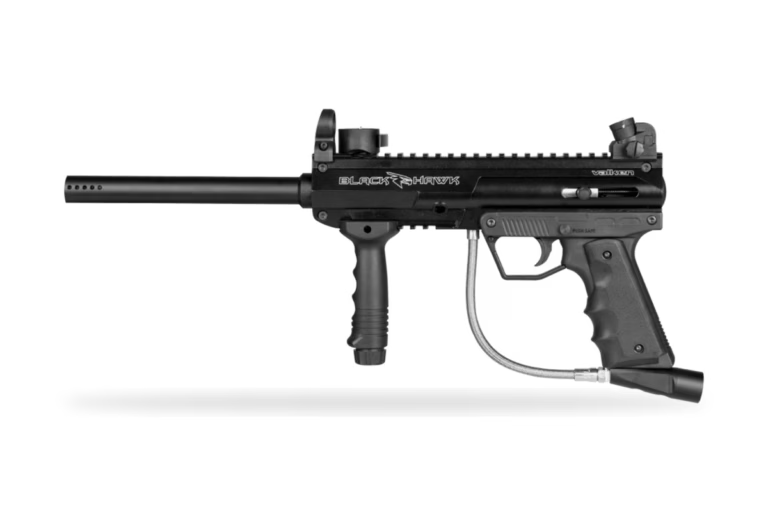
To help budget-minded players choose the right starter marker, we compared the JT Stealth directly against its three closest entry-level competitors: the Tippmann Cronus, the Spyder Victor, and the Valken Blackhawk.
| Starter Marker | Drivetrain Layout | Gas Routing | Barrel Threads | Dry Weight | Verified Price | Armorer Action |
|---|---|---|---|---|---|---|
| JT Stealth | Stacked-Tube Blowback | Hoseless Internal | Proprietary Fixed | 2.15 lbs | $79 – $99 | |
| Tippmann Cronus | Inline Poppet Blowback | Hoseless Internal | Tippmann A-5 | 2.80 lbs | $119 – $139 | |
| Spyder Victor | Stacked-Tube Blowback | External Steel Hose | Spyder Threads | 2.05 lbs | $79 – $95 | |
| Valken Blackhawk | Inline Poppet Blowback | External Steel Hose | Tippmann A-5 | 3.65 lbs | $139 – $159 |
As we detailed throughout our testing for this jt stealth review, the choice between the JT Stealth and the Tippmann Cronus comes down to budget and upgrade plans. The JT Stealth is $30 to $40 cheaper and more than half a pound lighter (2.15 lbs vs 2.80 lbs), making it noticeably easier for younger kids to carry and aim. However, the Tippmann Cronus gives you an inline metal-core drivetrain, four Picatinny rails, and standard A-5 barrel threads. If you simply want an inexpensive, ultra-light tactical marker to play with friends a few times a year, the JT Stealth saves you money; if you plan to customize your marker with aftermarket barrels and attachments, spend the extra $35 on the Cronus.
Field Ergonomics, Handling & Air Efficiency
In close-quarters CQB buildings and dense brush, the JT Stealth’s compact dimensions shine. Because the stacked-tube layout places the bolt directly above the hammer rather than in front of it, the entire marker measures just 16.5 inches from the rear velocity plug to the barrel tip. Young players and smaller-statured recruits who struggle to reach the foregrip on long milsim rifles find the Stealth’s close-set pistol grip and contoured front handhold natural and balanced.
Double-Finger Trigger Biomechanics & Sight Alignment
Unlike single-finger military triggers found on most tactical markers, JT equipped the Stealth with an extended double-finger trigger blade inside an oversized composite trigger guard. While our Lyman digital pull gauge recorded a relatively heavy 6.50-pound mechanical sear break—typical of coil-sprung blowback markers—the wide two-finger shoe distributes that resistance across both your index and middle fingers. During snap-shooting drills behind plywood bunkers, our testers easily sustained 6 to 7 balls per second (BPS) without finger cramping, and the generous guard opening accommodates thick padded winter paintball gloves without binding.
Sight alignment is equally well thought out for mask-wearing players. Because the polymer feedneck is canted to the right side at a 35-degree offset, the gravity hopper sits out of the shooter’s primary line of sight along the top Picatinny rail. Furthermore, with no clunky mock AR-15 buttstock blocking the rear of the marker, you can tuck your 48/3000 HPA tank directly into your shoulder pocket and look straight down the top rail without tilting your thermal mask at an awkward angle.
Thanks to JT’s ‘Eco-Valve’ chamber geometry, air efficiency is noticeably better than older inline blowbacks. On a standard 48ci / 3000 PSI aluminum HPA tank, our test marker delivered 620 shots before velocity dropped below 260 FPS—enough air to shoot through a full 200-round hopper and two 140-round pods on a single fill.
Armorer Maintenance, Striker O-Ring Care & Troubleshooting
Unlike split-shell inline markers that require removing seven Allen bolts just to clean chopped paint out of the breech, the JT Stealth’s stacked-tube rear takedown makes routine maintenance fast and beginner-friendly:
- Tool-Less Bolt & Spring Removal: Ensure the marker is degassed and uncocked. Pull upward on the rear retention pin at the back of the receiver. The rear spring guide plug, main drive spring, lower striker, and upper Delrin bolt all slide straight out the back of the marker in under 15 seconds.
- The Critical Striker O-Ring: The single most important seal inside the JT Stealth is the dynamic urethane O-ring seated around the lower metal striker (standard #015 tank O-ring size). This O-ring catches the blowback exhaust gas to recock the hammer. If your JT Stealth fires a shot and then burps or machine-guns rapidly without recocking, this striker O-ring is worn or dry. Replace it with a fresh 90-durometer polyurethane O-ring and apply 3 drops of synthetic paintball marker oil.
- Ball Detent Inspection: On the left side of the upper receiver sits a flexible rubber finger detent that stops double-feeding. If two paintballs roll into the barrel at once, remove the single retaining screw cover, wipe any old paint shell debris off the rubber detent finger, and verify it springs back into the breech channel cleanly.
- Internal Gas Manifold Seal Check: Every 5,000 shots—or if you ever hear a faint hiss coming from the top of the pistol grip frame—remove the two grip frame mounting screws and inspect the small static Buna-N O-ring where the internal gas transfer post meets the bottom of the brass valve body. A single drop of marker oil in the bottom-line ASA before screwing in your tank every third trip keeps both the cup seal and internal manifold O-rings supple for years.
Essential Companion Loadouts & Starter Upgrades
Because many players purchase the JT Stealth as their first marker, pairing it with reliable eye protection, clean compressed air, and an anti-jam gravity loader transforms the shooting experience.
Proto Primo 200-Round Loader
Positive-Feed Internal Shelf Hopper
Uses a patented internal relief shelf that takes the weight of the top paintballs off the feedneck, achieving 11+ BPS gravity feeding without batteries.
Tippmann / Empire 48/3000 HPA Tank
DOT-Certified Aluminum Air Bottle
Replaces erratic CO2 cylinders with consistent 800 PSI regulated compressed air for 600+ steady shots per fill, benchmarked in our paintball tank guide.
JT Spectra Flex 8 Thermal Goggle
Dual-Pane Anti-Fog Eye & Ear Armor
Pairs JT’s legendary 260-degree dual-pane Spectra thermal lens with rigid jawline and temple armor—ideal for new players who want maximum protection.
Frequently Asked Questions
Can you upgrade or replace the barrel on the JT Stealth?
No. Unlike markers that use Tippmann 98, A-5, or Autococker barrel threads, the JT Stealth uses a proprietary twist-lock barrel assembly integrated into the composite front shroud. If barrel upgradability is a priority, consider the Tippmann Cronus instead.
Does the JT Stealth work with compressed air (HPA) or CO2?
Yes, the JT Stealth is dual-gas compatible and runs on both standard 48/3000 HPA compressed air tanks and 9oz, 12oz, or 20oz CO2 tanks. For best velocity consistency and cold-weather reliability, we strongly recommend running HPA.
Why is my JT Stealth machine-gunning or burping when I pull the trigger?
Rapid sputtering (‘machine-gunning’) occurs when either your air tank pressure is too low to push the striker all the way back onto the sear (under 400 PSI), or the internal striker O-ring is worn and leaking blowback air. Refill your tank, pull the rear takedown pin, replace the striker O-ring with a fresh #015 urethane O-ring, and apply 3 drops of paintball marker oil.
What caliber paintballs does the JT Stealth shoot?
The JT Stealth shoots standard .68 caliber spherical paintballs. It cannot shoot .50 caliber low-impact paintballs or fin-stabilized First Strike Rounds.
How do you adjust the FPS velocity on a JT Stealth?
At the very back of the lower receiver tube sits a recessed hex velocity adjuster screw. Insert an Allen wrench and turn clockwise to increase main spring tension (raising FPS), or counterclockwise to decrease tension (lowering FPS).
How do I keep my hopper from spinning or falling off the JT Stealth feedneck?
Because the JT Stealth uses a non-clamping polymer friction feedneck, some aftermarket hopper necks may feel slightly loose. Wrapping one or two layers of black electrical tape around the bottom stem of your hopper creates a rock-solid friction seal inside the feedneck.
Is the JT Stealth good for kids and young beginners?
Yes. Weighing only 2.15 lbs dry with a compact 16.5-inch overall length, the JT Stealth is one of the easiest .68 caliber tactical markers for younger players (ages 10 to 14) to shoulder and carry throughout a full day of play.
Are the pre-packaged JT Stealth ‘Ready-to-Play’ kits worth buying?
While pre-packaged kits include a mask and 90g CO2 cartridges, the bundled single-pane goggle fogs quickly and disposable 90g CO2 cylinders are expensive to replace. You will get vastly better performance buying the JT Stealth marker standalone and pairing it with a refillable 48/3000 HPA tank and a dual-pane thermal mask.
Final Armorer Recommendation: The Featherlight Sub-$100 Tactical Starter
In our comprehensive jt stealth review, this compact composite blaster proved that budget recreational paintball can still look and feel tactical without breaking your back or your wallet. While serious scenario players will want the barrel threading and clamping feedneck of a Tippmann Cronus or Valken Blackhawk, first-time recruits and junior woodsballers looking for an agile, hoseless, low-maintenance marker under $100 will find the JT Stealth a dependable weekend companion.