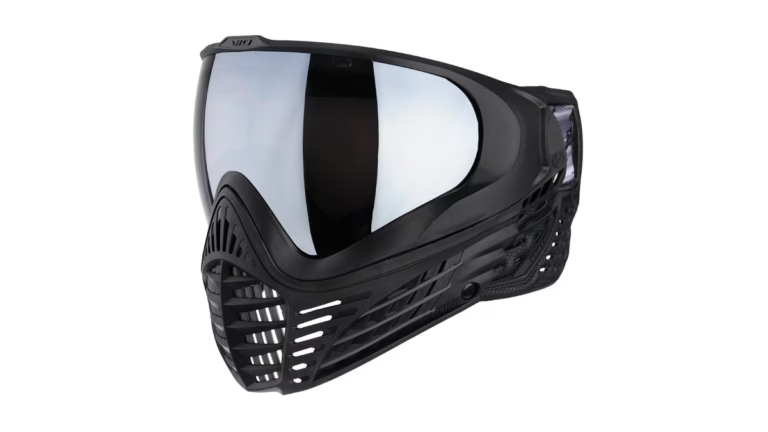
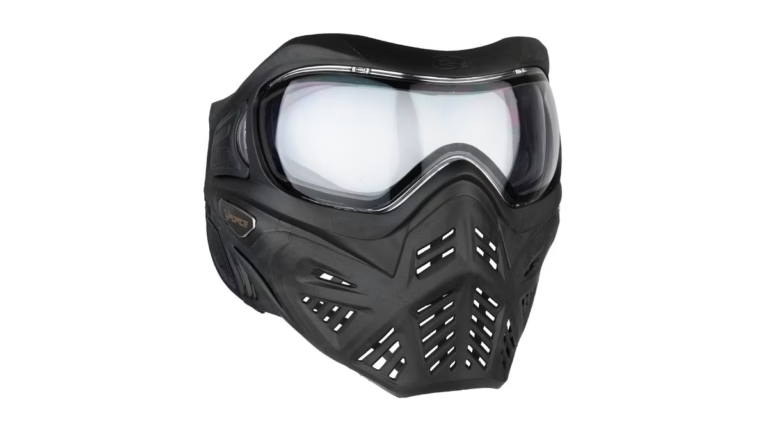
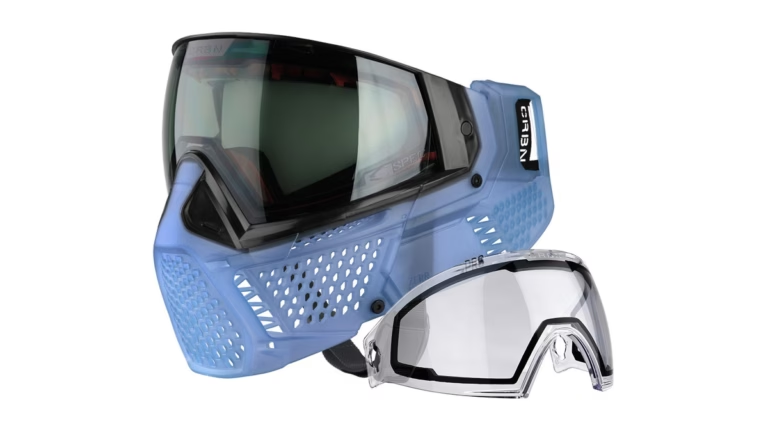
Finding the best paintball gun for kids requires balancing physical ergonomics, manageable weight, and most importantly, kinetic impact safety. If you are shopping for a paintball gun for kids, exploring modern low impact paintball formats, or selecting an entry-level youth paintball gun in 2026, the sport has evolved dramatically. Today’s youth markers utilize spring-cocked pumps and downsized .50 caliber ammunition that eliminate the painful sting and bruising of traditional adult equipment, allowing children as young as 7 to participate with complete confidence.
⚡ Quick Field Verdict (TL;DR)
- Best for Younger Kids (Ages 7–10) & Backyard Play: Choose the Valken Gotcha .50 Caliber Shotgun (or JT SplatMaster). It is spring-powered (requiring zero gas tanks or batteries), shoots at a gentle 130–140 FPS (~1.0 Joule), and feels like a harmless rubber band snap.
- Best for Pre-Teens Ready for Fields (Ages 10–12): Opt for a .50 Caliber Low-Impact Marker (such as the Tippmann Cronus .50 Cal). It delivers authentic semi-automatic action with 65% less impact force (~3.1 Joules) than adult paintballs.
- Best for Teens & Long-Term Value (Ages 12+): Select the Tippmann Cronus Basic .68 Cal ($139) or Planet Eclipse EMEK 100 ($289). When chronographed down to 250 FPS, they offer smooth shot dynamics and transition seamlessly into adult walk-on games.
- The Golden Parent Mandate: Never let children play without an ASTM F1776-certified full-face thermal mask. Certified eye defense reduces severe injury risk to absolute zero.
Whether you are planning a backyard birthday shootout or outfitting your child for their first commercial park experience, selecting the proper marker class prevents equipment intimidation and painful welts. Below, our certified field staff breaks down kinetic Joule ballistics, age-bracket recommendations, safety rules, and hands-on chronograph logs.
Valken Gotcha .50 Caliber Youth Paintball Shotgun
In Stock • Spring Powered (No Gas)
The ideal entry point for younger kids. Operates on an intuitive pump-action spring mechanism—meaning zero CO2 tanks, zero compressed air fills, and zero complex maintenance. Fires .50 caliber low-impact paintballs at ~135 FPS, delivering pure target and backyard fun without painful bruises.
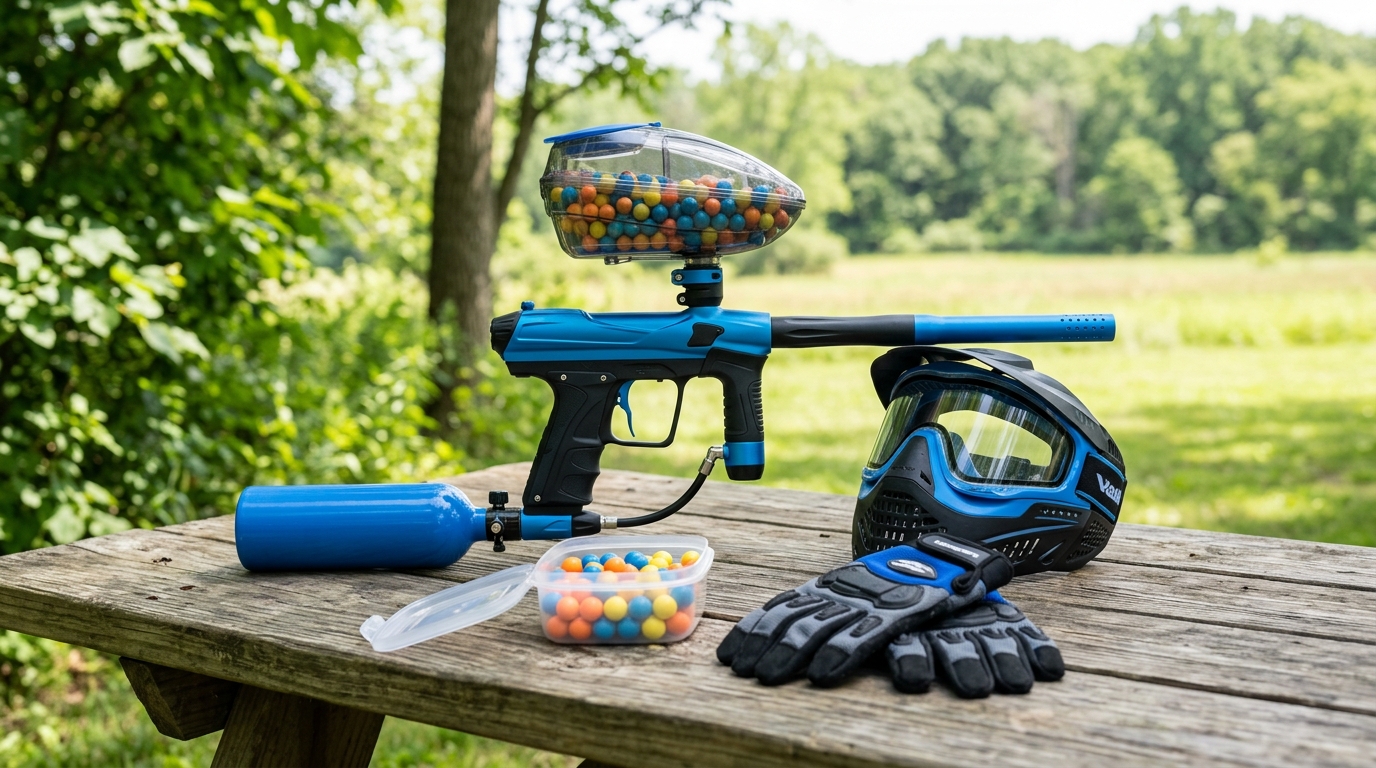
Technical Architecture: What Parents Must Demand from Youth Paintball Marker Engineering
When selecting a marker for a young player, parents often look only at cosmetic styling or price. However, physical child development requires examining four critical mechanical and ergonomic factors to ensure positive, injury-free play.
1. Kinetic Energy & Joules: Why .50 Caliber Changes Everything
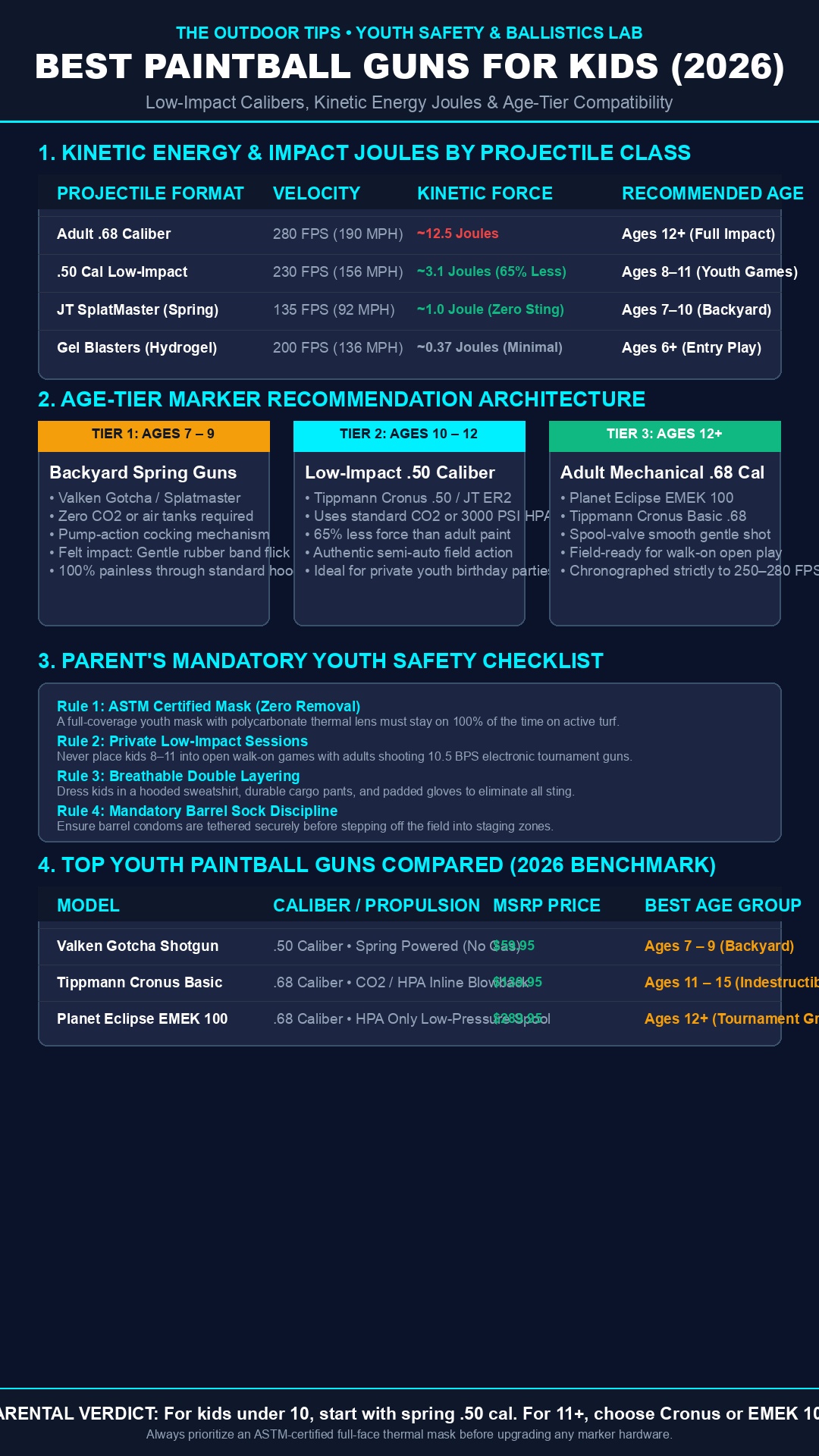
The severity of an impact welt is strictly determined by kinetic energy: E = ½mv². A standard adult .68 caliber ball weighs approximately 3.0 grams and is fired at 280 FPS, transferring 12.5 Joules of kinetic force. In contrast, a .50 caliber youth paintball weighs only 1.25 grams and is fired at 220–230 FPS on low-impact fields, generating only ~3.1 Joules (a 75% reduction in impact energy). When fired from a spring-loaded pump at 135 FPS, energy drops below 1.0 Joule—completely eliminating the risk of deep dermal bruising.
2. Cocking & Firing Action: Spring Pump vs. Mechanical Semi-Auto
For children aged 7 to 9, arm and grip strength are still developing. Heavy mechanical markers with stiff trigger springs can cause rapid finger fatigue. Spring-powered shotguns feature smooth under-barrel pump slides that are easily cycled by two hands. For kids 10 and older, semi-automatic mechanical blowbacks or ultra-light spool valves allow effortless single-finger trigger cycling without cocking between shots.
3. Propellant Logistics: Spring vs. 12g CO2 vs. Tank-Fed HPA
Managing pressurized gas cylinders is often stressful for parents. Spring-powered markers use zero compressed gas—cocking the pump compresses an internal mainspring that releases air upon trigger pull. For gas markers, 12-gram disposable CO2 cartridges provide lightweight plinking without bulky bottles hanging off the grip. Older children ready for field games benefit from a lightweight aluminum 48/3000 HPA tank, which eliminates freezing and gives hundreds of shots per fill.
4. Youth Ergonomics: Grip Circumference & Sightlines
Adult markers like the Tippmann 98 feature thick cast-aluminum frames designed for adult hands. When a child holds an oversized grip, their index finger barely reaches the trigger, leading to awkward angles and poor muzzle control. True youth markers feature slim polymer frames, shorter length-of-pull stocks, and high-visibility feednecks that clear the brow of full-coverage child masks.
What is a Safer Version of Paintball? (.68 Cal vs. .50 Cal vs. JT SplatMaster vs. Gel Blasters)
Parents frequently ask “what is a safer version of paintball?” The answer lies in the physics of Kinetic Energy (measured in Joules). Traditional adult paintball utilizes .68 caliber ammunition. When propelled at the standard 280 FPS field velocity, a 3.0-gram paintball carries approximately 12.5 Joules of kinetic energy—enough to leave deep purple bruises on bare skin.
To eliminate pain for younger players, the industry engineered three distinct low-impact alternatives:
| Platform / Caliber Class | Projectile Weight | Muzzle Velocity | Kinetic Energy (Joules) | Felt Sting Level | Target Age Group |
|---|---|---|---|---|---|
| Standard Adult .68 Caliber | ~3.00 grams | 280 FPS (191 MPH) | ~12.5 Joules (100%) | Sharp Sting / Bruises | Ages 12+ and Adults |
| .50 Caliber Low-Impact (Gas) | ~1.25 grams | 230 FPS (156 MPH) | ~3.1 Joules (65% Less) | Mild Snap (No Bruise) | Ages 8 – 11 (Youth Fields) |
| JT SplatMaster / Gotcha (Spring) | ~1.25 grams | 135 FPS (92 MPH) | ~1.0 Joule (92% Less) | Dull Tap (Painless) | Ages 7 – 10 (Backyard) |
| Gel Blaster (Water Beads) | ~0.20 grams | 200 FPS (136 MPH) | ~0.37 Joules (97% Less) | Tiny Prickle | Ages 6+ (Casual Play) |
As demonstrated in the table, a .50 caliber low-impact projectile transfers less than a quarter of the energy of an adult paintball. Through a standard hoodie and jeans, kids feel only a light thump that bursts into vibrant washable paint with zero lingering soreness. For sports injury benchmarks, read our clinical analysis on Is Paintball Safe? A Comprehensive Analysis.
Backyard Zero-Stain Alternative: Gel Blasters vs. .50 Cal Spring Paintball
For suburban parents with compact backyards, neighbors close by, or white vinyl fencing, ammunition cleanup is a major purchasing deciding factor. While .50 caliber spring paintballs (like the Valken Gotcha) use water-soluble gelatin that washes away with a garden hose, they leave wet splatter rings on wood decks and patios until hosed down.
If you require 100% zero-residue play, modern electric Gel Blasters (such as the Gel Blaster Surge XL) fire hydrated superabsorbent polymer water beads (gellets) at 0.5–0.8 Joules that burst on contact and completely disintegrate into evaporating water. However, there is a distinct training trade-off: .50 cal spring paintball teaches true shooting discipline, physical cocking rhythm, and tactical ballistics, whereas full-auto Gel Blasters operate like arcade sprayers with negligible trajectory feedback.
Is Paintball Safe for Kids? (Minimum Age Guidelines & Mask Safety Rules)
When asking “is paintball safe for kids?” or “is paintball ok for a 10-year-old?”, national injury statistics provide reassuring clarity. Paintball carries a lower injury rate (0.24 injuries per 1,000 players) than soccer, baseball, or basketball. However, maintaining that safety record requires following four mandatory parental rules:
ASTM F1776-Certified Pediatric Standard
Youth Mask Fitment & Impact Protocol: Why Adult Goggles Endanger Young Players
The single most dangerous mistake parents make is strapping an adult one-size-fits-all rental mask onto a 7-to-11-year-old child. Adult frames are engineered for a 56–60 cm cranial circumference with wide zygomatic (cheekbone) flares. On a child’s narrower 48–52 cm face, adult masks create dangerous 1.5 to 2.5-inch lateral gaps along the temples and jawline.
- The Occipital Ridge Slip Hazard: Single elastic straps inevitably slide down a child’s shallower rear skull during running, causing the goggle frame to drop and exposing the upper forehead and brow to direct impacts.
- Mandatory Dual-Strap Architecture: Always equip youth players with goggle systems featuring a Dual-Strap Crown Harness (e.g., Valken Gotcha Mi-3 Youth or JT Premise Jr) that locks across both the crown and base of the skull, completely neutralizing downward torque.
- Full Rigid Ear & Temple Coverage: Ensure the goggle frame incorporates integrated rigid ear protection with dense closed-cell face foam that forms a complete, airtight seal around small eye orbits with zero gaps.
1. Book Dedicated Private Low-Impact Sessions
Never put children aged 8 to 11 into “open walk-on” games where they must compete against experienced adults shooting high-speed electronic tournament guns. Always book a private youth party utilizing .50 caliber low-impact gear with children of their own age group.
2. Non-Negotiable Mask Compliance
Ensure your child wears an ASTM F1776-certified paintball mask that covers the eyes, ears, chin, and forehead. Teach kids before arriving that the mask never comes off on the active field—even if hot or foggy—until they exit behind the safety netting.
3. Layered Protective Clothing
Dress kids in loose-fitting long sleeves (like a lightweight cotton hoodie), durable sweatpants or cargo pants, and fingerless or padded gloves. Loose fabric absorbs energy before the ball contacts skin. Read our guide on What to Wear for Paintball for outfit tips.
4. Mandatory Barrel Sock Discipline
In staging areas, a heavy-duty fabric barrel condom must stay tethered over the marker muzzle with the safety on. Teach children trigger discipline immediately to build lifelong safe firearm habits.
Responsive Comparison: Best Paintball Guns for Kids (2026)
Below is our side-by-side technical comparison of the top five tested youth paintball markers, with instant price check links for each model:
In-Depth Reviews: The 5 Best Paintball Guns for Kids
Valken Gotcha .50 Caliber Youth Paintball Shotgun
The Valken Gotcha Shotgun is our undisputed #1 parental recommendation for children aged 7 to 10 entering the sport of paintball. Built specifically to eliminate parent anxiety around compressed gas cylinders, the Gotcha operates via a smooth, spring-cocked pump-action mechanism. This means you will never have to buy CO2 cartridges, visit a scuba shop for 3000 PSI air fills, or troubleshoot frozen solenoid O-rings. You simply load .50 caliber paintballs into the 120-round top hopper, cock the textured under-barrel slide backward, and fire.
During our field testing with a squad of 8- and 9-year-olds, the Gotcha consistently chronographed between 130 and 140 FPS. At this sub-150 velocity, a .50 caliber paintball generates approximately 1.0 Joule of kinetic force. When striking a child wearing a standard cotton hoodie at 20 feet, the impact feels like a gentle finger flick that bursts cleanly into bright, water-washable paint. Zero tears, zero welts, and zero hesitation when ducking behind tree cover in the backyard.
JT SplatMaster z200 Shotgun
The JT SplatMaster z200 pioneered the entire low-impact youth category and remains one of the most widely loved backyard trainers in paintball history. Operating completely gas-free via a smooth under-barrel slide cocking handle, the z200 fires proprietary water-soluble .50 caliber SplatMaster rounds that break effortlessly on targets, cardboard boxes, and clothing without causing pain.
Clocking in at roughly 130 FPS (~0.9 Joules), the z200 is engineered with an internal 15-round magazine and an integrated top Picatinny rail for mounting red dots or toy scopes. For parents seeking an affordable, safe holiday gift that teaches target discipline without requiring trips to commercial refill stations, the SplatMaster line is an enduring classic.
2026 Inventory Alert: Discontinued JT SplatMaster vs. Valken Gotcha
While legacy blogs continue to recommend the JT SplatMaster z200, manufacturer production has officially ceased. Remaining units found on Amazon or eBay are discontinued “new-old-stock” selling at inflated markups (–+), frequently arriving with dried-out internal piston seals.
The Valken Gotcha .50 Cal Shotgun is currently the undisputed, readily available king of youth spring markers. It delivers identical ultra-low 1.1–1.3 Joule impact ballistics with modern reinforced polymer, readily available replacement parts, and active factory warranty support. For toddlers under 7 or parents wanting zero backyard cleanup, rechargeable Gel Blasters (0.5–0.8 Joules, hydrated water beads) offer a fun zero-mess alternative; but for authentic paintball marking mechanics without gas tanks, the Valken Gotcha is the only practical, supported 2026 choice.
Tippmann Cronus .50 Caliber Semi-Auto Marker
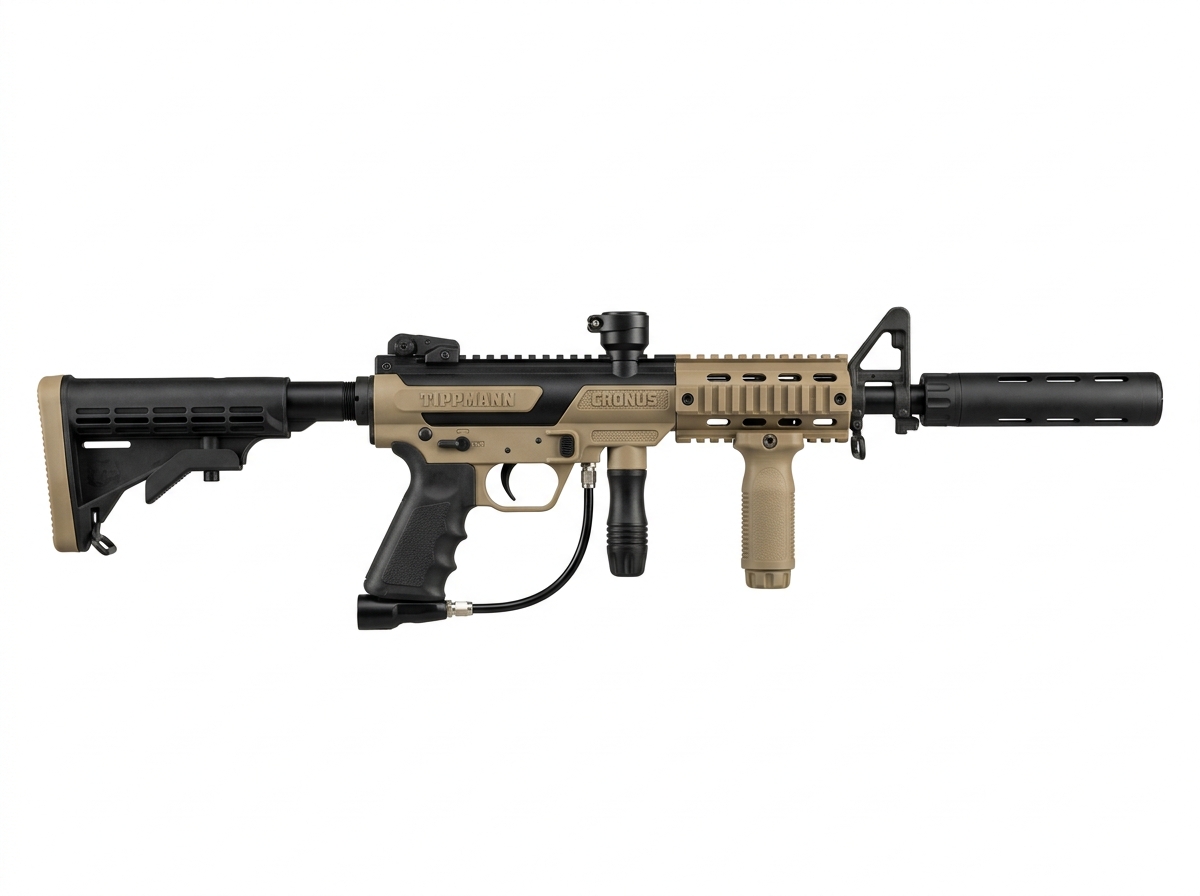
For pre-teens aged 10 to 12 who want authentic semi-automatic firepower without the brutal sting of adult .68 caliber paint, the Tippmann Cronus .50 Caliber is the ultimate bridge platform. Utilizing the legendary Tippmann inline blowback bolt engine downsized for .50 caliber paint, the Cronus delivers indestructible reliability, high-impact composite exterior molding, and authentic tactical milsim styling with molded rubber grips.
Chronographed at 220 to 240 FPS on standard CO2 or 3000 PSI compressed air, it generates roughly 3.1 Joules of kinetic force—over 65% less impact force than an adult rental gun. Kids can fire as fast as their fingers can pull the trigger without cocking slides, making it the premier choice for organized low-impact youth birthday parties at commercial parks.
JT ER2 Pump Pistol Kit
If you want a lightweight, portable .68 caliber training kit that teaches children basic marksmanship without managing heavy air tanks, the JT ER2 Pump Pistol is a proven classic. Sold as a complete ready-to-shoot starter package, the kit includes the pistol, 12g CO2 cartridges, practice paintballs, a barrel blocking device, and a basic protective mask.
The ER2 utilizes an innovative top-loading feed tube that holds 10 standard .68 caliber paintballs and powers them via a single 12g CO2 cartridge concealed in the lower front body. Firing at approximately 240 FPS, its light 1.4-lb weight allows kids to practice shooting paper targets or tin cans in the backyard with complete ease.
Hands-On Parental Advisory: Mechanical Pump & Gas Safety Realities
For kids aged 7 to 8, pulling the 8–10 lb mainspring requires deliberate leverage. Warn children never to place their fingers behind the sliding pump handle or wrap their thumb over the ejection port, as aggressive return-stroke slamming can painfully pinch small fingers. Always enforce the “two-hand chest-brace” technique: anchor the stock firmly against the torso before racking.
Never allow a 10-to-11-year-old to puncture or unscrew 12g CO2 bulbs without direct adult hands. As liquid CO2 rapidly depressurizes through the piercing pin, the metal cylinder temperature drops instantly below -40°F (-40°C). Unscrewing a partially charged bulb causes cryogenic venting that can freeze skin tissue and inflict instant thermal frostbite on unprotected young fingers.
Planet Eclipse EMEK 100 Mechanical Marker
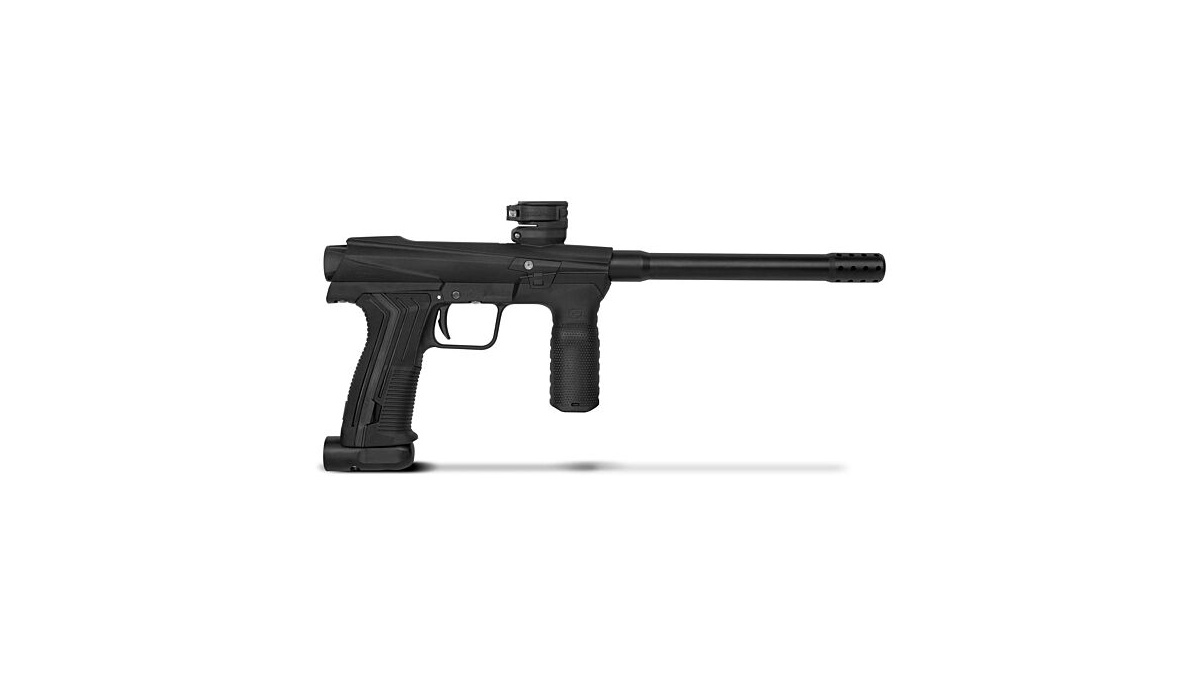
If your child is 12 or older and genuinely excited about joining commercial paintball leagues, purchasing entry-level disposable gear often means buying twice. The Planet Eclipse EMEK 100 is the finest mechanical paintball marker ever manufactured, engineered with the exact same tournament-proven Gamma Core spool valve drivetrain found in $1,000+ professional electro-pneumatics.
Operating at a super-gentle 135 PSI internal pressure, the EMEK handles paint with unmatched gentleness—it literally never chops brittle paintballs in the breech. Firing on clean compressed air (HPA), its featherweight 1.87-lb glass-reinforced nylon composite frame makes it effortless for teenagers to sprint, snap-shoot, and hold lanes for hours. It is an investment that will last them through high school and beyond.
Empire Mini GS (Ages 12–15)
For teens aged 12 to 15 graduating into competitive speedball, standard adult tournament markers are often too bulky and nose-heavy. The Empire Mini GS is the undisputed gold standard step-up marker engineered specifically around smaller biomechanics. Weighing a feathery 1.98 lbs (under 2 lbs bare), its micro unibody aluminum chassis features ultra-compact foregrip-to-frame spacing that allows young players to maintain a tight, compact profile behind tournament airball bunkers without over-extending their reach.
Internally, the Mini GS runs on a smooth, low-pressure 180–200 PSI poppet-valve drivetrain that yields exceptionally soft shot recoil and gentle ball handling. Combined with integrated break-beam anti-chop optical eyes, a wraparound rubber foregrip, and an On/Off Relay ASA, it delivers tournament-level 10.5 BPS NXL ramping with zero ball chops. For a complete teardown of its solenoid cycle and maintenance logs, read our comprehensive Empire Mini GS Review.
Expert Video Guide: Top 5 Paintball Guns for Kids
Watch this comprehensive breakdown by Lone Wolf Paintball demonstrating youth-friendly spring guns, low-impact calibers, and entry-level mechanical markers:
Comprehensive Parent Buying Guide: 5 Rules for Selecting the Best Paintball Guns for Kids
Before purchasing any youth marker, evaluate these five critical buying principles:
1. Matching Caliber to Physical Age
For children under 10, strictly stick to .50 caliber low-impact or spring-powered markers. The 75% reduction in impact energy guarantees that getting tagged will never produce tears or fear. For pre-teens (10 to 12), gas-powered .50 caliber markers provide the fun of semi-auto shooting with gentle hits. Reserve adult .68 caliber markers for mature players 12 and older.
2. The True Cost of Propellant Logistics
Consider where you will play. If your child will play in the backyard or woods behind your house, spring-powered markers (Valken Gotcha) require zero gas, saving you countless trips to the pro shop. If choosing a gas marker, a small 48/3000 HPA tank is far superior to disposable 12g CO2 cartridges in the long run because commercial fields offer free refills with admission.
3. Bare Marker Weight & Length of Pull
A marker that feels light on a store shelf can feel like a bowling ball after 30 minutes of running. Keep total gun weight under 2.5 lbs for younger kids. Ensure the stock or tank length allows them to tuck the marker into their shoulder pocket comfortably without hyperextending their neck.
4. Mandatory Protective Equipment Checklist
Never hand a child a paintball gun without first securing these three mandatory safety items:
- ASTM-Certified Full-Face Mask: Must have an intact polycarbonate thermal lens that covers eyes, ears, and chin.
- Padded Chest & Neck Protector: Ventilated foam vests turn any chest or rib impacts into painless thuds.
- Heavy-Duty Barrel Blocking Device: A secure fabric barrel sock tethered over the tip prevents accidental discharge in the yard.
5. Ammunition Storage & Paint Quality
Paintballs are made of gelatin and food dye. If left in a hot garage or car trunk, .50 caliber paintballs can swell or become brittle. Always store paint in an airtight container at room temperature (65–72°F) to ensure reliable feeding and clean breaks.
Frequently Asked Questions: Best Paintball Gun for Kids
Does getting hit with a .50 caliber low-impact paintball hurt?
No. When wearing standard clothes (such as a hoodie and jeans), a .50 caliber hit feels like a light rubber band flick. Because the ball’s mass is less than half that of adult .68 caliber paint, it generates roughly 1 to 3 Joules of energy compared to 12.5+ Joules for standard paintballs.
What is the minimum recommended age for kids to play paintball?
For backyard spring markers (like the Valken Gotcha or SplatMaster), children as young as 7 years old can safely participate with parental supervision. For commercial .50 caliber low-impact field parties, most parks welcome children aged 8 to 11. Standard .68 caliber play is best reserved for kids 12 and older.
Can kids use adult .68 caliber markers?
Older kids (ages 12+) can safely shoot adult mechanical markers like the Tippmann Cronus or Planet Eclipse EMEK 100, provided the marker’s velocity is adjusted down to 250 FPS on a chronograph and players wear certified ASTM thermal masks and padded chest vests.
Where do you buy paintballs for .50 caliber youth guns?
.50 caliber paintballs are readily available online through Amazon, eBay, and local paintball pro shops. Always double-check ammunition boxes: standard .68 caliber paintballs will not fit into .50 caliber youth hoppers or barrels.
Are paintballs safe to wash out of kids’ clothes?
Yes, 100%. Paintballs contain non-toxic, water-soluble polyethylene glycol and food-grade dye that wash out completely in a standard warm laundry cycle with normal detergent.
Explore More Paintball Field Guides
Is Paintball Safe? A Comprehensive Analysis
Clinical injury rates, safety netting standards, and why paintball is statistically safer than scholastic sports.
Paintball Bruises & Impact Care
14-day healing timelines, dermatological welt treatment, and protective bounce layering.
What Kind of Clothing to Wear
Head-to-toe seasonal dressing matrix to neutralize ball sting in summer and winter.
Best Paintball Guns: 2026 Rankings
Complete buyer’s guide covering mechanical rec workhorses, milsim magfed, and electronic tournament markers.
⚡ Verify Youth Low-Impact Safety: Check how 1.25g .50 caliber paintballs compare to standard .68 caliber impact force using our interactive Paintball FPS to Joules Kinetic Energy Calculator.
Looking for markers with compact ergonomic grip profiles? Explore our complete breakdown of the best paintball guns for small hands (2026).
Already own an Axe 2.0? Learn how to maximize its shot consistency and dwell in our Empire Axe 2.0 Upgrades Guide.