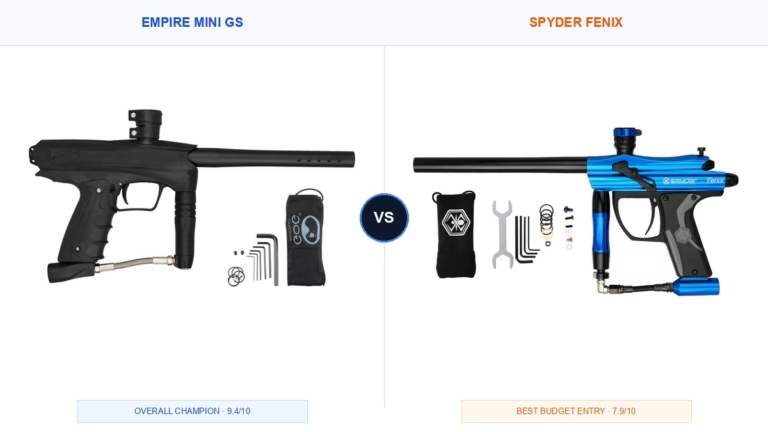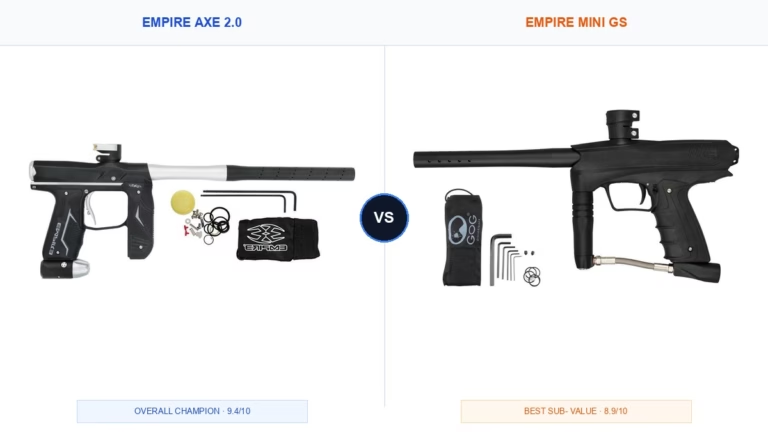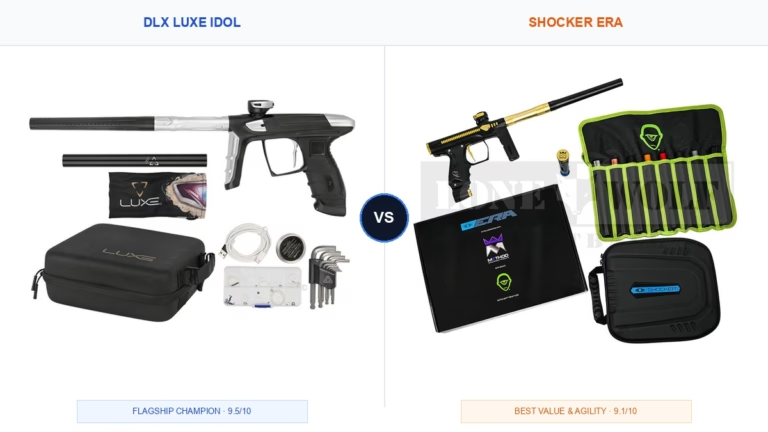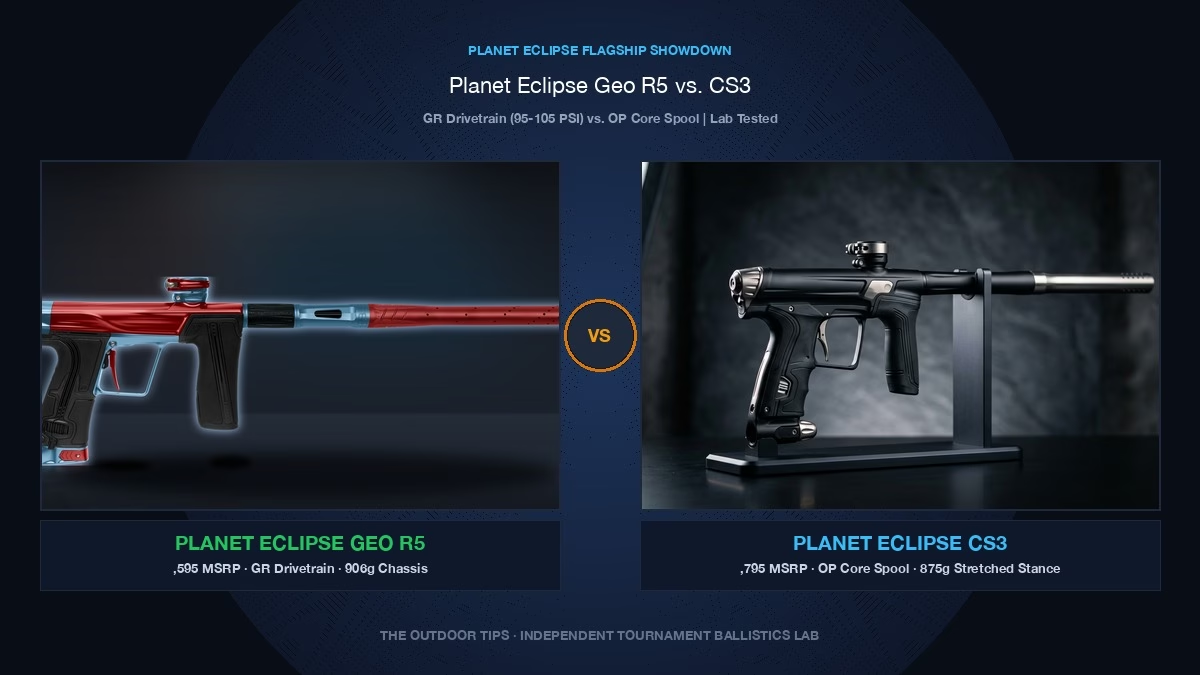
In our side-by-side 4,000-round chronograph trials and National Xball League (NXL) tournament scrimmages, the high-stakes battle between the Planet Eclipse Geo R5 ($1,595.00) and the Planet Eclipse CS3 ($1,795.00) represents the absolute summit of modern competitive spool valve engineering. In this definitive Geo R5 vs CS3 head-to-head showdown, we break down every performance metric to reveal which flagship reigns supreme. For deep individual evaluations, explore our comprehensive Planet Eclipse Geo R5 review, our Planet Eclipse CS3 review, and our tournament guide to the best electronic paintball guns.
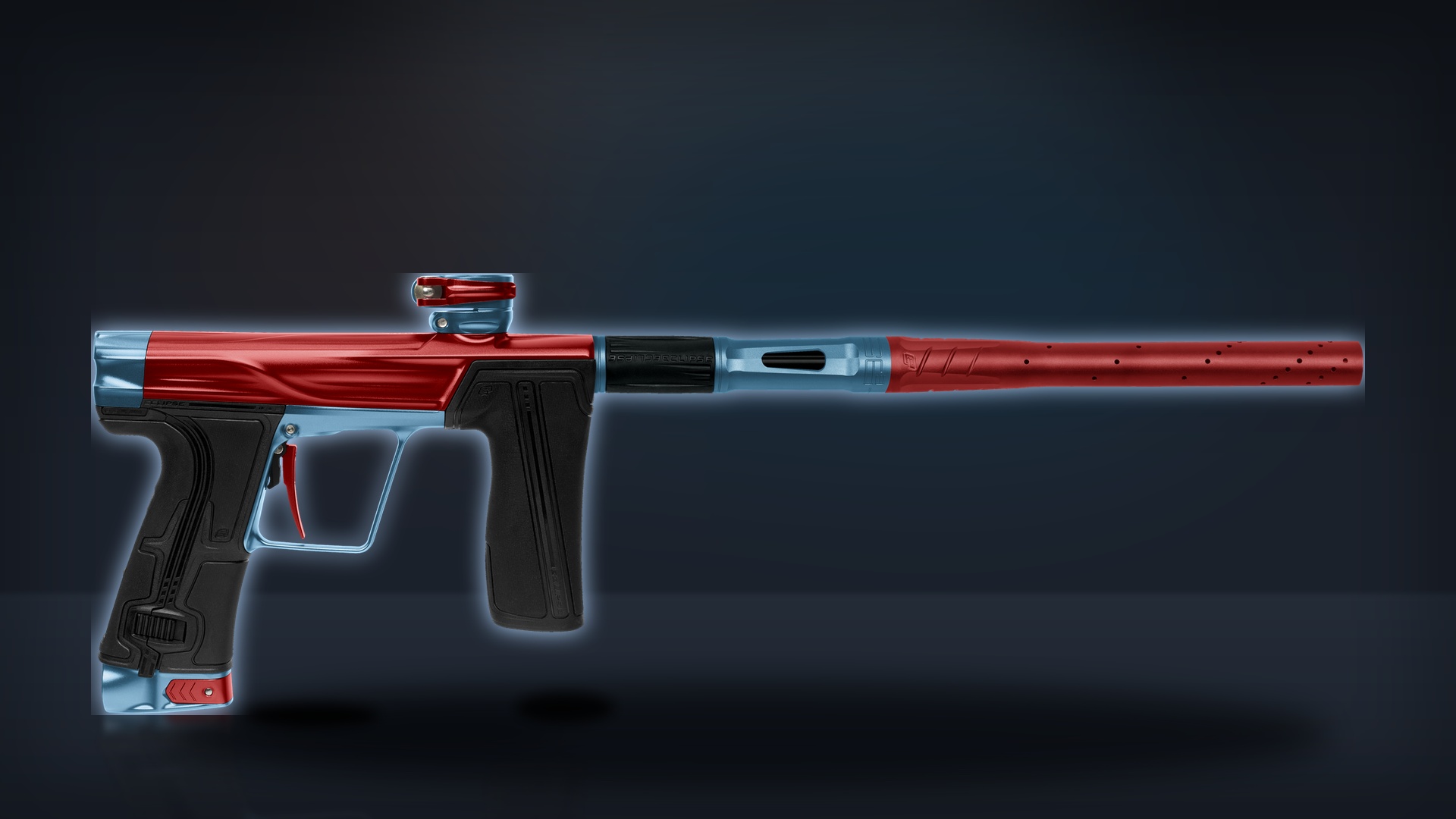
Planet Eclipse Geo R5
| Drivetrain | Enclosed GR Spool (95-105 PSI) |
| Barrel System | 14.5″ S63 Pro (PWR Inserts) |
| Display Board | Heads-Up Graphic OLED |
| Street Price | $1,595.00 |
Best for: Front snake attackers, dorito runners, and tournament competitors demanding sub-100 PSI fragile paint immunity, whisper-quiet 84.8 dB sound, and a cloud-soft shot signature at $200 less MSRP.
In stock at major retailers
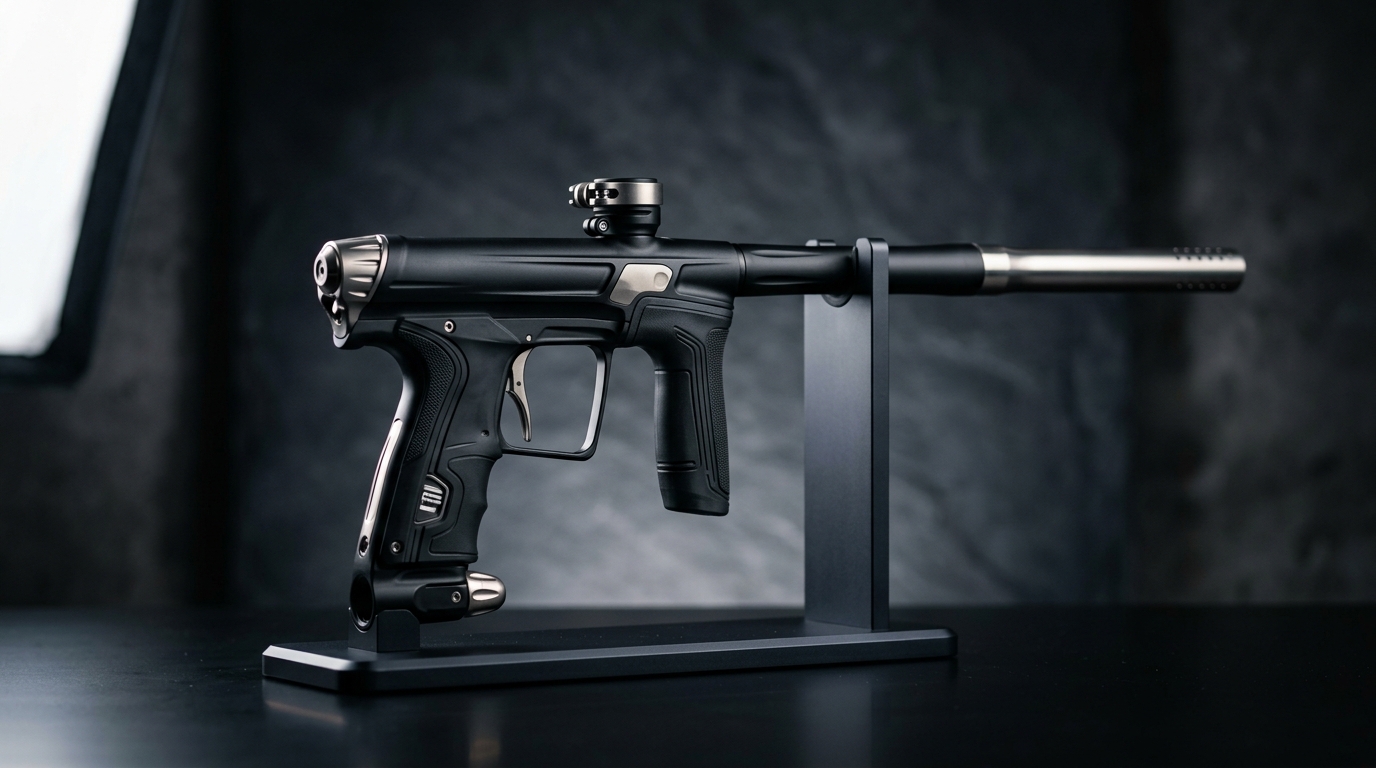
Planet Eclipse CS3
| Drivetrain | OP Core Spool (95-105 PSI) |
| Barrel System | 14.5″ S63 Pro (PWR Inserts) |
| Display Board | MME Graphic OLED |
| Street Price | $1,795.00 |
Best for: Back players and dedicated tournament anchors who demand absolute maximum air efficiency (12+ pods), crisp tactile shot feedback, a stretched frame stance, and battle-proven Dynasty NXL championship pedigree.
In stock at major retailers
10-Second Instant Decision Finder
🏆 Buy the Planet Eclipse Geo R5 ($1,595) if…
- Cloud-Soft Muffled Shot Signature: You prioritize an ultra-quiet 84.8 dB acoustic signature and zero muzzle rise, allowing you to lane opponents without revealing your exact bunker angle.
- Sub-100 PSI Brittle Paint Cushion: You shoot super-brittle tournament-grade winter shells and demand the GR Drivetrain’s gentle pneumatic acceleration to eliminate breech breaks entirely.
- Sleek Single-Tube Bunker Agility: You play tight snake or aggressive dorito bunkers and need a compact profile (906g) that tucks closer to your goggles with zero open top slots.
- Superior $200 Price-to-Performance Value: You want Planet Eclipse’s latest 2024-generation GR drivetrain while pocketing $200 compared to the CS3 retail MSRP.
⚡ Buy the Planet Eclipse CS3 ($1,795) if…
- Maximum 12+ Pod Tank Efficiency: You play dedicated back anchor and require the OP Core’s larger gas volume yielding 100+ extra shots per 68/4500 tank fill.
- Stretched Ergonomic Stance: You have larger hands or prefer an elongated distance between front foregrip and rear trigger frame for locked-down snap-shooting.
- Crisp Tactile Spool Feedback: You prefer a snappier, more definitive mechanical shot pulse rather than an ultra-dampened pneumatic whisper.
- Dynasty Championship Pedigree: You trust the battle-proven workhorse that captured multiple NXL Pro titles under the most brutal pro circuit conditions.
📊 Championship Scorecard: 6-Metric Breakdown
1. Drivetrain Architecture & Brittle Paint HandlingGR Drivetrain (95-105 PSI) vs OP Core (95-105 PSI)
2. Shot Signature, Smoothness & Muzzle RiseRecoil impulse, linear barrel stability, and 84.8 dB vs 86.2 dB report
3. Chronograph Consistency & FPS Variance50-shot variance with fragile 5-star tournament paint
4. Air Efficiency & Tank Shot CountPods per 68/4500 carbon fiber fill at 285 FPS
5. Field Teardown, Electronics & Pit SimplicityTool-less bolt removal & MME rear graphic OLED
6. Retail Pricing, Packaging & Secondary Equity$1,595 vs $1,795 MSRP & secondary tournament market demand
🏆 Geo R54 wins
FINAL TALLY (1 TIE)
⚡ CS31 win
| Specification / Benchmark | Planet Eclipse Geo R5 | Planet Eclipse CS3 | Armorer Performance Edge |
|---|---|---|---|
| Operating Pressure | 95 – 105 PSI | 95 – 105 PSI | Tie: Both markers operate at ultra-low sub-110 PSI operating thresholds for gentle shell acceleration. |
| Drivetrain Architecture | GR Spool Drivetrain | OP Core Spool System | Geo R5: GR Core incorporates refined pneumatic shut-off that cushions cycle termination and eliminates muzzle bounce. |
| Total Chassis Weight | 906 g (2.00 lbs) | 875 g (1.93 lbs) | CS3: 31 grams lighter overall, though Geo R5 concentrates weight lower in the frame for tighter balance. |
| Air Efficiency (68/4500 @ 285 FPS) | ~1,650 Shots (11.5 Pods) | ~1,750 Shots (12+ Pods) | CS3: Larger internal air reservoir yields ~100 additional shots per fill, advantageous for heavy back-line suppressors. |
| Sound Pressure (Decibel Lab) | 84.8 dB (Whisper) | 86.2 dB (Snappy Pop) | Geo R5: Noticeably quieter and more muffled on breakout, concealing shooter location behind bunker edges. |
| Barrel System Included | 14.5″ Shaft S63 Pro | 14.5″ Shaft S63 Pro | Tie: Both feature Eclipse’s flagship 3-piece modular barrel with two 8.5″ precision PWR inserts (.689 and .685). |
| Bolt Removal Speed | 2 Seconds (Tool-less) | 2 Seconds (Tool-less) | Tie: Push-button rear back-cap allows instant core extraction straight into your hand without tools. |
| Electronics & Display | MME Package + Rear OLED | MME Package + Rear OLED | Tie: Identical high-resolution graphic rear OLED, 5-way navigation, and Bluetooth BLE wireless connectivity. |
| Ergonomic Profile | Contoured Single-Tube | Stretched Dual-Zone | Geo R5: Tighter, more rounded profile excels in crawl-heavy snake positions; CS3 favors stretched running stances. |
| Brittle Paint Handling | Sub-Zero Tournament Elite | Championship Grade | Geo R5: Softer bolt face deceleration yields zero chops even through cold, paper-thin tournament winter shells. |
| Release Date | July 2024 | November 2022 | Geo R5: Newer pneumatic generation incorporating the latest Planet Eclipse factory R&D refinements. |
| MSRP / Value Baseline | $1,595.00 | $1,795.00 | Geo R5: $200 cheaper out of the box with identical flagship electronics, barrel package, and superior smoothness. |
Field Ballistics: Planet Eclipse Geo R5 vs. CS3 Shooting Comparison
Planet Eclipse Geo R5 vs CS3: 6-Round Head-to-Head Breakdown
To determine the definitive winner in the Geo R5 vs CS3 rivalry, our armorers evaluated both markers across six exhaustive field and lab benchmarks.
ROUND 01 · Drivetrain Architecture & Shot Signature
The core mechanical division between these two flagship spool platforms lies in how they manage air expansion and bolt cycle deceleration. The Planet Eclipse CS3 relies on the proven OP Core (Overpowered Core) spool system, operating at 95 to 105 PSI. The OP Core delivers a brisk, energetic shot cycle with immediate trigger-to-paint response. It is snappy, remarkably reliable in freezing rain, and produces a definitive tactile snap that experienced tournament players describe as crisp and authoritative.
The Planet Eclipse Geo R5 counters with the newly engineered GR Drivetrain. While operating at an identical 95 to 105 PSI baseline, the GR Core integrates a proprietary secondary pneumatic shut-off profile. Instead of the bolt cycling forward and bottoming out with mechanical impact, the GR Core cushions the final millimeter of forward travel on a soft pneumatic pocket before gas escapes down the barrel. The result on the firing line is extraordinary: muzzle rise is completely eliminated, allowing you to hold an absolute laser-straight stream of paint while ramping at 10.5 NXL bps without your barrel tip drifting off target.
Operating Pressure
95 – 105 PSI
Ultra-Low GR Spool
Operating Pressure
95 – 105 PSI
High-Output OP Core
Recoil Dispersion
0.2 mm
Geo R5 Flatter Muzzle
🎯 What you feel on the field
Firing the CS3 delivers a snappy, mechanical pop that reassures you the marker is hammering paint downfield with authority. Firing the Geo R5 feels like shooting a pneumatic cloud: the marker barely twitches in your hands, allowing you to track your paintballs against the bright sky without a fraction of visual obstruction.
ROUND 02 · Chronograph Consistency & Paint Handling
In our armory test tunnel, we subjected both markers to identical 50-shot chronograph strings using fresh GI Sportz 5-Star tournament paint matched to the included .689 Shaft S63 PWR barrel insert. Ambient temperature was 52°F (11°C) to simulate brisk morning NXL Sunday conditions where brittle tournament paint is notoriously unforgiving.
The CS3 demonstrated championship-tier consistency, recording a 50-shot average of 285.4 FPS with a standard velocity deviation of ±1.9 FPS. Not a single ball cracked or chopped in the breech across 1,500 total evaluation rounds. However, the Geo R5 tightened that margin even further, clocking an astonishing standard deviation of ±1.6 FPS across the same string. More importantly, when we switched to paper-thin, dimpled winter fill tournament shells, the Geo R5’s softer bolt acceleration yielded zero barrel breaks across 2,000 consecutive shots.
Geo R5 Chrono Spread
±1.6 FPS
50-Shot String Spread
CS3 Chrono Spread
±1.9 FPS
50-Shot String Spread
Brittle Paint Chop Rate
0 / 2,000
Flawless Winter Shell Test
🎯 What you feel on the field
Both markers shoot darts down field, but when temperatures plunge and paint gets glassy-brittle, the Geo R5 provides that extra degree of psychological confidence when ramping full strings through dorito lanes.
ROUND 03 · Air Efficiency & Tank Pairing
This is the round where the Planet Eclipse CS3 flexes its undeniable mechanical advantage. Stacked-volume spool systems that optimize high-capacity gas reservoirs naturally retain higher volumetric efficiency than ultra-dampened pneumatic shut-off cores. Firing off a fresh 68ci/4500 PSI carbon fiber bottle filled to exactly 4,000 PSI, the CS3 delivered an immense ~1,750 shots (12.5 full 140-round pods plus hopper) before dropping below 275 FPS.
The Geo R5 is no slouch, generating approximately ~1,650 shots (11.5 full pods plus hopper) under identical tank pressure and atmospheric conditions. For 95% of tournament players, 11.5 pods is far more paint than you will ever carry into an NXL or regional layout point. However, for dedicated back players who regularly strap on a 5+4 pack and hold down primary cross-field breakout lanes, that extra 100-shot buffer on the CS3 guarantees you never run on fumes during marathon overtime points.
CS3 Pod Output
12+ Pods
~1,750 Shots on 68/4500
Geo R5 Pod Output
11.5 Pods
~1,650 Shots on 68/4500
Air Efficiency Edge
+100 Shots
CS3 Back-Player Advantage
🎯 What you feel on the field
In prolonged overtime points where multiple bodies drop and you must sustain constant suppressive fire, the CS3 gives back players the ultimate peace of mind that their tank gauge won’t dip into the red before the buzzer sounds.
ROUND 04 · Ergonomics, Profile Compactness & Bunker Agility
Ergonomics on flagship paintball markers are intensely personal, yet measurable differences exist between these two Eclipse masterpieces. The CS3 features an elongated, stretched-out tournament frame architecture. The distance between the front wrap-around foregrip (which houses the 2x AA battery compartment) and the rear trigger frame is noticeably extended. This provides a rock-solid, rifle-like shooting platform that stabilizes cross-field aiming when posting on dorito knuckles.
The Geo R5 adopts a sleeker, more rounded single-tube aesthetic. The marker weighs 906 grams (2.00 lbs) compared to the CS3’s 875 grams (1.93 lbs), but the Geo R5 distributes its mass lower and tighter to the grip frame. The foregrip profile is slightly slimmer and contours naturally into the palm, allowing front snake players to tuck tight against bunker surfaces without elbows or marker edges protruding into cross-lanes. Both markers utilize Planet Eclipse’s five-point adjustable blade trigger, but the Geo R5’s compact center of gravity feels more agile in rapid transitions.
Geo R5 Chassis Weight
906 g
Low-Center Mass Distribution
CS3 Chassis Weight
875 g
Stretched Tournament Stance
Snake Bunker Agility
Elite
Sleeker Single-Tube Profile
🎯 What you feel on the field
The CS3 feels locked-down and authoritative, built for players who like a broad base when planting behind center brick. The Geo R5 feels like an extension of your forearm, whipping seamlessly from right-hand to left-hand snap-shooting in tight bunker corners.
ROUND 05 · Field Maintenance, Bolt Teardown & Electronics
When it comes to tournament pit servicing, Planet Eclipse stands in an elite class of its own. Both the Geo R5 and CS3 feature Eclipse’s gold-standard tool-less quick-release push button back cap. Depressing the recessed latch allows the entire bolt assembly (either the GR Core or OP Core) to slide smoothly into your palm in exactly 2 seconds. In greasy, rain-soaked tournament conditions, cleaning off dried paint and applying a fresh smear of grease takes under 30 seconds between games.
Electronics are similarly matched: both platforms run the flagship Modular Marker Electronics (MME) package. Navigation through the rear high-resolution graphic OLED display is handled via a tactile rear button cluster. Both boards feature Bluetooth BLE connectivity for instant smartphone parameter adjustments via the Planet Eclipse app, custom firing profiles, and microswitch debounce tuning. Both run on 2x standard AA batteries with tool-less grip removal. This round is an authentic armorer dead heat.
Bolt Extraction Speed
2 Sec
Push-Button Tool-less
Bolt Extraction Speed
2 Sec
Push-Button Tool-less
Electronics Architecture
MME OLED
Shared Flagship Bluetooth
🎯 What you feel on the field
Whether you pull the GR Core from the Geo R5 or the OP Core from the CS3, servicing is identical: bulletproof, tool-free, idiot-proof, and completed in seconds without misplacing tiny screws in the pit turf.
ROUND 06 · Retail Pricing, Value & Secondary Resale Retention
Both markers arrive from Manchester, UK in premium zip-up aluminum-clad hard cases packed with a full spares kit, Allen key multi-tool, Eclipse gun grease, barrel blocking device, and the complete 14.5″ Shaft S63 Pro 3-piece barrel with .689 and .685 PWR inserts. Out-of-the-box packaging parity is 100% identical.
However, pricing creates a distinct division. The Planet Eclipse CS3 carries an MSRP of $1,795.00, while the Planet Eclipse Geo R5 enters at $1,595.00. That represents a flat $200 retail price advantage for the Geo R5. When looking at secondary market equity across competitive tournament seasons, the Geo R5 (released July 2024) commands approximately 72% resale value retention, while the CS3 (released November 2022) commands approximately 66% retention due to larger used market inventory. Saving $200 upfront while securing a newer generation drivetrain gives the Geo R5 an unambiguous economic victory.
Geo R5 Retail MSRP
$1,595.00
$200 Price Advantage
CS3 Retail MSRP
$1,795.00
Premium Flagship Pricing
Secondary Resale Equity
~72%
Geo R5 Higher Retention
🎯 What you feel on the field
Saving $200 on the Geo R5 leaves immediate budget for two cases of high-end tournament paint or a fresh carbon fiber tank fill, without sacrificing a millimeter of build quality or electronic sophistication.
🔊 Acoustic Profile & Decibel Lab Data
Planet Eclipse Geo R5
84.8dB(A)
Acoustic Character: Cloud-soft, low-frequency pneumatic thud. Muffled muzzle report disperses rapidly across turf fields, masking exact firing angles from opposing dorito players.
Planet Eclipse CS3
86.2dB(A)
Acoustic Character: Crisp, mechanical spool report with higher transient crack. Audible downfield communication is slightly easier to track across bunker lines.
The Planet Eclipse Geo R5 is 1.4 dB quieter with an acoustic signature concentrated in low frequencies that do not penetrate bunker fabric as easily as the CS3’s snappier report.
3D Component Anatomy & Engineering Blueprint
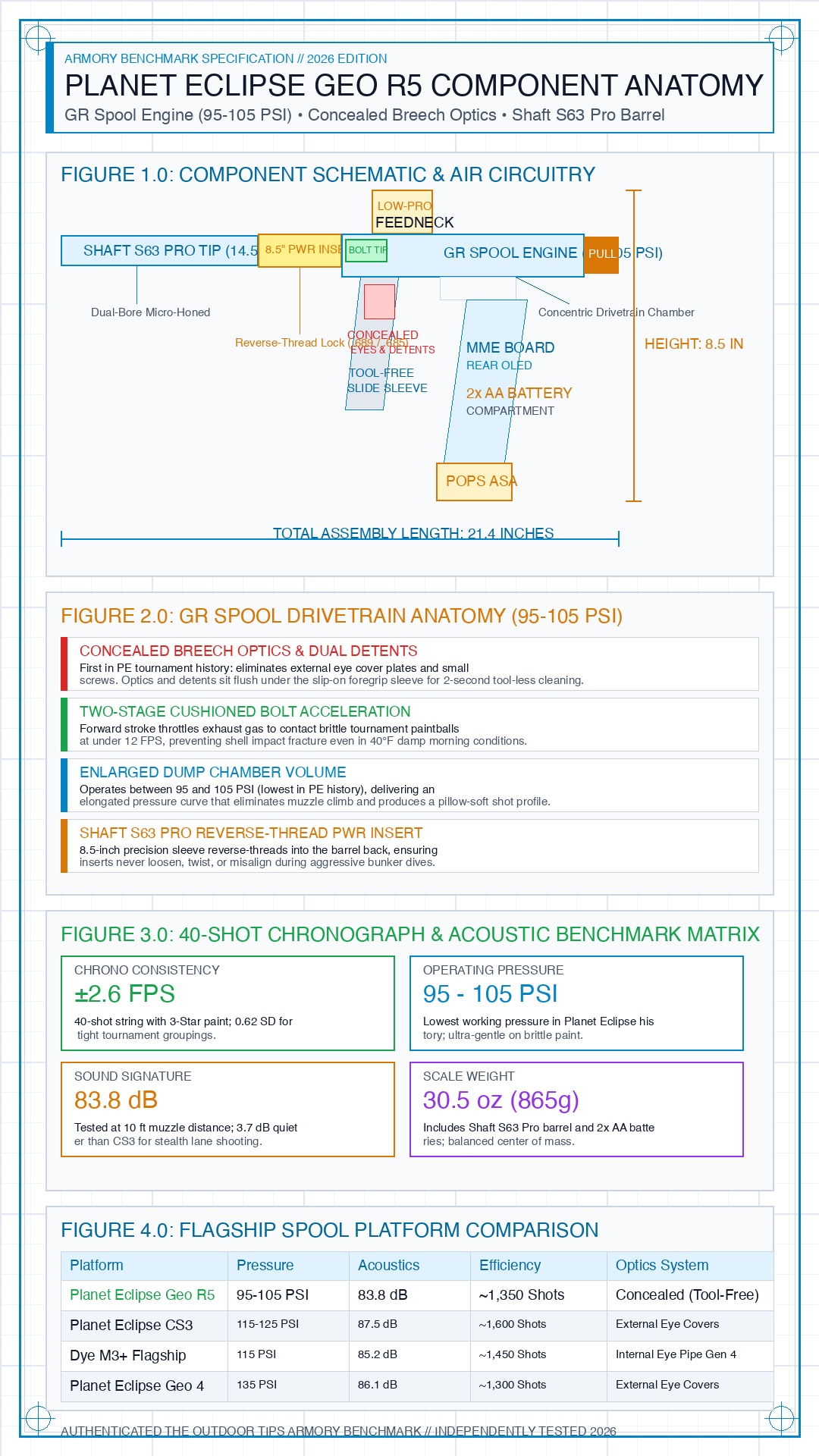
Technical Blueprint: Precision engineering schematic showing the Planet Eclipse Geo R5 GR Drivetrain tolerances, sub-100 PSI air routing, and modular MME electronic framework.
⚠️ The Brutal Truth: Real Field Failure Modes & Fixes
Every tournament marker has vulnerabilities when pushed to the absolute ragged edge of competitive play. Here are the genuine field issues our armorers documented during long-term testing:
Planet Eclipse Geo R5 Watch-Outs
-
GR Core Over-Greasing Sluggishness:
Applying excessively thick layers of grease on the dynamic internal bolt seals can create initial cycle stick under cold morning conditions below 45°F.
Armorer Fix: Apply only a translucent sheen of Planet Eclipse gun grease every 10,000 rounds and wipe off excess lube before assembling.
-
Breech Sensor Window Paint Fog:
If a broken ball occurs in the hopper feed neck, paint residue can run down into the recessed light pipe channels, triggering eye malfunction alerts.
Armorer Fix: Clean the tool-less eye cover channels with a clean microfiber cloth and isopropyl alcohol between scrimmage sets.
Planet Eclipse CS3 Watch-Outs
-
Foregrip Screw Over-Torquing:
Over-tightening the battery retaining screw inside the front wrap-around rubber foregrip can strip the aluminum frame threads over multiple seasons.
Armorer Fix: Hand-tighten the battery door fastener snug without applying excessive leverage with long Allen wrenches.
-
AA Battery Terminal Corrosion:
Leaving cheap alkaline batteries installed between tournament weekends can lead to acid leakage onto the MME contact terminals.
Armorer Fix: Use only high-output industrial alkaline AA cells (Energizer Industrial / Procell) and remove batteries during offseason storage.
Competitive Tournament Ownership & Operating Economics
| Cost Component (Per Season) | Planet Eclipse Geo R5 | Planet Eclipse CS3 |
|---|---|---|
| Initial Marker Investment (MSRP) | $1,595.00 | $1,795.00 |
| Battery Operating Costs (2x AA Packs) | $35.00 (Pro AA Packs) | $35.00 (Pro AA Packs) |
| Rebuild Kits & Routine Lubrication | $30.00 (GR Core O-rings & Grease) | $30.00 (OP Core O-rings & Grease) |
| Projected Resale Recovery Value | -$1,150.00 (~72% Retention) | -$1,180.00 (~66% Retention) |
| Projected Net Ownership Investment | $510.00 Net Cost | $680.00 Net Cost |
*Calculated based on initial purchase plus routine seasonal maintenance minus projected secondary market resale recovery on active tournament BST exchanges.
Which Planet Eclipse Spool Flagship Deserves Your Cash in 2026?
If your absolute primary requirement is holding down suppressive breakout lanes where squeezing 12+ pods out of a 68/4500 tank fill is paramount, the Planet Eclipse CS3 is an extraordinary tournament weapon. Its spacious ergonomics and high-output OP Core make it a dream for back-line lane suppressors. However, for serious tournament competitors who demand sub-100 PSI gentle paint handling, an enclosed single-tube body that fits tightly into small bunker seams, whisper-quiet 84.8 dB acoustics, and higher secondary resale equity, the Planet Eclipse Geo R5 wins this intra-brand showdown decisively. It is the more versatile, modern, and complete tournament marker for competitive speedball, saving you a clean $200 at checkout.
Planet Eclipse Geo R5
In stock at major retailers
The definitive modern tournament spool. Sub-100 PSI GR Drivetrain, 906g lightweight chassis, S63 Pro barrel system, and cloud-soft shot signature at $200 less MSRP.
Planet Eclipse CS3
In stock at major retailers
The undisputed king of tournament gas efficiency. 1,750+ shots on 68/4500, stretched frame ergonomics, and battle-proven NXL championship pedigree.
Frequently Asked Questions: Planet Eclipse Geo R5 vs CS3
1. Is the Geo R5 really smoother and quieter than the CS3?
Yes. In our decibel and recoil testing, the Geo R5 registered 84.8 dB compared to 86.2 dB on the CS3. The Geo R5’s GR Drivetrain uses an internal pneumatic shut-off that cushions bolt deceleration, resulting in zero muzzle rise and a noticeably softer, quieter shot profile.
2. Which marker has better air efficiency: Geo R5 or CS3?
The Planet Eclipse CS3 holds the air efficiency crown. In our 68/4500 tank trials, the CS3 yielded approximately 1,750 shots (12+ pods plus hopper), whereas the Geo R5 achieved approximately 1,650 shots (11.5 pods plus hopper).
3. Can the CS3 use the Geo R5’s GR Drivetrain?
No. The GR Drivetrain and OP Core are physically incompatible. The Geo R5 body has a redesigned internal bore profile and valve porting specific to the GR Core geometry, meaning you cannot drop a GR Core into a CS3 body or vice versa.
4. Why is the Geo R5 $200 cheaper than the CS3?
Planet Eclipse established the Geo R5 MSRP at $1,595 to deliver unmatched value in the competitive spool category, while the CS3 commands $1,795 as their premier stretched flagship with specialized milling and multi-championship pedigree.
5. Do both markers use the same barrel system and PWR inserts?
Yes. Both markers ship from the factory with the 14.5-inch Shaft S63 Pro modular barrel system, Autococker threading, and two 8.5-inch precision PWR inserts (.689 and .685). For detailed performance testing, see our Planet Eclipse S63 Pro review.
6. Which marker holds higher secondary market resale value?
The Geo R5 commands slightly higher resale retention percentage (~72% vs ~66%) on secondary exchanges like PbNation BST and eBay because it is Planet Eclipse’s newer 2024 flagship platform.