In our seasonal western reservoir drift logs anchoring heavy Carolina slip rigs along the shallow silt mudflats of Lincoln Beach and soaking fresh cut carp chunks in the turbulent sandstone scour holes of the Green River, Utah consistently delivers some of the most overlooked, high-yield channel catfish angling anywhere in the Intermountain West. While high-elevation native cutthroat trout and alpine reservoir tiger muskies dominate conventional tourism brochures across the Beehive State, Utah’s vast Great Basin impoundments and canyon-carving desert river systems harbor colossal, self-sustaining channel catfish populations. Between 20-pound heavyweight channel cats prowling the warm, nutrient-loaded shallows of Utah Lake, schooling whiskerfish crowding the marsh channels of Cutler Reservoir, and rod-bending predators feeding nocturnal eddies on the Colorado and Green rivers, Utah catfishing offers prolific, hard-hitting sport from early May runoff straight through late October river cooling.
Targeting catfish in Utah demands exact geographic and hydraulic reconnaissance. Terminal tackle and boat positioning protocols vary dramatically between navigating shallow, wind-swept alkaline mudflats in Utah County and anchoring multi-ounce flat no-roll sinkers in deep bedrock plunge pools below desert canyon drop-offs. In this comprehensive master guide, we break down the 8 best catfish fishing spots in Utah with verified GPS coordinates, official boat ramp access points, seasonal depth contours, high-flow rigging schematics, and official 2026 Utah Division of Wildlife Resources (DWR) harvest regulations.
✔ 2026 Regulations & Rigs Verified
Utah Fishing At a Glance: Top Waters & Winning Rigs
- #1 Trophy Waterway: Utah Lake (Lincoln Beach Harbor, Sandy Beach & State Park Marina, targeting
5–14 ftsilt-clay drop-offs) - Peak Bite Window: Late May through September (Water Temps
66°F–80°F; intense twilight-to-midnight nocturnal feeding bite) - 2026 Utah DWR Limits: Statewide general daily limit of 8 catfish (Channel Catfish & Black Bullhead combined); no minimum size limit; optional two-pole permit valid statewide.
- Primary Winning Setup: 7’6″ Heavy Ugly Stik Catfish Special + Penn Battle IV 5000 / Abu Garcia C3 6500 + 50–65lb Braid + 3 oz Flat No-Roll Sinker + 6/0 Gamakatsu Circle Hook + Fresh Cut Carp Steak
Top Utah Catfish Waterways: GPS & Access Matrix
Success when catfishing in Utah requires matching your boat anchoring strategy, sinker weight, and bait profile to the distinct hydraulic character of each waterway. High-flow canyon river runs on the Green and Colorado require heavy flat lead to pin scent trails to bottom scour trenches, while shallow desert impoundments like Utah Lake and Willard Bay require positioning Carolina rigs along transitional mud contours. The matrix below details the premier catfish fisheries across the Beehive State.
| Lake / River Section | Primary Target Species | Key Structure / Target Depth | Best Bait / Rig | Public Ramp / Bank Access |
|---|---|---|---|---|
| Utah Lake: Lincoln Beach (Utah County) |
Channel Catfish (Trophies to 25+ lb), Bullhead | Rocky dikes, clay shelves, 6–14 ft mud flats |
Fresh cut carp steaks, raw white bass | Lincoln Beach Marina • 📍 Google Maps |
| Cutler Reservoir: Bear River Marsh (Cache County) |
Channel Catfish, Black Bullhead | Cattail slough channels, 8–22 ft oxbow holes |
Garlic chicken breast, nightcrawlers | Benson Marina Launch • 📍 Google Maps |
| Green River: Labyrinth Canyon Reach (Emery & Grand Counties) |
Channel Catfish (High-density wild river cats) | Sandstone wall eddies, 8–25 ft scour seams |
Cut sucker, oily river chubs, stink bait | Green River State Park Ramp • 📍 Google Maps |
| Willard Bay: South & North Marinas (Box Elder County) |
Channel Catfish, Wiper (Hybrid Bass) | Perimeter dike riprap, 10–24 ft gravel basins |
Nightcrawler balls, dip bait, shad guts | Willard Bay South Marina • 📍 Google Maps |
| Colorado River: Moab Canyon Reaches (Grand County) |
Channel Catfish | Outside cut banks, 6–20 ft silt scour holes |
Cut carp, chicken liver wrapped in mesh | Takbik / Moab Boat Launch • 📍 Google Maps |
| Yuba Reservoir (Sevier Bridge Dam) (Juab & Sanpete Counties) |
Channel Catfish, Northern Pike | Submerged old riverbed, 12–30 ft gravel flats |
Cut sucker, nightcrawlers on Carolina rig | Oasis State Park Ramp • 📍 Google Maps |
| Sevier River: DMAD Reservoir & Delta (Millard County) |
Channel Catfish, Black Bullhead | Inflow silt deltas, 6–16 ft slow clay eddies |
Prepared punch bait, nightcrawlers | DMAD Reservoir Boat Ramp • 📍 Google Maps |
| Jordan River & Surplus Canal (Salt Lake & Utah Counties) |
Channel Catfish, Bullhead | Urban bridge pilings, 4–12 ft deep clay bends |
Nightcrawlers, hot dog chunks, chicken liver | Jordan River Parkway Launch • 📍 Google Maps |
Detailed Breakdown: The 8 Best Catfish Spots in Utah
1. Utah Lake: Lincoln Beach, Sandy Beach & State Park Marina (Utah County)
Covering nearly 96,000 surface acres in Utah Valley, Utah Lake is the undisputed heavyweight epicenter of Utah catfishing. Fed by the Provo, Spanish Fork, and American Fork rivers, this massive freshwater basin holds an immense forage base of common carp, white bass, and fathead minnows that fuels staggering channel catfish growth. In 1978, Utah Lake yielded the standing official state-record 32 lb 8 oz channel catfish to angler LeRoy Mortensen, and 10- to 20-pound whiskerfish are landed here every single summer.
The southern shoreline along Lincoln Beach Harbor is legendary. Submerged limestone riprap and clay drop-offs plunge from 4 feet into the lake’s deeper 10- to 12-foot mud trenches. When afternoon thermal winds push phytoplankton and baitfish toward the rocky south shore, predatory channel cats move up to hunt aggressively. Anchor your boat 50 yards outside the harbor entrance or cast from the public breakwater using a 2 oz No-Roll sinker Carolina rig baited with fresh cut common carp or freshly caught white bass strips. Ensure your sinker weight can hold bottom against wind-driven lake chop by consulting our Catfish Sinker Weight & River Current Calculator.
GPS Coordinates: 40.1415° N, 111.8080° W
Productive Depth: 5–14 ft mud-clay transition
Prime Structure: Rocky harbor breakwaters, clay shelves, Sandy Beach flats
Top Bait: Freshly cut common carp steaks or fresh white bass
Angler Field Log: During mid-summer night bites between 9:00 PM and 2:00 AM, trophy cats cruise shallow 4-foot mud bars. We rig 7’6″ heavy fiberglass casting rods with 50 lb braid and a 30 lb mono shock leader. Avoid lifting your rod on soft nibbles; let the fish load the rod tip completely until the 6/0 Gamakatsu circle hook pivots into the corner of the jaw.
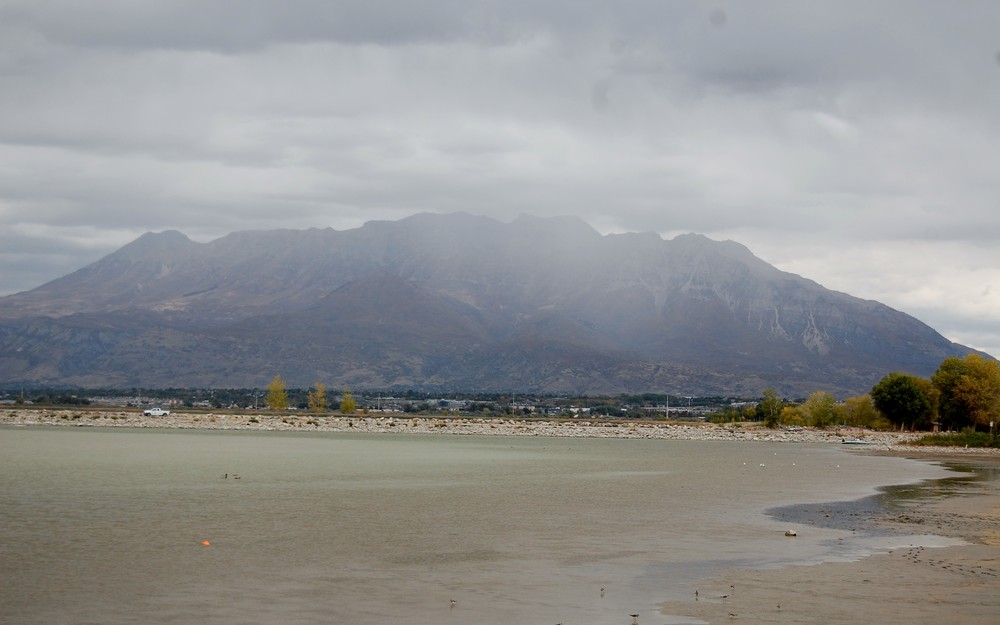
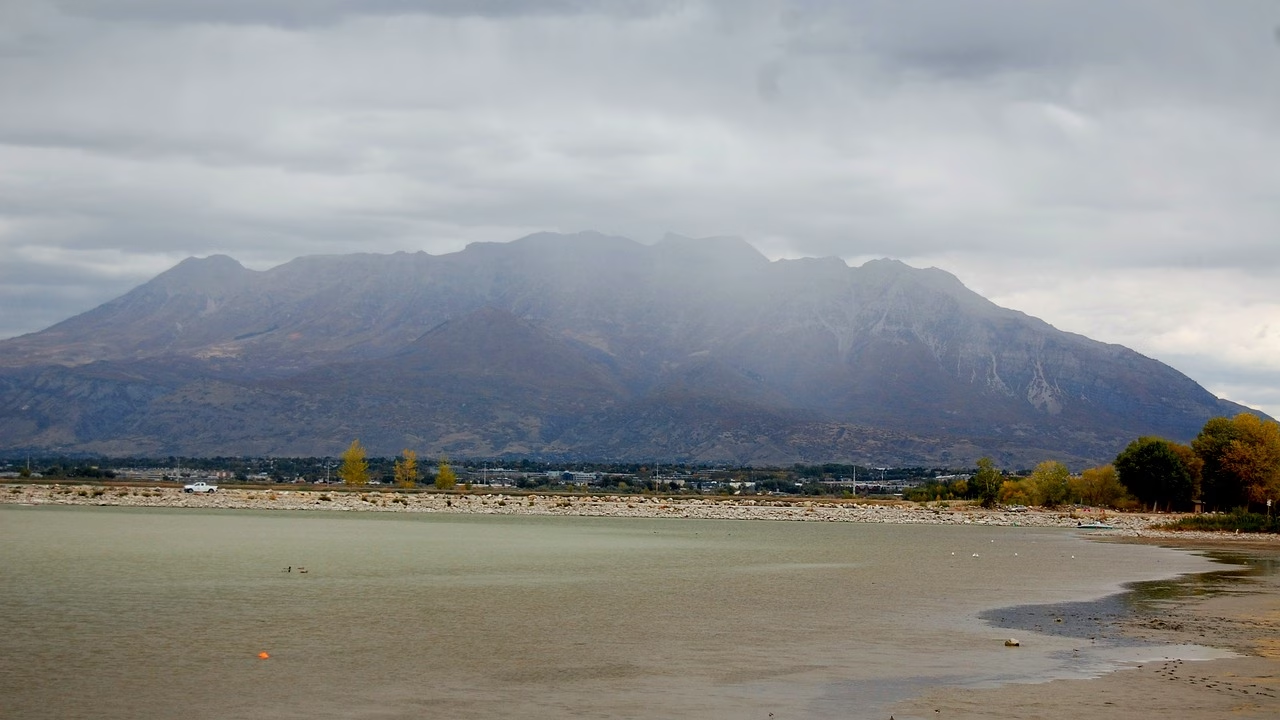
Photo: Scenic view of Utah Lake shoreline and marina basin near Mount Timpanogos — Utah’s #1 trophy channel catfish destination.
📍 Lincoln Beach Boat Ramp Spanish Fork Utah (GPS: 40.1415° N, 111.8080° W)
Access & Launch: Launch larger multi-species boats at the multi-lane concrete ramp inside Lincoln Beach Marina (Google Maps) or fish the paved public shoreline at Utah Lake State Park in Provo.
2. Cutler Reservoir & Bear River Marsh (Cache & Box Elder Counties)
Sprawling across northern Utah’s scenic Cache Valley, Cutler Reservoir is a 5,400-acre impoundment formed by Cutler Dam on the Bear River. Characterized by labyrinthine cattail marshes, vast submerged sago pondweed flats, and meandering river channels, Cutler represents the premier warmwater marsh catfishing environment in the state. Channel catfish thrive here in prolific numbers, alongside heavy populations of black bullhead.
The key to conquering Cutler is locating the submerged river channel oxbows where current slowly meanders through the marsh. As daytime water temperatures rise in July and August, catfish seek refuge in the 12- to 20-foot deep scour holes located near Benson Marina and the Valley View Highway bridge. At nightfall, they move out along the shallow 4- to 7-foot weed edges to gorge on crayfish, juvenile carp, and emerging aquatic insects. Deploy a Santee Cooper rig equipped with a 2-inch pegged foam float to elevate your bait 3 inches above the silted weed bottom.
GPS Coordinates: 41.7610° N, 111.9680° W
Productive Depth: 8–22 ft marsh channels & dam basin
Prime Structure: Submerged Bear River oxbows, cattail points, bridge abutments
Top Bait: Garlic-cured chicken breast cubes, dead minnows, nightcrawlers
Angler Field Log: Cutler’s soft silt bottom swallows standard sinkers quickly. We tie a 2.5-inch peg float 3 inches behind a 5/0 circle hook. Marinating raw chicken cubes in garlic powder and strawberry gelatin creates a resilient bait that withstands nuisance pecks from smaller bullheads while dispersing scent downstream through marsh channels.
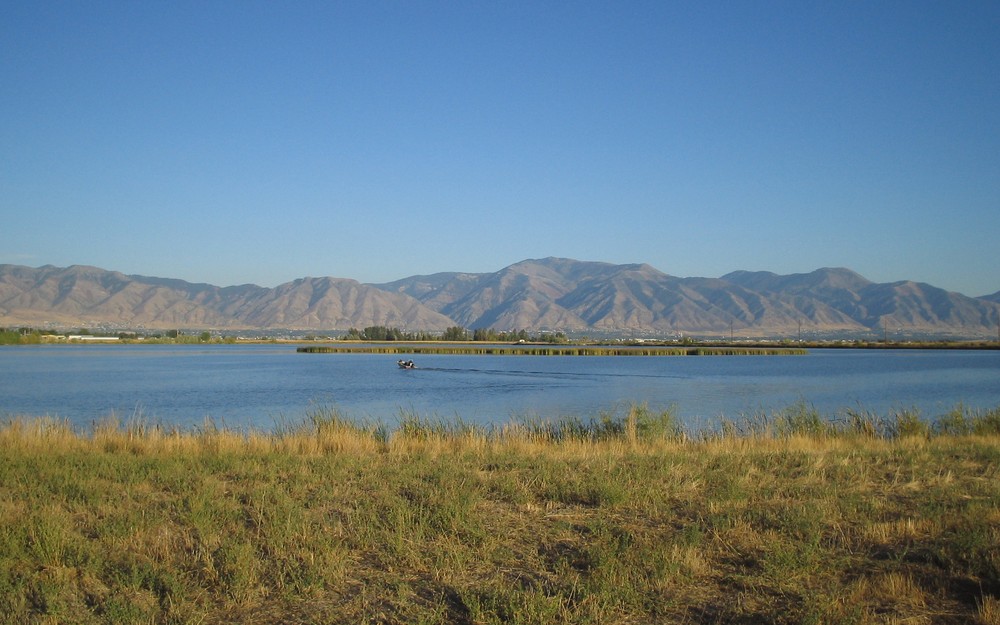
Photo: Cutler Reservoir marsh expanse on the Bear River — prime terrain for float-pegged channel cat rigs along cattail channels.
📍 Benson Marina Cutler Reservoir Cache County UT (GPS: 41.7610° N, 111.9680° W)
Access & Launch: Public access is available at the Benson Marina boat launch (Google Maps) on 3000 West, as well as multiple bank fishing access areas along the Cutler Canyon dam overlook.
3. Green River: Labyrinth Canyon & Green River State Park (Emery & Grand Counties)
Flowing through southeastern Utah’s striking red rock desert, the Green River is a true wild catfish wilderness. From the town of Green River downstream through Labyrinth Canyon to the confluence with the Colorado River in Canyonlands National Park, this turbid, silt-rich desert river supports huge populations of aggressive, river-hardened channel catfish. Unlike lake catfish that rely heavily on stationary scents, Green River catfish actively patrol current seams, undercut sandstone canyon walls, and tributary gravel deltas.
The premier staging locations are the deep scour eddies located downstream of large sandbars and rocky canyon points. River currents here carve 12- to 25-foot deep troughs in the red mud and sandstone. Anchor your jet boat or raft in the slack water on the eddy’s inside seam and cast 4- to 5-ounce flat No-Roll sinkers directly into the boiling current line. The heavy lead holds the bottom securely while the river current carries the scent of cut carp or river sucker steaks downstream into the hole.
GPS Coordinates: 38.9912° N, 110.1501° W
Productive Depth: 8–25 ft river scour troughs & eddies
Prime Structure: Sandstone plunge pools, outside mud bends, tamarisk sweepers
Top Bait: Cut river sucker, fresh carp belly strips, punch bait
Angler Field Log: Swift desert currents will roll round egg sinkers into snags immediately. We exclusively fish flat 4 oz No-Roll or bank sinkers on sliding sinker slides. Spool with 65 lb braided mainline to slice through silt current without creating line bow, backed by our Reel Line Capacity & Backing Calculator.
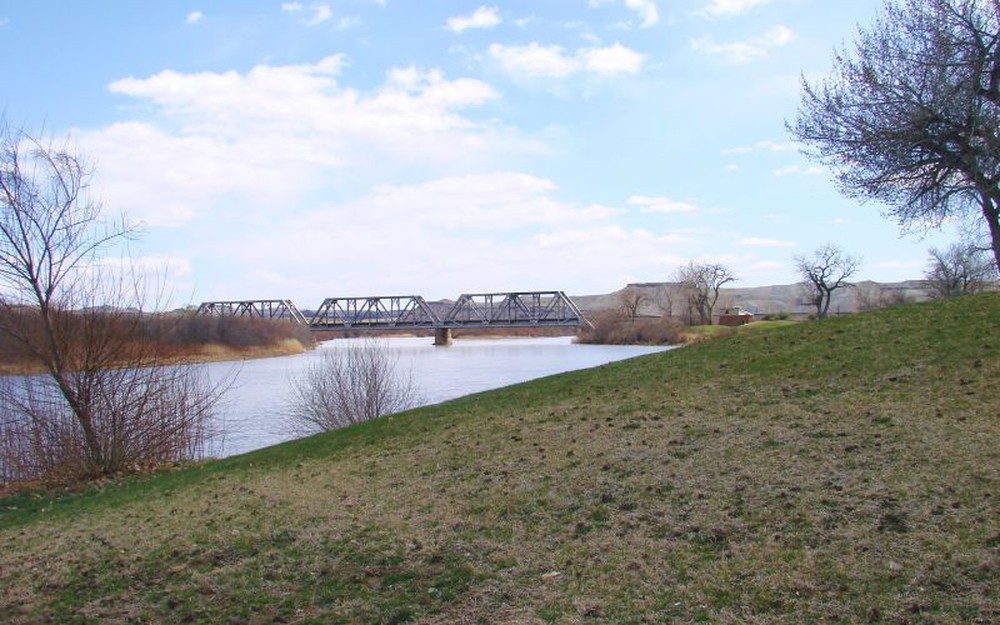
Photo: Green River State Park launch reach — gateway to remote desert canyon catfish drift holes and deep sandstone eddies.
📍 Green River State Park Boat Ramp Green River UT (GPS: 38.9912° N, 110.1501° W)
Access & Launch: Launch at Green River State Park’s paved boat ramp (Google Maps) in the city of Green River, or access remote reaches downstream at Ruby Ranch and Mineral Bottom.
4. Willard Bay Reservoir: South & North Marinas (Box Elder County)
Separated from the hypersaline waters of the Great Salt Lake by a massive 36-mile earth-filled dike, Willard Bay is an expansive 9,900-acre freshwater reservoir fed by the Weber River via the Willard Canal. Willard Bay is famous for its explosive hybrid striped bass (wiper) fishery, but catfish anglers recognize the reservoir as one of northern Utah’s premier channel catfish producers. Millions of gizzard shad and juvenile carp provide constant high-calorie forage that helps catfish reach 10 to 18 pounds.
The entire perimeter of the reservoir is lined with heavy granite riprap boulders that slope downward into 12 to 24 feet of water. In late spring and early summer, channel catfish move directly into the boulder interstitial voids to spawn. Bank anglers can experience non-stop action by casting Carolina slip rigs 30 to 50 yards out from the South Marina breakwater or along the freeway dike. At night, channel cats leave the rocks and cruise the flat mud bottom to vacuum up dead shad.
GPS Coordinates: 41.3855° N, 112.0620° W
Productive Depth: 10–24 ft dike base & open gravel basin
Prime Structure: Granite boulder riprap dikes, marina jetties, canal inlet
Top Bait: Jumbo Canadian nightcrawlers, cut gizzard shad, dip bait
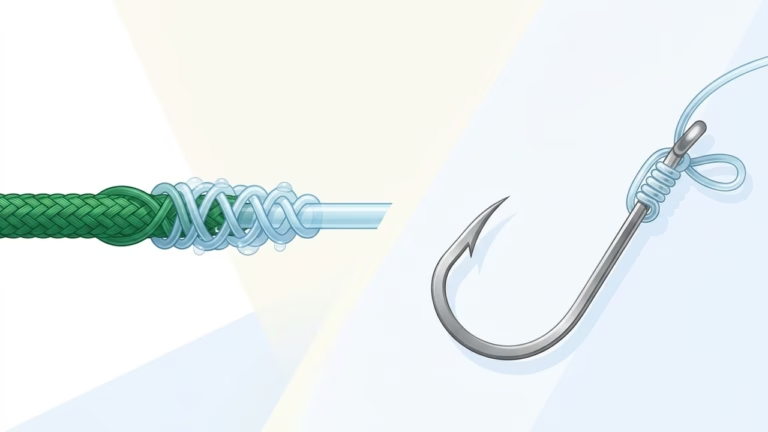
Angler Field Log: Sharp riprap rocks eat monofilament lines quickly. We deploy a 30 lb fluorocarbon shock leader tied to our braided mainline with an FG Knot. Check our Fishing Knot Strength & Line Matcher Tool to ensure your leader connection delivers 100% breaking strength when winching cats off the rocks.
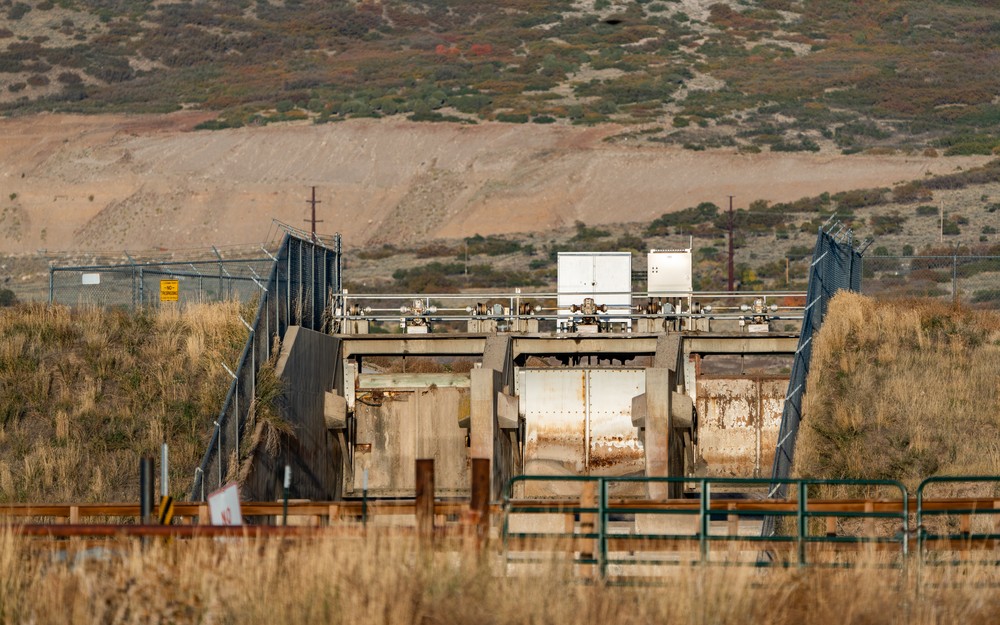
Photo: Willard Bay Reservoir perimeter dike and marina waters — endless riprap rock structure for spawning channel cats.
📍 Willard Bay State Park South Marina UT (GPS: 41.3855° N, 112.0620° W)
Access & Launch: State park marinas with multi-lane boat ramps, fish cleaning stations, and paved parking are located at the South Marina (Google Maps) and North Marina off Interstate 15.
5. Colorado River: Moab Reaches & Potash Scour Holes (Grand County)
As the mighty Colorado River carves through the red sandstone wonderlands of Grand County near Moab, it creates an exceptional, low-pressure channel catfish fishery. The reach extending from the Highway 191 bridge downstream past the Potash boat launch features outside cut banks, deep silt holes, and submerged tamarisk brush that provide ideal cover for predatory catfish. High water turbidity shields whiskerfish from bright desert sunlight, allowing active daytime feeding when river temps exceed 68°F.
Look for locations where the main river channel carves against sheer sandstone canyon walls. The current scours out 15- to 20-foot holes that collect drifting organic debris, dead baitfish, and terrestrial insects. Anchor above the hole and soak a high-odor cut bait rig. Because Colorado River catfish must contend with strong continuous current, they possess muscular, torpedo-shaped bodies that fight with incredible tenacity on medium-heavy tackle.
GPS Coordinates: 38.5985° N, 109.5840° W
Productive Depth: 6–20 ft outside bends & canyon wall troughs
Prime Structure: Red sandstone cut banks, tamarisk roots, tributary mud fans
Top Bait: Cut carp belly steaks, chicken livers wrapped in elastic bait thread
Angler Field Log: In high turbidity desert water, catfish feed almost purely via olfactory and barbel sensory cues. We make 3 deep incisions across fresh carp fillets to release maximum blood and natural oils into the current. A 4 oz flat sinker keeps the bait locked in place even when river barges and tour boats create heavy wake wash.
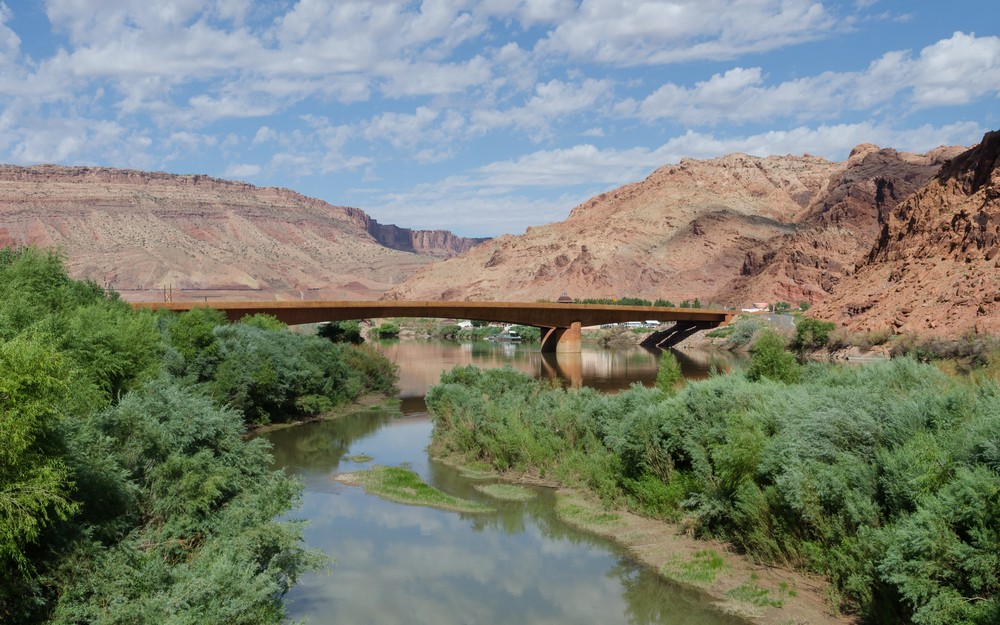
Photo: Colorado River crossing near Moab — outside red rock river bends and silt scour holes holding heavy river cats.
📍 Moab Boat Ramp Colorado River Moab UT (GPS: 38.5985° N, 109.5840° W)
Access & Launch: Excellent boat and bank access is available at the Takbik Boat Ramp (Google Maps) in Moab, as well as multiple scenic pullouts along Highway 128 (River Road) and the Potash boat ramp on Highway 279.
6. Yuba Reservoir: Oasis State Park & Painted Rocks (Juab & Sanpete Counties)
Formed by Sevier Bridge Dam on the Sevier River in central Utah, Yuba Reservoir is a sprawling 10,900-acre impoundment situated in a broad high-desert valley. Known among warmwater anglers for producing massive channel catfish and trophy northern pike, Yuba features extensive mud flats, submerged willow and sagebrush lines, and a well-defined drowned riverbed channel that drops to 30 feet near the dam.
In mid-summer, water temperatures in Yuba frequently surpass 75°F, triggering hyper-aggressive catfish feeding. During daytime hours, whiskerfish congregate in the cooler, oxygenated water of the old Sevier River channel. As dusk settles over the San Pitch Mountains, catfish push onto the 8- to 15-foot flats surrounding Oasis Campground and the Painted Rocks beach. Anglers deploying two rods (with Utah’s optional two-pole permit) can fan-cast Carolina slip rigs across both the channel drop-off and the shallow mud shelf to intercept roaming schools.
GPS Coordinates: 39.3872° N, 111.9540° W
Productive Depth: 12–30 ft drowned riverbed channel
Prime Structure: Old Sevier riverbed, submerged sagebrush, rocky points
Top Bait: Cut sucker meat, nightcrawlers, chicken liver, prepared cheese dip
Angler Field Log: Yuba catfish love cruising submerged gravel ridges at night. When targeting 10-pounders here, fish a medium-heavy 7’0″ rod paired with a 5000-size spinning reel. Use our Fishing Rod Power & Action Matcher Quiz to verify your rod’s flex profile for heavy bank casting.
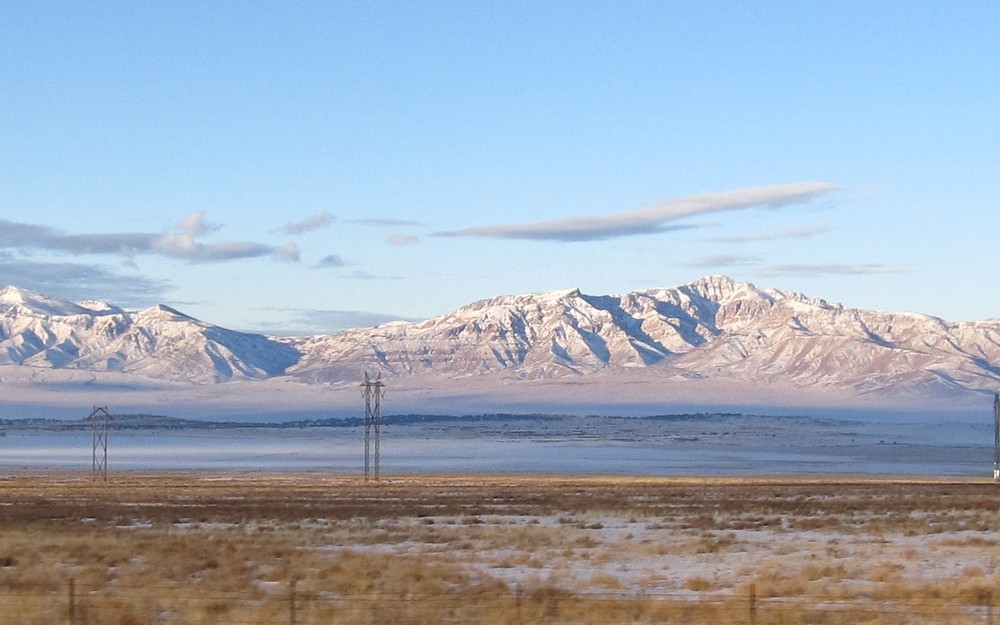
Photo: Early morning panorama over Yuba Reservoir — central Utah’s premier multi-species trophy catfish and pike water.
📍 Yuba State Park Oasis Campground UT (GPS: 39.3872° N, 111.9540° W)
Access & Launch: Paved public boat ramps and camping facilities are available at Oasis Campground (Google Maps) at the north end of the lake and Painted Rocks on the eastern shore off Highway 28.
7. Sevier River: DMAD Reservoir & Delta Reaches (Millard County)
Downstream of Yuba Reservoir, the Sevier River meanders through the arid agricultural plains of Millard County before entering DMAD Reservoir northeast of Delta. This secluded river system is one of Utah’s best-kept catfishing secrets. Because the river carries substantial suspended clay and agricultural drainage, water clarity is low year-round, creating a stress-free environment where channel catfish and black bullhead feed actively 24 hours a day.
DMAD Reservoir and the river sections immediately upstream feature deep clay cut banks, fallen Russian olive trees, and irrigation diversion pools. Channel cats stack up heavily below irrigation gates and in 8- to 16-foot scour holes where slow-moving water deposits dead forage. A simple sliding slip-sinker rig with a 1.5 oz egg sinker and a size 1/0 circle hook baited with nightcrawlers or garlic chicken will yield steady action, with channel cats commonly averaging 2 to 5 pounds.
GPS Coordinates: 39.3950° N, 112.4820° W
Productive Depth: 6–16 ft river channels & irrigation pools
Prime Structure: Clay cut banks, fallen Russian olive timber, diversion tailraces
Top Bait: Garlic chicken chunks, nightcrawlers, blood-scented punch bait
Angler Field Log: The Sevier River delta is brushy and snag-prone. We fish 20 lb abrasion-resistant monofilament mainline directly to a sliding 1.5 oz egg sinker. Casting tight under overhanging Russian olive branches at twilight consistently pulls eager channel cats out of root tangles.
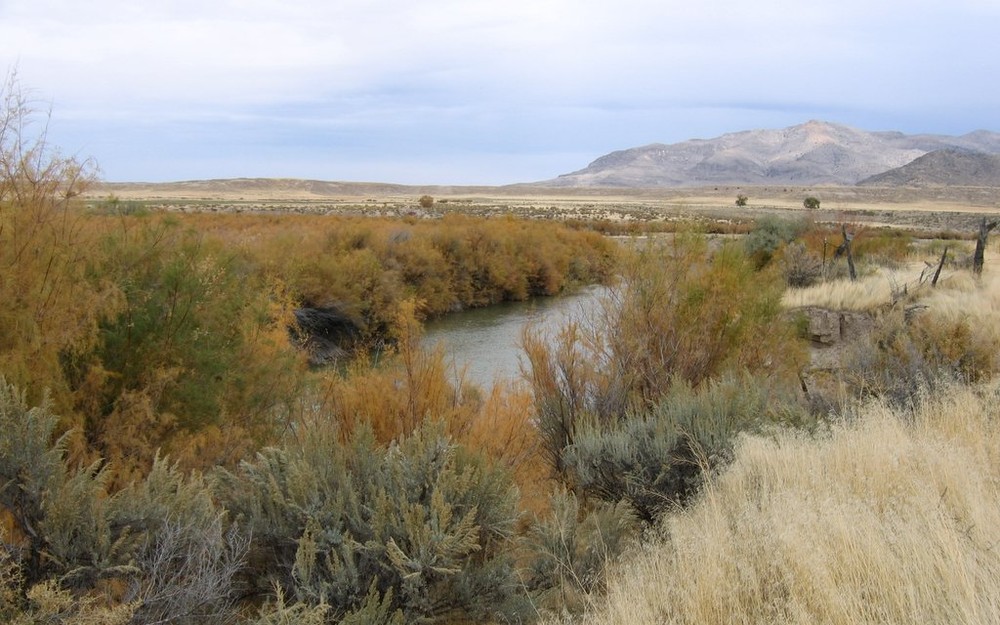
Photo: Sevier River through central Utah — winding clay banks, brushy snags, and fertile irrigation pools loaded with channel cats.
📍 DMAD Reservoir Boat Ramp Delta UT (GPS: 39.3950° N, 112.4820° W)
Access & Launch: Concrete boat ramp and public shoreline access are available at DMAD Reservoir (Google Maps), with additional road-bridge access points crossing the Sevier River along Highway 6.
8. Jordan River & Surplus Canal (Salt Lake & Utah Counties)
Flowing northward from Utah Lake through the heart of the Salt Lake Valley into the Great Salt Lake marshes, the Jordan River offers Utah’s premier urban catfishing experience. Winding through Salt Lake, West Valley City, and Murray, this 51-mile river channel provides year-round bank angling for channel catfish and black bullhead within minutes of major metropolitan areas.
Catfish concentrate in the deep outside river bends, bridge piling scour holes, and below small municipal weir dams where moving water carves 6- to 12-foot pools. The Surplus Canal diversion near 2100 South is another prime location where slow-moving water allows catfish to congregate. Because the Jordan River is accessible via the paved 45-mile Jordan River Parkway trail, anglers can easily walk or bike the banks, casting simple sliding bottom rigs into deep shaded pockets.
GPS Coordinates: 40.7180° N, 111.9320° W
Productive Depth: 4–12 ft outside bends & bridge scour pockets
Prime Structure: Concrete bridge abutments, urban riprap, willow cut banks
Top Bait: Hot dog chunks soaked in garlic salt, nightcrawlers, chicken liver
Angler Field Log: Urban catfishing on the Jordan River is about mobility. Travel light with a 6’6″ medium spinning combo and a pocket tackle box containing 1 oz slip sinkers and size 2 baitholder hooks. Target the shadowy water directly beneath highway bridges during hot summer afternoons for steady action.
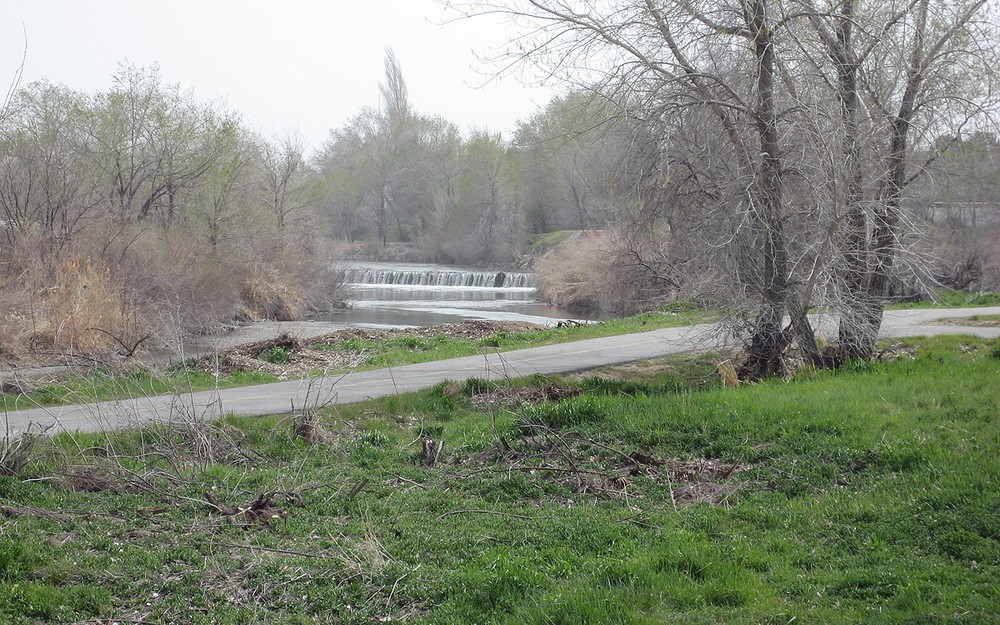
Photo: Jordan River Parkway trail in Murray — high-percentage urban channel catfish water right through the Salt Lake Valley.
📍 Jordan River Parkway Boat Ramp Salt Lake City UT (GPS: 40.7180° N, 111.9320° W)
Access & Launch: Access the river at hundreds of public parks along the Jordan River Parkway Trail, including the 1700 South River Park launch (Google Maps) and Murray Parkway Golf Course reach.
Recommended Utah Tackle & Rig Loadout Table (Field-Tested Gear)
Conquering Utah’s diverse catfish waters requires gear capable of pulling heavy channel cats away from jagged riprap in Willard Bay and holding fast bottom in heavy Green River desert currents. The loadout matrix below outlines our tested rod, reel, line, and terminal tackle recommendations.
| Gear Component | Recommended Model | Exact Spec (Power / Ratio / LB) | Why It Works in Utah | Check Live Price |
|---|---|---|---|---|
| Trophy Casting Rod | Ugly Stik Catfish Special Casting | 7’6″ Heavy Power | Medium-Fast Action | Indestructible Ugly Tech construction handles 4 oz weights in Green River current and absorbs runs from 20 lb Utah Lake cats. | |
| Bank & Boat Spinning Rod | St. Croix Mojo Cat Spinning | 7’0″ Medium-Heavy Power | Fast Action | SCII carbon blank detects subtle mud-tap pickups on Utah Lake and delivers long-distance bank casts at Willard Bay. | |
| Desert River Baitcast Reel | Abu Garcia Ambassadeur C3 6500 | 5.3:1 Ratio | 255 yd / 17 lb | Loud Clicker | Loud bait clicker alerts you immediately during night drifts when a big channel cat takes off downriver on the Green or Colorado. | |
| Reservoir Spinning Reel | Penn Battle IV 5000 | 5.6:1 Ratio | Full Metal Body | 25 lb Drag | Sealed HT-100 drag and full metal housing winch heavyweight cats out of Willard Bay riprap and Utah Lake clay ledges. | |
| Abrasion-Proof Mainline | PowerPro Spectra Braid | 50–65 lb Braid + 30 lb Mono Shock Leader | Zero-stretch braid cuts through heavy silt current while monofilament shock leader prevents breakoffs on sharp Willard Bay granite. | |
| Terminal Circle Hooks | Gamakatsu Offset / Inline Circle | Size 5/0 – 7/0 Circle Hooks | Self-setting geometry hooks catfish cleanly in the corner of the mouth, preventing gut-hooking during nocturnal rod-holder bites. |
Interactive Fishing Tools & Calculators Hub
To eliminate guesswork before you launch on Utah’s waterways, utilize our suite of proprietary fishing calculators and technical diagnostic tools designed specifically for western catfish and river currents:
⚓ Sinker Weight & River Current Matcher
Calculate the exact lead ounces required to hold bottom in Green River rapids or Utah Lake chop without rolling.
🔄 Reel Line Capacity & Backing Calculator
Calculate exact monofilament backing yards required to spool 50–65 lb braid flush onto your catfish reels.
🧲 Fishing Knot Strength & Line Matcher
Compare breaking strength percentages of the Palomar, FG, San Diego Jam, and Snell knots for heavy braid-to-mono connections.
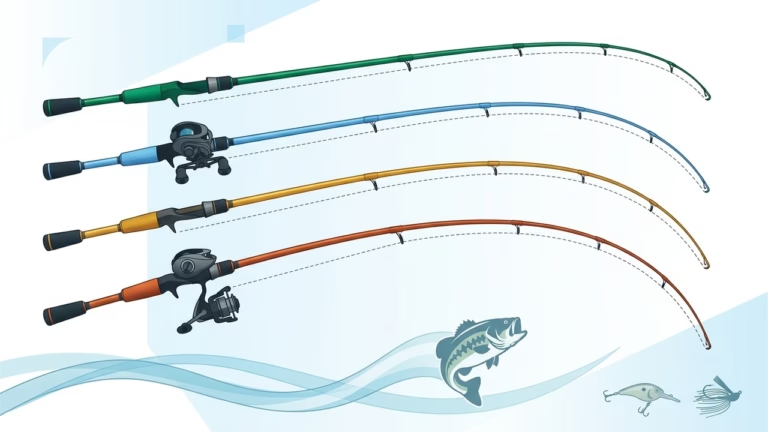
🎯 Rod Power, Action & Species Matcher
Interactive quiz matching your target catfish species, waterway current, and casting distance to optimal blank specs.
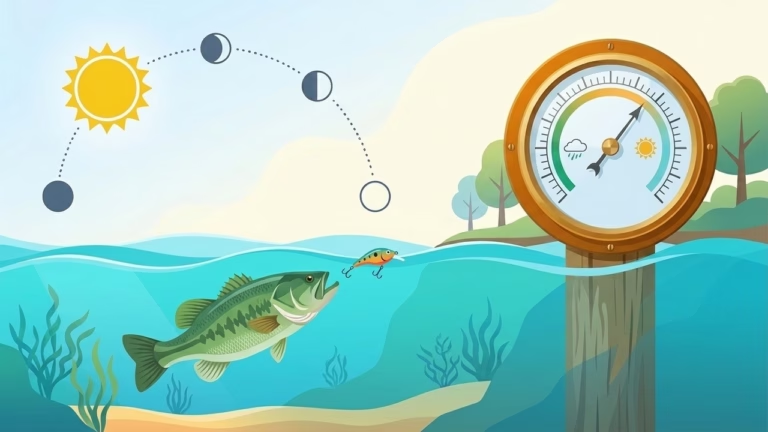
🌙 Solunar Bite Times & Barometric Forecaster
Track minor and major lunar feeding windows, barometric pressure swings, and nocturnal bite peaks across Utah waters.
🦐 Best Catfish Baits: Live vs. Cut Showdown
Comprehensive field showdown testing cut carp, chicken breast, dip bait, and nightcrawlers across seasonal water temps.
Utah Catfish Waterway & Rig Blueprint (Visual Guide)
Below is our complete field-tested visual blueprint illustrating the target depth zones across top Utah waters, terminal rig schematics (Desert River Santee vs. Utah Lake Mud Flat Slip Rig), and the 2026 Utah DWR regulatory framework.
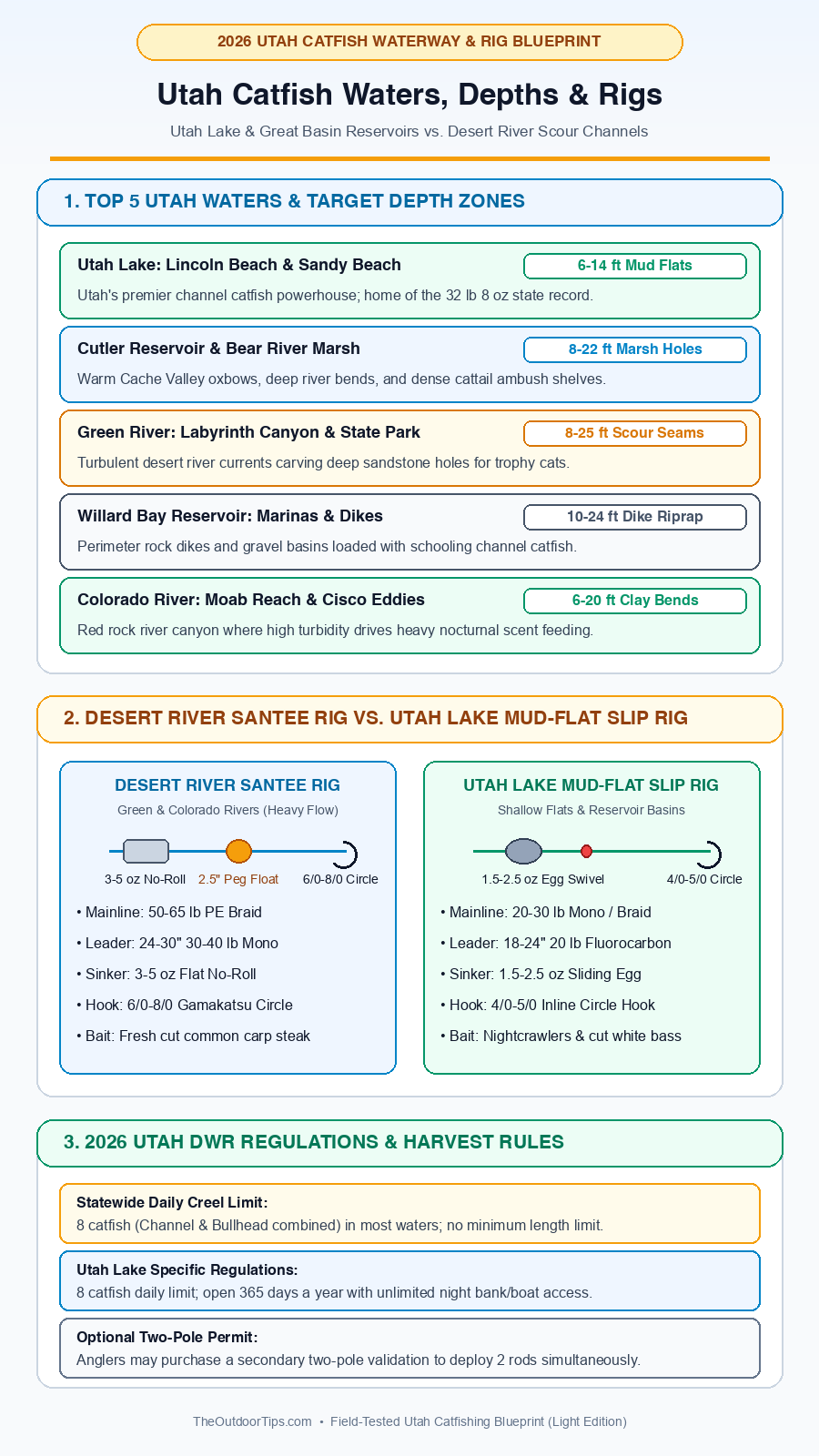
Click the blueprint image above to expand full 9:16 high-resolution view for mobile field reference.
Rigging & River Techniques: Holding Heavy Water & Mud Flats
Fishing Utah’s waters requires balancing two completely different rigging approaches depending on whether you are navigating swift desert river flows or drifting broad alkaline lake flats.
Watch how tournament river anglers read heavy current seams, anchor slip rigs, and prevent bait roll along deep scour drop-offs.
When tying the Santee Cooper Rig for the Green or Colorado rivers, construct your leader with 24 to 30 inches of 30 lb abrasion-resistant monofilament. Peg a 2.5-inch high-visibility cigar float roughly 3 inches above your circle hook. The float lifts your bait up into the strike zone just above the bottom silt and prevents your hook from becoming wedged under moving riverbed gravel. Never use active J-hooks that require an instantaneous hookset; circle hooks rely on the fish taking the bait and swimming away, allowing the hook point to slide seamlessly into the corner jaw hinge.
On shallow reservoir mud flats like Utah Lake or Cutler Reservoir, a standard Carolina Slip Sinker Rig is unmatched. Thread a 1.5 to 2.5 oz flat No-Roll or egg sinker onto your braided mainline, followed by a rubber shock bead to protect the knot, and tie to a heavy barrel swivel. Use an 18- to 24-inch leader of 20 lb fluorocarbon tipped with a 5/0 circle hook. When a roaming channel cat picks up the bait, the line slides freely through the weight without alerting the fish to resistance.
Utah Catfishing Bait Selection: River vs. Reservoir
Channel catfish dietary behavior in Utah shifts significantly depending on waterway ecology:
- Fresh Cut Common Carp: The absolute #1 trophy bait across Utah Lake, Cutler Reservoir, and the Green River. High in natural oils, firm on the hook, and readily available from local bowfishermen or rod-and-reel catches. Cut into 2×2-inch steaks with skin and bloodlines intact.
- Fresh Cut White Bass: Highly productive in Utah Lake where millions of white bass school alongside channel cats. Use legal rod-caught white bass cut into slender strips that flutter enticingly in light current.
- Garlic Chicken Breast: Cut boneless chicken breast into 1-inch cubes and marinate overnight with minced garlic powder and strawberry gelatin. Extremely resilient against nuisance bullheads, and stays on the hook through long-distance power casts.
- Jumbo Canadian Nightcrawlers: The definitive bait for high-action numbers fishing on the Jordan River, Sevier River, and Cutler Reservoir. Thread 2 or 3 nightcrawlers onto a baitholder hook to create a writhing ball of scent and vibration.
To compare commercial dip baits, stink baits, and live bait performance across seasonal water temperatures, review our comprehensive Best Catfish Baits Guide.
2026 Utah Division of Wildlife Resources (DWR) Regulations
Before heading into the field, ensure your tackle and harvest practices comply with official Utah Division of Wildlife Resources (DWR) fishing proclamations:
- Statewide Catfish Daily Bag Limit: The general daily limit is 8 catfish (Channel Catfish and Black Bullhead combined). There is no minimum length limit and no closed season on standard inland waters.
- Utah Lake Specific Harvest Rules: Open 365 days a year with a daily limit of 8 catfish. Anglers are encouraged to harvest channel cats to maintain fishery balance alongside native Bonneville cutthroat restoration efforts.
- Optional Two-Pole Permit: Anglers licensed in Utah may purchase an optional two-pole permit (valid for 365 days) allowing the simultaneous use of two fishing rods on all waters open to two-pole angling.
- Colorado River Basin Non-Native Fish Management: In specific reaches of the upper Colorado and Green rivers managed for endangered native fish (Colorado pikeminnow, razorback sucker), DWR rules may remove possession limits on non-native predators like channel catfish. Always check posted regulations for specific river sections.
✅ Final Captain’s Verdict: Unlocking Utah Catfish
1. Target Trophy Channels at Lincoln Beach: Launch at Lincoln Beach Marina on Utah Lake, set up 50 yards off the rock breakwaters at sunset, and soak fresh cut carp on 3 oz No-Roll Carolina rigs for 15- to 20-pound whiskerfish.
2. Drift Desert River Scour Eddies: Run the Green River downstream from Green River State Park or the Colorado River near Moab, deploying heavy Santee Cooper rigs into 15-foot plunge pools where swift current delivers disoriented prey directly to hungry channel cats.
Frequently Asked Questions About Catfishing in Utah
Where is the best catfish fishing in Utah?
Utah Lake is widely regarded as Utah’s premier catfish fishery, holding vast numbers of channel catfish and the standing 32 lb 8 oz state record. Lincoln Beach, Sandy Beach, and the State Park Marina are top access points. Other premier fisheries include Cutler Reservoir, Willard Bay, and the Green River.
What is the daily limit for catfish in Utah in 2026?
Under 2026 Utah Division of Wildlife Resources (DWR) regulations, the statewide general daily limit is 8 catfish (Channel Catfish and Black Bullhead combined). There is no minimum size restriction, and fishing is open year-round.
Can you fish with two rods in Utah?
Yes, provided you hold a valid Utah fishing license and purchase an optional Two-Pole Permit. This allows anglers to fish with two lines or rods simultaneously on all waters where two-pole fishing is permitted.
What is the Utah state record channel catfish?
The Utah state record Channel Catfish is 32 pounds, 8 ounces, caught by LeRoy Mortensen in Utah Lake in 1978. The record fish measured 39.5 inches in total length.