In our cold-weather drift logs across Milford Lake’s submerged Republican River channel and late-summer nights pinning live green sunfish outside Elk City timber bends, we have proved time and again why the best catfish fishing spots in kansas rank among the premier trophy catfish fisheries in North America. Anchored by massive prairie federal reservoirs, KDWP-fed Channel Catfish factories, and big-water corridors along the Missouri and Kansas rivers, the Sunflower State holds 121-pound Blue Catfish, 123-pound Flathead Catfish, and abundant Channel Catfish.
Because productive kansas catfishing splits cleanly between wind-swept 10,000-acre reservoirs and fast-flowing border wing dikes, matching your lead weight and bait to each system is essential. Heavy 8- to 10-ounce no-roll sinkers loaded with fresh goldeye dominate Missouri River dike eddies at Atchison, while 2-ounce Santee Cooper drift rigs with fresh cut gizzard shad shine across Milford and Cheney flats. Below are verified GPS launches, depth contours, 2026 Kansas Department of Wildlife & Parks (KDWP) rules, and winning tactics for catfish in kansas.
✔ 2026 KDWP Rules & Rigs Verified
Kansas Catfishing At a Glance: Top Waters & Winning Rigs
- #1 Trophy Waterway: Milford Lake (15,700 acres; 28–40″ protected Blue Catfish slot) & Missouri River (121.1 lb 2025 state-record Blue water).
- Peak Bite Windows: Spring river inflows at 52–64°F (April–May), summer night Flathead & feeder runs at 74–85°F, and fall shad migrations (52–66°F).
- 2026 KDWP Bag & Size Limit: Statewide: 10 Channel/day, 10 Blue/day (max 1 ≥30″), 5 Flathead/day. Special: Milford 28–40″ Blue slot; Missouri River 5 Blue/day (max 1 >30″).
- Primary Winning Setup: Ugly Stik Catfish Special 7’6″ + Abu Garcia C3 6500 / Penn Battle IV 6000 + 65 lb Braid + Heavy Slip-Sinker / Santee Rig.
Best Catfish Fishing Spots in Kansas: 2026 Waterway & GPS Matrix
Before hitching the boat or packing bank rod holders, compare all eight premier catfish in kansas fisheries across target species, holding structure, top baits, and public launch access below.
| Lake / River Section | Primary Target Species | Key Structure / Dam Tailrace | Best Bait / Lure | Public Ramp / Bank Access |
|---|---|---|---|---|
| Milford Lake (Geary/Clay) | Blue Catfish, Channel Catfish, Flathead | 14–38 ft Republican River channel bends, timber coves & dam riprap | Fresh cut gizzard shad, skipjack & live sunfish | Milford State Park, Curtis Creek & Wakefield Ramp |
| Missouri River (Atchison–Leavenworth) | Blue Catfish, Flathead Catfish, Channel | 20–45 ft rock wing-dike scour holes, chute mouths & barge seams | Fresh cut skipjack, goldeye, shad & live bullheads | Atchison Riverfront Ramp & Riverfront Park (Leavenworth) |
| Elk City Reservoir (Montgomery Co.) | Flathead Catfish, Channel Catfish, Blue Catfish | 10–26 ft flooded timber flats, Elk River bends & spillway tailrace | Live 5–7 in. green sunfish/bullheads & cut shad | Elk City State Park Ramp, Card Creek & Outlet Tailwater |
| Kansas River (Lawrence–Topeka) | Flathead Catfish, Channel Catfish, Blue Catfish | 8–24 ft Bowersock Dam tailrace, sandbar drop-offs & timber logjams | Live sunfish/chubs, cut shad & nightcrawlers | Burcham Park (Lawrence), Kaw River State Park & Eudora Ramp |
| Perry Lake (Jefferson Co.) | Channel Catfish, Flathead Catfish, Blue Catfish | 10–28 ft timbered coves, Delaware River channel & outlet tailrace | Fresh cut shad, chicken liver, dip bait & live bluegill | Perry State Park, Slough Creek Ramp & Outlet Park |
| Wilson Lake (Russell Co.) | Channel Catfish, Flathead Catfish | 12–32 ft limestone rock ledges, Saline River inflow & canyon points | Live sunfish/creek chubs, cut shad & crawfish tails | Wilson State Park (Hell Creek / Otoe) & Lucas Park Ramp |
| Cheney Reservoir (Wichita) | Channel Catfish, Flathead Catfish | 8–22 ft KDWP fish feeders, North Fork Ninnescah flats & dam riprap | Cut gizzard shad, dip/stink baits, worms & live bluegill | Cheney State Park (East & West Shores) & Sailboat Cove |
| Glen Elder / Waconda Lake | Channel Catfish, Flathead Catfish, Blue Catfish | 10–26 ft Downs causeway riprap, Solomon River bends & KDWP feeders | Fresh cut shad, shrimp, stink baits & live chubs | Glen Elder State Park, Cawker City Ramp & Downs Causeway |
Detailed Waterway Breakdowns, GPS Launches & Field Logs
Every destination below includes an interactive Google Map centered on verified public launch access, exact GPS coordinates, water specs, and firsthand Angler Field Log notes from Kansas waters.
1. Milford Lake & Republican River Inflow (Geary / Clay County)
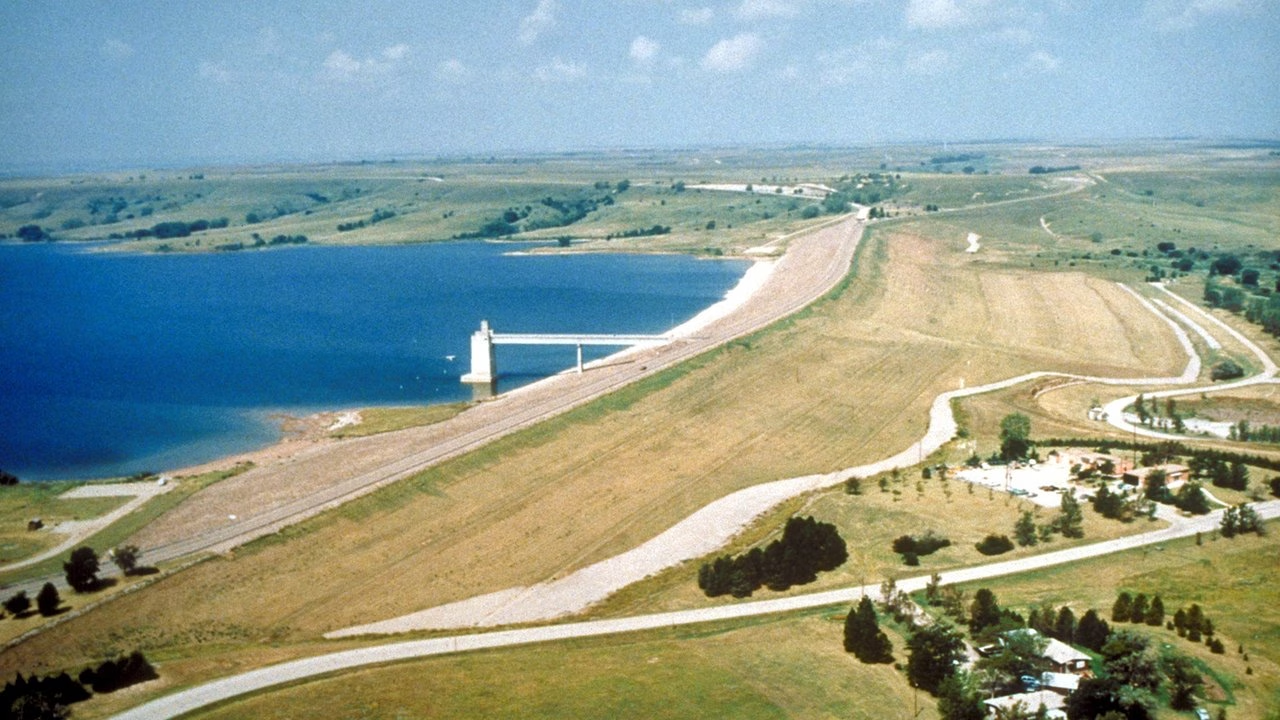
Spanning 15,700 acres north of Junction City along the Republican River valley, Milford Lake wears the crown as the Fishing Capital of Kansas—and for trophy Blue Catfish anglers, no inland lake in the Great Plains rivals its density of 30- to 80-pound fish. Massive gizzard shad populations fuel rapid growth from the upper river flats near Wakefield down to the deep main-basin channel ledges off Milford State Park and the dam face. Because KDWP actively protects spawning-size broodstock here with a strict 28- to 40-inch protected slot limit on Blue Catfish (allowing ten fish daily with only one over 40 inches), Milford consistently turns out 40- to 65-pound giants all year.
In spring and early summer, rising Republican River inflows pull hungry Blues and Channels onto 8- to 16-foot flats above the Wakefield causeway, where anchoring cut shad on shallow mudflat edges produces nonstop rod bends. Once July heat drives shad out over the main lake, switch to controlled Santee Cooper drifts at 0.5 to 0.8 mph across 18- to 32-foot river-channel bends around Curtis Creek and Farnum Creek, running 2-ounce slinky weights with 2.5-inch peg floats ahead of 7/0 circle hooks. On calm autumn and winter mornings, vertical bumping or suspending fresh bloody shad chunks three feet off 35-foot main-basin timber humps yields the heaviest Blues of the season.
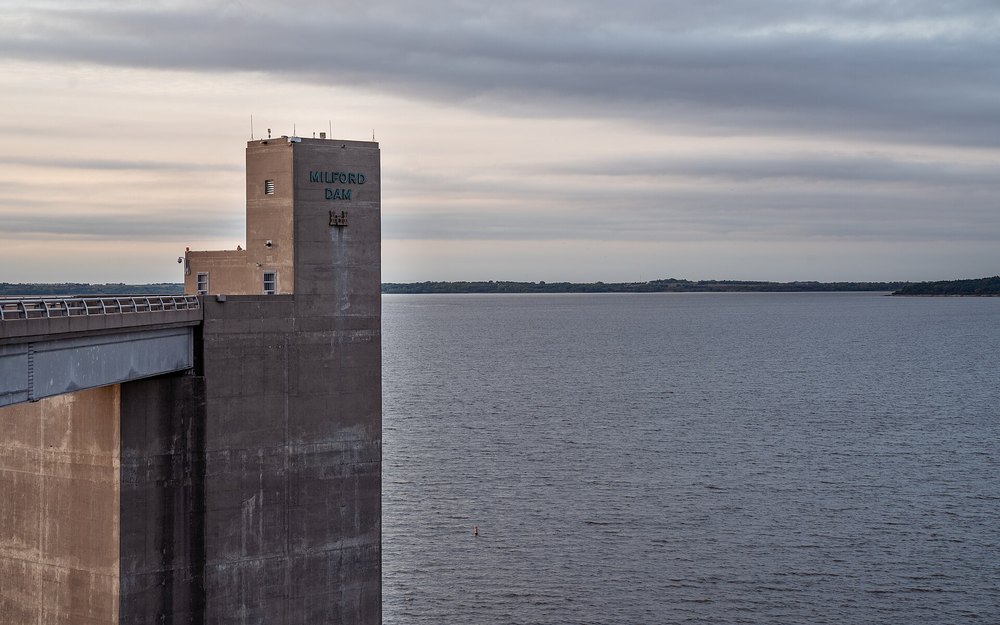
Verified Launch GPS: 39.0869, -96.9014
Spot Water & Access Specs
- Target Species: Trophy Blue Catfish (15–80+ lb), Channel Catfish (3–15 lb), Flatheads
- Lake Footprint: 15,700-acre USACE reservoir — largest man-made lake in Kansas
- Productive Depth: 14 to 38 ft submerged Republican River channel drops, Rush Creek & flats
- Current & Wind: Open-prairie wind swells; 2–4 oz Santee drift weights or heavy anchor leads
- Top Local Baits: Fresh cut gizzard shad, goldeye, river drum & live bluegill
- Public Access: Milford State Park Boat Ramp, Curtis Creek Marina & Wakefield Causeway
Angler Field Log: Drifting a 22-foot Republican River channel lip off Curtis Creek in early October (59°F surface temp) with fresh net-caught gizzard shad, we staggered four Santee rods between 1.5 and 3 ounces to match a 12-mph south breeze. Three hours of drifting yielded nine Blue Catfish—six eater-sized 22- to 26-inchers kept under slot, two 34-inchers released immediately inside the 28–40″ protected window, and a 43-inch, 44-pound brute photographed and revived cleanly.
2. Missouri River at Atchison & Leavenworth (Atchison / Leavenworth County)
Forming Kansas’s northeastern border from White Cloud through Atchison and Leavenworth down to Kansas City, the Missouri River is pure heavyweight big-river territory—highlighted by the 121.1-pound, 59.75-inch Kansas state-record Blue Catfish landed here in May 2025. Channelized between hundreds of stone wing dikes (L-head and straight rock groins) and rock revetment outside bends, the Missouri creates textbook current-break scour holes 25 to 45 feet deep right behind every dike tip. Massive Blues stack inside the calm slack water just downstream of the dike boils to ambush disoriented shad, Asian carp, and goldeye swept over the rocks.
Taming the Missouri requires heavy big-water gear: 7’6″ to 8′ heavy-action rods, 80-pound braided mainline, and 6- to 12-ounce flat no-roll or bank sinkers depending on river stage. Anchor fifty yards upstream of a submerged wing dike, lower your baits into the downstream eddy drop-off where the 4-knot main flow curls back toward the bank, and resist the urge to set the hook until the rod doubles over under an inline 8/0 or 10/0 circle hook. Keep 2026 KDWP Missouri River boundary rules front and center: anglers are limited to 5 Blue Catfish per day on the Missouri River and Browning Oxbow, with only 1 fish over 30 inches.
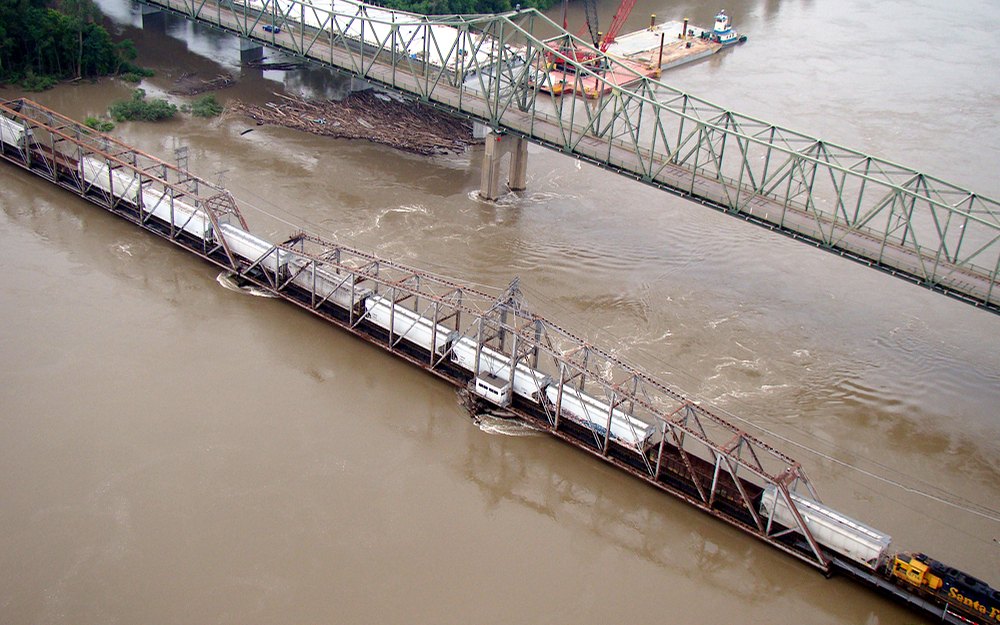
Verified Launch GPS: 39.5631, -95.1097
Spot Water & Access Specs
- Target Species: Record-Class Blue Catfish (20–120+ lb), Flatheads (15–60 lb), Channels
- Record Heritage: 121.1 lb Kansas State Record Blue Catfish (Missouri River, May 2025)
- Productive Depth: 20 to 45 ft wing-dike scour eddies, rock revetment bends & chute mouths
- Current Force: Heavy 3.5 to 5.5-knot main-channel push demanding 6–12 oz no-roll sinkers
- Top Local Baits: Fresh bloody goldeye, skipjack herring, gizzard shad & live suckers
- Public Access: Atchison Riverfront Boat Ramp, Leavenworth Riverfront Park & St. Joseph access
Angler Field Log: Running upriver from Atchison on a steady 53°F November flow, we used our catfish sinker weight calculator to match 10-ounce bank leads to a 4.2-knot outside-bend wing dike. Pinning fresh cut goldeye steaks into the 34-foot scour pocket behind the dike tip produced four heavy pulls before noon, topped by a scarred 51-pound Blue Catfish.
3. Elk City Reservoir & Elk River Inflow (Montgomery County)
Situated just northwest of Independence in Montgomery County, 4,450-acre Elk City Reservoir earned permanent immortality in 1998 when Ken Paulie wrestled a 123.0-pound, 61-inch Flathead Catfish from its waters—a catch that stood for years as the all-tackle world record and still reigns as the Kansas state record. Fed by the meandering Elk River and choked with standing timber, submerged brushpiles, and stained shallow flats, Elk City grows both enormous Flatheads and a surging population of chunky Channel and Blue Catfish. When summer water temperatures climb into the upper 70s, trophy Flatheads prowl the 10- to 20-foot timber edges at night.
Success at Elk City depends on heavy abrasion tackle and lively natural bait: spool 65- to 80-pound braid with a 60-pound monofilament leader, thread a 2-ounce egg sinker above a heavy barrel swivel, and bridle-rig a 6-inch green sunfish or bullhead on an 8/0 circle hook just outside submerged Elk River logjams. In addition to the main lake, don’t overlook the concrete spillway outlet channel below the dam whenever USACE releases water after spring storms—current boils draw baitfish and big cats within easy reach of bank anglers. Check KDWP statewide limits here: 5 Flatheads daily, 10 Channel Cats daily, and 10 Blues daily (max 1 Blue >= 30″).
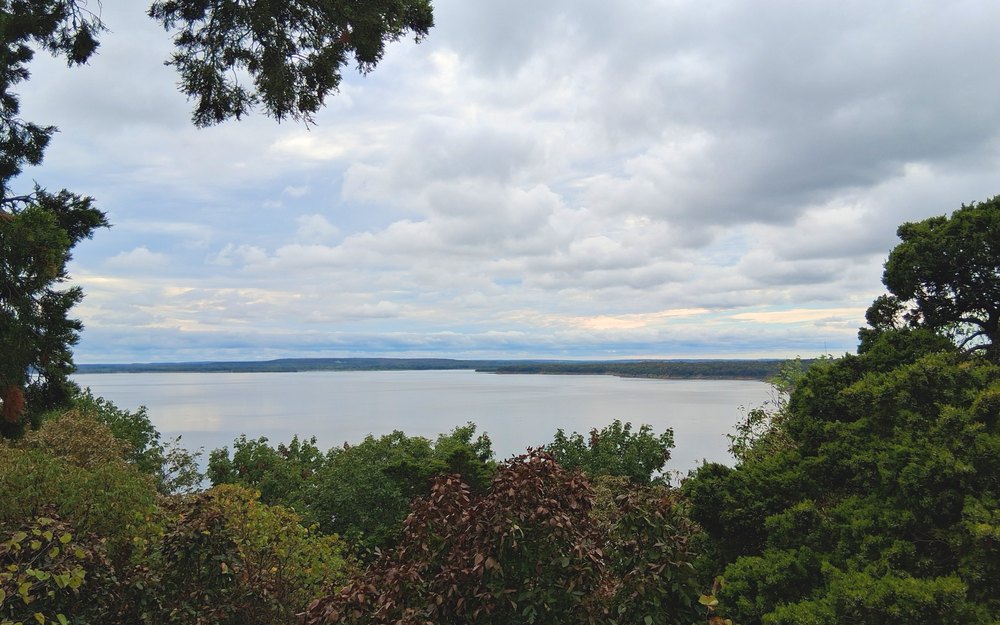
Verified Launch GPS: 37.2669, -95.7742
Spot Water & Access Specs
- Target Species: Giant Flathead Catfish (20–100+ lb), Channel Catfish, Blue Catfish
- Record Heritage: 123.0 lb Kansas State Record (Former World Record) Flathead (Ken Paulie, 1998)
- Productive Depth: 10 to 26 ft flooded Elk River timber bends, Card Creek & dam outlet
- Current & Clarity: Stained southern-Kansas water; 1–3 oz Carolina/slip-sinker rigs
- Top Local Baits: Live 5–7 in. green sunfish, bluegill, black bullheads & fresh cut shad
- Public Access: Elk City State Park Boat Ramp, Outlet Park & Card Creek Access
Angler Field Log: Launching at Elk City State Park on a sticky June night with 78°F water, we anchored along an old timbered Elk River bend dropping from 9 to 19 feet and set three live green sunfish rods along the woodline. At 11:15 PM, the shallowest rod buried toward the stumps, yielding a thick 39-pound Flathead that kept us firmly out of the timber thanks to 80-pound braid.
4. Kansas River (‘The Kaw’) — Bowersock Dam to Eudora (Douglas / Shawnee County)
Stretching 173 miles from the confluence of the Republican and Smoky Hill rivers at Junction City to the Missouri River at Kansas City, the Kansas River—known locally as The Kaw—is the most accessible multi-species river fishery for kansas catfishing. Public boat ramps and canoe/kayak launches at Topeka, Lawrence (Burcham Park), Eudora, and De Soto open up miles of shifting sandbars, cottonwood logjams, bridge pilings, and rocky low-head dam tailraces like Bowersock Dam in downtown Lawrence. Blue Catfish run up from the Missouri into the lower Kaw below Lawrence, while massive Flatheads and abundant Channel Catfish inhabit the entire length.
Because the Kaw’s sandy riverbed shifts after every spring rise, read surface current seams visually: look for tight boils curling off submerged cottonwood trunks, sharp depth chutes dropping off the downstream tail of sandbars, and deep scour pockets behind highway bridge piers. During daylight, drift or anchor 2- to 4-ounce slip-sinker rigs with fresh cut shad or nightcrawlers along sandbar drop-offs for fast Channel Catfish action. After sundown, pin live creek chubs or sunfish right against heavy outside-bend timber jams for 25- to 50-pound Flatheads—and remember the Kaw is also open to permitted Flathead hand-fishing from June 15 through August 31.
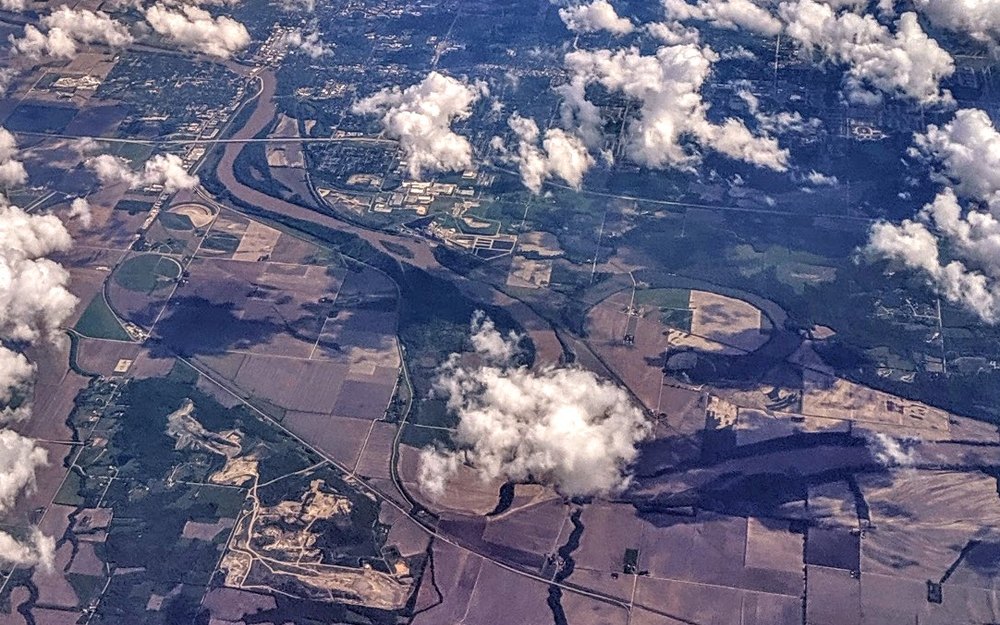
Verified Launch GPS: 38.9767, -95.2356
Spot Water & Access Specs
- Target Species: Flathead Catfish (15–60 lb), Channel Catfish (3–15 lb), Blue Catfish (10–40 lb)
- River Profile: 173-mile prairie sandbar river from Junction City to Kansas City
- Productive Depth: 8 to 24 ft low-head dam aprons, bridge-pier scour holes & rootwad bends
- Current Force: Moderate 1.5 to 3.5-knot flow; 2–5 oz no-roll or bank sinkers
- Top Local Baits: Live 5-in. creek chubs/green sunfish (Flatheads); cut shad & dip bait (Channels)
- Public Access: Burcham Park (Lawrence), Riverfront Park, Kaw River SP & De Soto Ramp
Angler Field Log: Floating downstream from Burcham Park in Lawrence on a 71°F June evening, we tied off twenty yards above a massive cottonwood sweep guarding an 18-foot outside-bend hole. Two rods baited with live green sunfish produced a 28-pound Flathead and a 19-pounder within forty minutes of full dark, while a cut-shad rod added three 5-pound Channels.
5. Perry Lake & Delaware River Tailrace (Jefferson County)
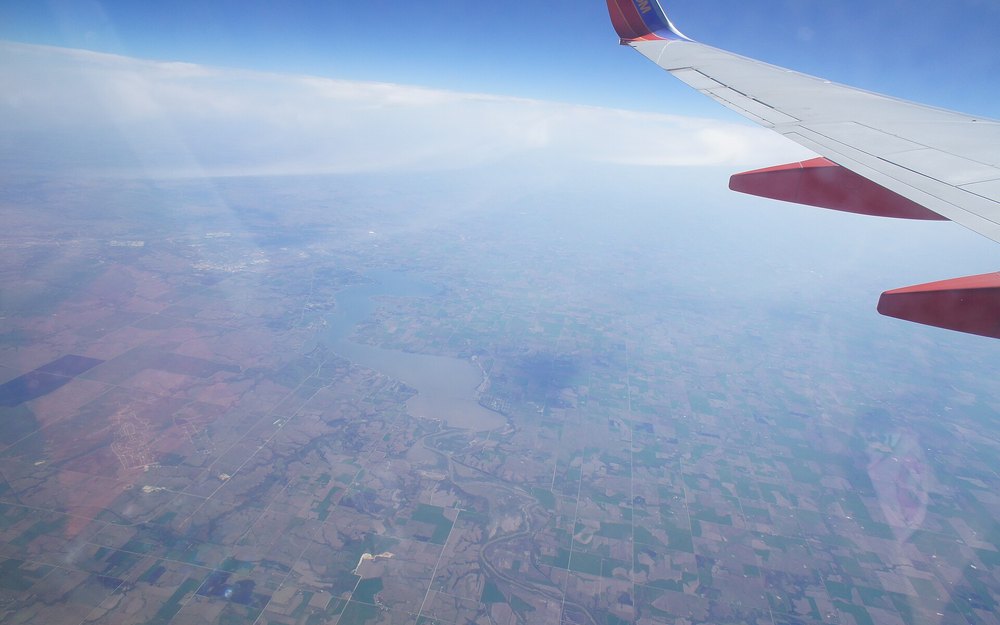
Nestled among forested hills between Topeka and Lawrence, 11,150-acre Perry Lake pairs classic standing-timber reservoir coves with one of northeast Kansas’s most reliable dam tailraces along the Delaware River below the outlet works. Unlike wide-open prairie lakes exposed to relentless south winds, Perry’s long timbered arms—especially Rock Creek, Slough Creek, and the upper Delaware River inflow north of Valley Falls—give boat and kayak anglers protected water loaded with Channel Catfish and ambush-hunting Flatheads. A growing Blue Catfish population has also established itself along the deeper main-basin river channel.
In late spring when runoff stains the upper Delaware River arm, anchor in 8 to 14 feet where muddy inflow meets clearer main-lake water and pitch 1.5-ounce slip-sinkers tipped with fresh cut shad or nightcrawlers. During hot July and August afternoons, both bank and boat anglers stack up below the Perry Dam outlet park whenever water releases stir the concrete stilling basin—bringing heavy Channel Cats, Flatheads, and hybrid wipers right within bank-casting range. For night Flatheads on the main lake, target rocky riprap bluffs and flooded timber points along the lower basin with live bluegill.
Verified Launch GPS: 39.1136, -95.4244
Spot Water & Access Specs
- Target Species: Channel Catfish (3–15 lb), Flathead Catfish (12–45 lb), Blue Catfish
- Lake Footprint: 11,150-acre wooded USACE reservoir northeast of Topeka
- Productive Depth: 10 to 28 ft Rock Creek/Slough Creek timber & Delaware River inflow
- Current & Structure: Protected timber coves + roaring spillway outlet; 1–3 oz rigs
- Top Local Baits: Fresh cut gizzard shad, raw shrimp, chicken liver & live 5-in. sunfish
- Public Access: Perry State Park Boat Ramp, Slough Creek, Rock Creek & Outlet Tailwaters
Angler Field Log: Setting up along the Rock Creek timber edge in mid-June (74°F water) with 2-ounce Santee Cooper rigs and cut gizzard shad, we worked a 15-foot submerged creek bend at dawn. Two hours of steady bites put eleven Channel Catfish from 3 to 9 pounds in the livewell alongside a bonus 16-pound Blue Catfish.
6. Wilson Lake (Russell County)
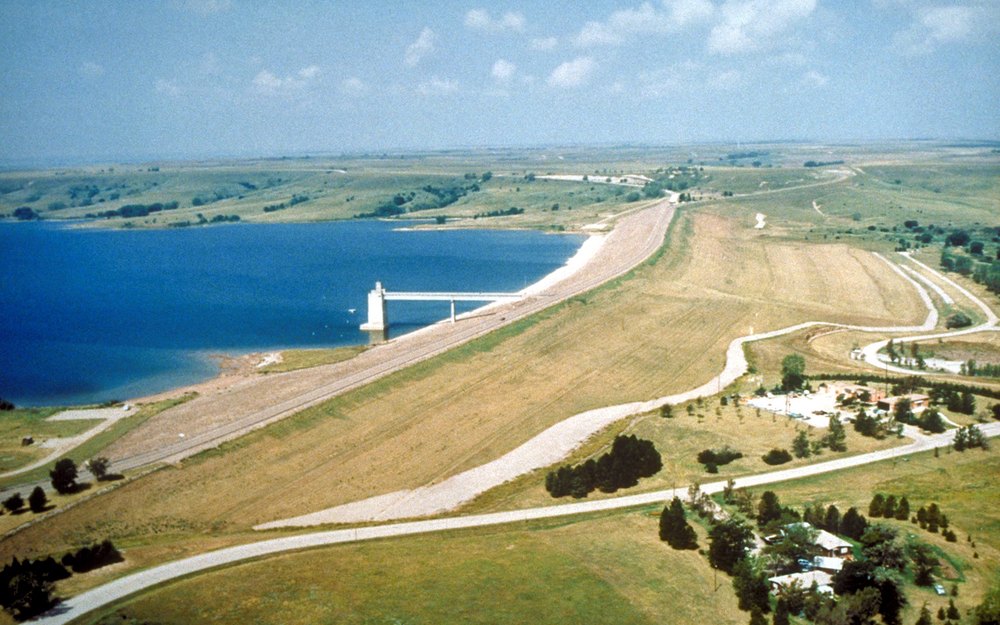
Carved through dramatic Dakota sandstone and limestone bluffs in Russell County, 9,040-acre Wilson Lake is famous for the clearest water of any major Kansas reservoir—making it a sleeper powerhouse for big, hard-fighting Channel and Flathead Catfish. Because Wilson’s 4- to 8-foot visibility pushes daytime catfish deep into shaded rock crevices and 25- to 32-foot canyon ledges, anglers who shift their clock to dusk, night, and pre-dawn hours intercept heavy fish sliding shallow to raid crayfish and shad along limestone shelves. The upper Saline River inflow arm also provides stained, nutrient-rich flats that fish well even at midday.
Because sharp limestone ledges and zebra-mussel clusters at Wilson slice thin monofilament fast, run 50- to 65-pound braid paired with a tough 40- to 50-pound fluorocarbon or heavy mono abrasion leader. After sunset from June through September, anchor off steep rocky points near Hell Creek or Minooka Park and suspend live green sunfish or creek chubs under heavy slip-floats 12 to 18 feet deep just above the rock drop-off. For steady Channel Catfish action, drift or anchor cut shad and raw shrimp along the upper Saline River flats at dawn.
Verified Launch GPS: 38.9439, -98.4961
Spot Water & Access Specs
- Target Species: Flathead Catfish (12–45 lb), Channel Catfish (4–18 lb)
- Lake Footprint: 9,040-acre clear canyon reservoir along the Saline River valley
- Productive Depth: 12 to 32 ft submerged limestone shelves, Hell Creek & dam riprap
- Water Clarity: Exceptionally clear water (4–8+ ft visibility) — favors dawn, dusk & night
- Top Local Baits: Live 5-in. green sunfish/chubs (Flatheads); cut shad & shrimp (Channels)
- Public Access: Wilson State Park (Hell Creek & Otoe areas), Minooka Park & Lucas Park
Angler Field Log: Anchoring off a steep limestone bluff point near Hell Creek at dusk in late July, we waited until full dark before sliding live 5-inch green sunfish down to 16 feet over a 28-foot drop. Clear-water Flatheads crushed the baits cleanly, resulting in three fish between 14 and 24 pounds before 1:00 AM.
7. Cheney Reservoir (Reno, Kingman & Sedgwick Counties)
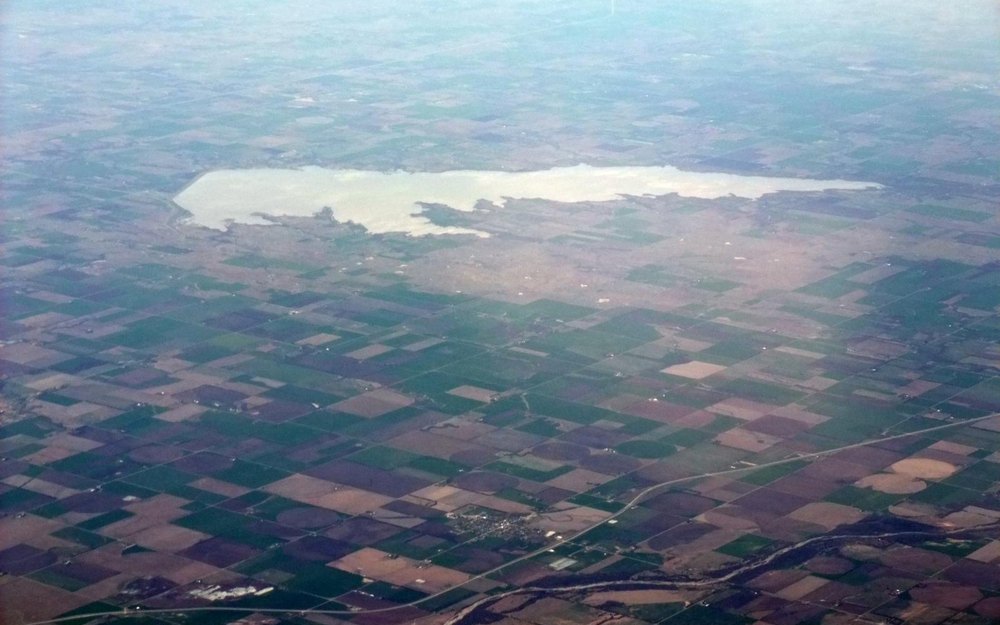
Located just thirty minutes west of Wichita, 9,550-acre Cheney Reservoir is south-central Kansas’s premier high-volume Channel Catfish factory—augmented by KDWP floating fish feeders that concentrate hungry catfish throughout the summer months. Fed by the sandy North Fork of the Ninnescah River, Cheney features expansive shallow flats, flooded timber pockets on the north end, and a long rock-faced dam that warms early in spring and holds gizzard shad year-round. Big Flatheads also patrol the dam riprap and Ninnescah river channel after dark.
For fast family or tournament-style Channel Catfish action from June through September, locate the marked KDWP floating feeders and anchor thirty yards away, casting nightcrawlers, dip baits, or small cut-shad chunks under slip-floats or light 1-ounce egg sinkers. When 15- to 25-mph south winds churn across Cheney’s open basin, deploy a drift sock to slow your boat to 0.7 mph and drag 2-ounce Santee Cooper rigs baited with fresh shad across the 12- to 18-foot wind-blown north flats. Check KDWP’s 10-fish daily Channel Catfish limit and 5-fish Flathead limit before keeping a cooler.
Verified Launch GPS: 37.7317, -97.7989
Spot Water & Access Specs
- Target Species: Abundant Channel Catfish (2–14 lb), Flathead Catfish (10–35 lb)
- Lake Footprint: 9,550-acre south-central reservoir fed by the North Fork Ninnescah River
- Productive Depth: 8 to 22 ft KDWP floating fish feeders, wind-blown mudflats & riprap
- Wind Factor: Strong prairie south winds; drift socks & 1.5–3 oz Santee rigs excel
- Top Local Baits: Fresh cut shad, Sonny’s/CJ’s dip bait, nightcrawlers & live sunfish
- Public Access: Cheney State Park East Shore, West Shore & Ninnescah Marina
Angler Field Log: Deploying a 48-inch drift sock in a 16-mph south wind on Cheney’s upper basin in late May (67°F water), we drifted four Santee cut-shad rigs across 14-foot mudflats. Consistent rod action yielded a quick two-angler limit of twenty Channel Catfish from 3 to 7.5 pounds in under three hours.
8. Glen Elder Reservoir / Waconda Lake (Mitchell County)
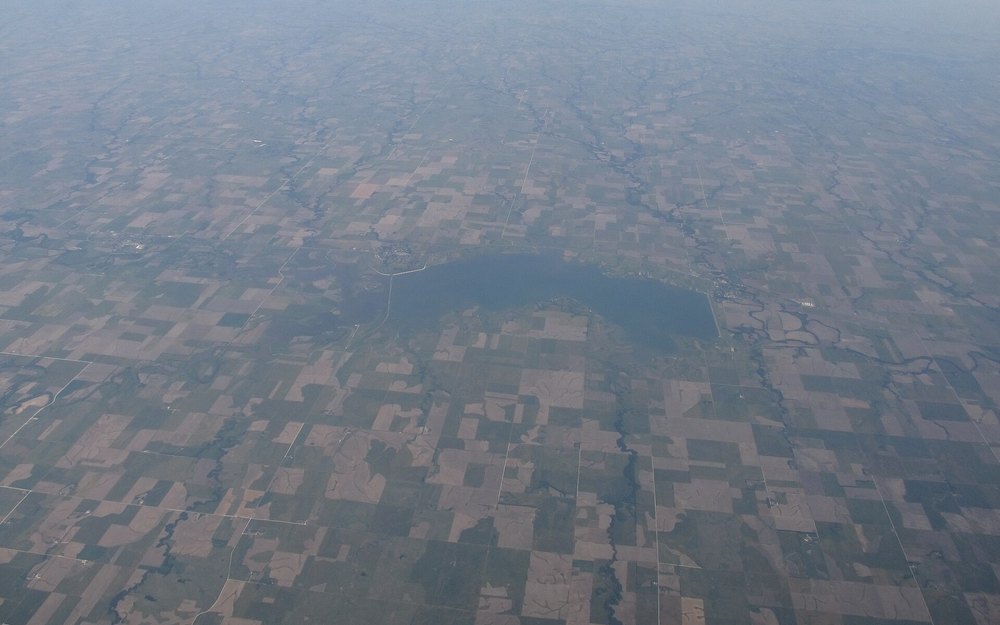
Stretching across 12,586 acres of Mitchell County in north-central Kansas, Glen Elder Reservoir—widely known as Waconda Lake—is one of the most fertile, fast-growing catfish impoundments in the Plains. Fed by the North and South Forks of the Solomon River, Waconda supports massive shad schools and KDWP-maintained summer fish feeders that routinely produce 6- to 15-pound Channel Catfish alongside healthy Flatheads and an expanding Blue Catfish fishery. The rock-lined Downs Causeway and Cawker City shoreline points offer top-tier bank access for anglers without a boat.
In May and early June, target the rocky riprap along the Downs Causeway and Glen Elder State Park shoreline where warming water pulls spawning Channel Catfish shallow into 5 to 12 feet of water. Through July and August, drift fresh cut shad across the 14- to 22-foot Solomon River channel flats or fish early mornings around Waconda’s marked KDWP feeders. When cold fronts push through in September and October, follow migrating shad toward the deeper 25-foot main-basin channel bends near the dam.
Verified Launch GPS: 39.4864, -98.3164
Spot Water & Access Specs
- Target Species: Trophy-Average Channel Catfish (4–18 lb), Flatheads (10–40 lb), Blues
- Lake Footprint: 12,586-acre fertile reservoir along the Solomon River valley
- Productive Depth: 10 to 26 ft Downs causeway, Granite Creek & submerged river channels
- Current & Feed: Nutrient-rich lake with KDWP summer feeders & heavy gizzard shad base
- Top Local Baits: Fresh cut gizzard shad, raw shrimp, prepared dip baits & live sunfish
- Public Access: Glen Elder State Park Boat Ramps, Cawker City & Downs Causeway
Angler Field Log: Fishing out of Glen Elder State Park on a calm September morning (66°F water), we anchored along a 19-foot Solomon River bend stacked with shad on side-imaging. Four rods baited with fresh gizzard shad fillets produced eight chunky Channel Catfish between 5 and 11 pounds before noon.
Species Biology, Terminal Rigging & 2026 Tactical Blueprint
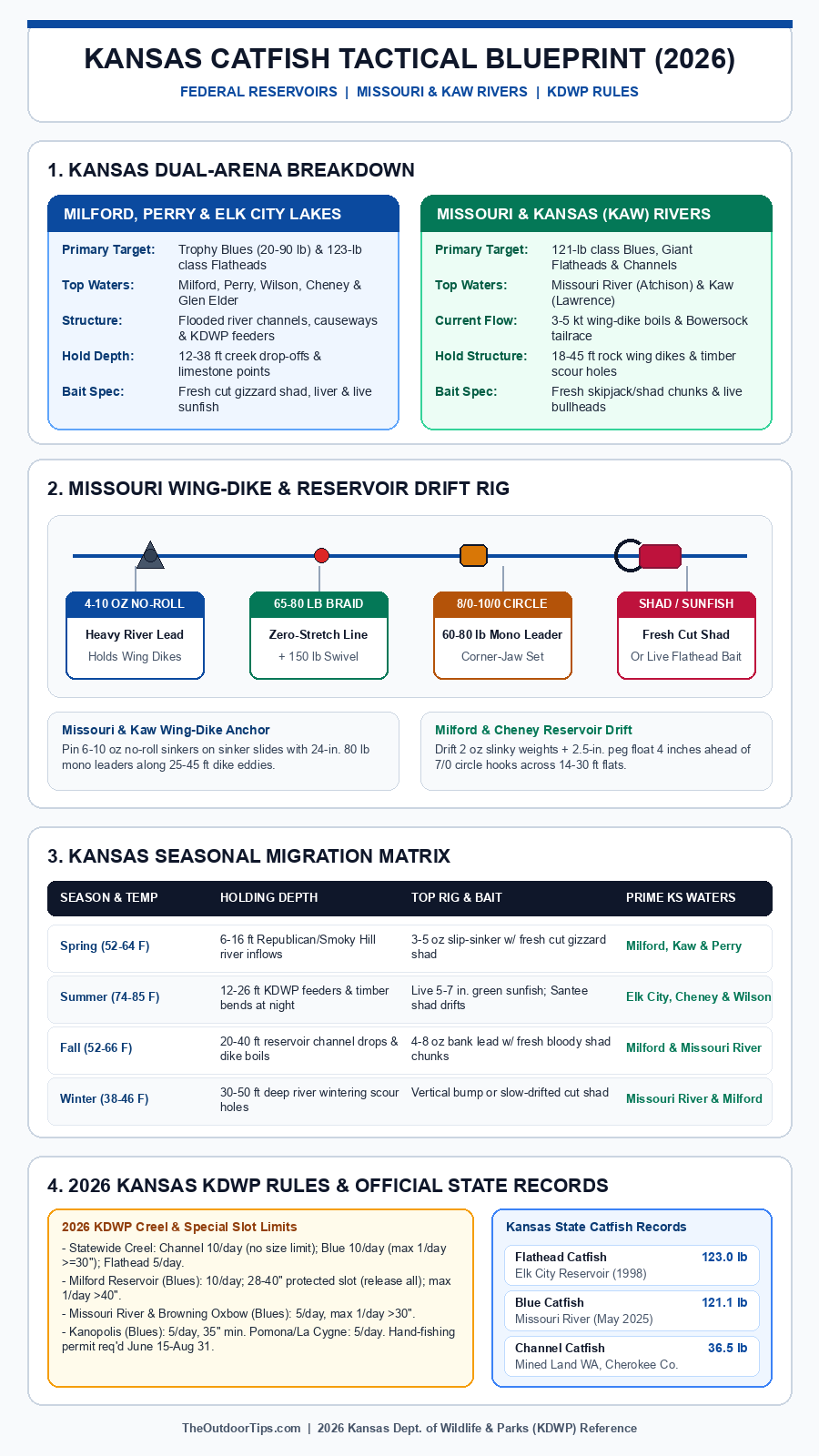
Mastering kansas catfishing comes down to matching your terminal hardware to wind-swept reservoirs versus heavy river currents. On the Missouri River at Atchison and Leavenworth, heavy 6- to 10-ounce flat no-roll sinkers on sinker slides keep fresh bloody goldeye or skipjack steaks anchored inside 25- to 45-foot wing-dike scour holes. When shifting to prairie reservoirs like Milford, Cheney, and Glen Elder, drop down to 1.5- to 2.5-ounce slinky weights or egg sinkers paired with a 2.5-inch Santee peg float four inches ahead of a 7/0 inline circle hook to drift cut gizzard shad cleanly above flooded creek-channel stumps.
For predatory Flatheads on Elk City Reservoir, Wilson Lake, and the Kansas River (The Kaw), skip processed stink baits completely and fish lively 5- to 7-inch green sunfish, creek chubs, or bullheads on 50- to 80-pound monofilament leaders just outside timber jams and limestone drop-offs after dark. Need exact sinker weight, spool capacity, or knot strength numbers before tying on? Dial in your terminal setup using our sinker weight calculator, reel line capacity calculator, knot strength matcher, and complete catfish bait guide.
Cast-Netting Gizzard Shad & Using KDWP Floating Fish Feeders
Two Kansas-specific advantages separate average trips from limit-out days: fresh net-caught gizzard shad and KDWP floating fish feeders. At dawn on Milford, Perry, Cheney, and Glen Elder, throwing a 6-foot, 3/8-inch-mesh cast net over dimpling shad schools in shallow coves puts lively 4- to 6-inch baitfish in your cooler—keep them over ice slush so the bloodlines stay bright red rather than waterlogged. On the Missouri River, use a light rod with a Sabiki rig or small white twister jig in wing-dike eddies to catch fresh goldeye and skipjack herring, which leak far more oil into fast current than frozen bait. Later in the day on Cheney and Glen Elder, anchor thirty yards off marked KDWP floating feeders where pelleted feed draws thick schools of 3- to 10-pound Channel Catfish, pitching nightcrawlers, raw shrimp, or small cut-shad chunks under slip-floats. For multi-day trips, lightly brining cut shad fillets in non-iodized rock salt firms the skin so baits survive repeated heavy casts without flying off 8/0 circle hooks.
Watch Our Heavy River & Santee Drift Catfish Rigging Demonstration
Switching cleanly between heavy 8-ounce Missouri River wing-dike anchors and 2-ounce Santee drifts on Milford or Cheney takes thirty seconds once you dial in leader length and swivel hardware. Watch our rigging demonstration below:
Recommended Kansas Catfish Tackle & Rig Loadout (2026 Field Picks)
From wrenching fifty-pound Missouri River Blues out of Atchison wing dikes to drifting cut shad across Milford Lake channel bends, dependable rod backbone and zero-stretch braid keep trophy fish out of submerged timber and limestone:
| Gear Component | Recommended Model | Exact Spec (Power / Ratio / LB) | Why It Works in Kansas | Check Live Price |
|---|---|---|---|---|
| Catfish Rod | Ugly Stik Catfish Special 7’6″ MH / Heavy | 7’6″ 1-pc / 2-pc, Heavy Action, 15–50 lb | Sensitive glass tip detects light Channel bites while holding backbone for 8–10 oz Missouri River leads. | |
| Heavy Reel | Abu Garcia Ambassadeur C3 6500 / Penn Battle IV 6000 | 5.3:1 Gear Ratio, 20–25 lb Drag, Clicker | Loud bait-clicker and brass gears survive Missouri River wing-dike boils and Milford 50-lb Blues. | |
| Mainline & Leader | 65–80 lb Braid + 50–80 lb Mono Leader | 0.41 mm Braid + 0.70–0.85 mm Abrasion Mono | Zero-stretch braid turns big Flatheads out of Elk City timber while thick mono resists Wilson limestone. | |
| Hooks & Weights | Gamakatsu Octopus Circle 6/0–10/0 + No-Roll Sinkers | Inline Offset-Free Circle + 2–10 oz No-Roll | No-roll flat lead holds steady in 4-knot Missouri River scour; inline circle hooks pin corner-jaw clean. |
Kansas Seasonal Hydrology & Bite Windows
Across Kansas’s prairie reservoir and river seasons, spring inflows, summer wind patterns, and autumn shad migrations dictate where catfish stage:
| Season & Water Temp | Where Catfish Hold in Kansas | Highest-Percentage Presentation | Prime Kansas Water |
|---|---|---|---|
| Spring (52–64°F) | 6–16 ft Republican/Smoky Hill river inflows & mudflats | 3–5 oz slip-sinker w/ fresh cut gizzard shad & nightcrawlers | Milford, Kaw & Perry |
| Summer (74–85°F) | 12–26 ft KDWP feeders, rock bluffs & timber bends at night | Live 5–7 in. sunfish/chubs for Flatheads; Santee cut shad drifts | Elk City, Cheney & Wilson |
| Fall (52–66°F) | 20–40 ft reservoir channel drops & wing-dike boils | 4–8 oz bank lead w/ fresh bloody shad & goldeye steaks | Milford & Missouri River |
| Winter (38–46°F) | 30–50 ft deep main-river wintering scour holes | Vertical river bumping or slow-drifted cut shad along ledges | Missouri River & Milford |
Beyond the eight flagship waters profiled above, anglers in eastern and central Kansas also target La Cygne Reservoir (a heated power-plant cooling lake in Linn County with a 5-fish Blue Catfish limit), Kanopolis Reservoir (where Blue Catfish carry a strict 35-inch minimum length limit), and Pomona Lake. In January and February, La Cygne’s warm-water discharge arm holds active Channel and Blue Catfish when surrounding prairie impoundments skim with ice. Likewise, southeast Kansas’s Mined Land Wildlife Area strip pits in Cherokee County—the very water that produced Kansas’s 36.5-pound state-record Channel Catfish—offer sheltered, wind-protected bank and kayak fishing throughout summer for anglers willing to hike into deep, clear strip-mine pits with cut shad and chicken liver.
Prairie Wind Boat Control, Bank Access & Trophy Catch-and-Release
Kansas reservoirs sit in wide-open prairie valleys where 20-mph south winds can build steep whitecaps in minutes; always monitor NWS marine/wind forecasts before crossing Milford, Cheney, or Glen Elder in smaller aluminum boats, and carry a 48-inch drift sock to stabilize Santee drift speeds at 0.5 to 0.8 mph. On the Missouri River, anchor cleanly outside marked navigation channel buoys and run bright all-around white lights after dark. Bank-bound anglers hunting best catfish fishing spots in kansas without a boat can score consistently from the Wakefield and Downs causeways, Perry Lake’s Delaware River outlet park, Bowersock Dam tailwaters in Lawrence, and Atchison’s riverfront shoreline—just pack sturdy steel rod holders, a 5-gallon bait aerator, and a 36-inch rubberized landing net. When releasing 28- to 40-inch slot Blues at Milford or 30-inch-plus trophies statewide, cradle the fish horizontally with wet hands rather than hanging heavy catfish vertically by the jaw, and revive them gently in slow current until they kick free under their own power.
2026 Kansas KDWP Regulations, Special Reservoir Slots & Hand Fishing
Always verify current local kiosk postings and the official KDWP Fishing Regulations Summary before keeping any catch:
- Statewide General Creel & Size Limits: Channel Catfish: 10/day (no statewide size limit). Blue Catfish: 10/day (only 1 fish/day ≥30″). Flathead Catfish: 5/day (no statewide size limit). Possession limit is 3× daily creel.
- Milford Reservoir (Blue Catfish): 10/day, with a strict 28–40 inch protected slot limit (all Blues between 28 and 40 inches must be released immediately) and max 1 fish/day over 40 inches.
- Missouri River & Browning Oxbow (Blue Catfish): 5/day, max 1 fish/day over 30 inches. Other Special Lakes: Kanopolis (5 Blues/day, 35″ min); Pomona & La Cygne (5 Blues/day, any size).
- Hand Fishing (Noodling) & Licensing: Flathead hand fishing is legal June 15 – August 31 (sunrise to sunset) on designated waters (including the Kansas River, Arkansas River, and approved federal reservoirs) with a special KDWP hand-fishing permit plus a standard Kansas fishing license (required age 16–74).
Free Interactive Angling Calculators & Rig Matchers
Dial in exact lead weight for Missouri River wing dikes, verify reel backing capacity, and time solunar bite windows before launching:
Catfish Sinker Weight Calculator
Compute exact pyramid or no-roll sinker ounce weight for 1 to 5-knot Missouri and Kaw currents.
Reel Line Capacity Calculator
Verify exact 65 lb braid yards and mono backing needed on Abu C3 6500 or Penn Battle IV spools.
Solunar & Bite Time Calculator
Time your night Flathead and reservoir Blue Catfish sets around peak barometric and moon feeding windows.
Final Captain’s Verdict: Picking Your #1 Kansas Catfish Trip
If your goal is tangling with a true 40- to 80-pound Blue Catfish in 2026, point your truck toward Milford Lake for controlled Santee shad drifts across Republican River bends, or anchor 10-ounce no-roll leads behind rock wing dikes on the Missouri River at Atchison and Leavenworth. Chasing a giant Sunflower State Flathead? Fish lively green sunfish after dark along the flooded timber of Elk City Reservoir or outside-bend logjams on the Kansas River (The Kaw). For fast, family-friendly coolers of chunky Channel Catfish, Cheney Reservoir, Glen Elder (Waconda), and Perry Lake deliver consistent action all season—and pairing fresh net-caught gizzard shad with 65-pound braid, 8/0 inline circle hooks, and verified GPS launch ramps ensures you convert every heavy bite into a landed Kansas trophy on any water.
Kansas Catfishing FAQs
What are the 2026 Kansas KDWP catfish creel and size limits?
Statewide, Kansas allows 10 Channel Catfish per day (no statewide size limit), 10 Blue Catfish per day (max 1 fish 30 inches or longer), and 5 Flathead Catfish per day (no statewide size limit). However, key waters have special rules: Milford Reservoir enforces a 28- to 40-inch protected slot limit on Blue Catfish (only 1 over 40 inches), the Missouri River limits Blues to 5/day (only 1 over 30 inches), and Kanopolis sets a 35-inch minimum and 5/day limit on Blues.
Where is the #1 trophy Blue Catfish lake in Kansas?
Milford Lake near Junction City is widely regarded as the #1 trophy Blue Catfish reservoir in Kansas due to its massive gizzard shad forage base and 28- to 40-inch protected slot limit. On the river side, the Missouri River along Atchison and Leavenworth holds the 121.1-pound Kansas state-record Blue Catfish caught in May 2025.
What is the best bait for catfish in Kansas reservoirs and rivers?
Fresh cut gizzard shad and goldeye are unmatched for Blue Catfish and big Channel Catfish across Milford, Cheney, Glen Elder, and the Missouri River. For trophy Flatheads on Elk City Reservoir and the Kansas River (The Kaw), lively 5- to 7-inch green sunfish, bluegill, creek chubs, and bullheads fished at night near timber or rocks are the top choice.
Is hand fishing (noodling) legal for catfish in Kansas in 2026?
Yes, for Flathead Catfish only from June 15 through August 31 (sunrise to sunset) on designated waters—including the Kansas River (Kaw), Arkansas River, and approved federal reservoirs. Anglers must hold a special KDWP hand-fishing permit in addition to a standard Kansas fishing license, and hooks or diving gear are strictly prohibited.