In our cold-weather drift logs below the Cannelton Locks & Dam concrete boils and humid July nights anchoring live bluegill outside White River limestone bluffs, we have proved time and again why the best catfish fishing spots in indiana belong among the Midwest’s premier multi-species catfish destinations. Anchored by massive Ohio River navigation tailraces, the free-flowing Wabash River corridor, and timber-choked southern USACE reservoirs like Monroe and Patoka, Hoosier waters hold triple-digit Blue Catfish (state record 104 lbs 0 oz), 79-pound Flathead Catfish, and abundant Channel Catfish.
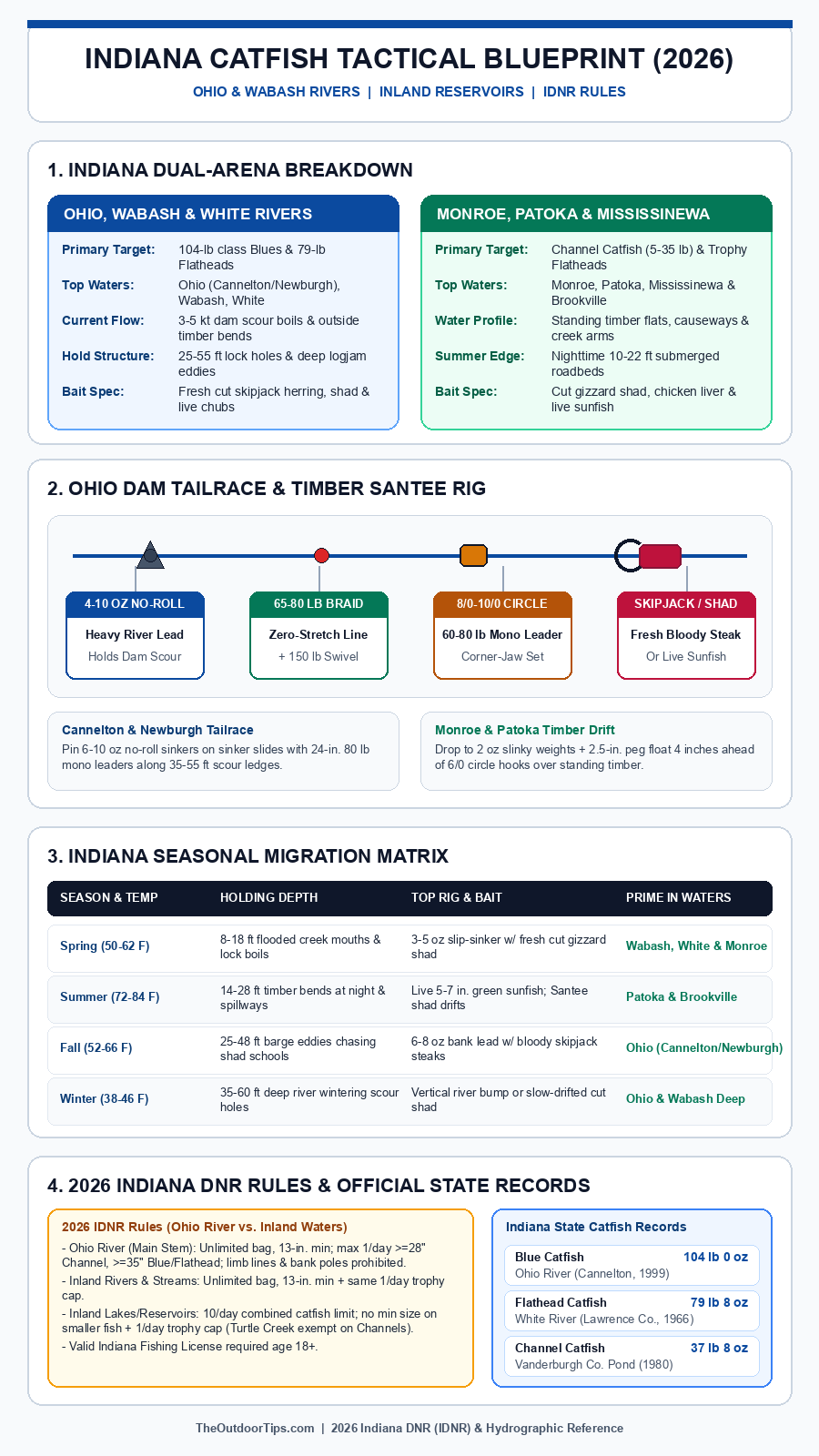
Because productive indiana catfishing spans everything from four-knot Ohio River barge seams to standing-timber reservoir flats, dial-in rigging makes the difference between fighting snags and landing personal-best fish. Heavy 8-ounce no-roll sinkers loaded with bloody skipjack herring anchor Cannelton and Newburgh scour holes, whereas 2-ounce Santee Cooper drift rigs with fresh cut shad glide cleanly over Monroe and Patoka timber. Below are verified GPS launches, depth contours, 2026 Indiana DNR (IDNR) rules, and winning tactics for catfish in indiana.
✔ 2026 IDNR Rules & Rigs Verified
Indiana Catfishing At a Glance: Top Waters & Winning Rigs
- #1 Trophy Waterway: Ohio River at Cannelton Locks & Dam (104 lb Indiana state-record Blue Catfish water; 28–55 ft lock tailrace scour holes).
- Peak Bite Windows: Spring pre-spawn rises at 52–64°F (April–May), summer night Flathead runs at 74–84°F, and fall shad migrations (52–66°F).
- 2026 IDNR Bag & Size Limit: Rivers/Ohio River: Unlimited bag, 13-in. min; Inland Lakes: 10/day combined. Statewide trophy cap: max 1/day ≥28″ Channel or ≥35″ Blue/Flathead.
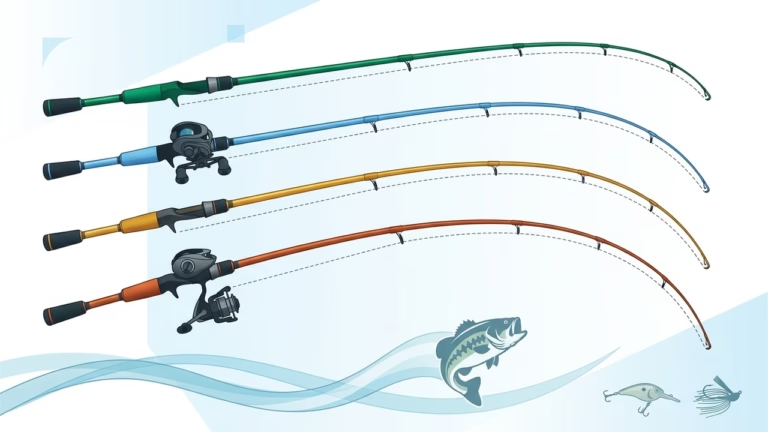
- Primary Winning Setup: Ugly Stik Catfish Special 7’6″ + Abu Garcia C3 6500 / Penn Battle IV 6000 + 65 lb Braid + Heavy Slip-Sinker / Santee Rig.
Best Catfish Fishing Spots in Indiana: 2026 Waterway & GPS Matrix
Before hitching the boat or rigging bank rods, compare all eight premier catfish in indiana fisheries across target species, holding structure, top baits, and public launch access below.
| Lake / River Section | Primary Target Species | Key Structure / Dam Tailrace | Best Bait / Lure | Public Ramp / Bank Access |
|---|---|---|---|---|
| Ohio River — Cannelton Dam | Blue Catfish, Flathead, Channel | 28–55 ft lock tailrace scour holes & barge wing dikes | Fresh cut skipjack herring & gizzard shad | Tell City Boat Ramp & Cannelton Riverfront |
| Ohio River — Newburgh Dam | Blue Catfish, Flathead, Channel | 25–48 ft tailrace eddies, tributary mouths & barge walls | Cut skipjack, live bluegill & shad heads | Newburgh Riverfront Ramp & Angel Mounds Access |
| Wabash River (Lafayette–Vincennes) | Flathead, Channel Catfish, Blue Catfish | 12–32 ft outside-bend logjams, bridge pilings & gravel scour pools | Live bullheads, chubs, cut shad & nightcrawlers | Kimmell Park (Vincennes), Fairbanks Park & Mascouten Park |
| White River (East & West Forks) | Flathead Catfish, Channel Catfish, Blue Catfish | 10–26 ft limestone bluff pools, low-head dam aprons & timber eddies | Live bluegill, creek chubs, cut shad & nightcrawlers | Williams Dam PFA, Shoals Public Ramp & Hindostan Falls |
| Monroe Lake (Monroe Co.) | Channel Catfish, Flathead Catfish | 10–24 ft Salt Creek channel ledges, SR 446 causeway riprap & timber coves | Cut gizzard shad, chicken liver, dip bait & live sunfish | Paynetown SRA, Fairfax SRA & Cutright Boat Ramp |
| Patoka Lake (Southern IN) | Channel Catfish, Flathead Catfish | 12–28 ft standing timber fields, submerged roadbeds & feeder creeks | Live bluegill, fresh cut shad & nightcrawlers | Newton-Stewart SRA, Painter Creek & Lick Creek Ramps |
| Mississinewa Lake (Miami/Wabash) | Channel Catfish, Flathead Catfish | 10–25 ft old river channel swings, riprap bridges & upper river inflow | Cut gizzard shad, shrimp, chicken liver & live chubs | Miami SRA Boat Ramp, Red Bridge & Pearson Mill Ramp |
| Brookville Lake (Franklin/Union) | Channel Catfish, Flathead Catfish | 12–30 ft Whitewater River channel drops, causeway riprap & standing timber | Cut gizzard shad, dip bait, nightcrawlers & live sunfish | Mounds SRA, Garr Hill Boat Ramp & Quakertown SRA |
Detailed Waterway Breakdowns, GPS Launches & Field Logs
Every destination below includes an interactive Google Map centered on verified public launch access, exact GPS coordinates, water specs, and firsthand Angler Field Log notes from Hoosier rivers and reservoirs.
1. Ohio River at Cannelton Locks & Dam Tailrace (Perry County)
In our late-autumn river logs drifting below Cannelton Locks & Dam near River Mile 720.7, no other stretch of Hoosier water matches the raw trophy-Blue density of this Perry County tailrace. Cannelton produced Indiana’s official 104-pound, 0-ounce state-record Blue Catfish in 1999, and heavy barge lockages combined with roaring turbine boils continue to funnel massive gizzard shad and skipjack herring schools directly into deep rock scour holes. When water releases push four knots along the Indiana bank wall, trophy Blues stage in the 32- to 50-foot current seams where turbulent whitewater softens against submerged limestone ledges and downstream wing dikes.
Because Cannelton demands serious river anchoring and abrasion resistance, we run 80-pound braided mainline paired with a three-way or sinker-slide slip rig carrying 6- to 10-ounce no-roll sinkers and a 24-inch 80-pound monofilament leader tipped with an 8/0 or 10/0 Gamakatsu inline circle hook. Respect all USACE lock safety buoy lines and never anchor inside restricted spillway exclusion zones; instead, position your boat 300 yards below the lock wall or work the downstream outside bends toward Tell City. Bank anglers without a boat can still connect with heavy fish off the Tell City riverfront rock riprap after dusk by lobbing heavy pyramid sinkers into the first main-channel drop-off at 22 to 30 feet.
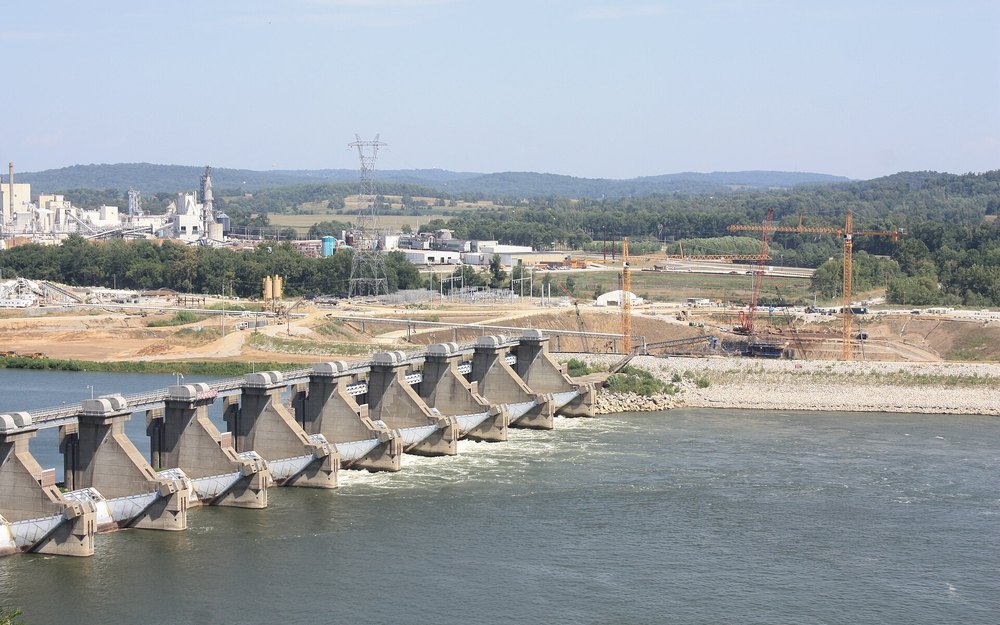
Verified Launch GPS: 37.9001, -86.7069
Spot Water & Access Specs
- Target Species: Trophy Blue Catfish (20–100+ lb), Flathead Catfish, Channel Catfish
- Record Heritage: 104 lb 0 oz Indiana State Record Blue Catfish (Bruce Midkiff, 1999)
- Productive Depth: 28 to 55 ft dam tailwater scour holes, rock dikes & channel ledges
- Current Force: Heavy 3.5 to 5-knot main-channel flow requiring 6–10 oz bank/no-roll lead
- Top Local Baits: Fresh skipjack herring steaks, whole cut gizzard shad, live 6-in. suckers
- Public Access: Tell City Riverfront Ramp, Cannelton Boat Ramp & Hawesville KY bank access
Angler Field Log: On a crisp November morning with Cannelton flow running 48,000 cfs and 51°F water, we anchored just outside the lower lock approach seam in 39 feet over broken limestone. Using our catfish sinker weight calculator, we stepped up from 6 oz to 8 oz flat no-rolls to pin fresh bloody skipjack head chunks motionless along the ledge. Within ninety minutes, a 46-pound Blue Catfish buried our heavy-action Ugly Stik to the foregrip, followed by a 31-pounder on the inside slack seam.
2. Ohio River at Newburgh Locks & Dam (Warrick County)
Sitting just upriver from Evansville at River Mile 776.1, the Newburgh Locks & Dam tailrace is a year-round magnet for anglers targeting trophy indiana catfishing without running all the way upstream to Cannelton. Whenever USACE operators crack the dam gates during spring rises or late-summer oxygen drops, baitfish stack tightly behind the concrete guide walls and inside the slack eddies off Cypress Creek. Blue Catfish patrol the deeper 30- to 48-foot main-channel trough, while big Flatheads tuck tight against submerged rock riprap and fallen sycamore rootwads along the Indiana shoreline.
During daylight hours, slow vertical drifting or bumping 4- to 6-ounce leads along the 35-foot gravel transition below Newburgh produces consistent strikes from 15- to 45-pound Blues. After sunset from June through September, we anchor above timbered creek mouths and pitch live green sunfish or bullheads on heavy Carolina rigs into 14- to 24-foot current breaks for prowling Flatheads. Remember that main-stem Ohio River rules follow Indiana’s boundary agreement with Kentucky—limb lines and bank poles are strictly prohibited on the Ohio River, and anglers may keep only one Blue or Flathead 35 inches or longer per day.
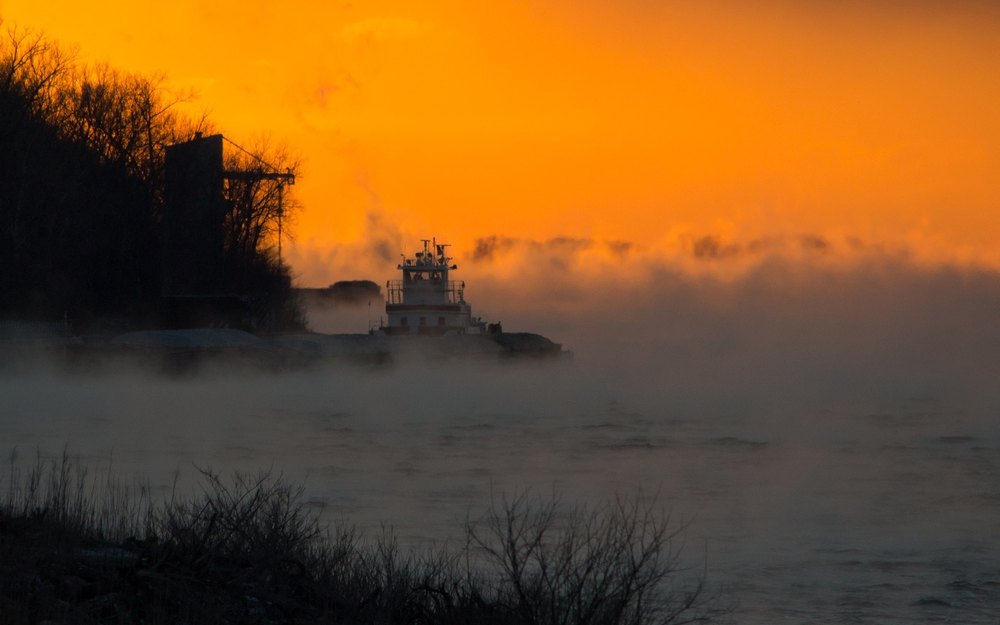
Verified Launch GPS: 37.9344, -87.3728
Spot Water & Access Specs
- Target Species: Blue Catfish (15–75 lb), Flathead Catfish (15–55 lb), Channel Catfish
- Tailrace Zone: USACE Newburgh Lock & Dam (River Mile 776.1) downstream to Evansville
- Productive Depth: 25 to 48 ft main-channel holes, rock groins & Cypress Creek mouth
- Current Force: Moderate to heavy 2.5 to 4.5-knot flow controlled by wicket/tainter gates
- Top Local Baits: Fresh skipjack fillets, cut gizzard shad, live 5-in. green sunfish
- Public Access: Newburgh Boat Ramp (Old Lock & Dam Park) & Dress Plaza Evansville
Angler Field Log: During a humid July dusk drift two miles below Newburgh Dam, we marked thick arches suspended three feet off a 34-foot mussel bed along the Indiana channel edge. Switching to 2.5-inch Santee peg floats raised our cut skipjack strips cleanly above zebra-mussel snags and triggered five solid runs in two hours, highlighted by a thick-shouldered 38-pound Blue and a 26-pound Flathead.
3. Wabash River Corridor — Lafayette to Vincennes (Tippecanoe / Knox County)
Stretching diagonally across the state as the longest free-flowing river east of the Mississippi, the Wabash River is the undisputed heartland highway for catfish in indiana. Without main-stem navigation dams interrupting seasonal fish movement from Lafayette through Terre Haute down to Vincennes and New Harmony, massive Flatheads and Channel Catfish migrate freely across hundreds of river miles—while big Blue Catfish push up from the Ohio confluence into the lower Knox and Posey county pools. Every sharp outside river bend carves a 15- to 32-foot scour hole stacked with tangled sycamore and cottonwood logjams that shelter 30- to 55-pound Flatheads all summer.
Reading the Wabash comes down to matching water stage to structure: during high spring flows, catfish tuck onto flooded inside willow flats and tributary mouths like Sugar Creek, the Tippecanoe, and the White River confluence; during August low water, every fish concentrates in the deepest outside-bend rootwad holes and bridge-pier scour pockets. For heavy timber Flatheads, we anchor 35 yards upstream of a major logjam, spool 65-pound braid with a 50-pound monofilament abrasion leader, and suspend a lively creek chub or green sunfish right on the upstream edge of the wood pile. Before launching, verify river gauge heights so you know whether a jon boat or kayak can safely clear shallow gravel riffles.
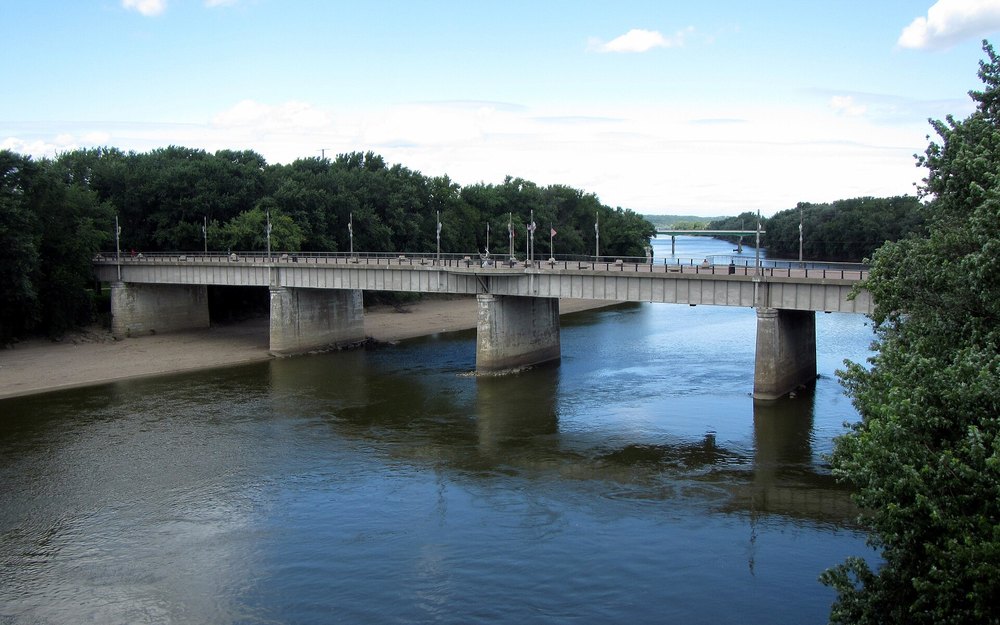
Verified Launch GPS: 38.6789, -87.5356
Spot Water & Access Specs
- Target Species: Flathead Catfish (15–60 lb), Channel Catfish (4–18 lb), Lower-River Blues
- River Profile: Longest free-flowing river east of the Mississippi; shifting sandbars & logjams
- Productive Depth: 12 to 32 ft outside-bend scour holes, bridge eddies & tributary confluences
- Current Force: Variable 1.5 to 4-knot current; 3–6 oz bank/pyramid sinkers match flow
- Top Local Baits: Live 5–7 in. creek chubs/bluegill for Flatheads; cut shad & livers for Channels
- Public Access: Kimmell Park Ramp (Vincennes), Fairbanks Park (Terre Haute) & Lafayette ramps
Angler Field Log: Launching at Kimmell Park in Vincennes on a falling June river stage (68°F water), we anchored just above a massive cottonwood sweep where the main channel compressed into a 24-foot chute. Two rods rigged with live 6-inch creek chubs on 7/0 circle hooks sat untouched until full dark—then our port rod bent double under a scarred 34-pound Wabash Flathead that tried twice to bury into the rootball.
4. White River — East Fork at Bedford & Shoals (Lawrence / Martin County)
Flowing through sculpted limestone bluffs and wooded hills across Lawrence and Martin counties, the East Fork of the White River holds a hallowed place in Midwest catfishing lore as the water that yielded Glen T. Simpson’s 79-pound, 8-ounce Indiana state-record Flathead in 1966—still the oldest standing fish record in the state. Below Williams Dam and through the rocky ledges at Hindostan Falls and Shoals, deep limestone pockets and submerged timber piles create textbook ambush habitat where oversized Flatheads trap suckers, drum, and sunfish. Meanwhile, both the East and West forks teem with aggressive 3- to 12-pound Channel Catfish from spring runoff right through October.
Because low-head dam aprons and shallow bedrock shelves restrict large fiberglass boats on parts of the East Fork, aluminum jon boats, jet rigs, and bank setups dominate this fishery. During daylight, cast nightcrawlers, chicken liver, or cut shad along gravel-bar drop-offs and current seams below Williams Dam for nonstop Channel Catfish action. Once twilight settles over the limestone bluffs, switch immediately to heavy 7’6″ rods loaded with 65-pound braid and live 5-inch bluegill or chubs pinned tight to undercut rock ledges and rootwads—where trophy Flatheads hunt shallow every night from May through September.
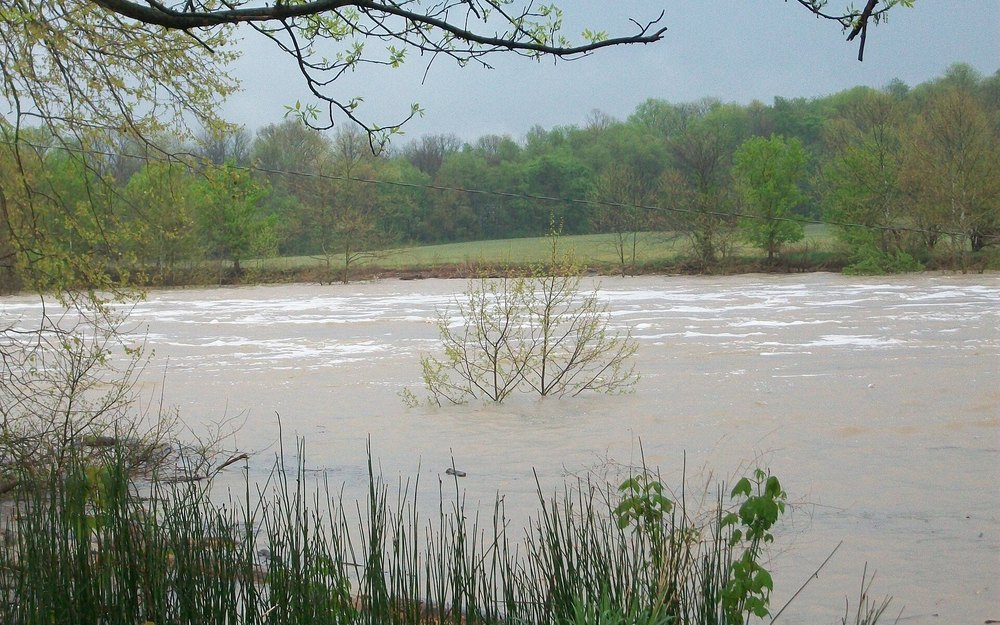
Verified Launch GPS: 38.6656, -86.7945
Spot Water & Access Specs
- Target Species: Trophy Flathead Catfish (15–70+ lb), Channel Catfish (3–16 lb)
- Record Heritage: 79 lb 8 oz Indiana State Record Flathead (Lawrence County, 1966)
- Productive Depth: 10 to 26 ft limestone bluff bends, Hindostan Falls & Williams Dam pools
- Current Force: Moderate 1.5 to 3-knot flow; 2–4 oz bank or egg sinkers hold cleanly
- Top Local Baits: Live sunfish/bluegill (Flatheads); fresh cut shad, catalpa worms & dip bait (Channels)
- Public Access: Williams Dam Public Fishing Area, Hindostan Falls PFA & Shoals Boat Ramp
Angler Field Log: Bank fishing below Hindostan Falls on a warm August evening at 77°F, we positioned two baits: one cut shad chunk in the 14-foot main eddy and one live green sunfish pinned three feet off a submerged sycamore trunk. By 10:30 PM we had released four Channel Cats up to 9 pounds and landed a thick 29-pound Flathead that inhaled the live sunfish right along the bluff shadow.
5. Monroe Lake (Monroe County)
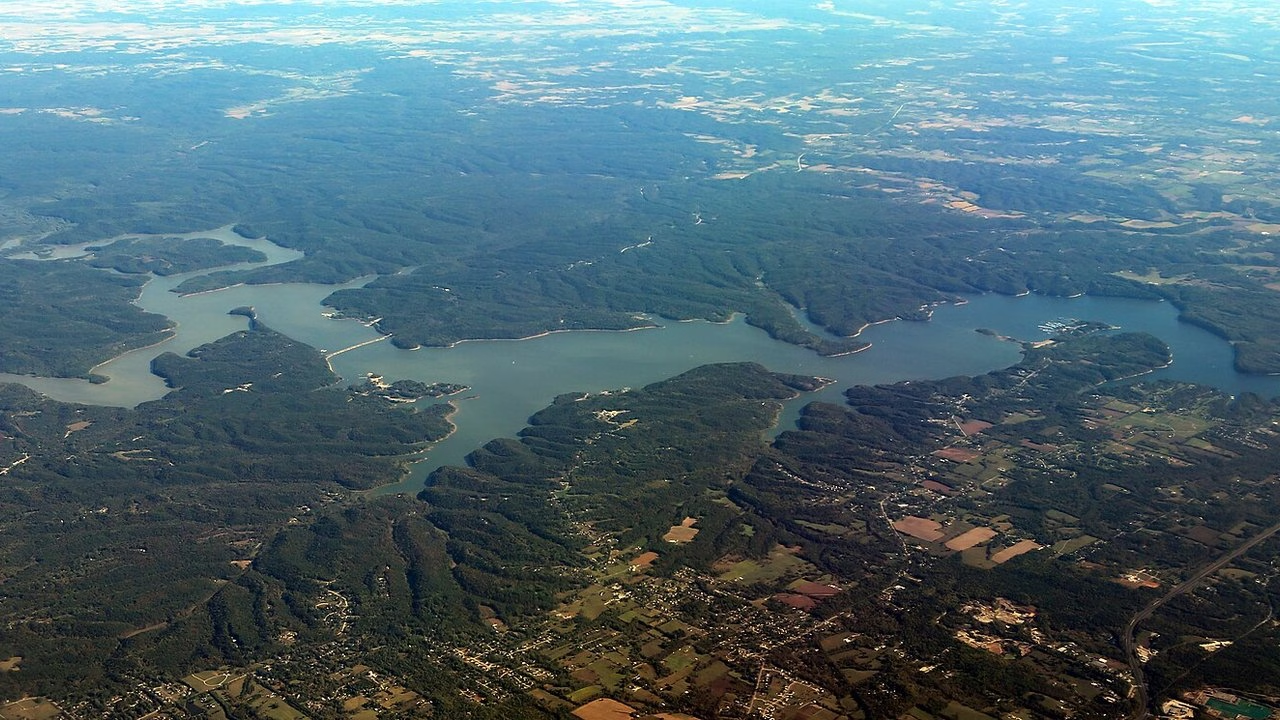
Spanning 10,750 acres just southeast of Bloomington, Monroe Lake is Indiana’s largest inland reservoir and one of the most accessible dual-purpose Channel and Flathead fisheries in the Midwest. Divided visually by the State Road 446 causeway, Monroe pairs a deep, open lower basin near Fairfax with a sprawling, timber-choked upper idle zone around Pine Grove, Crooked Creek, and the Salt Creek flats. Both zones hold massive gizzard shad forage bases, driving rapid catfish growth rates and predictable seasonal movements along submerged creek-channel edges.
In May and June, wind-blown rocky banks along the SR 446 causeway and riprap points near Paynetown ignite with spawning Channel Catfish—making Monroe one of the best shore-fishing lakes in southern Indiana. When summer boat traffic picks up on the lower basin, slip into the shaded idle-speed timber coves east of the causeway and slow-drift 1.5-ounce Santee Cooper rigs baited with fresh cut shad across 12- to 20-foot creek drops, or anchor live bluegill along submerged roadbeds after dark for 20-pound-plus Flatheads. Note that Monroe falls under Indiana’s inland lake regulation: 10 catfish combined daily bag limit, with no more than one Channel >= 28 inches or Flathead >= 35 inches.
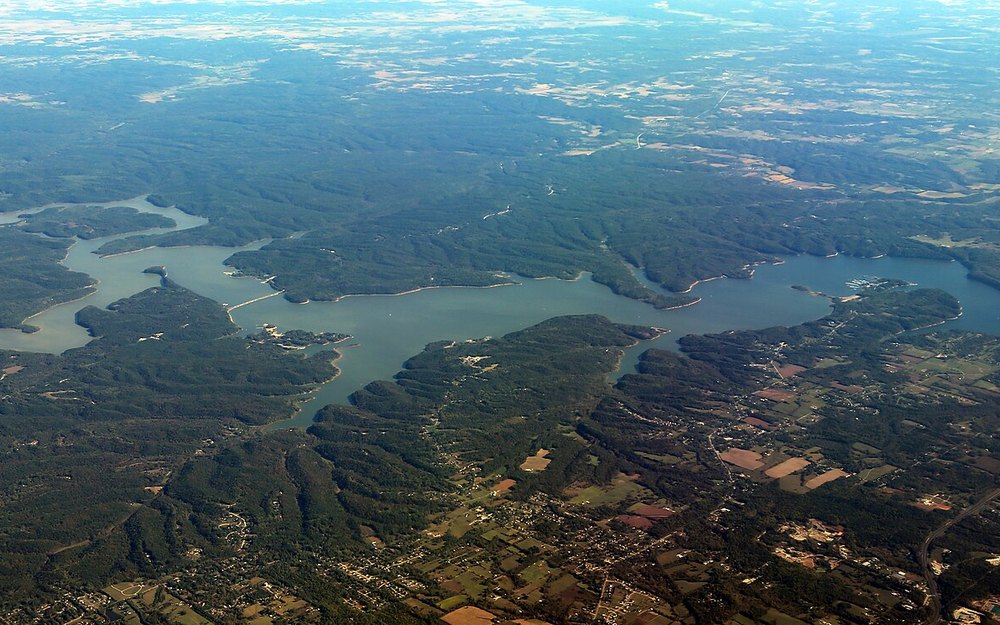
Verified Launch GPS: 39.0489, -86.4494
Spot Water & Access Specs
- Target Species: Channel Catfish (3–18 lb), Flathead Catfish (10–40 lb)
- Lake Footprint: 10,750 acres — Indiana’s largest inland lake, fed by Salt Creek
- Productive Depth: 10 to 24 ft submerged creek bends, causeway riprap & idle-zone timber
- Current Force: Wind-driven reservoir currents + dam discharge; 1–3 oz Santee or egg rigs
- Top Local Baits: Fresh cut gizzard shad, Sonny’s dip bait, chicken liver, live bluegill
- Public Access: Paynetown State Recreation Area, Fairfax SRA, Cutright & Pine Grove ramps
Angler Field Log: Launching at Cutright at first light in mid-June, we idled east into the flooded Salt Creek channel and set four Santee drift rods at 0.6 mph over 16-foot standing timber flats. Using 2-ounce slinky weights to bounce cleanly over old stumps, we boated nine chunky Channel Catfish between 4 and 11 pounds before 9:30 AM.
6. Patoka Lake (Dubois, Orange & Crawford Counties)
Tucked into the wooded hills of Dubois, Orange, and Crawford counties, 8,800-acre Patoka Lake is famous nationwide for its flooded standing timber, submerged roadbeds, and clear-water structure—all of which create prime real estate for big reservoir Flatheads and fat Channel Catfish. Unlike heavily silted prairie lakes, Patoka maintains rich submerged wood cover from the upper Patoka River and Painter Creek arms all the way down to the main dam riprap. During daylight, Channel Catfish cruise the 12- to 20-foot creek-channel lips, while trophy Flatheads ambush bluegill along flooded bridge abutments and timber edges after sundown.
To avoid losing terminal tackle inside Patoka’s dense flooded forest, spool 50- to 65-pound abrasion-resistant braid and use snag-resistant slinky weights or Santee peg floats positioned four inches above a 6/0 or 7/0 circle hook. In late spring and early summer, target the upper Painter Creek and Lick Creek feeder arms after warm rainstorms push stained runoff into the coves. By July and August, anchor right on the edge of 18- to 24-foot main-lake points at dusk with a lively 5-inch bluegill suspended three feet above the timber tops.
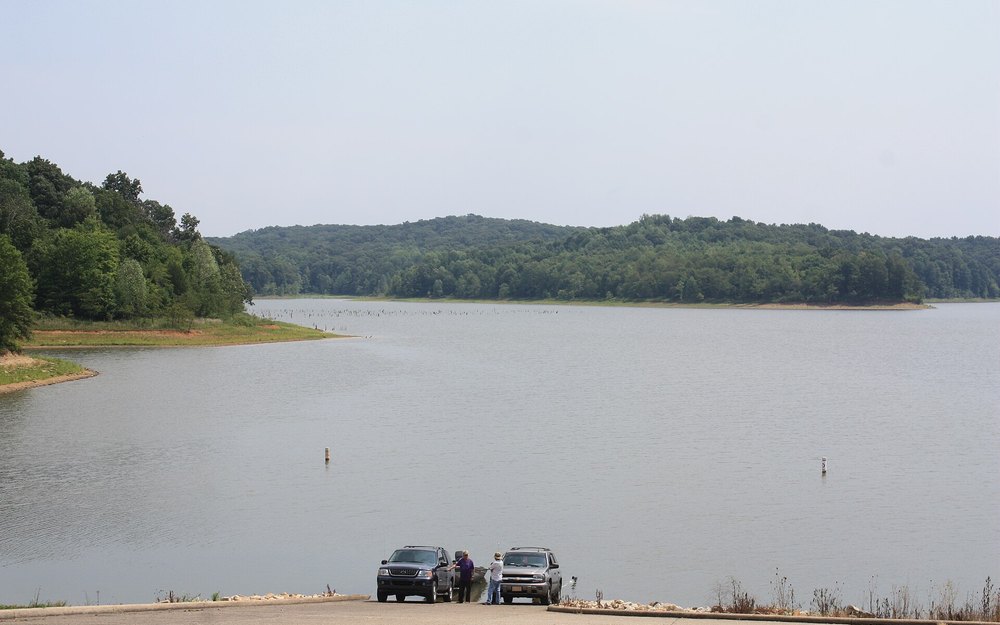
Verified Launch GPS: 38.4317, -86.7089
Spot Water & Access Specs
- Target Species: Channel Catfish (3–16 lb), Flathead Catfish (12–45 lb)
- Lake Footprint: 8,800-acre USACE reservoir surrounded by Hoosier National Forest hills
- Productive Depth: 12 to 28 ft flooded creek channels, standing timber & rock points
- Current Force: Minimal wind drift; 1–2.5 oz slip-sinkers or float-rigged live baits
- Top Local Baits: Live 5-in. bluegill/sunfish for Flatheads; cut shad & liver for Channels
- Public Access: Newton-Stewart SRA, Lick Creek Ramp, Painter Creek & Osborn Ramp
Angler Field Log: Motoring out of Painter Creek Ramp on a calm July evening (79°F surface temp), we side-imaged a drowned roadbed crossing an 18-foot creek bend and dropped two live bluegill under heavy slip-floats just clear of the treetops. Twenty minutes after sunset, the deeper float vanished straight down, producing a 27-pound Patoka Flathead alongside four 5- to 8-pound Channels on cut shad.
7. Mississinewa Lake (Miami & Wabash Counties)
For anglers across north-central Indiana from Peru and Wabash up toward Fort Wayne, 3,180-acre Mississinewa Lake delivers the region’s most reliable reservoir catfishing. Impounded along the Mississinewa River valley, the reservoir features steep limestone-and-clay channel swings, flooded bridge riprap around Red Bridge, and a nutrient-rich upper river inflow near Pearson Mill that draws shad schools every spring and fall. Summer pool levels stabilize above submerged timber bends that hold abundant 3- to 12-pound Channel Catfish and hard-pulling Flatheads.
Bank anglers score heavily along the Red Bridge riprap causeway and Miami SRA shoreline points during May and June using 1- to 2-ounce egg sinkers tipped with chicken liver, shrimp, or fresh cut shad. From a boat, trace the sharp meanders of the old Mississinewa River bed between 14 and 22 feet on sonar, anchoring on the outside bends where driftwood collects against the drop-off. Keep an eye on seasonal USACE winter drawdown schedules—Mississinewa drops significantly in late fall, concentrating remaining fish into the deepest main-basin holes near the dam.
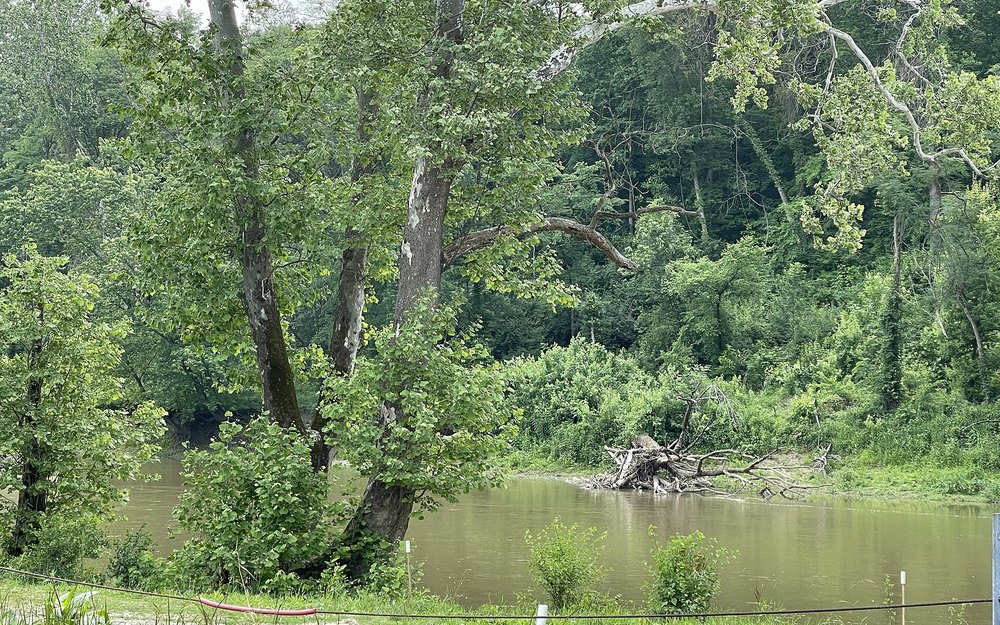
Verified Launch GPS: 40.7131, -85.9481
Spot Water & Access Specs
- Target Species: Channel Catfish (3–15 lb), Flathead Catfish (10–35 lb)
- Lake Footprint: 3,180-acre USACE flood-control reservoir in north-central Indiana
- Productive Depth: 10 to 25 ft submerged Mississinewa River channel bends & bridge riprap
- Current Force: Seasonal flood drawdown currents; 1.5–3 oz egg or flat bank sinkers
- Top Local Baits: Fresh cut shad, raw shrimp, dip baits & live suckers near wood
- Public Access: Miami State Recreation Area Ramp, Red Bridge Marina & Pearson Mill
Angler Field Log: Drifting above Red Bridge in late May with 64°F water, we anchored on an outside river-channel bend dropping from 11 to 21 feet and fanned four rods with fresh cut shad chunks and nightcrawler-shrimp combos. Steady action produced a limit-pace morning of seven Channel Cats averaging 4.5 pounds plus a surprise 19-pound Flathead.
8. Brookville Lake (Franklin & Union Counties)
Carved through the steep wooded hills of Franklin and Union counties along the East Fork of the Whitewater River, 5,260-acre Brookville Lake is southeastern Indiana’s premier deep-reservoir catfish destination. While many anglers visit Brookville for walleye and stripers, the lake’s massive threadfin and gizzard shad population fuels thick, fast-growing Channel Catfish and under-pressured Flatheads—especially in the northern idle zone above Quakertown and along the Dunlapsville causeway riprap. Steep creek-arm drop-offs allow boat and bank anglers alike to reach 15- to 25-foot channel edges with a short cast.
During spring warming trends, concentrate above the Quakertown ramp where the inflowing Whitewater River stains the upper flats and pushes baitfish into 8- to 16-foot timber pockets. In mid-summer, thermal stratification pushes Channel and Flathead Catfish onto rocky main-lake points and the Dunlapsville causeway after dark, where 2-ounce slip-sinker rigs baited with cut shad or live green sunfish outfish processed baits by a wide margin. Remember the 10-fish combined inland reservoir daily bag limit and Indiana’s one-trophy-per-day cap.
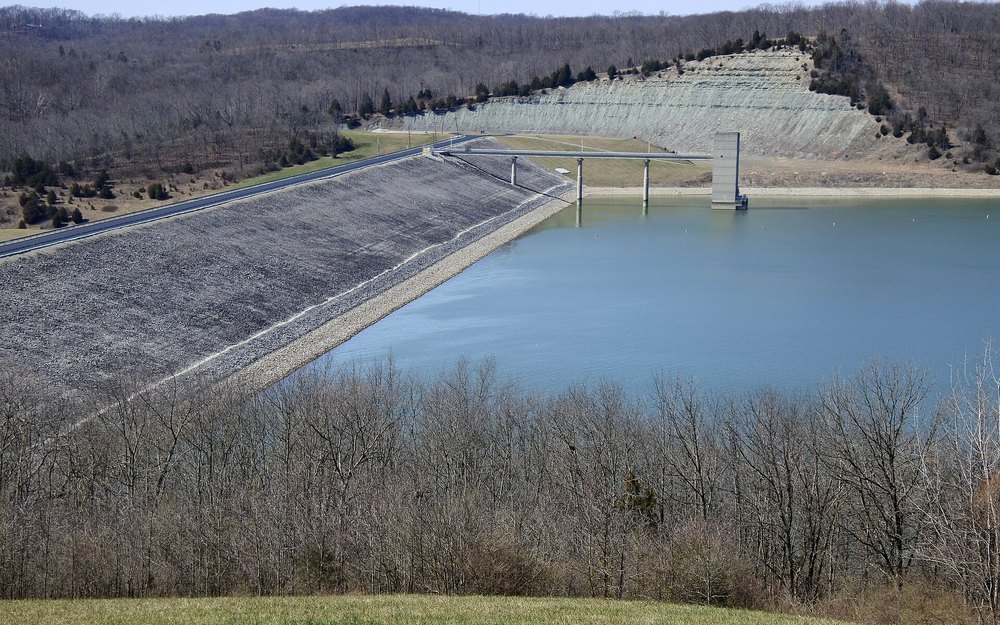
Verified Launch GPS: 39.4425, -85.0019
Spot Water & Access Specs
- Target Species: Channel Catfish (3–16 lb), Flathead Catfish (10–38 lb)
- Lake Footprint: 5,260-acre deep-valley reservoir fed by the East Fork Whitewater River
- Productive Depth: 12 to 30 ft submerged creek arms, causeway rock & upper idle timber
- Current Force: Protected valley wind drift; 1–2.5 oz slip-sinker or Santee float rigs
- Top Local Baits: Fresh cut shad, chicken liver, nightcrawlers, live 5-in. bluegill
- Public Access: Mounds State Recreation Area, Garr Hill, Quakertown & Bonwell Hill ramps
Angler Field Log: Anchoring along a rocky 19-foot drop north of Mounds SRA on a warm June night, we set two live bluegill rods toward the standing timber edge and two cut-shad rods down the main-channel break. We boated six clean 4- to 8-pound Channel Catfish and a stout 22-pound Flathead before midnight under clear skies.
Species Biology, Terminal Rigging & 2026 Tactical Blueprint
Mastering indiana catfishing starts with matching your terminal rig to the water column and bottom snag profile. On the main-stem Ohio River at Cannelton and Newburgh, heavy 6- to 10-ounce flat no-roll sinkers on sinker slides keep fresh bloody skipjack steaks anchored inside 35- to 55-foot scour holes without tumbling into zebra-mussel ledges. When shifting to timber-lined reservoirs like Monroe, Patoka, and Brookville, drop down to 1.5- to 2.5-ounce slinky weights and add a 2.5-inch Santee peg float four inches ahead of a 6/0 or 7/0 inline circle hook to hover cut gizzard shad cleanly above submerged stumps.
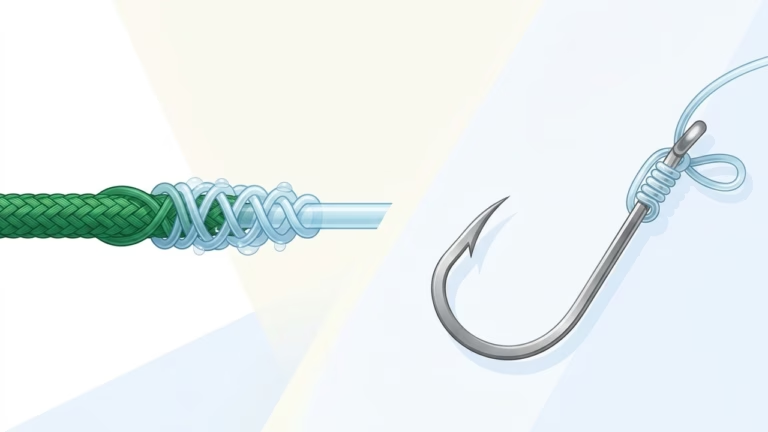
For predatory Flatheads on the Wabash and East Fork White rivers, skip processed stink baits completely and fish lively 5- to 7-inch creek chubs, green sunfish, or bullheads on 50- to 80-pound monofilament leaders just upstream of outside-bend logjams after dark. Need exact sinker weight, spool capacity, or knot strength numbers before tying on? Dial in your terminal setup using our sinker weight calculator, reel line capacity calculator, knot strength matcher, and complete catfish bait guide.
Sourcing Fresh Skipjack Herring & Gizzard Shad on Indiana Waters
Consistent success when targeting trophy catfish in indiana hinges directly on bait freshness. On the Ohio River below Cannelton and Newburgh dams, veteran anglers spend the first hour of dawn casting small 1/16-ounce white curly-tail jigs or silver Sabiki rigs directly into tailrace current boils to load livewells with silver skipjack herring—the single highest-oil, highest-scent cut bait in the Ohio Valley. Slice each skipjack behind the gill plate into thick, palm-sized fillets, keeping the tough skin intact so your 8/0 circle hook stays locked during long casts into four-knot seams. On inland reservoirs like Monroe, Patoka, and Mississinewa, throwing a 6-foot, 3/8-inch-mesh cast net over shallow creek-arm shad schools at daylight yields dozens of lively 4- to 6-inch gizzard shad; keep them chilled over ice slush rather than soaking in warm bucket water so the bloodlines stay bright red and firm on the hook.
Watch Our Heavy River & Santee Drift Catfish Rigging Demonstration
Transitioning smoothly between heavy 8-ounce Ohio River tailrace rigs and snag-free 2-ounce Santee drifts on Monroe or Patoka takes thirty seconds once you dial in leader length and swivel hardware. Watch our rigging demonstration below:
Recommended Indiana Catfish Tackle & Rig Loadout (2026 Field Picks)
From wrenching sixty-pound Ohio River Blues out of Cannelton rock boils to drifting shad across Monroe Lake timber flats, dependable rod backbone and zero-stretch braid keep trophy fish out of submerged cover:
| Gear Component | Recommended Model | Exact Spec (Power / Ratio / LB) | Why It Works in Indiana | Check Live Price |
|---|---|---|---|---|
| Catfish Rod | Ugly Stik Catfish Special 7’6″ MH / Heavy | 7’6″ 1-pc / 2-pc, Heavy Action, 15–50 lb | Glass-graphite tip detects light Channel bites while holding backbone for 8 oz Ohio River leads. | |
| Heavy Reel | Abu Garcia Ambassadeur C3 6500 / Penn Battle IV 6000 | 5.3:1 Gear Ratio, 20–25 lb Drag, Clicker | Loud bait-clicker and brass gears survive Cannelton & Newburgh lock boils and heavy braided drag. | |
| Mainline & Leader | 65–80 lb Braid + 50–80 lb Mono Leader | 0.41 mm Braid + 0.70–0.85 mm Abrasion Mono | Zero-stretch braid pulls hooks cleanly in deep tailraces while thick mono shrugs off mussel beds & timber. | |
| Hooks & Weights | Gamakatsu Octopus Circle 6/0–10/0 + No-Roll Sinkers | Inline Offset-Free Circle + 2–10 oz No-Roll | No-roll flat lead resists rolling in 4-knot Ohio River scour; inline circle hooks pin corner-jaw clean. |
Indiana Seasonal Hydrology & Bite Windows
Across Indiana’s four-season river and reservoir cycle, spring snowmelt, summer thermal stratification, and fall shad migrations create distinct feeding windows:
| Season & Water Temp | Where Catfish Hold in Indiana | Highest-Percentage Presentation | Prime Indiana Water |
|---|---|---|---|
| Spring (50–62°F) | 8–18 ft flooded creek mouths & dam tailraces | 3–5 oz slip-sinker w/ fresh cut gizzard shad & nightcrawlers | Wabash, White & Monroe |
| Summer (72–84°F) | 14–28 ft outside timber bends at night & spillways | Live 5–7 in. chubs/sunfish for Flatheads; Santee cut shad drifts | Patoka, White & Brookville |
| Fall (52–66°F) | 25–48 ft barge wing-dike scour holes chasing shad | 6–8 oz heavy bank lead w/ fresh bloody skipjack steaks | Ohio (Cannelton & Newburgh) |
| Winter (38–46°F) | 35–60 ft deep main-river wintering scour holes | Vertical river bumping or slow-drifted cut shad along ledges | Ohio River & Lower Wabash |
Beyond the eight flagship waters profiled above, anglers in west-central and southeastern Indiana also tap secondary impoundments like Turtle Creek Reservoir in Sullivan County (a heated cooling lake exempt from the 10-fish Channel Catfish bag limit), Raccoon Lake (Cecil M. Harden), and the Tippecanoe River below Lake Shafer and Lake Freeman. In mid-winter, Turtle Creek’s warm power-plant discharge keeps Channel Catfish actively feeding even when surrounding farm ponds lock under ice, while Tippecanoe tailraces yield crisp early-spring Channel and Flathead action before summer canoe traffic peaks.
Reading USGS River Gauges, Barge Safety & Trophy Catch-and-Release
Before trailering to any river ramp for indiana catfishing, check real-time USGS streamgauge readings at Tell City, Evansville, Vincennes, and Shoals. A two- to four-foot rising hydrograph pulls Channel, Blue, and Flathead Catfish aggressively onto flooded mudflats and feeder-creek mouths, whereas rapid five-foot flood crests fill the main channel with uprooted timber that can drag anchor ropes under. On the Ohio River, commercial towboats pushing fifteen-barge strings generate deceptive wake swells and blind spots around river bends; always anchor well outside the marked navigation channel buoys, run bright all-around white anchor lights after dark, and use a quick-release anchor buoy clipped with a heavy carabiner so you can drop and retrieve your anchor line in seconds if a barge shifts course. Finally, when landing 35-inch-plus trophy Blue or Flathead Catfish slated for release under Indiana’s one-fish trophy cap, support the belly horizontally with wet hands rather than hanging heavy fish vertically by the jaw, and revive them facing gently into slow current until they kick free under their own power.
Bank-bound anglers hunting best catfish fishing spots in indiana without a boat still enjoy prime shoreline access across every region of the state: the Tell City Riverfront and Old Lock & Dam Park at Newburgh put deep Ohio River current seams within casting range, Hindostan Falls and Williams Dam Public Fishing Areas give wade-and-shore anglers direct access to East Fork White River Flathead eddies, and riprap causeways at Monroe (SR 446), Mississinewa (Red Bridge), and Brookville (Dunlapsville) concentrate spawning Channel Catfish within 40 feet of gravel parking pull-offs every May and June. Packing sturdy bank rod holders, a 5-gallon bait aerator, and a 36-inch landing net turns any public shoreline riprap into a productive all-night catfish camp.
2026 Indiana DNR (IDNR) Regulations, Ohio River Rules & Licensing
Always confirm current site-specific notices with the Indiana DNR Division of Fish & Wildlife before keeping any catch:
- Ohio River Main Stem (Shared Kentucky Agreement): Unlimited daily bag limit and 13-inch minimum size limit for Blue, Channel, and Flathead Catfish. Trophy Cap: Max 1 Channel Catfish ≥28″, max 1 Blue Catfish ≥35″, and max 1 Flathead Catfish ≥35″ per day. Limb lines and bank poles are strictly prohibited on the Ohio River.
- Inland Rivers & Streams: Unlimited daily bag limit, 13-inch minimum size limit, and the same statewide 1-per-day trophy caps (≥28″ Channel; ≥35″ Blue and Flathead).
- Inland Lakes & Reservoirs: Combined daily bag limit of 10 catfish (Channel, Blue, and Flathead aggregate), no minimum size limit on smaller fish, plus the same 1-per-day trophy caps. Exception: Turtle Creek Reservoir has no daily bag limit on Channel Catfish.
- Licensing & Dam Safety: Valid Indiana Fishing License required for residents and non-residents age 18+. Respect USACE lock exclusion buoys at Cannelton and Newburgh at all times.
Free Interactive Angling Calculators & Rig Matchers
Dial in exact lead weight for Ohio River tailraces, verify reel backing capacity, and match rod power before launching:
Catfish Sinker Weight Calculator
Compute exact pyramid or no-roll sinker ounce weight for 1 to 5-knot Ohio and Wabash currents.
Reel Line Capacity Calculator
Verify exact 65 lb braid yards and mono backing needed on Abu C3 6500 or Penn Battle IV spools.
Solunar & Bite Time Calculator
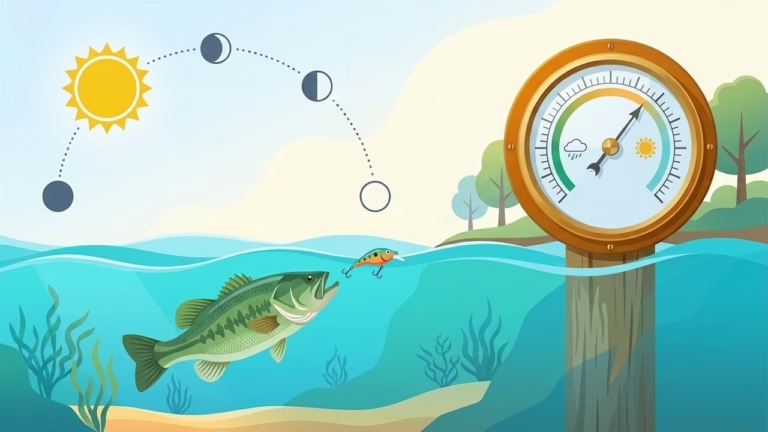
Time your night Flathead and tailrace Blue Catfish sets around peak barometric and moon feeding windows.
Final Captain’s Verdict: Picking Your #1 Indiana Catfish Trip
If your goal is breaking your personal-best Blue Catfish weight in 2026, book your launch below Cannelton Locks & Dam or Newburgh Locks & Dam on the Ohio River with 8-ounce no-roll sinkers and fresh bloody skipjack herring. Chasing a true Hoosier river Flathead? Drift or anchor outside-bend logjams along the Wabash River near Vincennes or the limestone bluffs of the East Fork White River around Shoals with lively creek chubs after dark. For family-friendly boat and bank limits of chunky Channel Catfish, Monroe Lake, Patoka Lake, and Mississinewa Lake deliver fast, dependable action from spring runoff through October.
Indiana Catfishing FAQs
What is the 2026 Indiana DNR catfish bag and size limit?
Indiana splits rules between rivers and inland lakes. On the main-stem Ohio River and inland rivers/streams, there is no daily bag limit and a 13-inch minimum size limit, with a trophy cap of only 1 Channel Catfish 28 inches or longer, 1 Blue Catfish 35 inches or longer, and 1 Flathead Catfish 35 inches or longer per day. On inland lakes and reservoirs, anglers are limited to 10 catfish combined per day (with no minimum size on smaller fish, except Turtle Creek Reservoir which has no limit on Channel Cats) plus the same 1-per-day trophy caps.
Where is the #1 trophy Blue Catfish spot in Indiana?
The Ohio River tailwaters below Cannelton Locks & Dam (Perry County) and Newburgh Locks & Dam (Warrick County) hold Indiana’s highest concentration of trophy Blue Catfish. Cannelton produced the 104-pound, 0-ounce Indiana state-record Blue Catfish in 1999.
What are the best baits for catfish in Indiana rivers vs. reservoirs?
On the Ohio and lower Wabash rivers, fresh bloody cut skipjack herring and gizzard shad dominate for big Blue Catfish, while live 5- to 7-inch green sunfish, creek chubs, and bullheads are unbeatable for Flatheads. On Monroe, Patoka, Mississinewa, and Brookville lakes, fresh cut shad, chicken liver, raw shrimp, and dip baits produce consistent Channel Catfish limits.
Are limb lines and bank poles legal on the Ohio River in Indiana?
No. Under Indiana DNR boundary water regulations for the main stem of the Ohio River, limb lines and bank poles are strictly prohibited. Always check current IDNR regulations before setting any unattended gear on inland tributaries.