In our cold-weather drift logs below the Melvin Price Lock & Dam concrete boils at Alton and sticky July nights anchoring live bullheads outside Sangchris Lake’s heated discharge coves, we have proved time and again why the best catfish fishing spots in illinois belong among the top trophy fisheries in North America. Anchored by massive border waterways—the Mississippi, Ohio, and Wabash rivers—plus high-fertility USACE prairie reservoirs and heated power-plant cooling lakes, Illinois holds triple-digit Blue Catfish (state record 124 lbs 0 oz), 81-pound Flathead Catfish, and 45-pound Channel Catfish within striking distance of every county.
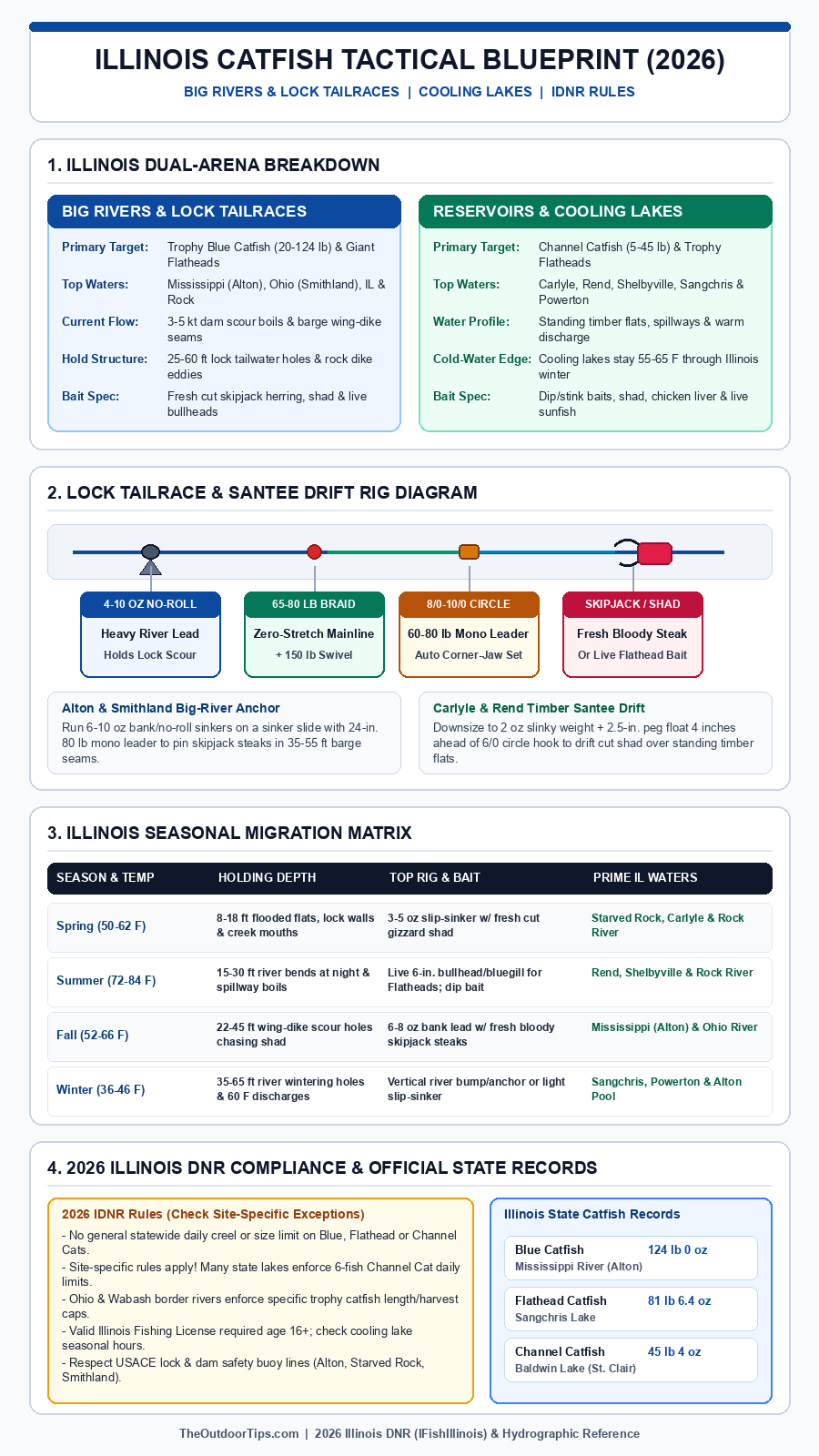
Because Illinois splits cleanly between roaring navigation rivers pushing four-knot lock tailwaters and shallow stump-lined prairie impoundments, productive illinois catfishing requires adapting your terminal weight and bait choices to each watershed. Heavy 8-ounce no-roll sinkers loaded with bloody skipjack herring dominate deep Alton and Smithland wing dikes, whereas 2-ounce Santee Cooper drift rigs with fresh cut gizzard shad shine across Carlyle and Rend timber flats. Below are verified GPS launches, depth contours, 2026 Illinois DNR (IDNR) rules, and winning tactics for catfish in illinois.
✔ 2026 IDNR Rules & Rigs Verified
Illinois Catfishing At a Glance: Top Waters & Winning Rigs
- #1 Trophy Waterway: Mississippi River at Alton (Pool 26) below Melvin Price Locks & Dam (124 lb IL state-record Blue Catfish water; 30–58 ft scour holes).
- Peak Bite Windows: Pre-spawn tailrace surges at 52–64°F (April–May), summer night Flathead runs at 74–84°F, and winter cooling-lake discharges (55–65°F).
- 2026 IDNR Bag & Size Limit: No general statewide daily creel or size limit on Blues, Flatheads, or Channels—except strict site-specific state lake limits (often 6/day) and Ohio/Wabash border trophy rules.
- Primary Winning Setup: Ugly Stik Catfish Special 7’6″ + Abu Garcia C3 6500 / Penn Battle IV 6000 + 65 lb Braid + Heavy Slip-Sinker / Santee Rig.
Best Catfish Fishing Spots in Illinois: 2026 Waterway & GPS Matrix
Before loading the boat or grabbing bank rod holders, compare all eight premier catfish in illinois fisheries across target species, holding depths, proven baits, and exact public launch coordinates below.
| Lake / River Section | Primary Target Species | Key Structure / Dam Tailrace | Best Bait / Rig | Public Ramp & GPS Map |
|---|---|---|---|---|
| 1. Mississippi River: Alton Pool 26 & Melvin Price Dam (Madison) | Blue Catfish (20-124 lb IL Record), Flatheads | 30-58 ft wing dikes, lock scour & barge ledges | 6-10 oz bank lead, 9/0 circle, skipjack/shad | 📍 Map & Ramp (38.8710° N, 90.1530° W) |
| 2. Illinois River: Starved Rock Dam to Peoria (LaSalle/Peoria) | Channel Catfish (4-18 lb), Flathead & Blues | 14-32 ft lock walls, current seams & river bends | 3-5 oz no-roll sinker, cut gizzard shad/liver | 📍 Map & Ramp (41.3250° N, 88.9830° W) |
| 3. Carlyle Lake & Kaskaskia Spillway (Clinton) | Channel Catfish (3-15 lb), Flathead Catfish | 10-22 ft drowned flats & tailwater rock apron | 2 oz Santee drift rig or spillway bottom shad | 📍 Map & Ramp (38.6150° N, 89.3540° W) |
| 4. Rend Lake & Big Muddy Spillway (Franklin/Jefferson) | Channel Catfish, Flathead Catfish (15-45 lb) | 8-20 ft flooded timber edges & dam outflow | 1.5 oz slip-sinker w/ dip bait, shad or bream | 📍 Map & Ramp (38.0370° N, 88.9720° W) |
| 5. Sangchris Lake Cooling Reservoir (Christian/Sangamon) | Flathead (81 lb 6.4 oz IL Record), Channel Cat | 12-28 ft warm discharge arm & riprap points | 2 oz slip-sinker w/ live bluegill & cut shad | 📍 Map & Ramp (39.6330° N, 89.4760° W) |
| 6. Lake Shelbyville & Kaskaskia Tailrace (Shelby) | Channel Catfish, Flathead Catfish (to 40 lb) | 15-32 ft timber points & spillway plunge pool | 2-3 oz Santee rig w/ cut shad & nightcrawlers | 📍 Map & Ramp (39.4080° N, 88.7810° W) |
| 7. Ohio River: Smithland Dam to Golconda (Pope/Massac) | Blue Catfish (25-80+ lb), Trophy Flatheads | 28-60 ft dam boil seams & rock wing dikes | 6-10 oz bank sinker, fresh skipjack steaks | 📍 Map & Ramp (37.1680° N, 88.4310° W) |
| 8. Rock River: Oregon Dam to Dixon (Ogle/Lee) | Channel Catfish (3-14 lb), Flathead Catfish | 10-22 ft low-head dam aprons & limestone ledges | 2-4 oz no-roll rig w/ live chubs & stink bait | 📍 Map & Ramp (42.0120° N, 89.3270° W) |
1. Mississippi River Pool 26 & Melvin Price Locks and Dam: Alton (Madison County)
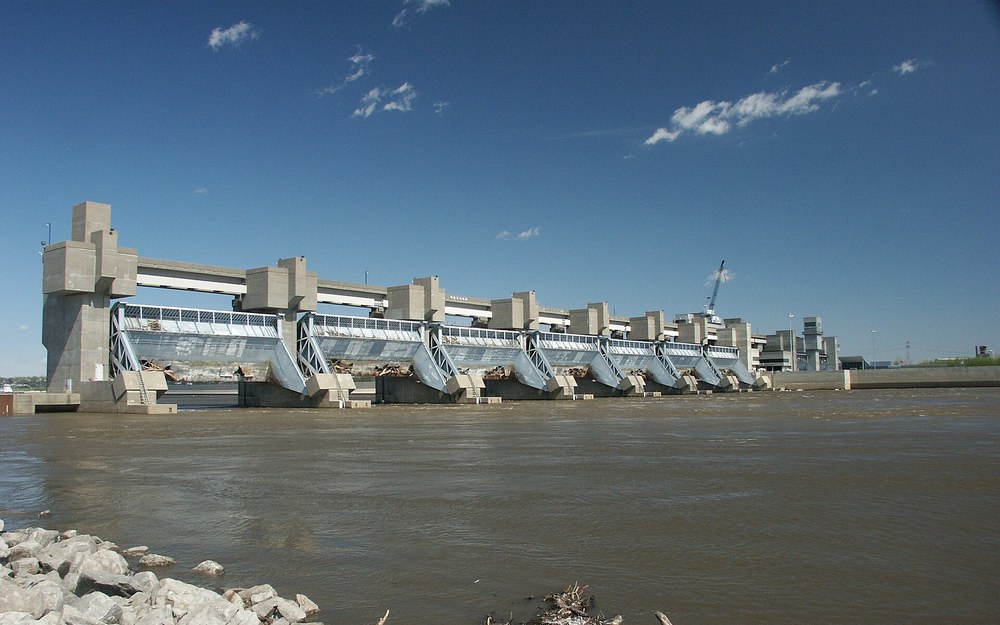
📍 Melvin Price Locks and Dam, Alton IL (GPS: 38.8710° N, 90.1530° W)
Spot Water & Access Specs
- Target Species: World-Class Blue Catfish (25-100+ lb), Flathead Catfish, Channel Catfish
- Record Heritage: 124 lb 0 oz Illinois State Record Blue Catfish (Alton, May 2005)
- Productive Depth: 30 to 58 ft lock tailwater scour holes, rock wing dikes & barge drop-offs
- Current Force: Heavy 3.5 to 5-knot main-channel push demanding 6-10 oz bank sinkers
- Top Local Baits: Fresh skipjack herring steaks, large cut gizzard shad, Asian carp chunks
- Public Launch: Alton Marina / Piasa Harbor, Ellis Island Park & West Alton ramps
Angler Field Log: Drifting controlled vertical three-way rigs along the 44-foot rock scour line trailing the first downstream wing dike below Melvin Price Dam during a brisk October morning, our 8-ounce lead bounced cleanly across gravel ridges until a fresh skipjack head disappeared—locking a 62-pound Blue Catfish onto 80-pound braid.
Stretching immediately downstream of the Illinois and Missouri river confluences at Alton, Mississippi River Pool 26 and the roaring tailwater below Melvin Price Locks and Dam represent true world-championship Blue Catfish territory. In May 2005, angler Tim Pruitt pulled a colossal 124-pound Blue Catfish right out of this Alton reach—briefly claiming the all-tackle world record—and high-definition side-scan units still mark sixty- to ninety-pound river giants stacked inside the concrete scour pockets and rock wing dikes every week of the year.
Success below Alton hinges on respecting massive river hydraulics rather than blind-casting into mid-river barge lanes. Just below the lock walls and stretching down past Wood River and Hartford, submerged Army Corps rock wing dikes jut perpendicular from both banks, carving deep 35- to 55-foot scour trenches immediately behind their downstream tips. Anchor securely upstream of a dike tip or drift parallel along the current seam using a bow-mounted electric motor to match river speed.
To keep baits pinned near bottom without tangling adjacent lines in three- to five-knot boils, run heavy 8-foot MH/H casting rods paired with 65- to 80-pound braided mainline, a 150-pound barrel swivel, 6- to 10-ounce flat bank or no-roll leads, and a 24-inch 80-pound mono leader ending in a forged 9/0 or 10/0 circle hook. Tip that hook with fresh, un-frozen skipjack herring or silver carp cut into thick bloody chunks that broadcast continuous scent trails downriver.
Maintain strict vigilance regarding commercial towboat wakes and USACE restricted safety zones immediately below the dam roller gates—never enter buoyed hazard areas, wear life jackets at all times in cold river seasons, and verify reciprocal Illinois/Missouri border-water licensing rules before drifting across mid-channel state lines.
2. Illinois River: Starved Rock Lock & Dam to Peoria Pool (LaSalle & Peoria Counties)
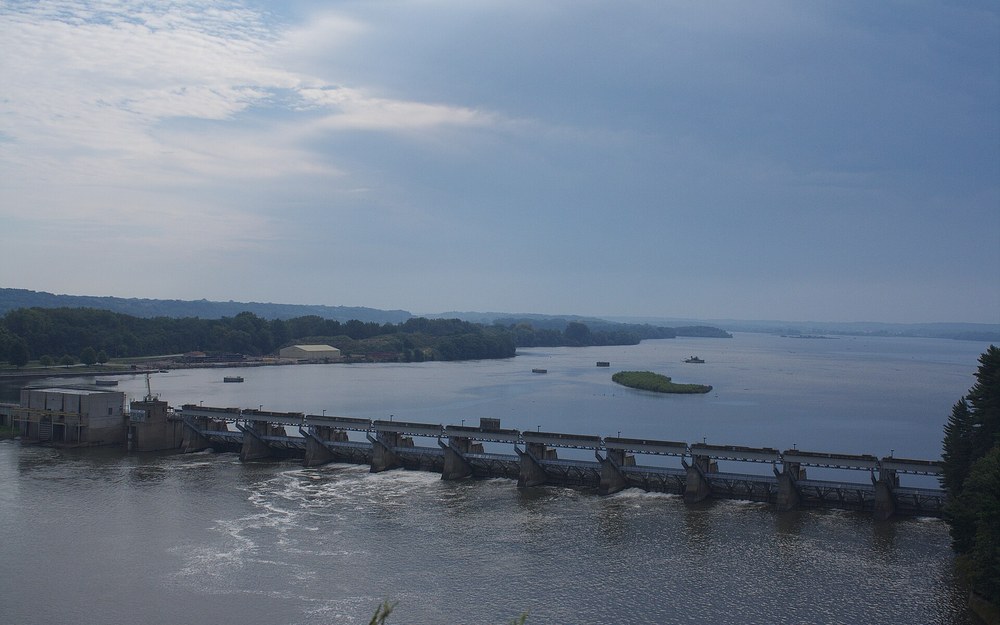
📍 Starved Rock Lock and Dam, Utica IL (GPS: 41.3250° N, 88.9830° W)
Spot Water & Access Specs
- Target Species: Channel Catfish (3-18 lb), Flathead Catfish (15-45 lb), growing Blue Catfish
- Corridor Span: Starved Rock tailwater (RM 231) down through Spring Valley, Hennepin & Peoria
- Prime Structure: Dam apron eddies, barge seawalls, wing dams & Vermilion River mouth
- Top Local Baits: Fresh cut gizzard shad, silver carp strips, chicken liver & live chubs
- Public Access: Starved Rock State Park shoreline, Utica Boat Launch & Detweiller Park
- Season Peak: April-June sauger/shad overlap & warm July-September night bank sessions
Angler Field Log: Setting up along the shaded sandstone seam half a mile below Starved Rock Dam just after a June rain bumped river flow, 4-ounce no-roll weights held fresh gizzard shad fillets steady on a 19-foot rock drop—producing twelve thick Channel Catfish and a 27-pound Flathead before midnight.
Cutting diagonally from the Chicago suburbs clear across central Illinois toward Grafton, the Illinois River anchors the northern half of the state with over two hundred navigable miles of lock tailraces, backwater sloughs, and industrial barge walls. Nowhere does that river concentrate whiskerfish more reliably than the dynamic stretch starting directly below Starved Rock Lock and Dam near Utica and rolling southwest through Spring Valley, Henry, and Peoria Pool.
Spring and early-summer high water pulls thousands of gizzard shad, emerald shiners, and juvenile invasive silver carp tight against the turbulent aprons below Starved Rock’s spillway gates. While walleye and sauger crowds pack the upper seawall in March, sharp catfish anglers target the quieter back-eddy pockets trailing Plum Island and downstream barge mooring cells where 14- to 28-foot gravel ledges drop smoothly away from roaring main-channel flow.
Medium-heavy river tackle fits this corridor cleanly without feeling cumbersome: spool 50-pound braid onto a baitcaster or 5000-size spinning reel, thread a 3- to 5-ounce no-roll sinker above a 30-pound fluorocarbon leader, and bait a 6/0 inline circle hook with freshly netted gizzard shad or bloody silver carp strips. Keep extra live creek chubs or bullheads handy if probing riprap bank pockets at dusk for resident Flatheads.
Shoreline anglers enjoy prime public bank access inside Starved Rock State Park downstream of the visitor center seawall as well as municipal parks in Ottawa and Peoria—just respect USACE safety fencing along the lock wall and check seasonal high-water closures before wading wet sandstone banks.
3. Carlyle Lake & Kaskaskia River Spillway (Clinton County)
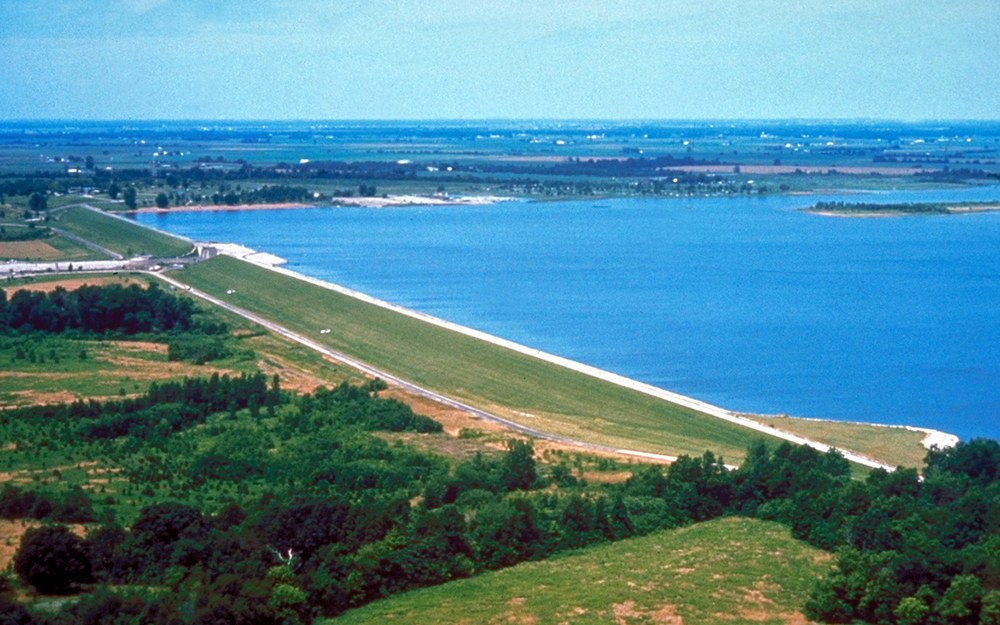
📍 Carlyle Lake Dam West Access, Carlyle IL (GPS: 38.6150° N, 89.3540° W)
Spot Water & Access Specs
- Target Species: Channel Catfish (2-14 lb), Flathead Catfish (15-50+ lb), Bullheads
- Size & Profile: 25,000-acre USACE reservoir (largest inland lake in IL) + famed tailrace
- Prime Structure: Standing timber north of railroad trestle, riprap dam & spillway rock
- Top Local Baits: Dip/punch stink baits, cut shad, nightcrawlers & live sunfish in tailwater
- Public Launch: Dam West Boat Ramp, Eldon Hazlet State Park & South Shore State Park
- Wind Caution: Broad open main lake builds steep 3-ft whitecaps fast in south winds
Angler Field Log: Drifting Santee Cooper peg floats baited with cut gizzard shad across twelve-foot submerged flats north of the Burlington Northern railroad trestle at Carlyle, we hooked steady 3- to 9-pound Channel Catfish all morning before sliding below the spillway apron at dusk for an aggressive 29-pound Flathead.
Covering 25,000 acres across Clinton, Fayette, and Bond counties roughly fifty miles east of St. Louis, Carlyle Lake reigns as Illinois’s largest man-made inland reservoir—and arguably its most forgiving high-numbers factory for family-friendly Channel Catfish alongside heavy tailwater Flatheads. Impounded along the winding Kaskaskia River valley, Carlyle splits neatly into two distinct personalities: a wide, windswept southern main basin and a stump-filled northern timberland above the Burlington Northern railroad trestle.
Inside the main reservoir during summer months, Channel Catfish roam shallow 6- to 16-foot mud flats and submerged roadbeds chasing schooling threadfin and gizzard shad. Drift-trolling lightweight 1.5-ounce slinky-style Santee Cooper rigs across open points out of Eldon Hazlet State Park keeps cut shad elevated just above bottom silt, often triggering multi-rod double-headers in a single drift pass.
Bank fishermen without boats, meanwhile, flock deservedly to the concrete walkways and riprap jetties framing the Carlyle Dam Spillway on the Kaskaskia River immediately below the lake. When USACE floodgates release high summer discharge, huge numbers of Channel Catfish and trophy 20- to 50-pound Flatheads stack tightly along the swirling rocky seams right beneath the dam wall—crushing live bluegill, fresh cut shad, and commercial dip baits soaked on 3-ounce pyramid leads.
Never underestimate Carlyle’s shallow fetch when 20-knot southerly winds howl across ten uninterrupted miles of open prairie water. Stick close to sheltered northern coves near Keyesport or fish the protected tailrace banks if lake whitecaps crest above two feet.
4. Rend Lake & Big Muddy River Spillway (Franklin & Jefferson Counties)
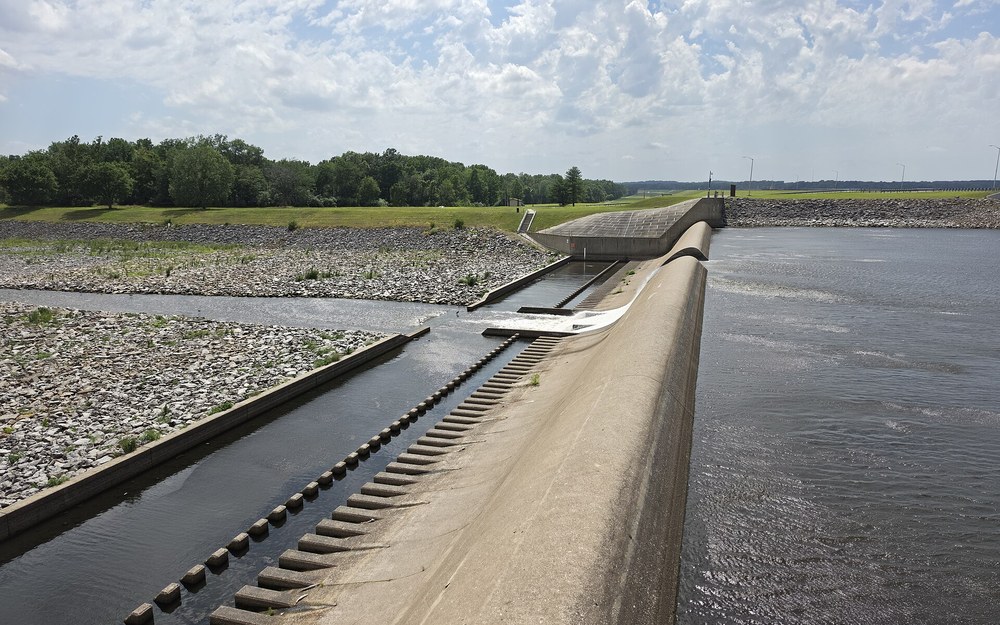
📍 Rend Lake Dam Spillway, Benton IL (GPS: 38.0370° N, 88.9720° W)
Spot Water & Access Specs
- Target Species: Channel Catfish (3-16 lb), Flathead Catfish (15-45+ lb), Yellow Bullheads
- Lake Size & Zone: 18,900-acre Southern IL USACE impoundment; Big Muddy & Casey Fork arms
- Prime Structure: Flooded hardwood timber flats, Route 154 causeway riprap & dam outflow
- Top Local Baits: Fresh cut shad, chicken liver, punch baits & live bream along spillway
- Public Launch: Wayne Fitzgerrell State Park, Dam West Ramp & Sailboat Harbor
- Local Note: Check Southern IL spillway walkways & sub-impoundment seasonal access
Angler Field Log: Working the riprap rip-curl along the Route 154 causeway bridge just as twilight settled over Rend Lake, 1-ounce sliding egg rigs carrying dip-bait worms drew constant runs from 4- to 8-pound Channel Catfish while a heavier live-bream rod set below the Big Muddy spillway hooked a heavy 31-pound Flathead.
Anchoring Southern Illinois just off Interstate 57 near Benton, 18,900-acre Rend Lake blends wide open prairie basins with thousands of acres of standing drowned pin oak and cypress timber across the upper Big Muddy and Casey Fork sub-impoundments. Renowned statewide for spring crappie and white bass, Rend quietly pumps out relentless summer limits of fat Channel Catfish and heavyweight Flatheads both inside the timbered lake arms and immediately below the main dam.
Shoreline anglers enjoy exceptional mileage along the rocky Route 154 causeway bisecting the lake’s middle section. Riprap boulders lining the bridge openings funnel wind-driven shad schools cleanly back and forth between upper and lower basins, letting bank casters pitch simple 1.5-ounce Carolina rigs loaded with chicken liver or shad guts directly into 10- to 16-foot current chutes without owning a boat.
Boat captains launching from Wayne Fitzgerrell State Park can push north into the Casey Fork and Big Muddy timbered channels, anchoring along 12- to 18-foot creek bends where drowned hardwood tops shelter hunting Flatheads. Switch to 50-pound braid and 6/0 circle hooks tipped with live sunfish or large cut shad heads to pull heavy fish straight out of root snags before they wrap standing trunks.
Below the main Rend Lake Dam, the winding Big Muddy tailwater remains a Southern Illinois staple for late-summer bank sessions—just obey all posted USACE tailrace railings and carry bug spray for thick bottomland mosquitoes after sunset.
5. Sangchris Lake State Park Cooling Reservoir (Christian & Sangamon Counties)
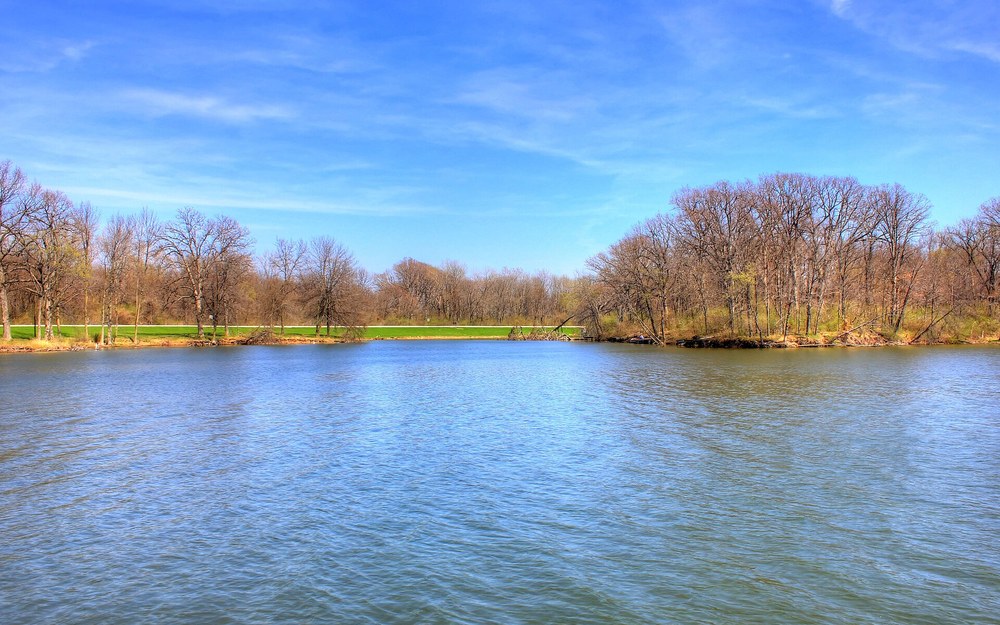
📍 Sangchris Lake State Park Boat Ramp, Rochester IL (GPS: 39.6330° N, 89.4760° W)
Spot Water & Access Specs
- Target Species: Giant Flathead Catfish (to 81+ lb IL Record), Trophy Channel Catfish, Blues
- Record Heritage: 81 lb 6.4 oz Illinois State Record Flathead Catfish (caught Aug 2015)
- Thermal Edge: 2,165-acre power-plant cooling lake holding warm water even in deep winter
- Sister Waters: Powerton Lake (Pekin) & Baldwin Lake (45 lb 4 oz Channel record) share pattern
- Boat HP Cap: Strict 25 HP outboard motor limit on Sangchris Lake (check seasonal hours)
- Public Launch: West Boat Dock, East Boat Dock & Deer Run shoreline access trails
Angler Field Log: Anchoring along a 20-foot submerged creek ledge inside Sangchris Lake’s West Arm on a crisp 42-degree February afternoon while steam drifted softly off the warm discharge plume, fresh cut gizzard shad on 2-ounce slip-sinker rigs produced seven chunky 6- to 15-pound Channel Catfish when every non-heated Illinois lake sat locked under ice.
Tucked southeast of Springfield near Rochester, 2,165-acre Sangchris Lake holds legendary status in Midwestern catfishing history: on August 29, 2015, angler James Klauzer wrestled an astonishing 81-pound, 6.4-ounce Flathead Catfish out of its warm waters to shatter Illinois’s all-tackle state record. Sharing the same power-plant cooling lake magic as sister waters Powerton Lake near Pekin and Baldwin Lake (birthplace of Illinois’s 45-pound-4-ounce Channel Catfish record), Sangchris stays dramatically warmer than ambient central Illinois air through winter and early spring.
That warm-water thermal plume transforms Sangchris into a genuine twelve-month catfish engine. While frozen mid-state farm ponds shut down completely from December through March, gizzard and threadfin shad pack tightly along the heated West and Middle discharge arms, pulling both hungry Channel Catfish and giant Flatheads into predictable 12- to 26-foot channel bends and riprap points.
Because Sangchris enforces a strict 25-horsepower outboard motor limit, the lake stays peaceful and kayak-friendly even on busy weekends. Run simple 1.5- to 2-ounce sliding egg sinkers or Santee peg floats baited with fresh shad strips during cool months, then switch to lively 6-inch bluegill pinned on 6/0–8/0 circle hooks tight to flooded timber points once summer heat spikes.
Always verify Sangchris Lake’s seasonal IDNR boat-launch hours and waterfowl hunting closures each autumn before trailering out—and double-check site-specific state park creel caps posted at the West and East Dock kiosks.
6. Lake Shelbyville & Kaskaskia Dam Tailrace (Shelby County)
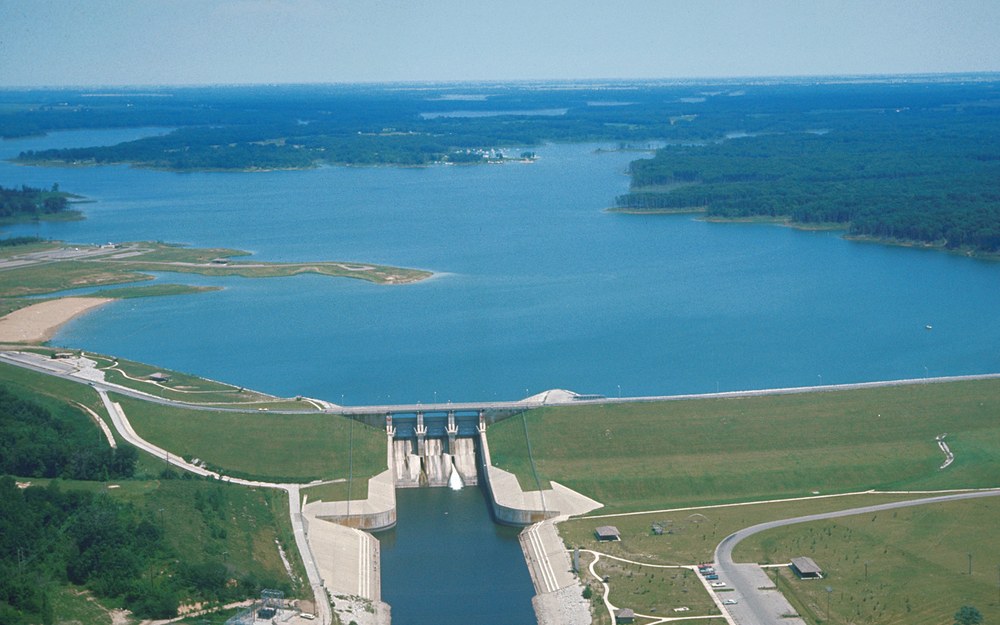
📍 Lake Shelbyville Spillway, Shelbyville IL (GPS: 39.4080° N, 88.7810° W)
Spot Water & Access Specs
- Target Species: Channel Catfish (3-15 lb), Flathead Catfish (15-45 lb), White Bass
- Lake Size & Zone: 11,100-acre steep-sided reservoir upriver of Carlyle on the Kaskaskia River
- Prime Structure: Sand Creek & Lithia Springs timber points, 15-30 ft drops, dam plunge pool
- Top Local Baits: Cut gizzard shad, nightcrawlers, chicken liver & live sunfish in spillway
- Public Launch: Dam West / Spillway Access, Eagle Creek State Park & Wolf Creek Park
- Technique Tip: Slow drift Santee rigs along mid-lake 18-ft clay humps during summer winds
Angler Field Log: Easing along the steep timbered points outside Lithia Springs on a warm July evening, drifting 2-ounce Santee rigs baited with cut gizzard shad across 18- to 24-foot creek channel drop-offs yielded nine thick Channel Catfish plus a stout 22-pound Flathead tucked tightly against a submerged oak root ball.
Impounding the upper Kaskaskia River in scenic Shelby County, 11,100-acre Lake Shelbyville offers noticeably steeper limestone bluffs, deeper creek valleys, and clearer water than shallow prairie lakes to its south. While famous across Central Illinois for walleye and muskie, Shelbyville’s flooded oak coves and turbulent spillway tailrace hold dense, fast-growing populations of Channel Catfish and hard-fighting Flatheads.
Inside the main reservoir around Eagle Creek State Park, Wolf Creek, and Lithia Springs, summer catfish suspend along defined 15- to 28-foot submerged creek channel edges where warm surface winds push shad schools against main-lake points. Drifting 2-ounce Santee Cooper peg-float rigs at 0.5 mph keeps fresh cut shad hovering cleanly above drowned timber branches.
Just below Shelbyville Dam, the narrow, rock-lined Kaskaskia River spillway gives shore anglers front-row access to hungry fish concentrated by heavy bottom-release dam currents. Cast 3-ounce flat bank sinkers loaded with live bluegill or cut shad along the outer rock seams trailing the concrete apron, keeping drags tightened to steer big Flatheads clear of jagged riprap edges.
Check seasonal USACE lake pool fluctuations before launching at shallow upper-river ramps near Findlay, and obey posted shoreline safety railings along the Shelbyville spillway bank.
7. Ohio River: Smithland Locks & Dam to Golconda (Pope & Massac Counties)
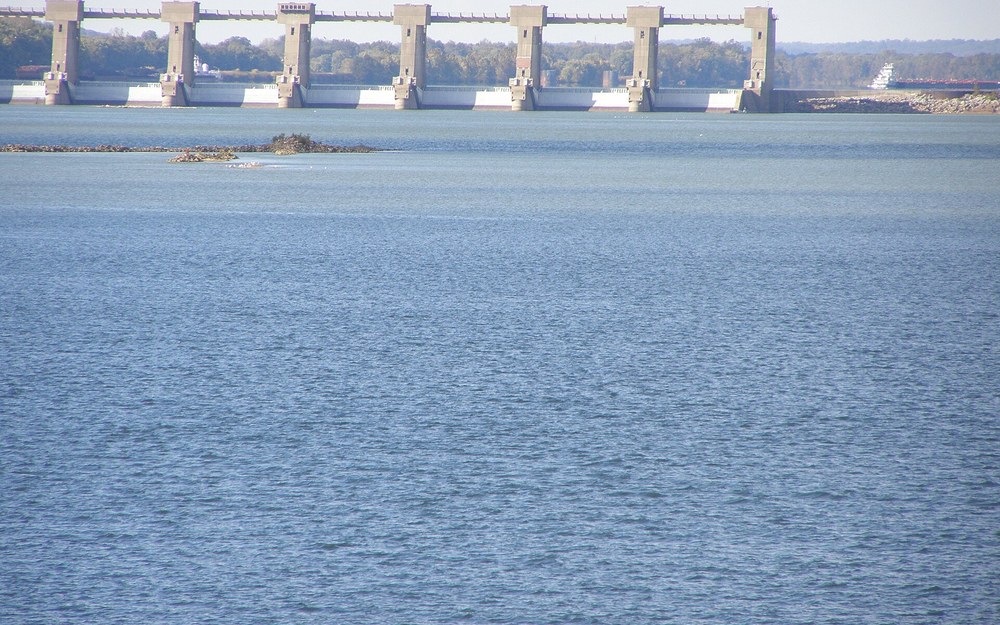
📍 Smithland Locks and Dam, Brookport IL (GPS: 37.1680° N, 88.4310° W)
Spot Water & Access Specs
- Target Species: Giant Blue Catfish (25-85+ lb), Trophy Flatheads (20-60 lb), Channels
- Border Corridor: Smithland Pool (Golconda) down past Smithland Dam & Brookport to Cairo
- Prime Structure: 40-65 ft lock scour holes, limestone bluff ledges & submerged rock dikes
- Top Local Baits: Fresh skipjack herring, live gizzard shad, large bloody sucker chunks
- Public Launch: Golconda Marina (Lusk Creek), Brookport Ramp & Fort Massac State Park
- 2026 Border Rule: Verify strict Ohio/Wabash border trophy catfish length & daily limits!
Angler Field Log: Bumping heavy 8-ounce bank sinkers carrying fresh-caught skipjack herring down a 42-foot limestone shelf three miles below Smithland Locks and Dam, our clicker screamed violently mid-drift—bringing a battle-scarred 49-pound Ohio River Blue Catfish cleanly to the net under crisp autumn skies.
Forming Illinois’s dramatic southern border from the Wabash River mouth past Golconda and Brookport down to the Mississippi confluence at Cairo, the lower Ohio River delivers raw, big-water trophy catfishing on an epic scale. Anchored by the massive Smithland Locks and Dam near Brookport—which creates the expansive Smithland Pool backed up past Lusk Creek at Golconda—this deep, current-swept corridor produces monstrous 40- to 85-pound Blue Catfish and bruising Flatheads year-round.
Above Smithland Dam out of Golconda Marina, submerged creek mouths like Lusk Creek and flooded shoreline timber flats offer calmer shelter during brisk winds while holding steady numbers of 15- to 40-pound Blues on 20- to 35-foot drops. Below the dam toward Brookport and Metropolis, however, strong current seams, deep bluff holes, and heavy gravel bars demand full-scale river bumping or anchor setups with 6- to 10-ounce bank sinkers and fresh skipjack herring.
Critical Border Regulation Check: Because the Ohio River forms a shared boundary with Kentucky, Illinois enforces specialized border-water harvest regulations along both the Ohio and Wabash rivers—including specific daily trophy-fish caps limiting how many oversized Blue or Flathead Catfish above threshold lengths an angler may keep per day. Always consult the latest official IDNR Illinois Fishing Information digest before harvesting river trophies here.
Stay alert for giant coal barges navigating wide river bends, wear PFDs whenever boating below Smithland Dam’s turbulent boil line, and use heavy landing nets built for fish exceeding fifty pounds.
8. Rock River: Oregon Dam to Dixon & Rockton (Ogle & Lee Counties)
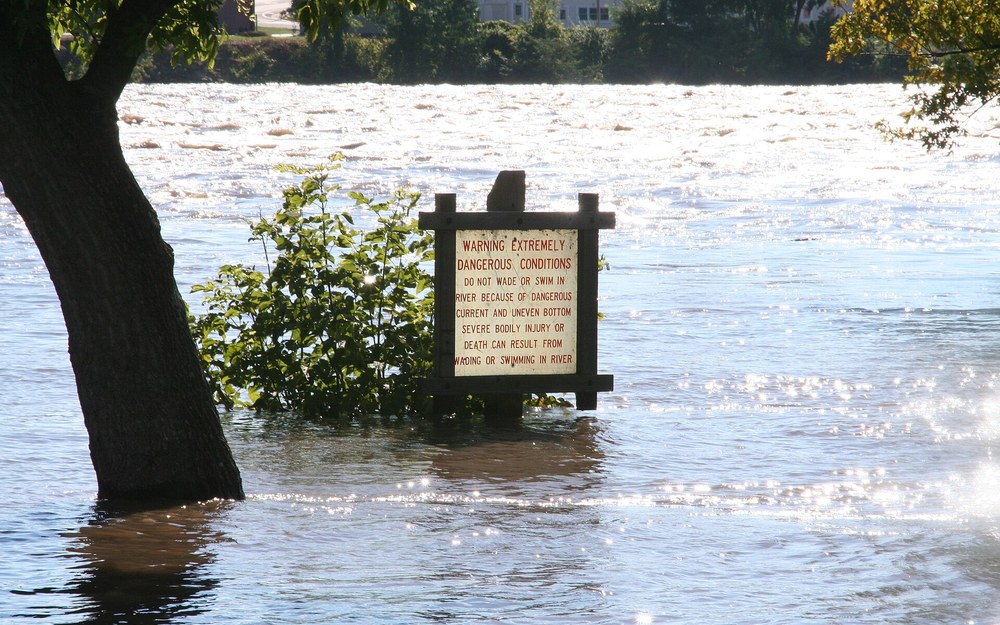
📍 Oregon Dam Rock River, Oregon IL (GPS: 42.0120° N, 89.3270° W)
Spot Water & Access Specs
- Target Species: Channel Catfish (3-14 lb), Flathead Catfish (12-40+ lb), Smallmouth bycatch
- Corridor Span: Rockton & Rockford dams down through Oregon, Castle Rock & Dixon dams
- Prime Structure: Low-head dam tailwaters, submerged limestone shelves, bridge pilings & logs
- Top Local Baits: Live creek chubs, bullheads, dip/stink baits, cut sucker & nightcrawlers
- Public Access: Oregon Park West / Dam bank, Castle Rock State Park & Lowell Park (Dixon)
- DANGER WARNING: NEVER boat or wade near deadly hydraulic rollers beneath low-head dams!
Angler Field Log: Anchoring safely two hundred yards downstream of Oregon Dam along a shaded 14-foot limestone undercut near Castle Rock State Park as evening cooled the water, 3-ounce flat sinkers holding lively five-inch creek chubs produced three muscular 16- to 28-pound Rock River Flatheads before midnight.
Flowing gracefully southwest from the Wisconsin border through Rockford, Oregon, Dixon, and Sterling toward the Mississippi River at Quad Cities, the Rock River stands unchallenged as Northern Illinois’s finest free-flowing riverine catfish corridor. Punctuated by scenic limestone bluffs around Castle Rock State Park and historic low-head dams at Rockton, Rockford, Oregon, and Dixon, the Rock blends shallow riffles with deep, log-filled 12- to 22-foot pools teeming with husky Channel Catfish and hard-pulling Flatheads.
From the public shore embankments below Oregon Dam (Oregon Park West) down through Dixon’s Lowell Park, anglers need far lighter gear than on the Mississippi or Ohio rivers. A 7-foot-6 medium-heavy rod spooled with 40-pound braid, 2- to 4-ounce no-roll sinker, and 5/0–7/0 circle hook easily holds current seams behind submerged bridge pilings and limestone ledges. Soak punch dip baits or nightcrawlers on warm afternoons for nonstop Channel Catfish, then switch to lively creek chubs or small bullheads tucked near shoreline logjams after dark for 15- to 40-pound Flatheads.
Life-Saving Low-Head Dam Warning: Illinois’s low-head river dams—including Oregon, Dixon, and Sterling—create deadly submerged recirculating hydraulic boils immediately below their concrete spillways that drown boats and waders instantly. Always obey warning signs, fish well downstream from safe public banks or anchored boats, and never paddle or motor close to a dam face.
Illinois Catfish Species Identification & 2026 Terminal Rig Blueprint
Telling apart young pale Blue Catfish from slate-dark spawning male Channel Catfish is essential across shared Illinois border waters where trophy length caps apply to specific species. Check these exact biological markers before measuring or releasing a fish:
- Blue Catfish (IL State Record: 124 lbs 0 oz — Mississippi River, Alton): Silvery-blue to pale slate back with zero dark body spots, pronounced shoulder hump on giants, and a flat, straight-edged anal fin containing 30 to 36 distinct rays. Dominates Mississippi Pool 26, Ohio River, and lower Illinois River.
- Flathead Catfish (IL State Record: 81 lbs 6.4 oz — Sangchris Lake): Broad flat head with protruding lower jaw, mottled yellow-brown camouflage skin, and a squared-off, un-forked tail. Prefers live sunfish, chubs, or bullheads tight to wood jams and dam rocks statewide.
- Channel Catfish (IL State Record: 45 lbs 4 oz — Baldwin Lake): Deeply V-forked tail, scattered black spots on younger fish (old males turn dark slate-blue), and a distinctly rounded, curved anal fin with 24 to 29 rays. Abundant in Carlyle, Rend, Shelbyville, Sangchris, and Rock River.
Watch Our Heavy River & Santee Drift Catfish Rigging Demonstration
Switching cleanly between heavy 8-ounce Alton lock-tailrace anchors and snag-free 2-ounce Santee drifts on Carlyle Lake takes thirty seconds once you dial in leader length and swivel hardware. Watch our rigging demonstration below:
Recommended Illinois Catfish Tackle & Rig Loadout (2026 Field Picks)
From battling sixty-pound Mississippi River Blues in four-knot lock boils to drifting shad across Carlyle Lake flats, dependable rod backbone and zero-stretch braid keep big fish out of rock dikes and timber:
| Gear Component | Recommended Model | Exact Spec (Power / Ratio / LB) | Why It Works in Illinois | Check Live Price |
|---|---|---|---|---|
| Heavy River / Tailrace Rod | Ugly Stik Catfish Special 7’6″ MH/H | 20-50 lb Line, 1-6 oz Lure, E-Glass Composite | Handles violent 8-oz Alton Mississippi current drags while loading smoothly on 80 lb river giants. | |
| Primary River Baitcaster | Abu Garcia Ambassadeur C3 6500 | 5.3:1 Gear Ratio, 245 yd / 14 lb, Bait Clicker | Brass gearing and loud freespool clicker hold up to relentless Ohio River bumping and Carlyle drift trolling. | |
| Spillway Spinning Reel | Penn Battle IV 6000 Spinning Reel | 5.6:1 Ratio, 25 lb HT-100 Carbon Drag | Blasts long casts across Starved Rock and Carlyle Dam aprons when wing-wall bank fishing. | |
| Braid & Circle Hook Kit | 65 lb PowerPro + Gamakatsu 8/0 Circle | 65 lb Braid + Non-Offset Inline 8/0 Circle | Cuts brisk Mississippi River flow cleanly while auto-setting in the corner of trophy Blue and Flathead jaws. |
Illinois Seasonal Hydrology & Bite Windows
Across Illinois’s four-season climate, river temperature swings and warm-water power-plant discharges create year-round opportunities when you follow seasonal depth shifts:
| Season & Water Temp | Where Catfish Hold in Illinois | Highest-Percentage Presentation | Prime Illinois Water |
|---|---|---|---|
| Spring (50-62°F) | 8-18 ft flooded flats, lock walls & warming creek mouths | 3-5 oz slip-sinker w/ fresh cut gizzard shad & nightcrawlers | Starved Rock, Carlyle & Rock River |
| Summer (72-84°F) | 15-30 ft river bends at night & oxygenated spillway aprons | Live 5-7 in. chubs/bream for Flatheads; Santee cut shad drifts | Rend Lake, Shelbyville & Rock River |
| Fall (52-66°F) | 22-45 ft wing-dike scour holes chasing migrating shad schools | 6-8 oz heavy bank lead w/ fresh bloody skipjack steaks | Mississippi (Alton) & Ohio River |
| Winter (36-46°F / 60°F Warm) | 35-65 ft deep river holes & heated cooling-lake discharge arms | Vertical river bumping or stationary 2 oz shad chunks on ledges | Sangchris, Powerton & Alton Pool |
Beyond the eight flagship waters profiled above, Illinois anglers also leverage secondary heated power-plant impoundments like Baldwin Lake (home of the 45-pound, 4-ounce state-record Channel Catfish), Powerton Lake near Pekin, and Braidwood Lake when mid-winter air temperatures drop below freezing. Because warm discharge flumes concentrate threadfin and gizzard shad against riprap dikes, Channel and Blue Catfish remain metabolically active even in January and February. On eastern border waters along the Wabash River, spring high-water pulses push pre-spawn Flatheads and Blues out of deep main-channel logjams into flooded tributary mouths, where anchoring just downstream of gravel-bar drop-offs with fresh cut shad or live bullheads intercepts migrating fish before summer low-water stages lock them back into deep outside-bend timber holes.
2026 Illinois DNR (IDNR) Regulations, Site Exceptions & Border Rules
Always verify specific lake and river regulations on the official IDNR IFishIllinois portal prior to keeping any catch:
- No General Statewide Limit — Crucial Exceptions Apply: Under standard IDNR statewide rules, there is no general daily creel or minimum length limit on Blue, Flathead, or Channel Catfish. However, dozens of state-managed lakes, conservation areas, and reservoirs enforce strict site-specific limits (commonly 6 Channel Catfish daily)—check park kiosks first.
- Ohio & Wabash River Border Trophy Rules: Shared border rivers (Ohio & Wabash) enforce special length thresholds and daily trophy caps limiting how many oversized catfish above threshold lengths may be harvested per day.
- Valid Illinois Fishing License (Age 16+): Required for all non-exempt anglers aged 16 and older; check reciprocal license coverage along shared Mississippi, Ohio, and Wabash boundary waters.
- USACE Lock & Low-Head Dam Safety: Never cross safety buoy lines below Mississippi, Illinois, or Ohio lock dams, and stay strictly clear of deadly hydraulic rollers beneath Rock River low-head dams (Oregon, Dixon, Sterling).
Dial In Your Rigging Numbers With Our Interactive Fishing Calculators
Guessing lead weights below Melvin Price Lock & Dam or misjudging how much 65-pound braid fits onto a 6500 baitcaster costs lost fish. Dial in exact rigging math before launching:
River Sinker Weight Calculator
Calculate exact 2 to 10 oz lead weights needed to hold bottom cleanly across Alton, Starved Rock, and Smithland currents.
Reel Line Capacity Calculator
Verify exact mono backing and 50–80 lb braid spool capacity for Ambassadeur C3 6500 and Penn 6000 reels.
Knot Strength & Line Matcher
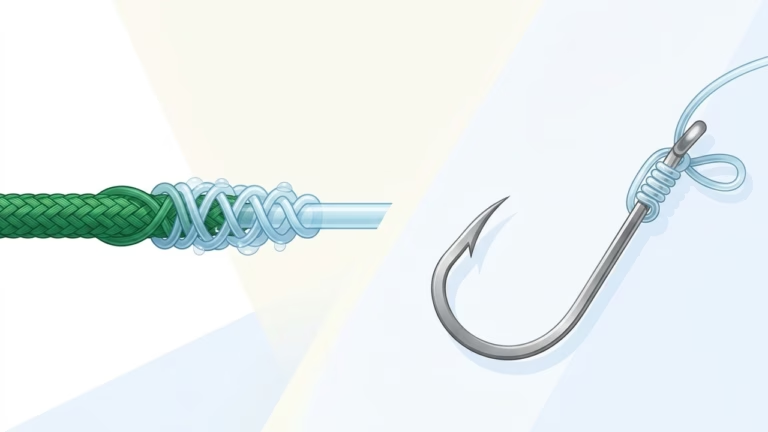
Pair slick braided mainlines cleanly to heavy 60–80 lb monofilament shock leaders without losing break strength.
Rod Power & Action Matcher
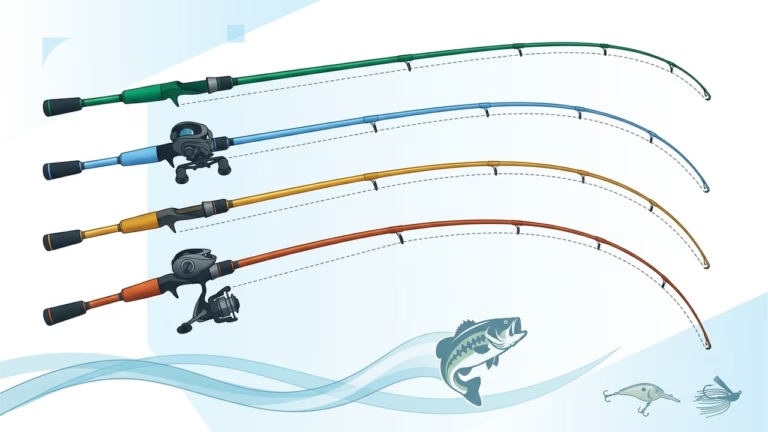
Match heavy composite blanks for 10-oz river bumping against flexible Santee drift rods for Carlyle Lake.
Solunar & Barometric Timer
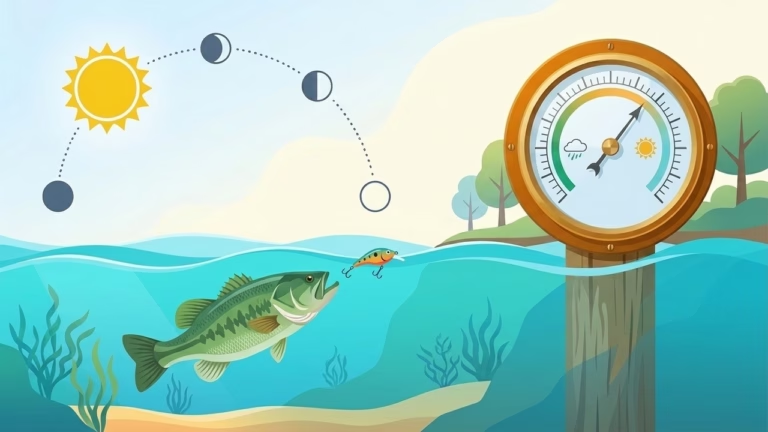
Line up overhead moon-transit windows and falling Midwest fronts over your favorite Illinois river pool.
Complete Catfish Bait Guide
Compare fresh skipjack herring, cut gizzard shad, silver carp strips, and live Flathead bait rigging.
Final Captain’s Verdict: Picking Your Ideal 2026 Illinois Catfish Run
From massive border navigation rivers to prairie cooling lakes, choosing among the best catfish fishing spots in illinois comes down cleanly to your trophy vs. numbers goals:
- For True 50–100+ lb Record-Class Blue Catfish: Point the boat toward Alton Pool 26 below Melvin Price Dam on the Mississippi River or the Ohio River below Smithland Dam with 8-oz bank leads and fresh bloody skipjack steaks.
- For Winter Fishing & Giant Flatheads: Hit heated Sangchris Lake (25 HP cap; 81+ lb Flathead state-record water) or sister cooling lakes Powerton and Baldwin for unbeatable cold-season shad bites.
- For High-Numbers Drift & Bank Action: Work Santee Cooper cut-shad drifts across Carlyle, Rend, and Shelbyville lakes, or chase summer Flatheads and Channels along the Illinois and Rock rivers while checking IDNR site-specific creel rules.
Illinois Catfishing FAQs: State Records, IDNR Rules & Cooling Lakes
What is the daily creel limit and minimum size limit for catfish in Illinois in 2026?
Under general IDNR statewide rules, there is NO statewide daily creel limit and NO minimum length limit on Blue, Flathead, or Channel Catfish. However, many state park lakes and conservation areas enforce strict site-specific regulations (commonly a 6-fish daily limit on Channel Catfish), and the Ohio and Wabash border rivers enforce special trophy-fish length limits—always verify local IDNR postings before keeping fish.
Where were Illinois’s state-record Blue, Flathead, and Channel Catfish caught?
Illinois’s official state-record Blue Catfish weighed 124 lbs 0 oz and was caught in the Mississippi River near Alton (Madison County) in May 2005. The state-record Flathead Catfish weighed 81 lbs 6.4 oz from Sangchris Lake (August 2015), and the state-record Channel Catfish weighed 45 lbs 4 oz from Baldwin Lake (February 1987).
What is the best bait and sinker weight for Alton on the Mississippi River?
Fresh, unfrozen skipjack herring or bloody gizzard shad steaks dominate Alton Pool 26 and Smithland Dam on the Ohio River. Because currents regularly push 3.5 to 5 knots, pack 6- to 10-ounce flat bank or no-roll sinkers paired with 65–80 lb braided mainline and 9/0–10/0 inline circle hooks.
Where can I catch catfish in Illinois during freezing winter weather?
Illinois’s power-plant cooling lakes—especially Sangchris Lake near Rochester, Powerton Lake near Pekin, and Baldwin Lake—hold warm 55–65°F water near their discharge arms through mid-winter, keeping gizzard shad and hungry Channel and Blue Catfish biting long after non-heated lakes freeze over.