In our seasonal reservoir anchoring logs soaking oily mackerel steaks along 45-foot submerged river ledges in San Diego County and drifting 5-ounce pyramid bank sinkers through outgoing four-knot tidal currents near Rio Vista, we have confirmed firsthand that Golden State whiskerfish waters rival the finest catfish destinations anywhere in North America. Across desert canyon impoundments, massive valley irrigation reservoirs, volcanic Northern California natural lakes, and tide-sculpted estuary channels, the best catfish fishing spots in California harbor multiple freshwater giants capable of snapping medium saltwater tackle in half. Anchored by San Vicente Reservoir’s awe-inspiring 113 lb 4.8 oz state-record blue catfish and flanked by fertile delta scour holes teemingly packed with white and channel catfish, serious california catfishing offers year-round action spanning every latitude from Oregon to the Mexican border.
Pursuing trophy catfish in california requires adjusting your hardware to match wildly contrasting aquatic environments. In Northern California’s volcanic basins and tidal sloughs, anglers deploy compact 1- to 3-ounce sliding sinkers and clam or shad baits along shallow tule drop-offs, while Southern California blue catfish hunters routinely drop 4-ounce Santee Cooper suspension rigs baited with whole mackerel into 55-foot summer thermocline corridors. Farther east along the Arizona border, rushing Colorado River tailrace hydraulics demand heavy fiberglass flathead blanks and live bait presentations tight against riprap eddies. In this comprehensive 2026 field manual, our veteran guides lay out verified GPS launch coordinates, bottom structure breakdowns, seasonal thermocline depth charts, terminal rig mechanics, and official California Department of Fish and Wildlife (CDFW) rules across the state’s top eight catfish waters.
✔ CDFW Regs & Boat Ramps Verified
California Catfish Fisheries Snapshot: Records, Gear & Seasonality
Top 8 California Catfish Waterways Matrix (GPS & Boat Ramp Directory)
Before trailering your boat or packing shoreline rod holders across California’s diverse basins, align your waterway choice with target species, seasonal water clarity, and access restrictions. Southern California water-supply reservoirs strictly enforce Quagga mussel dry-boat inspections and daylight operating windows, whereas the sprawling Sacramento–San Joaquin Delta and Lower Colorado River reward all-night river anchoring. Use the verified directory below to plan launch routes and pinpoint peak structure zones.
| Waterway & Region | Primary Species | Best Season | Access Type | Prime Depth & Structure | Boat Ramp / Access Map |
|---|---|---|---|---|---|
| Clear Lake: Redbud & The Narrows (Lake County • NorCal) |
Channel Catfish, White Catfish, Brown Bullhead | May – September (24-Hr Access) | Free Public Boat Ramps & Shoreline Parks | 6–24 ft tule pockets, Rodman Slough mud flats, dock pilings |
📍 Google Maps ↗ |
| San Vicente Reservoir (San Diego County • SoCal) |
Trophy Blue Catfish (to 113 lb), Channel Catfish | April – November (Summer Night Opens) | City Marina Ramp & Rentals (Thu–Sun + Night Events) | 25–65 ft flooded creek channels, Kimball & Barona points |
📍 Google Maps ↗ |
| Sacramento–San Joaquin Delta (Rio Vista & Franks Tract) |
White Catfish, Channel Catfish, Blue Catfish | March – November (Year-Round Action) | Public Launches, Bridges & Levee Banks | 12–38 ft tidal scour bends, riprap levees, sunken islands |
📍 Google Maps ↗ |
| Irvine Lake & Santa Ana River Lakes (Orange County • SoCal) |
Channel Catfish (to 25+ lb), Blue Catfish | May – October (Summer Derby Season) | Shoreline & Float Tube Access (Fee Lakes) | 8–30 ft Sierra Cove mudlines, submerged dam riprap |
📍 Google Maps ↗ |
| Lower Colorado River: Palo Verde & Blythe (Riverside & Imperial Counties) |
Flathead Catfish (to 60+ lb), Channel Catfish | April – October (Nocturnal Peak) | County Boat Ramps & Weir Bank Access | 10–32 ft diversion weir eddies, outside sandbar holes |
📍 Google Maps ↗ |
| Isabella Lake: Engineer Point & Kern Inlet (Kern County • Southern Sierra) |
Channel Catfish, Bullhead | May – October (24-Hr Access) | USFS Paved Ramps & Shoreline Flats | 8–26 ft flooded brush flats, Kern River inflow delta |
📍 Google Maps ↗ |
| Diamond Valley Lake (Riverside County • SoCal) |
Blue Catfish (to 60+ lb), Channel Catfish | April – November (Daylight Hours) | MWD Paved Ramp & Marina (Strict Quagga Rule) | 30–70 ft East Dam quarry ledges, submerged saddle humps |
📍 Google Maps ↗ |
| Sacramento River: Verona to Knight’s Landing (Sutter & Yolo Counties) |
Channel Catfish, White Catfish | April – October (Day & Night) | Public River Ramps & Levee Bank | 10–28 ft Feather River confluence seams, clay cutbanks |
📍 Google Maps ↗ |
In-Depth Breakdown: The 8 Best Catfish Fishing Spots in California
1. Clear Lake: Redbud Park, The Narrows & Rodman Slough (Lake County)
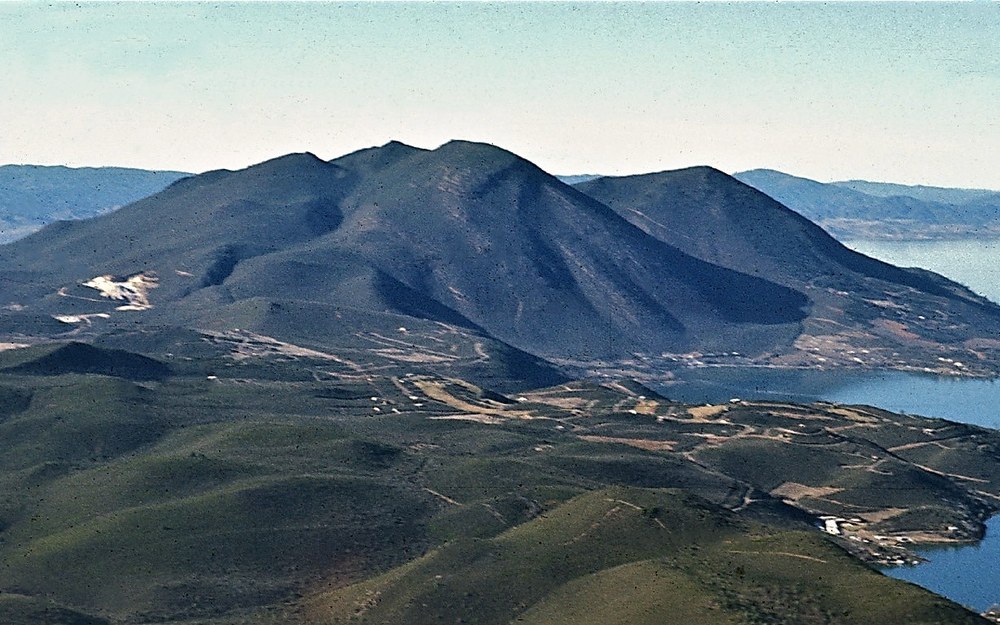
Photo: Mount Konocti overlooking Clear Lake’s fertile basin — California’s largest natural freshwater lake holds extraordinary densities of heavy channel and white catfish.
📍 Redbud Park Boat Ramp Clearlake CA (GPS: 38.9580° N, 122.6320° W)
Target Species: Channel Catfish (3–18 lbs), White Catfish (2–8 lbs), Brown Bullhead
Productive Depth: 6–24 ft tule edges, Redbud Arm rock piles & Rodman Slough channels
Prime Structure: Dense tule reed walls, submerged boat docks, volcanic rock points
Top Bait: Whole freshwater clams, frozen anchovies, jumbo Pacific mackerel, live mudsuckers
Angler Field Log: Clear Lake channel catfish gorge heavily on massive Clear Lake hitch, threadfin shad, and invasive Asian clams throughout summer. We anchor along the outside weedline of Rodman Slough or off the rocky drop at The Narrows just before sunset, casting 1.5-ounce sliding sinkers rigged with whole clam meat and salty anchovies right up against the tule edges.
Covering roughly 43,000 surface acres in the coastal mountains two hours north of San Francisco, Clear Lake is the undisputed volume-and-weight champion for Northern California channel and white catfish. Geologists estimate this shallow, volcanic basin is North America’s oldest lake, and its nutrient-dense water generates one of the highest forage fish biomasses in the western hemisphere. Because 95 percent of visiting tournament anglers chase largemouth bass, Clear Lake’s immense population of 5- to 15-pound channel catfish faces remarkably light angling pressure, allowing multi-dozen catch nights throughout the warmer months.
Hydrologically, Clear Lake splits into three distinct fishing zones: the broad, shallow Upper Arm to the north, the wind-swept Oaks Arm, and the deep, narrow Lower Arm stretching southeast toward Redbud Park in Clearlake. During late spring warming (58°F to 68°F), mature white and channel catfish push tightly into shallow 5- to 9-foot tule marshes around Rodman Slough, Cache Creek, and Clear Lake State Park. Look for wind-blown shorelines where warm afternoon breezes stack baitfish and decaying organic scent directly against reed pockets and floating boathouses.
Once July temperatures push shallow surface water past 78°F, reposition to The Narrows—the pinched transition bottleneck separating the Upper Arm from the southern arms near Soda Bay. Here, water drops abruptly from 8 feet down to 22-foot volcanic rock ledges bathed by wind-driven current. Anchor your hull 30 yards upwind of a point drop-off and deploy 40- to 50-pound braided lines with 2-ounce sliding flat sinkers and 6/0 circle hooks. Bank anglers without boats score consistently off the Redbud Park fishing pier and the Oaks Beach shoreline at dusk using heavy spinning rods and sliding clam rigs. For boaters, note that Lake County requires every trailerable hull to display a valid Clear Lake Quagga/Mussel inspection sticker obtained at local bait shops or ramp stations before launching.
2. San Vicente Reservoir: Kimball Arm & Barona Arm (San Diego County)
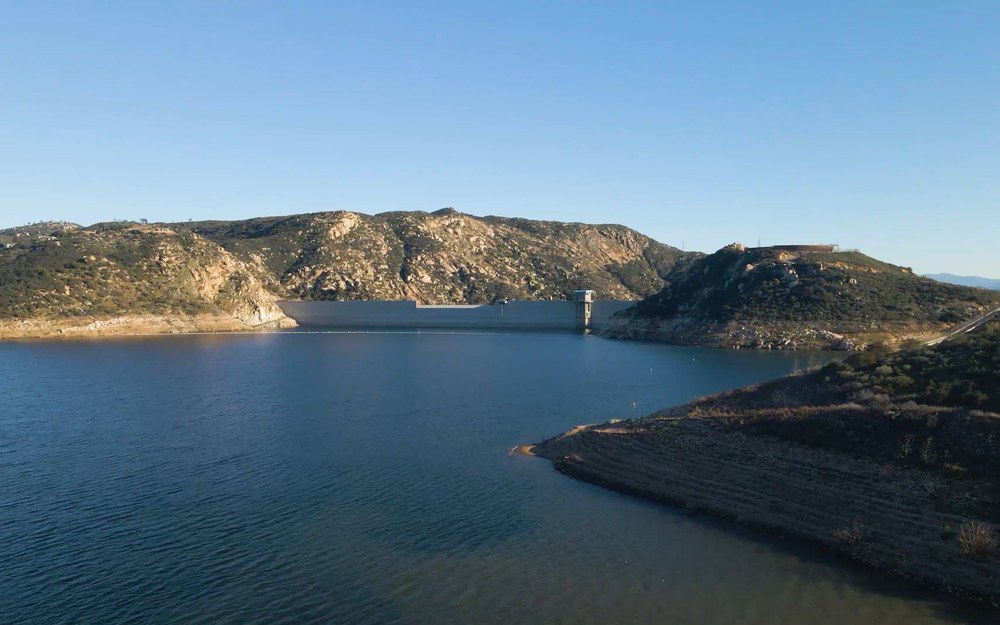
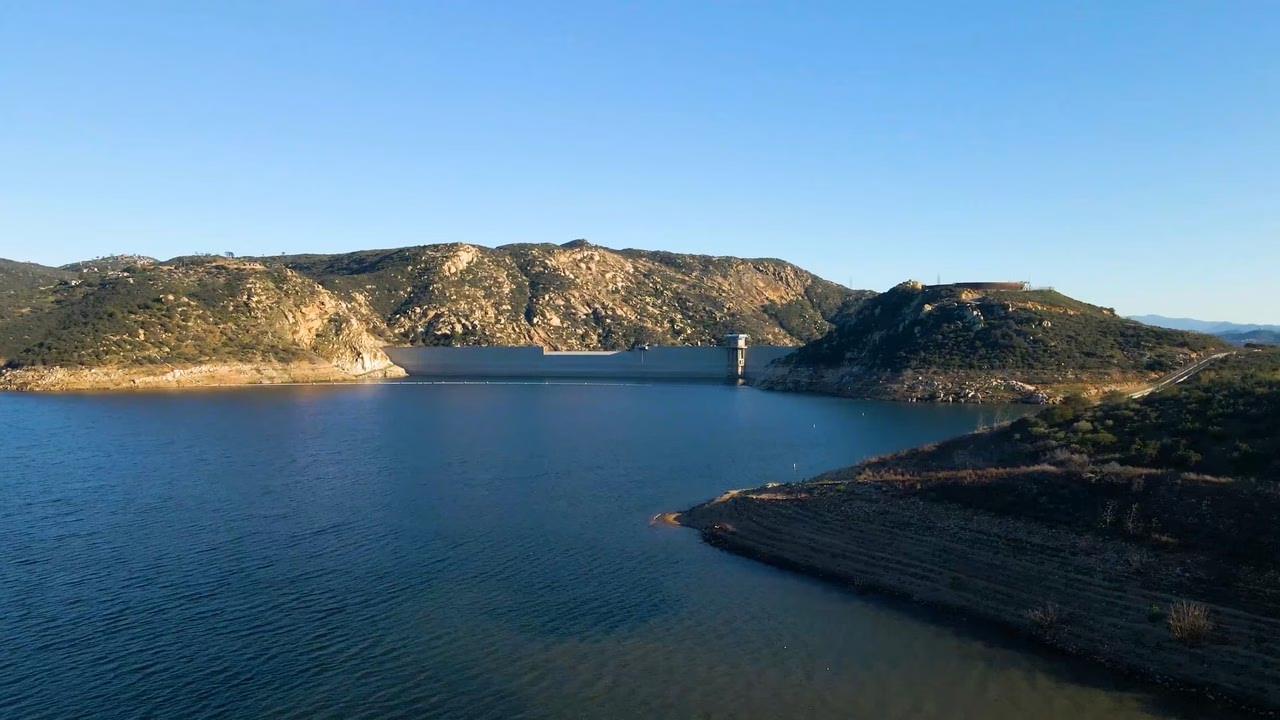
Photo: San Vicente Reservoir in San Diego County — site of California’s 113 lb 4.8 oz state-record blue catfish and home to massive deep-water reservoir predators.
📍 San Vicente Reservoir Marina Lakeside CA (GPS: 32.9150° N, 116.9240° W)
Target Species: Trophy Blue Catfish (20–90+ lbs), Channel Catfish (4–18 lbs)
Productive Depth: 25–65 ft flooded creek beds, granite saddles & deep arm coves
Prime Structure: Steep canyon drop-offs, submerged roadbeds, Kimball & Barona point ledges
Top Bait: Fresh-cut Pacific mackerel, California sardines, rainbow trout heads, nightcrawlers
Angler Field Log: Deep San Diego reservoirs experience crisp summer thermocline stratification around 28 to 36 feet. Never anchor randomly in 70 feet of dead-oxygen water. Instead, watch your side-imaging sonar along Kimball Arm points, anchor on the shallow side of the ledge, and cast 3-ounce Santee Cooper mackerel rigs right onto the 30-foot oxygenated contour line.
Tucked into the chaparral hills north of Lakeside in San Diego County, San Vicente Reservoir stands on the Mount Rushmore of American trophy blue catfish waters. In October 2008, local angler Steve Price landed an astonishing 113 lb 4.8 oz California state-record blue catfish from these deep canyon corridors—a fish that still anchors San Vicente’s reputation among big-water specialists nationwide. Following the San Vicente Dam Raise Project completed in the mid-2010s, the reservoir’s surface footprint expanded to roughly 1,600 acres, inundating tens of thousands of tons of fresh coastal sagebrush, boulders, and drowned oak trees that fueled another explosive biological surge in baitfish and giant catfish growth.
Blue catfish in San Vicente follow predictable seasonal depth migrations governed by water temperature and dissolved oxygen. During spring (March through May), trophy fish prowl 15- to 30-foot flats in Toll Road Cove, Barona Arm, and the upper Kimball Arm chasing threadfin shad schools and stocked rainbow trout. As Southern California summer heat locks in from June through October, San Vicente stratifies sharply. Mature 30- to 70-pound blue cats retreat just above the thermocline (typically 25 to 42 feet deep) along steep granite points and submerged roadbeds, staging periodic feeding raids up onto 15-foot shelves during evening hours and the City of San Diego’s special summer night-fishing openings.
Standard bass gear has no business here. You must spool conventional baitcasters or size-6000 heavy spinning reels with 65- to 80-pound braided mainline, coupled with a 30-inch 60-pound abrasion-resistant monofilament leader and an 8/0 or 10/0 octopus circle hook. A 2-inch cigar float pegged 6 inches ahead of the hook lifts big oily chunks of Pacific mackerel just clear of submerged oak stumps and jagged boulders. Before leaving home, confirm San Vicente’s operating calendar via the City of San Diego Lakes Recreation office (typically open Thursday through Sunday during standard daylight hours, plus scheduled summer Thursday night sessions) and pass mandatory dry-boat inspection at the gate.
3. Sacramento–San Joaquin River Delta: Rio Vista & Franks Tract (Sacramento & Contra Costa Counties)
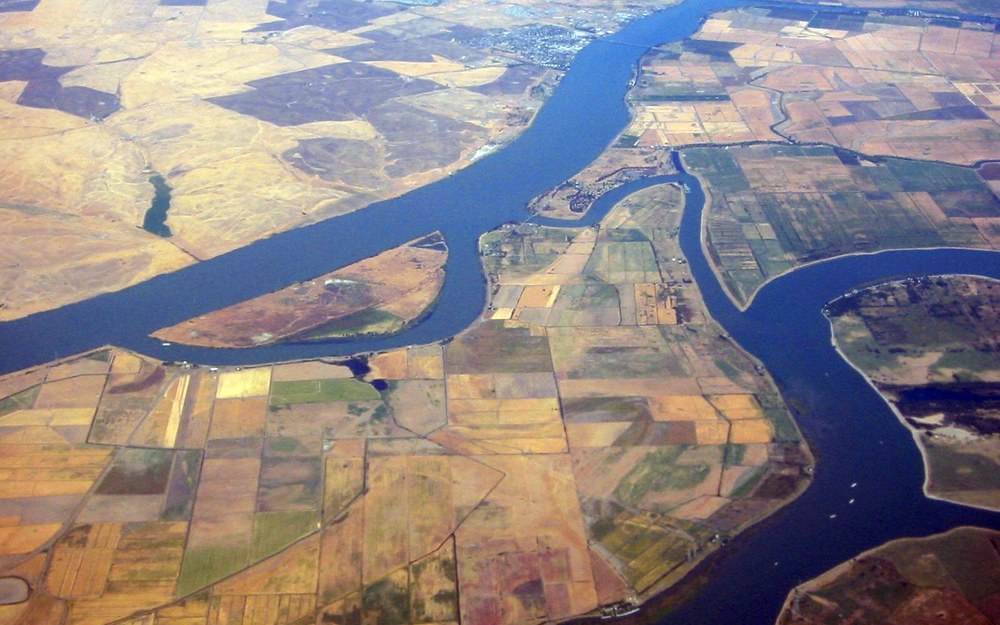
Photo: The labyrinthine tidal sloughs of the Sacramento–San Joaquin River Delta — over 1,000 miles of levees, riprap bends, and brackish scour holes holding endless white and channel cats.
📍 Rio Vista Public Boat Launch Rio Vista CA (GPS: 38.1550° N, 121.6850° W)
Target Species: White Catfish (high numbers), Channel Catfish (to 20+ lbs), Occasional Blue Catfish
Productive Depth: 12–38 ft main channel drop-offs, levee bridge pilings & flooded tract cuts
Prime Structure: Granite riprap banks, submerged island breaks at Franks Tract, Steamboat Slough bends
Top Bait: Whole pile worms, ghost shrimp, salted anchovies, cut Pacific sardines, fresh clams
Angler Field Log: The Delta is a living tidal river system where current velocity flips every six hours. During dead slack tide, bites shut off completely; the instant the outgoing ebb pulls water off flooded tule islands at Franks Tract or down the main Sacramento ship channel below Rio Vista, we drop 4- to 6-ounce pyramid sinkers onto the 20-foot shelf edge and double up on rods.
Stretching across 1,100 miles of interconnected waterways from Sacramento south to Stockton and west toward Suisun Bay, the Sacramento–San Joaquin River Delta forms the largest inland tidal estuary on the Pacific Coast. While the Delta draws worldwide notoriety for springtime striped bass runs and heavy largemouth flipping, veteran local meat anglers quietly harvest staggering numbers of white catfish and hard-fighting channel catfish from this massive aquatic maze nearly 300 days a year.
Tidal flow is the sole master clock of Delta catfishing. Because Pacific ocean tides drive brackish water far upstream past Rio Vista, Sherman Island, and Three Mile Slough, catfish stack in current-protected seams immediately adjacent to heavy flow. The finest summer and autumn bites erupt along the steep granite riprap drop-offs bordering Brannan Island, Decker Island, and the deep entrance cuts feeding Franks Tract State Recreation Area. Focus during the first three hours of the incoming flood tide or the middle push of a strong outgoing ebb tide, when rushing water flushes river shrimp, threadfin shad, and clams off shallow tule flats right past staged predators in 15- to 32-foot scour trenches.
Light tackle fails quickly in six-knot ebb current packed with floating water hyacinth. Rig stout 7’6″ to 8’0″ medium-heavy casting or surf-style Delta rods with 50-pound braid and 4- to 6-ounce pyramid or flat bank sinkers on a heavy slider clip—always check our Catfish Sinker Weight & River Current Calculator before heading out on spring-tide full moon days. Shore anglers enjoy effortless road-edge access along Highway 160 levees south of Isleton, the Rio Vista public fishing pier, and Brannan Island State Recreation Area banks using fresh pile worms or anchovy fillets.
4. Irvine Lake & Santa Ana River Lakes (Orange County)
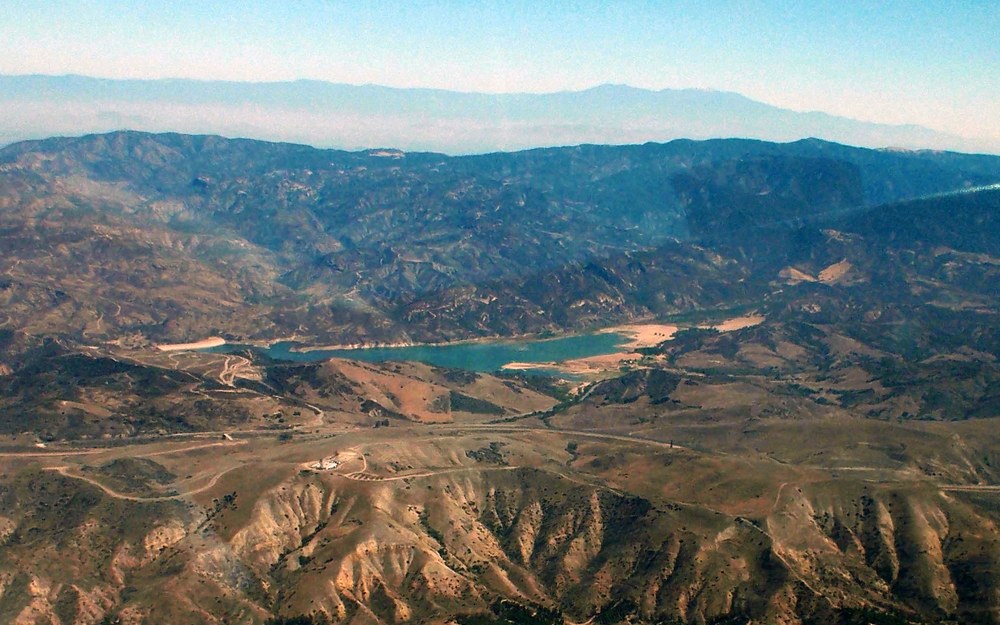
Photo: Irvine Lake nestled in Orange County’s Santiago Canyon — legendary Southern California shoreline fishery famous for trophy channel and blue catfish.
📍 Irvine Lake Silverado CA (GPS: 33.7780° N, 117.7240° W)
Target Species: Trophy Channel Catfish (8–30+ lbs), Blue Catfish (to 50+ lbs)
Productive Depth: 8–30 ft submerged brush lines, Woody’s Cove & Boat Dock Cove drop-offs
Prime Structure: Submerged oak flats, main-dam riprap, Santiago Creek inflow flats
Top Bait: Cut Pacific mackerel soaked in garlic/shrimp oil, chicken liver in spawn mesh, marshmallow-mealworm combos
Angler Field Log: On heavily pressured Orange County waters like Irvine Lake and nearby Santa Ana River Lakes, over-sized 8/0 hooks and stiff wire leaders get dropped immediately by educated stocked trophies. Downsize cleanly: spool 15- to 20-pound abrasion-resistant fluorocarbon leader behind a 1-ounce sliding egg sinker and pin mackerel fillets onto a sharp 2/0 or 3/0 octopus hook.
Nestled against the Santa Ana Mountains near Silverado in Orange County, Irvine Lake (Santiago Reservoir) alongside neighboring Santa Ana River Lakes (SARL) represents Southern California’s iconic urban-edge catfishing proving ground. Historically responsible for producing colossal 40-pound channel catfish and frequent 50-pound-class blues, Irvine Lake remains managed by OC Parks as a high-access shoreline and non-gas-vessel fishery where shore casters sit toe-to-toe with genuine wall-hanger whiskerfish every summer.
Currently at Irvine Lake, anglers operate from paved shoreline stretches, sandy beaches, and kayaks/float tubes along Woody’s Cove, the West Shore Flats, and Trout Island without needing a high-horsepower bass boat. In warmer months from May through September, massive channel catfish patrol shallow 6- to 15-foot shorelines before sunrise and during twilight runs, homing in on scent trails washed off bait-fishermens’ anchored lines. Casting parallel to old submerged creek channels off Santiago Flats or suspending cut mackerel 25 yards off the West Shore point riprap puts baits straight into cruising travel lanes.
Complementing Irvine Lake just 20 minutes west in Anaheim, Santa Ana River Lakes schedules dedicated summer night-fishing sessions and heavy stockings of trophy Nebraskan/Midwestern channel and blue catfish reaching 15 to 40 pounds. On both Orange County fisheries, scent dispersion matters far more than brute lead weight: marinating fresh-cut Pacific mackerel chunks in crushed garlic, shrimp oil, or anise sauce drastically shortens wait times. Because Irvine Lake is shoreline/hand-launch oriented, check current OC Parks gate schedules, day-use parking permits, and state sport-fishing license requirements ahead of arrival.
5. Lower Colorado River: Palo Verde, Blythe & Imperial Canals (Riverside & Imperial Counties)
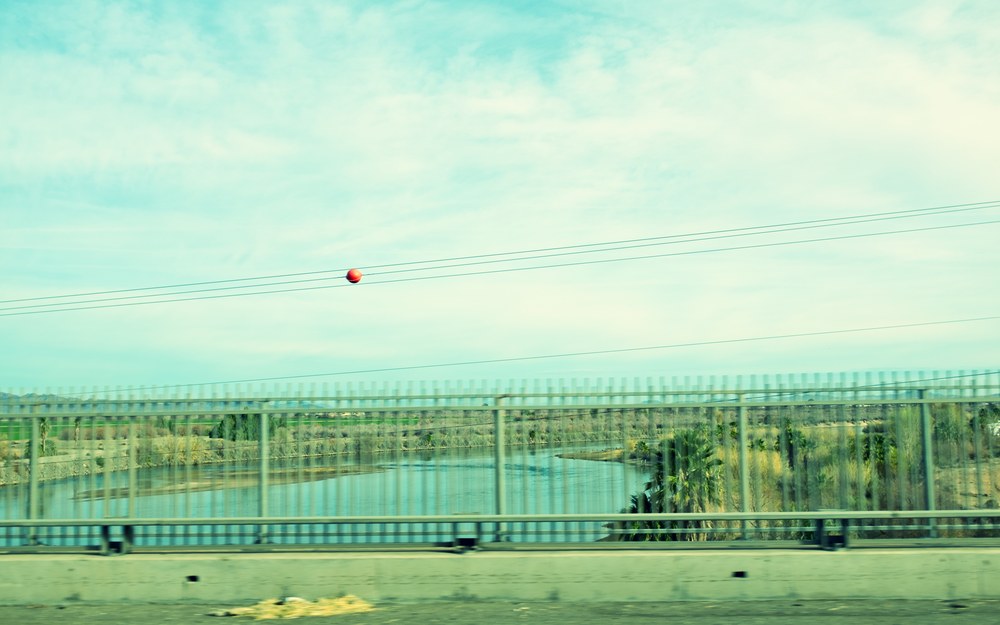
Photo: The Lower Colorado River corridor north of Blythe — deep current bends, diversion weirs, and submerged tamarisk cover holding California’s 72-lb-class flathead giants.
📍 Mayflower County Park Boat Ramp Blythe CA (GPS: 33.6100° N, 114.5240° W)
Target Species: Trophy Flathead Catfish (20–70 lbs), Channel Catfish (2–15 lbs)
Productive Depth: 10–32 ft Palo Verde Diversion Dam scour holes, riprap jetties & irrigation canals
Prime Structure: Submerged granite jetties, fallen salt-cedar root tangles, All-American Canal check drops
Top Bait: Live legal bluegill or goldfish (Colorado River District only), live waterdogs, cut carp & tilapia
Angler Field Log: The Lower Colorado between Palo Verde Diversion Dam and Picacho holds California’s 72 lb 14 oz flathead record—and fish over 50 pounds still rule these deep outside bends. Leave cut bait in the cooler after 9:00 PM here; giant Colorado flatheads demand vibrant, live legal sunfish or tilapia pinned beneath the dorsal fin on 9/0 circle hooks.
Carving California’s sun-baked eastern border through the Palo Verde and Imperial Valleys, the Lower Colorado River from Palo Verde Diversion Dam south through Blythe, Cibola, and down to Imperial Dam offers the state’s premier wild river flathead fishery. Originally stocked decades ago into the river corridor, flathead catfish exploded throughout the turbulent tailraces, irrigation check-weirs, and warm desert canals, culminating in California’s long-standing 72 lb 14 oz state-record flathead pulled from the Colorado River system.
Hunting giant flatheads between Mayflower County Park and the Palo Verde weir demands precision current reading. Daytime desert highs regularly cross 112°F from June through September, driving apex predators deep beneath shaded overhanging tules, rock wing-dams, and sunken salt-cedar logjams along 20- to 30-foot outside river bends. Once darkness cools the canyon walls after 8:30 PM, massive flatheads slip onto shallow 6- to 12-foot gravel bars and jetty tips to crush sleeping bluegills, striped mullet, and tilapia. Anchor silently 40 yards above an eddy seam and drop heavy 4- to 6-ounce flat no-roll sinkers directly along the sharp mud-to-current shear line.
Just west of the main stem, the labyrinth of Imperial Valley concrete irrigation canals—including the Highline Canal, Alamo River, and Coachella Canal—creates extraordinary shore-based flathead and channel catfishing below every concrete check-drop plunge pool. Importantly, California’s Colorado River District maintains special boundary reciprocity and unique regulations: unlike inland California lakes where live vertebrate baitfish are widely banned, specific live baits like legal sunfish, tilapia, and goldfish are permitted within Colorado River District waters (verify exact CDFW district boundary lines and current Arizona/California stamp rules before launching).
6. Isabella Lake: Engineer Point & Kern River Inlet (Kern County)
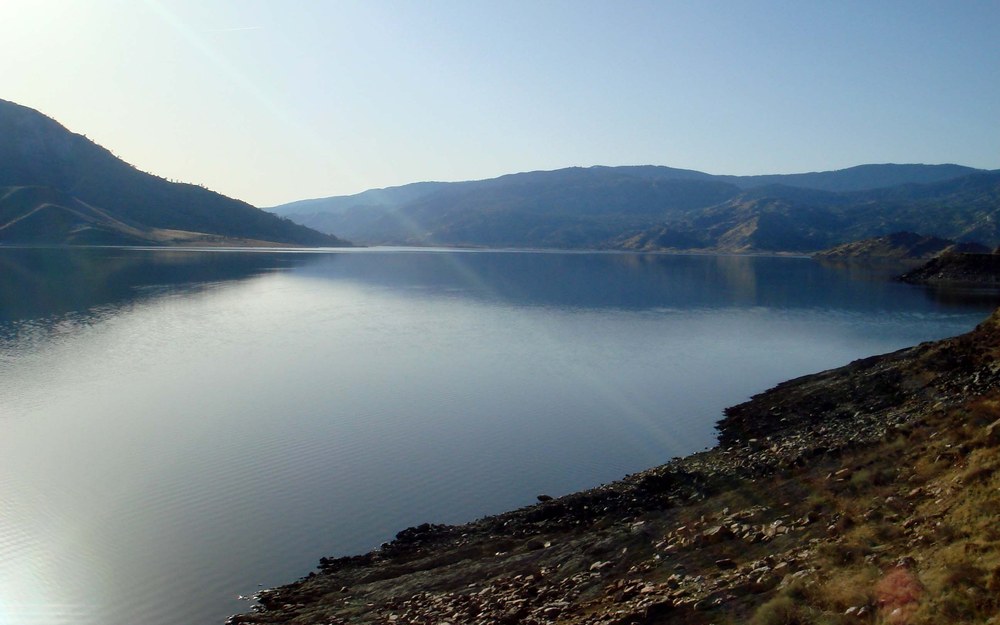
Photo: Isabella Lake at the southern tip of the Sierra Nevada — vast shallow flooded flats, brush-filled bays, and booming channel catfish populations.
📍 Main Dam Boat Launch Lake Isabella CA (GPS: 35.6450° N, 118.4720° W)
Target Species: Channel Catfish (2–18 lbs), Black & Brown Bullhead
Productive Depth: 8–26 ft Engineer Point ledges, South Fork cove & North Fork Kern inflow delta
Prime Structure: Submerged willow thickets, Granite boulder points, old drowned fence rows
Top Bait: Fresh chicken liver, nightcrawler gob-rigs, garlic stink bait, cut crappie/shad
Angler Field Log: Afternoon canyon winds across Isabella regularly whip up steep two-foot whitecaps by 1:00 PM. Instead of fighting open water in the main basin, use those afternoon winds to your advantage: set up along the wind-blown bank inside Stine Cove or off Engineer Point, where churning waves push turbid bait soup straight onto the 10-foot rocky shelf.
Spanning up to 11,000 acres where the North and South Forks of the Kern River converge 42 miles northeast of Bakersfield, Isabella Lake is the premier mountain-foothill channel catfish factory of California’s Central Valley. Benefiting from nutrient-rich Sierra snowmelt runoff and massive newly inundated terrestrial vegetation following the 2023 Dam Safety Modification refill, Isabella supports booming year-classes of healthy 3- to 12-pound channel catfish alongside surprise 20-pound river-channel brutes.
Because Isabella’s broad southern basin remains relatively shallow across thousands of acres of flooded willow and brush flats, spring and summer catfishing here requires remarkably short runs from shore. Concentrate around the rocky peninsula of Engineer Point, the submerged cemetery/fenceline flats off French Gulch, and the shallow delta mudlines where the South Fork Kern River enters the east side of the lake. As surface temperatures climb above 70°F in late May, hordes of hungry channel cats move into 6 to 14 feet of murky water each evening to root out crayfish, clams, and baitfish trapped inside inundated brush pockets.
Unlike deep canyon reservoirs where heavy Santee rigs rule, Isabella excels as a classic night-camping and shoreline slip-sinker fishery. Anglers pitching 1- to 2-ounce egg sinkers rigged with 20-pound monofilament and 3/0 Daiichi or Gamakatsu bait hooks loaded with garlic-cured chicken liver or thick nightcrawler gobs regularly intercept double-digit limits overnight. Pair your mainline setup cleanly with our Fishing Knot Strength & Line Matcher to prevent heavy timber snags from parting light leaders at dawn.
7. Diamond Valley Lake: East Dam & Submerged Quarries (Riverside County)
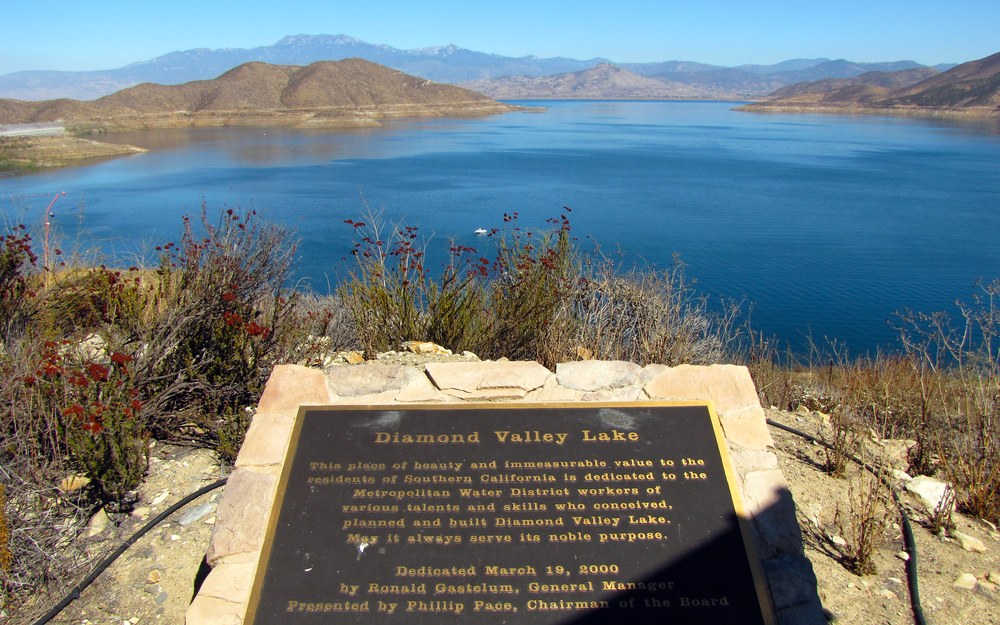
Photo: Diamond Valley Lake near Hemet — 4,500 acres of crystal-clear engineered canyon structure hiding 40- to 65-pound blue catfish along deep quarry ledges.
📍 Diamond Valley Lake Marina Hemet CA (GPS: 33.6820° N, 117.0050° W)
Target Species: Giant Blue Catfish (20–65+ lbs), Channel Catfish (5–22 lbs)
Productive Depth: 30–70 ft East Dam quarry shelves, saddle humps & Rawson Cove drop-offs
Prime Structure: Blasted rock quarries, flooded dam access roads, 40-foot saddle saddles
Top Bait: Fresh-cut mackerel fillets, trout-infused cut bait, anchovies, chicken breast with shrimp scent
Angler Field Log: Diamond Valley features remarkably clear water and zero natural inlet streams, meaning blue catfish rely heavily on deep trout stockings and massive shad schools suspended off vertical walls. We drift slowly along the 45-foot contour off the East Dam quarry faces with 3-ounce lead drags until sonar marks massive bottom arches, then deploy spot-lock trolling motors right over their heads.
Constructed by the Metropolitan Water District of Southern California near Hemet, the 4,500-acre Diamond Valley Lake (DVL) is a pristine, deep-basin monster factory that routinely produces 35- to 60-pound blue catfish alongside heavyweight channel cats. Because DVL operates strictly as an off-stream drinking-water reservoir with no shoreline fishing permitted beyond small designated areas near the marina and strict zero-body-contact rules, its cavernous depths harbor old, undisturbed fish that grow thick feeding on stocked rainbow trout and teeming inland silversides.
Success on Diamond Valley demands high-definition sonar discipline. Unlike muddy river lakes where shallow bank casts succeed all day, DVL’s bright visibility pushes veteran catfish onto steep 35- to 65-foot submerged shelves along the massive East Dam riprap, the flooded quarry pits south of Rawson Cove, and the deep hump-tops bordering the West Dam. Use a boat equipped with Bow-Mounted GPS anchoring (like Minn Kota Spot-Lock) to hover silently 50 feet off a sharp 40-foot saddle drop-off, lowering heavy 3- to 5-ounce Carolina rigs baited with whole half-mackerel directly into deep rock troughs.
Pay close attention to Diamond Valley’s uncompromising operational safeguards before hooking up your trailer: Metropolitan Water District inspectors perform meticulous clean-drain-dry Quagga mussel checks at the ramp gate (any moisture in bilges, livewells, or carpet triggers an automatic 7-day lockout), and all outboard engines must meet CARB 3-Star Ultra-Low Emission standards (two-stroke carbureted outboards are banned). Anglers without compliant hulls can rent stable aluminum skiffs directly from the Diamond Valley Lake Marina to access the productive East Dam quarry reefs.
8. Sacramento River: Verona Confluence to Knight’s Landing (Sutter & Yolo Counties)
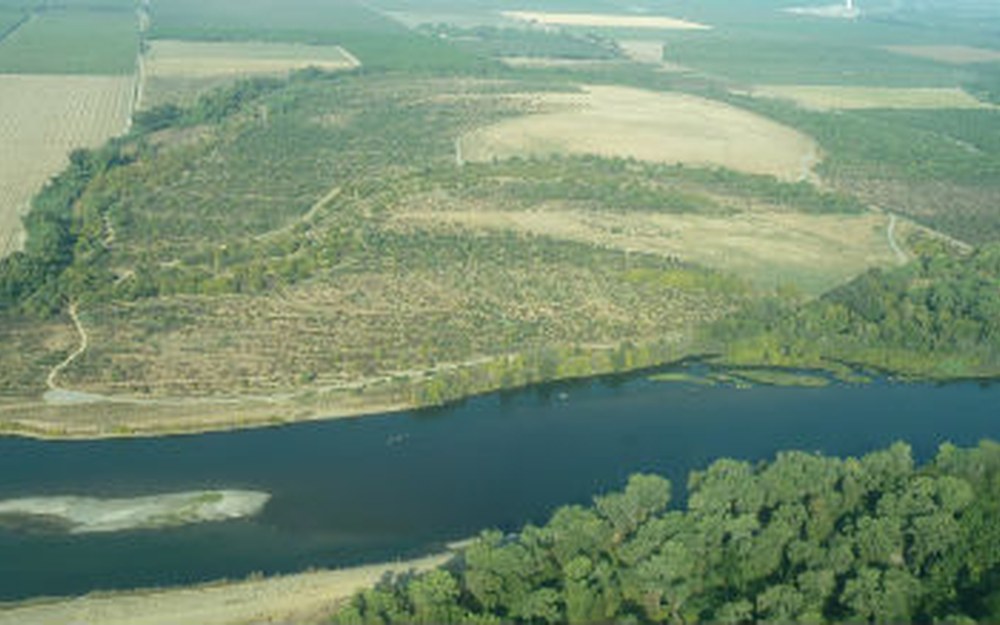
Photo: The middle Sacramento River corridor north of Verona — undercut clay river bends, logjams, and confluence seams teeming with wild channel and white catfish.
📍 Knights Landing Boat Launch CA (GPS: 38.7780° N, 121.5980° W)
Target Species: Wild Channel Catfish (3–16 lbs), White Catfish
Productive Depth: 10–28 ft Feather River confluence seams, undercut clay holes & fallen cottonwood jams
Prime Structure: Deep outside scour bends, submerged cottonwood snags, rock wing-dams
Top Bait: Whole freshwater clams, lamprey strips (seasonal), salted sardines, chicken liver, nightcrawlers
Angler Field Log: Downstream of the Feather River mouth at Verona, muddy runs meet cooler Sacramento main-stem current, forming a mile-long biological conveyor belt. Anchor on the slack side of the mudline seam in 16 feet of water and fish two heavy rigs straight out onto the gravel transition bar—clam and cut sardine bites happen fast here during warm summer nights.
Long before the Sacramento River widens into shipping channels downtown, the fertile stretch running past Knight’s Landing, Fremont Weir, and the Feather River confluence at Verona offers classic, uncrowded Central Valley river catfishing. Flanked by towering cottonwood galleries and agricultural riprap levees, this rolling river reach carries strong summer irrigation flows that nourish dense populations of muscular, current-hardened channel catfish and chunky white cats.
Reading river hydraulics unlocks this corridor effortlessly. Focus relentlessly on deep outside bends immediately downstream of giant fallen oak and cottonwood rootballs, where swirling river current carves 18- to 28-foot clay scour basins out of the riverbed. During spring and early summer runoff, catfish pile behind wing-dams and at the mouth of drainage canals (like Colusa Basin Drain near Knight’s Landing) where sluggish warm slough water dumps minnows and crayfish directly into main-stem flow.
From May through October, aluminum jet boats, drift boats, and shore casters launching out of Knight’s Landing Boat Launch or Elkhorn Boat Ramp intercept double-digit strings using 3- to 5-ounce flat no-roll sinkers paired with stout 50-pound braided lines to muscle big fish out of nasty cottonwood timber. Always maintain safe river courtesy: keep bright bow navigation anchor lights clearly illuminated at night so returning striper and salmon skiffs spot your anchored silhouette well in advance.
California Catfish Species Profile: Identifying Your Target Quarry
California harbors four primary freshwater catfish species—none of them native west of the Rockies, yet every single one fiercely naturalized over the past century into booming Golden State populations. Matching your hook gap, bait profile, and depth search to the exact species living in your target watershed dramatically increases catch rates.
- Blue Catfish (Ictalurus furcatus): Restricted primarily to Southern California aqueduct-fed impoundments (San Vicente, Diamond Valley, El Capitan, Otay, and Perris) plus scattered Delta pockets, blues represent California’s heavyweight titan (State Record:
113 lbs 4.8 oz). Easily identified by a straight, long anal fin containing 30 to 36 rays and a steep hump sloping cleanly up to the dorsal fin, mature blue catfish behave like freshwater sharks—roaming open deep-water basins and smashing bloody cut mackerel, trout heads, and gizzard shad. - Channel Catfish (Ictalurus punctatus): Found in nearly every warm-water lake, delta slough, and valley river from Shasta south to San Diego (State Record:
53 lbs 8 oz), channels feature deeply forked tails, rounded anal fins (24 to 29 rays), and scattered dark spots along juveniles. Opportunistic feeders equally willing to slurp fresh clam meat, garlic chicken livers, cut sardines, and stink baits in 6- to 30-foot depths. - White Catfish (Ameiurus catus): Native to Atlantic tidal rivers and introduced to the Sacramento River in 1874, white catfish dominate the Sacramento–San Joaquin Delta and Clear Lake (State Record:
21 lbs 12 oz). Identifiable by a moderately forked tail with rounded tips, broad head, pale chin barbels, and bluish-gray upper body, white cats thrive in warm brackish backwaters, biting fiercely during spring spawning pre-run on pile worms, shrimp, and anchovies. - Flathead Catfish (Pylodictis olivaris): Dominating the Lower Colorado River corridor and Imperial Valley irrigation canals (State Record:
72 lbs 14 oz), flatheads possess a square/unforked tail, wide flattened skull, and protruding lower jaw. Strictly nocturnal ambush carnivores that reject commercial stink baits as adults, demanding live legal sunfish, waterdogs, or tilapia delivered right up against submerged boulders and root tangles.
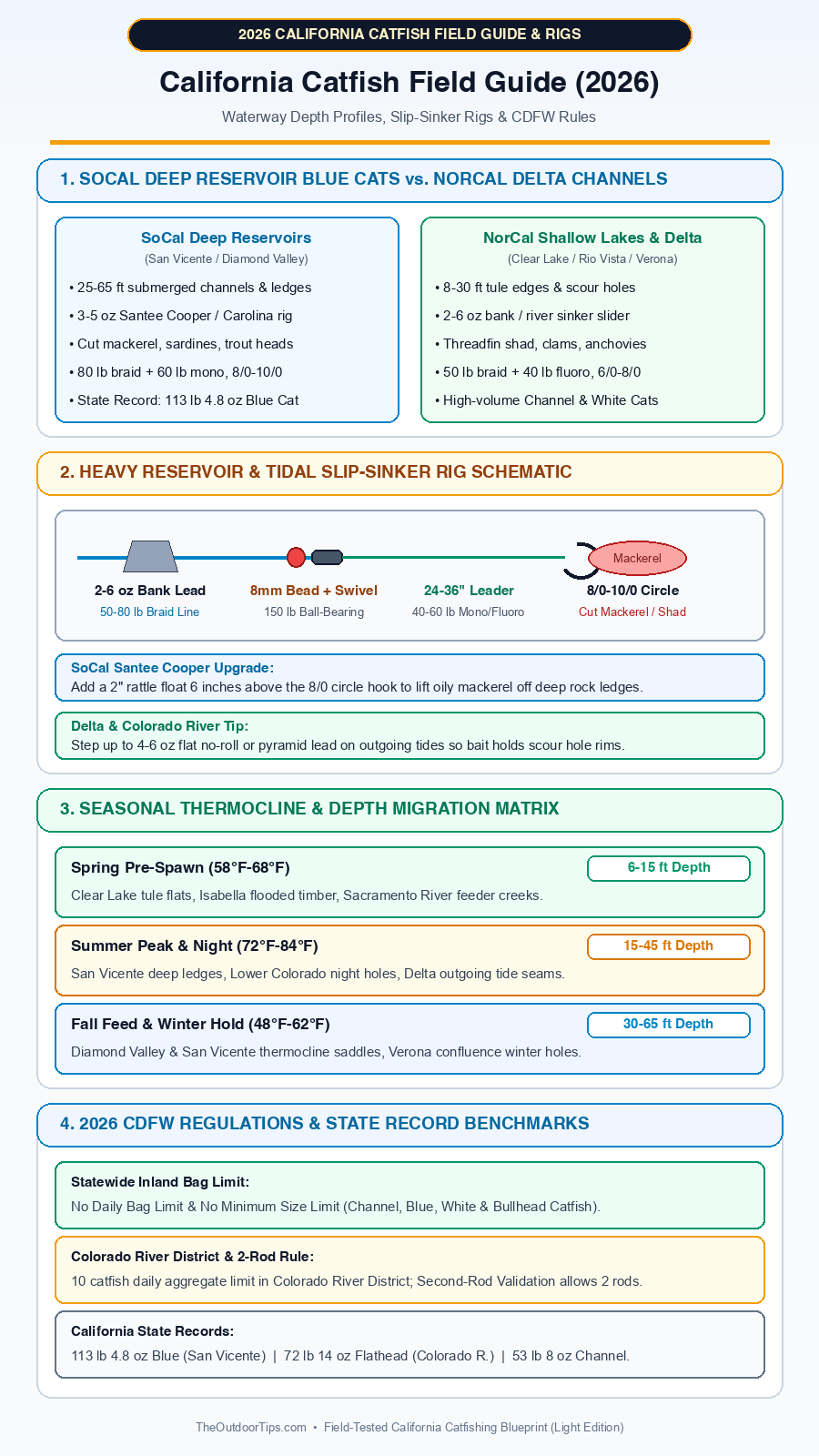
Click the high-resolution California Field Guide Blueprint above to save and view full 9:16 mobile specifications on the water.
Heavy Terminal Tackle, Slip-Sinker Rigs & Golden State Gear Guide
Rigging for California’s contrasting fisheries comes down to mastering two rock-solid terminal setups: the elevated Santee Cooper Rig for snag-laden Southern California reservoirs, and the heavy Tidal Slip-Sinker River Rig engineered for racing Sacramento Delta and Colorado River currents. Both configurations prioritize zero line resistance when a wary catfish mouths your bait—ensuring big blues and flatheads turn away and lock inline circle hooks neatly in the jaw corner before sensing lead weight.
Watch how veteran catfish guides rig sliding bank sinkers, shock beads, and circle hooks to anchor heavy baits cleanly along current seams.
For SoCal Deep Reservoir Blue Cats (San Vicente, Diamond Valley), thread a 3- to 5-ounce flat no-roll sinker onto 65- to 80-pound 8-strand braid, slide an 8mm rubber bumper bead below it, and tie cleanly to a 150-pound ball-bearing swivel using a Palomar knot. Tie on 28 to 34 inches of 60-pound abrasion-resistant monofilament leader, thread a 2-inch rattle cigar float onto the leader, peg it 6 inches above the hook eye with a rubber bobber stop, and snell an 8/0 to 10/0 Gamakatsu or Mustad Demon inline circle hook. That float holds juicy Pacific mackerel chunks just above drowned chaparral stumps and rocky quarry shelves right in the blue cat’s strike plane.
For Delta Outgoing Tides & Colorado River Flatheads, ditch the peg float unless heavy mud crabs are stripping bait off the bottom. Thread a 4- to 6-ounce pyramid or bank sinker on a heavy plastic sinker-slide clip along your mainline (allowing instant weight swaps as tidal current accelerates or eases off). Finish with 20 inches of 40- to 50-pound fluorocarbon or heavy mono and a 6/0 to 9/0 circle hook. Always set rods securely in metal rod holders and wait until the blank bends completely down toward the gunwale before cranking smoothly—never violently jerk-set an inline circle hook, or you will yank it cleanly out of the fish’s mouth.
Ugly Stik Catfish Special Casting Rod (7’6” Heavy)
Ugly Tech fiberglass-graphite composite blank handles 4- to 6-ounce Delta/Colorado sinkers effortlessly while delivering a resilient clear tip that absorbs brutal runs from 60-pound San Vicente blues.
Abu Garcia Ambassadeur C3 6500 / Penn Squall II Level Wind
Precision brass main gears, high-volume spool capacity for 65 lb braid, and an audible out-gear bait clicker built specifically for dark river anchoring along Verona and Rio Vista channels.
Proven California Bait Rotation (Oily Saltwater Cut Baits vs. Delta Clams)
Because California anchors a world-class coastline and massive inland freshwater fisheries side by side, Golden State catfish pros capitalize on oily marine baitfish unavailable to landlocked Midwestern anglers. Before rigging up for a weekend trip, review our Best Catfish Baits Guide and stock your bait cooler with this region-specific rotation:
- Fresh & Brined Pacific Mackerel / Sardines: The undisputed #1 Southern California trophy bait for San Vicente, Diamond Valley, and Irvine Lake blues. Rich dark bloodlines and dense oily flesh leach unmistakable scent plumes across 60-foot reservoir valleys. Cut 2-inch belly chunks or fillet butterflies with tough skin intact to stay pinned firmly through long casts.
- Whole Freshwater Asian Clams & River Shrimp: Unmatched for Northern California action on Clear Lake, the Sacramento Delta, and the Sacramento River. Crack one clam shell partially open and thread two or three meats cleanly onto a 4/0 hook to trigger instant ferocious strikes from both channel and white catfish.
- Threadfin Shad & Salted Anchovies: Where native or naturalized shad roam heavily in deep canyon arms, fresh-netted or salted shad fillets outperform artificial dip baits 3-to-1 throughout mid-summer and autumn transitions.
- Live Legal Bluegill, Tilapia & Waterdogs (Regional): Essential nocturnal trophy weaponry strictly along the Lower Colorado River District and waters specifically authorized under CDFW bait regulations. Never transport live baitfish between unapproved inland basins.
Seasonal Hydrology & Water Temperature Strategy Across California
Spanning nearly 800 miles north to south and dropping from Sierra snowmelt rivers to below-sea-level Imperial Valley desert canals, catfishing in California never operates on a single uniform calendar. Adjusting depth zones cleanly around local thermal transitions keeps rods bent twelve months a year:
- Spring Pre-Spawn Staging (March – May | 58°F–68°F): Shallow mud bays heat rapidly under clear spring sunshine. Target shallow 4- to 12-foot protected marshes on Clear Lake (Rodman Slough), Isabella’s South Fork mudlines, and shallow Rio Vista Delta sloughs. Warming tributary water draws spawning white catfish and feeding channels tight against sun-baked banks and riprap rocks.
- Summer Stratification & Nocturnal Raids (June – August | 72°F–85°F): Shallow waters grow intensely hot across Southern California and the Central Valley. Day anglers on San Vicente and Diamond Valley must probe deep 28- to 48-foot thermocline shelves where oxygen and forage schools intersect. Meanwhile, night owls on the Lower Colorado River, Clear Lake, and Sacramento River catch their heaviest fish between 9:00 PM and 2:00 AM after blazing valley heat subsides and big flatheads push shallow.
- Autumn Baitfish Gorge (September – November | 58°F–70°F): Cooling nights trigger fall lake turnover on reservoirs and trigger massive threadfin shad die-offs, sending heavyweight blue and channel cats into aggressive open-water gorging frenzies before winter slows metabolism. Follow windy points where floating shad rafts pile up.
- Winter Deep-Basin Hibernation (December – February | 46°F–55°F): While Clear Lake slows markedly in frosty winter weeks, deep SoCal reservoirs (San Vicente, DVL) and deep tidal ship channels near Rio Vista still yield giant, sluggish blue and white catfish huddled tightly along 40- to 65-foot channel bends. Downsize leader motion, anchor quietly, and soak fresh salty mackerel longer between moves.
2026 CDFW Catfishing Regulations, Second-Rod Rules & Boat Quagga Inspections
⚠️ 2026 California Department of Fish & Wildlife (CDFW) Compliance
Always consult the official California Department of Fish and Wildlife (CDFW) Freshwater Sport Fishing Regulations before launching or harvesting fish across district lines:
- Statewide Inland Daily Bag Limit: Across most California inland lakes and rivers, there is no daily bag limit and no minimum size limit for Channel, Blue, White, or Bullhead Catfish, with open year-round seasons. Check individual water district exceptions (e.g., some San Diego city reservoirs impose self-governed 5-fish limits—always check marina signage).
- Colorado River District Special Regulation: Along the California–Arizona border waters (Lower Colorado River, Blythe, Imperial/Palo Verde), anglers face a strict 10 catfish daily aggregate limit (combined species) and must carry either a California license with a Colorado River Special Use Validation or valid reciprocal border permits as prescribed.
- Second-Rod Validation Rule: A standard California sport fishing license entitles you to fish only one rod in inland waters. To legally run two bottom rigs simultaneously at Clear Lake, the Delta, or San Vicente, you must purchase an annual Second-Rod Validation (not valid in trout/salmon ocean waters or restricted single-barbless streams).
- Live Finfish Restrictions & Mussel Decontamination: Live freshwater vertebrate fish (such as live bluegill or shiners) are strictly prohibited as bait across most inland California basins outside designated exceptions (notably parts of the Colorado River District and specific Delta non-game finfish rules). Additionally, SoCal reservoirs (Diamond Valley, San Vicente) enforce strict Quagga/Zebra mussel dry-boat inspections—arrive with bone-dry livewells, bilges, and prop hubs or risk multi-day quarantine lockouts.
Interactive Fishing Tools & Calculators Hub
Dial in exact river sinker weights, braid backing spool calculations, knot efficiency ratings, and solunar peak feeding windows across California’s varied waterways using our free fishing tools below:
⚓ Sinker Weight & River Current Matcher
Compute exact pyramid and flat no-roll lead ounces required to hold Rio Vista ebb tides and Lower Colorado tailrace currents.
🔄 Reel Line Capacity & Backing Calculator
Measure mono backing yardage required when spooling 65–80 lb braid onto Ambassadeur or Squall conventional reels.
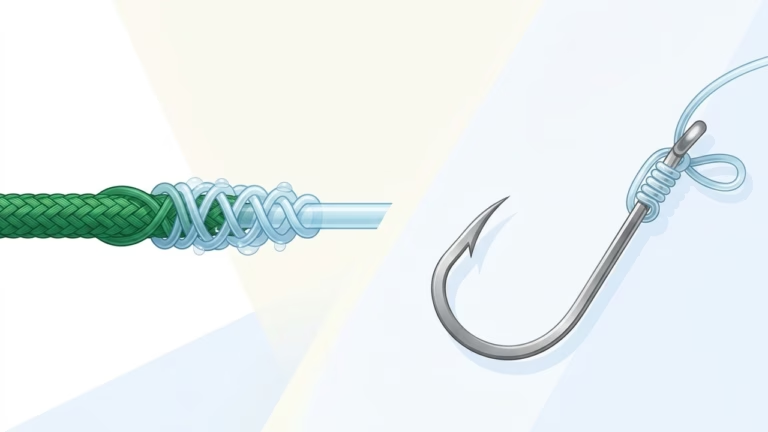
🧲 Fishing Knot Strength & Line Matcher
Compare Palomar, Snell, and FG knot break strength percentages for 80 lb braid-to-60 lb mono shock connections.
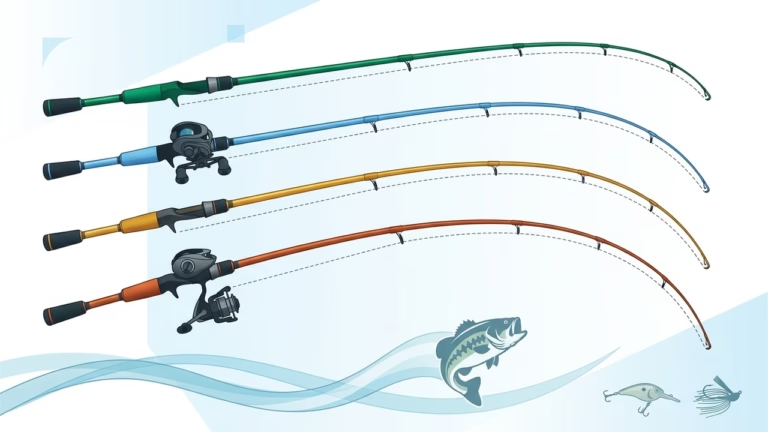
🎯 Rod Power, Action & Species Matcher
Interactive diagnostic quiz pairing California blue, flathead, or Delta channel tactics to the ideal blank action.
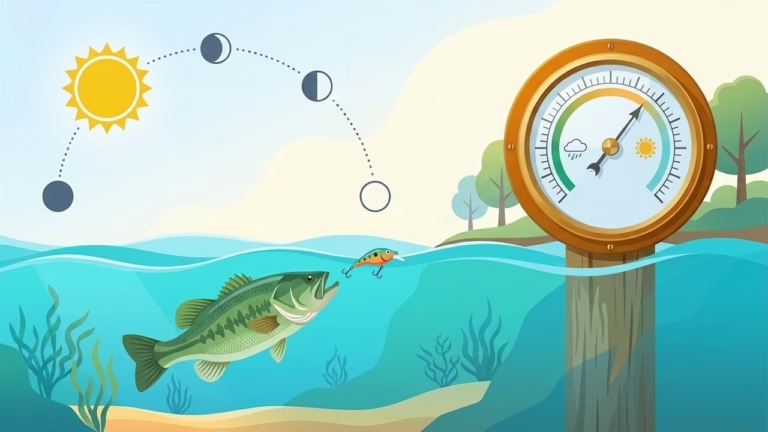
🌙 Solunar Bite Times & Barometric Forecaster
Predict major and minor nocturnal moon phases alongside tidal and barometric pressure shifts before launching.
🦐 Best Catfish Baits: Live vs. Cut Showdown
Compare Pacific mackerel, Delta clams, shad, and live bait performance across every California water temperature tier.
✅ Final Captain’s Verdict: Mastering California Catfish in 2026
1. Chase State-Record Giants in San Diego & Hemet: If your lifelong goal is breaking 50 pounds on a freshwater rod, reserve boat entry at San Vicente Reservoir or Diamond Valley Lake between May and October. Anchor along deep 30- to 50-foot points above the thermocline and suspend oily cut mackerel fillets on 8/0 Santee Cooper rigs.
2. Fill Coolers Fast in Northern California: For non-stop rod-bending action with family or tournament buddies, head straight for Clear Lake tule pockets or the outgoing tidal rips of the Sacramento–San Joaquin Delta near Rio Vista armed with fresh clams, pile worms, and a valid CDFW Second-Rod stamp.
3. Stalk Wild Night Flatheads East on the Colorado River: Trailer down to Blythe / Palo Verde Diversion with heavy 80-pound braided outfits and fish live legal baitfish tight against deep desert outside bends after sundown.
Frequently Asked Questions About Catfishing in California
Where is the #1 best place to catch giant blue catfish in California?
San Vicente Reservoir in San Diego County holds the all-time California state-record blue catfish at 113 lbs 4.8 oz, closely rivaled by Diamond Valley Lake in Hemet and El Capitan Reservoir. Focusing on deep 25- to 55-foot ledges with fresh Pacific mackerel delivers consistent 25- to 60-pound fish.
What is the daily bag limit for catfish in California in 2026?
Under 2026 CDFW inland sport fishing regulations, there is no daily bag limit and no minimum size limit for Channel, Blue, White, or Bullhead catfish across most inland California waters. The major exception is the Colorado River District, which enforces a strict 10 catfish daily aggregate limit (plus check local city lake rules such as San Diego city reservoirs).
Can you fish with two rods for catfish in California?
Yes, provided you purchase an annual CDFW Second-Rod Validation in addition to your standard California sport fishing license. The validation allows two rods simultaneously on all open inland waters, excluding waters restricted to single-rod angling (check local reservoir rules at fee lakes like Irvine Lake as well).
What is the single best catfish bait in California waters?
On Southern California reservoirs (San Vicente, DVL, Irvine), fresh oily Pacific mackerel or sardines outperform nearly everything else. In Northern California’s Clear Lake and Sacramento–San Joaquin Delta, cracked freshwater Asian clams, pile worms, and salted anchovies take top honors.
Are live bluegill or baitfish legal to use for catfish in California?
In most inland California lakes and rivers, using live freshwater vertebrate finfish (such as live bluegill or minnows) is strictly prohibited to protect native aquatic ecosystems. However, specific non-game live baitfish rules apply inside designated boundaries of the Colorado River District (where live sunfish/tilapia are popular for Lower Colorado flatheads) and select Delta zones. Always verify your exact District section in the CDFW regulation booklet.
Where can shore anglers catch catfish in California without a boat?
Bank casters enjoy exceptional access at Irvine Lake (Woody’s Cove & West Shore), Clear Lake (Redbud Park pier and state park banks), Isabella Lake shorelines, Highway 160 levees along the Sacramento River Delta near Rio Vista, and along the Imperial Valley canals in southeastern California.
What boat inspection rules apply to Southern California catfish lakes?
High-security water reservoirs including Diamond Valley Lake and San Vicente Reservoir mandate thorough Quagga and Zebra mussel clean-drain-dry inspections before any private hull touches the water. Even tiny drops of standing water inside bilges, trim cavities, or livewells result in immediate entry denial. Many SoCal reservoirs also ban two-stroke carbureted outboards.