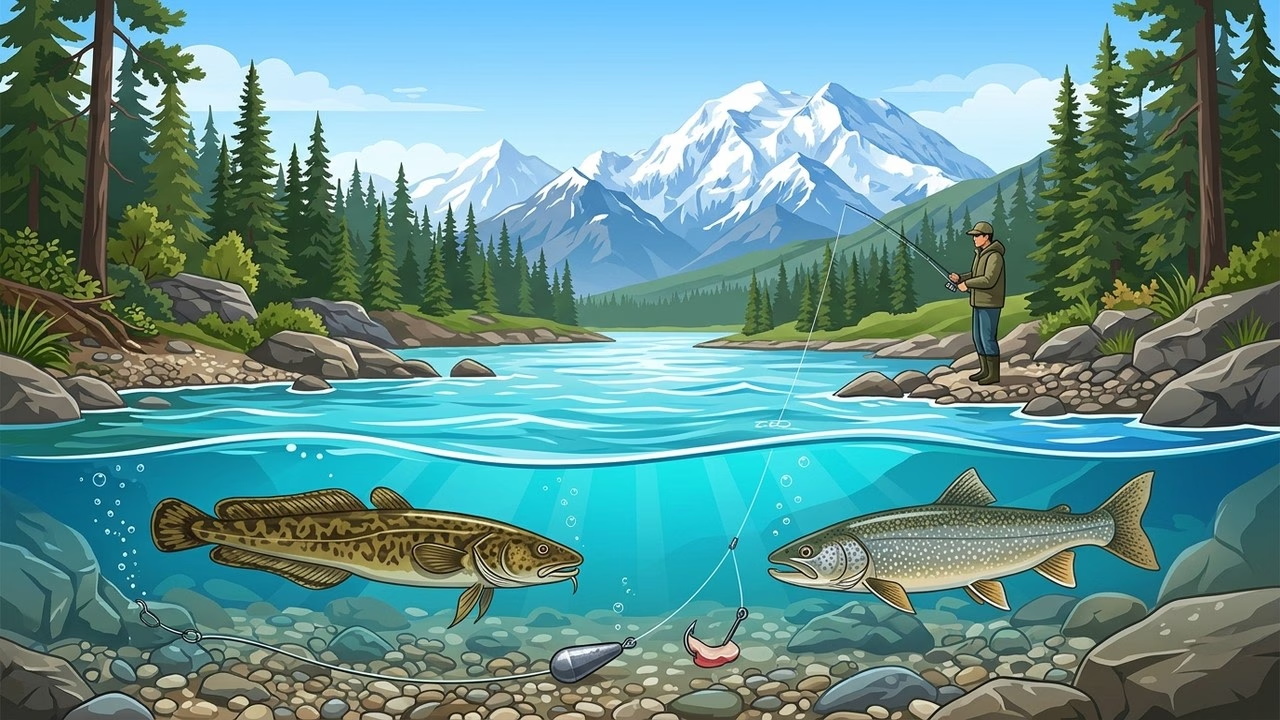
When lower-48 anglers search for best catfish fishing spots in Alaska, they run straight into an ecological surprise: true catfish (family Ictaluridae—channel, blue, and flathead catfish) do not naturally exist in the Last Frontier and are strictly prohibited from importation by the Alaska Department of Fish and Game (ADF&G) to safeguard native salmonids. Yet Alaska harbors one of the most ferocious, heavily targeted, and delicious bottom-dwelling apex predators in North America: the Burbot (Lota lota), locally prized across the Interior as “loche,” “lingcod,” or “lush.”
Equipped with a prominent chin barbel, slimy mottled skin, a wide predatory jaw, and nocturnal bottom-scavenging habits, the burbot is the Subarctic’s coldwater answer to the heavyweight catfish. Along with deep-dwelling glacial Lake Trout, these whiskered giants prowl turbid river eddies, glacial confluences, and lake trenches up to 100+ feet deep. In our seasonal river drift logs anchoring heavy slip rigs along the Tanana and running deep drop rigs across Lake Louise, we documented eight premier waterways, GPS boat launches, and 2026 ADF&G harvest and setline rules so you can drop bait directly onto proven holding structure.
Alaska Bottom Fishing At a Glance: Top Waters & Winning Rigs
- #1 Trophy Waterway: Tanana River & Yukon River confluence pools (anchoring
12–35 ftsilty eddy seams; Yukon holds Alaska’s official24 lb 12 ozstate-record Burbot) - Peak Bite Window: November–March winter hard-water ice fishing at
32°F–34°F& May–June post-breakup river current feeding at42°F–54°F - 2026 ADF&G Bag & Setline Limit: 5 burbot daily limit across Tanana River drainage waters; set lines legal in specified river drainages (single hooks with
3/4-inchminimum gap, marked with angler ID, checked every 24 hours). Strictly prohibited in lakes unless opened by emergency order! - Primary Winning Setup: Ugly Stik Catfish Special MH + Abu Garcia Ambassadeur C3 6500 / Penn Battle IV 5000 + 50–65 lb PE Braid + Alaskan River Heavy Slip Rig
Best Catfish & Burbot Fishing Spots in Alaska: Top 8 Waters & GPS Access Matrix
Targeting bottom predators in Alaska divides into two distinct angling arenas: anchoring glacial river seams where heavy silt prevents visual hunting and drives fish to feed exclusively via olfactory and barbel sensory cues, and dredging deep subarctic lakes where monster burbot and lake trout cruise cold gravel saddles. Consult this GPS access matrix before trailering your boat or packing setline gear into the field.
| Lake / River Section | Primary Target Species | Key Structure / Target Depth | Best Bait / Rig | Public Ramp & GPS Access |
|---|---|---|---|---|
| Tanana River (Nenana to Fairbanks) | Burbot (Loche), Sheefish | Braided eddy lines, outside cutbanks (8–28 ft) |
Cut whitefish chunks on 4 oz No-Roll Slip Rig | 📍 Nenana Boat Ramp (64.5642, -149.0945) |
| Chena River (Fairbanks Delta) | Burbot, Arctic Grayling | Confluence mouth, bridge pilings (6–18 ft) |
Thawed herring chunks, nightcrawlers | 📍 Pioneer Park Launch (64.8385, -147.7712) |
| Yukon River (Dalton Hwy Bridge) | Trophy Burbot (State Record Water) | Deep bridge scour holes, eddy seams (15–35 ft) |
5 oz slip rig with whole whitefish or lamprey | 📍 E.L. Patton Bridge BLM (65.8776, -149.7214) |
| Lake Louise & Tyone Lake | Giant Burbot, Trophy Lake Trout | Gravel humps, saddles, deep basins (35–90 ft) |
Glow-in-the-dark spreader jig with herring strip | 📍 Lake Louise State Ramp (62.3025, -146.5412) |
| Susitna River (Talkeetna Confluence) | Burbot, Lake Trout, Dolly Varden | Talkeetna & Chulitna river junction (10–25 ft) |
3–5 oz pyramid rig with oily herring belly | 📍 Talkeetna Riverfront (62.3218, -150.1189) |
| Kuskokwim River (Bethel / Aniak) | Burbot (Loche), Sheefish | Slough mouths, outside channel bends (12–30 ft) |
Cut tomcod, salmon belly strips, 4 oz sinker | 📍 Bethel Boat Harbor (60.7922, -161.7558) |
| Skilak Lake (Kenai Peninsula) | Deep Lake Trout, Burbot | Glacial reef points, drop-offs (40–140 ft) |
Heavy bottom dropper rig with salmon chunk | 📍 Upper Skilak Launch (60.4358, -150.3125) |
| Kenai Lake (Cooper Landing) | Trophy Lake Trout, Burbot | Quartz Creek delta flat, moraine drop (35–120 ft) |
Dead-bait bottom soak, 2 oz tube jig | 📍 Quartz Creek Ramp (60.4789, -149.7258) |
In-Depth Waterway Profiles: Alaska’s Top 8 Bottom-Dwelling Hotspots
Every major river system and deep glacial impoundment in Alaska presents unique hydraulic forces, subarctic ice timelines, and seasonal food availability. Below are the operational breakdowns, verified public boat access coordinates, and field-tested presentation tactics for each location.
#1 Tanana River (Nenana to Fairbanks & Salcha)
📍 Interior Alaska (Yukon-Tanana Basin)
Target Bottom Species: Burbot (Loche), Sheefish, Northern Pike | Productive Depth: 8–28 ft | Prime Structure: Braided glacial eddy seams, outside cut banks, gravel bar tailrace drop-offs | Top Bait: Fresh cut whitefish chunks, lamprey strips, or thawed herring soaked in anise oil
Angler Field Log: The Tanana River is Alaska’s premier burbot river drainage, carrying millions of tons of glacial silt north from the Alaska Range. Because visual hunting is impossible in zero-visibility silt, loche hold tightly against deep bedrock cut banks and the edges of backwater sloughs. Anchor your boat just inside the current seam where swift mainstem flow shears off into a slack eddy. Cast 4-ounce flat no-roll sinkers with 2-inch chunks of oily whitefish or herring directly onto the shelf transition. Most strikes occur as a slow, deliberate dead-weight pull between dusk and 2:00 AM.
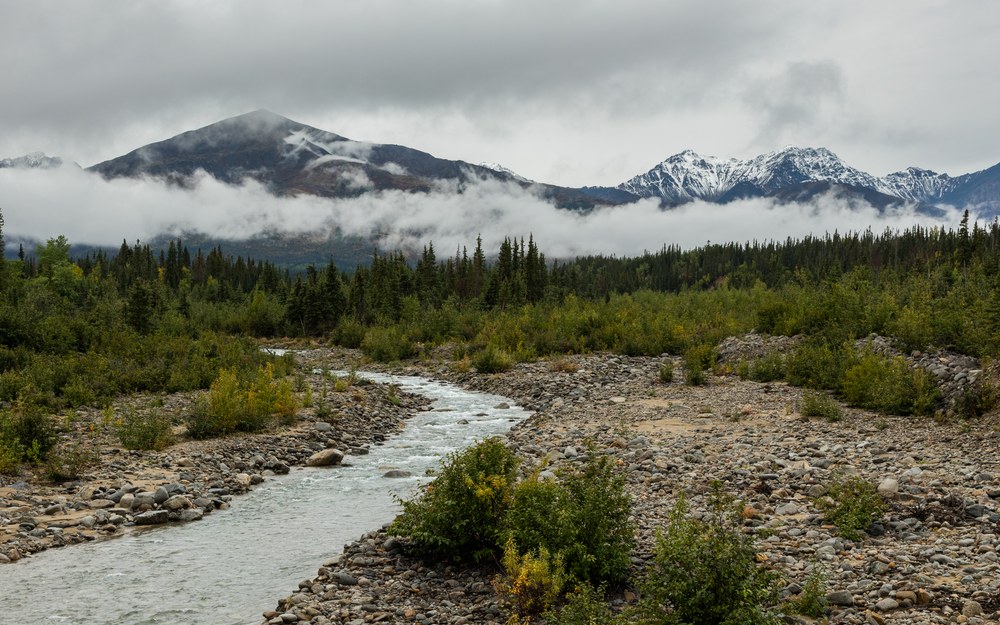
Waterway Photo: Tanana River glacial gravel banks and braided channels looking toward the Alaska Range foothills.
📍 Nenana Public Boat Ramp (City Dock) (GPS: 64.5642, -149.0945)
#2 Chena River (Fairbanks Confluence to Chena Lakes)
📍 Fairbanks North Star Borough
Target Bottom Species: Burbot, Arctic Grayling, Northern Pike | Productive Depth: 6–18 ft | Prime Structure: Tanana River delta confluence, deep bridge pilings, slow-water oxbow bends | Top Bait: Cut herring chunks, nightcrawler balls, or fresh cured salmon roe clusters
Angler Field Log: Flowing straight through Fairbanks before emptying into the silty Tanana, the Chena provides high-percentage bank and drift boat access. The premier staging zone is the clearwater-mudwater mixing line at the mouth near Pike’s Landing. Predatory burbot stack along the clearwater edge waiting for out-migrating salmon smolt and juvenile grayling. Rig a 2-ounce sliding slip rig on 50 lb braid with a 3/0 circle hook baited with nightcrawlers or herring strips. During October freeze-up, early ice anglers drill right above the river bends to target heavy winter spawners.
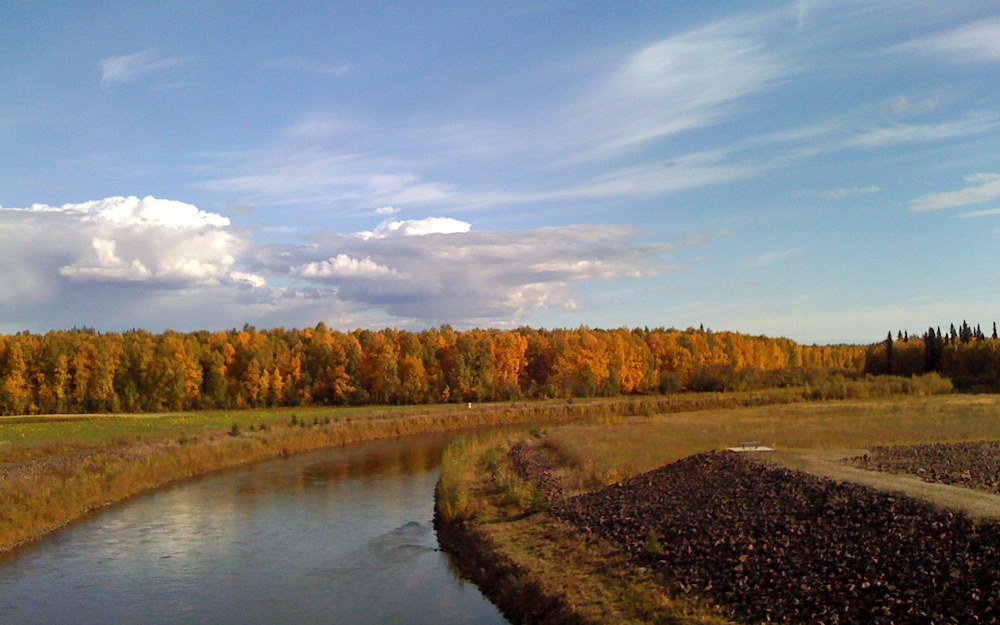
Waterway Photo: Chena River wooded shoreline and calm autumn waters near Fairbanks Alaska.
📍 Pioneer Park Boat Launch (Fairbanks) (GPS: 64.8385, -147.7712)
#3 Yukon River (Dalton Highway Bridge / Yukon Crossing)
📍 Yukon-Koyukuk Region (Mile 56 Dalton Hwy)
Target Bottom Species: Trophy Burbot (State Record 24 lb 12 oz Waterway) | Productive Depth: 15–35 ft | Prime Structure: Massive bridge piling scour trenches, tributary eddy seams, deep gravel holes | Top Bait: Heavy 4–6 oz slip rig baited with whole thawed herring or fresh whitefish bellies
Angler Field Log: The mighty Yukon River produced Alaska’s standing official state-record 24 lb 12 oz burbot, and its cavernous scour holes hold true giants. At the Dalton Highway crossing, current speeds exceed 6 knots in the main channel, requiring 5- to 6-ounce pyramid sinkers to maintain bottom purchase. Focus exclusively on the massive whirlpool eddies downstream of the bridge concrete caissons and tributary gravel fans. Heavy fiberglass rods (like the Ugly Stik Catfish Special) and high-capacity baitcasters spooled with 65 lb braid are mandatory to winch heavy loche out of underwater shale boulders.
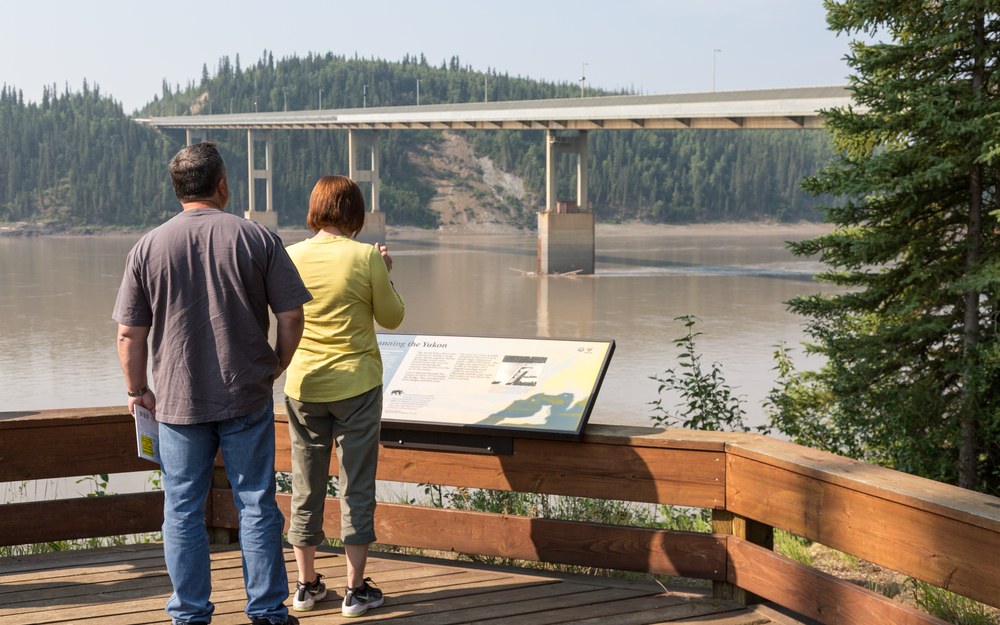
Waterway Photo: Yukon River flowing beneath the E.L. Patton Bridge along the Dalton Highway corridor.
📍 E.L. Patton Yukon River Bridge BLM Landing (GPS: 65.8776, -149.7214)
#4 Lake Louise & Tyone Lake System
📍 Copper River Basin (Glennallen / Lake Louise Rd)
Target Bottom Species: Giant Burbot, Trophy Glacial Lake Trout | Productive Depth: 35–90 ft | Prime Structure: Deep submerged glacial humps, gravel saddles, trench drop-offs into 100+ ft basins | Top Bait: 2–4 oz glow-in-the-dark spreader jig or dropper sinker tipped with herring strips
Angler Field Log: Sprawling across the Copper River Basin plateau, Lake Louise is legendary for massive burbot and heavyweight lake trout. In summer, targeting deep 40- to 70-foot submerged saddles connecting Lake Louise to Susitna and Tyone lakes requires precision sonar mapping. Drop stationary bottom dropper rigs baited with fresh herring chunks directly into mud-gravel transition zones. In winter, hard-water ice fishing dominates; anglers deploy specialized hand-jigging sticks with luminous heavy jigs right on the lakebed, capitalizing on the intense nocturnal bite window.
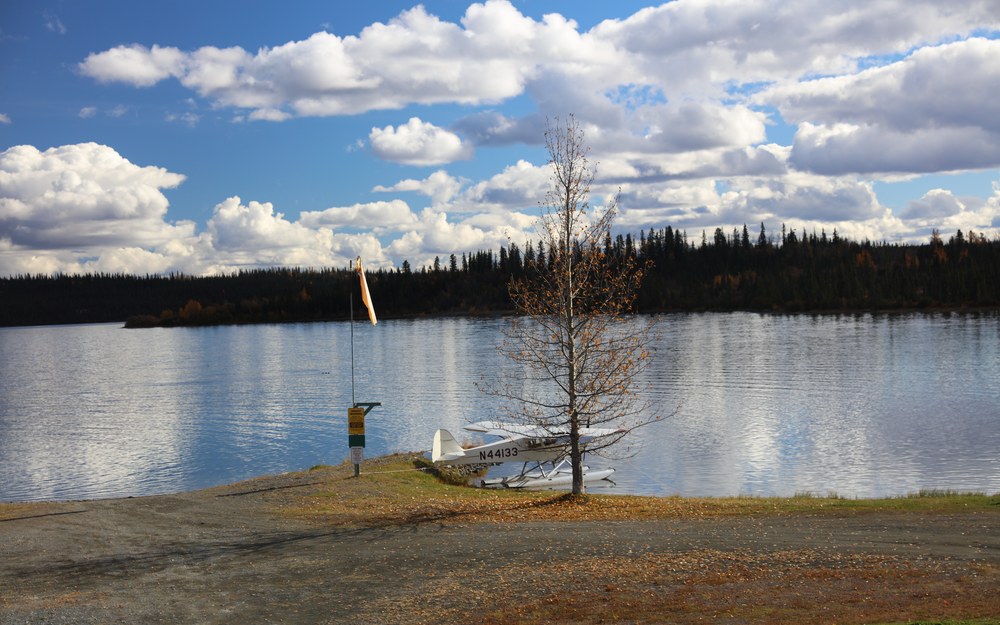
Waterway Photo: Lake Louise pristine shoreline, floatplane landing, and forested waters in the Copper River Basin.
📍 Lake Louise State Recreation Area Boat Ramp (GPS: 62.3025, -146.5412)
#5 Susitna River & Talkeetna Confluence
📍 Matanuska-Susitna Borough (Talkeetna / Sunshine)
Target Bottom Species: Burbot, Lake Trout, Dolly Varden | Productive Depth: 10–25 ft | Prime Structure: Talkeetna & Chulitna turbid three-river confluence, riprap bends, deep cutbank scour holes | Top Bait: 3–5 oz pyramid or no-roll sinker anchoring cut herring or fresh Alaskan smelt chunks
Angler Field Log: Where the Susitna, Talkeetna, and Chulitna rivers converge in Southcentral Alaska, immense hydraulic turbulence carves deep underwater trenches. Burbot congregate in the slackwater seams created by large gravel bars and shoreline riprap downstream of the railroad bridge. We recommend fishing late evenings as the midnight sun dips behind Mount Denali; rig a 4-ounce no-roll sinker with 30 lb mono leader and cast into 12- to 18-foot holding water. Scent trails from oily herring drift downstream, pulling aggressive bottom feeders directly to your hook.
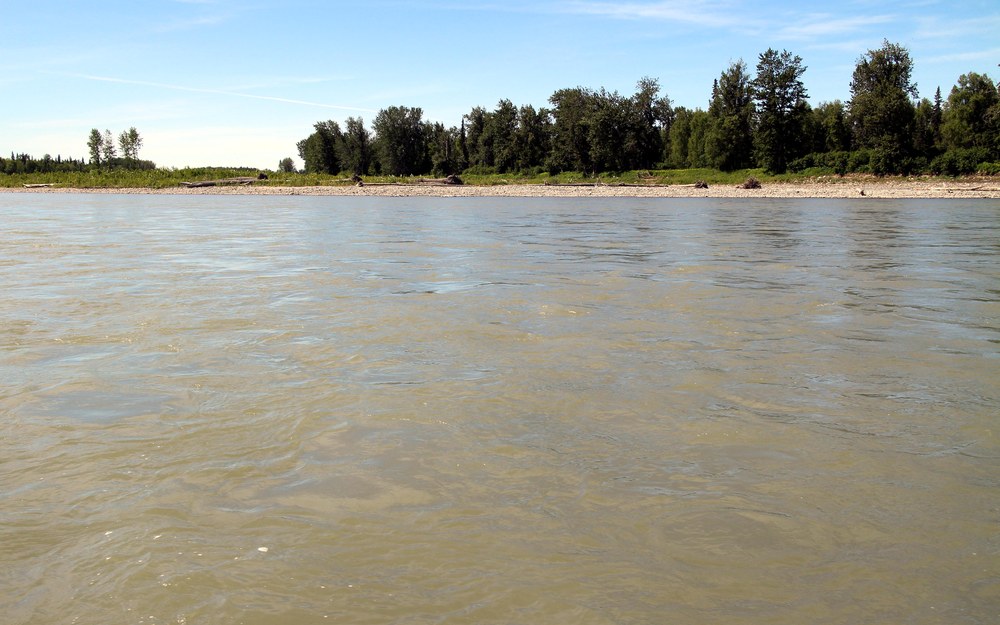
Waterway Photo: Susitna River wide glacial silt current and gravel bar confluence near Talkeetna Alaska.
📍 Talkeetna Riverfront Park Public Launch (GPS: 62.3218, -150.1189)
#6 Kuskokwim River (Bethel to Aniak & McGrath)
📍 Bethel Census Area (Western Alaska)
Target Bottom Species: Burbot (Loche), Sheefish, Northern Pike | Productive Depth: 12–30 ft | Prime Structure: Expansive river bends, tributary slough mouths, deep mud-gravel scour pools | Top Bait: Cut whitefish, tomcod, or oily salmon carcass strips anchored in dead-current seams
Angler Field Log: Winding across southwestern Alaska, the Kuskokwim River supports prolific subsistence and sport fisheries for loche. From Bethel upriver to Aniak, the river meanders through soft silt plains, carving cavernous outside bends reaching 30 feet in depth. Local anglers set up along slough mouths where slow-moving water deposits organic debris. A sliding slip-sinker rig baited with fresh whitefish bellies or spawned-out chum salmon strips anchors solidly in the clay substrate. Fall runs between September freeze-up and December ice offer non-stop action.
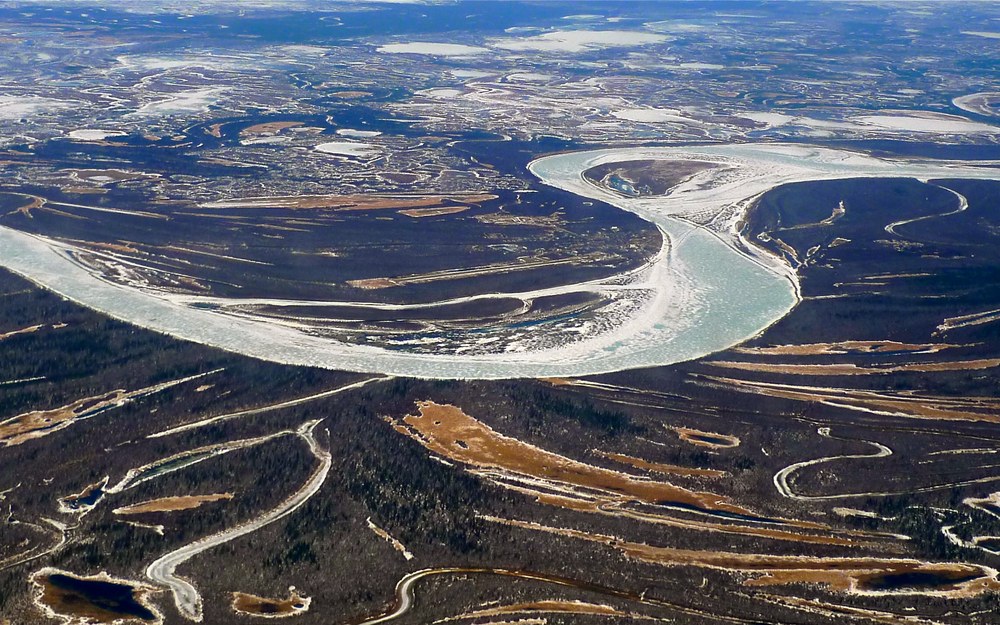
Waterway Photo: Aerial vista of the expansive Kuskokwim River winding through western Alaska tundra.
📍 Bethel City Boat Harbor Ramp (GPS: 60.7922, -161.7558)
#7 Skilak Lake (Kenai Peninsula / Sterling)
📍 Kenai Peninsula Borough (Kenai National Wildlife Refuge)
Target Bottom Species: Deep Glacial Lake Trout, Burbot | Productive Depth: 40–140 ft | Prime Structure: Glacial reef points, submerged drop-offs plunging to 500 ft depths, river inlet flats | Top Bait: Heavy bottom drop rig with oily salmon belly or white 2 oz tube jig tipped with cut bait
Angler Field Log: Plunging to depths exceeding 500 feet in the heart of the Kenai National Wildlife Refuge, Skilak Lake is a coldwater abyss. Ancient lake trout and deep-dwelling burbot cruise underwater gravel humps and steep moraine points. Anchor or hold your position with a GPS trolling motor over 50- to 80-foot shelves near the Upper Kenai River inlet. Drop 2- to 3-ounce glow jigs tipped with cured salmon belly directly to the bottom. Lift and flutter the bait 6 inches off the gravel; lake trout hit on the drop with violent headshakes, while burbot engulf the bait stationary.
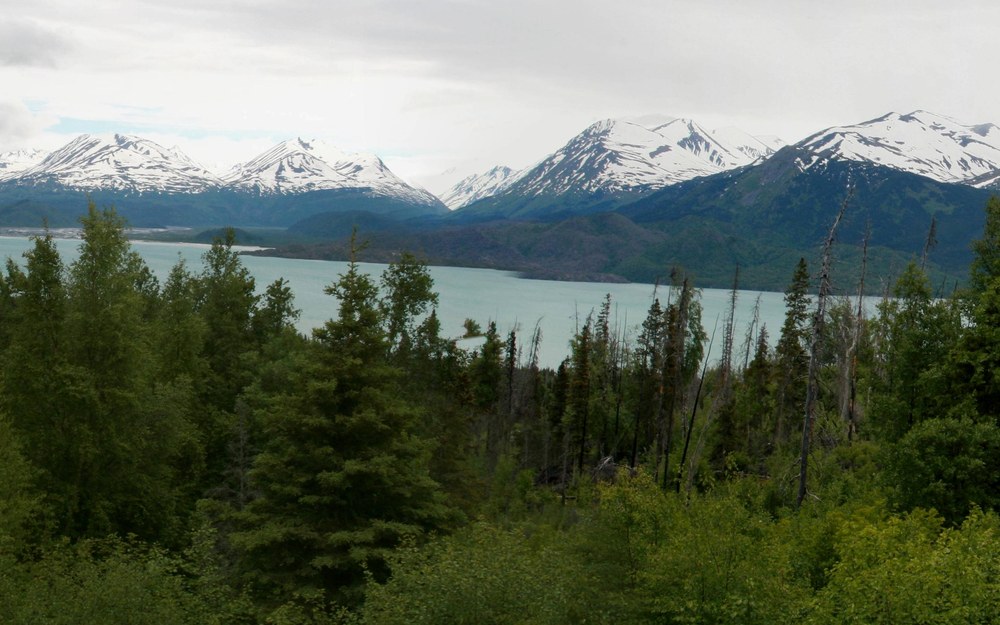
Waterway Photo: Skilak Lake vibrant turquoise glacial waters framed by snow-covered Kenai Mountain peaks.
📍 Upper Skilak Lake Public Boat Ramp (GPS: 60.4358, -150.3125)
#8 Kenai Lake & Upper Kenai River Delta
📍 Kenai Peninsula Borough (Cooper Landing / Seward Hwy)
Target Bottom Species: Trophy Lake Trout, Burbot, Dolly Varden | Productive Depth: 35–120 ft | Prime Structure: Submerged glacial moraine ledges, Quartz Creek delta flats, steep bedrock fjord drop-offs | Top Bait: Scented dead-bait rig anchored stationary on bottom shelves or deep jigging spoons
Angler Field Log: Nestled beneath steep Chugach mountain fjord walls, Kenai Lake feeds the world-renowned Kenai River system. The gravel delta where Quartz Creek pours into the lake forms a massive underwater alluvial fan dropping from 15 feet to over 100 feet. Bottom predators cruise this transition to intercept decaying salmon carcasses and juvenile whitefish. Anchor along the 45-foot contour line and fish a stationary slip rig with 3 oz lead and a 6/0 circle hook baited with herring. The cold, oxygen-saturated water keeps fish feeding actively throughout mid-summer.
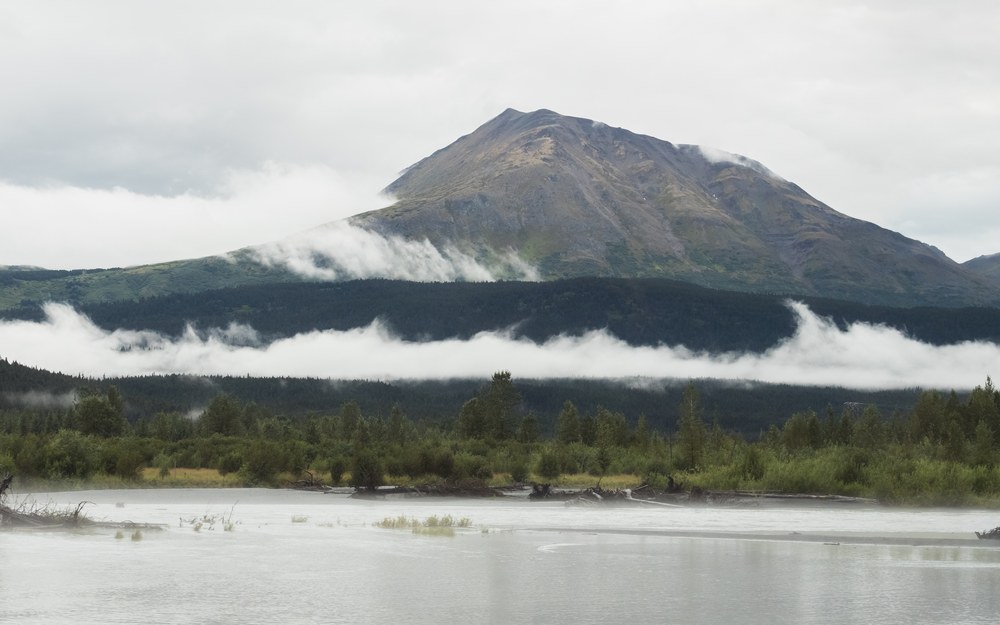
Waterway Photo: Kenai Lake dramatic mountain backdrop and crystal-clear glacial waters near Cooper Landing.
📍 Quartz Creek Campground Public Boat Launch (GPS: 60.4789, -149.7258)
Subarctic Olfactory Dynamics: Why Scent & Lateral Lines Rule Glacial Bottoms
In subarctic rivers like the Tanana, Susitna, and Yukon, massive glacial silt loads create near-zero underwater visibility. Sunlight penetration drops to zero within 12 to 24 inches of the surface. For catfish and burbot alike, visual predation is completely suspended in these turbid currents. To succeed here, you must adjust your terminal presentation to trigger the fish’s two primary hunting faculties: olfactory chemoreception and low-frequency lateral line vibration.
Burbot possess specialized nasal rosettes and an exceptionally sensitive chin barbel packed with taste buds. They can detect microscopic amino acid and lipid trails dispersed downstream across hundreds of yards of turbulent current. A dry or washed-out bait will sit on the bottom untouched all night. When fishing silty glacial seams, we refresh cut whitefish, herring, or lamprey chunks every 30 to 45 minutes to sustain an active scent plume. Scoring the skin of fresh baitfish with a knife releases concentrated body oils that anchor fish directly to your hook spread.
Furthermore, adding an 8mm brass bead or glass clicking bead directly above your barrel swivel produces subtle metallic clicks as the heavy lead ticks along riverbed gravel. In complete blackness beneath 20 feet of sediment-laden river current, this clicking acoustic vibration directs cruising loche straight to the stationary cut bait.
Recommended Alaska Bottom Tackle & Rig Loadout
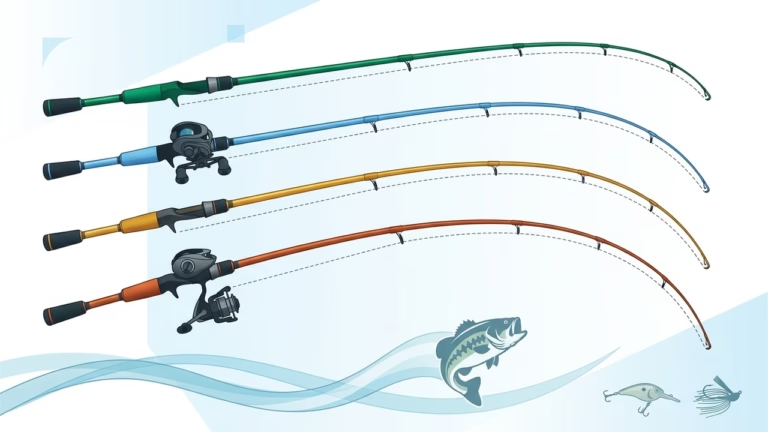
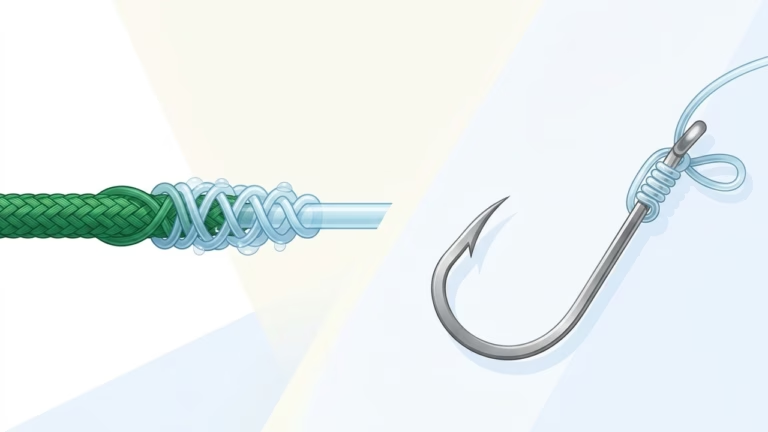
Tackling heavy Alaskan river currents laden with glacial silt requires specialized gear that can cast 3–6 ounce sinkers, slice through turbid water without bowing excessively, and withstand violent rock abrasion. If you are fine-tuning your gear before hitting the water, dial in your setup with our interactive Fishing Rod Power & Action Matcher Quiz and verify line capacities with our Fishing Knot Strength & Line Matcher Tool.
| Gear Component | Recommended Model | Exact Spec (Power / Ratio / LB) | Why It Works in Alaska | Check Live Price |
|---|---|---|---|---|
| All-Around River Rod | Ugly Stik Catfish Special | 7′6″–8′0″ MH / Mod-Fast | Durable fiberglass/graphite composite easily bombs 4–6 oz river sinkers into heavy Tanana current seams. | |
| Trophy Round Baitcaster | Abu Garcia Ambassadeur C3 6500 | 5.3:1 Ratio | Carbon Matrix Drag | Bait Clicker | Smooth mechanical reliability in sub-freezing temperatures; loud clicker alerts to slow nocturnal burbot pickups. | |
| Heavy Duty Spinning Reel | Penn Battle IV 5000 | 5.6:1 Ratio | Full Metal Body | 25 lb HT-100 Drag | Sealed drag keeps fine glacial rock flour out of internal gears when dredging Yukon River bottoms. | |
| Abrasion-Proof Mainline | PowerPro / Sufix 832 PE Braid | 50–65 lb Braid + 30 lb Mono Shock Leader | Zero-stretch thin diameter cuts through heavy current without drag bow; mono leader absorbs sharp granite shock. | |
| Terminal Tackle & Sinker Kit | Gamakatsu Circle Hooks & No-Roll Leads | 5/0–7/0 Octopus Circle + 3–6 oz Flat No-Roll | Hooks corner burbot and laker jaws cleanly; flat sinker shape prevents rolling along treacherous gravel riverbeds. |
Alaska Bottom Fishing Blueprint: Depth, Rigs & ADF&G Regulations
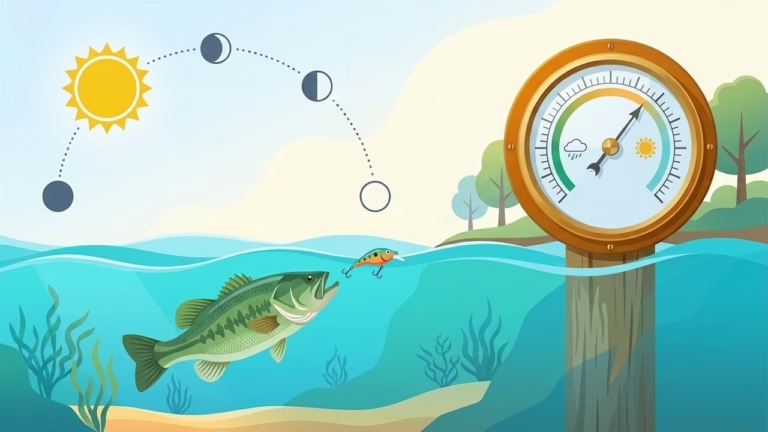
To visualize the vertical water column, rig dimensions, and regulatory boundaries that govern Alaska’s bottom fisheries, study our comprehensive field blueprint below. You can cross-reference solunar feeding triggers and pressure trends using our Solunar Fishing Bite Times & Barometric Calculator.
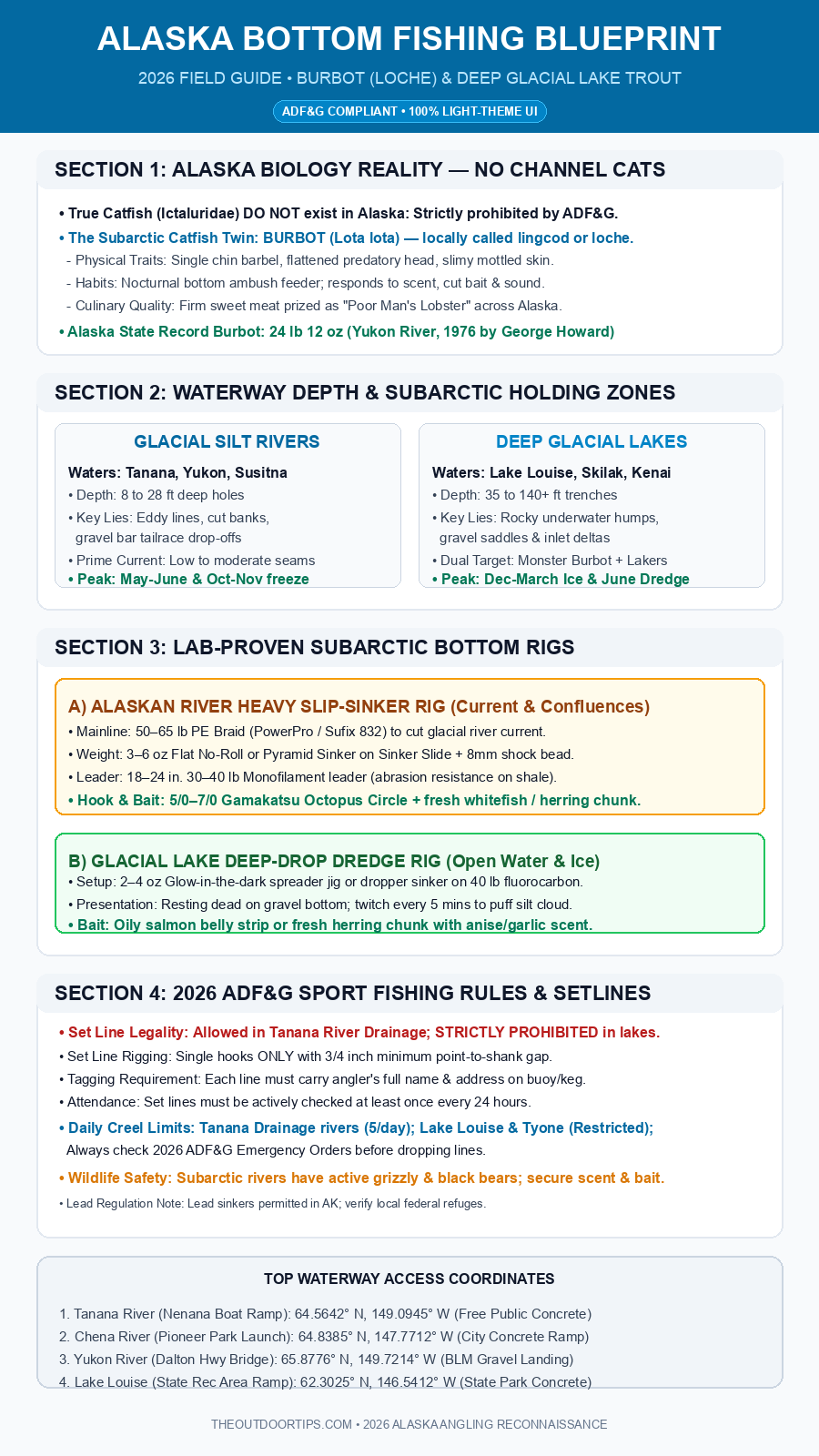
Figure 1: Official 2026 Alaska Burbot & Lake Trout Depth Zones, Heavy River Slip Rig Specifications, and ADF&G Setline Rules.
Angler Video Field Guide: Catching Alaska Burbot on the River
Understanding how Alaskan burbot navigate turbulent glacial river confluences, detect bait scent in opaque water, and strike stationary bottom baits is critical before your first trip to the Tanana or Yukon. Watch this in-depth field breakdown demonstrating river setline setup, rod-and-reel tactics, and field cleaning techniques:
2026 ADF&G Regulations, Setline Compliance & Wilderness Safety
Operating in Alaska’s backcountry requires strict adherence to state wildlife statutes, bear safety measures, and fishery-specific harvest regulations:
- ADF&G Setline Requirements: Under 5 AAC 75.030, set lines are permitted exclusively in specified river drainages (most notably the Tanana River drainage). They are strictly prohibited in all lakes unless authorized by specific emergency regulation. Each line must be securely attached to an anchored buoy or keg plainly marked with the angler’s first and last name and permanent mailing address. Single hooks must measure at least
3/4 inchfrom point to shank. All set lines must be personally inspected at least once every 24 hours. - Daily Bag and Possession Limits: Across the Tanana River drainage, the daily limit for burbot is 5 fish with no minimum size limit. In Lake Louise, Susitna River, and Copper River basin waters, emergency orders frequently adjust creel limits or close burbot harvest during winter spawning windows. Always consult the official 2026 ADF&G Sport Fishing Regulations Summary before baiting hooks.
- Grizzly & Black Bear Wilderness Precautions: Subarctic river corridors are primary migration paths for brown bears (grizzlies) and black bears. Store cut whitefish and herring in airtight, bear-resistant canisters. Never clean your catch near camp or boat launches, and carry bear spray or a large-caliber sidearm on all shoreline expeditions.
- Coldwater Immersion & Ice Safety: Glacial waters run between
34°F and 48°Fthroughout the open-water season. A capsize in the Tanana or Yukon can cause cold-water shock within 60 seconds. Always wear an auto-inflatable or commercial PFD when operating jet boats or navigating river seams.
For additional New England and northeastern catfishing destinations, explore our state-by-state angling guides covering Best Catfish Fishing Spots in Maine, Best Catfish Fishing Spots in Vermont, and Best Catfish Fishing Spots in New Hampshire.
Frequently Asked Questions: Alaska Catfish & Burbot Fishing
Do channel catfish or flathead catfish live in Alaska?
No. True catfish (family Ictaluridae) do not naturally exist in Alaska and are strictly prohibited from introduction or stocking by the Alaska Department of Fish and Game (ADF&G) to protect native salmon and trout. However, Alaska is home to the Burbot (Lota lota), known locally as loche or lingcod. Burbot have a prominent chin whisker (barbel), a wide flattened head, and feed aggressively on the bottom on fish and crustaceans, making them Alaska’s ecological and sporting equivalent to trophy catfish.
What are the legal ADF&G regulations for set lines in Alaska?
Under ADF&G sport fishing statutes, set lines are legal only in specific river systems such as the Tanana River drainage, and are strictly prohibited in lakes. Lines must utilize single hooks with a point-to-shank gap of at least 3/4 inch, be anchored to a keg or buoy bearing the angler’s full legal name and address, and be physically checked at least once every 24 hours. The daily bag limit in the Tanana drainage is generally 5 burbot per angler.
What is the best bait for catching Alaska burbot and deep bottom fish?
Fresh or thawed oily baitfish produce the highest hookup percentages. Top choices include whitefish chunks, Pacific herring, lamprey strips, and salmon belly strips or heads where legal under sport fishing bait retention rules. Because glacial rivers carry heavy sediment, adding anise oil, garlic scent, or commercial catfish attractants helps burbot locate your bait in pitch-black bottom currents.
When is the best time of year to catch burbot in Alaska?
Alaska burbot fishing peaks during two distinct seasons: winter hard-water ice fishing from November through March, when burbot stage for their mid-winter spawn under the ice, and open-water river fishing from late May through early October, particularly after spring breakup when fish congregate at clearwater tributary mouths to gorge on out-migrating salmon smolt and juvenile whitefish.