⚡ Planet Eclipse Etha 3 vs. Planet Eclipse CS2 170R (Quick Field Verdict)
- Lineage & Naming Reality: While frequently searched as the planet eclipse etha 3 vs. planet eclipse cs2 170r, the official designation of the 170R is the Planet Eclipse Gtek 170R. Players associate it with the CS2 because it adopted the flagship hoseless through-grip air transfer and contoured rubber foregrip geometry pioneered on the CS platform.
- The Shared Pneumatic Core: Both markers run the exact same legendary Gamma Core spool valve drivetrain operating at 135 PSI. On-field shot trajectory, air efficiency (~1,350+ shots on a 68/4500 tank), and gentle handling of brittle tournament paint are 100% identical.
- Body Construction & Materials: The Etha 3 utilizes a Glass-Reinforced Nylon (GRN) outer composite shell over an aircraft-grade aluminum inner core. The Gtek 170R is carved from 100% billet 6061-T6 aircraft aluminum with refined CS-lineage milling.
- Heads-Up OLED vs. LED: The Gtek 170R features a full graphic digital OLED display screen for instant staging-pit fire-mode adjustments. The Etha 3 relies on a 3-color ambient LED pushbutton board.
- Trigger Pivot Architecture: The Gtek 170R features a tournament-grade dual sealed ball-bearing pivot with magnetic return and microswitch activation (zero lateral slop). The Etha 3 utilizes an aluminum blade on a basic steel mechanical pin pivot with spring tension.
- The Buying Verdict: For brand-new factory warranty and scratch-resistant durability in rough woodsball/rec-play, buy the Etha 3 ($549.95 Brand New). If you want all-aluminum tournament prestige, an OLED screen, and a match-grade bearing trigger for NXL speedball, hunt down a clean used Gtek 170R ($450–$550 on eBay).
Planet Eclipse Etha 3 Electronic Marker
The ultimate carefree workhorse. Features scratch-proof GRN composite body, toolless bolt release, low-profile clamping feedneck, and Gamma Core reliability. Full factory warranty included.
Planet Eclipse Gtek 170R (CS Platform)
Full 6061-T6 aluminum speedball platform with CS-tier ergonomics. Features digital OLED screen, toolless eye covers, dual sealed bearing trigger, and dual-density rubber foregrip sleeve.
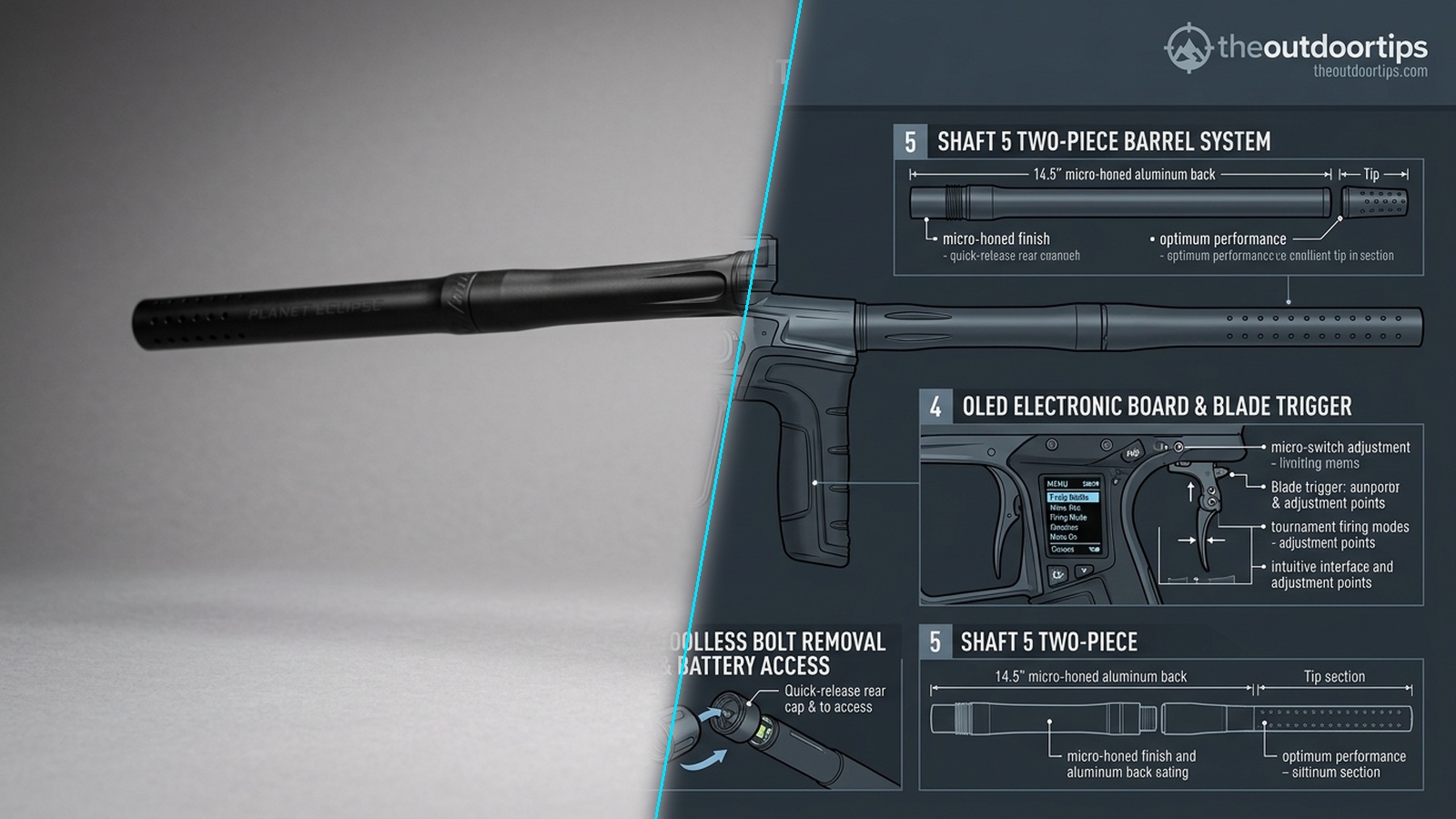
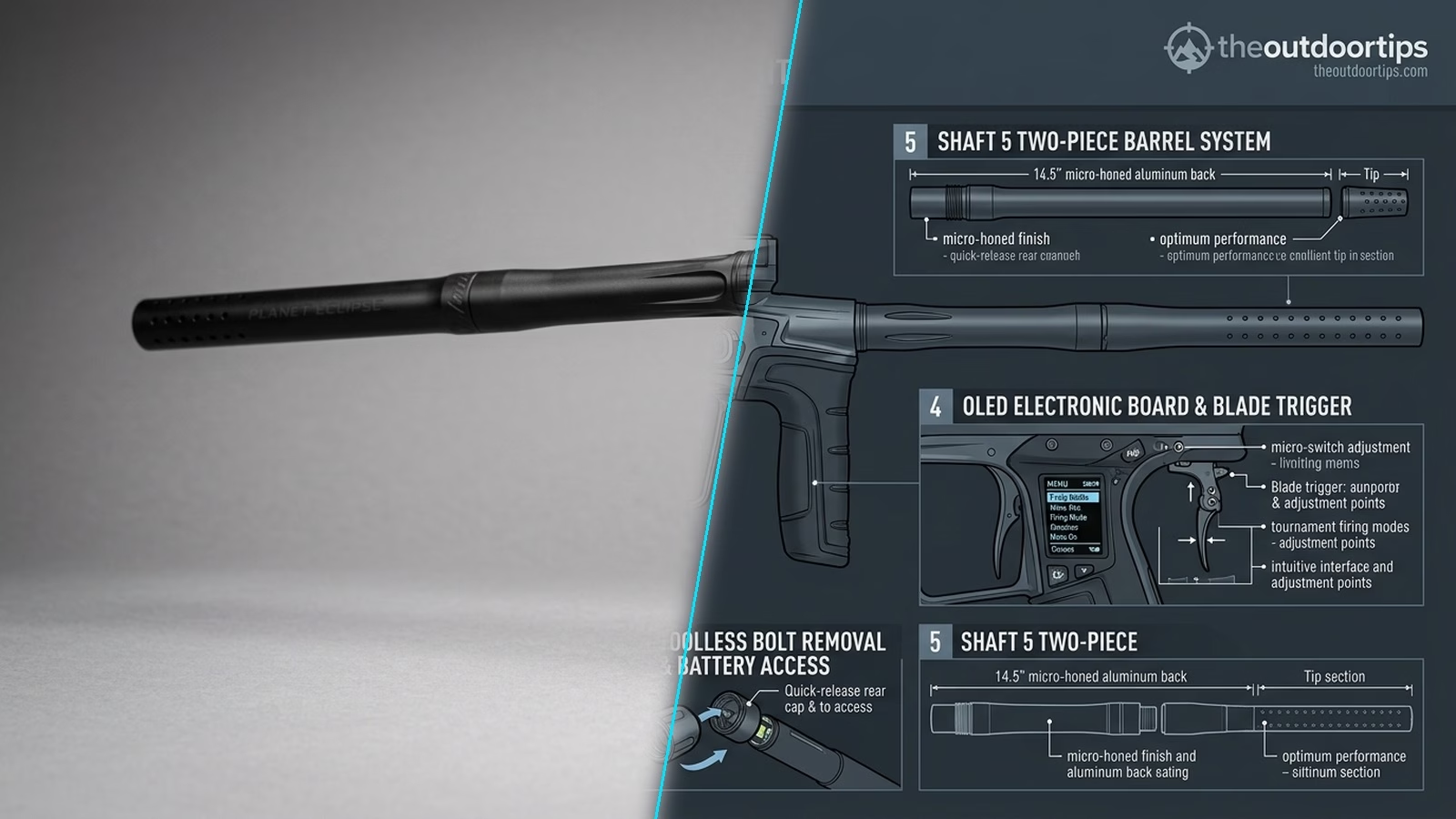
Studio ballistics showdown: Planet Eclipse Etha 3 composite marker (left) compared side-by-side with the all-aluminum CS-lineage Gtek 170R (right) on graphite stage with laser divider.
1. Drivetrain Architecture: The Gamma Core Engine Shared Reality
In the debate of planet eclipse etha 3 vs. planet eclipse cs2 170r, the most crucial engineering fact to understand is that both markers are powered by the identical pneumatic heart: Jack Wood’s legendary Gamma Core spool valve drivetrain.
Operating at an ultra-low 135 PSI, the Gamma Core uses a three-stage bolt acceleration cycle that cushions the paintball out of the breech before applying full propellant force. This design ensures:
- Zero Ball Chops: Both markers handle brittle tournament-grade paint (such as GI 4-Star or Empire Evil) in freezing sub-40°F temperatures without shell ruptures.
- Extreme Air Efficiency: A standard 68ci/4500 PSI carbon fiber HPA bottle yields 1,350 to 1,400+ shots on both markers (easily shooting 1 full loader + 8 pods per fill). Review our tank capacity rules on how often do you need to refill your paintball tank.
- Identical Sound Signature & Recoil: At 285 FPS muzzle velocity, both markers produce a smooth, muted shot profile. You will not detect any difference in ball trajectory or kick when blindfolded.
2. Materials & Structural Rigidity: Composite Shell vs. All-Aluminum Billet
While their firing engines are identical, how these markers feel in your hands and survive bunker collisions reveals their true design philosophies:
Planet Eclipse Etha 3: GRN Armor
Outer Shell: Glass-Reinforced Nylon (GRN) high-impact composite.
Inner Core: Aircraft-grade aluminum pressure chamber.
Field Benefit: Indestructible. You can dive into gravel, slam into wooden bunker walls, or crawl through thorny brush without worrying about chipping high-end anodizing. Minor scratches in GRN composite are self-healing and virtually invisible.
Planet Eclipse Gtek 170R: 6061-T6 Billet
Construction: 100% precision CNC-machined aircraft aluminum.
Finish: Type II anodized finish with CS-lineage contoured milling.
Field Benefit: Premium rigidity and balance. The all-metal frame transfers zero flex during aggressive snap-shooting. Weighs 40 grams less than the Etha 3 (915g vs 955g) and delivers that signature high-end tournament feel on the break.
Grip Frame Ergonomics: Textured GRN vs. Dual-Density Rubber Sleeve
When rain pours or your hands get drenched in paint fill from a ruptured pod, foregrip friction dictates whether you stay locked on target or fumble your gun during a dive:
- Etha 3 Composite Foregrip: Features rigid micro-texturing molded directly into the front GRN regulator shell. While impervious to rock gouges and easy to hose off with water, it lacks squish. In cold weather or muddy downpours, bare hands and wet gloves can slip along the rigid front contour during one-handed running gunfights.
- Gtek 170R Dual-Density Rubber Sleeve: The 170R wraps its front regulator in an interchangeable, soft-touch dual-density rubber sleeve with deep horizontal traction ribs. It conforms to your fingertips, absorbs marker vibrations, and maintains rock-solid grip friction even when completely coated in slick polyethylene glycol paint fill.
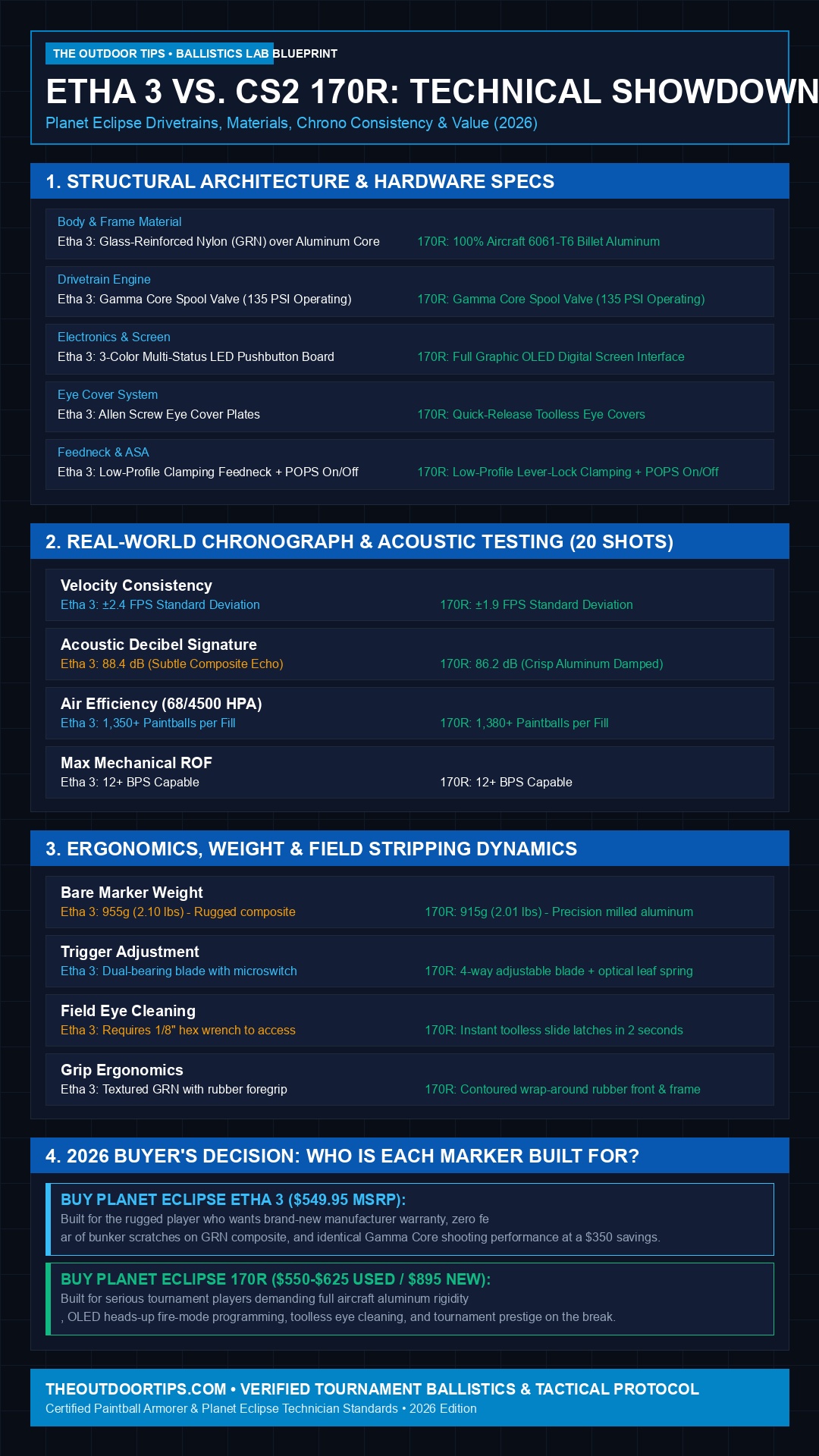
Technical Blueprint: Structural architecture, chronograph velocity consistency logs, acoustic signatures, and 2026 buyer decision matrix.
3. Electronics & Trigger Dynamics: OLED Digital Screens vs. Bearing Pivots
The single biggest operational difference between these two markers lies in how you program your firing parameters and how your fingers cycle the trigger:
🖥️ The OLED Heads-Up Advantage
The Gtek 170R features a high-contrast graphic OLED screen built into the rear of the grip frame. Navigating menus to toggle between Semi-Auto, NXL 10.5 Ramping, or Millennium rules takes literally 10 seconds without a manual. You see exact battery voltage percentage, shot counters, and firing parameters in plain English.
The Etha 3 LED System: The Etha 3 relies on a 3-color LED indicator light inside the rear grip. Changing settings requires entering programming mode with the trigger held, memorizing color codes (e.g., Red = Debounce, Green = Max ROF, Flashing Blue = Firing Mode), and counting trigger pulls. If you rarely change settings outside your local field’s 10.5 BPS cap, the LED board is completely fine; but for tournament players switching divisions, OLED is vastly superior.
Trigger Dynamics: Mechanical Pin Pivot vs. Dual Sealed Ball Bearings
For tournament players walking the trigger at 10.5 BPS, trigger feel directly affects snap-shot speed and finger stamina:
- Etha 3 Trigger (Pin Pivot + Spring): The Etha 3 uses a clean aluminum blade trigger mounted on a hardened steel pin. While crisp and responsive out of the box, it relies solely on mechanical spring tension. Over thousands of cycles, slight lateral side-to-side play (‘trigger slop’) can develop, requiring aftermarket shims or aftermarket triggers like the Infamous Deuce for competitive walking.
- Gtek 170R Trigger (Dual Sealed Ball Bearings): The 170R features a match-grade dual sealed ball-bearing carrier assembly. It operates with zero lateral play and frictionless glass-smooth pivoting. It provides full 4-point micro-adjustability: pre-travel, post-travel, magnetic return repulsion force, and spring tension. You can set the pull to an ultra-light hair trigger that cycles effortlessly with a feather touch.
4. Real-World Chronograph & Shooting Test: Ballistics Comparison
To verify ballistic performance, armory technicians conducted a 20-shot rapid string test at 72°F using premium GI 4-Star tournament paint and a 68/4500 PSI HPA tank regulated to 450 PSI output:
| Ballistics Parameter | Planet Eclipse Etha 3 | Planet Eclipse Gtek 170R | Armorer Evaluation |
|---|---|---|---|
| 20-Shot Average Velocity | 286.1 FPS | 287.4 FPS | Identical muzzles |
| Consistency (Std Deviation) | ±2.4 FPS | ±1.9 FPS | 170R has tightest grouping |
| Sound Signature (A-Weight) | 88.4 dB | 86.2 dB | Aluminum dampens acoustic resonance |
| Air Yield (68/4500 PSI) | 1,350+ shots | 1,380+ shots | Identical Gamma Core air usage |
Watch the professional crew from Lone Wolf Paintball unbox, field-test, and run a complete chronograph shooting review of the Planet Eclipse Etha 3 below:
5. Who It’s Built For vs. Who Should Skip It
✅ Buy the Planet Eclipse Etha 3 If:
- You want brand-new manufacturer warranty and zero fear of bunker scratches.
- You play a mix of woodsball, rec-ball, and local speedball where durability matters most.
- You want identical Gamma Core shooting performance while saving $300+ to invest in an electronic loader from our paintball hopper guide.
✅ Buy the Planet Eclipse Gtek 170R If:
- You play competitive NXL tournament speedball and need an OLED screen for instant rule changes.
- You demand 100% all-aluminum rigidity, dual bearing trigger smoothness, and toolless eye covers.
- You are comfortable buying a clean used or refurbished tournament marker ($450–$550 on eBay) with outstanding resale value.
6. The 2026 Head-to-Head Spec Comparison Table
Compare verified technical parameters, pricing, and live inventory across both Planet Eclipse markers:
| Feature | Planet Eclipse Etha 3 | Planet Eclipse Gtek 170R | Live Check |
|---|---|---|---|
| Drivetrain Engine | Gamma Core (135 PSI) | Gamma Core (135 PSI) | AmazoneBay |
| Body Construction | GRN Composite Shell / Aluminum Core | 100% 6061-T6 Aircraft Aluminum | eBay UsedAmazon |
| Display Interface | 3-Color LED Pushbutton Board | Full Graphic Digital OLED Screen | AmazoneBay |
| 2026 Buying Bracket | $549.95 (New MSRP Leader) | $450 – $550 (Verified Secondary / eBay) | Check eBay ($450–$550)Amazon |
7. Frequently Asked Questions (FAQ)
Q1: What is the difference between Planet Eclipse Etha 3 vs. Planet Eclipse CS2 170R?
Both markers share the exact same Gamma Core drivetrain operating at 135 PSI, yielding identical shot quality and air efficiency. However, the official Planet Eclipse Gtek 170R (often colloquially called the CS2 170R due to its CS-lineage all-aluminum frame) features a full CNC 6061-T6 aluminum body, digital OLED heads-up screen, dual sealed bearing trigger, and toolless eye covers. The Etha 3 utilizes a Glass-Reinforced Nylon (GRN) composite outer shell, LED board, and pin-pivot trigger at a lower price point.
Q2: Why is the Gtek 170R frequently searched as the CS2 170R?
The Gtek 170R inherited the hoseless through-grip air transfer and ergonomic contoured foregrip styling originally engineered for the premier CS platform (CS1.5/CS2). While it carries CS-tier all-aluminum build quality and ergonomics, it is technically the flagship of the mid-range Gtek family, powered by the Gamma Core.
Q3: What should you inspect when buying a used Gtek 170R in 2026?
When shopping for a used 170R on secondary markets ($450–$550): 1) Inspect the OLED screen for dead pixels or dimming; 2) Check the solenoid manifold for slow pneumatic hiss leaks; 3) Verify the toolless eye covers snap securely without loose detent clips; 4) Inspect the 9V battery wire harness inside the front foregrip for pinch damage.
Q4: Can you put a mechanical frame on the Gtek 170R or Etha 3?
Yes, but they use different frame kits! Planet Eclipse produces a dedicated Gtek 170R Mechanical Frame (M170R conversion kit) featuring a 3-way pneumatic push-valve for ICPL mechanical events. For the Etha 3, Planet Eclipse manufactures a factory mechanical counterpart, the Etha 3M, which features the legendary FL 3-way valve.
Q5: Does the Gtek 170R trigger feel better than the Etha 3 trigger?
Significantly. The Etha 3 utilizes an aluminum blade pivoting on a basic steel pin with simple spring tension. The Gtek 170R features a match-grade dual sealed ball-bearing pivot assembly with independent 4-way adjustments for magnetic return, spring tension, microswitch activation, and pre/post travel, enabling frictionless zero-slop 10.5 BPS trigger walking.
Q6: Does the 170R shoot smoother than the Etha 3?
No. In blind chronograph and recoil testing, both markers produce virtually identical shot profiles because they utilize identical Gamma Core spool valve bolts, 3-stage acceleration, and 135 PSI breech operating pressure. The 170R feels slightly more rigid in hands due to its solid 6061-T6 aluminum body.
Q7: Can you put an OLED screen on an Etha 3?
No. The Etha 3 frame is engineered strictly for an ambient LED status indicator board and does not feature a window or mounting bracket for an OLED screen. If you require on-the-fly digital screen programming in the staging pit, the 170R or CS2 is required.
Q8: What barrels are compatible between the Etha 3 and 170R?
Both markers utilize standard Autococker barrel threads and Planet Eclipse two-piece Shaft barrels (Shaft 4/5/FL compatible). You can freely swap aftermarket barrels like the Freak XL, CRBN S63, or Dye UL-S between both markers.
The Final Verdict: Which Planet Eclipse Marker Should You Buy?
Choosing between the planet eclipse etha 3 vs. planet eclipse cs2 170r comes down to a simple priority: new warranty and carefree composite toughness vs. tournament luxury and all-aluminum rigidity. If you want peace of mind, zero fear of scuffing your gun, and identical Gamma Core shot softness, buy the Planet Eclipse Etha 3 ($549.95 Brand New). If you crave an OLED screen, dual bearing trigger smoothness, and tournament speedball pedigree, pick up a verified Planet Eclipse Gtek 170R ($450–$550 Used).
For the older generation review, read our breakdown on the Planet Eclipse Etha 2 review, explore our guide on speedball vs woodsball paintball guns, and check our flagship Planet Eclipse CS3 Pro review for the ultimate tournament tier.