You pull the trigger on the breakout, hear a muffled “chuff” instead of a crisp pneumatic crack, and watch in disbelief as no projectile breaks across the 50-yard line. Diagnosing and clearing a stuck paintball in barrel is a high-stakes armorer procedure where bad field instincts cause catastrophic equipment damage. In our field tests and match clinics across more than a decade of competitive tournament play, the single worst mistake an athlete can make is pulling the trigger again to “shoot through” the squib. Firing a secondary 280 FPS projectile into an obstruction spikes internal chamber back-pressure up to 450 PSI, blowing out spool valve solenoid gaskets, cracking carbon fiber barrel tips, and pulverizing gelatin shells backwards into the marker’s optical eye channels. Below is our definitive step-by-step armorer protocol to safely extract intact and ruptured paintballs, prevent bore-pinch squibs, and recalibrate your paint-to-bore match.
Key Technical Takeaways (TL;DR)
Whenever dealing with a stuck paintball in barrel, immediately cease firing, install an ASTM-approved barrel blocking device, and unscrew the barrel assembly from the marker. Never push an intact squib forward toward the muzzle step; always extract intact paintballs from the muzzle backward out through the wider breech using a straight delrin ramrod to prevent permanent bore gouging.
380 – 450 PSI
Risks Solenoid Gasket Blowout
Muzzle → Breech
Reverse-Push Taper Rule
+0.002″ to +0.004″
Safety Thermal Margin
Delrin / Hardwood
Zero Metal-on-Bore Contact
- The Metal Tool Prohibition: Never insert screwdrivers, coat hangers, or cleaning rods made of steel or brass into a barrel. Precision aluminum bores feature micro-honed mirror polishes (Ra < 4 μin); scratching the rifling or control step permanently destroys downrange accuracy.
- Thermal Expansion Warning: In humid conditions exceeding 75% relative humidity, gelatin shells absorb airborne moisture and swell by +0.003″ in less than two hours. What fit as a loose .684 bore size in the morning becomes a jammed squib by match three.
- Detent Inspection Priority: If a squib consists of two paintballs wedged side-by-side inside the control bore, worn rubber nub detents allowed a double-feed into the breach during cycling.
Physics of Barrel Squibs: How Paintballs Get Trapped
Understanding why a stuck paintball in barrel occurs requires analyzing the interplay between pneumatic impulse forces, barrel taper geometry, and the visco-elastic properties of gelatin shells:
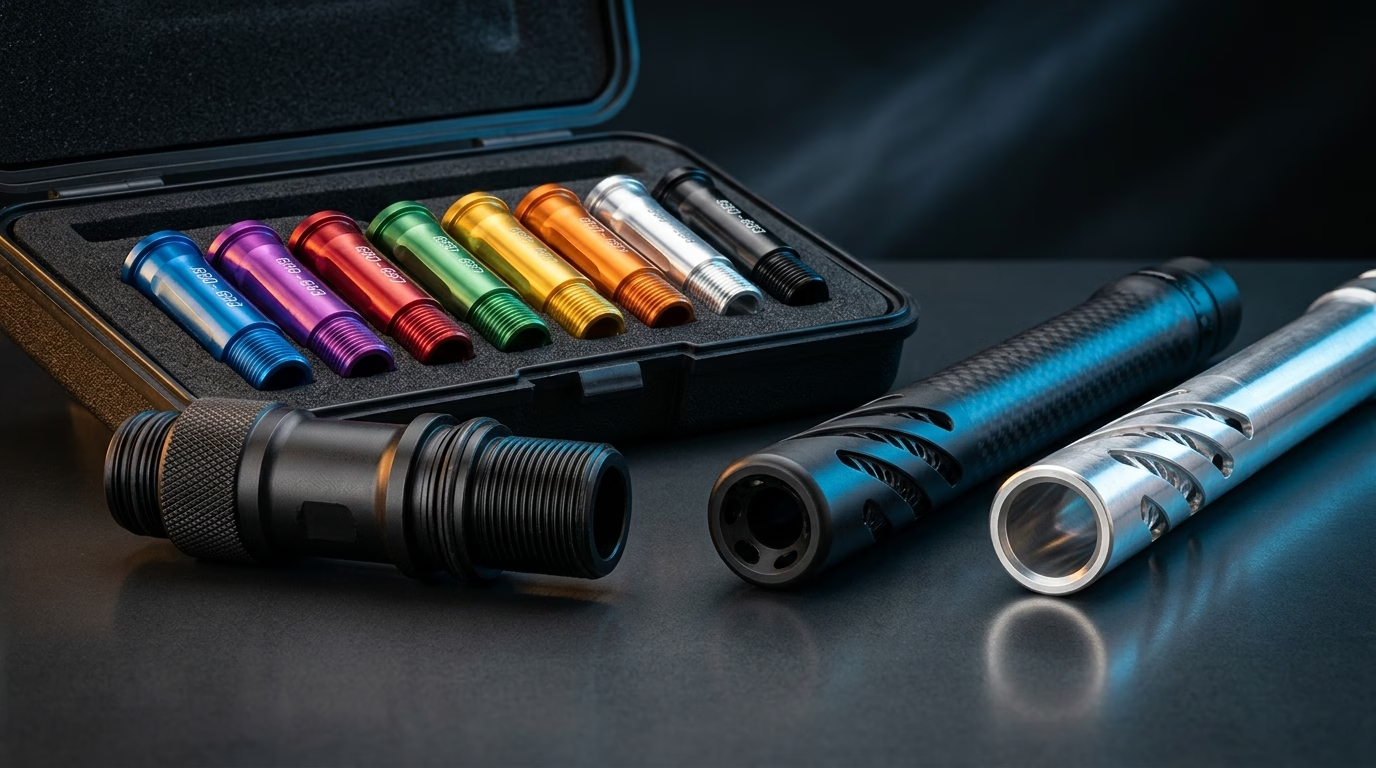
- Severe Underboring Friction: Modern two-piece tournament barrel systems (Freak XL, Dye UL, Shaft FL) use control backs measuring 5 to 8.5 inches in length with specific internal diameters (.677 to .693 inches). When a paint batch averages .688″ and a player forces an aggressive underbore insert of .682″, the interference fit is a massive 0.006 inches. The frictional resistance ($F_f = \mu imes N$) can exceed the pneumatic propulsive work done by the marker’s 110–140 PSI bolt stroke, stopping the projectile dead in the control section.
- Low Operating Pressure (Bolt Stick / First-Shot Drop-Off): If the marker suffers from cold-weather grease thickening or regulator pressure starvation, the bolt’s forward dwell impulse drops below the threshold required to overcome static bore friction ($F_s$). The ball clears the breech detents but lodges 3 to 4 inches down the control bore.
- The Taper Wedge Effect: Paintball barrels are engineered with a tighter control back that transitions into a wider un-honed front tip (.695″+) with acoustic porting. If a player pushes a stuck paintball in barrel forward toward the muzzle, the paintball can impact the internal transition lip, compressing the gelatin into an elliptical wedge that locks tightly against the wall.
Diagnostic Lookup Table: Stuck Paintball Scenarios & Field Remedies
Use our field-tested armorer reference matrix to identify your specific blockage scenario, the physics behind the jam, and the exact extraction tool to deploy:
Step-by-Step Diagnostic Flowchart
When you encounter a stuck paintball in barrel during staging or practice, consult our structured armorer decision tree below to safely clear the obstruction:
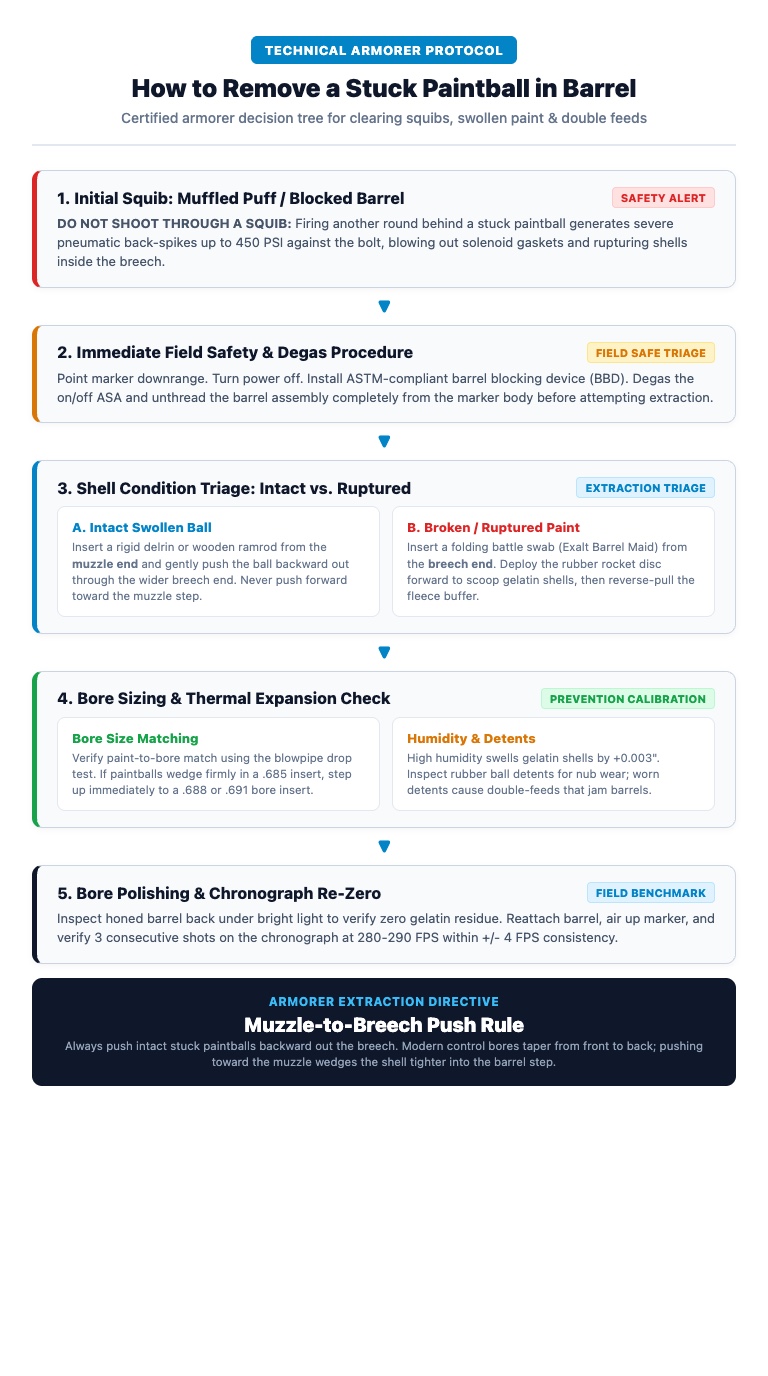
Figure 1: Certified armorer decision tree for clearing intact squibs, swollen gelatin shells, and broken paint from tournament barrels.
5-Step Armorer Protocol: Safe Stuck Paintball Extraction
Follow our field-proven protocol to remove a stuck paintball in barrel without risking eye injuries, blown internal gaskets, or scarred barrel rifling:
Phase 1: Immediate Range Safety & Degas
The instant you detect a squib, keep your finger off the trigger. Point the barrel downrange, switch the electronic power button off, and immediately slip your ASTM F1776-compliant barrel blocking device over the muzzle. Degas the marker using the on/off ASA purge lever to dump all high-pressure gas from the inline regulator.
Never look down the barrel bore under any circumstances, even if you believe the marker is uncocked. Trapped pneumatic pressure behind a stuck ball can suddenly discharge the projectile without warning.
Phase 2: Barrel Disassembly & Visual Triage
Unthread the entire barrel assembly from the marker receiver. If you shoot a two-piece barrel system (like a Freak XL, Dye Boomstick, or HK Army Lazr), separate the barrel tip from the control back. In 90% of squib failures, the paintball is wedged inside the first 4 to 8 inches of the control back or insert.
Look through the breech end into ambient light to confirm whether the shell is fully intact or crushed into wet paint gelatin.
Phase 3: The Muzzle-to-Breech Push Technique (Intact Squib)
If the stuck paintball is intact, apply the certified armorer Muzzle-to-Breech Push Rule:
- Take a non-marring delrin rod, a thick wooden dowel (1/2″ diameter), or a sturdy straight squeegee shaft.
- Insert the rod through the front muzzle end of the barrel.
- Apply steady, gentle hand pressure against the ball face, pushing it backward toward the wider breech threads.
- Catch the expelled ball in your hand or a shop rag as it pops out of the breech.
Why muzzle-to-breech? Modern barrel backs feature a precision step taper that leads into the control bore. Pushing from the breech toward the muzzle forces the ball against the taper step, squeezing it tighter and increasing the likelihood of rupturing the shell inside the bore.
Phase 4: Clearing Broken Shells with a Folding Battle Swab
If the paintball ruptured during the squib, liquid polyethylene glycol and gelatin fragments coat the bore walls. Do not push dry paper towels or cotton rags down the barrel, as they smear liquid paint into the acoustic porting holes:
- Insert the rubber “rocket disc” end of a folding battle swab (such as the Exalt Barrel Maid) into the breech end.
- Push the disk straight through past the broken shell; the elastomer disk flexes on entry and expands on the return stroke to squeegee 95% of liquid paint and shell shards out the front.
- Flip the swab and run the high-density fleece buffer end back and forth through the bore to polish the aluminum to a dry, mirror-like finish.
Phase 5: Paint-to-Bore Calibration & Detent Inspection
Before rethreading the barrel onto your marker, determine why the stuck paintball in barrel occurred in the first place:
Perform the Blowpipe Drop Test: Drop 5 separate paintballs from your pod into your barrel insert. A properly matched bore allows the ball to rest gently inside the control bore without falling through on its own; a light breath of air through the breech should propel the ball smoothly through the front. If you must blow with maximum lung force, the insert is severely underbored. Step up your insert size by +0.003″ (e.g., from .684 to .687).
Inspect Marker Ball Detents: Shine an inspection light into the marker breech. Verify that both rubber ball detents (or magnetic pistons) extend firmly into the chamber. Worn or flattened detents allow two paintballs into the firing chamber, causing a severe double-feed squib on the subsequent trigger pull (ensure your marker is tuned to eliminate paintball trigger bounce to avoid accidental double-taps).
Essential Armorer Tools for Barrel Extraction & Bore Sizing
To safely clear barrel obstructions and prevent squibs during tournaments, keep these certified bench tools in your staging pack:
Exalt Barrel Maid Folding Battle Swab
The gold standard tournament battle swab. Features a flexible molded rocket disc that squeegees liquid paint forward and a plush fleece buffer that dries the bore.
Freak XL Boresizing Insert Barrel Kit
8-piece precision 8.5-inch aluminum insert system (.677 to .693) that eliminates squibs and barrel breaks by matching any tournament paint batch to environmental humidity.
HK Army Ball Breaker Rubber Pull Squeegee
Heavy-duty flexible rubber pull-through squeegee designed to extract stubborn gelatin husks and thick paint sludge without damaging barrel rifling or mirror honing.
Delrin Non-Marring Barrel Cleaning Ramrod
Solid engineering polymer extraction rod for safely pushing intact squibs backward out the breech without scratching aluminum bore walls or damaging porting.
Video Walkthrough: Proper Barrel Squeegeeing & Squib Clearing
If you are actively diagnosing why you have a stuck paintball in barrel, watch this practical technical demonstration showing the exact procedure for swabbing, squeegeeing, and polishing a paintball barrel without marring its honed finish:
Final Armorer Verdict: Squib Safety & Bore Maintenance
Safely resolving a stuck paintball in barrel requires discipline and patience on the staging bench. Never attempt to shoot through a barrel obstruction, and never force metal tools into a honed aluminum or carbon fiber sleeve. Disassemble the barrel, push intact paintballs backward out the breech with a non-marring delrin rod, clean liquid residues with a high-density fleece battle swab, and step up your bore insert size to maintain a +0.002″ thermal safety margin against ambient humidity.
Frequently Asked Questions
Can I shoot another paintball to clear a stuck paintball in barrel?
Never attempt to shoot through a stuck paintball. Firing a secondary round generates severe pneumatic back-pressure spikes up to 450 PSI against the marker bolt. This pressure spike will blow out solenoid manifold gaskets, crack barrel tips, and pulverize liquid paint backward into your marker’s optical eye channels.
Which direction should I push a stuck paintball to remove it?
Always push intact paintballs from the muzzle backward out through the breech. Paintball barrels feature a tighter control bore that steps into a wider ported front; pushing toward the muzzle wedges the ball tighter into the bore transition step, risking rupture.
Can I use a metal coat hanger to push out a stuck paintball?
No. Never use metal coat hangers, screwdrivers, or brass rods. Aluminum barrels have microscopic mirror-polished finishes (Ra < 4 μin). Metal contact creates deep longitudinal gouges that permanently destroy downrange paintball stability and accuracy.
Why do paintballs get stuck in the barrel on hot or humid days?
Paintball shells are manufactured from organic gelatin that readily absorbs atmospheric moisture. In high humidity, paintballs can swell by +0.003″ in less than two hours. If your barrel insert was tightly matched in the cool morning, the swollen paint will jam in the bore during afternoon play.
What causes a double-feed squib with two balls in the barrel?
A double-feed squib is caused by worn or damaged rubber ball detents inside the marker breech. When detent nubs become flattened, they fail to retain the second ball in the feed stack, allowing two projectiles into the firing chamber simultaneously where they wedge tightly in the barrel.
How do I dissolve dried paint stuck inside a barrel?
Submerge the barrel or insert in warm water (approx. 110°F) for 5 minutes. Paintball fill is 100% water-soluble polyethylene glycol (PEG) and vegetable dye; warm water dissolves the hardened crust instantly without chemical solvents. Follow up with a plush fleece swab to dry completely.