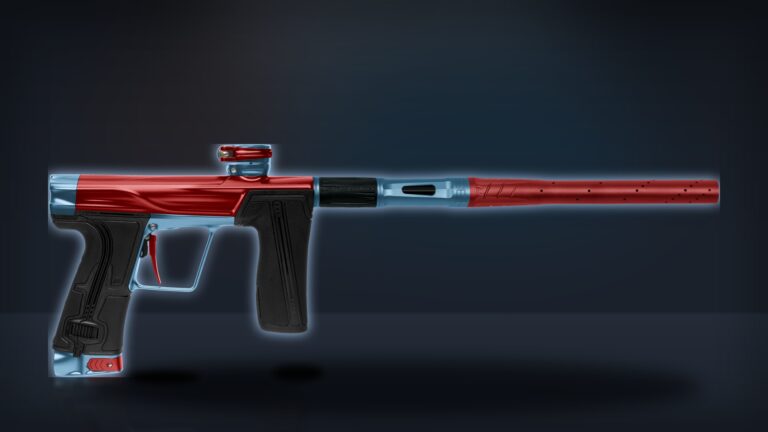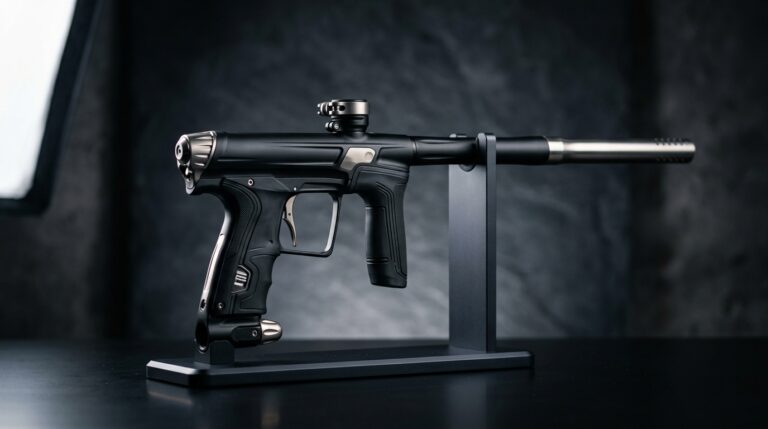
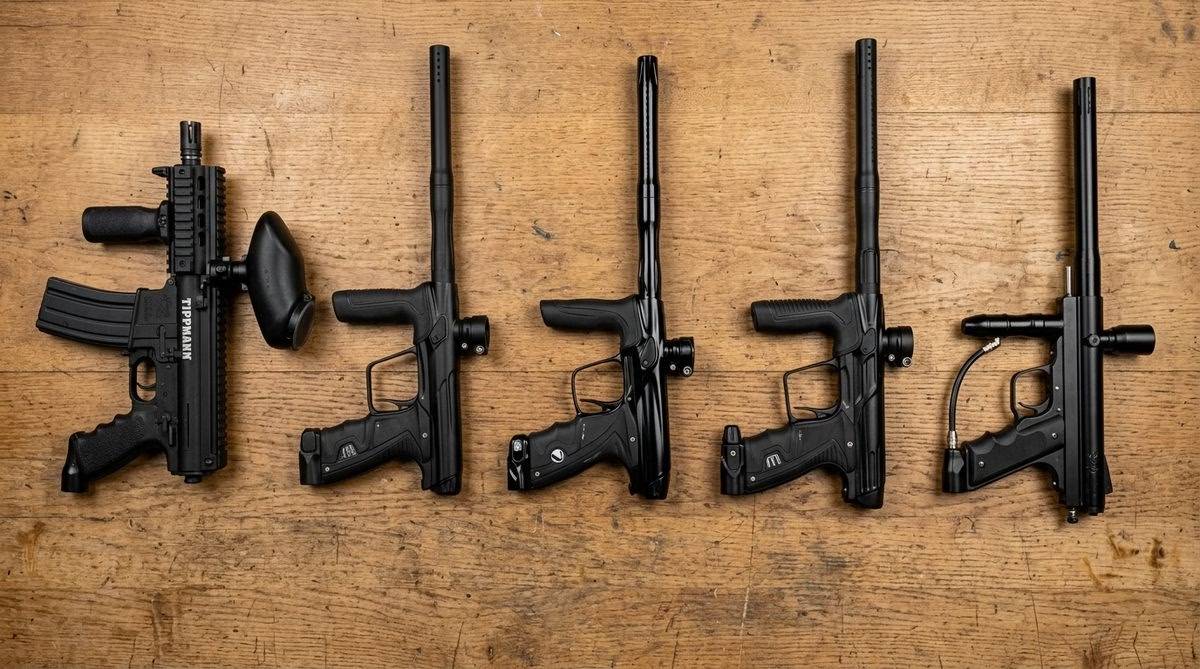
Quick take: paintball objectively hits with vastly more kinetic energy (roughly 12 to 14 Joules vs. 1.2 to 1.5 Joules for airsoft), producing a heavy, blunt-force impact that can leave circular bruises and deep welts. In contrast, airsoft concentrates its much lower energy on a tiny 6mm pin-point, resulting in a sharp, stinging pinch that feels like a rubber band snap or bee sting. While paintball packs nearly 10 times more total impact force, airsoft is more likely to break bare skin or chip unprotected teeth at close range due to its concentrated surface area. With the right protective layers and thermal masks, both sports are safe, thrilling, and completely manageable for beginners.
Quick Comparison: Paintball vs. Airsoft Pain & Ballistics
| Factor | Paintball (.68 Caliber) | Airsoft (6mm BB) |
|---|---|---|
| Projectile Weight | ~3.0 to 3.3 grams (Gelatin liquid shell) | 0.20 to 0.28 grams (Solid polymer BB) |
| Standard Field Velocity | 280–300 FPS (~91 m/s) | 350–400 FPS (AEGs) / up to 500 FPS (Snipers) |
| Kinetic Energy (Impact Force) | 12.0 to 14.0 Joules | 1.2 to 1.5 Joules (Snipers: ~2.3J) |
| Impact Sensation | Heavy, blunt thud; deep muscle ache | Sharp, localized sting; pin-point snap |
| Aftermath & Marks | Circular welts, deep purple bruising | Small red dots, surface welts, or small scabs |
| Energy Dissipation | Shell breaks on impact, dispersing kinetic energy | Solid BB bounces, transferring impact into surface point |
| Mandatory Protective Gear | ASTM F1776 Full-Face Mask with Thermal Lens | Full-Seal Eye Goggles + Lower Mesh Face/Tooth Guard |
The Ballistics & Physics: Why Paintball Packs 10x More Energy
When comparing pain levels, physics provides the clearest answer. Kinetic energy (the total force delivered to your body on impact) is calculated using the standard ballistic formula:
$$\text{Kinetic Energy} = \frac{1}{2} m v^2$$
Where m is the mass of the projectile in kilograms and v is the velocity in meters per second.
- Standard Paintball (.68 Caliber @ 300 FPS): A 3.2-gram paintball traveling at 91.4 m/s delivers approximately 13.37 Joules of kinetic energy.
- Standard Airsoft BB (6mm 0.20g @ 380 FPS): A 0.20-gram plastic BB traveling at 115.8 m/s delivers approximately 1.34 Joules of kinetic energy.
Because kinetic energy scales directly with mass, a paintball delivers roughly ten times more total physical energy upon impact than an airsoft BB. This is why a paintball hit can knock your breath out or push your arm back when bunkered, whereas an airsoft hit is purely a surface-level tactile signal.
Blunt Force Thud vs. Sharp Needle Sting
While the math clearly gives paintball the raw energy victory, the type of pain you feel is noticeably different between the two sports:
What a Paintball Hit Feels Like
A paintball hit feels like being struck firmly by a wet tennis ball or snapped with a heavy wet towel. The impact radiates over a 1.5-inch circular area. If the paintball hits bare skin or thin cotton at close range, blood vessels beneath the skin rupture, resulting in a classic raised red welt that turns into a deep purple bruise over the next 24 to 48 hours. The pain lingers as a dull muscle ache for several minutes after the hit.
What an Airsoft Hit Feels Like
An airsoft BB impact feels like an intense rubber band snap or a sharp bee sting. Because the 6mm BB does not deform or burst, its entire 1.3 Joules of energy is concentrated onto a tiny 0.28 cm² contact patch. While it doesn’t produce deep muscle bruising like paintball, an airsoft hit on bare skin or through a single layer of thin fabric creates an immediate, sharp sting that can cause small localized bleeding or a pinhead-sized scab. However, the pain dissipates much faster — usually fading within 30 to 60 seconds.
The “Bounce” Factor: Why Non-Breaking Paintballs Hurt Most
In paintball, the gelatin shell is designed to burst upon impact. When a paintball breaks cleanly, a substantial percentage of its 13 Joules of kinetic energy is consumed in rupturing the shell and splashing the liquid fill outward, dampening the shockwave transferred into your skin.
However, when a paintball bounces without breaking (which frequently happens at extreme distances, on loose baggy clothing, or in cold winter conditions where gelatin shells stiffen), 100% of that kinetic energy is driven directly into your body. Non-breaking paintball bounces represent the most painful impacts in either sport.
Essential Impact Protection
As an Amazon Associate, we earn from qualifying purchases at no extra cost to you.
Distance & Engagement Range Dynamics
How much a hit hurts is heavily dictated by engagement distance and field layouts:
- Close Quarters Combat (CQB / Bunkering Under 15 Feet): This is where both sports hurt the most. In paintball, taking a direct hit at 10 feet produces immediate welts. In airsoft, point-blank fire on exposed knuckles, fingers, or earlobes is notoriously painful and can easily break bare skin.
- Mid to Long Range (50+ Feet): Due to their large surface area and low aerodynamic efficiency, .68 caliber paintballs shed velocity rapidly in flight. A paintball hit from 70 feet away feels gentle and rarely bruises. Airsoft BBs, with their high ballistic density and spin, maintain their stinging zip even at longer ranges.
Most Sensitive Hit Locations (And What to Wear)
If you want to eliminate 90% of the pain in both sports, protecting your body’s sensitive high-nerve areas is essential:
- Fingers and Knuckles: The hands are exposed whenever holding a marker or rifle. Getting shot on bare knuckles is agonizing in both sports. Wear hard-knuckle tactical gloves with rubber armor.
- The Neck & Adam’s Apple: The neck has thin skin and no muscle padding. A direct hit here leaves an unsightly welt. A simple neoprene neck protector absorbs all impact energy.
- The Groin: Both male and female players should wear athletic supporters or padded slide shorts.
- The Face, Eyes, and Teeth:
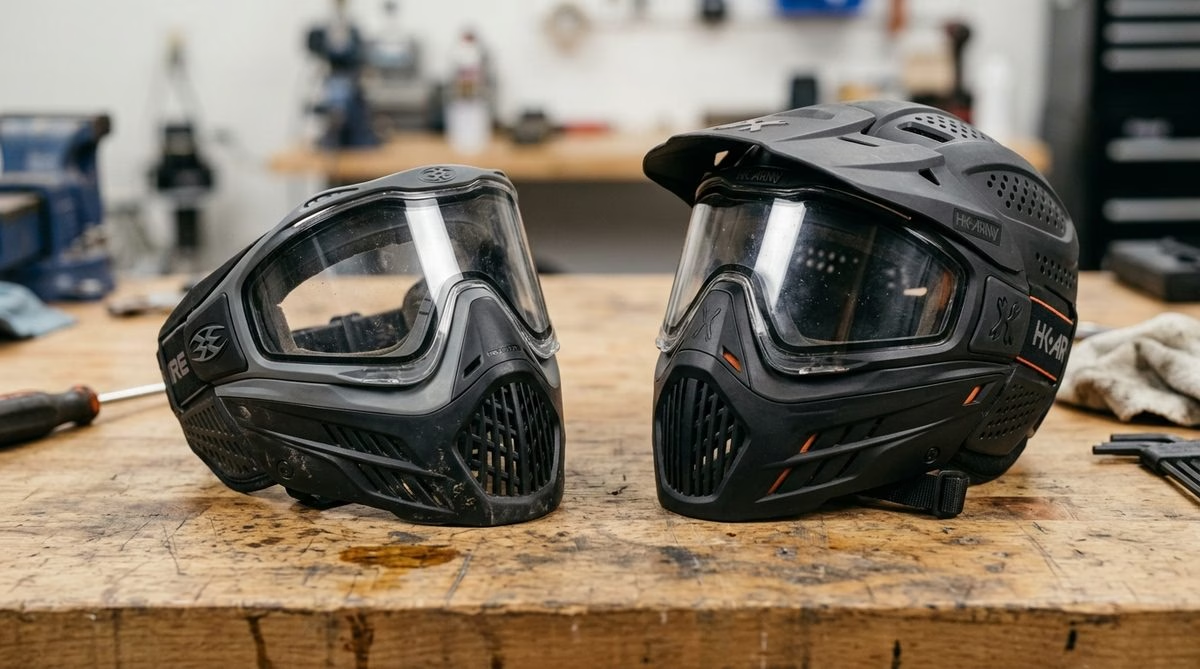
- In Paintball: An ASTM F1776 certified full-face mask with thermal dual-pane lenses is non-negotiable.
- In Airsoft: Never play with eye goggles alone. High-velocity BBs easily shatter front incisors; a steel mesh lower face mask is mandatory to protect your teeth.
Protect Your Neck & Hands
As an Amazon Associate, we earn from qualifying purchases at no extra cost to you.
Mistakes to Avoid
- Wearing thin, tight cotton t-shirts. Tight clothing transfers all impact force directly to the skin. Wear loose-fitting layers (a moisture-wicking base layer under a durable hoodie or tactical jersey) to create an air cushion that deadens impact.
- Lifting your mask on the field. Never remove or adjust your eye protection while inside the netting or playing arena — eye injuries are the only severe hazard in both sports.
- Playing airsoft without steel mesh tooth protection. Unlike paintballs that break on your lips, a solid plastic BB traveling at 400 FPS can chip or shatter teeth instantly.
- Using brittle or expired paint in cold weather. Storing paint in freezing garages hardens the shell, turning balls into bouncing marbles that hurt significantly more. See our paintball storage guide.
Frequently Asked Questions
Does paintball hurt more than airsoft?
Yes. Paintballs deliver roughly 12 to 14 Joules of kinetic energy compared to 1.2 to 1.5 Joules for an airsoft BB. Paintball impacts produce a heavy, blunt-force hit that frequently leaves bruises, while airsoft creates a sharp, localized sting.
Do airsoft BBs break skin?
Yes, at close range or on exposed skin, high-velocity airsoft BBs can break the epidermis, leaving small circular bleeding marks or pinhead scabs. Wearing long sleeves and tactical gloves prevents skin breaks completely.
How long do paintball bruises last?
Paintball bruises typically peak in discoloration between 24 and 48 hours and fade within 5 to 10 days. Applying an ice pack immediately after play reduces swelling and welt formation.
Can kids play paintball without pain?
Yes. Many modern fields offer low-impact .50 caliber paintball or spring-powered Splatmaster markers, which operate at less than one-third the kinetic energy of standard .68 caliber markers and are virtually painless for younger players.
What is the best clothing to reduce pain in both sports?
Wear two loose-fitting layers (such as a long-sleeve athletic shirt beneath a hooded sweatshirt or tactical jersey), a neoprene neck protector, hard-knuckle gloves, and comfortable cargo pants with knee pads.
Verdict
When stripped down to pure physics, paintball hurts more than airsoft in terms of raw impact force, muscle shock, and post-game bruising. However, airsoft delivers a sharper, needle-like sting that can surprise first-time players. Neither sport causes unmanageable pain once you suit up in basic protective gear: loose layers, tactical knuckle gloves, a neck guard, and a quality full-face mask turn both sports from intimidating to pure adrenaline-fueled fun.
Related reading: How Do I Protect Myself from Paintball? · What Is the Injury Rate for Paintball? · Best Paintball Gear for Cold Weather · How to Store Paintballs · Best .68 Caliber Paintball Guns
Affiliate Disclosure: theoutdoortips.com is a participant in the Amazon Services LLC Associates Program. As an Amazon Associate we earn from qualifying purchases at no extra cost to you.