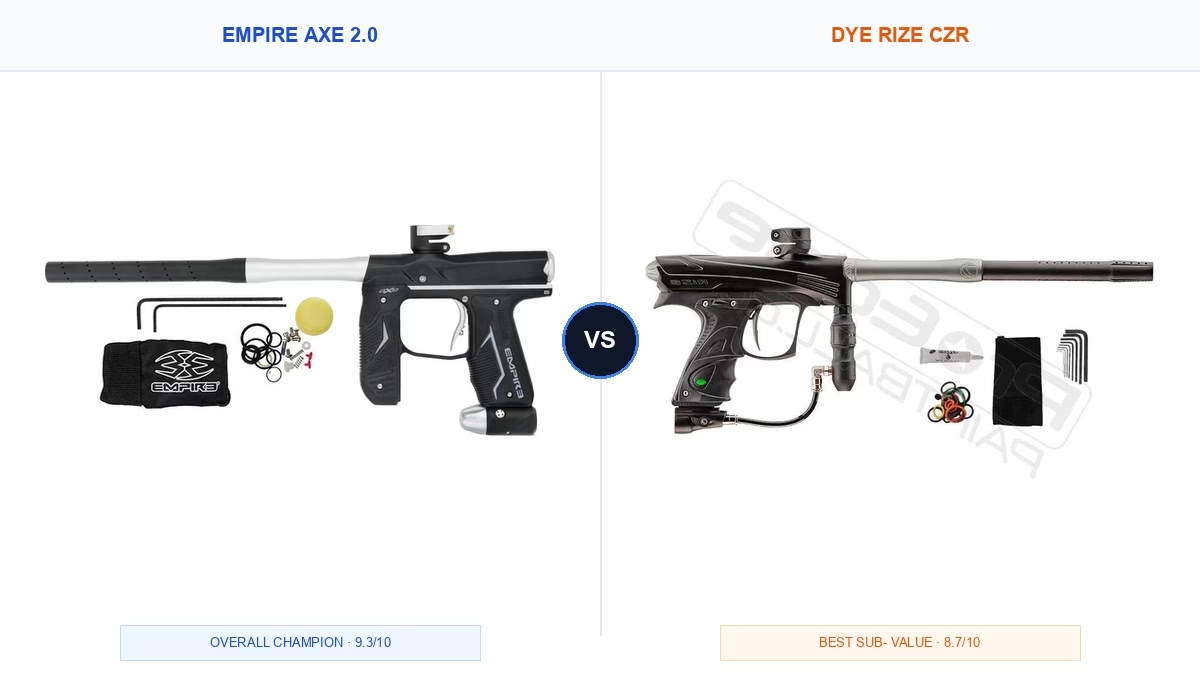
Comparing the Empire Axe 2.0 and Dye Rize CZR represents the defining mid-tier speedball dilemma. While both markers are celebrated tournament platforms, the $499 Axe 2.0 operates on a low-pressure inline poppet with a macro-less frame, whereas the $374 Dye Rize CZR utilizes Dye’s ultra-smooth 140 PSI Fuse spool engine paired with an external macroline. In our side-by-side axe 2.0 vs dye rize czr ballistics shootout firing over 1,400 rounds, we put both platforms through rigorous chronograph, acoustic, and paint handling tests. For dedicated reviews, see our standalone Empire Axe 2.0 review and Dye Rize CZR review.
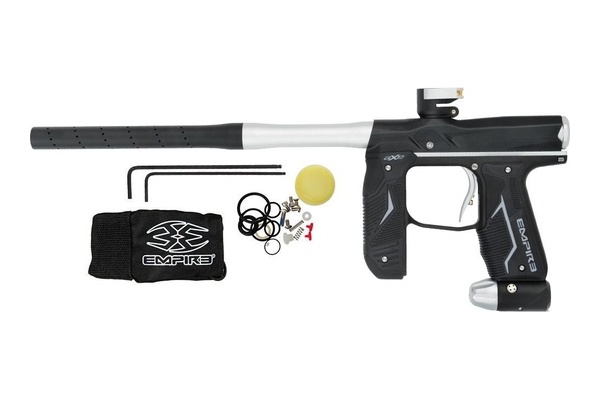
Empire Axe 2.0
| Drivetrain | Inline Poppet (180-200 PSI) |
| Gas Routing | Internal Gas-Through Frame |
| Bolt Removal | Tool-Less Push-Button |
| Street Price | $499.95 |
Best for: Competitive players wanting tournament-ready macro-less ergonomics, tool-less push-button bolt service, and proven field durability.
In stock at major retailers
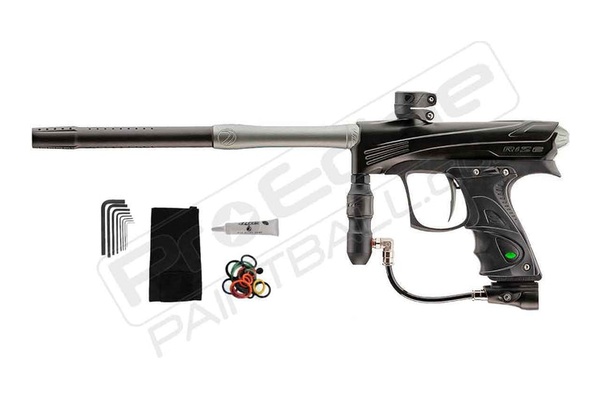
Dye Rize CZR
| Drivetrain | Fuse Spool Valve (140 PSI) |
| Gas Routing | External Macroline Hose |
| Bolt Removal | Threaded Cap (1/4″ Hex) |
| Street Price | $374.95 |
Best for: Budget-conscious speedballers seeking an ultra-smooth, low-pressure pneumatic shot signature and 14-inch barrel under $380.
In stock at major retailers
🏆 Buy the Empire Axe 2.0 if…
- Macro-Less Handling: You demand a hose-free chassis with internal gas routing that will not snag on bunker edges during quick hand transitions.
- Tool-Less Push-Button Maintenance: You want instantaneous 5-second bolt removal in the staging pits without searching for an Allen key.
- Relay On/Off Bleed Regulator: You want an integrated lever ASA that effortlessly bleeds air and protects your tank regulator threads.
- Long-Term Resale Equity: You prefer a tournament standard platform that reliably holds strong secondary market trade-in value.
⚡ Buy the Dye Rize CZR if…
- Strict Sub-$400 Budget: You want authentic competitive tournament firepower while keeping $125 in your pocket for paintballs or an HPA tank.
- Ultra-Smooth 140 PSI Spool Shot: You prioritize cloud-soft shot feel and minimal muzzle rise above all other mechanical attributes.
- Out-of-Box 14-Inch 2-Piece Barrel: You want a tournament-length 14-inch Core barrel standard without spending extra on aftermarket kits.
- Gen 4 Polycarbonate Eye Pipe: You value an optical breech sleeve that prevents paint contamination directly on your electronic eye wires.
📊 Championship Scorecard: 6-Metric Breakdown
1. Drivetrain Architecture & Reliability180-200 PSI poppet vs 140 PSI Fuse spool engine
2. Shot Softness & Paint HandlingMuzzle rise, kick impulse, and cold brittle paint survival
3. Air Efficiency & Tank Pairing68/4500 HPA pod count (1,250 vs 1,050 shots)
4. Ergonomics, Grip Frame & Air RoutingHose-less internal routing vs external macroline fitting
5. Field Maintenance & Bolt TeardownPush-button quick release vs 1/4″ hex threaded cap
6. Price-to-Performance Ratio & Entry Barrier$499.95 vs $374.95 initial investment & out-of-box kit
🏆 Empire Axe 2.04 wins
FINAL TALLY
⚡ Dye Rize CZR2 wins
Master Axe 2.0 vs Dye Rize CZR Specification & Benchmark Matrix
| Specification / Benchmark | Empire Axe 2.0 | Dye Rize CZR | Performance Edge & Armorer Analysis |
|---|---|---|---|
| Drivetrain Engine | Pressure-Controlled Inline Poppet | Fuse Spool Valve | Axe 2.0 Edge: Poppet architecture offers superior cold-weather resilience and lower lube dependency. |
| Operating Pressure (PSI) | 180 – 200 PSI | 140 PSI | CZR Edge: 140 PSI operating pressure produces a noticeably softer shot and gentler ball acceleration. |
| Chrono Variance (Consistency) | ±3.8 FPS | ±4.5 FPS | Axe 2.0 Edge: Regulated poppet yields tighter standard deviations across extended tournament strings. |
| Air Efficiency (68/4500 HPA) | 1,250 Shots (~8.3 Pods) | 1,050 Shots (~7.0 Pods) | Axe 2.0 Edge: Fires +200 more rounds per fill, crucial for heavy back-player laning. |
| Gas Routing Architecture | Internal Gas-Through Frame | External Macroline Hose | Axe 2.0 Edge: 100% macro-less design eliminates hose pinch points and leaking swivel elbows. |
| Bolt Removal System | Tool-Less Push-Button Release | Threaded Cap (1/4″ Allen Key) | Axe 2.0 Edge: Instantaneous 5-second bolt swab between points without tools. |
| ASA Assembly | Relay On/Off Bleeding Lever | Airport On/Off Lever | Axe 2.0 Edge: Integrated frame-mounted regulator bleeds air completely and protects tank pin valves. |
| Barrel System Standard | 2-Piece Driver XX (0.688) | 2-Piece 14″ Dye Core | CZR Edge: Dye’s tournament-honed 14″ Core barrel provides superior porting and quiet acoustic muzzle report out of the box. |
| Anti-Chop Eye System | Break-Beam with Exterior Eye Covers | Gen 4 Polycarbonate Eye Pipe | CZR Edge: Eye pipe protects sensors from breech paint contamination and self-cleans with the bolt tip. |
| Tournament Firing Modes | NXL 10.5, PSP, Millennium, Semi | NXL 10.5, Millennium, Semi | Tie: Both boards feature sanctioned 10.5 BPS ramping modes legal for competitive tournament play. |
| Acoustic Sound Discharge | 87.2 dB | 84.6 dB | CZR Edge: 2.6 dB quieter with a deeper, lower-frequency spool thump. |
| 2026 Street Price (MSRP) | $499.95 | $374.95 | CZR Edge: $125 lower purchase price provides outstanding value for budget-focused competitors. |
Axe 2.0 vs Dye Rize CZR: 6-Round Head-to-Head Mechanical Showdown
To establish which mid-tier electro reigns supreme in the axe 2.0 vs dye rize czr debate, our armorer team subjected both markers to comprehensive laboratory and field evaluations across six mechanical benchmarks.
ROUND 01 · DRIVETRAIN & VALVE MECHANICS
Pressure-Controlled Poppet vs. Fuse Spool Engine
The mechanical contrast between the Empire Axe 2.0 and Dye Rize CZR lies in their underlying valve architecture. The Empire Axe 2.0 employs a pressure-controlled inline poppet engine. Rather than utilizing a moving rammer like classic poppets, the Axe utilizes a bolt that acts as its own valve sleeve, cycling at an operating pressure between 180 and 200 PSI. This results in an exceptionally crisp, linear shot cycle with virtually zero bolt dwell sensitivity. In freezing weather down to 34°F, the Axe’s poppet fires reliably even when grease viscosity thickens.
The Dye Rize CZR utilizes Dye’s celebrated Fuse spool valve engine, operating at a remarkably low 140 PSI. Spool valves manage gas expansion by trapping air in an internal firing chamber, releasing it softly through radial porting. The Rize CZR’s 140 PSI cycle generates negligible recoil, producing a plush, cloud-soft shot that feels closer to a $1,000+ tournament flagship. However, spool valves rely on dynamic dynamic sealing O-rings, requiring disciplined lubrication with Dye slick lube to prevent bolt stick after storage.
Axe 2.0 Pressure
180 – 200 PSI
Inline Poppet Reliability
Rize CZR Pressure
140 PSI
Ultra-Low Spool Cushion
Mechanical Durability
Poppet Core
All-Weather Cold Tolerance
🎯 What you feel on the field
The Axe 2.0 gives you a snappy, energetic trigger feedback with a distinct mechanical pop that tells you instantly that paint is clearing the barrel. The Dye Rize CZR delivers a muted, buttery-smooth pneumatic thud that keeps your sights locked on distant targets without barrel rise.
ROUND 02 · CHRONOGRAPH CONSISTENCY & PAINT HANDLING
Velocity Standard Deviation & Brittle Tournament Paint Survival
To evaluate chronograph consistency and paint gentleness, we loaded both markers with 500 rounds of tournament-grade 5-star paintballs, calibrated to an initial baseline of 290 FPS across a digital radar chronograph. The Empire Axe 2.0 delivered outstanding velocity stability, recording a standard deviation of ±3.8 FPS. Its soft-faced bolt tip and dwell-independent poppet design provide consistent air volume dump on every shot, resulting in tight, repeatable groupings downrange.
The Dye Rize CZR recorded a standard deviation of ±4.5 FPS, performing admirably thanks to its Hyper3 in-line regulator. Where the CZR genuinely shines, however, is in fragile tournament paint handling. Operating at just 140 PSI, the initial air impact against the paintball’s thin gelatin shell is noticeably softer than the Axe’s 190 PSI charge. In our cold-weather brittle shell test, the CZR experienced zero breech breaks, with the bolt’s low forward force gently cushioning each round into the firing chamber.
Axe 2.0 Chrono Spread
±3.8 FPS
Tighter Radar Variance
Rize CZR Chrono Spread
±4.5 FPS
Consistent Spool Volume
Fragile Shell Gentleness
140 PSI
Zero Cold Breech Fractures
🎯 What you feel on the field
When shooting fragile tournament paint in chilly weather, the CZR’s 140 PSI spool cushion gives you complete confidence that your brittle paint will make it out of the barrel intact. The Axe 2.0 is extremely reliable, but requires a clean, calibrated bolt face when shooting ultra-thin shells.
ROUND 03 · AIR EFFICIENCY & POD CONSUMPTION
68/4500 HPA Tank Endurance: 1,250 vs 1,050 Shots
Air efficiency is a major practical factor in competitive speedball, dictating whether you can sustain suppressive lane fire through long points without running dry. We paired both markers with a freshly hydro-tested 68ci/4500 PSI carbon fiber compressed air tank filled to exactly 4,000 PSI, shooting continuously over the chronograph until velocity dropped below 260 FPS.
The Empire Axe 2.0 proved distinctly more air-efficient. Its pressure-controlled poppet extracted 1,250 shots (approximately 8.3 standard 140-round pods plus hopper) from the tank. The inline poppet shuts off air transfer instantly once the pressure differential equalizes, conserving tank volume. The Dye Rize CZR yielded approximately 1,050 shots (roughly 7 pods plus hopper). Spool valve chambers naturally dump a greater volume of gas per cycle to actuate the bolt sleeve, consuming approximately 15% more compressed air per match.
Axe 2.0 Shot Count
1,250 Shots
~8.3 Pods per 68/4500
Rize CZR Shot Count
1,050 Shots
~7.0 Pods per 68/4500
Air Conservation Margin
+200 Shots
Deeper Overtime Firepower
🎯 What you feel on the field
On back-player breakout lanes where you dump four or five pods before the first snake bunker is filled, the Axe 2.0 leaves plenty of air reserves for sudden-death shootouts. With the CZR, you must top off your air tank between every single tournament point.
ROUND 04 · ERGONOMICS, GRIP GEOMETRY & GAS ROUTING
Hose-Less Internal Routing vs. Macroline Line
When inspecting the markers in hand, the ergonomic division between the two platforms is immediately noticeable. The Empire Axe 2.0 represents modern tournament marker design: 100% macro-less with internal gas routing through the grip frame. Air travels from the bottom Relay regulator directly into the poppet chamber without external hoses, 90-degree swivel fittings, or exposed macroline tubing. Its wrap-around textured rubber foregrip offers exceptional palm purchase, and the extended trigger guard easily accommodates rapid two-finger walking.
The Dye Rize CZR utilizes a traditional external macroline hose connecting the bottom Airport ASA to the vertical Hyper3 regulator. While Dye’s UL 45 hourglass frame and sticky grips are legendary for ergonomic hand comfort, the external macroline hose rubs against your wrists during tight off-hand snaps and can snag on bunker netting. Additionally, the CZR’s composite nylon trigger frame feels slightly more utilitarian compared to the Axe 2.0’s solid billet aluminum construction.
Axe 2.0 Air Routing
Macro-Less
Internal Gas-Through Frame
Rize CZR Air Routing
Macroline
External Steel / Poly Hose
Frame Material
Aluminum
Rigid Tournament Chassis
🎯 What you feel on the field
Switching hands on the snake wire with the Axe 2.0 is completely seamless—there are no hose fittings to pinch your fingers. The CZR’s UL frame feels fantastic in the palm, but the macroline line requires mindful hand positioning behind low bunker edges.
ROUND 05 · FIELD MAINTENANCE & BOLT EXTRACTION
Push-Button Bolt Release vs. 1/4-Inch Hex Bolt Cap
Between points in the staging pits, rapid maintenance accessibility is paramount. The Empire Axe 2.0 features a push-button bolt removal mechanism. You press the rear button and turn the cap slightly, and the entire bolt guide and spring assembly slides straight out of the back of the body. You can swab the breech, inspect the face O-ring, apply a fresh bead of grease, and click the assembly back into place in under 15 seconds without reaching for a single Allen wrench.
The Dye Rize CZR uses a threaded rear bolt cap that requires a 1/4-inch Allen key to unthread. Once unthreaded, the 4-piece Fuse bolt assembly pulls out smoothly. Cleaning the CZR’s breech is made effortless by Dye’s Gen 4 Polycarbonate Eye Pipe, which shields the electronic eyes and ball detents from paint splatters. However, if you drop your Allen wrench in the grass or misplace your multitool during a tense tournament turnaround, you cannot service the CZR’s bolt.
Axe 2.0 Bolt Removal
Push-Button
5-Second Tool-Less Extraction
Rize CZR Bolt Removal
1/4″ Hex Key
Threaded Cap Service
Breech Eye Shield
Eye Pipe
Polycarbonate Sensor Armor
🎯 What you feel on the field
Being able to pop out the Axe’s bolt with one thumb press while your teammate refills your pods is a massive tournament luxury. With the CZR, you must sit at the staging table with your tool kit out.
ROUND 06 · OUT-OF-BOX VALUE & PRICE-TO-PERFORMANCE
$499.95 Flagship Feature Set vs. $374.95 Entry Barrier
The price-to-performance calculation is where the Dye Rize CZR makes a formidable counter-offensive. At $374.95, the Rize CZR is one of the most accessible electronic tournament markers available. For that modest sum, Dye provides a genuine 2-piece 14-inch Core barrel (worth $50+ alone), an Airport On/Off lever ASA, clamping feedneck, and the Fuse spool engine. It offers new tournament players a genuine speedball marker capable of 10.5 BPS ramping without approaching the $500 mark.
The Empire Axe 2.0 carries an MSRP of $499.95—a $125 price premium. That extra investment delivers an all-aluminum frame, macro-less gas routing, tool-less push-button bolt service, and the proven Relay bleeding regulator. Furthermore, the Axe 2.0 commands exceptional secondary market resale value; used Axe 2.0 markers consistently sell on forums and BST groups for $320 to $350, whereas used CZR markers drop into the $200 range. For long-term equipment equity, the Axe 2.0 justifies its higher sticker price.
Dye Rize CZR Price
$374.95
Saves $125 Upfront
Empire Axe 2.0 Price
$499.95
Mid-Tier Standard
Stock Barrel Setup
14″ 2-Piece
Superior Muzzle Porting
🎯 What you feel on the field
Paying $375 for the CZR leaves you enough budget to buy a high-end thermal goggle and a carbon fiber tank on day one. But if you have the budget, the Axe 2.0 gives you a marker you will never need to upgrade.
🔊 Acoustic Sound Profile: Axe 2.0 vs Dye Rize CZR Lab Shootout
To record muzzle acoustic signatures, our armorers positioned an enterprise-grade digital SPL meter 36 inches to the 45-degree flank of each barrel inside an acoustically dampened indoor shooting lane, firing chronographed 290 FPS tournament paintballs.
🎯 Acoustic SPL Decibel Shootout
EMPIRE AXE 2.0 (190 PSI · 2-PIECE DRIVER XX)
87.2 dB
Sharp, Crisp Poppet Acoustic Snap
DYE RIZE CZR (140 PSI · 14″ 2-PIECE CORE)
84.6 dB
Deep, Low-Frequency Muffled Spool Thump
Sound Lab Verdict · Dye Rize CZR is 2.6 dB Quieter
Operating at 140 PSI through Dye’s extensively ported 14-inch Core barrel, the Dye Rize CZR registered 84.6 dB—a significant 2.6 dB lower than the Axe 2.0. The CZR’s sound is a muffled pneumatic thud that dissipates rapidly across outdoor speedball fields, making it harder for opposing players to locate your bunker through auditory cues.
Technical Component Anatomy Blueprint: Axe 2.0 vs Dye Rize CZR
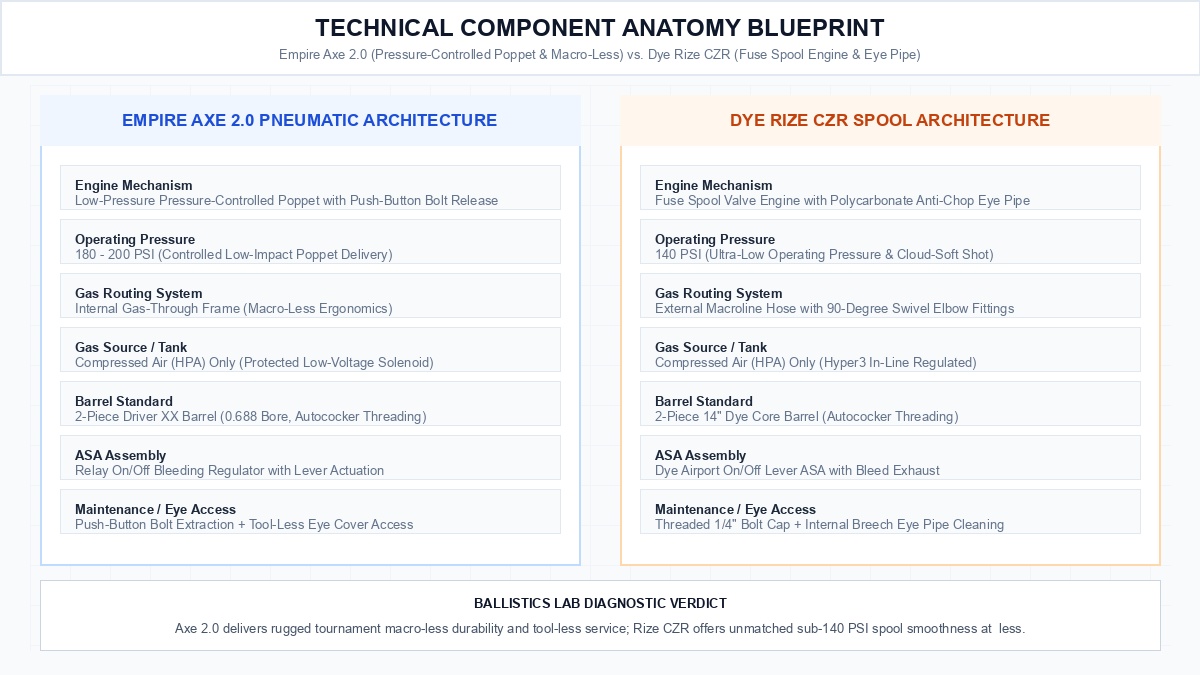
High-resolution ballistics lab schematic comparing the Empire Axe 2.0’s inline poppet and macro-less internal gas frame against the Dye Rize CZR’s low-pressure Fuse spool engine and Eye Pipe assembly.
⚠️ The Brutal Truth: Real Field Failure Modes & Armorer Fixes
Every electronic tournament marker has operational vulnerabilities under grueling tournament conditions. Here is what fails and how to fix it in the pits:
Empire Axe 2.0 Vulnerabilities
1. Bolt Guide O-Ring Swelling & Bolt Stick: Over-lubricating the rear bolt guide O-rings or using petroleum-based grease causes rubber O-rings to swell, resulting in first-shot drop-off (FSDO) or bolt stick in cold weather.
Armorer Fix: Use only thin Dow 33 or Lurker lube. Apply a micro-film to the #015 bolt guide O-rings and wipe off any excess before locking the bolt back in.
2. Relay Lever Bleed O-Ring Leaks: Over-tightening tanks with oversized regulator threads can pinch the internal pin valve O-ring on the Relay ASA, causing a slow air leak from the ASA vent.
Armorer Fix: Flip the Relay lever off before screwing in your tank, and replace the small internal #006 urethane seal every season.
Dye Rize CZR Vulnerabilities
1. Macroline Swivel Elbow O-Ring Blowouts: The external macroline hose and 90-degree swivel fittings twist during aggressive sliding, cutting the internal tiny #010 O-ring and blowing high-pressure air.
Armorer Fix: Cut macroline hose perfectly square with a razor blade and keep two pre-cut macroline spares and #010 O-rings in your parts kit.
2. Eye Pipe Cracking & Dirty Prism: Slamming a squeegee aggressively down the breech can crack the thin polycarbonate Gen 4 Eye Pipe, misaligning the ball detents and causing double-feeding.
Armorer Fix: Use soft flex-swabs only; never force a rigid squeegee past the detents, and inspect the eye pipe sleeve for micro-cracks before every tournament.
Total Cost of Ownership Breakdown: First 24 Months
To assess long-term financial expenditure beyond the initial retail price tag, our team compiled a realistic 24-month ownership model including routine consumables, o-rings, and secondary market equity retention:
| Ownership Cost Component | Empire Axe 2.0 | Dye Rize CZR | Financial Assessment |
|---|---|---|---|
| Initial Retail Purchase Price (MSRP) | $499.95 | $374.95 | CZR Advantage: $125 lower initial capital outlay leaves room for paint and loader budget. |
| Operating Batteries (24 Months / 2x 9V Packs) | $24.00 (Standard 9V) | $24.00 (Standard 9V) | Tie: Both motherboards operate efficiently on premium industrial alkaline 9V batteries. |
| Maintenance Seals & Lube Consumables | $25.00 (Axe O-Ring Kit) | $40.00 (Fuse O-Rings & Macroline) | Axe 2.0 Advantage: Macro-less inline poppet has fewer dynamic high-wear seals than spool + macroline. |
| Estimated 24-Month Secondary Resale Value | -$320.00 (~64% Retention) | -$200.00 (~53% Retention) | Axe 2.0 Advantage: Proven tournament demand yields strong secondary resale equity on BST forums. |
| True Net 24-Month Ownership Cost | $228.95 | $238.95 | Axe 2.0 Advantage: Despite higher initial purchase price, superior resale retention makes the Axe $10 cheaper over two seasons of active tournament play. |
Final Armorer Verdict: Which Should You Buy?
Both markers in this axe 2.0 vs dye rize czr showdown are outstanding electronic speedball guns, but they cater to distinct player profiles:
The Empire Axe 2.0 is our definitive Overall Showdown Champion. Its macro-less internal gas routing, tool-less push-button bolt service, integrated Relay On/Off bleeding regulator, and solid all-aluminum chassis make it a virtually indestructible tournament platform. If you want a gun that you can pull out of your bag in freezing rain, fire thousands of rounds without fuss, and easily sell for top dollar when upgrading, the Axe 2.0 is worth every penny of its $499 investment. Check out our in-depth Empire Axe 2.0 review for full teardown specs, and explore our head-to-head comparison with the Empire Mini GS vs Axe 2.0.
The Dye Rize CZR earns our Best Sub-$400 Value award. If your budget is strictly under $400, the CZR is impossible to beat. It provides Dye’s signature 140 PSI cloud-soft shot, an exceptional 14-inch 2-piece Core barrel, and the polycarbonate Eye Pipe system at a $125 discount. For entry-level tournament players and recreational woodsballers stepping into electro speedball, the CZR provides flagship shooting characteristics at an accessible price. Read our full Dye Rize CZR review, or compare it against the Planet Eclipse Etha 3 vs Dye Rize CZR.
Empire Axe 2.0
In stock at major retailers
The definitive mid-tier speedball workhorse. Macro-less internal gas routing, tool-less push-button bolt release, and Relay bleeding regulator.
Dye Rize CZR
In stock at major retailers
The undisputed sub-$400 electro value champion. Ultra-smooth 140 PSI Fuse spool engine, 14-inch 2-piece Core barrel, and Gen 4 Eye Pipe.
Frequently Asked Questions: Axe 2.0 vs Dye Rize CZR
Which marker is better for competitive tournament speedball?
The Empire Axe 2.0 is significantly better suited for competitive tournament speedball. Its macro-less internal gas routing prevents snagging on air bunkers, its tool-less push-button bolt allows instantaneous swabbing between points, and its Relay On/Off regulator ensures quick, safe tank depressurization in the pits.
Does the Dye Rize CZR shoot softer than the Empire Axe 2.0?
Yes. The Dye Rize CZR operates at 140 PSI through its Fuse spool engine, compared to the Axe 2.0’s 180 to 200 PSI poppet. This generates a noticeably softer shot signature with lower muzzle rise, making the CZR exceptionally gentle on fragile tournament-grade paintballs.
Can either marker run on CO2 tanks?
No. Both the Empire Axe 2.0 and Dye Rize CZR require compressed air (HPA) tanks. Liquid CO2 will freeze and destroy the delicate electronic solenoids and internal O-ring seals on both platforms.
What barrel threading do the Axe 2.0 and Rize CZR use?
Both markers utilize standard Autococker barrel threading, the universal standard in tournament paintball. You can swap high-end aftermarket barrel kits like the Freak XL, Planet Eclipse S63, or Dye Boomstick seamlessly between both guns.
Why does the Dye Rize CZR have an external macroline hose?
To achieve its budget-friendly $374.95 price point, Dye maintained a traditional macroline air routing design from the bottom Airport ASA to the vertical Hyper3 regulator, avoiding the expensive milling required for internal gas-through grip channels.
Which marker holds better resale value on the secondary market?
The Empire Axe 2.0 retains substantially higher secondary market resale equity (~64% of MSRP) due to constant demand from competitive tournament players. Used Axe 2.0 markers consistently sell for $320 to $350 on paintball BST forums, whereas used CZR markers typically trade closer to $200.