Executive Takeaway: Are Paintballs Washable?
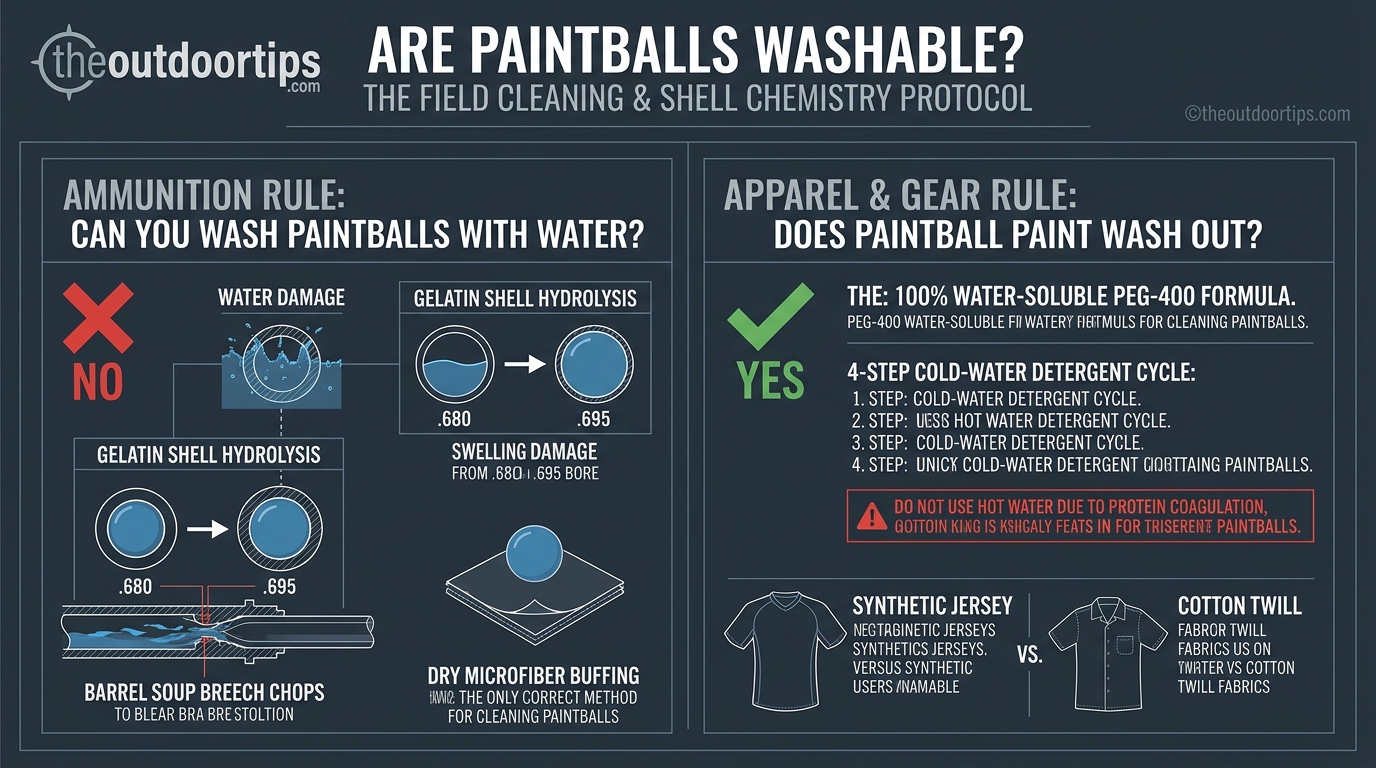
The definitive answer to are paintballs washable? depends entirely on whether you mean the ammunition or the paint splatter: NO, you can never wash paintball projectiles with water, but YES, paintball paint fill is 100% washable from clothes and gear. Paintball projectiles are encapsulated in hygroscopic pharmaceutical gelatin. Exposing them to liquid water triggers instant shell hydrolysis and osmotic swelling (expanding a standard .680 caliber ball past .695 bore within 90 seconds), turning ammunition into sticky, misshapen paste that disintegrates in your marker’s breech. Conversely, the liquid fill inside is formulated with non-toxic, water-soluble polyethylene glycol (PEG-400), sorbitol, and food dye, which completely dissolves in cold water and laundry detergent without permanent staining.
Every weekend at paintball fields across the globe, two distinct groups of players ask the exact same five-word question: are paintballs washable? For anxious beginners and parents peering into laundry baskets full of brightly splattered camouflage pants, hoodies, and shoes, the question is about fabric salvation: will this fluorescent pink and neon yellow paint ruin my clothes forever? For thrifty players who just spilled a 140-round pod of premium paintballs into a damp patch of gravel, dirt, and mud, the question is about gear economy: can I rinse these muddy paintballs under a water faucet, towel them dry, and shoot them through my marker?
The short answer is dual-faceted: paintball paint is 100% washable from fabrics, but paintball ammunition can NEVER be washed with water. Washing paintballs with water causes catastrophic ammunition failure, turning precision ballistics into barrel-choking sludge. Understanding the molecular chemistry of gelatin shells, the chemical mechanics of polyethylene glycol fills, and how marker operating pressures react to deformed paintballs is the difference between an effortless laundry cycle and a ruined weekend with blown marker o-rings.
In this technical 2026 ballistics and gear maintenance audit, we explore the exact material science behind paintball shells, test what happens during water exposure, break down marker drivetrain physics (from 800 PSI blowbacks to 140 PSI low-pressure spool valves), detail the correct field salvage method for dropped paintballs, and establish the ultimate cold-water wash protocol for all your gear.
1. The Chemical Anatomy of a Paintball: Shell vs. Fill
To understand why water is both the ultimate savior of your clothes and the absolute destroyer of your ammunition, you must first understand what a paintball is actually made of. Unlike commercial spray paint, house paint, or industrial coatings, sporting paintballs contain zero oil, zero latex, zero volatile organic compounds (VOCs), and zero synthetic polymers. As detailed in our comprehensive guide on do paintballs have plastic?, paintballs are 100% biodegradable, non-toxic pharmaceutical capsules developed originally from agricultural animal-marking and forestry tree-marking technologies.
The Outer Capsule: Bovine Gelatin
The outer sphere is manufactured from pure pharmaceutical-grade gelatin—a hydrolyzed collagen protein derived from animal connective tissue. Formulators add sorbitol and glycerin as plasticizers to control brittleness and elasticity. Gelatin relies on delicate hydrogen bonds between triple-helix amino acid chains (proline, hydroxyproline, and glycine). These bonds are extremely hygroscopic; they readily absorb ambient moisture, which causes the protein lattice to relax, expand, and hydrolyze into liquid soup upon direct water contact.
The Inner Liquid: PEG-400 & Dyes
The interior fill is an emulsion of Polyethylene Glycol (specifically PEG-400 or PEG-600), mineral thickeners, sorbitol, and food-grade colorants (FD&C Red #40, Yellow #5, Blue #1). PEG is a polar, water-soluble polyether compound that acts as a non-drying carrier fluid. Because PEG-400 molecules possess multiple ether oxygen atoms that readily form hydrogen bonds with water molecules, the entire fill dissolves instantaneously when introduced to water, leaving behind zero hydrophobic grease or oil residues.
This fundamental chemical dichotomy explains the entire “washable” paradox: the fill is engineered to dissolve completely in water, while the shell is engineered to dissolve completely in water. The very property that makes the stain effortlessly washable out of your team jersey is the exact property that makes washing the ammunition impossible.
2. What Happens When You Wash Paintballs with Water? The 4-Stage Cascade of Failure
If you drop a pod of paintballs into sandy mud and attempt to rinse them under a running water faucet or submerge them in a bucket of water, a violent chemical and mechanical degradation sequence begins immediately. Here is the four-stage cascade of failure that occurs when you wash paintball ammunition with water:
3. Marker Mechanics: Drivetrain, Operating Pressure & Wet Paintballs
How a paintball marker responds to moisture-compromised paintballs is determined directly by its internal pneumatic drivetrain and operating pressure. As explored in our deep dive on paintball marker guide for beginners, markers operate across vastly different pressure spectrums, and wet paintballs inflict catastrophic damage on each system in unique ways.
High-Pressure Mechanical Blowbacks (800 PSI)
Entry-level mechanical markers like the Tippmann Cronus and Tippmann 98 Custom utilize an inline blowback drivetrain operating at raw tank pressure: 800 to 850 PSI. A massive steel rear hammer strikes the valve pin, releasing an abrupt, violent blast of high-pressure gas directly behind the bolt face.
When an 800 PSI shockwave hits a water-softened or swollen paintball resting in the chamber, the sheer pneumatic hammer effect ruptures the weakened gelatin seam before the ball even leaves the breech. The projectile literally explodes inside the marker barrel, spraying fill across the ball detents and power tube.
Low-Pressure Spool Valves (135–200 PSI)
Modern spool valve tournament and scenario markers, such as the Planet Eclipse Etha 3M or Dye DSR+, feature an internal regulator (LPR or HPR) that drops gas operating pressure down to a whisper-quiet 135 to 200 PSI. These drivetrains use soft rubber-tipped bolts that accelerate paintballs gently down the bore.
While a 140 PSI spool valve is exceptionally gentle on brittle tournament paint, it cannot overcome the mechanical friction of a swollen .698 bore ball. The oversized swollen ball wedges tightly into the barrel back (.685 bore). The bolt stalls forward, triggering an electronic cycle fault or short-stroking the pneumatic spool.
The Gas Propellant Trap: CO2 vs. High-Pressure Compressed Air (HPA)
The type of propellant powering your marker further magnifies the danger of wet ammunition. If you are operating on liquid CO2 (carbon dioxide), drawing gas rapidly causes the liquid CO2 inside the tank to boil into vapor, causing an extreme endothermic refrigeration reaction. Marker operating temperatures plunge below freezing—frequently reaching -20°F to 0°F (-29°C to -18°C) at the valve seat.
When sub-zero CO2 vapor contacts paintballs that have absorbed surface moisture from washing or high rain humidity, the water inside the gelatin matrix freezes instantly into rigid crystalline ice. When fired, these frozen moisture-laden paintballs do not shatter or flex—they behave like solid marbles, creating severe impact laceration hazards and shattering aluminum barrel internals. Conversely, regulated High-Pressure Air (HPA) tanks deliver dry, temperature-stable nitrogen/compressed air, as detailed in our guide on how to refill a paintball tank?. While HPA eliminates the freezing hazard, it cannot fix swollen, water-softened gelatin shells.
4. Dropped Paintballs in Dirt: The Field Recovery Protocol
You are in the middle of a high-stakes scenario game or an intense woodsball match. You reach for your harness to reload, fumble the lid, and 140 fresh paintballs spill across the ground into dirt, pine needles, and dry gravel. With paintball cases costing between $40 and $75, your immediate instinct is to salvage every ball you can find. Can you save them? Yes—provided you never use water or cleaning chemicals.
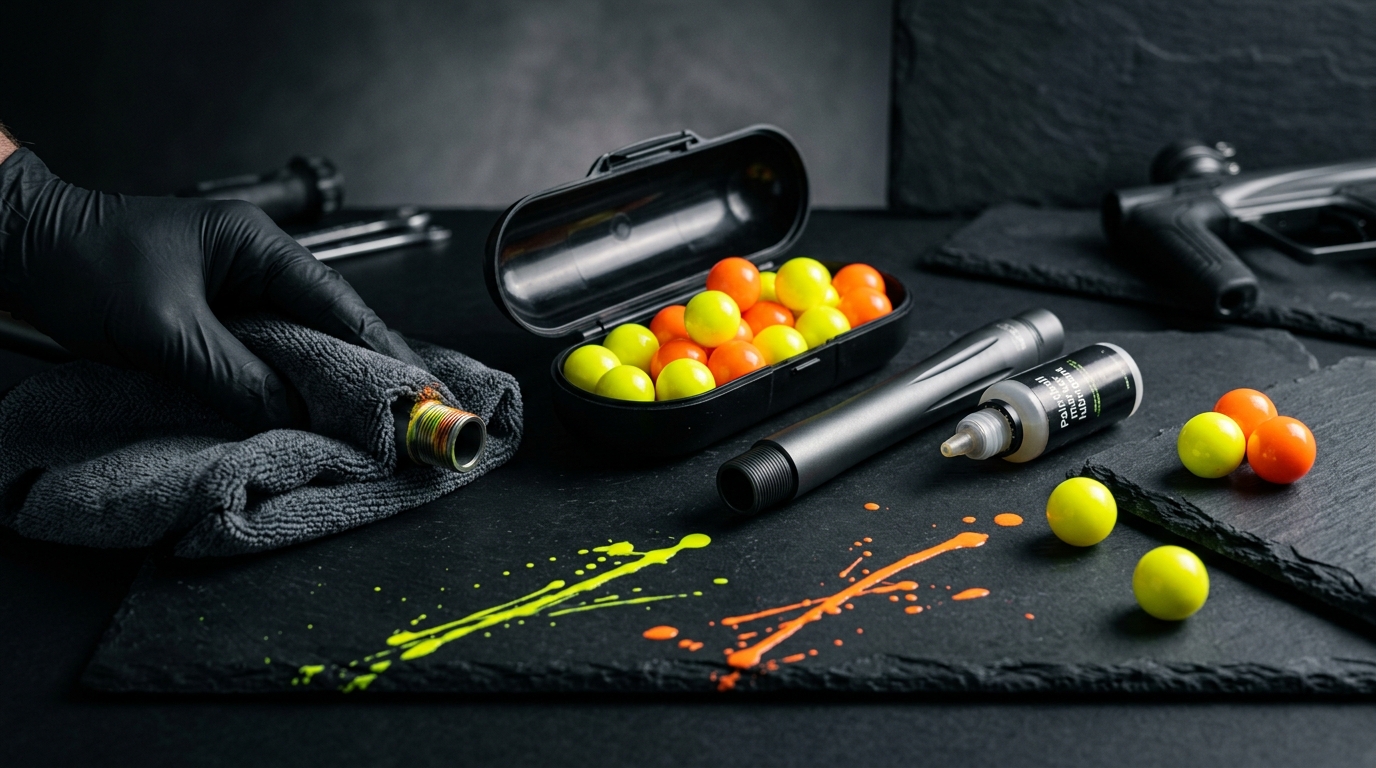
The 3-Step Zero-Moisture Microfiber Buffing Technique
- Step 1: The Coarse Sieve Pod Shake. Scoop the paintballs into an empty pod, leaving behind large rocks. Turn the pod upside down over your hand with the lid cracked slightly open, shaking vigorously to allow loose dirt granules, dry dust, and gravel to sift out through the gaps.
- Step 2: The Microfiber Roll & Buff. Lay a large, 100% dry, clean plush microfiber cloth flat on a staging table. Pour 30 to 40 dropped paintballs into the center of the towel. Fold the towel over the balls into a cradle and gently roll the balls back and forth in circular motions for 45 seconds. The electrostatically charged microfibers will trap microscopic dust and grit while polishing the gelatin shell without introducing a single drop of liquid.
- Step 3: The Squeeze & Seam Inspection. Inspect each cleaned ball individually under good light. Discard any paintball that has a visible dimple (a sunken flat spot), an oval shape, or a hairline crack along the equatorial seam. If a single ball broke during the fall, wash your hands and discard all paintballs coated in liquid fill—do not try to wipe wet fill off other balls, as the liquid fill will dissolve their outer shells within 10 minutes.
The Golden Field Rule: Salvaged, buffed paintballs should never be used in high-end motorized tournament loaders (like a Dye Rotor or Virtue Spire) or fired during competitive tournament points. Even a single microscopic sand grain trapped in a seam can gouge a precision mirror-finished aluminum barrel back (destroying your marker’s accuracy forever) or jam an electronic feeder impeller. Use salvaged paintballs exclusively for chronograph tuning, backyard target plinking, or mechanical rental loaners.
5. The Apparel Cleaning Protocol: Does Paintball Paint Wash Out of Clothes?
While paintball ammunition cannot tolerate water, paintball paint splatter is 100% washable from fabrics, skin, and gear. Because modern tournament and recreational paintballs utilize non-toxic, food-grade PEG-400 and water-soluble food dyes rather than oil-based pigments, paintball splatter will wash cleanly out of 99% of athletic clothing on the very first wash cycle—provided you do not commit the fatal “Hot Water Trap.”
The single biggest mistake parents and new players make is tossing paint-covered clothes directly into a washing machine with hot water, or setting the clothes dryer to high heat before checking if the stain is gone. When you wash paintballs with hot water (above 115°F / 46°C), the dissolved gelatin proteins in the splatter undergo thermal denaturation. The protein molecules unfold and bond permanently into the porous cellulose fibers of cotton clothing (such as cotton t-shirts and denim jeans). Once gelatin proteins coagulate in cotton, the stain becomes permanently baked into the fabric! Always wash paintball clothing in cold water.
For players curious about specific clothing choices and footwear care, explore our dedicated research on are jeans ok for paintball?, our summer apparel guide on what to wear to paintball in summer, and our footwear decontamination breakdown on does paintball stain shoes?.
6. Material-by-Material Cleaning Guide: What Washes Out and What Doesn’t
Different materials interact with water-soluble PEG fills in drastically different ways. While sublimated polyester jerseys shed paint in seconds, porous leather boots and delicate thermal goggle lenses require specialized handling protocols. Review this comprehensive material washability matrix before cleaning your loadout:
| Material / Gear Item | Washability | Recommended Cleaning Method | Critical Risk / Caution |
|---|---|---|---|
| Synthetic Jerseys (Polyester) | 100% Washable | Cold machine wash, standard detergent, hang dry | Zero risk; non-porous synthetic fibers shed dye effortlessly |
| Cotton Denim Jeans (12–14 oz) | 95% Washable | Cold pre-soak, cold machine wash, air dry | Never use hot water! Gelatin coagulates in cotton fibers |
| Tactical Pants (Cordura/Ripstop) | 100% Washable | Brush off dried crust, cold machine wash, line dry | Fasten all velcro straps before washing to avoid fabric snagging |
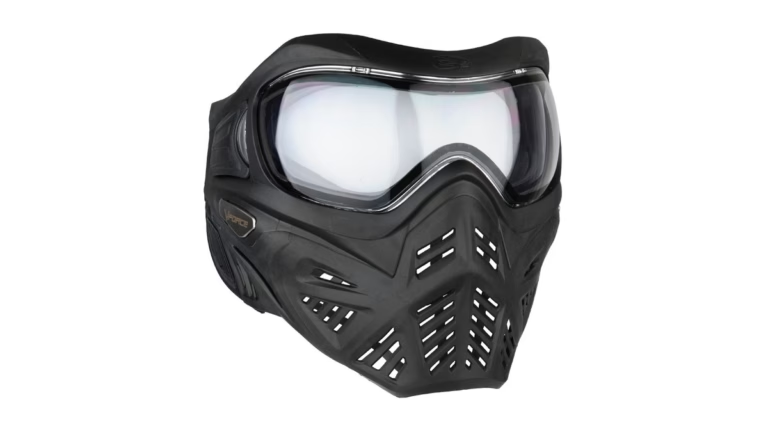
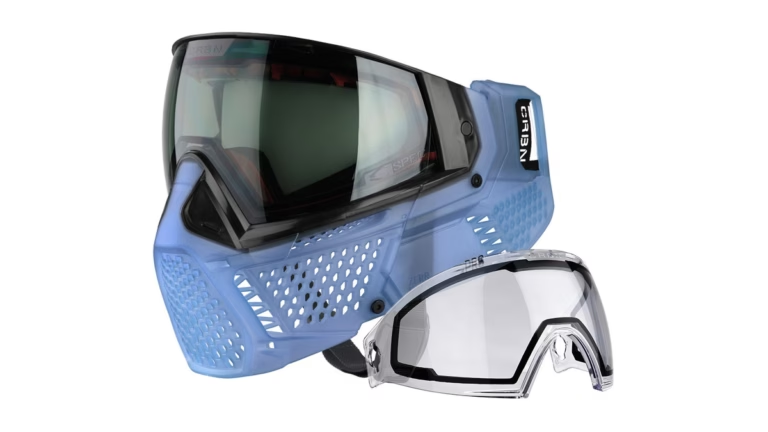
| Thermal Paintball Mask Lenses | Special Handling | Damp microfiber wipe ONLY; lukewarm water on cloth | NEVER submerge in water! Liquid ruins the inner thermal seal |
| Synthetic Trail Shoes & Cleats | 98% Washable | Cold garden hose rinse, soft nylon brush, remove insoles | Allow to dry with newspaper stuffed inside to hold shape |
| Genuine Leather & Suede Boots | Stain Risk (40%) | Damp cloth wipe, saddle soap, apply leather balm immediately | Porous raw leather drinks dye; requires hydrophobic wax seal |
| Automotive Paint & Clear Coats | 100% Washable | Immediate garden hose rinse, car wash soap, microfiber mitt | Do not let sit in 90°F sunlight for days; wash within 24 hours |
7. Recommended Field Cleaning & Maintenance Gear
Maintaining clean gear between points and properly swabbing your barrel after an accidental paint break is what separates amateur players from seasoned tournament veterans. Here is the essential field cleaning gear you should always keep in your gear bag:
Exalt Paintball Barrel Maid Swab
The gold standard in paintball barrel maintenance. Features a rocket-disk rubber blade on one end that squeegees out broken paint instantly, and a plush microfiber buffing swab on the other end to restore mirror-finish accuracy.
HK Army Microfiber Goggle & Gear Towel
Ultra-dense, scratch-free microfiber designed specifically for delicate dual-pane thermal goggle lenses and dry ball buffing. Absorbs grease, oil, and wet PEG fill instantly without scratching anti-fog coatings.
For complete marker setups and tactical loadouts, check out our comprehensive what to wear for paintball must-have items checklist, our mechanical breakdown of the best paintball guns for beginners, and our long-range tactical field tests on the best paintball guns for long range precision. If you are organizing small-group games, consult our operational breakdown on can 2 people play paintball?.
The Olfactory & Staining Science: Why Paintballs Smell & How to Prevent Clothes Staining
Beyond washability, players frequently encounter two related concerns after a day on the turf: “Why do paintball fields and dirty gear carry a distinct smell?” and “Do paintballs permanently stain clothes?” Both answers trace directly back to the biochemistry of paintball fills and gelatin capsule manufacturing.
Why Do Paintballs Smell? The PEG & Gelatin Chemistry
Fresh, premium competition paintballs have a very mild, slightly sweet chemical odor reminiscent of medicinal syrup. This scent originates from Polyethylene Glycol (PEG)—a non-toxic, water-soluble pharmaceutical polymer used as the primary carrier liquid, combined with edible food dyes, sorbitol, and pharmaceutical-grade gelatin.
However, if paintballs or paint-splattered gear develop a sharp, pungent, or sour vinegar-like stench, it is caused by bacterial and fungal hydrolysis. Paintball shells are made from animal collagen (gelatin). When exposed to heat and ambient moisture inside an unventilated gear bag or trunk, natural bacteria digest the organic gelatin protein, producing volatile fatty acids and sulfur compounds. Storing ammunition and jerseys in cool, dry conditions (<50% relative humidity) prevents this microbial decomposition entirely.
Do Paintballs Stain Clothes? Fabric Vulnerability Protocol
Modern paintball fill is formulated to be 100% water-soluble and non-staining under standard laundry conditions. However, whether a paintball leaves a permanent mark depends entirely on fabric porosity, dye drying time, and water temperature:
| Fabric Type | Stain Vulnerability | Risk Factor | Recommended Pre-Treatment | Wash Protocol |
|---|---|---|---|---|
| Synthetic Polyester & Nylon (Jerseys) | Zero Risk (0% Stain) | Non-porous extruded fibers repel PEG oil | Cold water rinse; no chemical pre-soak required | Standard cold wash with regular detergent |
| Heavy Cotton Denim & Canvas | Moderate Risk | Natural cellulose fibers wick dye into core when left dry for days | Spot treat with concentrated Dawn dish soap or liquid Oxiclean | Warm water soak for 30 mins before machine wash |
| Untreated Leather & Suede Footwear | High Risk (Permanent) | Porous animal hide absorbs mineral oils and red/pink dyes | Wipe immediately with damp microfiber; never soak in water | Saddle soap followed by leather conditioner |
Hot water cooks the gelatin proteins and binds artificial color pigments into cotton fibers. Always rinse paint-covered clothing in cold water first to dissolve the PEG carrier, followed by your normal detergent cycle.
Interactive Ballistics & Field Maintenance Calculators
To match barrel bore sizes, calibrate marker operating pressure, check kinetic energy limits, and prevent barrel breaks, explore our interactive suite of free paintball tools:
Match paint diameter with barrel inserts for ±2 FPS shot consistency.
Calibrate output pressure shims for mechanical vs spool markers.
Calculate kinetic energy impact and velocity limits at official field safety caps.
Calculate exact shot count based on air tank size (48ci vs 68ci) and operating pressure.
Verify tournament legality for NXL 10.2 BPS and local field firing rules.
Estimate paint consumption and case budget for recreational weekend games.
Check if your hopper can keep pace with fast semi-auto trigger pulls.
Evaluate humidity and thermal lens protection to keep your vision crystal-clear.
8. Frequently Asked Questions
Are paintballs washable?
No, paintball ammunition cannot be washed with water, but yes, paintball paint fill is 100% washable from clothes, skin, and gear. Paintball shells are made of hygroscopic gelatin that dissolves, swells, and softens when exposed to water, causing severe marker jams. Conversely, the fill is water-soluble polyethylene glycol (PEG-400) and food dye that dissolves completely in cold water and laundry detergent.
Can I wash dirty paintballs dropped on the ground?
Never wash dropped paintballs with water, wet wipes, or liquid cleaners. Liquid water hydrolyzes the gelatin capsule, causing it to swell from .680 to .695+ bore within two minutes. To clean dropped paintballs, place them in a clean, dry microfiber cloth and gently roll and buff them dry to remove surface dust. Never shoot dirty or washed paintballs through high-end electronic markers.
Does paintball paint wash out of clothes completely?
Yes. Paintball fill washes out completely from 99% of fabrics. Because modern paintballs use non-toxic, non-staining water-soluble PEG-400 and food-grade dyes instead of oil or latex, a standard machine wash cycle with cold water and regular detergent will remove all traces of paint. Avoid hot water, which can set the gelatin proteins into cotton fibers.
Does paintball paint come out of shoes?
Yes, paintball paint washes easily off synthetic athletic shoes, trail runners, and cleats. Spray them with a cold garden hose and scrub with a soft nylon brush and dish soap. However, porous unsealed leather or suede can absorb dye pigments; apply a hydrophobic wax or silicone protectant before playing.
Can you submerge a paintball mask in water to clean it?
No, never submerge a dual-pane thermal paintball mask in water. While the plastic mask frame and rubber skirt can be washed with water, submerging the dual-pane thermal lens allows water to penetrate the foam gasket between the inner and outer lens panes. Once water enters this thermal barrier, the lens will permanently fog up and must be replaced.
Will paintball paint wash off cars and houses?
Yes. Paintball splatter washes off car clear coats, vinyl siding, and concrete with plain water from a garden hose. Because PEG-400 is non-corrosive and water-soluble, it will not damage automotive paint. However, wash it off within 24 hours to prevent the gelatin shell fragments from drying hard under direct sunlight.
Why do wet paintballs break inside the marker barrel?
Wet paintballs break inside markers because moisture softens the gelatin shell and causes osmotic expansion. The swollen ball jams in the tight barrel bore (.685/.689), while the soft, water-weakened shell cannot withstand the 140 to 800 PSI blast of gas behind the bolt, rupturing instantly in the breech and coating the barrel in liquid soup.
How should I store paintballs to keep them from absorbing moisture?
Store paintballs in an airtight, sealed plastic bag or container in a climate-controlled room at 60°F–70°F (15°C–21°C) with 40%–50% relative humidity. Never store paintballs in damp basements, hot car trunks, or garages. Keep silica gel desiccant packs inside your gear bag to absorb excess ambient humidity. For a complete step-by-step preservation protocol, read our detailed guide on how to store paintballs.
Curious how paintball PEG fill affects custom paint jobs? See our armorer warning in Can You Hydro-Dip a Paintball Gun? on why 2K clear coats are mandatory.